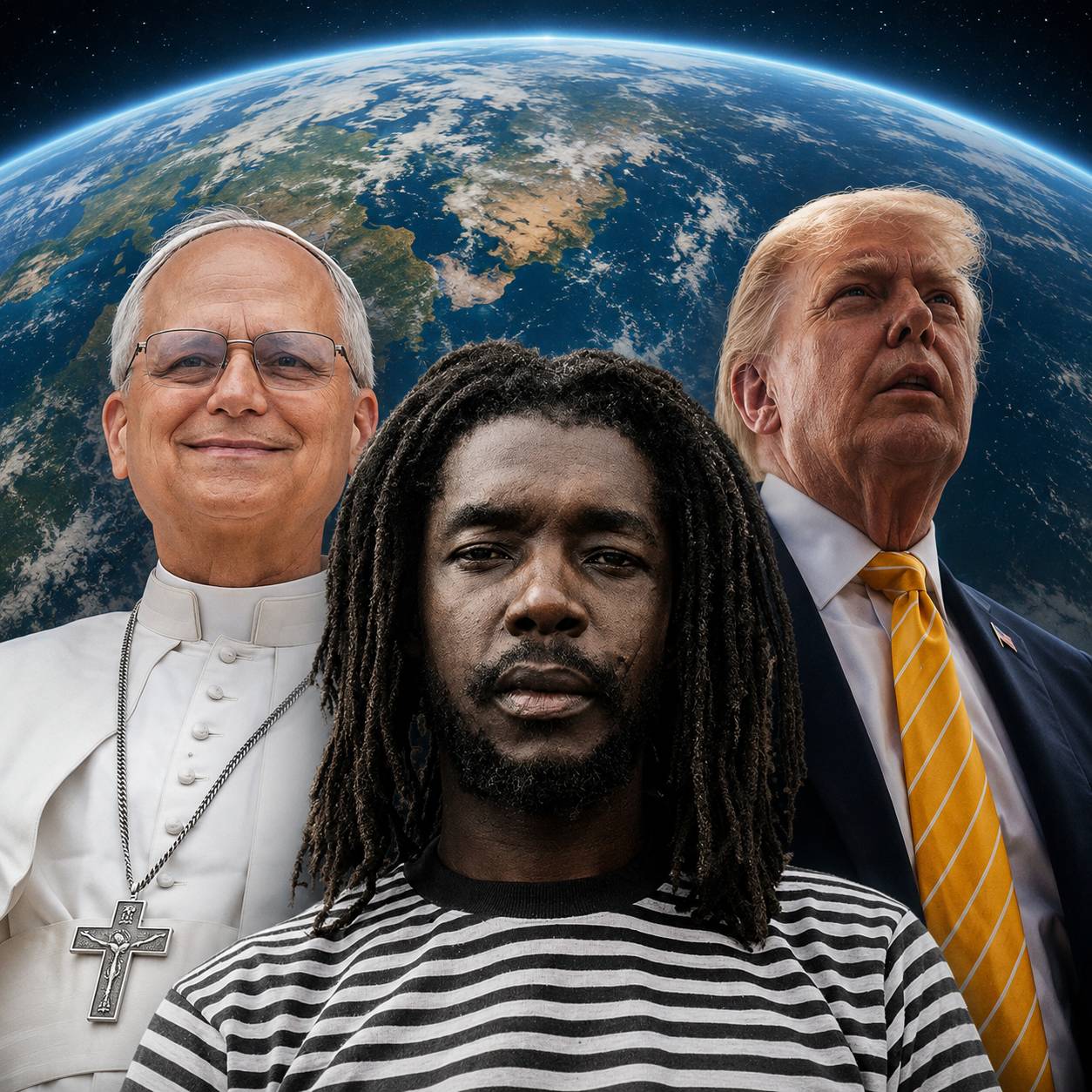
Fifty years after Peter Tosh’s iconic 1977 track *Equal Rights* laid bare the hollow promise of peace without justice, his warning remains more urgent than ever for a world grappling with spreading conflict and systemic inequality. Tosh’s lyric — that all cry out for peace, but few dare demand the justice that makes it lasting — frames a searing intervention from C. Justin Robinson, Pro Vice-Chancellor and Campus Principal at The University of the West Indies Five Islands Campus, that challenges global powers and calls on the Caribbean to claim its moral voice in today’s fractured international order.
Robinson anchors his argument in a long-running clash of principles: when Pope Leo XIV warned that nations that prioritize armament over negotiation are paving the way for a larger, deadlier war, Washington dismissed his words as disgraceful. Where Washington has leaned on military strength and dominance to impose quiet, the Pope, like Tosh, has insisted that peace without justice is nothing more than a temporary ceasefire, a paused conflict waiting to reignite when the next generation inherits the unpaid cost of old compromises. For the Caribbean, which has lived through both imposed dominance and coerced surrender, the choice between these two visions is not an abstract global debate — it is a matter of survival.
Nowhere is that survival more at stake than in the ongoing standoff between the US-Israel bloc and Iran, now in its seventh week with diplomatic talks at a deadlock. The crisis centers in part on the Strait of Hormuz, a 33-kilometer waterway that carries 20% of the world’s traded oil. A full closure of the strait would send global energy prices soaring, and the damage would hit the most vulnerable economies first — including the Caribbean. Almost all of the region’s fuel is imported, and its core economic pillars — tourism, aviation, and integrated food supply chains — are uniquely sensitive to energy price shocks. As the late Caribbean intellectual Lloyd Best argued, this vulnerability is not an accident of geography: it is the enduring architecture of the adapted plantation economy, a system structured from its origins to serve the interests of foreign powers, not local communities. A crisis 10,000 kilometers away threatens to collapse Caribbean livelihoods, a direct inheritance of a global economic order the region never designed.
This means the Iran-US standoff, and the string of concurrent conflicts across Gaza, Sudan, and Ukraine, is not distant spectator sport for Caribbean people. We are already inside this crisis, Robinson argues. Economic vulnerability does not grant automatic moral authority, but silence in the face of that preordained risk is not neutrality — it is consent to a system that puts Caribbean lives at risk for the gain of foreign powers. These conflicts are not separate, disconnected tragedies: they are the same pattern of injustice repeating, enabled by a global order that mistakes the silence of exhaustion or surrender for peace.
Robinson outlines how the world repeatedly falls into this trap. Two false versions of peace are peddled again and again: the first is the peace of dominance, where a stronger power crushes resistance to the point that opposition becomes impossible. The bombed, displaced and subjugated are not at peace — they are merely too exhausted to fight. The second is the peace of surrender, where a weaker side is forced to accept unjust terms because it can no longer afford to continue resistance. Both are branded as peace, but neither delivers lasting stability.
History is littered with the consequences of this mistake. The Treaty of Versailles punished Germany after World War I without addressing the root causes of conflict, and just 20 years later, the world was consumed by an even deadlier global war. The Oslo Accords, long criticized by activists and analysts, sought to create a Palestinian state on paper while leaving the Israeli occupation of Palestinian territories fully intact — today, Gaza lies in ruins as a result. The Taif Agreement that ended Lebanon’s civil war only redistributed power among the same factions that sparked the conflict, leaving the country to lurch from one systemic crisis to total collapse for decades. This pattern is no coincidence: injustice deferred is war that accumulates interest, compounding across generations until the bill comes due. Peace is the universal stated goal, but justice is the price almost every power refuses to pay. And almost always, the bill is paid not by the leaders who made the compromise, but by ordinary people in future generations.
For the Caribbean, this is not abstract academic theory — it is lived history. The plantation system was called “peaceful” by colonial powers. Colonial order was framed as stability. The silence of dispossessed Indigenous and enslaved people was repeatedly mislabeled as peace across the region, and Caribbean communities know better than any other how heavy that false peace costs. No other region has greater reason to see the lie of calling managed injustice peace.
Yet Tosh’s most cutting insight, Robinson argues, goes deeper: everyone wants to reach heaven, but no one wants to die to get there. Societies want the end result of peace without enduring the difficult, disruptive, costly work of building justice that makes it last. People want the celebration of Easter Sunday without the sacrifice and suffering of Good Friday. Most people genuinely desire peace, but they flinch from the discomfort of upending the existing arrangements that quietly benefit them, even as they harm others. Time and again, societies settle for the cheap short-term false peace of dominance or surrender, rather than pay the price of justice. The result is always the same: another conflict, another bill, another generation forced to pay.
Robinson poses a sharp question that cuts through the vague global calls for peace: Do we demand peace because we believe in justice for all, or do we just want peace because war is inconvenient? Do we condemn the suffering in Gaza because our conscience demands it, or do we only recoil because higher oil prices hurt our local tourism industry? Do we cry out for peace, or do we just cry out for the return of our comfortable daily lives?
The positions of the major global players are already clear. Washington has pushed for ceasefire resolutions rooted in surrender and dominance, paired with massive military buildups that perpetuate the cycle of conflict. The Pope has been dismissed as disgraceful for insisting that justice must come before any lasting ceasefire, a position aligned with Tosh’s core argument. Tosh’s vision goes further: equal rights and justice for every person, not only for those whose suffering is politically convenient for global powers to acknowledge.
It is time, Robinson argues, for the Caribbean to speak out — not just through formal diplomatic communiqués, but through the collective voice of its people. To speak as the Caribbean does not mean pretending the region is uniformly united in all views; it means recognizing that shared systemic vulnerability demands a shared collective voice, even when full unity is difficult to achieve. The region has already done this work before: on the frontlines of the climate justice movement, Caribbean nations refused to accept the unfair terms set by the major global polluters, named the injustice of climate harm before demanding a just remedy. That same moral clarity is needed now, applied to war, military occupation, and the selective enforcement of international law that lets powerful actors violate rules with impunity.
Robinson outlines three non-negotiable demands the Caribbean must raise: First, any ceasefire must be judged not by how quickly it restores surface-level quiet, but by whether binding accountability is enforced equally for all parties — not suspended when the violating power is an ally of influential global states. Second, post-conflict reconstruction must never be used as leverage to force silence from wronged parties: there can be no rebuilding without full recognition of fundamental rights. Third, amnesty for perpetrators of harm must never come before full truth and accountability. Any justice delayed is simply the next conflict scheduled for the future.
Speaking out with this clear voice will come at a cost. It will require spending diplomatic capital, and giving up the comfortable neutrality that many prefer to maintain at this dangerous moment. It will mean risking the approval of great powers that many Caribbean states have learned to court, even when that cultivation runs against the region’s own interests. But the alternative — crying out for peace while endorsing the very systemic structures that guarantee peace will fail — is exactly what created the current crises in Gaza, Sudan, and the threat of closure for the Strait of Hormuz.
That alternative has never worked, it cannot work now, and it was never designed to. Military might does not equal moral right, and any peace built on dominance is always temporary, and when it collapses, the burden always falls on the most vulnerable. If the Strait of Hormuz closes, oil prices spike, and air travel becomes unaffordable for Caribbean businesses, no great power will airlift the region to safety. Caribbean communities will bear that cost, just as they have born so many costs created by a system they did not build. So there is no better time to stand for something that outlasts the suffering.
Fifty years ago, Peter Tosh sang plainly: “I don’t want no peace. I need equal rights and justice.” Today, Washington has dismissed the Pope’s call for justice as disgraceful, but Tosh, from his legacy, calls both global powers and quieted communities to account. The Caribbean people have always known which voice echoes through the marrow of their shared history of exploitation and resistance. The only question that remains is whether the region will sing that voice again, loud enough, in time, not as petitioners begging for crumbs from global powers, but as free people naming justice on their own terms.