分类: world

  • Important working session on the stabilization and economic recovery of Haiti

    Important working session on the stabilization and economic recovery of Haiti

    On June 5, 2026, senior Haitian government officials and leaders of the United Nations System in Haiti convened a critical working session focused on advancing the country’s urgent economic stabilization and recovery agenda, laying out clear collaborative next steps to address the Caribbean nation’s ongoing humanitarian and development challenges.

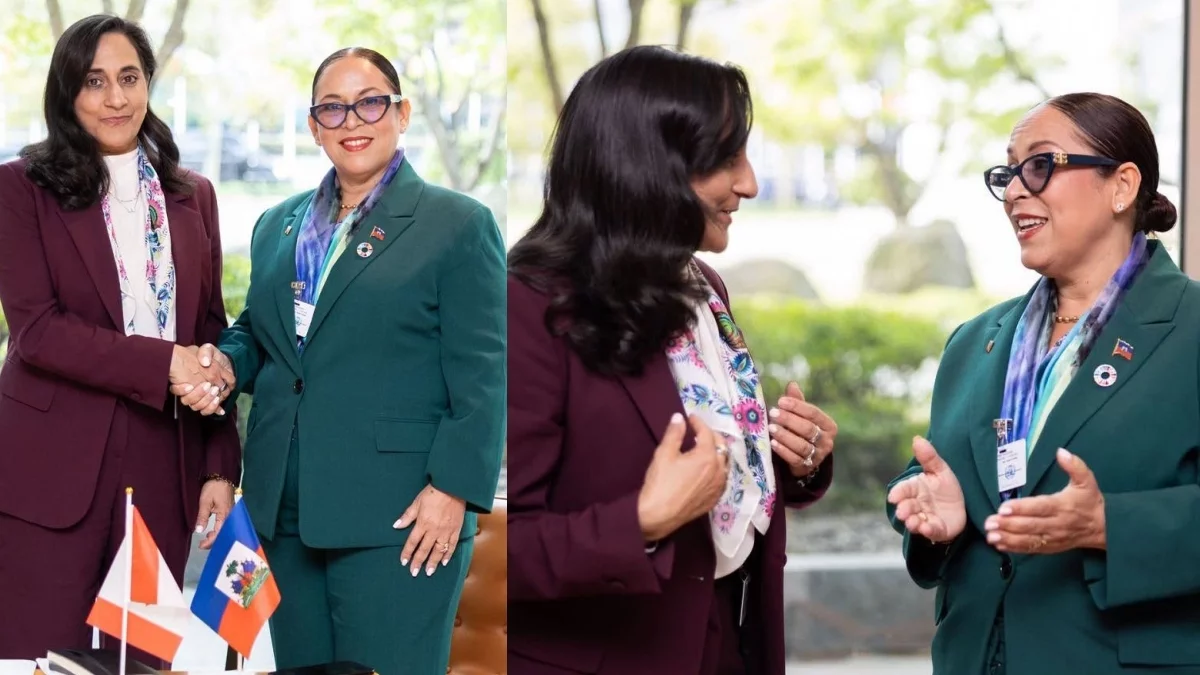
    Leading the Haitian government delegation was Sandra Paulemon, Haiti’s Minister of Planning and External Cooperation, who was joined by Guy Roméo Latry, the Ministry’s Director General, and Paul Ruddy Mentor, Paulemon’s Chief of Staff. On the United Nations side, the meeting was hosted by Nicole Kouassi, UN Resident Coordinator in Haiti, alongside her specialized technical team.

    The two sides centered discussions on five core priorities, starting with the governance of the UN-Haiti Global Cooperation Framework and the Peacebuilding Fund (PBF) steering committee. Additional agenda items included progress updates on Haiti’s Strategic Development Plan (PSDH), the finalization of the mid-term report for the Doha Development Agenda, and the rollout of Haiti’s national economic stabilization and recovery program.

    This flagship recovery program is explicitly aligned with the Haitian government’s top national priorities, which center on enabling the safe return of displaced citizens to their home neighborhoods and the resumption of schooling for children across the country. It also prioritizes expanded access to safe drinking water and the rollout of a suite of essential social initiatives designed to rebuild Haiti’s damaged economic and community fabric.

    In her opening remarks to the session, Minister Paulemon clarified the institutional leadership structure for the program: strategic direction is set by the Office of the Prime Minister, while the Ministry of Economy and Finance serves as technical coordinator and carries responsibility for all budgetary oversight.

    Intervention zones for the recovery program have been selected through a multi-criteria assessment that weighs a region’s level of vulnerability, existing security pressures, and untapped economic potential. The program’s primary focus areas are fragile urban communities, strategic border transit corridors, and key agricultural basins that play a critical role in advancing national food security and creating much-needed local jobs.

    Paulemon underlined the urgent need to mobilize international funding that is coordinated, predictable, and rapidly deployable to deliver tangible, on-the-ground improvements that directly improve the lives of the Haitian people. “The Haitian population cannot afford to wait for relief and recovery,” she emphasized, noting that the program’s goals extend beyond enabling displaced people to return home to rebuilding the lost household capital of vulnerable communities.

    During negotiations, the Minister called for a revamped comprehensive cooperation framework between Haiti and the UN that is centered on measurable results and fully aligned with the government’s three core priorities: expanding national security, driving inclusive economic and social recovery, and laying the groundwork for upcoming national elections.

    For his part, Guy Roméo Latry stressed that the Ministry of Planning and the United Nations system must reach consensus on clear, concrete deliverables embedded within the overall cooperation framework. He reiterated that the framework must deliver results that are tangible, visible, and measurable to the Haitian public, calling for an impact-first working approach that turns formal commitments into immediate, direct action that benefits local communities.

    Paulemon and Kouassi also dedicated discussion to aligning Haiti’s Strategic Development Plan with the government’s current urgent priorities. The Minister called for expanded regular technical exchanges between planning department teams and the UN Resident Coordinator’s Office to align strategic references and eliminate any ambiguity around the strategic foundation for external development support to Haiti.

    The working session also yielded tangible progress on two key administrative priorities: negotiators moved closer to finalizing the mid-term report of the Doha Development Agenda, and agreed on preliminary terms for the organizational structure and membership of the Peacebuilding Fund steering committee.

    By the close of the meeting, both sides confirmed that the session had successfully consolidated strategic alignment between Haiti’s Ministry of Planning and the United Nations system. Participants recorded meaningful progress on strengthening governance mechanisms for both the Global Cooperation Framework and the Peacebuilding Fund, and established a clear timeline and roadmap for the next phases of implementing the national economic stabilization plan.

  • Waarom Iran de controle over Hormuz niet kan opgeven

    Waarom Iran de controle over Hormuz niet kan opgeven

    The Strait of Hormuz, the narrow waterway that carries roughly one-quarter of the world’s seaborne oil trade and massive volumes of liquefied natural gas (LNG) and fertilizer, has once again become the epicenter of a sharpening standoff between Iran and the United States, with regional security and global energy markets hanging in the balance. In the latest escalation, Iran’s Islamic Revolutionary Guard Corps (IRGC) released a new maritime map on Monday, May 4, 2026, marking out an expanded claimed control zone that extends far beyond the Strait of Hormuz and covers large sections of the United Arab Emirates (UAE) coastline.

    The map draws two key boundary lines: the western line stretches from Iran’s westernmost point on Qeshm Island to the UAE emirate of Umm al Quwain, while the eastern line connects Iran’s Mount Mobarak to the UAE’s Fujairah emirate, laying formal claim to navigation authority over the entire enclosed maritime area. This provocative move comes directly on the heels of a new U.S. initiative led by President Donald Trump, dubbed “Project Freedom,” which has deployed U.S. Navy escorts to help stranded tankers transit the strait— a waterway that has remained effectively closed since the U.S.-Israel war against Iran began on February 28.

    Hours after the map’s release, the UAE announced it had suffered a wave of drone and rocket attacks, with one strike igniting a major fire at a critical energy facility in Fujairah. The assault marked the first such attack on a Gulf Arab state since the fragile ceasefire between the U.S. and Iran went into effect on April 8. While the UAE swiftly blamed Iran for the strikes, Tehran initially withheld official confirmation before implicitly accepting responsibility on Tuesday, while shifting blame back to the U.S. for its aggressive military actions in the region.

    In a show of defiance, Iranian Parliament Speaker Mohammad Bagher Ghalibaf wrote on social media Tuesday that “the continuation of the current situation is unbearable for the United States, and we have not even started yet.” But behind this public display of confidence, analysts warn that Iran is increasingly leaning on its control over the Strait of Hormuz as its core bargaining chip in the ongoing conflict, which remains formally paused only by the shaky ceasefire—and Iran cannot afford to give up this leverage.

    Experts describe Iran’s control over the strait as a “strategic equalizer” that allows the country to offset U.S. military superiority. Iran cannot match the U.S. Navy and Air Force in a symmetric confrontation, but it leverages the strait’s unique geography: the narrow, heavily trafficked, economically critical waterway allows Iran to impose massive global costs without waging all-out war. Even without a full closure, tactics including mine-laying, drone and rocket strikes, fast patrol boat harassment, and electronic disruption are enough to make transit too risky for commercial shippers.

    Since the conflict began, tanker traffic through the strait has plummeted from an average of 129 transits per day in February to a near-complete standstill, sending ripples through global energy markets, supply chains, and shipping industries. “Iran doesn’t need to defeat the U.S. Navy to reshape the economic consequences of this conflict,” explained Mohammad Reza Farzanegan, a professor of Middle Eastern economics at Marburg University. “It only needs to make clear to insurers, shipowners, and energy traders that military pressure on Iran comes with costs for the entire global market. That uncertainty alone is enough to push up oil and LNG prices, raise transportation costs, and transmit the conflict to global inflation, food security, and financial markets.”

    Over the course of the conflict, Iran has demonstrated it possesses an advanced arsenal of attack drones, anti-ship missile-equipped fast attack craft, coastal rocket launchers, and precision-guided weapons, many deployable from underground coastal facilities, giving it ample capability to threaten commercial shipping through the waterway.

    Yet Iran also pays a steep price for its use of this leverage. Since April 13, the U.S. has enforced a full maritime blockade of all Iranian ports and shipping, cutting off Iran’s oil exports, blocking imports of essential goods, and halting inflows of foreign currency. The blockade has sent domestic prices soaring, eliminated or put on hold millions of Iranian jobs, and been compounded by a near-total internet blackout across Tehran.

    “Hormuz is probably Iran’s most important leverage point right now, even though it is a dangerous weapon,” Farzanegan noted. “It gives Iran negotiating power because full use of it would harm everyone.”

    The fragile April ceasefire has already come under severe new strain following the Fujairah attack. The Fujairah refinery exports more than 1.7 million barrels of crude oil and refined fuels daily, equal to roughly 1.7% of total global daily demand. The strike came just after U.S. officials announced that two U.S. commercial vessels, escorted by U.S. guided-missile destroyers, had successfully transited the strait. Shipping giant Maersk confirmed that the U.S.-flagged Alliance Fairfax exited the Persian Gulf with U.S. military escort, but Iran has denied it allowed any vessels to pass through the waterway. The U.S. military also reported it destroyed six small Iranian patrol boats, a claim Iran denies; Tehran says U.S. strikes killed five Iranian civilians in the confrontation.

    Muhanad Seloom, an instructor of international politics and security at the Doha Institute for Graduate Studies, argues that the attack on Fujairah reveals a deliberate Iranian strategy: Iran does not need to target U.S. commercial vessels directly in the Strait of Hormuz to keep economic pressure high on global markets—it can instead strike Gulf Arab states to send a warning. “Iran is trying to warn Gulf states that if they allow the U.S. to use their territory to attack Iran, Iran will destroy their infrastructure and trigger an economic collapse,” Seloom explained.

    The warning is directed at the six member states of the Gulf Cooperation Council (GCC): Saudi Arabia, the UAE, Qatar, Kuwait, Oman, and Bahrain. Of these, the UAE has drawn particular Iranian ire: Abu Dhabi has deepened its strategic partnership with Israel, a U.S. ally in the war against Iran, since normalizing ties through the 2020 Abraham Accords. Just last month, the UAE also withdrew from OPEC and OPEC+, the production-cutting bloc led de facto by Saudi Arabia, shifting the regional energy and political dynamic.

    Since the start of the conflict, Iran has launched at least 6,413 rockets and drone strikes targeting seven Arab states in the region, with the majority hitting the UAE. Seloom says Iran is deliberately capitalizing on this shifting regional landscape, leaving a critical open question for regional stability: “The big question now is what this means for GCC countries and how long they will maintain their strategic patience. At some point, they could begin to see this as an existential threat.”

  • Belize, Cuba Team Up to Boost Disaster Readiness

    Belize, Cuba Team Up to Boost Disaster Readiness

    In a collaborative step to address growing climate and natural hazard risks across Central America and the Caribbean, Belize has launched a new bilateral cooperation agreement with Cuba focused on elevating national disaster readiness capabilities, with Cuban expertise set to drive capacity building across multiple key areas of risk management.

    The formal agreement to expand cooperation took shape during a high-level working meeting between Belize’s Minister of Disaster Risk Management Henry Charles Usher and a senior delegation from Cuba’s Ministry of Science, Technology, and Environment (CITMA), led by First Deputy Minister Rudy Montero Mata. Discussions centered on designing a structured joint support program that will deepen technical ties between the two nations, with tangible initiatives already on the negotiating table.

    Under the proposed framework, the partnership will prioritize three core objectives: upgrading Belize’s existing early warning systems, enhancing nationwide hazard monitoring infrastructure, and standardizing community-level risk assessment protocols. In practical terms, these changes will deliver more accurate hazard data, faster public alerts for impending disasters, and more targeted, evidence-based emergency planning at the local level.

    To bring these goals to life, both sides have proposed a range of cooperative activities, including cross-border expert exchanges, specialized training programs for Belizean emergency management personnel, and an upcoming study visit by Belizean officials to Cuba to observe the country’s disaster management systems in action. The Cuban delegation also floated the possibility of permanently deploying specialized technical experts to Belize, where they would provide hands-on training, help build local institutional capacity, and share decades of on-the-ground experience in hazard response.

    Cuba has earned longstanding regional recognition for its robust, community-centered disaster response framework, particularly for its proven track record of mitigating damage from Atlantic hurricanes—one of the most consistent and deadly climate threats facing Caribbean and Central American nations. For Belize, which faces repeated exposure to tropical storms, flooding, and coastal erosion tied to climate change, tapping into this established expertise offers a accelerated path to strengthening its own disaster resilience.

    Officials from both sides emphasized that the partnership builds on a foundation of existing regional cooperation on climate action, and that the next step will be formalizing the joint program details to launch initiatives in the near term. The agreement comes as small island and coastal developing nations across the Caribbean increasingly turn to regional knowledge sharing to address the accelerating impacts of climate change, which have pushed disaster risk management to the top of national policy agendas across the region.

  • Earthquake Recorded Northeast of Antigua

    Earthquake Recorded Northeast of Antigua

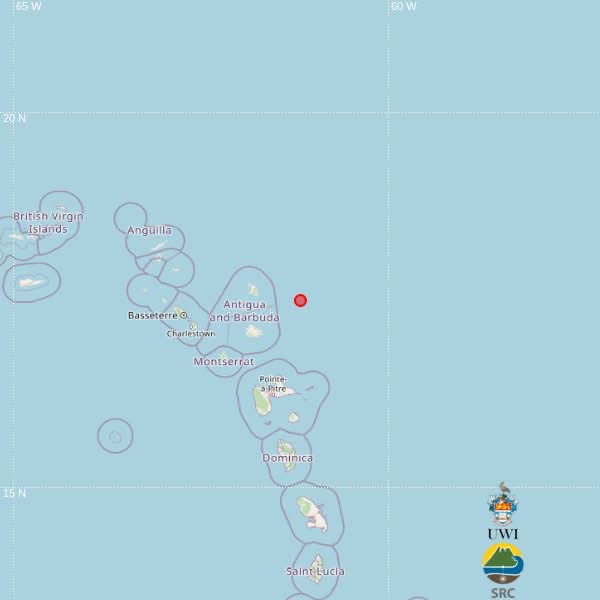
    A minor seismic event has been detected off the northeastern coast of Antigua by a leading Caribbean geological monitoring agency, according to an early update issued on Tuesday. The University of the West Indies (UWI) Seismic Research Centre, which tracks earthquake activity across the Caribbean region, logged the shallow tremor at 11:36 a.m. local time.

    Preliminary automatic readings put the magnitude of the earthquake at 3.6, with a focal depth of 10 kilometers below the ocean surface. The epicenter falls within the geologically active Leeward Islands, an island chain that forms part of the broader Lesser Antilles in the eastern Caribbean Sea. Several population centers are located within a 160-kilometer radius of the quake’s recorded location: Saint John’s, the capital of Antigua and Barbuda, sits roughly 138 kilometers to the epicenter’s northwest; Basseterre, the capital of St. Kitts and Nevis, lies approximately 103 kilometers to the north-northeast; and Brades, the administrative center of Montserrat, is around 158 kilometers to the north-northwest.

    In the immediate aftermath of the tremor, emergency management agencies have not received any reports of structural damage or harm to local residents. The UWI Seismic Research Centre emphasized that the current location and magnitude data are preliminary, and official readings may be adjusted after experts complete full manual analysis of the seismic recordings.

  • Grenada Marks 169th Anniversary of Indian Arrival Day

    Grenada Marks 169th Anniversary of Indian Arrival Day

    On May 1, a historic celebration of Indian Arrival Day unfolded at Grenada’s iconic Belmont Estate, organized through a collaborative partnership between the High Commission of India in Trinidad and Tobago, the Indo–Grenadian Heritage Foundation Inc., and The Belmont Foundation Inc. The gathering drew a diverse cross-section of attendees, including members of the Indo-Grenadian community, senior Grenadian government officials, diplomatic representatives, local students, and members of the general public, all gathered to honor the centuries-long contributions that Indo-Grenadians have made to the island nation’s social, economic, and cultural growth.

    The day’s official proceedings kicked off at 10 a.m. with a solemn flag-raising ceremony, overseen by Master of Ceremonies Dr. Vajinder Singh. Lauren Salim, Personal Assistant to Grenadian Minister Dennis Cornwall, hoisted Grenada’s national flag, while Sagar Maitra, Head of Chancery at the High Commission of India in Trinidad and Tobago, raised the flag of India on the commission’s behalf. The event opened with a moving performance of Grenada’s national anthem by Naomi Roberts, followed by a rousing rendition of India’s national anthem led by Priya Thomas. His Excellency Gitakishore Kumar Pasupuleti, Grenada’s Non-Resident High Commissioner to India, delivered special keynote remarks marking the occasion. To cap off the opening ceremony, students from seven participating local schools recited the Grenada Pledge, highlighting how the island’s multicultural heritage remains a core part of younger generations’ national identity.

    Following the formal opening, attendees gathered for the official launch of “Roots and Resilience,” a new historical exhibition co-curated by Dr. Angus Martin and Teddy Frederick, with Dr. Martin chairing the launch event. The immersive exhibition traces the multi-generational journey of Indo-Grenadian families, from the first arrival of indentured laborers in the 19th century through the harsh realities of the indentureship system and the enduring cultural and social legacies that descendants have built across decades. Through a curated collection of personal photographs, rarely seen archival documents, and collected oral histories from community members, the exhibition brings long-overdue visibility to a critical, often underdocumented chapter of Grenada’s national history while centering the remarkable resilience and lasting impact of the Indo-Grenadian community.

    In his official address at the event, Grenadian Prime Minister Dickon Mitchell emphasized the national significance of preserving and sharing this history. “We have built an inclusive society, one that celebrates diversity and embraces our shared identity,” Mitchell stated. “It is critical that we continue to document and teach the history, the accomplishments, and the struggles that have shaped who we are as a people.”

    Maitra, speaking on behalf of the High Commission of India, reflected on Grenada’s extraordinary model of cross-cultural integration. “Grenada stands as a powerful example of how cultures can come together to create something stronger,” he noted. “Different traditions, beliefs, and experiences have combined to shape a shared Grenadian identity, built on respect, resilience, and shared humanity.”

    The afternoon’s lively cultural program, chaired by Jadey Bissessar, Belmont Estate’s Marketing Executive and Event Coordinator, showcased the depth of Grenada’s blended cultural heritage. Performances from the St Andrew’s Anglican Secondary School Choral Speaking Ensemble, Amesiha Persaud, the Belmont Belles, and Mrittika Maitra added vibrant, dynamic energy to the day’s celebrations. The program’s highlight was a featured performance by Vidushi Deepa Bhat and her daughter Nisarga Gurunandan, classical Bharatanatyam dancers whose graceful, precise performance brought the rich tradition of classical Indian dance to the Belmont Estate stage, drawing enthusiastic applause from attendees.

    The official May 1 celebration capped off a weekend of commemorative events: on April 30, the High Commission of India organized a symbolic historical reenactment along Kirani James Boulevard, where participants recreated the moment that the first Indian indentured laborers arrived on Grenadian shores, bringing this foundational moment of national history to life for modern audiences.

    Indian Arrival Day is held across the Caribbean to mark the arrival of Indian indentured laborers who came to the region after the abolition of chattel slavery. In Grenada, the first wave of Indian laborers arrived in 1857, and over the subsequent decades, their communities transformed the island’s agricultural sector, drove economic growth, and left an indelible mark on Grenada’s national culture. Today, their descendants remain an integral, foundational part of Grenada’s multicultural national identity. As the 2026 celebration made clear, Grenada continues to stand as a powerful testament to what can be achieved when diverse communities come together in mutual respect, building shared national unity through a commitment to shared humanity.

  • World Press Freedom Day Underscores thea Vital Role of a Free Press: Advancing Peace, Human Rights, and Global Security

    World Press Freedom Day Underscores thea Vital Role of a Free Press: Advancing Peace, Human Rights, and Global Security

    Each year on World Press Freedom Day, global stakeholders pause to celebrate the irreplaceable contribution that free, independent journalism makes to upholding human rights, advancing equitable development, and stabilizing global security. Beyond celebration, the annual observance also shines a critical spotlight on the persistent threats that confront media professionals worldwide: from state-enforced censorship and the unchecked spread of disinformation to targeted violence and harassment that put journalists’ lives at risk simply for doing their jobs.

    This year’s official theme, “Shaping a Future at Peace: Promoting Press Freedom for Human Rights, Development, and Security,” reflects a growing global consensus that a free press is not a secondary privilege, but a foundational building block of peaceful, resilient societies. When journalists are able to work without interference, sharing accurate, verified information with the public, they deliver far-reaching public good: they help defuse emerging conflict before it escalates, hold powerful actors accountable for their actions, and create space for inclusive, informed public dialogue that bridges divides.

    As the global media landscape undergoes rapid transformation, marked by rising disinformation campaigns and growing public disengagement from traditional news sources, a growing shift is underway in journalistic practice. More outlets and reporters are turning to solutions-oriented reporting, an approach that does not just highlight pressing global challenges, but also explores actionable pathways forward for audiences seeking to understand how to address complex issues.

    At the forefront of this movement to align journalism with global peace is HWPL, the Heavently Culture World Peace Restoration of Light, a non-governmental organization that has long advanced the cause of peace journalism through programs in Washington D.C. and across the globe. This work directly reflects the core mission of HWPL Chairman Lee Man-hee, who has long argued that “To attain world peace, all journalists must frequently report on peace.” Today, a growing community of journalists is answering that call, integrating peace-focused reporting into their work to support global efforts to end conflict.

    Earlier this year, HWPL brought together roughly 220 journalists from every region of the world for its International Workshop on Peace Journalism Studies, a gathering that turned the principles of peace-focused reporting into actionable practice. Attendees centered their discussions on three core priorities: rebuilding eroded public trust in media, countering the rising political polarization that distorts public discourse, and expanding access to accurate, balanced, solutions-focused reporting that serves the public good. The workshop’s core goals aligned directly with the mission of World Press Freedom Day, emphasizing the critical need to rebuild public confidence in journalism and ensure the field acts as a positive force for inclusive, peaceful societies.

    “‘As we observe World Press Freedom Day, we are reminded that press freedom is inseparable from peace,” an HWPL representative shared in comments marking the annual observance. As cross-border challenges from climate change to political extremism intensify across the globe, World Press Freedom Day serves a dual purpose: it is both a celebration of the critical work journalists do every day, and an urgent call to action. The observance urges governments, civil society, and global publics to continue defending press freedom and supporting responsible journalism that advances human dignity and works toward lasting global peace.

  • US/Iran Tensions Continue to Rise

    US/Iran Tensions Continue to Rise

    As the standoff between the United States and Iran enters its fourth week, the fragile ceasefire that has prevented the Strait of Hormuz — the world’s most vital oil shipping chokepoint — from erupting into full-scale war is unraveling at an accelerating pace, sending shockwaves through global energy markets and raising urgent alarm across the Middle East.

    The latest escalation unfolded on Monday, after the United States launched its so-called “Project Freedom” operation, a mission designed to provide armed escort for commercial cargo vessels transiting the strategic waterway. Within hours of the operation’s debut, both US and Iranian forces exchanged direct fire in the strait, marking the most severe test of the truce agreement since it was implemented.

    Contradictory statements emerged from US leadership on Tuesday, as Defense Secretary Pete Hegseth publicly asserted that “the ceasefire is not over” despite confirmation from General Dan Caine, Chairman of the Joint Chiefs of Staff, that Iranian forces have launched more than ten separate attacks on US military assets since the truce went into effect. According to reporting from the Associated Press, Iran has also targeted commercial shipping vessels nine times over the course of the standoff and seized two foreign container ships. US officials have so far characterized these actions as remaining “below the threshold of restarting major combat operations,” a framing that has left observers uncertain about Washington’s next moves.

    Regional tensions spilled over to neighboring Gulf states on Monday, when the United Arab Emirates announced it had successfully intercepted 15 Iranian ballistic missiles and four unmanned aerial drones launched toward its territory. In response, Iran’s foreign ministry issued a stark warning to the UAE, urging the country not to allow itself to be “dragged back into a quagmire” of open conflict between Washington and Tehran. A senior anonymous regional source speaking to CNN summed up the gravity of the current situation bluntly: “It is very bad and messy at the moment.”

    The escalating crisis has already had a direct impact on global energy prices, with benchmark petrol prices rising 50% since the outbreak of hostilities in the region. Hundreds of commercial tankers are currently stranded outside the strait, as shipping companies reroute vessels to avoid the high-risk zone, creating massive supply chain backlogs that threaten to further raise energy costs for consumers worldwide. CNN reports that global oil demand is now declining at the fastest rate recorded since the height of the Covid-19 pandemic, a shift that has done little to offset price pressures driven by supply uncertainty.

    With neither Washington nor Tehran showing any willingness to make diplomatic concessions to de-escalate tensions, energy and security analysts warn that the entire region is just one accidental or intentional incident away from a full resumption of large-scale combat that would disrupt nearly a fifth of the world’s daily oil supply, with catastrophic consequences for the global economy.

  • Lashmar takes deep dive into Drax family in latest book

    Lashmar takes deep dive into Drax family in latest book

    It has been nearly four years since the global Black Lives Matter movement reignited long-overdue conversations about the enduring legacy of chattel slavery in modern societies, and a new investigative work is now pulling back the curtain on one of the most underreported stories linking a prominent British political family to centuries of slave-based profit in Barbados.

    Written by veteran investigative journalist and historian Dr. Paul Lashmar, *Drax Hall* explores the full, unvarnished history of the Drax family, tracing their fortune and influence back to the 17th century, when founder James Drax built one of the first commercially successful sugar plantations on the Caribbean island and pioneered the brutal system of chattel slavery that would become the backbone of the transatlantic slave economy.

    In an interview with Barbados TODAY, Lashmar explained that the book was a serendipitous six-year project, sparked by a moment of curiosity in the summer of 2020. Driving past the sprawling English country estate owned by Richard Drax, a wealthy former British Member of Parliament, Lashmar realized almost nothing had been published about the origins of the Drax family’s vast wealth, a gap he set out to fill. What began as a small inquiry into Richard Drax’s current assets quickly expanded when a source connected the family to the historic Drax Hall plantation in Barbados. Lashmar partnered with fellow former journalist Johnathan Smith to publish an initial investigative article revealing that Richard Drax remained the sole beneficiary of the 400-year-old plantation. The story drew international attention, particularly in countries like Barbados that have led global calls for reparations from nations and families that profited from slavery.

    Over centuries, the Drax family’s ties to the institutionalization of chattel slavery run far deeper than land ownership, Lashmar’s research confirms. Just decades after James Drax first established Drax Hall, his son Henry Drax penned a widely circulated, still-extant manual that detailed the brutal management of enslaved labor on sugar plantations. A century later, another family member, Edward Earl Drax, updated the manual for a new generation of plantation owners; that document is now held in the collection of the Barbados Museum.

    Lashmar emphasized that the sweeping history of the Drax family’s central role in building and normalizing chattel slavery had never been fully told by other historians, making the book a necessary work of public historical record. “As a journalist, I just thought this is an extraordinary story, very historically important, and I had to write it,” he said.

    The book was officially launched last week at the Barbados Museum and Historical Society, and it has already earned strong reception from audiences in both Barbados and the United Kingdom, particularly among activists and scholars leading the global movement for reparations for transatlantic slavery. During the launch, Lashmar presented a copy of the work to David Comissiong, Barbados’ Ambassador to CARICOM, a leading figure in the Caribbean reparations movement.

    While Lashmar declined to dictate specific policy or reparative actions to descendants of slave-owning families, he stressed that families with well-documented legacies of profiting from slavery have a responsibility to engage openly with their history and contribute to discussions about what appropriate reparations should look like for affected communities. The 400-year continuous ownership of Drax Hall by the Drax family, Lashmar argues, makes their story a critical lens through which to examine how the profits of slavery continue to shape wealth and power in the present day.

  • Caribbean advances regional framework to strengthen disaster displacement data and response

    Caribbean advances regional framework to strengthen disaster displacement data and response

    Against a backdrop of rising climate-fueled natural disaster activity that has displaced millions across the Caribbean, regional governments and international partners have taken a major step forward to close critical gaps in disaster response coordination. Over the past decade, increasingly frequent and intense extreme weather events—including hurricanes, flash floods, wildfires and volcanic eruptions—have left millions of people displaced across the region, exposing deep flaws in how governments track and respond to displacement. Outdated, fragmented data systems have slowed emergency aid delivery, left vulnerable unregistered populations without support, and undermined long-term recovery planning, creating an urgent push for coordinated reform.

    To address these unmet needs, the International Organization for Migration (IOM) gathered representatives from National Disaster Offices and regional stakeholders for a two-and-a-half-day workshop held in Bridgetown, Barbados from April 23 to 25. The gathering centered on upgrading regional capacity to collect, analyze, and deploy displacement data to improve disaster outcomes for affected communities, backed by funding from EU Humanitarian Aid through the regional Resilient Caribbean initiative.

    A landmark achievement of the workshop was shared agreement to advance development of a harmonized Standard Operating Procedure (SOP) for displacement data management. The new framework is being intentionally aligned with the Caribbean Disaster Emergency Management Agency (CDEMA)’s existing Damage Assessment and Needs Analysis (DANA) system, ensuring interoperability across existing regional infrastructure. Once fully rolled out, the standardized SOP will boost coordination and cut response times across the 13 participating Caribbean nations, while also creating more robust data to inform long-term community recovery planning.

    Barbados’ Minister of Home Affairs and Information Gregory Nicholls opened the workshop by emphasizing the human-centered core of the reform effort. “For Barbados, the guiding principle is simple: Families first,” Nicholls said. “When disaster strikes and systems are stretched to breaking point, reliable data allows first responders to locate vulnerable families faster, match aid to actual on-the-ground needs, and protect the dignity of displaced people. Displacement data must always serve people, not bureaucratic processes.”

    Throughout the workshop, participants got hands-on experience with a suite of specialized tools designed to strengthen end-to-end displacement data management. Attendees tested and reviewed IOM’s Displacement Tracking Matrix (DTM), the IOM Shelter Portal, and KoboToolbox, a platform built for rapid field data collection during emergencies. Trainers also led demonstrations of advanced geospatial analysis and planning tools, including the Copernicus Emergency Management Service and MapAction, to build national capacity for more accurate spatial mapping of displacement.

    Lessons drawn from CDEMA’s After Action Reviews following Hurricanes Beryl and Melissa, paired with first-hand national-level experiences from across the region, helped outline clear shared priorities for the new SOP framework. Top priorities identified include expanding pre-disaster baseline data to establish more accurate displacement benchmarks, standardizing inconsistent definitions of displacement and shelter categories across nations, and streamlining information sharing between local shelters, national emergency operations centers, and regional coordination systems.

    Patrice Quesada, IOM’s Caribbean Coordination Officer and Chief of Mission for Barbados, framed the workshop as a critical investment in proactive preparedness rather than reactive response. “Preparedness is about learning from experience,” Quesada explained. “It is really about anticipating the next storm, not just responding to the last one. To do that well, we need to build trust and shared experience between expert teams across the region, so that when disaster strikes, we can rely on each other to act fast.”

    Regional representatives highlighted the tangible, life-saving benefits of adopting a unified approach to displacement data for small, hazard-prone Caribbean states. Sashagaye Vassell, a Planning Analyst at Jamaica’s Office of Disaster Preparedness and Emergency Management, noted that the standardized system will remove coordination barriers that have slowed aid in past disasters. “We are very prone to various hazards, and we have a lot of vulnerable people across our region,” Vassell said. “With this SOP, Caribbean states can better coordinate among ourselves to support the vulnerable and find targeted solutions to respond efficiently and effectively.”

    The workshop also addressed long-standing, underdiscussed challenges in displacement response, most notably the difficulty of identifying and supporting displaced people who never register for official assistance. Livingston Pemberton, National Disaster Coordinator for Saint Kitts and Nevis’ National Emergency Management Agency, explained that unregistered displaced people are often entirely cut off from life-saving aid. “Sometimes displaced persons are not registered, making it very difficult to reach out to them,” Pemberton said. “If you are not able to capture them within the system, it is very difficult to render the assistance that they need.” He added that the new SOP directly addresses this gap by providing clear definitions and standardized methodologies for capturing all displaced people, allowing governments to share accurate data with national and regional response mechanisms and help affected people return to normalcy far faster.

    Participants also highlighted the critical importance of ethical, culturally sensitive, people-first data collection that centers the needs and experiences of diverse affected communities. Yemi Knight, founder of AnchorBridge Environmental Inc., emphasized that disaster survivors are in crisis when data is collected, requiring intentional cultural competence from data collection teams. “Data collectors must understand the sensitivity of the situation,” Knight said. “A person has just gone through a disaster, and you may meet different types of people from varying backgrounds, so you have to have the cultural sensitivity to interact with them respectfully.”

    Beyond meeting immediate shelter and emergency needs, attendees discussed the far-reaching societal impacts of disaster displacement that standardized data will help address. Simon Alleyne noted that effective displacement response goes far beyond rebuilding physical structures. “There are a lot of regional examples of people being displaced,” Alleyne said. “It is more than just giving a person back a home. It is also ensuring that they can be reintegrated into society, including access to employment and protection of their rights as citizens.”

    Official statistics underscore the urgent need for this coordinated reform: between 2012 and 2021 alone, disasters triggered an estimated 5.14 million new cases of internal displacement across the Caribbean. In just the past five years, approximately 2.6 million people have been affected by extreme weather and geologic hazards, reflecting the growing complexity of disaster response in one of the world’s most climate-vulnerable regions.

    IOM Caribbean officials framed the Barbados workshop as a transformative milestone in building data-driven, people-centered disaster management systems across the region. Upcoming next steps will focus on scaling up national capacity through targeted training for National Disaster Office staff, covering data collection and analysis, vulnerability assessments, full-scale disaster response simulation exercises, and specialized training in Camp Coordination and Camp Management (CCCM).

    Taken together, these coordinated initiatives aim to build a more connected, prepared, and climate-resilient Caribbean that can effectively protect vulnerable communities and respond to future disasters with speed and equity.

  • Herdenking Tweede Wereldoorlog: Surinaamse bijdrage en offers centraal

    Herdenking Tweede Wereldoorlog: Surinaamse bijdrage en offers centraal

    On May 4, Suriname gathered at the Monument to the Fallen along the iconic Waterkant waterfront to hold a solemn annual commemoration of the lives lost and contributions made by Surinamese people during the Second World War. The event, opened by Defense Minister Uraiqit Ramsaran who laid the first ceremonial wreath at the monument, centered on calls to permanently enshrine and pass on the nation’s often-overlooked war contributions to future generations.

    In his keynote address to attendees, Minister Ramsaran emphasized the foundational role of historical awareness in building a cohesive national future. “Those who do not know their past can never fully understand what lies ahead,” he stated, highlighting that the sacrifices of Surinamese service members and civilians remain an inseparable part of the country’s modern national identity. He added that collective societal safety and stability stem not only from border defense, but from deep shared connection within communities. “These people rose up when freedom was under threat. Their story is not a closed chapter of history, but a legacy we carry forward with us every day,” Ramsaran said.

    Beyond the human sacrifice, Suriname played a critical strategic role in the Allied war effort, most notably through its large-scale exports of bauxite — an essential raw material used to produce aluminum for American military aircraft and equipment. Hundreds of Surinamese service members also deployed to fight under the Dutch flag during the global conflict; today, only two veterans from that contingent remain alive: Wilfred van Gom and August Hermelijn.

    Mitchell Labadie, Commander of the Surinamese National Army, reinforced the call for sustained engagement with this history, announcing a landmark policy change that will integrate Suriname’s WWII contributions permanently into the core curriculum of all national military training programs.

    Labadie outlined four distinct groups that make up Suriname’s WWII history, all of which deserve equal recognition: service members who died fighting under the Dutch flag, resistance activists who opposed Axis occupation, Surinamese Jews who were killed in Nazi deportation and genocide, and merchant seafarers who lost their lives to German attacks in the Atlantic Ocean. “We can never allow this history to be forgotten,” Labadie said. “It is our core responsibility to keep this knowledge alive and pass it on to the generations that come after us.”