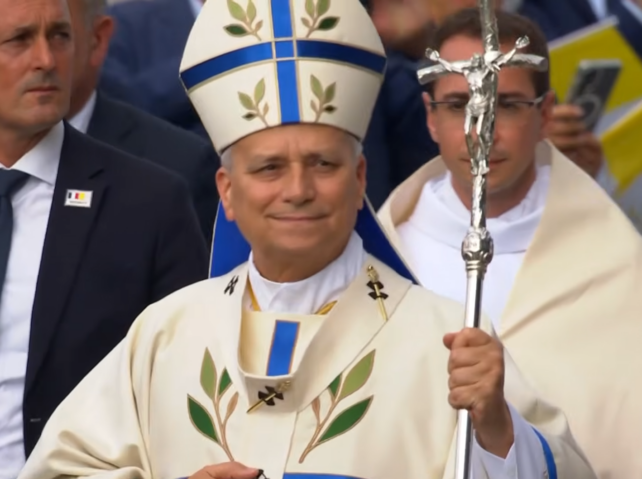
In a landmark display of religious devotion that underscores the Catholic Church’s lasting hold on public life in France, an estimated 800,000 worshippers and pilgrims packed central Lourdes to attend Pope Leo XIV’s open-air mass, CBS News has confirmed. The Saturday service marked the pontiff’s first public mass in the country in nearly 20 years, drawing followers from across France and neighboring European nations to the iconic gathering space. The massive turnout has sparked renewed discussion about the role of faith in a traditionally secular Western nation, at a time when regular weekly church attendance has fallen steadily across most of the continent. While France has maintained a strict legal separation of church and state for more than a century, the sheer scale of the crowd for Pope Leo XIV’s mass offers clear evidence that the Catholic Church remains a powerful cultural and social force in the country, defying broader regional trends of declining religious participation.
分类: world
-
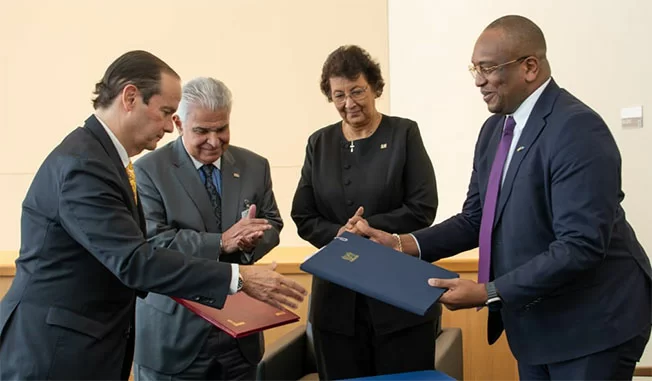
Suriname en Panama bespreken visumvrij reizen en nauwere samenwerking
On the sidelines of the 81st United Nations General Assembly in New York, Suriname President Jennifer Simons and her Panamanian counterpart José Raúl Mulino Quintero held a high-level meeting to advance bilateral relations between the two Caribbean and Central American nations, agreeing to a sweeping agenda of cooperation covering travel facilitation, political dialogue, climate action and economic integration.
Following the discussions, the foreign ministers of both countries formalized one key agreement by signing a Memorandum of Understanding that establishes a permanent structured political consultation mechanism. This new framework will create a regular channel for Suriname and Panama to align their positions on bilateral, regional and multilateral issues, laying a solid institutional foundation for long-term engagement.
Travel liberalization emerged as a top priority on the meeting’s agenda. Suriname has already completed all domestic parliamentary procedures for a visa waiver agreement for holders of diplomatic and service passports, and leaders are working to finalize remaining formalities to extend visa-free access to all ordinary national passport holders from both countries. The ultimate goal of this reform is to remove longstanding barriers to cross-border movement, making travel far more accessible for ordinary citizens of both nations.
Another key topic of discussion was the strategic value of the air route connecting Suriname’s capital Paramaribo and Panama’s capital Panama City. President Simons noted that this connection is far more than a commercial air corridor; it serves as a critical gateway for Suriname to access other markets across North, Central and South America. Suriname aims to leverage this route more effectively to grow bilateral trade, boost tourism, attract foreign investment, expand cargo operations and deepen business-to-business connections between the two countries. Simons added that Panama’s unique position as a global logistics and commercial hub makes it an ideal strategic platform for Suriname to expand its economic and political outreach across Central America and the wider Latin American region.
Climate change cooperation was also a central focus of the talks, as both nations share a unique status as part of a small global group of carbon-negative countries. Currently, Suriname and Panama collaborate on climate action within the G-Zero Alliance alongside Bhutan and Madagascar. Simons called for the alliance to move forward by setting clearer collective priorities and expanding membership to include other like-minded nations committed to ambitious climate action.
“We need to take the next step: identifying our shared priorities within the G-Zero Alliance, reaching out to like-minded partners across all regions to support this initiative, and deliver tangible outcomes,” Simons stated. Beyond internal alliance coordination, Suriname views this partnership as a platform to advocate for a more equitable global climate finance system, one that gives developing nations greater flexibility to pursue economic development while upholding their climate and environmental responsibilities.
Closing the meeting, Simons emphasized that the two nations now have a historic opportunity to translate their already positive diplomatic relations into tangible benefits for their populations. “We currently have the chance to convert our excellent bilateral relations into greater connectivity, stronger trade and investment flows, closer political dialogue, and practical cooperation that delivers real results for our people,” she said, confirming her commitment to working closely with President Mulino to continue deepening the bilateral partnership between Suriname and Panama.
-
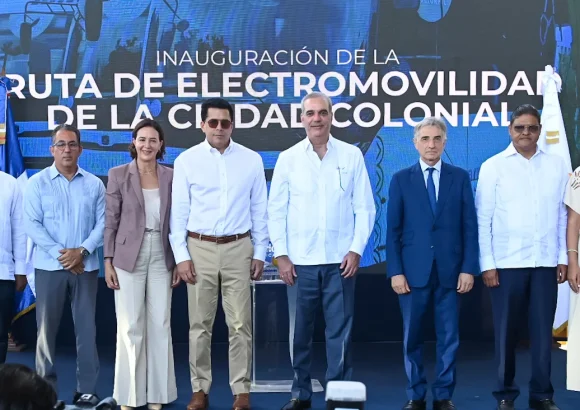
Abinader inaugurates restored Alcázar de Colón Museum and new Electric Route in Colonial City
On a pivotal Monday for cultural preservation and sustainable development in the Dominican Republic, President Luis Abinader officially opened two landmark projects in Santo Domingo’s Colonial City: the fully renovated Alcázar de Colón Museum and the newly launched Colonial City Electromobility Route. These dual initiatives mark a major milestone in the ongoing, multi-partner revitalization of one of the Caribbean’s most historically significant urban districts, bringing together long-term heritage conservation goals with forward-thinking climate-friendly transportation policy.
Funded through a collaborative partnership between the Dominican government, the Inter-American Development Bank (IDB) and the European Union, the projects sit at the intersection of cultural tourism, urban renewal and climate action. During the inauguration ceremony, President Abinader emphasized that protecting the nation’s unique historical legacy is a core national priority, noting that the newly restored museum will function as more than a tourist attraction – it will serve as a dynamic educational space welcoming Dominican citizens, local students and international visitors alike.
Detailed breakdown of the museum restoration project reveals the scale of investment in the historic site. Dominican Republic’s Ministry of Tourism poured RD$100 million into core structural and restoration work, while the IDB contributed an additional US$3 million to develop cutting-edge new exhibits. Beyond the museum itself, the broader revitalization program includes planned and ongoing restoration work for dozens of other historic sites across the Colonial City, including centuries-old churches, civic buildings and underused public spaces.
For the Alcázar de Colón Museum, the renovation was far more than a cosmetic refresh. The work included comprehensive infrastructure sanitation to address longstanding structural risks, targeted archaeological research that uncovered new insights into the site’s centuries-long history, the integration of immersive digital technology to engage modern visitors, and a complete redesign of the museum’s layout and curation to enhance the overall visitor experience.
Alongside the museum reopening, authorities launched the pilot Electromobility Route, a first-of-its-kind sustainable transit system tailored to the unique needs of the Colonial City’s residents and the 1.2 million+ annual visitors that travel to the district each year. The project launched with five fully electric buses, purpose-built charging infrastructure and major upgrades to the transit yard that houses the fleet.
Total investment in the electromobility project totals more than RD$169 million, with RD$71 million contributed by the European Union and RD$98 million coming from the IDB. The 12.4-kilometer route includes 31 stops strategically placed across the district and surrounding neighborhoods: 17 stops are located within the boundaries of the Colonial City to serve major historic sites and residential areas, while 14 additional stops connect the route to other parts of Santo Domingo, improving regional connectivity.
Every bus in the new fleet is designed for universal accessibility, with a 22-passenger capacity, built-in wheelchair ramps and reserved priority seating for people with disabilities, people with reduced mobility and senior citizens. Project organizers project that the route will serve more than 40,000 residents and visitors annually, delivering a wide range of public benefits beyond improved transit access. The shift from fossil fuel-powered buses to electric vehicles is expected to cut local transport emissions, improve neighborhood air quality, reduce noise pollution in the dense historic district, and set a benchmark for energy-efficient public transit across the Caribbean.
The new service will be operated directly by the Dominican state-owned transit company OMSA, with regulatory oversight handled by the national transportation institute INTRANT. In an additional announcement during the inauguration event, Tourism Minister David Collado confirmed that the Ministry of Tourism has already approved plans to acquire five more electric buses to expand the route’s reach and capacity in the near future, responding to projected demand for the service.
Both the museum restoration and the electromobility route are core components of a larger, comprehensive 10-year development program for the Colonial City. The program’s overarching goals focus on three key pillars: restoring the district’s irreplaceable historic cultural spaces, upgrading affordable housing for long-term local residents, and expanding accessible, sustainable mobility options that benefit both the local community and the growing tourism economy.
-
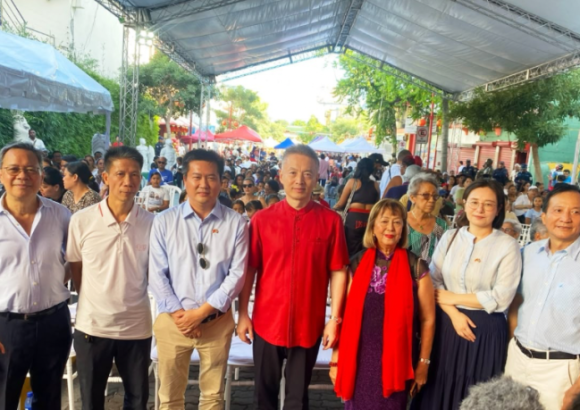
Santo Domingo’s Chinatown hosts Mid-Autumn Festival celebrating Chinese culture
On a recent gathering in the heart of Santo Domingo’s historic Chinatown, hundreds of attendees spanning the local Chinese community, diplomatic officials, local Dominican families, small business owners and non-profit representatives came together to mark the centuries-old traditional Mid-Autumn Festival, turning the annual cultural event into a vibrant celebration of shared history and growing bilateral connection between the Dominican Republic and China.
Organized jointly by two leading local community groups — the Flor Para Todos Foundation and the Chinese Colony Center in the Dominican Republic — the celebration drew high-profile participation, including Chinese Ambassador to the Dominican Republic Chen Luning, leadership from the Fujian General Chamber of Commerce, and delegates from multiple Chinese community associations active across the country.
Leading the opening remarks for the event was Rosa NG, who serves as president of the Flor Para Todos Foundation and is widely recognized as the founding visionary of Santo Domingo’s modern Chinatown. In her address, NG centered the deep roots of Chinese presence in the Dominican Republic, tracing the community’s lineage back more than 160 years to the first wave of immigrants who arrived on Dominican shores.
NG reflected on the origins of the community, noting that the earliest Chinese settlers fled poverty and widespread conflict in their home country to seek new economic opportunity in the Dominican Republic. Over generations, she emphasized, the core values that carried those first immigrants — hard work, mutual solidarity, personal discipline, and a deep commitment to family unity — have remained the foundation of the community’s growth and contribution to Dominican national life.
Unlike closed ethnic enclaves that exist in many global cities, Santo Domingo’s Chinatown has intentionally evolved as a cross-cultural meeting ground for all residents and visitors, NG explained. Today, the bustling corridor stands as a one-of-a-kind multicultural destination where traditional Chinese customs, authentic Asian gastronomy, local Dominican commerce, and cross-cultural public events merge to create a shared public space that welcomes everyone.
This year’s Mid-Autumn Festival embodied that inclusive spirit through a full slate of programming that showcased Chinese cultural heritage for attendees of all backgrounds. The event featured energetic traditional lion and dragon dance performances, live sets of classic Chinese folk music, interactive children’s cultural activities, and a series of art and craft displays that highlighted different regional traditions from across China.
Beyond the celebration of culture, organizers also used the event to highlight the diverse contributions Chinese community organizations have made to broader Dominican society, extending far beyond the business sector. These contributions range from ongoing cultural education initiatives to targeted community assistance programs that provide support to vulnerable Dominican groups regardless of ethnic background.
As a prominent example of the deep culinary and cultural fusion that has developed between the two communities, NG pointed to the widespread popularity of local Chinese-owned eateries known colloquially across the Dominican Republic as “pica pollos” — a beloved local dining staple that blends Chinese cooking techniques with Dominican flavor preferences.
In a nod to the Mid-Autumn Festival’s traditional focus on generosity and shared goodwill, the Fujian General Chamber of Commerce donated hundreds of gifts to local community members, distributed during the event to attendees and families in the surrounding neighborhood. Many of the day’s activities were also designed to strengthen connections between longstanding community members and newer arrivals to the area.
For context, the Mid-Autumn Festival, also widely referred to as the Moon Festival, is one of the most important traditional holidays in Chinese culture, historically centered on family reunions, expressions of gratitude for the year’s harvest, and the sharing of good wishes for health and prosperity among loved ones. In Santo Domingo, the annual celebration has gradually expanded beyond the Chinese community to become a major public event that promotes cross-cultural exchange and deepens people-to-people ties between the Dominican Republic and China.
Looking ahead to future projects, NG used the festival as a platform to announce new community-led plans to revitalize underused public spaces and upgrade aging infrastructure in the neighborhoods surrounding Chinatown. The revitalization project aims to create larger, more accessible public venues to host expanded cultural activities, including future Chinese New Year celebrations that can draw even more attendees from across Santo Domingo.
As the day’s events came to a close, organizers closed the celebration with a unified message of cross-community unity and ongoing cooperation, reaffirming the central role that Santo Domingo’s Chinatown plays as a vital cultural and social hub for both the Chinese community and the broader Santo Domingo public.
-
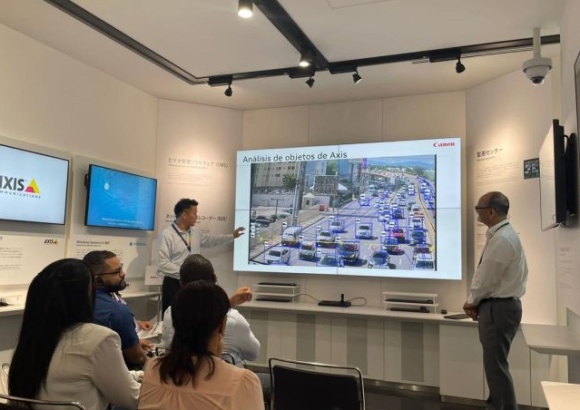
JICA advances projects to improve urban mobility in Greater Santo Domingo
In a push to transform urban transportation across Greater Santo Domingo, the Japan International Cooperation Agency (JICA) has deepened its collaborative ties with local Dominican institutions, centering its work on boosting traffic management capabilities, advancing digital transport innovation, upgrading road infrastructure, and building a transport system that is safer, more efficient, widely accessible, and environmentally sustainable.
The partnership launched in 2025 as a three-year technical cooperation initiative, carried out jointly with the Dominican Republic’s National Institute of Transit and Land Transportation (Intrant), with a core focus on modernizing urban mobility through intelligent transport systems.
One of the most critical pillars of this project is the creation of a comprehensive master plan for intelligent transportation systems (ITS). This strategic framework is designed to unlock the full potential of digital technology and real-time data to streamline day-to-day traffic management and deliver data-backed insights for long-term transportation decision-making. Beyond planning, the initiative includes hands-on capacity building for local technical teams, on-the-ground testing of innovative pilot programs, and the development of interactive digital monitoring dashboards. These tools will enable transport officials to track live traffic conditions, pinpoint bottlenecks, and design targeted interventions to cut down on persistent gridlock across the metropolitan area.
Inclusivity is also a central priority of the partnership. JICA is actively advocating for the integration of universal design principles into all urban mobility planning efforts, a change that will significantly improve access to public and private transport for people living with disabilities and senior residents who have long faced barriers to movement across the city.
The collaboration extends beyond digital traffic solutions to address long-standing gaps in physical infrastructure, with a specific focus on the region’s bridge network. JICA is providing technical and financial support for feasibility studies for proposed new bridge construction projects that are expected to drastically cut congestion by distributing road traffic more evenly across the metropolitan area. Alongside new developments, the agency has also scheduled comprehensive structural assessments for dozens of existing bridges, including several that have been flagged as being in critical structural condition.
These assessment projects will not only evaluate immediate needs for maintenance, structural reinforcement, and seismic retrofitting to improve the infrastructure’s resilience against natural disasters, but also include specialized training for local engineering and infrastructure management teams. This capacity building is designed to equip Dominican professionals with the skills needed to manage and maintain critical transport infrastructure independently over the long term.
Kota Sakaguchi, JICA’s Resident Representative in the Dominican Republic, outlined the core goals of the multifaceted partnership, noting that all initiatives are aligned to cut chronic congestion, elevate road safety standards for all road users, expand accessible transport options for marginalized groups, and strengthen the country’s capacity to manage urban infrastructure. He added that the cooperation goes beyond addressing immediate transport challenges that currently disrupt daily life in Greater Santo Domingo, with a long-term vision of building a more inclusive, climate-resilient metropolitan region that is fully prepared to meet evolving mobility demands in the decades ahead.
-
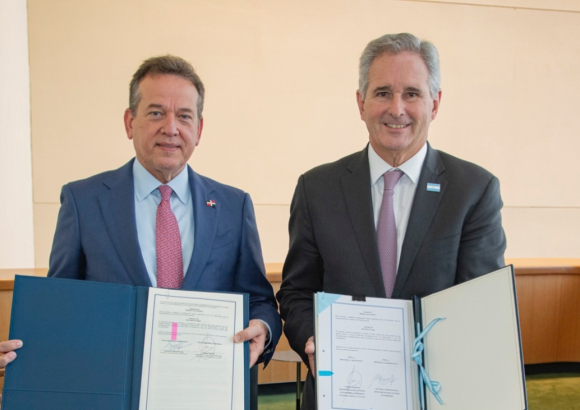
Dominican Republic and Argentina sign agreement to expand air connectivity
Against the backdrop of the 81st United Nations General Assembly High-Level Week, a pivotal new air transport pact between the Dominican Republic and Argentina has been finalized, marking a major step forward in deepening bilateral ties across key economic sectors. The historic deal was signed by Dominican Foreign Minister Víctor “Ito” Bisonó and Pablo Quirno, Argentina’s Minister of Foreign Affairs, International Trade and Worship, on the global stage of New York’s annual UN gathering.
This landmark Air Services Agreement establishes a modern, flexible regulatory framework designed to unlock expanded air connectivity between the two Caribbean and South American nations, opening new avenues for growth in tourism, cross-border trade, and foreign direct investment. Unlike restrictive older aviation pacts, the new framework grants both nations the right to appoint one or multiple air carriers to operate international services between their territories. Carriers will also enjoy broad autonomy to adjust flight frequencies and seating capacity based on real-time market demand, eliminating the rigid regulatory limits that often stifle route development.
The agreement’s scope extends to both regularly scheduled commercial flights and one-off charter operations, while also explicitly permitting codeshare partnerships and other collaborative commercial arrangements between airlines from both countries. It additionally lays out clear, standardized rules covering critical operational areas including aviation safety oversight, consumer protection for airline passengers, ground handling services, and fair competition between carriers, ensuring a level playing field for all operators.
Under the agreed route network structure, airlines designated by either country will have the right to operate between any point in the Dominican Republic and any point in Argentina, with additional provisions allowing carriers to add intermediate stopovers in third countries and continue onward to other destinations beyond both contracting nations, in line with the agreement’s terms.
In a statement following the signing, the Dominican Ministry of Foreign Affairs emphasized that the deal is a core component of the national government’s broader economic diplomacy strategy. By strengthening international air connections and creating new, accessible opportunities for the country’s productive industries, the agreement aligns with the government’s core economic goals: expanding export market access, attracting targeted foreign investment, and growing the Dominican Republic’s key tourism sector.
-
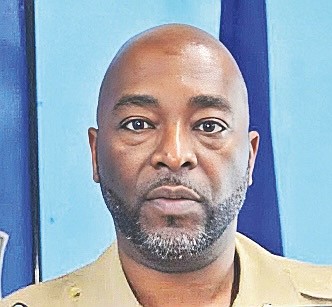
Senior police officer pleads ‘not guilty’ in pike killing
A high-profile case with international ramifications unfolded in the Bahamas Supreme Court on Friday, as a senior police officer pleaded not guilty to the murder of an American utility worker — a shooting that prompted U.S. diplomatic intervention and forced a national review of off-duty officer firearm rules.
Fifty-four-year-old Superintendent Berneil Pinder entered his plea in connection with the March 21 killing of 31-year-old Cody Castillo, a Pike Corporation employee who was shot through the side window of his work truck outside Da Plantation Bar & Grill on West Bay Street, New Providence.
Within days of the incident, the case captured global attention. The U.S. Embassy in the Bahamas quickly issued a public call for prompt justice, and U.S. Ambassador Herschel Walker formally offered FBI investigative support to the Royal Bahamas Police Force. Bahamian Prime Minister Philip “Brave” Davis responded by ordering a full, transparent investigation and launching a review of existing policies governing off-duty officers carrying personal firearms.
Initial police accounts of the shooting claimed that a physical altercation that started inside the bar spilled out into the parking lot, after which a man got into his vehicle and deliberately drove toward Pinder in a threatening manner. Pinder, who was off-duty at the time of the killing just before 6 p.m., reportedly fired his weapon out of fear for his personal safety. However, local newspaper The Tribune later uncovered key details contradicting that narrative, confirming Castillo was never involved in the initial bar fight. He had only driven to the venue to pick up his younger brother, cousin, and another co-worker, all of whom were also employed by Pike.
Castillo was struck in the chest by the bullet fired through the truck’s window. First responders found him lying face-down outside the vehicle in a pool of blood, and he was pronounced dead at the scene. Investigators obtained key evidence from multiple sources, including dash camera footage from Castillo’s work truck and closed-circuit camera footage from nearby businesses, which National Security Minister Wayne Munroe confirmed early in the probe. In a break from standard protocol for police-involved fatalities, which are typically sent directly to the Coroner’s Court, Munroe confirmed investigators treated Castillo’s death as a criminal homicide investigation from the start. Pinder was formally charged with murder just four days after the shooting.
Castillo was a native of Huntsville, Texas, who had been working in the Bahamas on a major project to upgrade New Providence’s electricity grid. At the time of his death, his wife was four months pregnant with the couple’s first child.
The fatal shooting also had tangible economic and project impacts, disrupting the $130 million grid upgrade initiative. In the immediate aftermath of the incident, roughly 40 Pike Corporation employees left New Providence out of safety concerns. Anthony Ferguson, chairman of the Bahamas Grid Company, later confirmed the shooting left many remaining workers deeply fearful, and contributed to a roughly two-month delay to the overall project timeline.
During Friday’s court hearing before Justice Guillimina Archer-Minns, Pinder appeared calm as he entered his not guilty plea. Cassie Bethel is serving as Pinder’s defense counsel, while Eucal Bonaby and Betty Wilson are leading the prosecution. Pinder is scheduled to return to court on October 7 for a formal trial date setting hearing.
-

Three Dominicans detained in Panama over alleged recruitment for Russia-Ukraine war
A transnational criminal recruitment scheme targeting Panamanian nationals for military service alongside Russian forces in the war in Ukraine has led to the provisional detention of three Dominican citizens in Panama, according to official law enforcement updates from the Central American country. The case, which unfolded through an investigation launched by Panama’s Public Prosecutor’s Office, has revealed a coordinated network that used social media platforms to lure vulnerable people with promises of high payments for work that ultimately tied to active conflict.
-
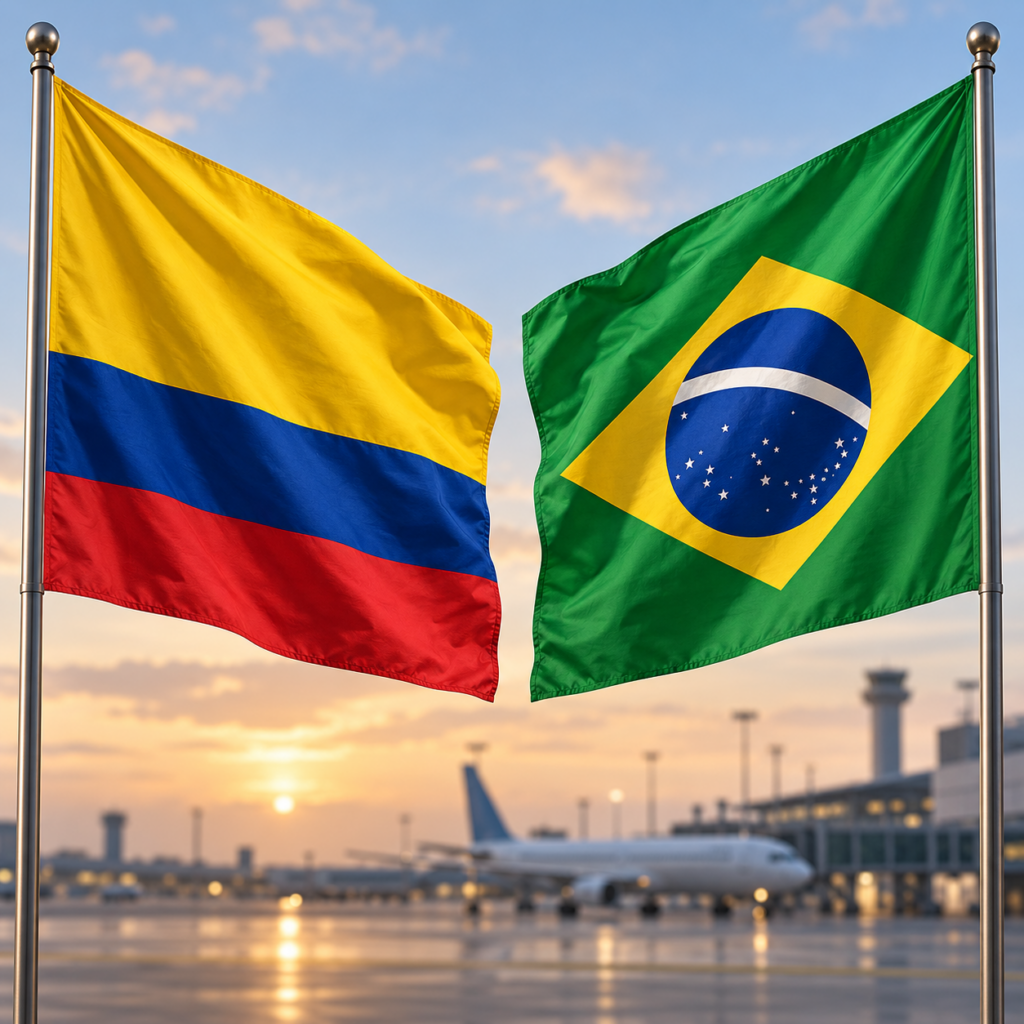
Antigua wants TCN’s from Brazil, Colombia and CARICOM, except Haiti
On a recent public radio broadcast, details of a draft bilateral arrangement between the Caribbean nation of Antigua and Barbuda and the United States emerged, revealing strict nationality limitations that Antigua and Barbuda is pushing to include in the final agreement.
Per the draft operating procedures made public on Saturday, the proposed framework would only permit the United States to put forward for transfer individuals holding nationality from Caribbean Community member states — with the explicit exception of Haiti — as well as citizens of Brazil and Colombia. Any individual from outside this pre-approved list of nationalities would only be eligible for consideration if Antigua and Barbuda grants formal written consent in advance.
Antigua and Barbuda Prime Minister Gaston Browne walked through the revised draft during an appearance on Pointe FM’s *Browne and Browne Show*, where he clarified that his administration had modified the initial terms shared by Washington, and is now waiting for the U.S. side to respond. Browne emphasized that the nationality restrictions are Antigua and Barbuda’s counterproposal, not a finalized clause that has already been agreed to by U.S. negotiators.
Beyond nationality rules, the draft lays out additional key parameters to govern the arrangement. Citizens and nationals of Antigua and Barbuda itself are completely excluded from any transfers covered by the deal. The same exclusion applies to individuals under the age of 18, and people with an established criminal record — the only exception to this criminal history rule is offenses related solely to violations of U.S. immigration law.
Even for candidates that meet all nationality criteria, approval is not guaranteed. Every individual proposed for transfer must hold a valid passport, and have a confirmed, realistic, and fully legal pathway to either return to their country of origin or continue travel to a third destination. Antigua and Barbuda will retain full authority to approve or reject each proposed candidate via written approval before any individual is placed on a flight to the country.
To cap the volume of transfers, the draft also sets a hard limit of seven total transfers across any three-month period, and explicitly states that the government of Antigua and Barbuda faces no requirement to accept a minimum number of transferees under the framework.
During his radio remarks, Browne did not elaborate on why Brazil and Colombia were selected for inclusion on the eligible nationality list, nor did he explain the decision to explicitly exclude Haitian nationals from the eligible group. To date, no transfers have been announced under this revised draft framework, as negotiations between the two countries remain ongoing.
-
Jamaica at the United Nations: Melissa and the meaning of vulnerability
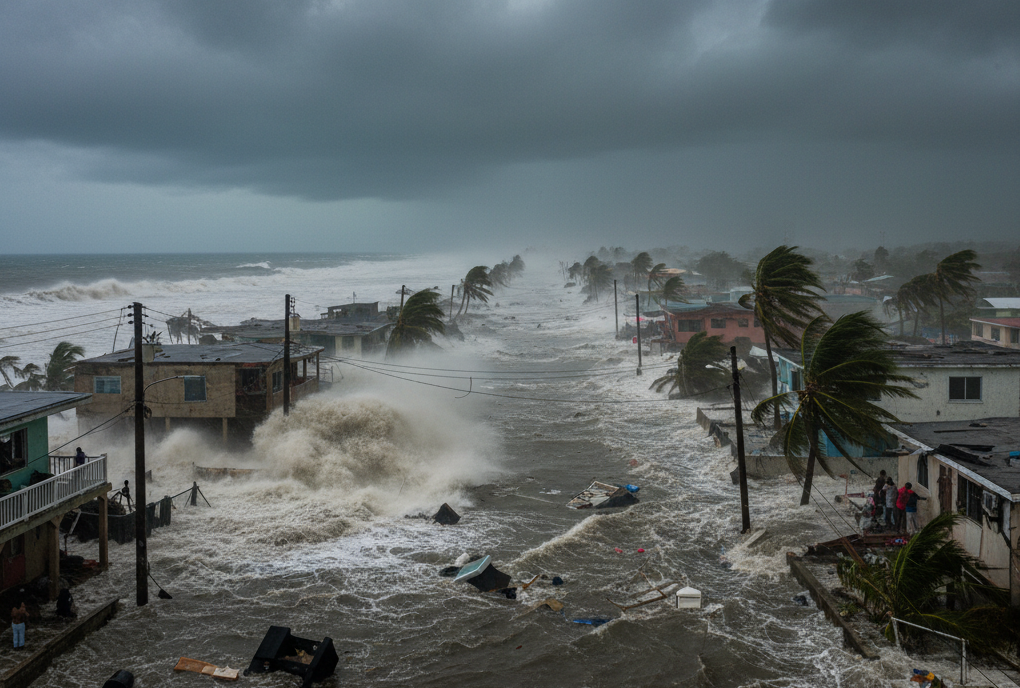
When Jamaica took the floor at the 81st United Nations General Assembly general debate this week, it carried a stark, urgent lesson for the global community: even nations that follow every rule, make hard choices, and build long-term resilience can lose decades of progress in a single catastrophic event. Foreign Affairs and Foreign Trade Minister Senator Kamina Johnson Smith turned the country’s recent trauma from Hurricane Melissa into one of the most compelling arguments for small developing states heard during the week of global diplomacy.
The destruction left by Hurricane Melissa, which made landfall on October 28, 2025, is almost unfathomable for a small open economy. Early assessments peg total damage and economic losses at 56.7% of Jamaica’s entire annual gross domestic product – more than half a year of national output erased in just a few hours of extreme weather. Johnson Smith emphasized that Jamaica had done everything in its power to prepare: years of deliberate fiscal discipline had built robust economic buffers, and the country had proactively invested in catastrophe insurance and catastrophe bonds that unlocked immediate liquidity for emergency response. Even with all this prudent planning, however, the Minister told the Assembly that no amount of national preparation can fully shield a small developing state from a climate disaster of this scale. One extreme weather event, she noted, can unravel decades of hard-won development, no matter how well a nation governs itself.
This devastating experience forms the core of Jamaica’s central policy demand: a fundamental reworking of how the global community measures national vulnerability to climate and economic shocks. Per capita income alone, Johnson Smith argued, cannot capture the structural risks small island developing states face. Crossing an arbitrary income threshold does not make a country any less exposed to catastrophic hurricanes or other climate-driven disasters. Jamaica is once again pushing for global development and concessional finance eligibility to be guided by multidimensional vulnerability indices, and is calling for climate finance that is truly accessible, reasonably priced, and predictable for at-risk nations.
The credibility of Jamaica’s case is strengthened by its own track record of strong governance before the storm. Before Hurricane Melissa hit, the country had cut its national debt from a high of more than 140% of GDP down to just 62%. Unemployment fell to a historic low of 3.4%, and even after the storm, it has only edged up to 3.7%. Credit rating agencies have retained or improved Jamaica’s ratings despite the massive disaster, a testament to the country’s stable economic fundamentals. Johnson Smith stressed that Jamaica is not asking for special treatment or to be let off the hook for its responsibilities – instead, it is demanding an international system that gives responsible, well-governed small states the support and policy space they need to recover and grow after climate shocks.
Johnson Smith’s address also advanced the broader regional agenda of the Caribbean Community (CARICOM) with clear conviction. Jamaica joined regional partners in nominating Carolyn Rodrigues-Birkett of Guyana for the position of UN Secretary-General, framing small states as natural bridge builders whose global influence stems from their credibility, not their geographic or population size. On the ongoing crisis in Haiti, Jamaica called for sustained international support for the Haitian Gang Suppression Force, Haitian National Police, and national armed forces, urging the UN Security Council to renew the Force’s mandate at what Johnson Smith described as a critical crossroads for the country.
On the issue of transnational organized crime, Johnson Smith echoed Prime Minister Andrew Holness’s call for a coordinated global campaign against gang activity, reminding major arms-exporting nations that illicit firearms flooding Caribbean communities do not originate locally. She pushed for stricter international export controls on small arms and mandatory post-delivery verification to crack down on illegal diversion. Domestically, Johnson Smith noted, Jamaica has already made major progress: the country recorded its lowest annual homicide count in more than three decades in 2025, and the Global Peace Index now ranks Jamaica as the most peaceful nation in the Caribbean.
On the long-running campaign for reparations for the transatlantic slave trade, the Minister confirmed that the historic petition delivered to Buckingham Palace has now been referred to the Judicial Committee of the Privy Council. She also confirmed Jamaica’s support for the UN General Assembly resolution introduced by Ghana in March 2025. Johnson Smith defined reparatory justice as encompassing six core pillars: truth, acknowledgement, repair, compensation, development, and reconciliation. Notably, she framed Jamaica’s claim around its own individual petition rather than referencing CARICOM’s established Ten-Point Plan, marking a distinct approach for the country’s advocacy.
On the topic of US-Cuba relations and the decades-long trade embargo, Johnson Smith struck a carefully balanced tone: the delegation expressed clear concern for the hardship faced by the Cuban people, encouraged ongoing domestic reform efforts on the island, and called for diplomatic engagement rather than continued isolation under the blockade.
Sixty-four years after Jamaica gained independence and raised its black, green and gold flag, the country has delivered one of the most actionable and evidence-backed arguments for the upcoming global debate on climate and development finance. As the aftermath of Hurricane Melissa makes clear, vulnerability for small island states is structural, not a consequence of low national income. The next critical step is turning this powerful case made from the UNGA rostrum into tangible change to the international eligibility rules that shape access to critical finance for at-risk nations.