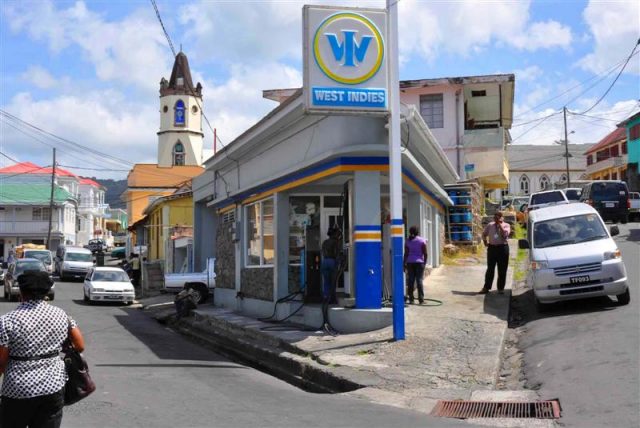
Residents of the Caribbean island nation of Dominica are facing immediate financial strain after government officials announced sharp increases to all petroleum product prices, set to take effect on May 5, 2026. Matthan Walter, the country’s Director of Trade, attributed the dramatic price adjustments to the escalating ongoing conflict between the US, Israel and Iran, which has disrupted global energy supply chains and pushed up crude and refined fuel costs worldwide.
Walter officially outlined the new regulated price points for all major fuel grades in a public statement. Regular gasoline will now sell for $17.98 per unit, while High Sulfur Diesel (HSD) is priced at $19.23, kerosene at $18.21, and Ultra-Low Sulfur Diesel (ULSD) – the most widely used road transport fuel in the country – has reached $20.53. Compared to the last official price adjustment, these jumps represent dramatic percentage increases: 26.7% for gasoline, 33.87% for HSD, 23.33% for kerosene, and a near 39% rise for ULSD.
In his address, Walter stressed that the price surge is not an isolated issue unique to Dominica. The global energy market disruption has pushed up fuel prices across the globe, he noted, with other member states of the Caribbean Community (CARICOM) already reporting similarly elevated costs for the same petroleum products. Walter called on the Dominican public to practice patience as the country collectively works through the economic fallout of the distant geopolitical conflict.
To help consumers offset the impact of higher fuel costs on household budgets, Walter outlined a series of practical steps the public can take to reduce energy consumption and lower overall spending. He recommended that residents adopt carpooling for daily travel, cut back on non-essential trips, and reduce unnecessary electricity use at home – measures that he says will ultimately ease financial pressure on individual households while supporting broader national economic stabilization efforts.
The announcement also addressed growing speculation over potential increases to public bus and taxi fares. Walter reminded transport operators that any fare adjustment must follow official protocol: any request for a rate hike must first be submitted as a formal written request to the national transport board, which holds sole authority to review and approve revised fare pricing for public and private commercial passenger transport. Closing his statement, Walter expressed confidence that with prudent personal decision-making and collective patience, the country can successfully navigate this period of elevated energy costs.