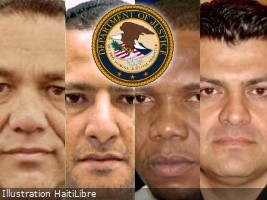
Five years after the high-profile assassination of Haitian President Jovenel Moïse sent shockwaves across the Western Hemisphere, a federal jury in Miami has delivered a guilty verdict for four men charged with coordinating the deadly plot from U.S. soil. The September 2025 conviction closes a key chapter in the sprawling investigation into the July 7, 2021 attack that killed the sitting Haitian leader, wounded then-First Lady Martine Moïse, and exacerbated years of political chaos and instability in the Caribbean nation.
Arcangel Pretel Ortiz, Antonio Intriago, Walter Veintemilla, and James Solages were found guilty on a slate of federal charges, including conspiracy to provide material support resulting in death, conspiracy to kill a foreign official, conspiracy to commit offenses against the United States, and violating federal law by organizing an expedition against a friendly nation. Additional charges applied exclusively to Intriago include a separate conspiracy count, smuggling tactical equipment from the U.S. to Haiti, and submitting false export documentation.
Top U.S. law enforcement officials emphasized that the verdict delivers long-awaited accountability for a plot that used American territory as a launching pad for political violence abroad. “These defendants conspired to replace and ultimately to assassinate Haitian President Jovenel Moïse,” said Assistant Attorney General for National Security John A. Eisenberg. “Using U.S. soil as a staging ground for a violent plot overseas is a grave violation of our laws and, more fundamentally, our sovereignty.”
U.S. Attorney Jason A. Reding Quiñones for the Southern District of Florida echoed that sentiment, noting the plot was driven by personal greed and ambition that destabilized a close U.S. partner. “These defendants pursued power, influence, and profit through violence. They supported a conspiracy that crossed borders, destabilized a friendly nation, and ended with the murder of a sitting president,” he said. “The jury has spoken, and the rule of law has answered.”
Court documents and trial evidence laid bare the full scope of the conspiracy, which began taking shape in early 2021. The four men hatched a plan to violently overthrow Moïse, install a hand-picked replacement, and secure millions of dollars in lucrative government contracts for themselves after the coup. To execute their scheme, they built a cross-border network of co-conspirators across the United States, Colombia, and Haiti, recruiting 22 former Colombian Army soldiers and armed Haitian gang leaders to carry out the attack. To date, eight co-conspirators have already pleaded guilty to their roles in the plot, and six testified for the prosecution during the four defendants’ trial.
Over the three months leading up to the assassination, the group refined multiple plans to kidnap or kill Moïse. An early plot to abduct the president at his sister’s home, drug him, and force his resignation fell through, and a second attempt to kidnap him upon his return from an international trip in mid-June 2021 also collapsed. The group ultimately settled on a direct assault on Moïse’s private residence, ordering their team of Colombian mercenaries to storm the home and kill the president. Black-market weapons and ammunition were secured by co-conspirators inside Haiti ahead of the attack.
On the morning of July 7, 2021, Solages and the team of Colombian mercenaries, backed by local Haitian allies, carried out the attack. A specialized squad of former Colombian special forces operators dubbed the “Delta Team” led the assault, breaking into the residence and fatally shooting Moïse in his bedroom, while seriously wounding Martine Moïse. Ballistics evidence presented at trial matched bullets recovered from the president’s autopsy and the first lady’s surgery to a rifle used by members of the Delta Team. Thousands of pages of digital communications between the co-conspirators also confirmed the four defendants spent months coordinating and refining their plot.
Each defendant played a distinct, key role in the conspiracy: Veintemilla, the group’s financier, funded the plot with a $175,000 loan raised through fraudulent U.S. pandemic relief funds, including Paycheck Protection Program (PPP) and Economic Injury Disaster Loan (EIDL) money that was funneled through a co-conspirator’s bank account. Within hours of the assassination, Veintemilla contacted a co-conspirator and bragged, “the rat (President Moïse) is in the box.”
Pretel Ortiz, who went by the alias “Colonel Gabriel” and regularly wore counterfeit U.S. military uniforms and insignia, oversaw the plot’s tactical planning and coordinated directly with the Colombian mercenary team. Hours before the attack, he told his co-defendants, “I put my men on the ground and we are still fighting to reach the objective.”
Intriago, Pretel Ortiz’s business partner, managed day-to-day logistics for the plot, including paying co-conspirators and sourcing equipment and supplies. In June 2021, he smuggled bulletproof vests, radios, flashlights, and tactical goggles from Miami to Haiti for the mercenaries, and traveled to Haiti later that month to meet with the group’s local allies. On the eve of the assassination, he messaged co-conspirators, “We finally got the tools to do the work.”
Solages, the group’s on-the-ground liaison in Haiti, made repeated trips between South Florida and Haiti to coordinate with local gang leaders, source weapons and ammunition, and conduct surveillance on Moïse’s residence. During the July 7 attack, he accompanied the mercenary team and gave orders to kill every person inside the residence, reportedly saying they should eliminate “the dog, the cat, and parrot” to leave no witnesses.
All four men now face the possibility of life in federal prison. Federal Judge Jacqueline Becerra of the Southern District of Florida has scheduled sentencing for the end of summer 2026. The case was investigated by FBI Miami and Homeland Security Investigations Miami, with support from the U.S. Department of State, the Bureau of Alcohol, Tobacco, Firearms and Explosives, the U.S. Department of Commerce’s Bureau of Industry and Security, and the Defense Department Criminal Investigative Service. A team of prosecutors from the Southern District of Florida and the Justice Department’s National Security Division led the trial.