分类: world

  • Trinidad says oil spill adequately dealt with, despite concerns from Venezuela

    Trinidad says oil spill adequately dealt with, despite concerns from Venezuela

    PORT OF SPAIN, TRINIDAD – A cross-border diplomatic dispute has broken out over an early May oil spill in the Gulf of Paria, with Venezuelan authorities decrying severe regional environmental damage and Trinidad and Tobago’s government insisting the incident was small, contained quickly, and properly addressed.

    The spill was first detected on May 1 at Trinidad and Tobago’s Main offshore oil field. According to the nation’s Ministry of Energy and Energy Industries (MEEI), crews halted the leak the same day it was discovered, completed repairs, and restored full operations to the site by May 2. Heritage Petroleum Company Limited, the operator of the field, immediately notified local regulators, the coast guard, and the national Environmental Management Authority after identifying the spill, MEEI explained. After receiving official approval, chemical dispersants were deployed between six and eight nautical miles from the shared Trinidad-Venezuela border, a proactive step based on early spill trajectory modeling that showed untreated oil could cross into Venezuelan waters.

    MEEI’s assessment confirms that the dispersant successfully broke down the hydrocarbon, with follow-up inspections using drone surveillance and surface vessels finding no visible trace of oil remaining on the water. Officials estimate the total spill volume at just 10 barrels, and note that daily monitoring of all offshore operations has not uncovered any additional leaks. The spill, Energy Minister Dr. Roodal Moonilal emphasized, was a minor event contained entirely within 48 hours with no major environmental impact. Moonilal added that the leak was tied to decades of neglected, aging oil infrastructure left behind by the former People’s National Movement (PNM) government, saying deteriorated pipelines have increased the overall risk of such incidents.

    However, the incident has sparked international pushback from neighboring Venezuela, which says the spill has caused irreversible harm to coastal ecosystems in its Sucre and Delta Amacuro states. In a weekend statement, Venezuelan authorities reported that official environmental assessments found severe threats to the region’s mangroves, wetlands, marine wildlife, and hydrobiological resources critical to both local food security and regional ecological balance. The government added that the spill has already harmed vulnerable species and high-sensitivity ecosystems, prompting it to direct its foreign ministry to formally request full details on the incident, a copy of Trinidad and Tobago’s mitigation and containment plan, and immediate compliance with international environmental law obligations to provide reparations for the documented damage.

    Domestically, the Trinidad and Tobago government is also facing pressure from opposition figures. Former energy minister Stuart Young of the PNM is calling for a full formal investigation, alleging that both Heritage Petroleum and the current administration deliberately covered up what he calls a major offshore spill, hiding critical information from the public for weeks. “It is clear that both Heritage and the Government sought to cover up and hide a major offshore oil spill, which is a significant environmental event,” Young said, demanding an inquiry to identify which officials were responsible for suppressing information about the May 1 incident.

    Despite the disagreements, MEEI has reaffirmed its commitment to transparency and cross-border cooperation. The ministry says it stands ready to share all requested additional information with local and international authorities, and is open to collaborating with Venezuelan counterparts to develop a formal joint framework for responding to future transboundary oil spill incidents along their shared maritime border. “The Ministry of Energy and Energy Industries remains committed to ensuring that all of its stakeholders operate in a manner which advances the Government of Trinidad and Tobago’s commitment to protection of the environment in keeping with domestic law and international obligations,” the ministry’s statement concluded.

  • Peace plea

    Peace plea

    One of the Caribbean’s most seasoned elder statesmen has publicly urged both Guyana and Venezuela to respect the International Court of Justice’s upcoming verdict on their long-running territorial dispute over the resource-rich Essequibo region, a decades-long standoff that has twice escalated to the brink of armed conflict in recent years.

    Dr. Ralph Gonsalves, the former prime minister of St. Vincent and the Grenadines who already stepped in to de-escalate tensions between the two South American nations in 2023, shared his position during a public appearance at the Jamaica Observer Press Club’s sitting last week. It was Gonsalves who brokered a landmark face-to-face meeting between then-Venezuelan President Nicolas Maduro and Guyanese President Irfaan Ali in December 2023, when tensions over the disputed border territory spiked sharply after a series of provocative moves from Caracas.

    “I am hopeful that whatever the result of the ICJ, that both sides will abide by the determination of the ICJ. But even after there is a determination by the ICJ I would expect that there would be discussions between Venezuela and Guyana for matters which arise out of the decision,” Gonsalves told the outlet’s editors and reporters. He added that regardless of the court’s final ruling, open dialogue will remain critical to preventing further unrest: “I don’t know what all the dimensions of the ruling of the ICJ would be but I can envisage that if there is any matter which is left undecided, that it may well still call for conversations.” Gonsalves also noted that the Caribbean Community (Caricom) broadly shares the goal of a peaceful, rule-based resolution, and confirmed he stands ready to resume his role as a neutral intermediary between the two governments if called upon. “What I want to see is peace between two important neighbours, and what I want to see is that justice is determined in accordance with the principles of international law adjudicated,” he said.

    Last Monday marked the official start of a week of public hearings at the ICJ, the United Nations’ highest judicial body, over the decades-long territorial row. In his opening address to the court’s panel of judges, Guyana’s Foreign Minister Hugh Hilton Todd framed the case as an existential issue for the small Caribbean nation, noting that more than 70% of Guyana’s current sovereign territory is at stake in the dispute. “For the Guyanese people, it is tragic even to think about having our country dismembered by stripping from us a vast majority of our land, together with its people, its history, its traditions and customs, its resources and precious ecology,” Todd told the court.

    Venezuela’s lead representative to the hearings, Samuel Reinaldo Moncada Acosta, rejected Guyana’s framing outright during his address Wednesday. “The characterisation by Guyana of an alleged threat to its territorial integrity or to its sovereign territory constitutes a flagrant misinterpretation, a deliberately misleading presentation of both facts and law,” Acosta told the court. He reaffirmed Caracas’ long-held position that Venezuela’s historical claims to the Essequibo region “are inalienable,” and stressed that the South American nation remains committed to defending its claims through peaceful means. Acosta also reiterated Venezuela’s longstanding refusal to recognize the ICJ’s jurisdiction over the case, a position Caracas has held since proceedings began.

    The origins of the dispute stretch back to the 1890s, when a border was drawn between the two territories under British colonial rule, when Guyana was still a British dependency. Currently, Guyana administers the 62,000-square-mile Essequibo region, which makes up more than two-thirds of Guyana’s total territory and is home to roughly 125,000 of the country’s 800,000 residents. But Venezuela has claimed the entire region, which stretches along the western bank of the Essequibo River, since the early 20th century. Caracas argues the 1899 border agreement is invalid, and maintains the true border should follow the Essequibo River further east, aligned with the territorial boundaries that existed under Spanish colonial rule in 1777, as outlined in a 1966 agreement signed shortly before Guyana gained full independence. The dispute intensified dramatically a decade ago, when energy giant ExxonMobil discovered massive offshore oil deposits in the region, catapulting Guyana to hold the largest crude oil reserves per capita in the world.

    Tensions spiked again in 2023, when Maduro made a series of public and political moves to assert Venezuelan claims over the region, leading Gonsalves to broker the emergency Argyle International Airport summit in St. Vincent between Maduro and Ali. The two leaders signed the historic Argyle Declaration following the summit, in which they formally committed to avoiding any direct or indirect use of military force in the dispute. The truce held into 2024, but tensions flared again earlier this year when Venezuela’s National Assembly approved legislation to formally designate Essequibo as Venezuela’s 24th federal state, a move that was immediately rejected as illegal and invalid by Guyana and the wider international community. Caracas followed that move by announcing it would include the new “state” in upcoming gubernatorial elections scheduled for May 25, 2025, prompting Georgetown to formally request immediate intervention from the ICJ to block the move. While the ICJ’s rulings are legally binding on all parties to the dispute, the court holds no independent enforcement power to compel compliance from member states.

  • Suriname en Indonesië breiden samenwerking uit met training in voedselverwerking

    Suriname en Indonesië breiden samenwerking uit met training in voedselverwerking

    In a diplomatic move aimed at deepening bilateral agricultural cooperation, the governments of Suriname and Indonesia formalized a new partnership agreement on Friday, establishing a targeted training initiative focused on food processing and agro-industry development. The accord marks a tangible step forward in advancing shared goals of sustainable agricultural growth and economic diversification for both nations, with a specific focus on building local capacity in the Caribbean region.

    The signing ceremony brought together senior representatives from both sides. On behalf of Suriname’s Ministry of Foreign Affairs, International Trade and Cooperation (BIS), acting director of Foreign Affairs Luziano Truideman put pen to paper on the agreement. Indonesian ambassador to Suriname Agus Priono signed for the Indonesian side, completing the formalization of the partnership. A commemorative photo of the two officials following the signing was captured by BIS photographers.

    Organized by Indonesia’s official development agency Indonesian AID/LDKPI, the training program is tailored to build expertise in the processing and product diversification of mango and breadfruit, two staple tropical agricultural crops relevant across Caribbean nations. The two-week intensive program is scheduled to run from May 31 to June 14, 2026, hosted at the Politeknik ATI Padang based in West Sumatra, Indonesia. Suriname will send two delegates to participate in the full program, gaining hands-on skills and technical knowledge to bring back to their domestic agricultural sector.

    According to a statement from Suriname’s BIS, the new agreement represents a meaningful deepening of longstanding bilateral cooperation between Suriname and Indonesia across three core priority areas: agricultural development, food processing, and institutional capacity building.

    For Suriname specifically, the partnership opens a valuable new opportunity to acquire advanced technical knowledge and industry expertise in agro-processing and value addition for locally produced agricultural goods. Suriname’s domestic policy priorities place strong emphasis on expanding sustainable food production and broadening the country’s economic base beyond traditional sectors, and participating officials noted that this training initiative aligns perfectly with those national development goals.

    Beyond structured classroom and practical training sessions, the program will also include an official working visit to Indonesia’s capital Jakarta. During the visit, participating delegates will gain on-the-ground practical experience, and engage in direct knowledge exchange with leading Indonesian research institutions and industry experts specializing in food processing and agro-industrial development.

  • Surinamer en Guyanees opgepakt met ruim 45 kilo cocaïne en vuurwapen

    Surinamer en Guyanees opgepakt met ruim 45 kilo cocaïne en vuurwapen

    In a major anti-narcotics operation carried out in Guyana on Friday, law enforcement officers from the country’s Customs Anti-Narcotics Unit (CANU) have seized more than 45 kilograms of cocaine and an unlicensed submachine gun, arresting two men – one Surinamese national and one Guyanese national – in connection with the international drug trafficking plot.

    The raid targeted a residential property in Springlands, a town located in the Corentyne region of eastern Guyana, along the country’s border with Suriname. According to official statements and local media reports, CANU agents launched the operation after receiving credible intelligence about illegal drug activity at the address. When officers arrived at the scene, they encountered the two suspects in the property’s yard, standing near two unmarked brown cardboard boxes.

    A subsequent search of the boxes uncovered 40 brick-shaped packages wrapped for smuggling. When law enforcement opened one of the packages for field testing, they discovered a white powdery substance that returned a positive result for cocaine. The entire seizure weighed approximately 45.6 kilograms. CANU officials estimate that this cocaine shipment has an approximate street value of 1.575 million euros, equal to nearly 1.9 million U.S. dollars, if it had reached illegal markets in Europe. The seizure was originally reported by local Guyanese outlet Demerara Waves, with additional details confirmed by Suriname-based media Starnieuws.

    A follow-up search of the entire residential property turned up an illegal firearm: a black Uzi submachine gun, along with a stock of ammunition. Neither suspect was able to produce a valid license for the weapon, a requirement under Guyanese gun control laws.

    Preliminary investigations into the smuggling network have outlined the alleged structure of the operation. Investigators say the 35-year-old Surinamese suspect, identified as Amrishkoemar Mathoera from Nickerie, a Surinamese district on the shared border with Guyana, transported the cocaine shipment across the border into Guyana. The 32-year-old Guyanese suspect, named Ravindra Sanakumar, received the drugs and stored them at his Springlands residence ahead of onward shipment to Europe, according to initial findings.

    Following their arrest, both suspects were transported to CANU headquarters for processing. The entire cocaine shipment, collected drug evidence samples, and the unlicensed firearm have been confiscated as evidence for the ongoing investigation.

    In a statement following the operation, CANU emphasized that this seizure is part of the agency’s ongoing, sustained campaign to disrupt transnational drug trafficking and crack down on the illicit arms trade in the country. The agency noted that actionable intelligence gathering and cross-border regional cooperation remain critical tools to protect Guyana’s borders and preserve the country’s national security, as criminal networks continue to use South American border territories as transit routes for cocaine destined for European consumer markets.

  • Investigation launched into alleged oil spill reported by Venezuela

    Investigation launched into alleged oil spill reported by Venezuela

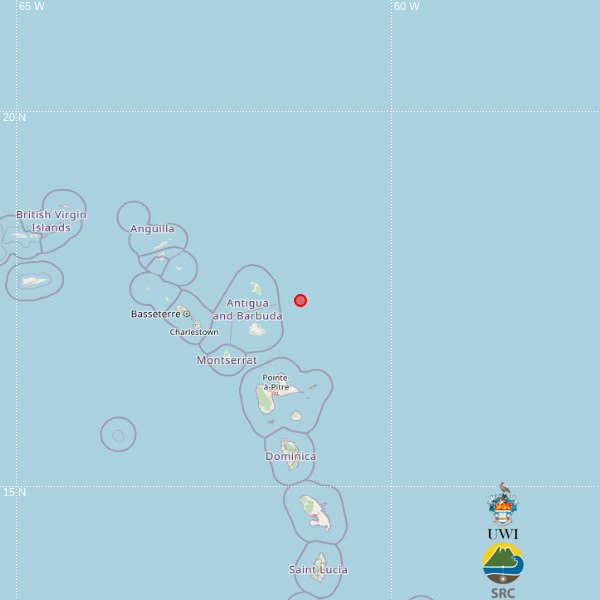
    A cross-border environmental dispute has emerged between Venezuela and Trinidad and Tobago after Caracas accused Port of Spain of being the source of a major oil spill that has inflicted widespread harm to coastal ecosystems and communities in eastern Venezuela.

    In an official communiqué released Wednesday evening, Venezuela’s interim government under Acting President Delcy Rodríguez publicly raised alarm with the global community over the incident. The statement pinned the origin of the spill on the Republic of Trinidad and Tobago, noting that contamination has already spread across the Gulf of Paria and the shorelines of Venezuela’s Sucre and Delta Amacuro states.

    Preliminary technical assessments conducted by Venezuelan agencies have confirmed that the spill has left measurable damage across multiple key zones: open marine habitats, public coastlines, ecologically sensitive natural areas, and the fishing communities that form the backbone of the local regional economy. According to the communiqué, experts have documented severe threats to the region’s mangrove forests, coastal wetlands, native marine wildlife, and critical hydrobiological resources that underpin both local food security and the broader ecological balance of the Gulf of Paria. Records also confirm harm to vulnerable native species and ecosystems categorized as exceptionally sensitive to disruption.

    Following the detection of the spill, the Venezuelan government has issued a formal set of demands and next steps. Caracas has instructed its Ministry of Foreign Affairs to immediately launch a formal request for full access to all relevant details about the incident from Trinidad and Tobago, alongside a comprehensive copy of Port of Spain’s containment and mitigation action plan. The communiqué also emphasized that Venezuela demands Trinidad and Tobago uphold all binding obligations under international environmental law, and move forward urgently to implement reparations measures for the damage already inflicted by the spill.

    “ The Government of the Bolivarian Republic of Venezuela will continue to deploy all necessary actions to protect the affected ecosystems and safeguard the impacted communities,” the statement concluded.

    Responding to requests for comment from local outlet Trinidad Express, Trinidad and Tobago’s Energy Minister Dr. Roodal Moonilal confirmed that a formal investigation into the claims is already underway. Moonilal stated that Heritage Petroleum, the state-owned energy company of Trinidad and Tobago, has launched its own internal inquiries into the reports, and that additional details will be released to the public once preliminary findings are compiled.

  • The PM in Rome is launching a new dynamic of cooperation for the recovery of Haiti

    The PM in Rome is launching a new dynamic of cooperation for the recovery of Haiti

    In a diplomatic gathering held in Rome on Friday, May 8, 2026, Haitian Prime Minister Alix Didier Fils-Aimé led high-stake working discussions with senior representatives from the International Fund for Agricultural Development (IFAD) and a coalition of global development partners, opening a new chapter of coordinated international action to advance Haiti’s long-awaited recovery across multiple critical sectors.

    At the core of the talks were four foundational national priorities that the Haitian administration has identified as make-or-break for the country’s stability and growth: rural development, public security, institutional governance, and broad economic revitalization. Prime Minister Fils-Aimé used the platform to reaffirm his government’s unwavering commitment to scaling up targeted investments in Haiti’s rural regions, laying out a clear vision that links these investments to three core national goals: boosting domestic agricultural production, generating much-needed formal employment for Haitian citizens, and strengthening the country’s long-term food sovereignty to reduce reliance on uncertain international imports.

    A key policy priority highlighted by the prime minister was the urgent need to reopen the country’s major arterial road networks. He stressed that functional, accessible transportation corridors are a strategic prerequisite to connecting smallholder producers to domestic and regional consumer markets, laying the groundwork for a broader resumption of halted economic activity across the country. In addition to rural and economic priorities, discussions addressed institutional governance challenges, with participants agreeing on the importance of maintaining a robust, effective state presence in the capital Port-au-Prince while continuing to roll out development projects in provincial departments across Haiti.

    Fils-Aimé also used the meeting to outline ongoing institutional reforms the Haitian government has undertaken in the justice sector, particularly in the fight against systemic impunity. Among the key upcoming initiatives he detailed is the establishment of new specialized judicial mechanisms designed to investigate and prosecute two of the country’s most damaging challenges: large-scale financial crimes and mass atrocities that have long eroded public trust in state institutions.

    In response to the policy framework presented by Haitian authorities, attending international partners voiced unanimous support for the administration’s recovery guidelines. The global coalition, led by IFAD, reaffirmed their long-term commitment to aligning their support with Haiti’s national priorities, with a specific focus on advancing inclusive rural development, building the country’s environmental resilience to climate shocks, and catalyzing new productive investments that drive shared economic growth.

    The meeting marks a critical milestone in Haiti’s ongoing efforts to rebuild stability after years of political and humanitarian upheaval, bringing together national leadership and global stakeholders around a shared, coordinated agenda for sustainable recovery.

  • FLASH – Historic meeting between Haiti’s PM Fils Aimé and Pope Leo XIV

    FLASH – Historic meeting between Haiti’s PM Fils Aimé and Pope Leo XIV

    In a landmark diplomatic and faith-based gathering held on May 9, 2026, Haitian Prime Minister Alix Didier Fils-Aimé took part in a historic audience with Pope Leo XIV at the Vatican, marking a high-profile moment to draw global attention to Haiti’s ongoing crises. The meeting marked the first stop on Fils-Aimé’s diplomatic visit to the Holy See, ahead of separate talks the prime minister held later with senior Vatican officials: Cardinal Pietro Parolin, Vatican Secretary of State, and Archbishop Paul Richard Gallagher, Secretary for Relations with States and International Organizations.

    During the closed-door discussion between the Pope and the Haitian prime minister, both leaders expressed mutual satisfaction with the longstanding positive ties between the Holy See and the Caribbean nation. Attendees also underscored the outsized, unique role the Catholic Church has played in Haiti throughout its current period of widespread political instability and humanitarian upheaval. The two dignitaries delved into the most pressing challenges facing the country, covering its fractured socio-political landscape, ongoing humanitarian crises, systemic migration pressures, and spiraling security conditions. They also echoed the critical need for coordinated support from the international community to help Haiti navigate its current difficulties.

    In a symbolic gesture of national pride amid struggle, Fils-Aimé presented Pope Leo XIV with an official jersey from Haiti’s national men’s football team. The team secured its spot in the 2026 FIFA World Cup finals against steep odds, a achievement that has stood as a rare unifying moment for the crisis-battered nation.

    Later the same day, at 4:00 p.m. local time, Fils-Aimé attended a special Mass for Peace in Haiti, celebrated at the Basilica of Saint Mary Major by Cardinal Parolin. The service drew a distinguished audience including senior Vatican officials, members of the global diplomatic corps accredited to the Holy See, and dozens of members of Haiti’s diaspora community based in Italy. The entire Mass was dedicated to prayer for peace, lasting stability, and national reconciliation across Haiti.

    Cardinal Parolin’s homily centered on the interconnected themes of hope, national reconciliation, and global solidarity with the Haitian people. He urged Haitians at home and abroad to commit to a “patient process of building justice and dialogue,” emphasizing that sustainable peace can only emerge from a sincere commitment to reconciliation across all segments of Haitian society. The cardinal voiced the Catholic Church’s deep concern over the widespread human suffering caused by ongoing gang violence, specifically calling out the crises of mass displacement and widespread malnutrition that have left millions vulnerable.

    Parolin reiterated that international partners must step up their “necessary contribution” and mobilize greater support for Haiti, stressing that the nation cannot be abandoned to face its security and humanitarian challenges alone. He issued a clear call for a “laying of the guns” by all armed factions, and reaffirmed that the Catholic Church remains a “leaven of peace” and an unwavering source of support for Haiti throughout its current transitional period.

    Following the conclusion of the Mass, Prime Minister Fils-Aimé addressed the gathered crowd to thank the Holy See for organizing the prayer service dedicated to his country. He reaffirmed the Haitian government’s core commitments: restoring national security, strengthening fractured national cohesion, and creating the conditions for a lasting return to institutional stability, most notably through the preparation of inclusive, democratic national elections.

    Fils-Aimé also highlighted the critical importance of interreligious dialogue in uniting the country, and recognized the central role the Catholic Church already plays in addressing Haiti’s most pressing social needs. He further acknowledged the outsized contribution that Haiti’s global diaspora has made and continues to make to national reconstruction efforts.

    In closing, the prime minister repeated his call for expanded support from the international community, and announced that Haiti is pushing for an international solidarity conference focused specifically on addressing the nation’s multiple crises. He expressed his hope that the Vatican gathering would help rekindle a sense of hope and unity among the Haitian people, even amid their most difficult trials.

  • OP-ED: The global epidemic of violence in an age of impunity

    OP-ED: The global epidemic of violence in an age of impunity

    In an authoritative analysis published by Dr. Alon Ben-Meir, President of the Institute for Humanitarian Conflict Resolution, the modern world faces an unprecedented escalation of systemic violence that has shifted from an extraordinary anomaly to a normalized daily reality. Data compiled by the International Institute for Strategic Studies underscores the severity of this crisis: more than 180,000 violent events have been documented globally, and the number of active armed conflicts currently stands at over 130—more than double the count recorded just 15 years ago. This pervasive spread of conflict inflicts catastrophic damage beyond immediate battlefield casualties: critical civilian infrastructure is destroyed, long-standing social bonds are torn apart, and the dehumanization of enemy groups has become an accepted political tactic. Disproportionate harm falls on the most vulnerable populations: hundreds of millions of women and children live within range of active armed clashes, facing not only the direct threat of bullets and bombs, but also secondary devastation including widespread hunger, preventable disease, and soaring rates of gender-based violence that leave millions dead and countless more with lifelong psychological trauma. Despite the scale of this crisis, Dr. Ben-Meir argues that the United Nations system and the world’s leading democratic powers are stuck in dangerous paralysis. Gridlocked by Security Council veto power, crippled by intensifying geopolitical rivalries, and reduced to issuing hollow, unenforceable declarations, global bodies offer only symbolic gestures of concern rather than the coordinated, enforceable accountability that this growing plague of violence desperately demands. The analysis frames the global escalation of violence as a structural crisis, not a random deviation from global order—a crisis that lays bare the profound failure of international institutions and the normalization of human suffering across political, economic, and societal spheres. The proliferation of conflict is not merely a numerical increase in armed confrontations, but a total breakdown of the global mechanisms designed to constrain aggression, turning dehumanization into a routine tool of political power. To unpack this multi-layered crisis, the analysis examines root causes across six interconnected dimensions, drawing on foundational insights from leading political and social philosophers. First, from a philosophical perspective, violence is revealed as a symptom of collapsed legitimate political authority, not a demonstration of state strength. Citing Hannah Arendt’s 1970 work *On Violence*, the analysis echoes Arendt’s core argument: “Power and violence are opposites; where the one rules absolutely, the other is absent. Violence appears where power is in jeopardy, but left to its own course, it ends in power’s disappearance.” Today’s spreading conflicts directly reflect this dynamic: they do not signal strong state power, but widespread institutional failure, where violence substitutes for the popular consent and legitimacy that governing bodies can no longer command. When political dialogue is exhausted and no legitimate power structure exists to resolve disputes, violence becomes the default recourse. Second, economic disenfranchisement acts as a critical accelerant of modern violence, fueled by resource competition, exploitative resource extraction, and systemic global inequality. Drawing on Slavoj Žižek’s concept of systemic violence, the analysis highlights that the most insidious form of modern violence is not the overt brutality of individual actors, but the anonymous, objective structural violence embedded in global capitalist systems. Greed-driven extraction of natural resources—from blood diamonds in Sierra Leone to oil in Venezuela and conflict cobalt in the Democratic Republic of the Congo—directly finances armed rebellions, turning prolonged conflict into a profitable enterprise for rogue actors. Beyond extractive industries, systemic economic deprivation, geoeconomic confrontation waged through weaponized tariffs and sanctions, and global commodity price shocks all directly shape military capabilities and the outcomes of conflicts. Third, the analysis examines the political conditions that enable violence to flourish. Political violence rarely emerges spontaneously from conflicting interests; it is a deliberate choice to pursue goals through coercion rather than negotiation. The paralysis of the UN Security Council and weakening democratic institutions align with Arendt’s description of bureaucratic tyranny: “In a fully developed bureaucracy, there is nobody left with whom one can argue, to whom one can present grievances, on whom the pressures of power can be exerted. … everybody is deprived of political freedom, of the power to act… where we are all equally powerless, we have a tyranny without a tyrant.” This dynamic creates a structural void in global accountability: veto power and geopolitical rivalry allow violence to spread unchecked, while political fragility and weakened institutions in countries such as Syria and Myanmar leave societies vulnerable to total breakdown, radicalization, and violent dissent. Fourth, deep societal fragmentation creates conditions where violence becomes normalized through growing inequality and the erosion of social cohesion. Centuries after Thomas Hobbes described the “solitary, poor, nasty, brutish, and short” life of humans in a pre-political state of nature, his bleak assessment remains relevant for modern communities where governance has collapsed and fear dominates daily life—conditions that currently affect millions of people living near active conflict zones. When social norms accept violence as a legitimate way to resolve disputes, combined with deep economic inequalities and limited opportunities for community participation, aggression is allowed to flourish. This environment normalizes dehumanization, creating recurring cycles of brutality fueled by gender-based violence, ethnic tensions, and unaddressed historical grievances, visible in regions from Nigeria to South Africa. Fifth, state-level actions and complicity amplify systemic violence. Governments that fail to address ethnic marginalization, resource competition, and establish functional governance create fertile ground for prolonged conflict. Walter Benjamin’s 1940 observation that “There is no document of civilization which is not at the same time a document of barbarism” underscores how national institutions can perpetuate violence through their foundational exclusionary structures. When governments refuse to recognize and address destabilizing inequities such as political, religious, or ethnic marginalization, societies become trapped in cycles of civil and international conflict. In extreme cases, rulers weaponize state apparatus to carry out totalitarian mobilization of violence, eliminating all space for political dissent and resistance. Finally, the instrumentalization of religion by political actors acts as a powerful catalyst for violence. When faith is stripped of its ethical core and co-opted to advance political goals, it becomes a tool to sanctify exclusion and legitimize brutality. Sectarian divides across the Middle East, South Asia, and parts of Africa turn collective identity into a battlefield, where compromise is labeled heresy and the annihilation of opposing groups is framed as a moral duty. As René Girard observed, “Religion shelters us from violence just as violence seeks shelter in religion.” When faith is manipulated to justify political power or historical grievance—seen in regions including India, Israel, and Iraq—it no longer restrains violence, but instead consecrates it, deepening cycles of retribution and turning conflicts into existential struggles that cannot be resolved through negotiation. The convergence of these six interconnected dimensions explains why violence has become a baseline condition of modern life, rather than an exceptional deviation from order. While Dr. Ben-Meir acknowledges that reversing this crisis is an extraordinarily difficult challenge, he outlines four concrete actionable measures that global actors can pursue to de-escalate global violence, emphasizing that grassroots public pressure is the essential driving force for change. Sustained popular protest, continuous grassroots advocacy, and relentless pressure on policymakers are required to force meaningful institutional reform. First, the United Nations Security Council must reform its veto power rules. Governments should restrict the use of veto power in cases involving genocide, war crimes, and crimes against humanity, and require permanent Security Council members to abstain from veto use when they are directly involved in a conflict. This would transform the veto from a tool of obstruction into a mechanism for accountability, addressing the institutional paralysis that allows violence to spread unchecked. Second, international bodies must develop and implement functional early warning systems that connect detection of emerging conflict to rapid preventive action, closing the persistent gap between early warning and effective response. Effective systems will integrate predictive analytics, local on-the-ground expertise, and cross-border coordination to anticipate violence months before it erupts, enabling timely diplomatic intervention and humanitarian action that can stop conflict before it begins. Third, governments and global institutions must address the root economic drivers of violence by tackling systemic inequality and economic insecurity. Progressive policy reforms including targeted wage increases, comprehensive tax reform, and targeted financial assistance for vulnerable communities directly address the underlying triggers of violence. Targeted lending, large-scale job creation, and redistributive economic policies alleviate the financial strain that fuels conflict and violent crime, making structural prevention far more effective than reactive, post-conflict response. This analysis, authored by Dr. Alon Ben-Meir, carries the disclaimer that the opinions expressed are solely those of the author and do not necessarily reflect the views of Duravision Inc., Dominica News Online, or any of its subsidiary brands.

  • CDB seminar to spotlight clean energy push and lower electricity costs across the Caribbean

    CDB seminar to spotlight clean energy push and lower electricity costs across the Caribbean

    As Caribbean nations grapple with sky-high energy costs, persistent economic strain, and intensifying climate risks, a landmark seminar focused on accelerating the region’s shift from imported fossil fuels to renewable energy is set to take centre stage at the Caribbean Development Bank’s (CDB) 56th Annual Meeting of the Board of Governors in Nassau, The Bahamas.

    Scheduled for Thursday, June 4, 2026, from 9:00 AM to 10:30 AM Atlantic Standard Time, the 90-minute session titled *Energy Transition: The Key to a More Resilient Caribbean* is framed as one of the flagship discussions of the week-long gathering, which runs from June 1 to 5. The event aligns with the annual meeting’s overarching theme: *Forging the Caribbean’s Future: Strategic Solutions for Uncertain Times*, which aims to equip regional stakeholders with actionable approaches to navigate economic volatility, fiscal headwinds, and growing climate-driven threats.

    The core impetus for the seminar stems from a long-standing crisis plaguing the region: crippling dependence on imported fossil fuels that has pushed electricity prices to among the highest globally. According to CDB data, commercial electricity rates across the bank’s Borrowing Member Countries average roughly US$0.37 per kilowatt-hour — almost three times the average rate across the United States. William Ashby, Acting Division Chief of CDB’s Economic Infrastructure Division, emphasized that this extraordinary cost burden weighs disproportionately on micro, small, and medium enterprises (MSMEs), eroding the Caribbean’s overall economic competitiveness. Beyond cost concerns, the fossil fuel dependence also leaves regional energy systems vulnerable to global price shocks and supply chain disruptions, undermining long-term energy security.

    To meet existing national renewable energy targets set by Caribbean nations, CDB estimates that approximately US$11 billion in targeted clean energy investment will be required between 2020 and 2030. To unlock this level of financing and progress, officials argue that deeper regional cooperation, progressive policy reform, and creative, accessible financing mechanisms are no longer optional — they are critical necessities.

    The seminar will convene a cross-sectoral lineup of key stakeholders, including regional government policymakers, leading energy sector specialists, global and regional financiers, and international development leaders, all to debate and co-develop practical strategies to speed up the transition to low-carbon energy systems. Key topics on the agenda include modernizing aging regional electricity grids to accommodate variable renewable energy sources like solar and wind, updating regulatory frameworks to draw more private sector investment into clean energy projects, and expanding access to blended financing — a model that combines public and private capital to de-risk emerging renewable initiatives.

    The session will also showcase CDB’s own ongoing renewable energy work across its member states, which forms a core pillar of the bank’s 2026–2035 strategic plan, *Transforming the Caribbean for Resilience*. Confirmed featured speakers bring on-the-ground expertise from across the region: Barbados’ Kerrie Symmonds will outline his country’s national Energy Transition and Investment Plan; Toni Seymour will share updates on utility modernization and transformation efforts in host country The Bahamas; Mohammad Rafik Nagdee will deep dive into pathways for expanded renewable energy financing and project development; and Timothy N. J. Antoine will offer perspective on how clean energy transition strengthens broader regional economic resilience.

    For those unable to attend the event in person, CDB has announced that all public sessions of the 56th Annual Meeting, including the energy transition seminar, will be streamed live for free via the bank’s official YouTube, LinkedIn, and Facebook platforms, opening the discussion to global stakeholders and interested observers.

  • Pope Leo XIV meets Haitian prime minister amid ongoing crisis

    Pope Leo XIV meets Haitian prime minister amid ongoing crisis

    Against the backdrop of spiraling gang violence, collapsing political order and a catastrophic humanitarian emergency unfolding across Haiti, Pope Leo XIV, the supreme leader of the Roman Catholic Church, hosted Haitian Prime Minister Alix Didier Fils-Aimé for a diplomatic audience at the Vatican on Saturday.

    Following the closed-door meeting with the Pope, the Haitian prime minister continued his diplomatic visit with high-level discussions with two senior Vatican officials: Cardinal Pietro Parolin, the Vatican Secretary of State, and Archbishop Paul Richard Gallagher, who serves as Secretary for Relations with States and International Organizations.

    In an official briefing released after the talks, the Holy See Press Office characterized the bilateral exchanges as warm and cordial. Both participating delegations reaffirmed their commitment to the long-standing, robust ties that have connected the Caribbean nation of Haiti and the Holy See for decades.

    According to the Vatican’s statement, the core of the discussions centered on the critical role the Catholic Church continues to play in Haitian society during this unprecedentedly challenging chapter in the country’s history. Beyond the Church’s ongoing work, delegations also tackled the root and ongoing dimensions of Haiti’s multifaceted crisis, including the collapsing socio-political order, the acute deterioration of humanitarian conditions, growing migration pressures and the rapidly worsening security landscape.

    The official statement further underlined that international coordinated support is not just helpful, but essential, for Haiti to successfully navigate and overcome its current overlapping emergencies.

    Haiti’s security breakdown has accelerated sharply in recent years, with the capital Port-au-Prince bearing the brunt of the chaos. Transnational and local armed gangs now exert complete control over large swathes of the capital and surrounding suburban and rural areas, forcing thousands of residents to flee their homes and disrupting basic access to food, water and medical care.

    The unrelenting violence has upended nearly all aspects of daily Haitian life, and has weakened or damaged core state and civil society institutions—including the Catholic Church, which has long been one of the most stable service providers across the country.

    Against this instability, Haiti is set to hold general elections on August 30, which will see voters select a new national president, fill all seats in the Senate and Chamber of Deputies, and elect new local mayors. The country’s last general election was held in 2016, a poll that was immediately tainted by widespread controversy over irregularities and voter suppression. After taking office following that disputed vote, former President Jovenel Moïse governed until his assassination in 2021—a shock event that plunged Haiti into even deeper political paralysis and violent unrest that continues to this day.

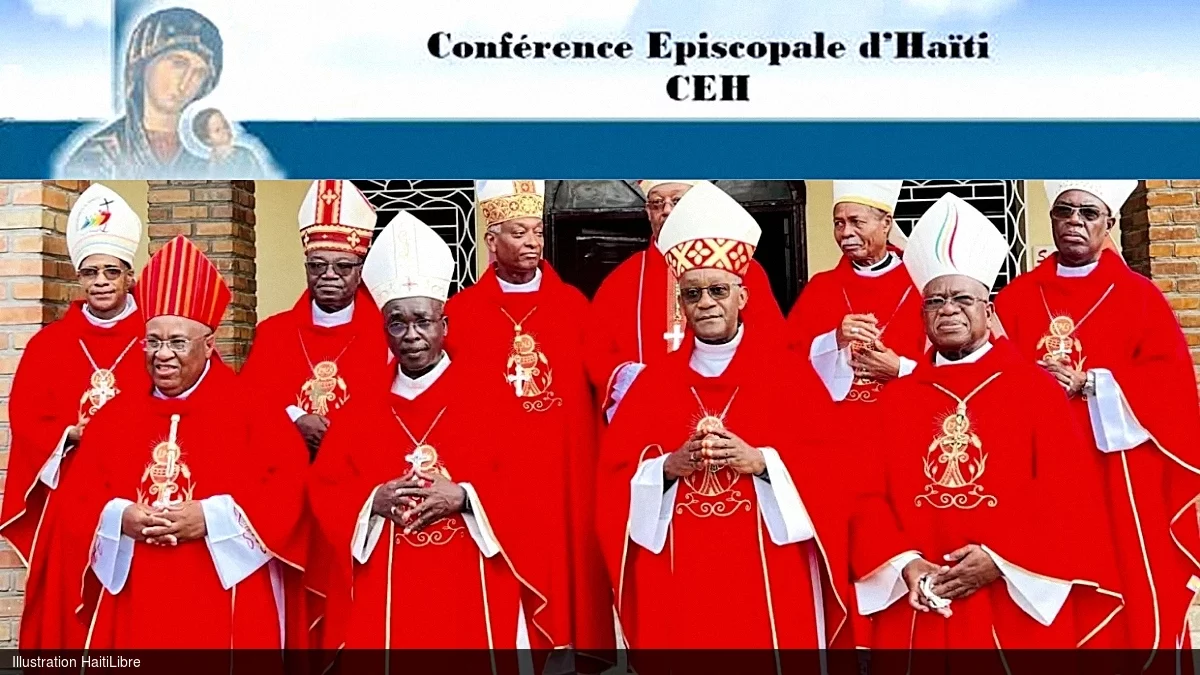
    Earlier in 2024, Pierre-André Dumas, vice president of Haiti’s national bishops’ conference, publicly raised pointed questions about whether the upcoming August elections can deliver a credible, legitimate result. He warned that given the prevailing security and political chaos across the country, the electoral process cannot be guaranteed to be transparent or fully democratic.