分类: world

  • Trump doubles down on Iran threat, says ceasefire ‘not good enough’

    Trump doubles down on Iran threat, says ceasefire ‘not good enough’

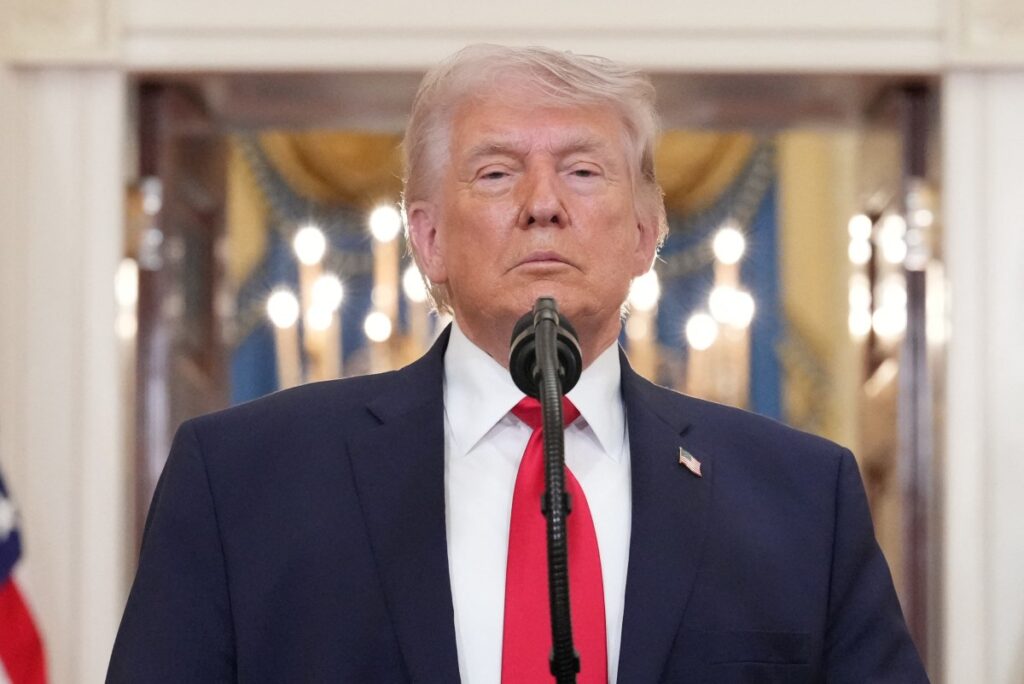
    Five weeks after a joint US-Israeli air offensive on Tehran ignited a sweeping conflict across the Middle East, US President Donald Trump has amplified his aggressive rhetoric, issuing a stark new threat to Iran’s civilian infrastructure that has sent shockwaves through the international community. Speaking at a press conference in Washington on Monday, Trump doubled down on his warning that American military power could wipe out every bridge and power plant across Iran in as little as four hours, dismissing a 45-day ceasefire proposal brokered by global intermediaries as insufficient to de-escalate the crisis. The US leader has issued an ultimatum: Iran must reopen the strategically critical Strait of Hormuz to international commercial shipping by midnight GMT Tuesday, or the country will face a devastating new wave of airstrikes.

    Both Washington and Tehran have rejected the current draft of the ceasefire, which diplomatic sources confirm is being negotiated through mediators from Pakistan, Egypt and Turkey. While Trump previously acknowledged the plan as a significant step forward, he emphasized it still falls short of US demands. “We have a plan — because of the power of our military — where every bridge in Iran will be decimated by 12 o’clock tomorrow night, where every power plant in Iran will be out of business, burning, exploding and never to be used again,” Trump told reporters. “I mean complete demolition by 12 o’clock, and it’ll happen over a period of four hours — if we wanted to.”

    For its part, Iranian state media quotes senior officials confirming Tehran has also turned down the proposed truce, insisting a permanent, definitive end to hostilities is the only acceptable outcome. The Iranian military has reiterated it will continue offensive operations as long as the country’s political leadership deems it necessary, following recent high-casualty strikes that have killed top Iranian security commanders.

    The conflict has already escalated dramatically on the ground in recent days. On Monday, Israeli airstrikes targeted two of Iran’s largest petrochemical facilities: the major complex at Asaluyeh on the Persian Gulf coast, Iran’s biggest petrochemical hub, and a second installation outside the central city of Shiraz. The Israeli military also confirmed it struck Iranian Air Force assets, including fighter jets and helicopters, at airports across the country, including in Tehran. The strikes claimed the life of Iran’s Revolutionary Guards Corps intelligence chief Majid Khademi, who was killed early Monday in a joint US-Israeli raid, one day after Israeli forces killed Asghar Bagheri, commander of the Quds Force’s elite special operations unit.

    Israeli Prime Minister Benjamin Netanyahu reaffirmed his government’s stance Monday, saying “We will reach anyone who seeks to harm us.” In response, the Revolutionary Guards’ intelligence branch has vowed to carry out a major retaliatory strike against the US and Israel for the assassinations, according to the group’s official Sepah News outlet. The spillover of the conflict has spread across the region: Yemen’s Houthi rebels, who back Iran, announced a new attack targeting Israel Monday, while Iran’s ally Hezbollah continues to engage Israeli forces along the Lebanon border. US-aligned Gulf nations have also been drawn into the fighting, with Kuwait and the United Arab Emirates reporting strikes and injuries between Sunday and Monday.

    Iran’s virtual blockade of the Strait of Hormuz, through which roughly 20% of global oil supplies pass daily, has triggered a sharp spike in global oil and gas prices, sending ripple effects through economies around the world. The conflict first erupted on February 28, when the initial joint US-Israeli airstrike killed Iran’s supreme leader Ayatollah Ali Khamenei, opening a full-scale war that has upended global energy markets.

    On Monday, Indonesia announced it would raise jet fuel surcharges, and long-haul low-cost carrier AirAsia X said it would implement ticket price increases of up to 40% to offset soaring fuel costs. South Korea’s ruling party confirmed Monday that Seoul will redirect oil tankers to Saudi Arabia’s Red Sea port of Yanbu, bypassing the Strait of Hormuz entirely to avoid the risk of attack, with Taiwan’s government announcing it would adopt the same alternate shipping route.

    Even as diplomatic efforts continue to revise the ceasefire proposal to meet both sides’ demands, Trump’s latest threats — including a profanity-laced social media post Sunday directed at Iran — have drawn sharp international condemnation. Mirjana Spoljaric, president of the International Committee of the Red Cross, warned that deliberate threats targeting essential civilian infrastructure violate international humanitarian law.

    As tensions remain at a boiling point, both sides continue active operations across the region. Iran has kept up missile and drone attacks against Israel: Monday, Israeli military and medical officials confirmed four civilians were pulled dead from the rubble of a residential building in the northern Israeli city of Haifa after an Iranian missile strike. On the Iranian side, state media reported multiple strikes on residential neighborhoods in Tehran, and a strike on a Tehran university knocked out gas service to large swathes of the capital.
  • Vermiste Amerikaanse piloot gered in Iran na hevige vuurgevechten

    Vermiste Amerikaanse piloot gered in Iran na hevige vuurgevechten

    On April 5, 2026, U.S. President Donald Trump announced a landmark military achievement: the second pilot of an American F-15E Strike Eagle shot down over southern Iran just three days prior had been successfully recovered by U.S. rescue forces after 48 hours of searching. Trump hailed the operation as one of the boldest rescue missions in modern U.S. military history, marking a high-stakes success amid a rapidly escalating regional conflict that has gripped the Middle East for nearly six weeks.

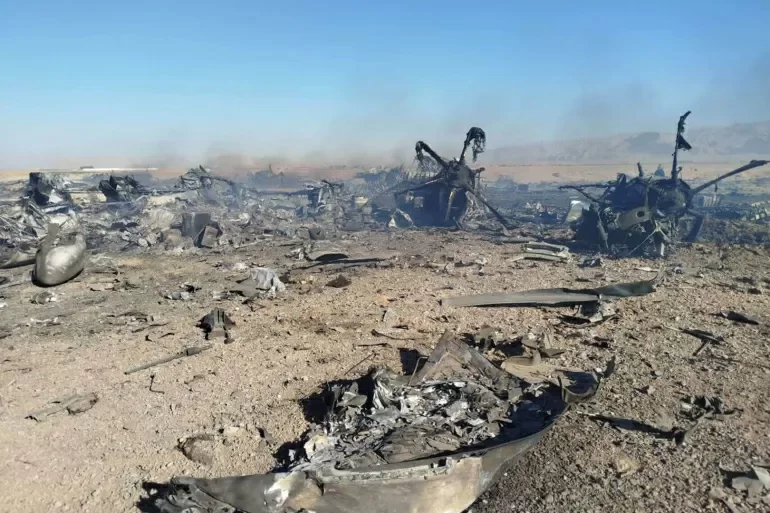
    The F-15E was downed by Iranian air defense systems on a Friday, contradicting earlier U.S. military claims that Iran’s integrated air defense network had already been fully destroyed in prior strikes. The first crew member of the jet was evacuated shortly after the crash, but the second pilot remained missing for two full days, triggering an urgent search-and-rescue operation deep inside Iranian territory. During the extraction mission, U.S. Black Hawk rescue helicopters came under hostile fire, yet all U.S. aircraft exited Iranian airspace without sustaining damage, according to initial U.S. accounts. Multiple regional outlets including Al Jazeera have since confirmed that the operation escalated into intense direct firefights between U.S. special operations forces and Iranian military personnel on the ground. The rescued pilot sustained non-life-threatening injuries during the incident, and military officials expect a full recovery.

    Iran has not issued an official confirmation of the pilot’s successful rescue, but the country’s military has confirmed separate developments tied to the operation: it claims a U.S. Air Force Lockheed C-130 Hercules transport aircraft supporting the rescue attempt was shot down over Iranian territory. Additionally, local Iranian reports note nine civilian and military fatalities in airstrikes targeting southwestern Iran that officials link directly to the U.S. rescue mission.

    The hunt for the missing pilot represented a major strategic and political risk for the Trump administration, as public support for the six-week conflict continues to decline among U.S. voters. Iranian authorities launched a widespread domestic manhunt for the airman, calling on local populations to assist in capturing the pilot and offering a substantial cash reward for information leading to his detention. Nomadic tribes in the mountainous search zone responded to the government’s call, opening fire on U.S. rescue helicopters operating in the area.

    The successful rescue came just days after Trump issued a stark ultimatum to the Iranian government: reach a negotiated settlement and reopen the Strait of Hormuz within 48 hours, or face expanded U.S. military strikes that would target critical Iranian energy infrastructure, including national power plants. The ultimatum was widely interpreted by global analysts as a major escalation of the ongoing conflict, which began in late February 2026 when a joint U.S.-Israeli strike killed Iranian Supreme Leader Ayatollah Ali Khamenei. Since the opening of hostilities, thousands of people on all sides have been killed, and the conflict has expanded into a full regional war, with Iran launching retaliatory strikes against Gulf states that host U.S. military assets and American interests.

    Iran rejected Trump’s ultimatum outright in an official statement from Foreign Minister Abbas Araqchi. Araqchi clarified that Iran has never refused to enter into negotiations, but any talks must be built around terms that deliver a “decisive and lasting end” to what Tehran describes as an illegal war of aggression against the country. He emphasized that Iran will never concede to one-sided demands imposed by Washington, and reaffirmed that the Iranian people remain fully determined to defend the country’s territorial integrity and national sovereignty against foreign invasion.

  • Guerra’s empire now under siege

    Guerra’s empire now under siege

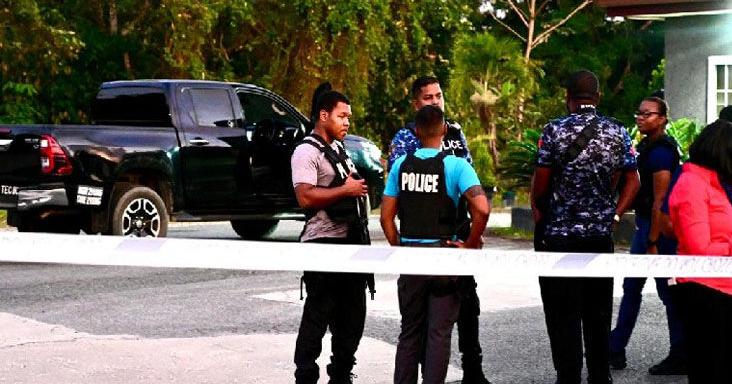
    For years, Danny Guerra cultivated an image as a legitimate, successful businessman operating across Trinidad. But behind that carefully crafted public persona lay a sprawling network of high-level connections, spanning ranks of local police and prominent political figures. Insiders confirm this shadow alliance acted as an impenetrable shield, blocking official scrutiny and killing off potential criminal investigations before they could advance.

    When the 50-year-old was gunned down in a targeted assassination on March 13, he walked free without a single criminal conviction on his record, despite widespread persistent rumours of his deep involvement in illegal activities. Outstanding charges tied to allegations of unregulated unlawful quarrying will now never go to trial, buried alongside the tycoon.

    In the wake of his execution, those once-secret connections have emerged as a key to unpacking how Guerra evaded justice for decades, how his sprawling business empire became so deeply rooted in local commerce, and why a violent battle for control of his assets has erupted across the country.

    One of Guerra’s major holdings is a $21 million waterfront property located at Paharry Junction, along Toco Main Road in Sangre Grande, first reported by the *Sunday Express* last week. The bitter, violent dispute over this asset between Guerra’s relatives and a former business partner extends far beyond a single plot of land, investigators confirm. When a high-stakes land deal collapsed, that business associate placed a $600,000 contract to have Guerra killed, according to official probes.

    Guerra’s assassination has already sparked a wave of follow-on violence across the region. Roughly 10 days after his killing, Rondell “Patch” Adolphus, a former quarry supervisor with ties to Guerra’s operations, was shot dead at Trini Lime Resort. Unknown attackers also stormed Guerra’s private Sangre Grande residence, stealing multiple high-value items before fleeing.

    The escalating bloodbath has forced a key figure in Guerra’s business and personal life to flee the country entirely. A 42-year-old woman identified by multiple insiders as Guerra’s close business partner and new romantic partner left Trinidad in the days after the killing, convinced she was next on the hit list in the rapidly expanding murderous conflict.

    Court documents obtained by the *Sunday Express* show the woman assisted Guerra in July 2025 to transfer the Paharry Junction property mortgage from an East Trinidad bank to a separate mortgage institution. The paperwork, drawn up by a respected local legal firm for Guerra’s DG Homes Company Ltd, frames the transaction as a “consolidation of deeds and mortgage” covering a total value of roughly $43.1 million. The remaining balance beyond the $21 million land value was earmarked for large-scale development of the site. The deal was originally brokered by the same business associate who would later order Guerra’s hit, before he was pushed out of the venture and sidelined by Guerra, sources confirm.

    Investigators believe the scorned associate not only masterminded the assassination, but also recruited a trusted insider within Guerra’s circle to track his movements on the day he was killed, ensuring the attack would succeed.

    The 42-year-old woman first met Guerra more than five years ago while she worked at an East Trinidad bank, before later moving to a senior role at a local credit union, multiple sources confirmed. Most recently, she arranged an unsecured $30 million loan for Guerra, and she was already under active official investigation for that transaction at the time of his death.

    Insiders familiar with the pair’s relationship say Guerra bought a luxury St Augustine property for the woman roughly three years ago, putting both of their names on the property deed. A frequent guest at the home, Guerra also recently gifted her a brand-new Mercedes-Benz, and was reportedly planning to marry her before his death. The woman left her first husband and two children in 2023, finalizing a divorce shortly after, and just months after her departure, her 14-year-old son passed away.

    “Her joint ownership of the St Augustine property means she has a legal claim to a portion of Guerra’s business holdings and real estate empire,” one source close to the tycoon explained. “But that claim has put a target directly on her back.” The source added that many of Guerra’s long-time associates and inner circle members have grown resentful of the woman’s rapid rise to wealth and influence. With no formal legal documents guaranteeing the associates a share of the estate after Guerra’s death, eliminating the woman clears the way for other figures to file for a letter of administration and seize full control of all of Guerra’s assets.

    Tensions have boiled over into open conflict even within Guerra’s own family. In the days after the killing, one family member allegedly issued a death threat to another relative, accusing them of deliberately helping the business associate set up Guerra’s assassination. The relative who issued the threat has since gone into hiding, after a price was put on his own head. He is also currently wanted by local police under a preventative detention order (PDO), and was in line to take over leadership of Guerra’s company before the assassination.

    Public record documents obtained by the *Sunday Express* show that just two months before his death, in January after Guerra was released from a month-long prison stint held under a PDO, he removed two people from their director positions at DG Homes Company Ltd, leaving only himself and two family members as active directors. When Guerra’s last will and testament was read to heirs last week, multiple close associates and family members were shocked to discover they had been cut out of the estate entirely, deepening existing rifts and distrust.

  • Paus Leo roept op tot vrede te midden van oorlogen in de wereld

    Paus Leo roept op tot vrede te midden van oorlogen in de wereld

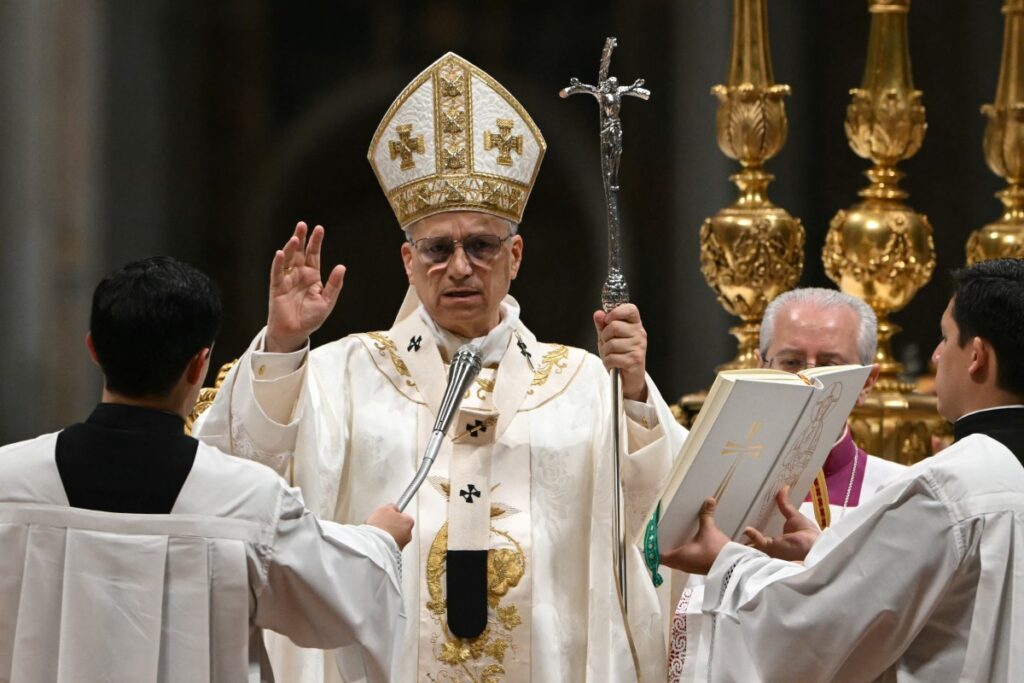
    On the holiest night of the Catholic liturgical calendar, Pope Leo XIV used his address during the Easter Vigil at Vatican City’s St. Peter’s Basilica to deliver a urgent plea to global Catholic communities, urging people not to grow numb to the human suffering caused by active conflicts across the world — most notably the escalating war roiling the Middle East. In his remarks delivered Saturday evening, the pontiff called for intentional, active pursuit of peace, warning against the paralysis that fear and mutual distrust can sow in global relations.

  • Advanced Tactical Training : Graduation in Haiti of the 2nd Class

    Advanced Tactical Training : Graduation in Haiti of the 2nd Class

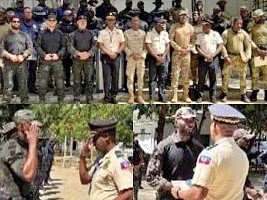
    On April 3, 2026, Haiti marked a key milestone in its ongoing battle against widespread gang violence with the graduation of the second cohort of specialized police officers from the country’s new anti-gang tactical training facility. The ceremony, held at the purpose-built Anti-Gang Training Center in Morne Casse, was led by Inspector General Jacques Joël Orival, Central Director of Haiti’s Administrative Police, and capped off a rigorous training program that concluded with a large-scale simulated assault exercise demonstrating trainees’ new capabilities.

    Thirty police officers drawn from across all of the Haitian National Police (PNH)’s elite specialized units completed the program. Participants represented the force’s SWAT team, the Anti-Gang Unit (UTAG), the Counter-Ambush Unit (CAT), the Departmental Operations and Intervention Brigade (BOID), and the Research and Intervention Brigade (BRI). Unlike previous training initiatives that often trained separate units in isolation, this advanced tactical course brought cross-unit officers together under unified, harmonized training standards, a design specifically intended to strengthen inter-unit coordination during high-stakes field operations.

    The program was delivered through a collaborative partnership between international specialized instructors and Haitian national trainers, all of whom are themselves graduates of the same advanced tactical program. Upon completing all required coursework and practical assessments, each graduate received an official certification confirming that they have acquired the upgraded tactical skills needed to confront Haiti’s evolving complex security challenges.

    Against the backdrop of persistent insecurity driven by armed gang activity across Haiti, this training initiative fills a critical operational gap. Local security conditions frequently demand joint responses from multiple specialized PNH units across different jurisdictional boundaries, and the shared training framework directly addresses the coordination gaps that have hampered past anti-gang operations. Officials frame the graduation of this second cohort as a critical step toward strengthening the PNH’s overall operational capacity to combat armed gangs, reduce community insecurity, and stabilize the country amid ongoing crisis.

  • Fear hangs over Easter mass after Nigeria shooting

    Fear hangs over Easter mass after Nigeria shooting

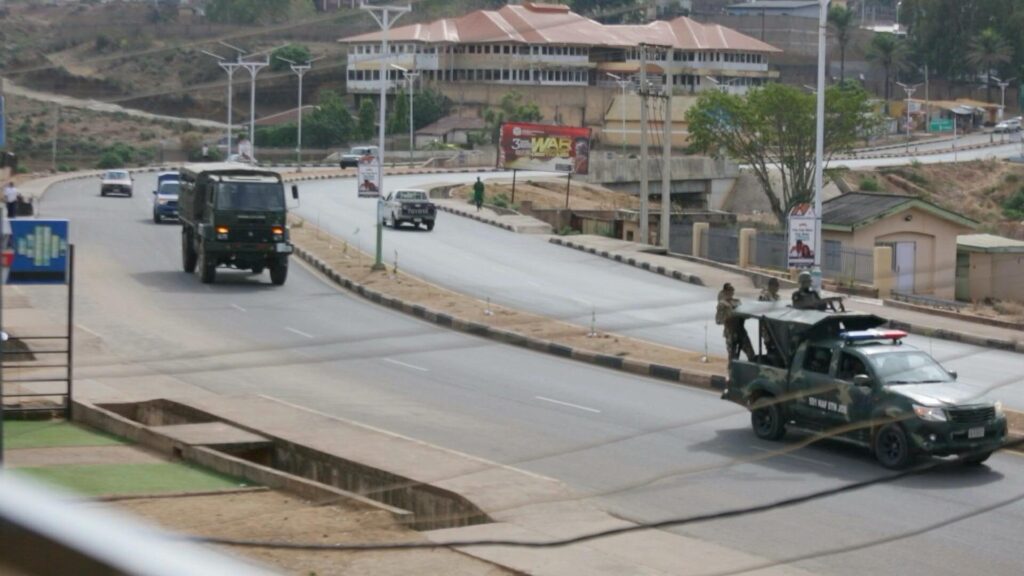
    JOS, Nigeria – Just seven days after a mass shooting claimed roughly 30 lives in central Nigeria’s Plateau state, Christian worshippers gathered for Easter Sunday Mass in the capital city of Jos under a heavy cloud of insecurity.

    The region’s most important Christian festival, a moment traditionally marked by joyful, packed congregations, looked drastically different this year. One of the city’s largest churches, standing just meters from the site of the deadly Palm Sunday attack at an open-air bar, saw attendance fall to less than half of its normal capacity. The state-imposed curfew, which restricts movement between 3 a.m. and 7 p.m. local time, has left most city streets eerily deserted, with only a handful of civilians venturing out for essential activities.

    Along the road leading to the church in Jos’ Anguwan Rukuba district, just one single police checkpoint was visible, a sparse security presence that has done little to reassure residents. In response to last week’s attack, Nigerian military authorities announced they had deployed an extra 850 troops to the restive state to bolster security. But for many worshippers, the reinforcement has come too late, and official promises of protection ring hollow.

    Standing outside the beige facade of the Evangelical Church Winning All (ECWA), 57-year-old congregant John Abo Galadima told reporters he sees no real improvement in local safety. “I don’t feel safe in the community, because the government is not doing enough…in terms of security,” Galadima said. “There is no sufficient security presence here.” To compensate for gaps in state security, church leadership has arranged for its own private security team to screen all attendees before allowing entry to worship services.

    Fellow worshipper Marian Mark Andy echoed Galadima’s concerns, explaining that widespread anxiety kept many adherents from joining the Easter celebrations. “I don’t feel safe. People are afraid, they could not come to church,” Andy said.

    During his sermon, Reverend Luka Musa Madaki led the congregation in prayers for an end to violence while urging attendees to remain constantly alert to potential threats. “As people of God, you need to stand up, spiritually and physically. The attacks are coming to us too much. You should always remain vigilant and reach out to each other,” Madaki told the assembled crowd.

    While Plateau state has a long history of repeated rural violence, much of it tied to long-running resource conflicts between farming and herding communities, last week’s attack in Jos marks a rare and particularly alarming episode of urban violence. Jos itself is home to a mixed population of Christians and Muslims, most of whom have coexisted peacefully for generations. But the region has a decades-long history of deadly ethnic and sectarian tension that has sparked large-scale outbreaks of violence in the past.

    This most recent attack is part of a grim pattern of bloodshed in the landlocked state. In one of the deadliest recent incidents, nearly 200 people were killed in December 2023 during raids targeting majority Christian communities across the state. The worst sectarian violence in Jos’ modern history dates back to September 2001, when five days of rioting left nearly 1,000 people dead.

    The ripple effects of the attack extended to the city’s Muslim community as well. During weekly Juma’a prayers held the Friday after the shooting, worshippers gathered at Jos’ central mosque under significantly heightened security, with both soldiers and police deployed to guard the site. In his post-prayer sermon, the chief Imam of Jos, Sheikh Ghazali Ismail Adam, called on all believers to prioritize mutual respect. “Dignify humanity, uphold fear of Allah and…promote peaceful coexistence,” Adam urged his congregation.

  • ‘Choose peace’: Pope marks first Easter under cloud of Mideast war

    ‘Choose peace’: Pope marks first Easter under cloud of Mideast war

    In his inaugural Easter address from the heart of Vatican City, Pope Leo XIV delivered a urgent, heartfelt plea on Sunday to global leaders holding the power to ignite and escalate armed conflict, urging them to set aside confrontation and choose the path of peace. The pontiff’s call comes as a broad regional war raging across the Middle East, triggered by joint US-Israeli strikes on Iran on February 28, has sent shockwaves across the entire region and disrupted economic stability worldwide, casting a dark shadow over Easter celebrations for more than 1 billion Catholics marking the holiday globally.

  • Guatemala Sends Cuban Doctors Home

    Guatemala Sends Cuban Doctors Home

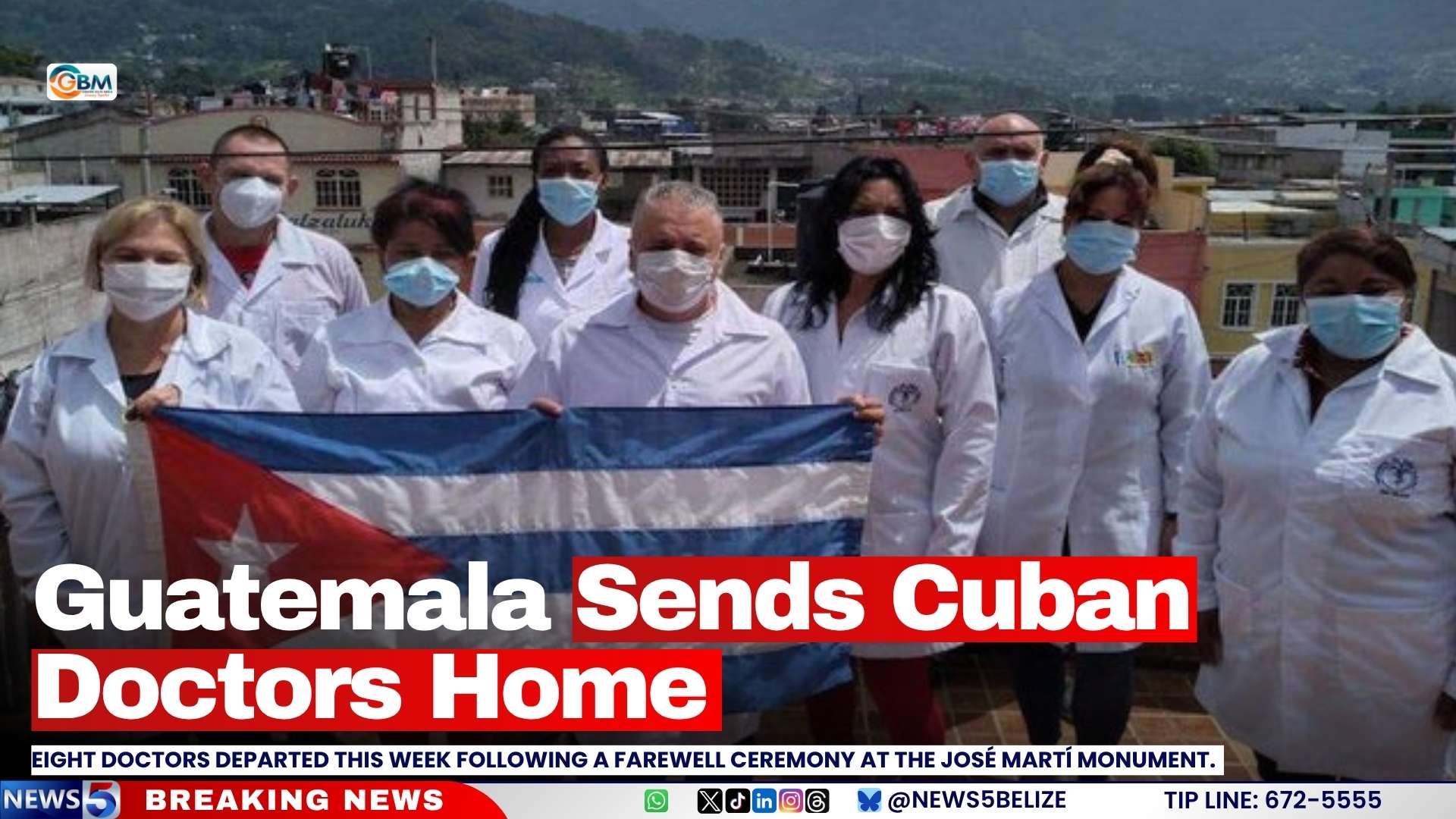
    On April 4, 2026, Guatemala has launched the first phase of withdrawal for a decades-old Cuban medical collaboration program, marking the latest development in a growing regional trend of terminating medical partnerships with Havana that has been spurred by United States pressure.

    The first cohort of eight Cuban medical professionals departed Guatemala this week after an official farewell ceremony held at the José Martí monument in the capital. In total, 93 members of the long-standing Cuban medical brigade are scheduled to complete their exit from the country by the end of April, with the remaining 319 brigade members set to leave in a second wave scheduled for August.

    The Cuban medical mission first established a presence in Guatemala in 1998, growing over 28 years to include 412 total public health collaborators, 333 of whom were licensed practicing doctors. These medical workers were integrated fully into Guatemala’s national public health network, with nearly half deployed to some of the country’s most underserved remote regions. Departments including Quiché, Petén, and Alta Verapaz – which have long struggled with limited access to basic healthcare for rural and Indigenous communities – relied heavily on the Cuban medical personnel to fill critical gaps in service.

    A key detail of the withdrawal has sparked questions about compliance with the bilateral agreement between Guatemala and Cuba. Guatemala’s Ministry of Health has confirmed that the Guatemalan government will not cover the cost of the medical workers’ return flights, a financial obligation explicitly outlined in the original 1998 cooperation agreement. According to reporting from independent Cuban news outlet CiberCuba, the Cuban embassy in Guatemala ultimately stepped in to coordinate funding for the tickets, securing financial support from Guatemalan private business owners to cover the travel costs.

    Guatemala’s decision to end the program is not an isolated policy shift. It is part of a broader wave of withdrawals across Latin America and the Caribbean that can be traced directly to pressure from the U.S. government. In 2025, the U.S. State Department implemented visa restrictions on government officials across the region connected to Cuban medical missions, basing the punitive measure on unsubstantiated claims that the programs amount to forced labor schemes. Since those restrictions went into effect, three other countries – Honduras, Jamaica, and Guyana – have already terminated their own bilateral medical cooperation agreements with Cuba, leading to the withdrawal of hundreds of additional Cuban doctors from the region.

    The regional shift has left the future of the Cuban medical program in neighboring Belize hanging in the balance. Prime Minister John Briceño confirmed recently that the Belizean government is currently holding “delicate negotiations” to determine the future of the program, which has supplied critical medical staff to Belize’s under-resourced public health system for many years.

  • US Destroys Iran’s Largest Bridge, Killing Eight

    US Destroys Iran’s Largest Bridge, Killing Eight

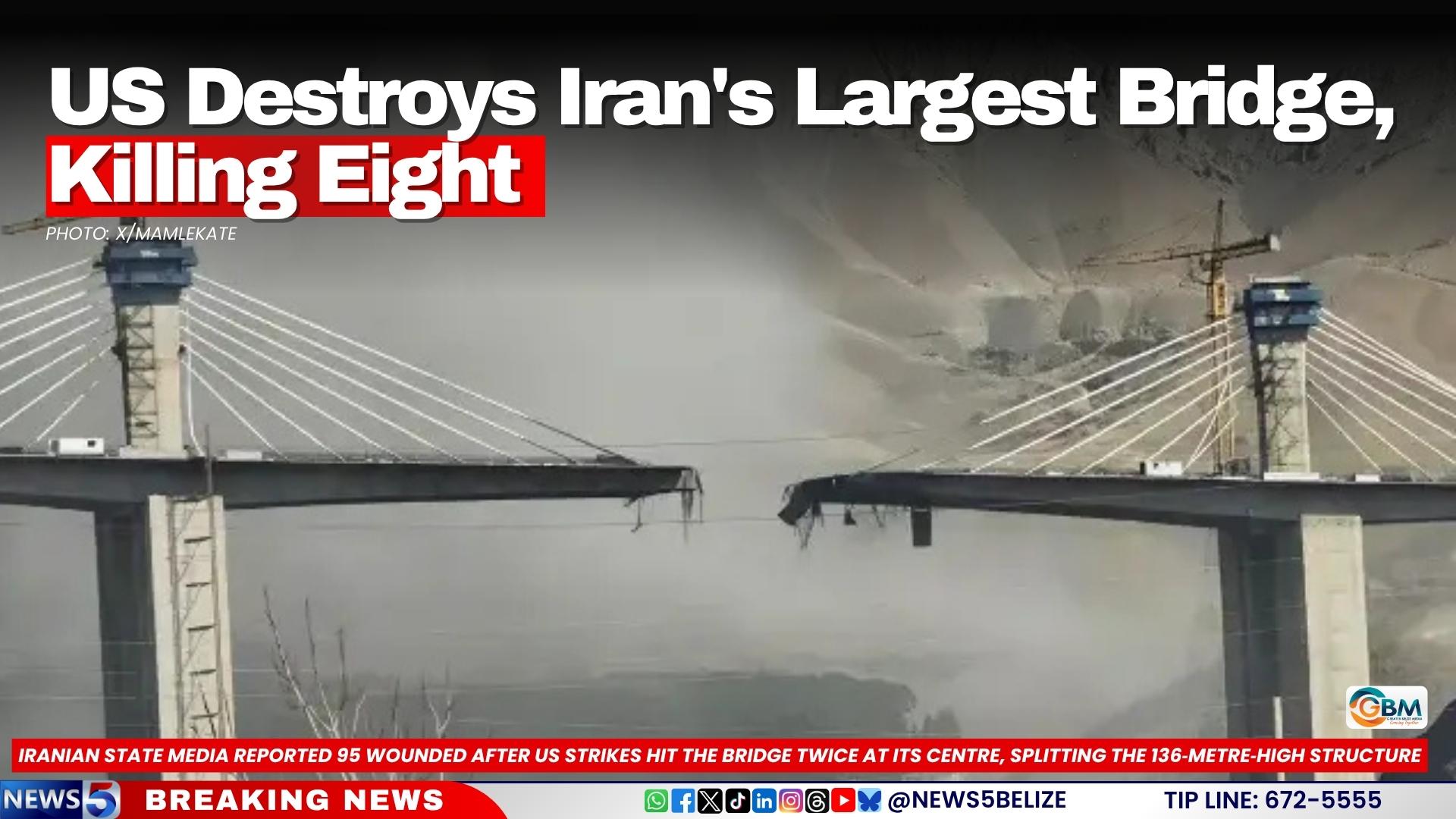
    On April 3, 2026, a dramatic escalation of ongoing hostilities between the United States and Iran unfolded after a U.S. military strike destroyed Iran’s largest suspension bridge, a critical $400 million infrastructure link connecting the capital Tehran to the nearby industrial city of Karaj. The attack left eight civilians dead and 95 others injured, according to Iranian state media reports, marking one of the most high-profile targeted strikes in a five-week military campaign that has already claimed thousands of lives.

    U.S. President Donald Trump quickly took public responsibility for the attack in a post to his Truth Social platform, sharing verified footage of the 136-meter-tall bridge’s central span splitting and collapsing into a thick plume of black smoke. In his post, Trump issued a blunt public warning to Iranian leadership, writing, “The biggest bridge in Iran comes tumbling down, never to be used again — much more to follow. It is time for Iran to make a deal before it is too late.”

    Just hours after his initial announcement, Trump doubled down on his threats, expanding his warning of additional targeted infrastructure attacks against Iran. “Our military, the greatest and most powerful anywhere in the world, hasn’t even started destroying what’s left in Iran,” the post read. “Bridges next, then electric power plants.”

    The current full-scale conflict traces its origins to a coordinated joint offensive launched by U.S. and Israeli forces against Iranian military and strategic targets on February 28. Early in the campaign, reports emerged that Iran’s Supreme Leader Ali Khamenei was killed in one of the opening strikes, a development that sent shockwaves across the Middle East. In the wake of the offensive, Iranian officials publicly vowed to launch full retaliation against U.S. and Israeli targets and rejected a U.S.-drafted peace proposal that would have ended hostilities.

    Over the five weeks of sustained bombing operations that have followed, casualty numbers have surged dramatically. Data from the International Federation of Red Cross and Red Crescent Societies estimates that at least 1,900 people have been killed across Iran since the campaign began, with an additional 20,000 people sustaining injuries. The organization’s counts also confirm that more than 15,000 separate bombing raids have been carried out across Iranian territory, putting massive strain on local healthcare systems and civilian infrastructure across the country.

    Satellite imagery captured after the bridge strike confirms the complete destruction of the structure’s central section, leaving a massive gap where the span once stood and severing a key transportation artery between two of Iran’s most populated northern cities.

  • Trump gives Iran 48 hours to make deal or face ‘hell’

    Trump gives Iran 48 hours to make deal or face ‘hell’

    Escalating tensions between the United States, Israel and Iran have reached a new boiling point, with former U.S. President Donald Trump issuing a stark 48-hour ultimatum to Tehran: reach a negotiated deal or face overwhelming retaliation. This latest threat comes as multiple fronts of conflict expand across the Middle East, search operations continue for a missing American airman, and a strike near a critical Iranian nuclear facility has sparked international alarm over nuclear safety.

    The full-scale conflict erupted more than a month ago, when joint U.S.-Israeli strikes against Iranian targets triggered a wave of Iranian retaliation that has destabilized the entire region and sent shockwaves through global energy markets. The disruption has been particularly acute because Iran has closed the Strait of Hormuz, the world’s most critical chokepoint for global oil and natural gas supplies, through which roughly a fifth of the world’s daily oil consumption passes.

    In a post to his Truth Social platform Saturday, Trump referenced an earlier ultimatum he issued on March 26 that gave Tehran 10 days to strike an agreement and reopen the strategic waterway. “Time is running out — 48 hours before all Hell will reign down on them,” the U.S. president wrote.

    Concurrent with Trump’s threat, military forces from both the U.S. and Iran are engaged in a tense search for a downed American service member. On Friday, Iran announced it had shot down a U.S. F-15 fighter jet; U.S. media reports confirm special operations teams have rescued one of the two crew members, but the second remains unaccounted for. Iran also claims to have downed a U.S. A-10 ground attack aircraft over the Persian Gulf, with U.S. outlets confirming that plane’s pilot has already been recovered.

    Local search operations for the missing F-15 crew member are being led by combined Iranian military, popular forces and local tribal groups in southwestern Iran’s Kohgiluyeh and Boyer-Ahmad province, deputy provincial governor Fattah Mohammadi told Mehr News Agency Saturday. Mohammadi added that local civilians confronted American search helicopters overnight, opening fire with small arms and preventing U.S. forces from landing to extract the downed pilot. AFPTV-verified social media footage confirms Iranian security forces fired on a U.S. helicopter operating in the southwestern border region during the search.

    Iran’s parliamentary speaker Mohammad Ghalibaf used the incident to mock the Trump administration, quipping that the war the U.S. launched has devolved from its original goal of regime change to a frantic plea: “Hey! Can anyone find our pilots?” adding sarcastically, “What incredible progress. Absolute geniuses.”

    Retired U.S. Brigadier General Houston Cantwell, a combat pilot with 400 hours of flight experience in conflict zones, told AFP that any downed pilot would rely on standard survival training to avoid capture immediately after ejecting. “My priority would be, first of all, concealment, because I don’t want to be captured,” Cantwell explained.

    The threat level rose further Saturday after a strike near Iran’s Bushehr nuclear power plant left one security guard dead. Russia, which co-built the facility and supports its ongoing operations, announced it would evacuate 198 Russian personnel from the site in response. Iranian Foreign Minister Abbas Araghchi issued a dire warning that repeated strikes on the coastal nuclear facility could trigger catastrophic radioactive contamination. “Continued attacks could eventually lead to radioactive fallout that would end life in GCC (Gulf Cooperation Council) capitals, not Tehran,” Araghchi noted, a warning amplified by the fact that Bushehr sits far closer to Kuwait, Bahrain and Qatar than it does to the Iranian capital.

    Rafael Grossi, head of the International Atomic Energy Agency (IAEA), wrote on X that the agency has not yet recorded any abnormal spike in radiation levels at the site, but nonetheless voiced “deep concern” over the incident, which marks the fourth strike near a Iranian nuclear facility in recent weeks. “NPP (nuclear power plant) sites or nearby areas must never be attacked,” Grossi emphasized.

    Strikes have also continued across the Iranian capital Tehran, where an AFP correspondent on the ground reported thick grey smoke blanketing the city’s skyline Saturday. For ordinary Iranians caught in the crossfire, the conflict has brought widespread chaos and uncertainty. “This war wasn’t for freedom… we just ended up trapped with something even more savage,” 31-year-old Tehran resident Faezeh told AFP via a messaging app. “They bomb randomly, there’s no sign of any specific target these recent days.”

    Maryam, a 35-year-old resident of Khansar in Isfahan Province, said Iranian public opinion is deeply split: some citizens hope for an end to the current Islamic government, while others are more terrified of long-term economic collapse. “I’m honestly really scared about our future,” Maryam said. “Things are a disaster right now. Mass layoffs, widespread shutdowns… everything feels overwhelming.”

    In recent days, strikes from both belligerent sides have increasingly targeted critical economic and industrial infrastructure, stoking fears that global energy supplies will face even deeper disruption. On Saturday alone, U.S.-Israeli strikes hit an Iranian petrochemical hub, a cement production plant and a cross-border trade terminal on the Iran-Iraq border, leaving one person dead at the terminal site.

    For its part, Iran has responded with waves of drone and missile strikes against Israel and U.S. allied states across the Persian Gulf. Bahraini authorities reported Saturday that shrapnel from intercepted Iranian drones injured four people on the island, while debris from downed drones hit two buildings in Dubai, including an office complex hosting U.S. cloud computing giant Oracle. Iran’s Islamic Revolutionary Guard Corps also claimed responsibility for an attack on the commercial vessel MSC Ishyka, which the Guards claims is owned by Israel and flagged to a third country, docked at Bahrain’s Khalifa Bin Salman Port.

    The conflict has spilled over into Lebanon as well, where the Israeli military has been engaged in nearly daily fighting with Iran-backed Hezbollah for a month. The Israeli military announced Friday that it has struck more than 3,500 targets across Lebanon since the latest round of border clashes erupted. After issuing advance warnings of planned strikes on key infrastructure, Israeli warplanes destroyed a bridge in Lebanon’s Bekaa Valley, with local reports confirming a second bridge was also hit.

    An AFP correspondent in Beirut reported two loud explosions in the capital early Saturday, with thick smoke rising from the site of one blast. The Lebanese health ministry reported that a hospital in the coastal city of Tyre was damaged in Israeli strikes on nearby buildings, which left 11 people wounded. The Israeli military later issued an urgent evacuation order for Tyre’s remaining residents ahead of planned expanded strikes. Tens of thousands of residents have already left the city, but an estimated 20,000 people remain, including 15,000 people who were already displaced from surrounding border villages.