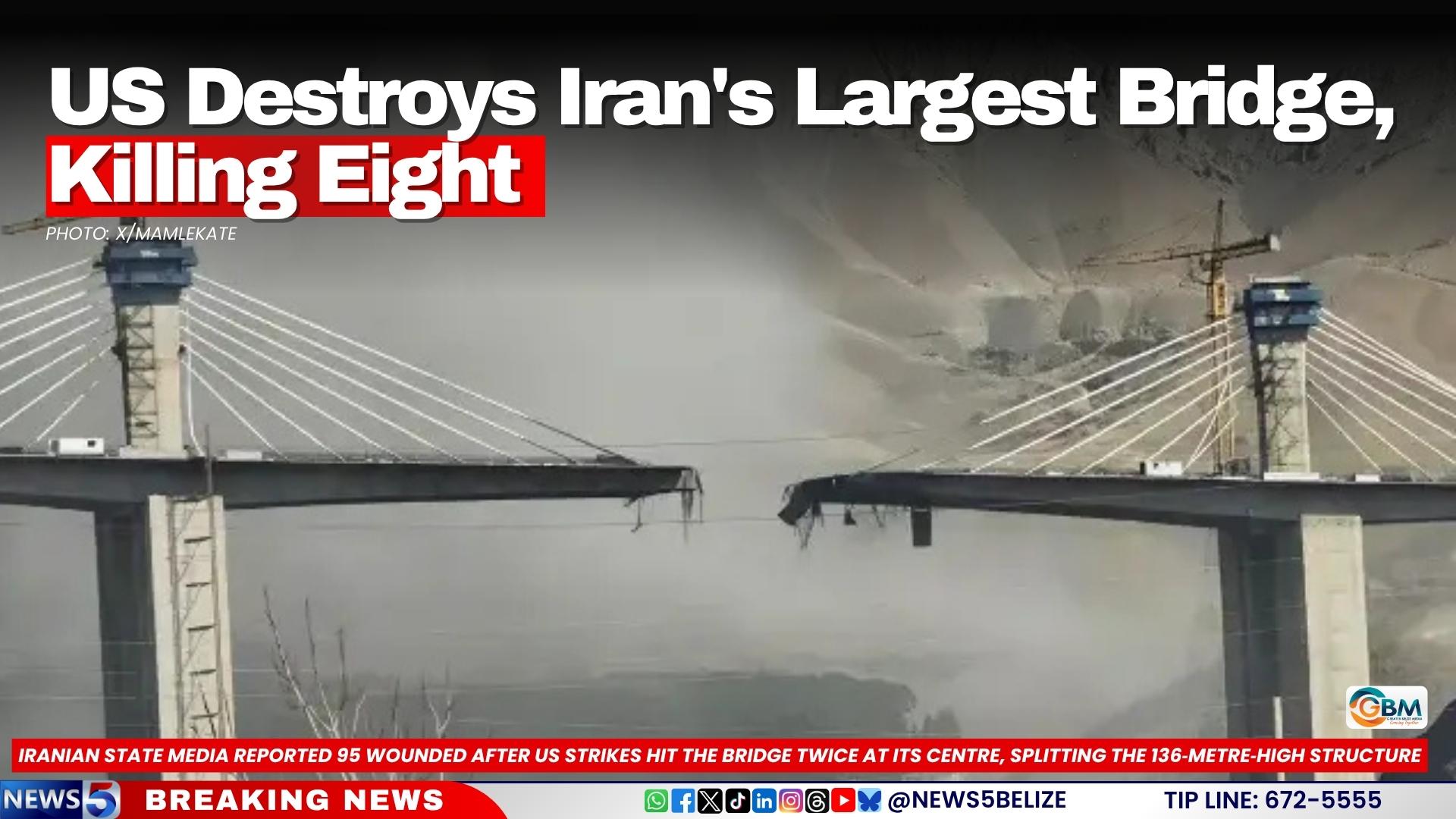
On April 3, 2026, a dramatic escalation of ongoing hostilities between the United States and Iran unfolded after a U.S. military strike destroyed Iran’s largest suspension bridge, a critical $400 million infrastructure link connecting the capital Tehran to the nearby industrial city of Karaj. The attack left eight civilians dead and 95 others injured, according to Iranian state media reports, marking one of the most high-profile targeted strikes in a five-week military campaign that has already claimed thousands of lives.
U.S. President Donald Trump quickly took public responsibility for the attack in a post to his Truth Social platform, sharing verified footage of the 136-meter-tall bridge’s central span splitting and collapsing into a thick plume of black smoke. In his post, Trump issued a blunt public warning to Iranian leadership, writing, “The biggest bridge in Iran comes tumbling down, never to be used again — much more to follow. It is time for Iran to make a deal before it is too late.”
Just hours after his initial announcement, Trump doubled down on his threats, expanding his warning of additional targeted infrastructure attacks against Iran. “Our military, the greatest and most powerful anywhere in the world, hasn’t even started destroying what’s left in Iran,” the post read. “Bridges next, then electric power plants.”
The current full-scale conflict traces its origins to a coordinated joint offensive launched by U.S. and Israeli forces against Iranian military and strategic targets on February 28. Early in the campaign, reports emerged that Iran’s Supreme Leader Ali Khamenei was killed in one of the opening strikes, a development that sent shockwaves across the Middle East. In the wake of the offensive, Iranian officials publicly vowed to launch full retaliation against U.S. and Israeli targets and rejected a U.S.-drafted peace proposal that would have ended hostilities.
Over the five weeks of sustained bombing operations that have followed, casualty numbers have surged dramatically. Data from the International Federation of Red Cross and Red Crescent Societies estimates that at least 1,900 people have been killed across Iran since the campaign began, with an additional 20,000 people sustaining injuries. The organization’s counts also confirm that more than 15,000 separate bombing raids have been carried out across Iranian territory, putting massive strain on local healthcare systems and civilian infrastructure across the country.
Satellite imagery captured after the bridge strike confirms the complete destruction of the structure’s central section, leaving a massive gap where the span once stood and severing a key transportation artery between two of Iran’s most populated northern cities.