分类: world

  • Trump Orders “Shoot to Kill” in Hormuz; Pope: ‘Not in Favour of War’

    Trump Orders “Shoot to Kill” in Hormuz; Pope: ‘Not in Favour of War’

    Tensions in the strategically critical Strait of Hormuz have reached a dangerous new boiling point, after former US President Donald Trump issued a sweeping “shoot to kill” directive targeting Iranian vessels suspected of laying mines in the key global waterway. The aggressive order has sent shockwaves through global energy markets and stoked widespread fears that a localized maritime dispute could spiral into a full-scale regional conflict.

    The escalation comes amid growing international pushback against the rising hostilities, led by Pope Leo XIV, who has reaffirmed his firm opposition to the deepening US-Iran confrontation. In a pointed public address, the head of the Catholic Church emphasized that any path to lasting resolution must grow out of a commitment to peace, not violent confrontation. “As a pastor I cannot be in favour of war,” Pope Leo XIV stated. “I would like to encourage all to make efforts to look for answers that come from a culture of peace and not from a place of hate and division.”

    The pontiff went further, highlighting the far-reaching human and economic costs of the escalating standoff. He warned that the mounting conflict has already created a chaotic situation for the global economy, pushing up energy costs and deepening hardship for ordinary people around the world. He also issued a separate condemnation of the Iranian government’s crackdown on domestic protests, stressing that all human life deserves inherent respect regardless of context.

    Pope Leo XIV’s remarks come one week after Trump publicly attacked the pontiff for his critical stance on the Middle East crisis, which has re-emerged as one of the world’s most volatile military flashpoints. In recent days, the Trump administration has ramped up US military presence in the region: Washington currently has 19 warships deployed across the Middle East, including two full aircraft carrier strike groups, with additional military assets positioned in the Indian Ocean to support ongoing operations.

    In comments to reporters, Trump confirmed there is no set deadline for ending hostilities or entertaining Iranian peace overtures, and repeated his claim that Iran’s leadership is fractured and indecisive. “Iran is having a very hard time figuring out who their leader is!” Trump asserted. The claim was immediately rejected by top Iranian officials, including Iranian President Masoud Pezeshkian and Parliament Speaker Mohammad Bagher Ghalibaf, who jointly insisted that the country maintains “iron unity” under the leadership of Supreme Leader.

    Global energy markets have already reacted sharply to the rising tensions. The Strait of Hormuz remains one of the world’s most critical chokepoints for global oil trade, with roughly a fifth of all globally traded crude passing through the waterway daily. As traders price in the rising risk of disrupted shipping lanes, oil prices have climbed sharply in recent trading sessions, adding new inflationary pressure to already fragile global economies.

  • Belize Pushes Regional Security at ONE Caribbean Dialogue

    Belize Pushes Regional Security at ONE Caribbean Dialogue

    In a high-level gathering focused on advancing collective progress across the Caribbean region, Belize has positioned regional security as a top priority at the ONE Caribbean Ministerial Dialogue, hosted in Port of Spain, Trinidad and Tobago in April 2026. The gathering brought together heads of delegations, senior government officials, and key development stakeholders from across the bloc to assess progress made since the initiative’s launch and map out a strategic roadmap extending to 2029.

    Belize’s official delegation to the dialogue featured two prominent figures: Narda Garcia, Chief Executive Officer of the Prime Minister’s Office, and Cinnamon Bottaro, Belize’s sitting representative on the Inter-American Development Bank (IDB) Board of Directors. As the institutional backbone of the ONE Caribbean program, the IDB launched the flagship regional cooperation initiative in 2024, bringing together eight core member nations including Belize, Jamaica, Guyana, Barbados, The Bahamas, Suriname, and Trinidad and Tobago to tackle shared challenges through coordinated action.

    The initiative is structured around four interconnected priority pillars that address the most pressing concerns facing Caribbean nations: building climate resilience and improving disaster risk management, enhancing cross-border citizen security, driving inclusive private sector growth, and strengthening regional food sovereignty. Throughout the dialogue, Garcia took a leading role in moderating and guiding thematic discussions centered on citizen security, a core priority for Belize. Her work focused on forging consensus around strategies to counter transnational organized crime, expand protections for at-risk vulnerable communities, and upgrade regional cybersecurity infrastructure to counter growing digital threats. She emphasized that shared security challenges can only be effectively resolved through coordinated regional partnership, rather than isolated national action.

    Beyond its leadership on security issues, Belize maintained an active presence across all four of the initiative’s thematic working sessions, reinforcing its longstanding commitment to deepening regional integration. To date, Belize has already realized tangible benefits from its participation in ONE Caribbean, including targeted technical and planning support for critical national infrastructure projects. This support has enabled updates to Belize’s National Transport Master Plan and the development of its first comprehensive Domestic Airports Master Plan, laying the groundwork for more connected, sustainable mobility across the country.

    Dialogue participants also highlighted Belize’s underrecognized strategic role in strengthening regional food security. With its abundant agricultural resources and geographic position, the country holds significant potential to expand intra-Caribbean agricultural trade, helping to reduce regional reliance on extra-hemispheric imports and stabilize food supplies for vulnerable populations across the bloc. As the ONE Caribbean initiative enters its next phase through 2029, Belize’s active engagement and leadership on key priority areas is expected to continue shaping the region’s cooperative agenda for years to come.

  • IACHR raises concern over Jamaica’s continued criminalisation of same-sex relationships

    IACHR raises concern over Jamaica’s continued criminalisation of same-sex relationships

    In its recently released 2025 annual human rights assessment, the Inter-American Commission on Human Rights (IACHR), an independent oversight body affiliated with the Organization of American States (OAS), has outlined a mixed picture of progress and ongoing concerns for human rights protections across Jamaica. The report shines a light on both incremental policy wins and deep-rooted systemic gaps that continue to impact vulnerable communities across the Caribbean nation.

    One of the most high-profile findings centers on LGBTQ+ rights: Jamaica retains its place as one of just five countries in the Americas that still enshrines criminal penalties for consensual same-sex relationships between adults. This legal framework runs counter to global advocacy priorities set by human rights organizations like the Association for the Prevention of Torture, which calls for full legal equality, protection from discrimination, and social inclusion for LGBTQ+ people in employment, healthcare, and all other spheres of public life.

    Turning to disability rights, the IACHR acknowledged that Jamaica has continued rolling out its national Disabilities Act, which legally prohibits discrimination against people with disabilities in education, employment, healthcare, and access to public spaces. Even with this legislative advance, the commission stressed that major barriers remain in place. Many disabled people, particularly those residing in rural communities with limited infrastructure and underfunded support systems, still lack consistent access to life-sustaining essential services. The report also flagged the absence of a specialized, appropriate facility to accommodate people with psychosocial disabilities held in state custody, joining broader concerns about poor conditions at Jamaica’s detention facilities, including the overcrowded and harsh conditions widely reported at the St Catherine Adult Correctional Centre.

    On the contentious issue of capital punishment, the commission noted that Jamaica has not moved to strike the death penalty from its national statutes, despite a decades-long de facto moratorium on executions. No executions have been carried out in the country since 1988, and as of the latest official data in May 2023, no prisoners were currently facing a death sentence.

    The IACHR did recognize several key positive steps taken by Jamaican authorities over the past year. Most notably, the report highlighted a dramatic 43% drop in homicides between January 1 and December 20, 2025, compared to the same period in 2024. Official data recorded 649 homicides in the 2025 monitoring period, down from 1,136 the year before, bringing the national homicide rate down to 22.8 per 100,000 residents. The commission also welcomed ongoing work on constitutional reform, the launch of a public legal information portal to expand access to judicial resources, and the opening of Jamaica’s first dedicated shelter for boys who have survived human trafficking. In child welfare, the commission highlighted the opening of the St James Child and Adolescent Wellness Centre, a multi-agency facility offering critical mental health services including psychotherapy, family counseling, social work support, and psychiatric care. The new facility responds to a widespread public health crisis, with recent official data showing 20% of Jamaican children live with a diagnosable mental health disorder ranging from depression and anxiety to attention deficit hyperactivity disorder.

    Despite these gains, the IACHR raised urgent alarms around several persistent human rights risks, particularly related to citizen security and policing. The commission has continued monitoring Jamaica’s longstanding use of States of Public Emergency (SoEs) as a tool to suppress violent crime, and noted a landmark 2025 ruling from the Jamaican Supreme Court that found 17 SoEs declared between 2018 and 2023 were unconstitutional. The court ruled the measures exceeded legal authority: they were not declared for a constitutionally valid purpose, were disproportionate to the threat faced in a democratic society, and eroded separation of powers by undermining parliamentary oversight of emergency extensions. Even after this ruling, the commission confirmed that Jamaican authorities have continued to declare new SoEs, including new emergency measures for four police divisions in January 2025 following a spike in violent crime, and an additional SoE for the St Catherine North Police Division days later. The country’s parliament also approved a 180-day extension of Zones of Special Operations (ZOSOs), another targeted emergency security measure, across seven Jamaican communities in June 2025.

    Most concerning, a special investigative report published in October 2025 by Jamaica’s Independent Commission of Investigations (INDECOM) documented a staggering 591% increase in police-related fatalities linked to planned police operations between 2021 and 2024. Between January and July 2025 alone, 97 people were killed by police during planned operations. INDECOM’s report mandated that all planned police operations strictly adhere to the Jamaica Constabulary Force’s existing Use of Force and Firearms Policy, with requirements for advanced planning and full documentation of all activities. Local civil society groups have since called for full implementation of INDECOM’s recommendations, alongside an independent audit to confirm that all officers are meeting mandatory human rights and accountability standards.

    In the area of child rights, the IACHR also expressed concern over a controversial amendment to Jamaica’s Child Care and Protection Act passed by the House of Representatives in April 2025. The bill increases mandatory sentencing guidelines for children convicted of homicide, allowing for life sentences or minimum 30-year prison terms for children convicted of capital murder, with parole eligibility only after 15 years of incarceration. For children convicted of non-capital murder, the bill allows for life sentences or other extended prison terms, with judges granted discretion to set parole eligibility windows. The change has drawn criticism from human rights advocates who argue that harsh extended sentences for juvenile offenders contradict international standards for child justice and rehabilitation.

  • Gaza civil defence says Israeli strikes kill 13

    Gaza civil defence says Israeli strikes kill 13

    On a violent Friday across the besieged Gaza Strip, multiple Israeli attacks left at least 13 Palestinians dead, including civilians and police officers, in a sharp escalation of ongoing clashes that have persisted despite a fragile ceasefire brokered in October. Gaza’s civil defence agency, a rescue body operating under Hamas administration, has detailed three separate incidents that spread fear and grief across both the northern and southern regions of the territory.

    The deadliest single attack struck a police vehicle traveling through Al-Mawasi, a district of the southern Gaza city of Khan Yunis, killing eight people including one child and leaving multiple others wounded. Gaza’s interior ministry confirmed two of those killed in this strike were active police officers. Further north, near the Kamal Adwan hospital in Beit Lahia, Israeli artillery hit local residential homes, killing a woman and her two young children. A third attack, carried out by an Israeli aircraft against a police patrol in Gaza City, the territory’s most populous urban hub, left two more police officers dead and two others injured.

    Among the 13 confirmed casualties, 12 have had their names formally released by administrators at Gaza’s Al-Shifa and Nasser hospitals. The 13th victim was identified only as a 12-year-old child, whose full identity could not be immediately confirmed amid the chaos of the violence. Mourners gathered at Al-Shifa hospital, where grief-stricken relatives wept over the bodies of their loved ones as victims were transferred out of the facility’s morgue. In the Khan Yunis tent camp where the vehicle strike occurred, local residents and onlookers crowded around the charred, skeletal remains of the targeted car on an unpaved dirt road, bearing witness to the destruction.

    For many Gaza residents, the strikes confirm that the ceasefire has done little to stop the bloodshed. “The war never stopped… this is not fair,” Mohammed al-Qassas, brother of one of the victims, told AFP from Al-Shifa hospital.

    The Israeli Defense Force initially declined to immediately respond to requests for comment on the strikes, before releasing a short statement confirming one of the day’s operations. “Earlier today (Friday), IDF troops under the Southern Command identified armed Hamas terrorists in the northern Gaza Strip, who operated adjacent to the troops and posed a threat. In order to remove the threat, the terrorists were eliminated in an aerial strike,” the statement read.

    Hamas has issued a fierce condemnation of what it calls “barbaric Zionist attacks that reached all parts of the Gaza Strip since this morning,” hitting out at the international community for what it describes as a failure to uphold its responsibility to end ongoing violence against Palestinian civilians.

    The October ceasefire was intended to bring a halt to the full-scale Gaza war that erupted after Hamas’s cross-border attack on October 7, 2023. But in the weeks since the truce took effect, violence has continued unabated. Gaza’s Hamas-run health ministry, whose casualty statistics are deemed reliable by the United Nations, reports that at least 792 Palestinians have been killed since the ceasefire began. The Israeli military has also confirmed five of its soldiers have been killed in Gaza during the same period.

    Due to strict media restrictions and limited access for independent journalists operating in Gaza, AFP has not been able to independently verify the casualty counts or report freely on frontline clashes.

  • Antigua and Barbuda Below Regional Average in Organised Crime Exposure, 2025 Index Shows

    Antigua and Barbuda Below Regional Average in Organised Crime Exposure, 2025 Index Shows

    Released by the Global Initiative Against Transnational Organised Crime, the 2025 Global Organised Crime Index has delivered new insights into the distribution of organised criminal activity across the Caribbean, with Antigua and Barbuda emerging as one of the bloc’s lowest-risk jurisdictions. The index ranks nations on a 10-point scale, where lower numerical scores signal weaker infiltration of organised crime networks and illicit activity. Antigua and Barbuda earned a criminality score of 3.03, landing it among the eight CARICOM member states that fall below the Caribbean regional average of 4.27. This performance puts the dual-island nation in a similar risk bracket to regional neighbors Barbados, which scored 2.90, and St. Kitts and Nevis, which notched a 3.10. By contrast, the index marks several Caribbean states as far higher-risk hotspots for organised crime: Jamaica recorded a 5.93, Guyana came in at 5.78, and Haiti topped the bloc with a 6.53, holding the unenviable title of the Caribbean nation with the highest documented criminality level. The 2025 assessment measures the prevalence and societal impact of a range of organised criminal operations, from cross-border drug trafficking to a spectrum of other illicit markets operating across the region. Even with Antigua and Barbuda’s relatively strong standing, the broader Caribbean region continues to face persistent systemic threats tied to global drug smuggling. Geographically positioned along key trafficking routes moving cocaine from producer nations to consumer markets in North America and Europe, the Caribbean ranks as the world’s third-largest transit zone for the illicit drug trade. The index’s final conclusions make clear that while Antigua and Barbuda cannot insulate itself entirely from the organised crime pressures impacting the wider Caribbean, its domestic level of criminal activity remains moderate compared to most of its regional peers.

  • St. Kitts economic citizen wanted by United States

    St. Kitts economic citizen wanted by United States

    U.S. law enforcement and diplomatic authorities have launched a new push to apprehend a convicted fugitive tied to one of the largest transnational cryptocurrency fraud rings in recent years, announcing a $4 million reward Thursday for any information that leads to the arrest of Daren Li, a Chinese national who holds economic citizenship in the Federation of St. Kitts and Nevis.

    The reward was officially announced through the Transnational Organized Crime Rewards Program (TOCRP), administered by the State Department’s Bureau of International Narcotics and Law Enforcement Affairs, in a public statement released April 23, 2026. Li was already convicted and sentenced on federal money laundering charges by the U.S. District Court for the Central District of California, but he has evaded custody and remains at large years after his conviction.

    According to official details released by U.S. law enforcement, Li played a central role in laundering hundreds of millions of dollars in illicit proceeds generated by large-scale scam operations based across Southeast Asia. Court records formally list Li as a dual citizen of China and St. Kitts and Nevis, and investigators confirm he has previously resided in three countries: China, Cambodia, and the United Arab Emirates.

    Prosecutors outline that Li pleaded guilty to conspiracy charges, admitting he worked with a broad criminal network to launder funds stolen from thousands of global victims through fraudulent cryptocurrency investment schemes and associated financial frauds. U.S. State Department officials emphasized that transnational fraud rings like the one Li worked with depend heavily on professional money launderers to move illicit funds across international borders while avoiding detection by global anti-money laundering frameworks, with cryptocurrency offering these criminal groups an extra layer of obfuscation.

    Investigative records detail that Li coordinated with his co-conspirators to set up hundreds of U.S. bank accounts registered under fake shell companies, then personally oversaw the movement of stolen funds through both domestic U.S. and cross-border wire transfers. Authorities have traced a minimum of $73.6 million in funds stolen from fraud victims through accounts connected to Li and his criminal network, with nearly $60 million of that illicit sum passing through shell company accounts based in the United States.

    This reward announcement is the latest step in a sweeping, ongoing U.S.-led crackdown on transnational cybercriminal networks that operate cross-border fraud and associated criminal activity. In recent months, U.S. authorities have brought charges against multiple other individuals tied to scam compounds operating in Myanmar and Cambodia, alongside coordinated enforcement actions targeting the online infrastructure and financial networks that these criminal groups use to facilitate fraud, money laundering, and even human trafficking.

  • 5 more officers sent on leave

    5 more officers sent on leave

    Authorities have placed five additional San Fernando Municipal Police Station personnel on administrative leave, ramping up probes into the fatal shooting of acting corporal Anuska Eversley and the brazen theft of dozens of firearms and ammunition from the facility early last week. The Sunday incident has sent shockwaves through Trinidad and Tobago’s law enforcement community, triggering a sweeping internal overhaul even as investigators close in on persons of interest and recover leads on stolen weapons.

    Senior law enforcement sources confirmed to local outlet Express that San Fernando Municipal Police Superintendent Dustan Renn, alongside four constables who were on duty alongside Eversley during the fatal shift, were ordered to take immediate paid leave. In a separate connected development, the contract of Senior Superintendent Cecil Santana, the station’s top command, has been terminated and not renewed. Santana, whose contract officially expired on April 5, had previously received verbal promises of an extension before the high-profile attack, but those guarantees were withdrawn in the wake of the incident, sources said.

    The personnel changes extend beyond the station level: on Tuesday, Municipal Assistant Commissioner of Police Surrendra Sagramsingh was also placed on immediate administrative paid leave via an official letter dated April 21, 2026, issued by the acting permanent secretary at the Ministry of Rural Development and Local Government. The correspondence explicitly noted that Sagramsingh’s leave is a precautionary step designed to protect the integrity of the ongoing investigation, and does not amount to a finding of misconduct or legal liability on his part.

    Investigators have clarified that the officers placed on leave are not automatically classified as suspects in Eversley’s murder or the weapons heist. Instead, the step was taken because all affected personnel had either access to areas of the station central to the probe or held operational responsibility for station security at the time of the attack.

    New details on the attack itself have also emerged from law enforcement sources. Eversley was on duty the night before the killing, Saturday, and offered to secure the downstairs charge room while her two on-duty colleagues rested upstairs. Two additional officers assigned to the shift were working out of a remote sub-office on San Fernando’s Penitence Street at the time, leaving Eversley alone as the only active officer in the main station building.

    Per witness and intelligence accounts, a silver vehicle was parked outside the station compound ahead of the attack. After killing Eversley, the primary suspect signaled for two accomplices waiting in the vehicle to enter the station, where the group stole multiple firearms and hundreds of rounds of ammunition before fleeing the scene. Investigators have named a known drug addict as the prime suspect and alleged mastermind behind the operation.

    Authorities confirmed they have developed credible intelligence on the location of at least some of the stolen weapons, and have pledged to apprehend any persons found to be aiding or sheltering the suspects involved in the crime.

    The security breach has sparked widespread public and political concern over gaps in internal police station security, and the severe risk that stolen law enforcement firearms could fall into the hands of criminal gangs and be used for additional violent crime. The incident has also intensified public pressure on Trinidad and Tobago’s national police service to deliver a full accounting of how the brazen attack on one of its own facilities was able to occur.

  • U.S. Embassy advises travelers to monitor weather conditions in Dominican Republic

    U.S. Embassy advises travelers to monitor weather conditions in Dominican Republic

    Amid ongoing severe weather that has battered multiple regions of the Dominican Republic, the U.S. Embassy in Santo Domingo has amplified an official storm and flood warning issued by the country’s Emergency Operations Center (COE), bringing heightened attention to hazardous conditions for both local residents and international visitors.

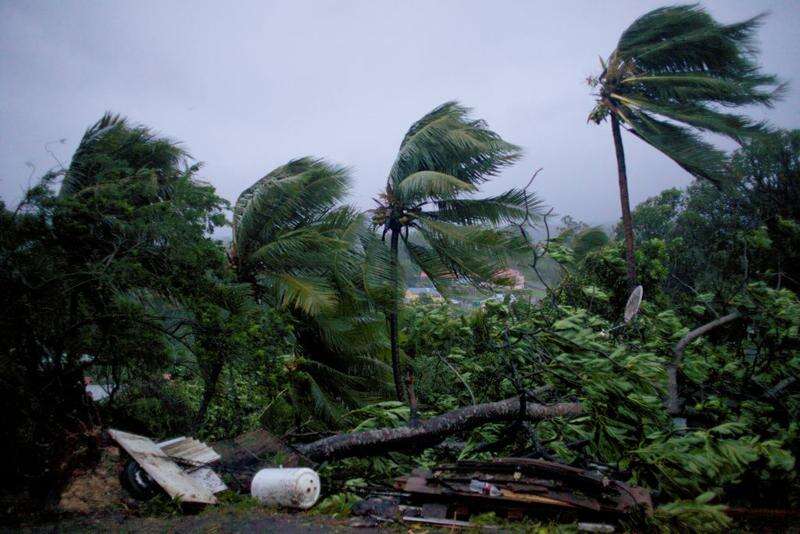
    As sustained heavy downpours and active storm systems continue to pummel the northern Dominican provinces of Puerto Plata and Espaillat, the COE has upgraded those two areas to the highest level of red alert, signaling imminent, life-threatening weather risks. A broader swathe of the country, including the nation’s capital district known as the National District, remains under lower-level yellow and green alerts, with emergency management teams working around the clock to track evolving conditions, assess damage, and pre-position response resources if conditions worsen.

    In its public advisory, shared across the embassy’s official social media channels including Instagram, the U.S. diplomatic mission urged all people in affected zones — from local citizens to U.S. travelers staying in the country — to prioritize safety by relying on updates from official Dominican government emergency outlets, checking frequent weather forecasts, and preparing for potential secondary hazards tied to the persistent precipitation. Those hazards include widespread road closures, traffic disruptions, flash flooding, and potential landslides in low-lying or hilly areas, all of which are common during extended periods of heavy tropical rainfall in the Caribbean nation.

    The warning comes as the Dominican Republic, a top Caribbean tourist destination, regularly faces heightened storm activity during the Atlantic hurricane season, when sustained rainfall can quickly overwhelm local drainage infrastructure and disrupt travel and daily life for communities across the country.

  • Taiwan Navy Band Performs in Belize During Training Ship Visit

    Taiwan Navy Band Performs in Belize During Training Ship Visit

    On April 22, 2026, a Taiwan Navy midshipman training and cruising squadron completed a 50-day ocean voyage to reach Belize, kicking off a series of goodwill exchange activities hosted by the Embassy of the Republic of China (Taiwan) in the Central American country.

    The centerpiece of the public outreach events was a special performance by the Taiwan Navy marching band, joined by the service academy’s honor guard and Taekwondo demonstration team. The showcase blended military discipline, musical performance, and cultural display for local attendees, who were later invited to an open house onboard the training vessels, allowing local students and government officials to explore the ships first-hand.

    Beyond the ceremonial and cultural events, the visit puts a spotlight on 37 years of formal diplomatic and people-to-people ties between Belize and Taiwan, as well as the long-running military training partnership between the two sides. Francis Usher, chief executive officer of Belize’s Ministry of National Defense and Border Security, highlighted the deep personal connections embedded in this exchange during his remarks at the event.

    Usher noted that one Belizean officer cadet, Broaster, is currently completing his four-year training program as part of the Taiwan Naval Academy’s graduating class and is serving as a crew member aboard the visiting squadron. Following the conclusion of the Belize stop, Broaster will return to Taiwan with the squadron to begin specialized marine infantry training at Taiwan’s marine corps academy. This is not an isolated case: Usher added that a current Belize Defence Force pilot completed his foundational flight training at the Taiwan Air Force Academy years earlier.

    “Taiwan helps us a lot in specialty training in different ways to develop the capacity,” Usher explained. “Like I said, Taiwan has cracked the code. They invest in Belize’s most important resource, and that’s Belize’s people.”

    The goodwill visit, organized as part of the Taiwan Navy’s annual midshipman cruising training program, aims to strengthen international military exchanges, deepen bilateral cooperation, and highlight the long-standing diplomatic relationship between the two countries.

  • The Haitian Maritime and Navigation Service raises its voice

    The Haitian Maritime and Navigation Service raises its voice

    Haiti’s top maritime regulator has launched a urgent compliance push targeting unsafe coastal shipping operations in the Caribbean nation’s territorial waters, announcing strict penalties for vessel owners that fail to resolve outstanding maintenance violations. In an official circular published April 21, 2026, Éric Prévost Jr., Director General of the Haitian Maritime and Navigation Service (SEMANAH), exercised his statutory authority over navigational safety and maritime law enforcement to order immediate adherence to existing maritime rules for all coastal vessels operating in Haitian jurisdiction.

    The regulator confirmed that it has documented widespread non-compliance across the sector, with a significant number of vessels failing to meet mandatory requirements for periodic dry-dock maintenance. These violations directly contradict core provisions of the 1974 International Convention for the Safety of Life at Sea (SOLAS), including all subsequent amendments, as well as established clauses in Haiti’s own domestic Maritime and Navigation Code.

    Under the new directive, any vessel found operating outside regulatory guidelines has been given a strict 15-day window, counting from the date the circular is formally served, to submit either a valid, up-to-date dry-docking certificate or a fully completed technical report of a recent hull inspection to SEMANAH for review. Failure to correct the violation and submit the required documentation within this mandated timeframe will trigger immediate administrative action: the vessel’s operating permit will be automatically suspended with no additional administrative procedures required, and all commercial and private maritime activity for that craft will be banned until compliance is achieved.

    SEMANAH made clear that competent local enforcement authorities will be called in to ensure these measures are implemented, and that enforcement via official force remains an option if non-compliant operators refuse to cooperate. In a statement accompanying the circular, the agency emphasized that it will not accept any operational practice that puts seafarers, coastal communities, or Haiti’s sensitive marine ecosystem at unnecessary risk. The move comes amid growing international and domestic pressure to improve maritime safety standards across Haiti’s coastline, a critical transport artery for the island nation’s domestic trade and supply networks.