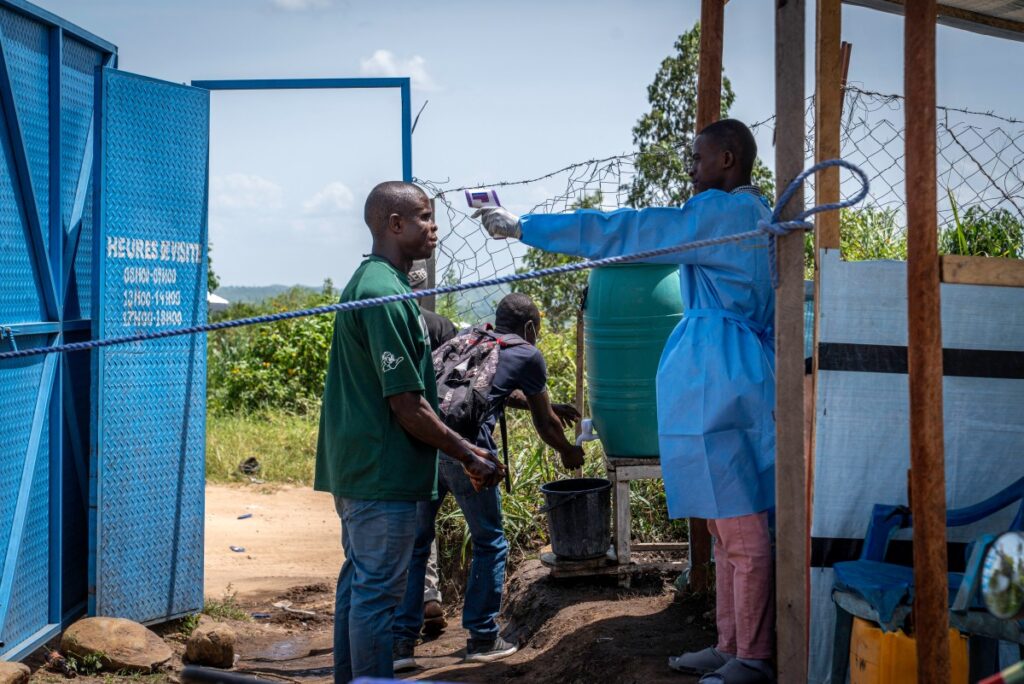
In the wake of an expanding Ebola outbreak centered in the Democratic Republic of Congo (DRC), a controversial plan by the United States to construct a dedicated quarantine facility for its citizens in Kenya has sparked legal action, public health concerns, and constitutional debate across the East African nation.
On Thursday, the Nairobi-based Kenyan human rights organization Katiba Institute confirmed it had submitted a formal court petition to block the project entirely. The petition demands not only that the facility be prevented from commencing operations but also that authorities ban any entry of individuals potentially exposed to the Ebola virus through this program, according to statements from the group.
The rights organization has leveled sharp criticism at the opaque process behind the facility’s development, saying the project was advanced unilaterally and without public transparency. This lack of consultation, Katiba Institute argues, violates core tenets of Kenya’s constitution and creates unacceptable risks for the country’s population.
A senior U.S. administration official has previously framed the project as a public health safety measure, describing the planned site as a modern, “state-of-the-art” facility intended to house U.S. citizens for quarantine after they exit the DRC, which has been grappling with the ongoing outbreak since it was declared in mid-May.
The plan has also drawn concern from top African public health leadership. Jean Kaseya, director of the Africa Centres for Disease Control and Prevention (Africa CDC), warned during a recent press briefing that the facility could place unplanned, additional strain on Kenya’s already stretched national health system. “Adding an international quarantine responsibility for foreign nationals could stretch their national capacities… If it’s not well supported by additional resources,” Kaseya explained, highlighting the risk of overburdening local infrastructure without sufficient backing.
Nora Mbagathi, executive director of Katiba Institute, emphasized the core motivations behind the legal challenge, saying, “The case is about preserving constitutional accountability, protecting public health and ensuring that no government may place expediency above the lives and safety of the people of Kenya.”
To date, Kenya has implemented mandatory Ebola testing for all incoming travelers from affected regions, and has not recorded any confirmed cases linked to the current outbreak within its borders. Uganda, which shares borders with both the DRC and Kenya, has already documented at least seven cases of the virus.
Kenya’s Ministry of Health has not issued a formal direct response to questions about the proposed facility, only stating broadly that the country is open to collaboration with international partners, including the United States.
Current data from the World Health Organization puts the outbreak’s toll at more than 1,000 combined confirmed and suspected cases, with 10 confirmed deaths and 223 suspected fatalities. Complicating response efforts, the outbreak is driven by the Bundibugyo strain of Ebola, for which no licensed vaccine or targeted treatment currently exists.