分类: world

  • Prime Minister Browne pleased with Booby Alley Development

    Prime Minister Browne pleased with Booby Alley Development

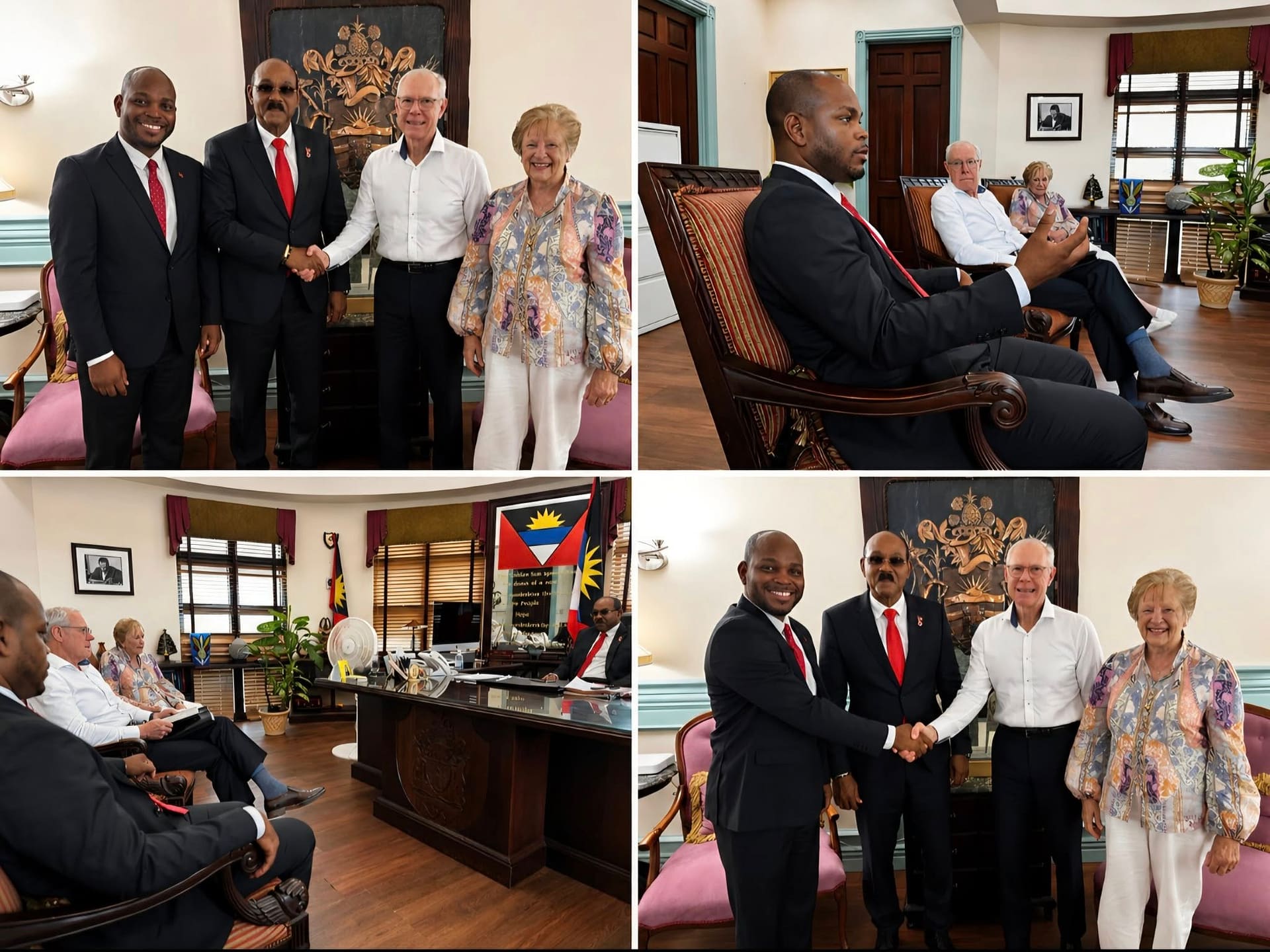
    On a recent inspection visit to the ongoing Booby Alley Housing Project in Antigua and Barbuda’s Point community, Prime Minister Gaston Browne joined Chinese Ambassador to Antigua and Barbuda Jiang Wei and other Chinese government delegation members to review construction work that is steadily advancing toward its scheduled completion later this year.

    During the tour, Browne shared glowing feedback on both the speed of construction and the high standard of work being delivered. He framed the initiative as far more than a residential development, calling it a life-changing intervention for the entire local community. “I am very pleased with the progress made so far,” the Prime Minister stated, noting that the project goes beyond building new walls and roofs—it creates a path to restored dignity and expanded economic opportunity for every resident impacted.

    Browne particularly highlighted the critical role of bilateral partnership with China, emphasizing the Chinese government’s transformative contribution to making the project possible. He argued that the development stands as a gold-standard example of productive international cooperation, delivering tangible, measurable improvements to citizens’ daily lives while breathing new life into one of Antigua and Barbuda’s oldest, most historically significant communities.

    Ambassador Jiang echoed Browne’s positive assessment of the project’s progress. She applauded the close, coordinated collaboration between the two nations and recognized the relentless on-the-ground work of construction teams that have kept the project on schedule. Jiang also reaffirmed China’s longstanding commitment to supporting sustainable, people-centered development across Antigua and Barbuda, noting that the housing project is a tangible reflection of the deep, lasting friendship binding the two countries and peoples.

    Funded through a substantial grant from the Chinese government, the Booby Alley development is a cornerstone of the Antigua and Barbuda government’s national urban renewal strategy. When complete, it will deliver 150 modern, condominium-style housing units engineered to withstand extreme climate events, alongside upgraded public infrastructure that will serve the entire community. The project is specifically designed to replace the aging, substandard and informal housing structures that previously stood in the Booby Alley area, where many longstanding local residents lived in precarious conditions.

    Priority for the new units is given to existing Point community residents who occupied the original Booby Alley neighborhood. The government’s formal plan prioritizes relocating and regularizing housing status for these long-term residents, granting them access to safe, climate-resilient modern homes that meet contemporary living standards. Any remaining units after existing residents are accommodated will be offered through a structured rent-to-own ownership framework, expanding access to affordable quality housing for additional community members.

    As the inspection tour concluded, both Browne and Jiang reaffirmed their shared commitment to seeing the project through to successful completion, with the shared goal of delivering long-term, sustainable positive change for all residents of the Point community. With construction on track, the full development is on schedule to open to residents by the end of 2024.

  • U.S. Coast Guard Offloads $19.3M in Cocaine Seized in Caribbean Sea

    U.S. Coast Guard Offloads $19.3M in Cocaine Seized in Caribbean Sea

    In a major win for maritime counter-drug trafficking operations, the U.S. Coast Guard Southeast has announced the successful offloading of approximately 2,570 pounds of seized cocaine worth an estimated $19.3 million, recovered during three separate interdiction missions in the Caribbean Sea. Alongside the massive drug seizure, six individuals suspected of involvement in illicit smuggling activities were transferred into the custody of federal law enforcement authorities on Thursday at the U.S. Coast Guard Base located in Miami Beach. The intercepted narcotics were seized during coordinated operations that brought together multiple military and law enforcement assets, including the U.S. Coast Guard Cutter Tahoma and the USS Billings, which had a dedicated embarked Coast Guard law enforcement detachment on board to support the mission. The final offloading process at the Miami Beach base was completed by the crew of the Coast Guard Cutter Resolute. This latest seizure is part of a broader, ongoing nationwide and international effort by the U.S. Coast Guard to disrupt the transnational movement of cocaine and other banned controlled substances across maritime borders. So far in 2025, the service has achieved a historic milestone, seizing more than 511,000 pounds of cocaine total — a volume that exceeds three times the service’s average annual seizure volume over previous years. Since the launch of Operation Pacific Viper, a major targeted counter-narcotics initiative that launched in early August, the Coast Guard has already seized over 215,000 pounds of cocaine and taken 160 suspected drug traffickers into custody across its operating areas. In addition to the surface vessels that carried out the interdictions, the multi-agency operation drew on support from a wide range of specialized units, including the Coast Guard Helicopter Interdiction Tactical Squadron, Tactical Law Enforcement Team South LEDET 405, Joint Interagency Task Force South, and watchstanding personnel from the Coast Guard Southeast District, all of whom coordinated closely to disrupt the smuggling networks.

  • Woman slain outside church had been receiving death threats, says friend

    Woman slain outside church had been receiving death threats, says friend

    MONTEGO BAY, Jamaica — A shocking act of gun violence has cut short the life of a 38-year-old Jamaican woman who was gunned down Wednesday afternoon while selling books on the grounds of a prominent church in this western Jamaican city, with investigators now pointing to a dispute over property inherited from her recently deceased husband as a leading line of inquiry.

    Cora Thompson was attacked just after 2:00 pm outside the Montego Bay New Testament Church of God on Water Lane, where she had been an active, committed member for five years and served as a choir singer. At the time of the shooting, congregants inside were holding a live-streamed fasting and prayer service, and the echo of at least five gunshots sent the gathering into shock and disbelief.

    A close anonymous friend of Thompson confirmed to local publication Jamaica Observer on Friday that Thompson had been targeted with repeated threats before her killing. According to the friend, at least three separate death threats had been made against Thompson in the period leading up to the attack.

    While Jamaica’s police force has not publicly confirmed the existence of these threats, a senior officer involved in the ongoing investigation, speaking on condition of anonymity, told the Observer that domestic dispute rooted in contested assets is the primary direction detectives are leaning toward. The officer added that investigators are focusing on property and assets linked to Thompson’s late husband, who died recently of undisclosed natural causes and was scheduled to be laid to rest this weekend.

    Family members, who have requested privacy amid their grief, remembered Thompson as a gentle, giving person who avoided conflict at all costs. A cousin described her as someone who would choose to walk away from any confrontation rather than engage. Those close to her also noted she was a quiet, devout Christian who spent much of her time engaged with church activities. Bishop Ruel Robinson, senior pastor of the Montego Bay New Testament Church of God, echoed those tributes, calling Thompson a high-spirited, cooperative and supportive community member who got along well with nearly everyone she met.

    Thompson, a native of Roehampton in southern St James who most recently resided in central Montego Bay’s Humber Avenue, is survived by her 12-year-old son, who is now in the care of Thompson’s grieving mother.

    The killing marks the second time in recent years that a woman has been murdered on the grounds of a house of worship in western Jamaica, and the two cases bear striking, unsettling similarities. In January 2021, Andrea Lowe-Garwood was shot and killed while worshipping inside the Agape Christian Fellowship Church in Falmouth, Trelawny. Like Thompson, Lowe-Garwood’s death was immediately linked to disputes over her late husband’s property and possessions.

    In that 2021 case, Lowe-Garwood’s stepson Javon Garwood was charged with contracting gunman Dwight Bingham and getaway driver Leon Hines to carry out the killing. Bingham and Hines both pleaded guilty to their roles in the crime and agreed to testify against Garwood, but Bingham later withdrew his cooperation, leading to a jury acquittal for Garwood. Bingham was ultimately sentenced to 45 years in prison for the murder, while Hines received a six-year sentence as an accessory after the fact.

  • Libanon en Israël verlengen wapenstilstand na top in het Witte Huis

    Libanon en Israël verlengen wapenstilstand na top in het Witte Huis

    On a high-stakes diplomatic gathering held at the White House Oval Office on Wednesday, U.S. President Donald Trump announced a critical breakthrough: Lebanon and Israel have agreed to extend their existing bilateral ceasefire for an additional three weeks, keeping a fragile pause in hostilities that was set to expire this Sunday. The announcement followed a second round of U.S.-facilitated negotiations that brought together Israeli ambassador to the U.S. Yechiel Leiter and Lebanese ambassador to the U.S. Nada Moawad, with senior U.S. officials including Vice President JD Vance, Secretary of State Marco Rubio, and U.S. ambassadors to Israel and Lebanon Mike Huckabee and Michel Issa also in attendance.

    The negotiations come on the heels of a sharp escalation in cross-border violence that marked the deadliest day for Lebanon since the initial April 16 ceasefire took effect. On Wednesday, Israeli airstrikes across southern Lebanon killed at least five people, among them Amal Khalil, a journalist working for Lebanese newspaper Al-Akhbar. Khalil’s coffin was carried by mourners during her funeral in Baisariyeh, drawing global attention to the persistent human cost of the ongoing conflict. The Lebanese Ministry of Health confirmed three additional civilian deaths, including injuries to a child, while the Israel Defense Forces reported it killed two armed individuals it said approached its positions in a threatening manner. The IDF has launched an investigation into the incident that wounded two journalists, emphasizing it does not target journalists as a matter of policy.

    In a post published to his social platform Truth Social shortly after the meeting, Trump called the gathering “very productive” and outlined the U.S.’s next steps: “The United States will work alongside Lebanon to help protect the country against Hezbollah.” The Iran-aligned armed group Hezbollah, which has been engaged in open conflict with Israeli forces, was not invited to the Washington talks. The organization has repeatedly reiterated its right to resist what it terms Israeli occupation, and while a Hezbollah member of parliament stated the group supports extending the ceasefire on the condition Israel fully adheres to its terms, Hezbollah maintains its opposition to direct negotiations with Israel and has called on the Lebanese government to cut all contact with the Jewish state.

    Trump struck an optimistic tone about long-term peace prospects, telling reporters there is a “strong chance” that a permanent peace deal between Lebanon and Israel can be reached within the 21-day extension period. He added that he hopes to host Israeli Prime Minister Benjamin Netanyahu and Lebanese President Joseph Aoun for direct talks in Washington in the near future. As part of his push for broader normalization, Trump called on Lebanon to repeal longstanding anti-normalization laws that ban official contact with Israel, asking reporters “Is it a crime to talk to Israel?” and claiming he would ensure the legislation is scrapped “very quickly.”

    Following the announcement, Ambassador Moawad thanked Trump for his administration’s mediation, saying “With your help and support, we can make Lebanon great again.” According to a senior Lebanese official, Beirut’s core priorities in the next phase of negotiations will be securing a full Israeli withdrawal from occupied southern Lebanese territory, the return of all Lebanese detainees held by Israel, and formal demarcation of the shared Israel-Lebanon land border. On the Israeli side, officials have made clear they seek cooperation from the Lebanese government to disarm Hezbollah, a process the Lebanese government has been pursuing peacefully for roughly a year. Trump did not share details of what U.S. assistance to Lebanon would entail, but reaffirmed Israel’s inherent right to defend itself against Hezbollah attacks.

    The current escalation of tensions between Israel and Hezbollah dates back to March 2, when the group launched large-scale cross-border fire in solidarity with Iran amid the broader regional conflict. Since Israel launched its counter-offensive that same month, Lebanese authorities report nearly 2,500 people have been killed in the fighting. Israel currently maintains a 5 to 10 kilometer deep buffer zone inside southern Lebanon, a deployment it says is necessary to protect northern Israeli communities from rocket and ground attacks by Hezbollah, which has fired hundreds of projectiles into Israeli territory since the conflict resumed. The IDF has repeatedly warned Lebanese civilians against entering the occupied buffer zone, even as scattered clashes and airstrikes continue to claim lives despite the initial ceasefire.

    The ceasefire extension comes as part of the Biden administration’s (note: correction, this is the Trump administration per original text) – the Trump administration’s broader diplomatic push to de-escalate regional tensions tied to the ongoing standoff with Iran, which has called for Hezbollah to be included in any broader regional ceasefire agreement. While violence has dropped dramatically since the first ceasefire took effect, intermittent clashes have persisted, leaving the fragile new extension hanging in the balance as both sides prepare for the next phase of negotiations.

  • Dominican Republic, Costa Rica and Ecuador condemn Iran’s seizure of MSC Francesca

    Dominican Republic, Costa Rica and Ecuador condemn Iran’s seizure of MSC Francesca

    In a rare coordinated display of diplomatic pushback, three Latin American nations — the Dominican Republic, Costa Rica, and Ecuador — have publicly condemned Iran’s seizure of the Panama-flagged commercial vessel MSC Francesca in the strategically critical Strait of Hormuz, issuing a unified call for the immediate release of both the ship and its crew.

    The joint statement released by the three governments outlines key details of the incident: the container ship, which is owned by an Italian shipping firm and registered under Panama’s flag, was intercepted by Iranian authorities while making a routine transit through the busy international waterway. Beyond demanding the vessel’s release, the three nations are calling for an immediate halt to all actions that put unimpeded, free navigation through international waters at risk.

    Senior officials from the three countries argue that the seizure does not merely run counter to established international norms, but constitutes a clear violation of binding international law. They frame the action as a direct challenge to the long-recognized principle of freedom of navigation, a right explicitly enshrined and protected under the United Nations Convention on the Law of the Sea. The statement also notes that Iran’s actions infringe on the sovereign rights of Panama, the flag state of the seized vessel, and amplify long-simmering security concerns across one of the globe’s most vital trade and energy chokepoints. Roughly 20% of the world’s daily oil supplies pass through the Strait of Hormuz, making consistent, unthreatened access critical to global energy markets and economic stability.

    The joint communique further warns against the escalating trend of coercive actions targeting civilian shipping engaged in legitimate international transit, emphasizing that such moves are fundamentally incompatible with the global legal obligations all signatory nations are bound to uphold. In closing, the three governments called on the broader international community to stand against any behavior that erodes maritime security, reaffirmed their unwavering solidarity with Panama, and reiterated their full commitment to upholding the framework of international maritime law.

  • Haiti mobilizes its international partners

    Haiti mobilizes its international partners

    In a high-profile gathering on the margins of a UN Security Council session focused on the UN Secretary-General’s quarterly report on the UN Integrated Office in Haiti (BINUH), Haiti’s top diplomatic and governmental leaders have made an urgent appeal for stepped-up global support to address the country’s escalating challenges. Held on Thursday, April 23, 2026, the side event was co-hosted by Haiti and Canada through their permanent missions to the United Nations, drawing an unprecedented cross-section of global stakeholders to coordinate action on Haiti’s crisis.

    More than 60 UN member states took part in the event, with major global and regional powers including the United States, France, Germany, China, Brazil, Kenya, El Salvador, and the Dominican Republic sending representatives. Multiple leading international institutions also joined the deliberations, alongside senior officials heading key missions in Haiti. Attendees included Jack Christofides, the designated Special Representative for the Gangs Suppression Force (GSF), UNICEF Executive Director Catherine Russell, and Carlos G. Ruiz Massieu, the UN Secretary-General’s Special Representative for Haiti.

    The core mandate of the gathering was to tighten coordination across three critical groups: UN Security Council members, nations contributing personnel and resources to the Gangs Suppression Force (GSF), and all international and regional partners that collaborate directly with Haitian state institutions. With the Caribbean nation grappling with prolonged gang violence, institutional instability, and stalled democratic progress, the event served as a platform for Haiti’s leadership to lay out its most pressing priorities for global support.

    In his keynote address to attendees, Haitian Prime Minister Alix Didier Fils-Aimé pressed the international community to ramp up its collective mobilization to back the Haitian government’s two core priorities: restoring national security and advancing the restart of the country’s electoral process. The Prime Minister underlined the critical urgency of fully deploying the GSF across Haiti to counter rampant gang activity, while also stressing that enhanced international backing is required to advance key institutional reforms. Among the most critical of these reforms, he highlighted strengthening the national justice sector and expanding efforts to combat systemic impunity for violence and corruption.

    The gathering marks a key moment in global diplomatic efforts to align behind Haiti’s recovery, as international stakeholders continue to work through the UN framework to coordinate a coordinated response to the country’s deepening crisis.

  • UN : Haiti between political hope and security emergency (video speech)

    UN : Haiti between political hope and security emergency (video speech)

    In a video address to the international community on April 23, 2026, UN Secretary-General Special Representative Ruiz Massieu outlined the stark dual reality currently defining Haiti: a rare moment of tangible institutional progress paired with an ongoing, devastating security emergency that continues to uproot millions of lives.

    Massieu framed the current moment as a striking Haitian paradox: while the country’s state institutions are slowly rebuilding their administrative function after years of collapse, large swathes of national territory remain deeply scarred by pervasive gang-related violence. He gave credit to the administration led by Prime Minister Alix Didier Fils-Aimé for successfully maintaining basic state continuity through a period of extreme instability. A key step forward highlighted by the envoy is the National Pact for Stability, signed by a broad cross-section of Haitian civil society, which signals a widespread commitment to forging a homegrown, Haitian-led solution to the years-long national crisis.

    The most significant milestone on the political path to normalcy, Massieu noted, is the successful completion of national political party registration — a process that has not been fully carried out since 2016. This foundational achievement paves the way for what the international community universally recognizes as the only legitimate end to the crisis: the holding of free, credible national elections that will restore full constitutional order to Haiti. Beyond this regulatory progress, the resumption of weekly Cabinet meetings inside Haiti’s National Palace, a practice that had been suspended for three years due to instability, marks a symbolic and practical step toward the state reclaiming control of central public spaces in the heart of Port-au-Prince.

    Coordination between Haitian national authorities and international support partners has also reached an unprecedented level of alignment, according to the UN envoy. The recent appointment of all key leadership positions at the United Nations Office for Security and Justice in Haiti, paired with strengthened operational coordination with Haiti’s national Gang Repression Force (FRG), has created a more unified front against armed groups.

    Even with these notable political gains, Massieu stressed that the overall security landscape remains deeply alarming. Recent targeted massacres in the Jean-Denis region and ongoing coordinated attacks across Haiti’s Southeast department prove that armed gangs retain both the capability and mobility to wreak widespread harm on civilian populations. As of the latest UN projections, the ongoing violence has displaced more than 1.45 million Haitians, who now live in overcrowded displacement camps or rely on host families for shelter. By the end of 2026, UN humanitarian estimates project that 6.4 million Haitians — more than half the country’s population — will require life-saving humanitarian assistance.

    To build lasting, sustainable peace in Haiti, Massieu argued that the international response cannot focus solely on security crackdowns. Reviving the country’s National Commission for Disarmament, Demobilization, and Reintegration is a critical priority, he said, as it creates a safe, viable path out of armed groups for young people who were forcibly recruited by gangs. Complementing this effort, the planned creation of specialized judicial units focused on prosecuting mass atrocities and transnational financial crime is designed to finally break the cycle of impunity that has enabled systemic violence in Haiti for decades.

    Massieu emphasized that Haiti currently stands at a critical window of opportunity that cannot be wasted. Drawing on a traditional Haitian proverb that notes shared burdens are lighter to carry, he called for sustained, unified international support to help Haitian institutions carry forward the progress they have made. The year 2026, he urged, must become the turning point where hard-won political progress finally translates to tangible, everyday security and improved living conditions for all Haitian citizens.

  • Climate experts say hotter, drier days ahead

    Climate experts say hotter, drier days ahead

    Leading regional climate research institutions have issued an urgent warning that the Caribbean region is likely to face two consecutive years of unusually high temperatures and prolonged dry conditions, driven by a strengthening El Niño event that raises the likelihood of widespread drought, public health risks, and far-reaching economic fallout. The joint alert comes from two leading regional bodies: the Caribbean Institute of Meteorology and Hydrology (CIMH) and the Climate Studies Group Mona at the University of the West Indies. Both organizations are calling on every sector of society, from national governments and private businesses to small-scale farmers and individual households, to launch immediate preparedness measures to mitigate potential damage.

    Climatologist Cedric Van Meerbeeck explained that current long-range forecasts point to extended periods of below-average rainfall paired with sustained spikes in temperature and humidity across much of the region. This combination of conditions does not only put severe pressure on already strained freshwater supplies; it also threatens to undermine agricultural output and create measurable risks to public human health.

    Looking at historical climate patterns, major El Niño events have repeatedly triggered extreme, long-lasting drought across the Caribbean. Notable examples include the severe dry spells recorded in 2009–2010 and again in 2014–2016. Experts emphasize that Eastern Caribbean nations, which are already struggling with ongoing dry conditions, face a particularly challenging outlook: water reserves may recover far more slowly than usual even once the annual wet season gets underway.

    Beyond the immediate threat of drought, the region is bracing for a cascade of overlapping climate hazards. Extreme heat events will increase the risk of uncontrolled wildfires across dry landscapes, while marine heatwaves threaten to trigger widespread coral bleaching that can permanently damage fragile Caribbean marine ecosystems that underpin tourism and fishing industries.

    University of the West Indies professor Michael Taylor, a leading climate researcher in the region, warned that current forecasts point to the emergence of what he termed a “multi-hazard regime”. In this scenario, heat, drought, and marine climate impacts do not occur in isolation; they overlap and amplify each other, creating more severe risks than any single hazard would pose alone. Taylor stressed that these compound extreme events pose an existential threat to the livelihoods of millions of Caribbean residents, and require coordinated, cross-border collective action to address effectively.

    While El Niño is historically linked to a less active Atlantic hurricane season, climate specialists are quick to note that hurricane risk has not been eliminated entirely. Even a single intense storm or a short period of extreme rainfall can cause catastrophic damage to Caribbean communities, as demonstrated by past destructive events including Hurricane Andrew and Tropical Storm Erika.

    The potential impacts of this El Niño event extend far beyond immediate weather-related disruption. Reduced rainfall and higher average temperatures will place additional strain on already vulnerable water and energy infrastructure, cut into expected agricultural yields, and exacerbate public health risks — ranging from a rise in heat-related illnesses to growing challenges maintaining safe drinking water quality across the region.

    Wider economic ripple effects are also already on the horizon. Climate-driven disruptions are already altering key global trade routes that the Caribbean depends on, most notably the Panama Canal, where ongoing drought conditions have forced restrictions on shipping traffic. These disruptions are expected to trickle down to Caribbean supply chains, driving up the cost of imported goods for local consumers.

    Climate specialists say that ongoing monitoring of evolving conditions remains critical, noting that the accuracy of El Niño projections typically improves significantly starting in May. Updated, detailed guidance will be presented at the upcoming Caribbean Climate Outlook Forum, where regional climate specialists will share refined projections ahead of the annual wet and hurricane seasons.

    Regional officials reiterated that early public awareness and proactive preparedness will be the most critical factors in reducing the potential damage that this developing climate pattern could inflict on communities across the Caribbean.

  • St. Vincent and the Grenadines pledges $100,000 US aid package to support the Cuban people

    St. Vincent and the Grenadines pledges $100,000 US aid package to support the Cuban people

    In a public address to the nation’s Parliament this week, St. Vincent and the Grenadines’ Minister of Foreign Affairs Fitzgerald Bramble announced a landmark $100,000 U.S. humanitarian aid commitment to the people of Cuba, reaffirming the Caribbean nation’s long-standing solidarity with the island amid its ongoing economic and social challenges.

    The decision to approve the aid package came directly out of collaborative discussions held during the recent CARICOM Heads of Government Meeting hosted by St. Kitts and Nevis, where regional leaders convened to coordinate collective responses to shared issues impacting small island developing states across the Caribbean. Minister Bramble emphasized that the pledge underscores St. Vincent and the Grenadines’ unwavering support for the Cuban people, aligning with consistent regional efforts to stand in solidarity with neighboring nations facing external pressures.

    Beyond the financial commitment, Bramble commended the work of Cuba’s newly installed Head of Mission in St. Vincent and the Grenadines, noting the diplomatic mission has delivered outstanding service to the Caribbean nation’s community living and studying in Cuba. The mission maintains regular, open communication with Vincentian students pursuing education in Cuba, and provides consistent updates to the students’ families back home. Bramble gave public assurance that the government of St. Vincent and the Grenadines will continue to leverage all available resources to support these students and their families as they navigate ongoing uncertain conditions.

    The announcement comes at a time of renewed focus on regional cooperation within the Caribbean Community, with member states increasingly aligning on shared priorities to support collective resilience and mutual assistance across the bloc.

  • Trump Orders “Shoot to Kill” in Hormuz; Pope: ‘Not in Favour of War’

    Trump Orders “Shoot to Kill” in Hormuz; Pope: ‘Not in Favour of War’

    Tensions in the strategically critical Strait of Hormuz have reached a dangerous new boiling point, after former US President Donald Trump issued a sweeping “shoot to kill” directive targeting Iranian vessels suspected of laying mines in the key global waterway. The aggressive order has sent shockwaves through global energy markets and stoked widespread fears that a localized maritime dispute could spiral into a full-scale regional conflict.

    The escalation comes amid growing international pushback against the rising hostilities, led by Pope Leo XIV, who has reaffirmed his firm opposition to the deepening US-Iran confrontation. In a pointed public address, the head of the Catholic Church emphasized that any path to lasting resolution must grow out of a commitment to peace, not violent confrontation. “As a pastor I cannot be in favour of war,” Pope Leo XIV stated. “I would like to encourage all to make efforts to look for answers that come from a culture of peace and not from a place of hate and division.”

    The pontiff went further, highlighting the far-reaching human and economic costs of the escalating standoff. He warned that the mounting conflict has already created a chaotic situation for the global economy, pushing up energy costs and deepening hardship for ordinary people around the world. He also issued a separate condemnation of the Iranian government’s crackdown on domestic protests, stressing that all human life deserves inherent respect regardless of context.

    Pope Leo XIV’s remarks come one week after Trump publicly attacked the pontiff for his critical stance on the Middle East crisis, which has re-emerged as one of the world’s most volatile military flashpoints. In recent days, the Trump administration has ramped up US military presence in the region: Washington currently has 19 warships deployed across the Middle East, including two full aircraft carrier strike groups, with additional military assets positioned in the Indian Ocean to support ongoing operations.

    In comments to reporters, Trump confirmed there is no set deadline for ending hostilities or entertaining Iranian peace overtures, and repeated his claim that Iran’s leadership is fractured and indecisive. “Iran is having a very hard time figuring out who their leader is!” Trump asserted. The claim was immediately rejected by top Iranian officials, including Iranian President Masoud Pezeshkian and Parliament Speaker Mohammad Bagher Ghalibaf, who jointly insisted that the country maintains “iron unity” under the leadership of Supreme Leader.

    Global energy markets have already reacted sharply to the rising tensions. The Strait of Hormuz remains one of the world’s most critical chokepoints for global oil trade, with roughly a fifth of all globally traded crude passing through the waterway daily. As traders price in the rising risk of disrupted shipping lanes, oil prices have climbed sharply in recent trading sessions, adding new inflationary pressure to already fragile global economies.