It has been nearly four years since the global Black Lives Matter movement reignited long-overdue conversations about the enduring legacy of chattel slavery in modern societies, and a new investigative work is now pulling back the curtain on one of the most underreported stories linking a prominent British political family to centuries of slave-based profit in Barbados.
Written by veteran investigative journalist and historian Dr. Paul Lashmar, *Drax Hall* explores the full, unvarnished history of the Drax family, tracing their fortune and influence back to the 17th century, when founder James Drax built one of the first commercially successful sugar plantations on the Caribbean island and pioneered the brutal system of chattel slavery that would become the backbone of the transatlantic slave economy.
In an interview with Barbados TODAY, Lashmar explained that the book was a serendipitous six-year project, sparked by a moment of curiosity in the summer of 2020. Driving past the sprawling English country estate owned by Richard Drax, a wealthy former British Member of Parliament, Lashmar realized almost nothing had been published about the origins of the Drax family’s vast wealth, a gap he set out to fill. What began as a small inquiry into Richard Drax’s current assets quickly expanded when a source connected the family to the historic Drax Hall plantation in Barbados. Lashmar partnered with fellow former journalist Johnathan Smith to publish an initial investigative article revealing that Richard Drax remained the sole beneficiary of the 400-year-old plantation. The story drew international attention, particularly in countries like Barbados that have led global calls for reparations from nations and families that profited from slavery.
Over centuries, the Drax family’s ties to the institutionalization of chattel slavery run far deeper than land ownership, Lashmar’s research confirms. Just decades after James Drax first established Drax Hall, his son Henry Drax penned a widely circulated, still-extant manual that detailed the brutal management of enslaved labor on sugar plantations. A century later, another family member, Edward Earl Drax, updated the manual for a new generation of plantation owners; that document is now held in the collection of the Barbados Museum.
Lashmar emphasized that the sweeping history of the Drax family’s central role in building and normalizing chattel slavery had never been fully told by other historians, making the book a necessary work of public historical record. “As a journalist, I just thought this is an extraordinary story, very historically important, and I had to write it,” he said.
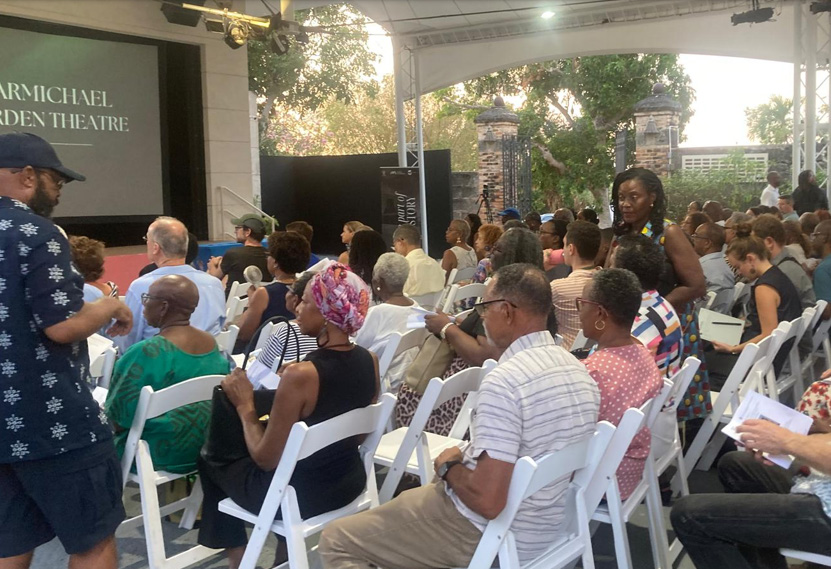
The book was officially launched last week at the Barbados Museum and Historical Society, and it has already earned strong reception from audiences in both Barbados and the United Kingdom, particularly among activists and scholars leading the global movement for reparations for transatlantic slavery. During the launch, Lashmar presented a copy of the work to David Comissiong, Barbados’ Ambassador to CARICOM, a leading figure in the Caribbean reparations movement.
While Lashmar declined to dictate specific policy or reparative actions to descendants of slave-owning families, he stressed that families with well-documented legacies of profiting from slavery have a responsibility to engage openly with their history and contribute to discussions about what appropriate reparations should look like for affected communities. The 400-year continuous ownership of Drax Hall by the Drax family, Lashmar argues, makes their story a critical lens through which to examine how the profits of slavery continue to shape wealth and power in the present day.