分类: world

  • VS en Iran escaleren strijd om Straat van Hormuz

    VS en Iran escaleren strijd om Straat van Hormuz

    Tensions between the United States and Iran reignited in the Gulf region on Monday, as both sides launched new military operations in a battle for control over the strategically critical Strait of Hormuz, pushing a fragile month-long ceasefire to the breaking point. This latest round of rocket and drone strikes comes after former US President Donald Trump announced a new naval initiative dubbed “Project Freedom”, designed to escort stalled commercial and oil tankers through the closed waterway.

    The Strait of Hormuz, the world’s most vital chokepoint for global energy trade, has been effectively closed to most commercial shipping since the US-Israeli war against Iran began in February. The ongoing conflict has already claimed thousands of lives and caused severe disruption to global oil supply chains, sending ripples through energy markets worldwide.

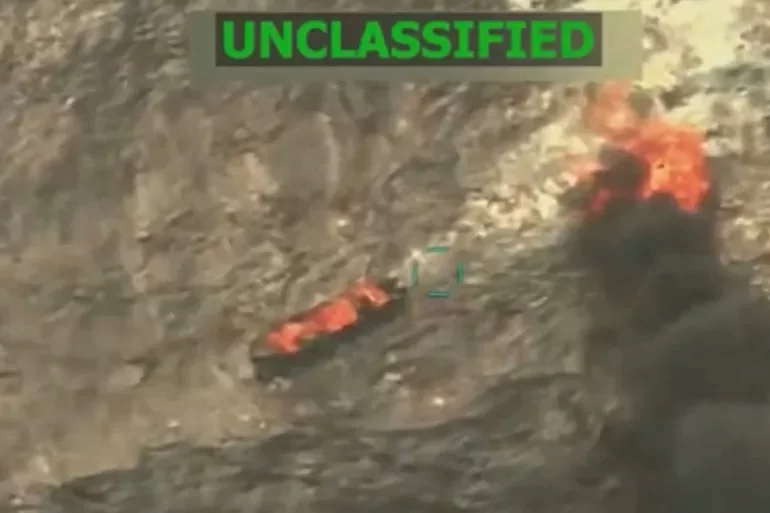
    Multiple commercial vessels operating in the Gulf reported explosions and onboard fires on Monday. US military forces confirmed they destroyed six small Iranian military craft operating in the area, while Iranian rocket strikes set ablaze a key oil port in the United Arab Emirates that hosts a major US military base.

    Trump first announced Project Freedom via social media, shortly after a congressional legal deadline for authorization of further war operations expired. The former president claimed the war “is already over”, a statement immediately disputed by multiple members of the US Congress who have pushed for greater oversight of military action in the region.

    While Monday’s strikes mark the first major military escalation since last month’s ceasefire, the new US escort initiative has so far failed to restart regular commercial shipping through the strait. Iran’s Islamic Revolutionary Guard Corps issued a stark warning that any further escalation will trigger new strikes on neighboring Gulf states that host US military forces. Major global shipping lines have confirmed they will keep avoiding the route until a formal end to hostilities is reached.

    Iranian Foreign Minister Abbas Araqchi emphasized that military force cannot resolve the ongoing standoff, noting that peace talks mediated by Pakistan are continuing to make incremental progress. He warned the US and UAE against being drawn into a “costly quagmire” by bad-faith actors.

    Despite Iranian denials of military activity, US defense sources confirmed that two US-flagged commercial transits completed passage through the strait on Monday escorted by US combat vessels. Danish shipping giant Maersk publicly confirmed that the US-owned cargo ship *Alliance Fairfax* exited the Gulf through the strait under US Navy protection.

    Admiral Brad Cooper, commander of US Central Command, reaffirmed that the six Iranian small craft were destroyed by US naval forces, and issued a direct warning to Iran to keep its forces away from US military assets. In response, Iran denied any reported losses and released a new maritime map claiming extensive territorial waters that include large swathes of the UAE’s coastal exclusive economic zone.

    Multiple independent reports of attacks trickled in through the day: South Korean shipping firm HMM reported its vessel HMM Namu suffered an engine room explosion and fire in the strait, with no casualties reported. The UK Maritime Trade Operations (UKMTO) security agency confirmed two separate attacks on commercial vessels near the UAE coast, while UAE state oil giant ADNOC confirmed one of its empty oil tankers was hit by an Iranian drone strike.

    The Iranian rocket attack on Fujairah, a major oil export terminal located just outside the Strait of Hormuz, is widely viewed as a significant escalation of hostilities. UAE authorities announced they reserve the right to respond to the attack and have shifted all school students to remote learning as a precautionary safety measure.

    Iran has accused the US of “military adventurism” in the region, and claimed it struck a US warship, forcing it to retreat from the area. US military officials rejected the claim, saying no US vessel was hit and that the operation against Iran’s small craft was a clear warning to Tehran.

    Global oil prices jumped more than 5% within hours of the new escalation, as investors priced in extended disruption to global energy supplies.

    Iran’s military command issued a new mandate on Monday requiring all commercial vessels to coordinate directly with Iranian armed forces to receive permission for transit through the strait. It added a stark warning that any foreign military unit, particularly US forces, will be targeted if they approach the waterway.

    While the US and Iran halted large-scale bombing operations four weeks ago and entered preliminary peace talks mediated by Pakistan, further negotiations have stalled in recent days. Iran submitted a 14-point peace proposal to the US through the Pakistani government, which calls for talks on Iran’s nuclear program to be delayed until after all hostilities end and oil export blockades are lifted. Trump has confirmed he is still reviewing the proposal, with multiple sources indicating it is likely to be rejected.

    Latest US intelligence assessments indicate Iran’s nuclear program has suffered only limited damage since the start of the conflict. Iran has repeatedly maintained that its nuclear program is entirely for peaceful civilian energy purposes, while the US has pushed for full inspections and limits on uranium enrichment to prevent any potential future nuclear weapons development.

  • Data-driven disaster management: Mapping displacement to build a resilient Caribbean

    Data-driven disaster management: Mapping displacement to build a resilient Caribbean

    Climate-fueled disasters including hurricanes, floods, wildfires and volcanic eruptions have displaced millions of people across the Caribbean over the past decade, growing in intensity and frequency to put unprecedented pressure on regional disaster response systems. As crises have mounted, response teams and policymakers have repeatedly highlighted a critical gap: the absence of consistent, reliable data on population displacement that would allow for more effective emergency action, long-term recovery and reduction of future loss of life and property.

    To address this pressing gap, the International Organisation for Migration (IOM) brought together representatives from National Disaster Offices and cross-regional disaster management partners for a two-and-a-half day regional workshop hosted in Barbados this past April. Held from 23 to 24 April, the gathering focused on strengthening regional capacity to collect, analyze and deploy displacement data to support faster, more equitable disaster response.

    By the close of the workshop, participants had made notable progress toward developing a regionally harmonized Standard Operating Procedure (SOP) for displacement data management, designed to align with the existing Damage Assessment and Needs Analysis (DANA) framework developed by the Caribbean Disaster Emergency Management Agency (CDEMA). Once finalized, the standardized SOP will improve coordinated, timely response across 13 participating Caribbean states, allowing displacement data to inform both immediate emergency relief operations and long-term recovery planning.

    In opening remarks, Barbados’ Minister of Home Affairs and Information Gregory Nicholls emphasized the human-centered core of the initiative, noting, “For Barbados, the guiding principle is simple. Families first.” Nicholls explained that robust, well-organized data allows first responders to locate displaced families faster, match aid to actual on-the-ground needs, and uphold the dignity of displaced people even when emergency systems are stretched beyond capacity. “Displacement data must always serve people and not processes,” he said.

    Over the course of the workshop, participants gained hands-on training with a suite of specialized tools and digital platforms built for displacement data management. These included IOM’s own Displacement Tracking Matrix (DTM) and Shelter Portal, as well as KoboToolbox, a platform designed for rapid field data collection during emergencies. Participants also explored geospatial and satellite-enabled tools including the Copernicus Emergency Management Service and MapAction, which strengthen capacity for mapping displacement, conducting analysis and planning response efforts.

    Discussions drew heavily on lessons learned from recent major disasters across the region, including Hurricanes Beryl and Melissa. Findings from CDEMA’s After Action Reviews following these storms, paired with national-level experiences from across the region, confirmed a widespread set of unmet needs: improving pre-disaster baseline population data, standardizing definitions of displacement and shelter types across borders, and streamlining data flows between shelters, emergency operations centers and national management systems.

    Patrice Quesada, IOM’s Coordination Officer for the Caribbean and Chief of Mission for Barbados, framed the initiative as a critical shift toward proactive rather than reactive disaster management. “Preparedness is about learning from experience,” Quesada said. “It is really about anticipating the next storm, not just responding to the last one. For that, we need to share experience with teams of experts who can trust and support each other when the time comes.”

    Participants across the region highlighted that a unified approach to displacement data will deliver tangible, practical benefits for vulnerable communities. Sashagaye Vassell, a Planning Analyst at Jamaica’s Office of Disaster Preparedness and Emergency Management, noted that Caribbean nations are disproportionately exposed to natural hazards and home to large numbers of at-risk people. “With this SOP, Caribbean states can better coordinate among ourselves to support the vulnerable and find targeted solutions to respond efficiently and effectively,” Vassell explained.

    The workshop also openly addressed persistent challenges that have long hindered support for displaced populations across the region. Livingston Pemberton, National Disaster Coordinator at Saint Kitts and Nevis’ National Emergency Management Agency, pointed to unregistered displaced people as one of the most common barriers to effective aid. “Sometimes displaced persons are not registered, making it very difficult to reach out to them,” Pemberton said. “If you are not able to capture them within the system, it is very difficult to render the assistance that they need.” He added that the new SOP directly solves this gap by clearly defining terminology, establishing a standardized methodology for capturing and analyzing displacement data, and streamlining information sharing between national and regional response mechanisms, allowing teams to support displaced people and restore normalcy much faster after a disaster.

    Participants also placed strong emphasis on the need for ethical, inclusive, people-centered data collection practices that account for the diverse needs of affected communities. Yemi Knight, founder of AnchorBridge Environmental Inc., noted that data collectors must prioritize cultural sensitivity when engaging with disaster survivors. “A person has just gone through a disaster, and you may meet different types of people, so you have to have the cultural sensitivity to interact with them,” Knight said.

    Discussions also expanded to address the broader social impacts of displacement that go far beyond emergency shelter. Simon Alleyne, a participant in the workshop, noted that displacement support requires more than just rebuilding housing. “It is also ensuring that they can be reintegrated into society, including access to employment and their rights as citizens,” Alleyne said.

    The scale of the displacement challenge across the Caribbean underscores the urgency of this work. Official estimates show that between 2012 and 2021 alone, disasters triggered 5.14 million new cases of internal displacement across the region. In just the past five years, 2.6 million people have been affected by floods, storms, wildfires and volcanic activity, highlighting the growing complexity of disaster management across the Caribbean.

    Funded by EU Humanitarian Aid as part of the broader Resilient Caribbean project, the workshop represents a major milestone in building data-driven disaster management systems across the region. In the coming months, follow-up activities will focus on building sustained capacity for National Disaster Offices through targeted training in data collection and analysis, vulnerability assessments, disaster response simulation exercises, and specialized training in Camp Coordination and Camp Management (CCCM) and other core preparedness areas.

    These collective efforts aim to build a more coordinated, prepared and resilient Caribbean, better positioned to protect vulnerable communities and save lives when future disasters strike.

  • US Ambassador Herschel Walker visits Nassau Cruise Port, highlights strong Bahamas–US ties

    US Ambassador Herschel Walker visits Nassau Cruise Port, highlights strong Bahamas–US ties

    Nassau Cruise Port, one of the busiest and most prominent cruise hubs in the Caribbean, recently welcomed a high-profile courtesy visit from the United States’ 14th Ambassador to the Commonwealth of The Bahamas, Herschel Walker, who was accompanied by his wife Julie Blanchard Walker for the full-day site tour.

    Under the leadership of Nassau Cruise Port CEO and Director Mike Maura Jr., the ambassadorial delegation was guided through the port’s active piers, core operational zones, and public visitor spaces. During the walkthrough, port leadership outlined the complex logistics that keep the facility running smoothly, including how it manages the steady flow of tens of thousands of annual passengers while upholding rigorous global service and safety standards. The tour gave Ambassador Walker an up-close look at the port’s role as a critical economic gateway connecting The Bahamas to North American and international travel markets.

    A core stop on the delegation’s itinerary was the on-site Bahamas Museum of Junkanoo, where the couple immersed themselves in the vibrant, centuries-old cultural tradition that forms a core part of national Bahamian identity. In photos from the visit, Ambassador Walker tried his hand at playing a traditional goatskin drum, joining in the rhythmic practice that is central to Junkanoo street parades and cultural celebrations.

    Beyond operational and cultural tours, the ambassador made time to connect directly with the people that power the port’s visitor experience. He held casual conversations with local small-business vendors, in-demand hair braiders that serve arriving cruise guests, and American leisure travelers already exploring the port’s marketplace. These informal exchanges, port officials noted, underscored the deep, people-centered social and cultural bonds that have defined the U.S.-Bahamas relationship for decades.

    In a press statement following the tour, Maura emphasized that Nassau Cruise Port views itself as an active steward of the bilateral relationship between the two nations. “We were honored to welcome Ambassador Walker to our facility,” Maura said. “The bond between The Bahamas and the United States is truly one-of-a-kind, and we are proud to contribute to strengthening that connection every single day. We take our responsibility very seriously: we safely welcome thousands of U.S. visitors through our gates annually, deliver a standout experience for every guest, and use our platform to showcase the very best of Bahamian culture and world-famous hospitality.”

    The visit also served as a platform for Nassau Cruise Port to highlight three core pillars of its current operational strategy: a sustained commitment to operational excellence that meets global cruise industry standards, a dedication to centering authentic Bahamian cultural representation for visitors rather than performative experiences, and ongoing support for local small entrepreneurs who build unique, memorable interactions for arriving guests. For the U.S. ambassadorial post, the tour offered a chance to engage directly with one of The Bahamas’ most economically important infrastructure assets and reaffirm the strength of bilateral ties between the neighboring nations.

  • Rising debt burdens disproportionately impact women in developing countries, UN study finds

    Rising debt burdens disproportionately impact women in developing countries, UN study finds

    As sovereign debt levels continue to climb across low- and middle-income economies, new research from the United Nations Development Programme (UNDP) has revealed a stark, underreported truth: women in developing countries are bearing the overwhelming brunt of fiscal austerity measures triggered by rising debt repayment obligations. The findings, drawn from three decades of data collected across 85 nations, paint a clear picture of how existing gender inequalities are amplified by economic strain, with global geopolitical tensions set to push this crisis even further.

  • 22 Electric Vehicles handed over to public sector – What comes next

    22 Electric Vehicles handed over to public sector – What comes next

    A landmark step in sustainable transport development is underway in the Caribbean island nation of Saint Lucia, as 22 new electric vehicles have been fully allocated to key government and public sector institutions, marking the official operational launch of a demonstration pilot under the Nationally Determined Contributions Technology (NDC-TEC) Project.

    The core mission of the initiative is to showcase the practical benefits and real-world feasibility of integrating electric vehicles into public sector operations, while advancing the country’s nationally mandated targets for low-carbon economic and social development. Vehicle distribution, which kicked off in early March, concluded last week with the final batch of EVs assigned to 12 critical public service entities, including the Saint Lucia Postal Service, Customs and Excise Department, Royal Saint Lucia Police Force, National Fire Service, ministries of Education and Health, the Ministry of Infrastructure, Air and Sea Ports Authority, and Sir Arthur Lewis Community College.

    Dr. Madgerie Jameson-Charles, Principal of Sir Arthur Lewis Community College, emphasized the dual value of the institution’s newly received electric vehicle. Beyond meeting daily operational needs, she noted, the EV acts as a hands-on learning tool that connects classroom climate education to real-world action. She also commended the Government of Saint Lucia and its implementing partners for translating national climate policy into tangible on-the-ground action, adding that the inclusion of an educational institution in the pilot underscores the critical role of learning and research institutions in the country’s just transition to a low-carbon future.

    The first wave of handovers, held on March 4, delivered four EVs to the Ministry of Infrastructure, the Water and Sewerage Company (WASCO), and the national police force. The entire pilot initiative is financed by Germany’s International Climate Initiative (IKI) and implemented by the Deutsche Gesellschaft für Internationale Zusammenarbeit (GIZ), in close partnership with Saint Lucia’s Department for Sustainable Development, with additional regional backing from the Caribbean Community (CARICOM).

    Ina de Visser, Head of the NDC-TEC Programme for GIZ in Saint Lucia, highlighted that the entire vehicle selection process was rooted in collaborative consultation with public sector stakeholders. “We are grateful for the close cooperation and openness of the government services, who shared detailed operational data to help us source the most suitable vehicles aligned with their specific needs,” de Visser explained. She emphasized that this pilot extends far beyond simply replacing gasoline-powered vehicles; it forms a core pillar of broader efforts to embed sustainability across the country’s transport and energy sectors, while also advancing collective climate action goals across the CARICOM region.

    De Visser added that the pilot will generate critical practical experience that brings the government’s formal target of 30% electric vehicles in the national public fleet by 2030 closer to reality. An official public commissioning ceremony for all 22 EVs is scheduled to take place later this year.

    GIZ officials note that the pilot also holds global significance: even with Saint Lucia’s challenging mountainous terrain, which demands high performance from vehicles on high-mileage routes, the project will prove that electric vehicles can meet these operational demands without compromising on functionality. Beyond the core vehicle rollout, the initiative outlines four key strategic objectives that set a replicable model for small island developing states.

    First, the project projects significant long-term fiscal benefits for the government. Compared to comparable internal combustion engine (ICE) vehicles, the EV fleet is expected to cut combined fuel and maintenance costs by a minimum of 30%. The data collected over the pilot period will be used to quantify exact savings and build a scalable model for national fleet electrification.

    Second, the pilot leverages data to inform evidence-based future planning. Every one of the 22 EVs is fitted with advanced telematics systems that track real-time energy use, battery performance and health, and total mileage. GIZ and the Saint Lucia government will analyze this data to produce actionable insights, including projected national greenhouse gas emission reductions, required grid capacity upgrades to support broader EV adoption, and refinements to the national fleet transition strategy.

    Third, the initiative invests in local technical capacity and green job growth. Alongside the vehicle handovers, specialized training programs have already been delivered to local automotive mechanics, emergency first responders from the police and fire departments, and public fleet managers. This training builds the local expertise needed to maintain a growing electric fleet, while creating new skilled job opportunities in the emerging green economy.

    Finally, the project prioritizes circular economy principles to address end-of-life battery sustainability. Aligned with Saint Lucia’s national commitment to circular economic development, the initiative has developed a framework for second-life repurposing of EV batteries. Once batteries can no longer power vehicles, they will be repurposed for secondary energy storage applications before being exported for professional recycling, ensuring no hazardous battery waste is left on the island.

    The NDC-TEC project draws on support from a broad network of regional and international development partners. Beyond GIZ and the Government of Saint Lucia, implementing partners include the Caribbean Centre for Renewable Energy and Energy Efficiency (CCREEE), a CARICOM specialized institution focused on sustainable energy, the Caribbean Development Bank (CDB), the University of the West Indies (UWI) which provides research and analytical support, and Climate Analytics, a global science and policy organization focused on climate action.

  • US–Iran Tensions Flare as Fighting Resumes in Strait of Hormuz

    US–Iran Tensions Flare as Fighting Resumes in Strait of Hormuz

    The narrow Strait of Hormuz, one of the world’s most critical chokepoints for global energy trade, has once again become a flashpoint for escalating confrontation between the United States and Iran, as resumed fighting has thrown a previously negotiated fragile ceasefire into serious jeopardy. The outbreak of hostilities has sparked urgent international alarm over both regional stability and the security of global energy supply chains that millions of consumers and businesses depend on daily.

    According to statements released by US Central Command, the clash unfolded when Iranian forces launched a coordinated attack involving cruise missiles, unmanned aerial drones, and fast-attack small craft targeting US naval vessels and passing commercial shipping transiting the waterway. In response, the US military says it destroyed six Iranian boats involved in the assault, framing the operation as a purely defensive measure designed to safeguard free and open maritime navigation through the strait. Tehran has immediately pushed back against the US account, dismissing the claims of Iranian aggression as entirely baseless in official statements.

    The return of open hostilities has already sent ripples through global financial and commodity markets. Investors rushed to price in heightened risk of a full-blown disruption to shipping through the strait, which carries roughly 20% of the world’s daily oil consumption. By early trading following the incident, benchmark oil prices had climbed sharply, while major global stock indices dipped on the news. Energy market analysts warn that if security conditions in the strait continue to deteriorate, consumers around the world could face dramatic spikes in retail fuel prices in the coming weeks.

    Tensions have already spilled beyond the immediate confines of the Strait of Hormuz into other parts of the Gulf region. In the United Arab Emirates, national security authorities confirmed they intercepted incoming missiles, and a drone attack targeting an Emirati oil facility left three people injured. Multiple commercial vessels have also sustained damage in nearby Gulf waters. In a development that highlights the deepening web of regional security cooperation, an Israeli-built air defense system deployed in the UAE successfully intercepted an incoming Iranian missile during the attack.

    The broader regional cold war between Iran and Western-aligned states continues to simmer across multiple front lines. Along the Lebanon-Israel border, clashes have resumed between the Israeli military and Iran-backed Hezbollah, even though a fragile ceasefire had largely held the area for months.

    As of the latest updates, military officials from both sides have issued stark warnings that they stand ready to respond forcefully to any further acts of aggression from the opposite camp. There remains significant uncertainty over whether the original US-Iran ceasefire can be salvaged, with many regional analysts warning that the current escalation could be the final blow to the already shaky truce.

  • Guyana Battles Venezuela at World Court Over Oil-Rich Essequibo

    Guyana Battles Venezuela at World Court Over Oil-Rich Essequibo

    The decades-long territorial dispute between Guyana and Venezuela over the resource-rich Essequibo region has moved into formal public hearings at the United Nations’ highest judicial body, the International Court of Justice (ICJ), opening in The Hague this week. The proceedings mark a major turning point in a conflict that has simmered for more than a century, with energy reserves at the heart of rising geopolitical tensions in South America.

    Guyana’s Foreign Affairs Minister Hugh Todd opened his country’s arguments before the 15-judge panel on Monday, framing the case as a straightforward yet high-stakes battle for the nation’s core sovereignty. At issue is the legal fate of the 1899 boundary arbitration award that first established the modern border between the two neighboring countries, granting Guyana control over the 159,000-square-kilometer Essequibo region. This territory makes up more than 70% of Guyana’s current total land area and holds massive untapped reserves of oil, gold, and timber—resources that have driven major foreign investment and economic growth in Guyana over the past decade.

    Todd emphasized that the 1899 ruling has enjoyed international recognition and formal acceptance from both states for more than 100 years. Under established principles of international law, he argued, Venezuela’s decades-late challenge to the award is legally invalid. He also called out Venezuela for escalating tensions in recent years, pointing to increased military deployments along the shared border and repeated attempts by Caracas to assert administrative and economic control over parts of the disputed territory.

    Venezuela, for its part, has rejected Guyana’s framing and maintains that the 1899 agreement was inherently flawed and legally void from its inception. Caracas points to a 1966 bilateral treaty signed with Guyana ahead of the country’s independence, which requires both nations to pursue a negotiated solution through direct talks rather than binding arbitration at the ICJ. Hearings are scheduled to run through May 11, with Venezuela set to lay out its full legal arguments starting midweek.

    The ICJ previously ruled that it holds formal jurisdiction to adjudicate the dispute, rejecting Venezuela’s preliminary challenges. While the court’s final rulings are legally binding under international law, it lacks an independent enforcement mechanism to compel compliance from either state. A final decision on the merits of the case is expected to be issued in the coming months.

    The Guyana-Venezuela dispute is one of two active high-profile territorial conflicts being adjudicated by the ICJ involving Latin American states. The court is also processing a long-running territorial, maritime, and insular dispute between Belize and Guatemala. In a recent development in that case on March 19, 2026, the ICJ ruled that Guatemala may participate as a non-party intervener in a separate ongoing dispute between Belize and Honduras over the Sapodilla Cayes, after the court recognized that Guatemala holds a legitimate legal interest in the outcome of that case. The court has since set procedural deadlines for Guatemala to submit its formal position, while the main Belize-Guatemala border dispute continues to move forward, with a final judgment expected in the next few years.

  • Guyana fragments Venezuela’s “mishmash” memo for claim to Essequibo at World Court

    Guyana fragments Venezuela’s “mishmash” memo for claim to Essequibo at World Court

    On Monday, at landmark merit hearings held at the International Court of Justice (ICJ) over the decades-long Essequibo Region territorial dispute, legal representatives for Guyana delivered a sweeping rebuttal of Venezuela’s core foundational claim, dismantling a decades-old document that has underpinned Caracas’ territorial assertion for more than half a century. The long-simmering dispute centers on the 1899 Arbitration Tribunal boundary award, which granted Guyana sovereignty over the 159,000-square-kilometer Essequibo Region rich in oil and mineral resources. Venezuela has contested the award’s validity since 1962, relying on a posthumously released memorandum written by Severo Mallet-Prevost, former secretary to the 1899 tribunal. The document alleges the final award was the product of backroom collusion between the United Kingdom and Imperial Russia, engineered through pressure from tribunal president Friedrich Martens.

    Appearing before the ICJ in The Hague, prominent international law professor Philippe Sands, lead counsel for Guyana, dismissed the Mallet-Prevost memorandum as a baseless, unsubstantiated compilation of unreliable anecdotes. The memo was privately circulated after Mallet-Prevost’s death in 1948, and transferred to the Venezuelan government by American jurist Otto Schoenrich in 1949, laying the groundwork for Caracas to revive its territorial claim. Sands told the full bench of the ICJ that for more than 60 years, Venezuela has weaponized the memorandum to create unsubstantiated controversy, rather than illuminate the factual record of the 1899 award.

    Sands characterized the core allegation of a secret Anglo-Russian power-sharing deal as outlandish, noting the document’s overwhelming reliance on speculation and total lack of verifiable fact. Long on fantasy and short on empirical evidence, the memorandum lay dormant for 13 years after it was first published, he added. No credible independent evidence exists to confirm the off-the-record conversations Mallet-Prevost described, and nothing in the document supports Venezuela’s claim that the 1899 award is legally void, Sands argued. Describing the memorandum as a “giant red herring,” he told the court that the document does nothing to validate Venezuela’s challenge to the 1899 award, and instead only confirms that the entire challenge is rooted in fiction rather than fact.

    Sands also questioned the document’s provenance, noting it was published nearly half a century after the conversations it claims to document, and that Mallet-Prevost was a known, publicly recognized advocate for Venezuela’s territorial claims. “Venezuela has opened a world of theater and fiction, not law, not fact,” Sands told the court. “This is the stuff of a novel. It is not the stuff of a pleading before this court.” Photographs from the hearing showed Venezuela’s delegation, led by Foreign Minister Yvan Gil, listening to Sands’ rebuttal without interruption.

    In addition to dismantling Venezuela’s core evidentiary claim, Guyana’s legal team has also asked the ICJ to impose formal consequences on Venezuela for violating two earlier provisional measures orders issued by the court. In December 2023, Venezuela held a national referendum that approved constitutional amendments to formally claim Essequibo as Venezuelan territory, established new administrative districts for the region, moved to register local residents to vote in Venezuelan national elections, and designated the area a national defense zone. All of these actions directly violated the ICJ’s prior orders requiring Venezuela to refrain from altering the status quo of the disputed region, Guyana argues.

    Edward Craven, another member of Guyana’s legal team, told the court that Venezuela’s actions represented a clear, intentional violation of the ICJ’s binding provisional measures. Craven requested that the ICJ issue a formal declaration that Venezuela violated the court’s orders, and compel Caracas to revoke all domestic laws, executive decrees and administrative actions that purport to incorporate Essequibo into Venezuelan territory, and extend Venezuelan legislative, executive and judicial jurisdiction over the region. Guyana is also demanding that Venezuela withdraw and destroy all official maps that incorrectly depict Essequibo as part of Venezuelan territory. “These measures are requested because Venezuela is under the obligation, by way of reparation for its breaches of the provisional measures, to re-establish the situation which would in all probability have existed if those breaches had not been committed,” Craven told the court.

    Venezuela is scheduled to present its oral arguments on the merits of the territorial dispute before the ICJ on Wednesday. The hearing marks a key milestone in a dispute that has raised regional tensions over the past two years, following the discovery of massive new oil reserves in the Essequibo offshore shelf that have turned Guyana into one of the world’s fastest-growing oil producers.

  • Spain says no decision taken on hantavirus cruise ship

    Spain says no decision taken on hantavirus cruise ship

    MADRID, Spain — In an ongoing public health standoff involving a cruise ship carrying confirmed cases of hantavirus, Spanish health authorities announced Tuesday that no final decision on a port of entry will be made until a full review of all relevant epidemiological data is completed. The announcement came via an official social media post from Spain’s Ministry of Health, published only moments after the World Health Organization’s top official for epidemic and pandemic preparedness, Maria Van Kerkhove, stated from WHO headquarters in Geneva that the vessel was en route to the Canary Islands.

    Spanish health officials clarified that the appropriate docking location will be determined exclusively by an analysis of data gathered during the ship’s recent stopover in Cape Verde. The ministry confirmed it has already communicated this position to the World Health Organization, emphasizing that no binding choice will be made before the review concludes.

    The situation has sparked disagreement between regional and national authorities over the optimal handling of the stranded vessel. Manuel Dominguez, vice president of the Canary Islands regional government, has publicly pushed for the ship to be diverted to mainland Spain instead of the archipelago. In an interview with local radio, Dominguez argued that the Spanish mainland holds far more extensive public health and medical resources to safely manage the situation, noting that docking elsewhere would be preferable for the Canary Islands. He added that any final decision must be made with the maximum possible public safety guarantees to protect local communities.

  • Guyana vraagt ICJ om bevestiging van grens met Venezuela

    Guyana vraagt ICJ om bevestiging van grens met Venezuela

    One of Latin America’s longest-running border disputes, centered on the resource-rich Esequibo region, has moved into open oral hearings at the International Court of Justice (ICJ) in The Hague, with Guyana calling on the United Nations’ highest court to formally invalidate Venezuela’s territorial claims to the contested area.

    The 160,000-square-kilometer Esequibo region, a largely jungle-covered territory straddling the Esequibo River, plus its adjacent offshore waters, has been a source of tension between the two neighboring South American nations since the colonial era. The discovery of massive new oil and natural gas reserves in the offshore area in recent decades has turned the long-simmering conflict into a critical threat to regional stability, Guyana argues.

    Addressing the panel of ICJ judges at the opening of the week-long proceedings, Guyana’s Minister of Foreign Affairs Hugh Hilton Todd framed Venezuela’s claim as an existential threat to his country. “The territorial ambitions of a larger, more powerful neighbor have not only undermined our peace and security, they have held back our national development for generations,” Todd told the court. He added that Venezuela’s claim encompasses more than two-thirds of Guyana’s entire current sovereign territory, making the dispute a matter of survival for the small Caribbean nation.

    The roots of the conflict stretch back to an 1899 arbitration ruling that established the modern border between Venezuela and what was then British Guiana, a British colony. That ruling awarded the Esequibo region to British Guiana, a decision that Venezuela has repeatedly rejected as invalid since the early 20th century. In 2018, amid rising tensions over newly discovered offshore oil reserves, Guyana formally brought the case to the ICJ, asking the court to uphold the 1899 border settlement and confirm its full sovereignty over the entire Esequibo area.

    Tensions escalated dramatically in late 2023, when Venezuela held a national referendum on the dispute in which Venezuelan voters overwhelmingly rejected the ICJ’s jurisdiction over the case and backed the government’s plan to establish a new Venezuelan state covering all of Esequibo. In early 2024, Venezuela formally proclaimed the new state, a move that Guyana and much of the international community condemned as a violation of international law.

    A major shift in Venezuela’s political landscape occurred in January 2025, when former Venezuelan president Nicolás Maduro and his wife were detained by U.S. forces, leading to the installation of a new interim government that currently administers Venezuelan state affairs. This interim government will have the opportunity to present its formal position on the dispute to the ICJ later this week, court schedules confirm.

    Legal observers expect a final binding ruling from the ICJ within the next several months. While ICJ decisions are legally binding and irreversible under international law, the court itself does not hold independent enforcement power. Any implementation of the court’s final ruling will depend on intervention and support from the United Nations Security Council, leaving open questions about how the decision will be put into practice regardless of which side prevails.