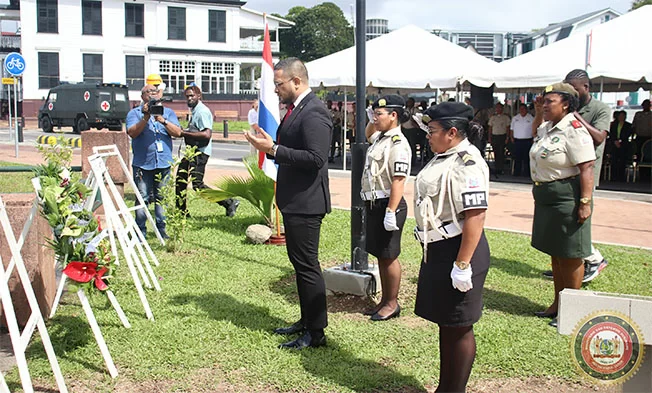
On May 4, Suriname gathered at the Monument to the Fallen along the iconic Waterkant waterfront to hold a solemn annual commemoration of the lives lost and contributions made by Surinamese people during the Second World War. The event, opened by Defense Minister Uraiqit Ramsaran who laid the first ceremonial wreath at the monument, centered on calls to permanently enshrine and pass on the nation’s often-overlooked war contributions to future generations.
In his keynote address to attendees, Minister Ramsaran emphasized the foundational role of historical awareness in building a cohesive national future. “Those who do not know their past can never fully understand what lies ahead,” he stated, highlighting that the sacrifices of Surinamese service members and civilians remain an inseparable part of the country’s modern national identity. He added that collective societal safety and stability stem not only from border defense, but from deep shared connection within communities. “These people rose up when freedom was under threat. Their story is not a closed chapter of history, but a legacy we carry forward with us every day,” Ramsaran said.
Beyond the human sacrifice, Suriname played a critical strategic role in the Allied war effort, most notably through its large-scale exports of bauxite — an essential raw material used to produce aluminum for American military aircraft and equipment. Hundreds of Surinamese service members also deployed to fight under the Dutch flag during the global conflict; today, only two veterans from that contingent remain alive: Wilfred van Gom and August Hermelijn.
Mitchell Labadie, Commander of the Surinamese National Army, reinforced the call for sustained engagement with this history, announcing a landmark policy change that will integrate Suriname’s WWII contributions permanently into the core curriculum of all national military training programs.
Labadie outlined four distinct groups that make up Suriname’s WWII history, all of which deserve equal recognition: service members who died fighting under the Dutch flag, resistance activists who opposed Axis occupation, Surinamese Jews who were killed in Nazi deportation and genocide, and merchant seafarers who lost their lives to German attacks in the Atlantic Ocean. “We can never allow this history to be forgotten,” Labadie said. “It is our core responsibility to keep this knowledge alive and pass it on to the generations that come after us.”