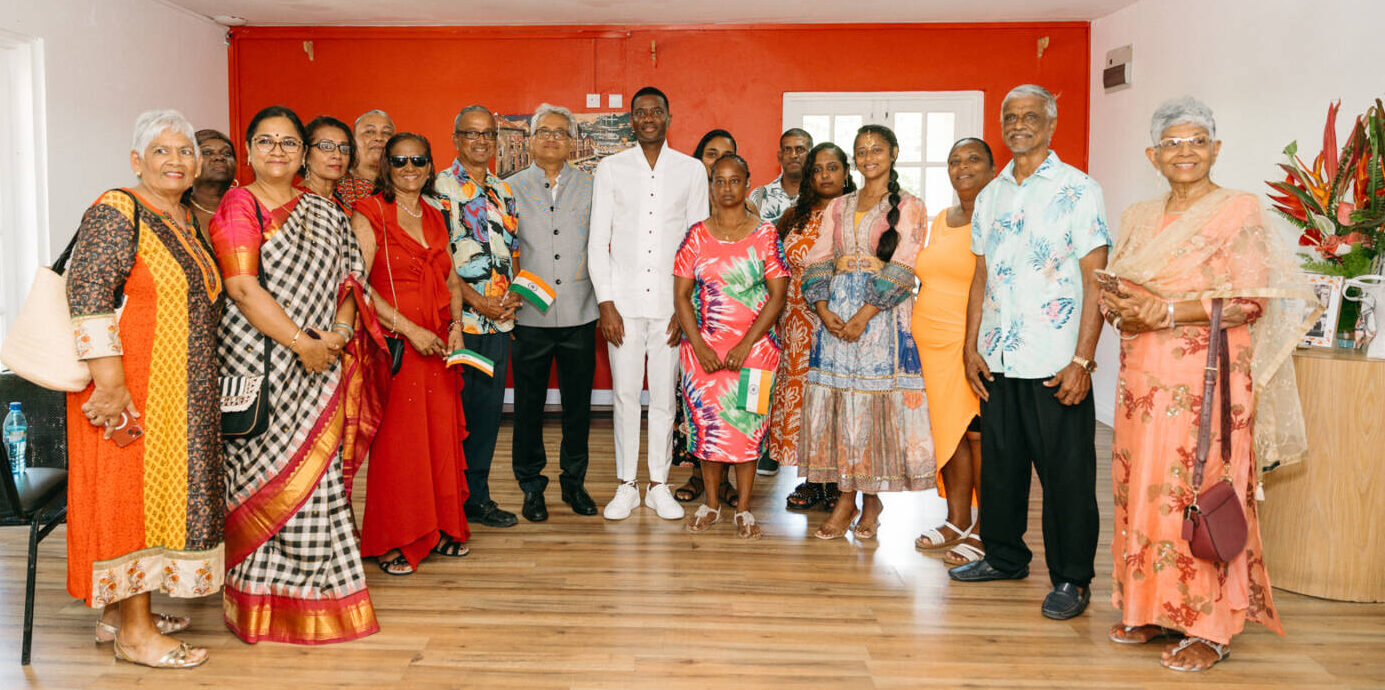
On May 1, a historic celebration of Indian Arrival Day unfolded at Grenada’s iconic Belmont Estate, organized through a collaborative partnership between the High Commission of India in Trinidad and Tobago, the Indo–Grenadian Heritage Foundation Inc., and The Belmont Foundation Inc. The gathering drew a diverse cross-section of attendees, including members of the Indo-Grenadian community, senior Grenadian government officials, diplomatic representatives, local students, and members of the general public, all gathered to honor the centuries-long contributions that Indo-Grenadians have made to the island nation’s social, economic, and cultural growth.
The day’s official proceedings kicked off at 10 a.m. with a solemn flag-raising ceremony, overseen by Master of Ceremonies Dr. Vajinder Singh. Lauren Salim, Personal Assistant to Grenadian Minister Dennis Cornwall, hoisted Grenada’s national flag, while Sagar Maitra, Head of Chancery at the High Commission of India in Trinidad and Tobago, raised the flag of India on the commission’s behalf. The event opened with a moving performance of Grenada’s national anthem by Naomi Roberts, followed by a rousing rendition of India’s national anthem led by Priya Thomas. His Excellency Gitakishore Kumar Pasupuleti, Grenada’s Non-Resident High Commissioner to India, delivered special keynote remarks marking the occasion. To cap off the opening ceremony, students from seven participating local schools recited the Grenada Pledge, highlighting how the island’s multicultural heritage remains a core part of younger generations’ national identity.
Following the formal opening, attendees gathered for the official launch of “Roots and Resilience,” a new historical exhibition co-curated by Dr. Angus Martin and Teddy Frederick, with Dr. Martin chairing the launch event. The immersive exhibition traces the multi-generational journey of Indo-Grenadian families, from the first arrival of indentured laborers in the 19th century through the harsh realities of the indentureship system and the enduring cultural and social legacies that descendants have built across decades. Through a curated collection of personal photographs, rarely seen archival documents, and collected oral histories from community members, the exhibition brings long-overdue visibility to a critical, often underdocumented chapter of Grenada’s national history while centering the remarkable resilience and lasting impact of the Indo-Grenadian community.
In his official address at the event, Grenadian Prime Minister Dickon Mitchell emphasized the national significance of preserving and sharing this history. “We have built an inclusive society, one that celebrates diversity and embraces our shared identity,” Mitchell stated. “It is critical that we continue to document and teach the history, the accomplishments, and the struggles that have shaped who we are as a people.”
Maitra, speaking on behalf of the High Commission of India, reflected on Grenada’s extraordinary model of cross-cultural integration. “Grenada stands as a powerful example of how cultures can come together to create something stronger,” he noted. “Different traditions, beliefs, and experiences have combined to shape a shared Grenadian identity, built on respect, resilience, and shared humanity.”
The afternoon’s lively cultural program, chaired by Jadey Bissessar, Belmont Estate’s Marketing Executive and Event Coordinator, showcased the depth of Grenada’s blended cultural heritage. Performances from the St Andrew’s Anglican Secondary School Choral Speaking Ensemble, Amesiha Persaud, the Belmont Belles, and Mrittika Maitra added vibrant, dynamic energy to the day’s celebrations. The program’s highlight was a featured performance by Vidushi Deepa Bhat and her daughter Nisarga Gurunandan, classical Bharatanatyam dancers whose graceful, precise performance brought the rich tradition of classical Indian dance to the Belmont Estate stage, drawing enthusiastic applause from attendees.
The official May 1 celebration capped off a weekend of commemorative events: on April 30, the High Commission of India organized a symbolic historical reenactment along Kirani James Boulevard, where participants recreated the moment that the first Indian indentured laborers arrived on Grenadian shores, bringing this foundational moment of national history to life for modern audiences.
Indian Arrival Day is held across the Caribbean to mark the arrival of Indian indentured laborers who came to the region after the abolition of chattel slavery. In Grenada, the first wave of Indian laborers arrived in 1857, and over the subsequent decades, their communities transformed the island’s agricultural sector, drove economic growth, and left an indelible mark on Grenada’s national culture. Today, their descendants remain an integral, foundational part of Grenada’s multicultural national identity. As the 2026 celebration made clear, Grenada continues to stand as a powerful testament to what can be achieved when diverse communities come together in mutual respect, building shared national unity through a commitment to shared humanity.