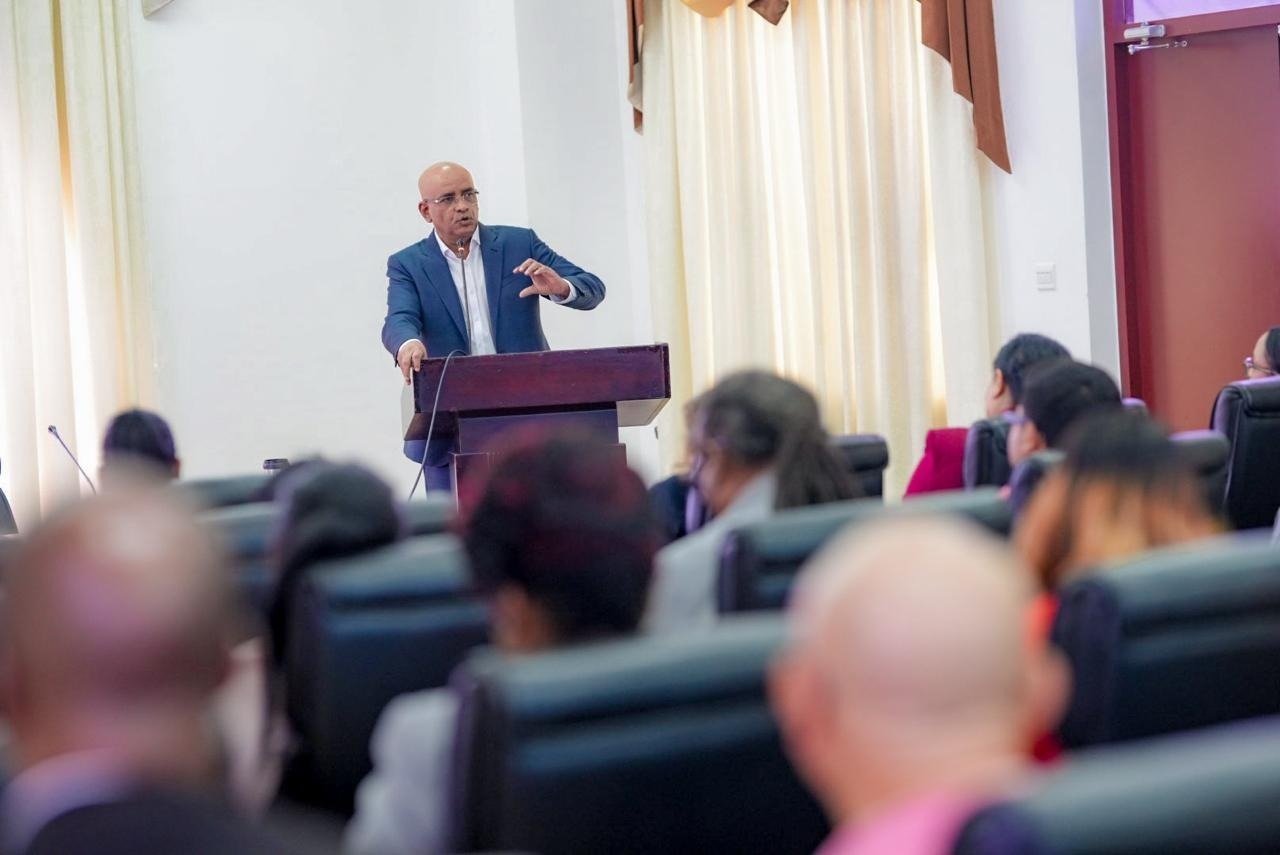
On Monday, September 7, 2026, Guyana’s Vice President Dr. Bharrat Jagdeo gathered senior public sector leaders from across the country at the Arthur Chung Conference Centre for a high-stakes meeting centered on fixing governance gaps and strengthening public trust in state institutions. The gathering brought together cabinet ministers, Permanent Secretaries, Regional Executive Officers, chief accounting officers from leading semi-autonomous government agencies, and top leadership from key state bodies including the Guyana Prison Service, Guyana Police Force, Guyana Fire Service, Guyana Power and Light, Maritime Administration, multiple line ministries, the Guyana Energy Agency, Civil Defence Commission, and Cheddi Jagan International Airport. The core focus of the closed meeting was to align public sector leadership around new governance standards, with particular emphasis on reinforcing accountability and transparency across three high-risk areas: public procurement processes, government payment systems, and public communication of government activities. The ultimate goal of these reforms is to improve the delivery of public programs and services to Guyanese citizens. In his opening address to attendees, Vice President Jagdeo underscored the critical leadership responsibility held by Permanent Secretaries and Regional Executive Officers, noting that these officials are the frontline stewards of public funds allocated to their respective ministries, regions, and agencies. He stressed that their primary duty is to ensure all operations align with existing national laws and regulations, while also driving sound, efficient management of the public resources entrusted to them. According to an official statement released by the Office of the President following the meeting, participants also collaborated to discuss a series of new initiatives designed to strengthen ongoing compliance tracking, specifically for procurement activities and government payment protocols. During the discussion, senior officials issued a clear caution to all attending accounting and administrative leaders: any deliberate breach or violation of governance rules will result in formal consequences for the individuals responsible for the misconduct. Vice President Jagdeo also used the meeting as an opportunity to reaffirm the unwavering commitment of the ruling People’s Progressive Party/Civic government to delivering high-quality, accessible public services to all Guyanese. He highlighted that the administration is prioritizing the integration of modern digital technology into government operations as a key strategy to streamline citizen interactions with state institutions, reduce bureaucratic delays, improve the overall quality of public services, and ultimately help all Guyanese achieve a higher quality of life.
分类: politics
-
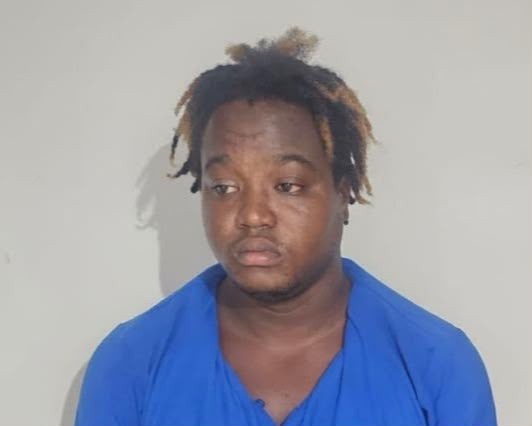
Mohamed’s video editor asks police for hard evidence on alleged drone use near Ali’s private residence
On Monday, September 7, 2026, 25-year-old Dwayne Ross, a video editor employed by Guyana’s Opposition Leader Azruddin Mohamed, formally signaled his intention to force law enforcement to produce concrete evidence to support charges that he illegally operated a drone near the private residence of President Irfaan Ali in Leonora, West Coast Demerara. Ross appeared before Vreed-en-Hoop Magistrate Ravindranauth Singh to enter a plea on three criminal charges brought under Guyana’s Civil Aviation Act: two counts of unlawful operation of an unmanned aerial vehicle under separate statutory provisions, and a third count of operating an aircraft without official authorization. He pleaded not guilty to all three counts.
Following the plea, Magistrate Singh granted bail to Ross, setting bail at GY$200,000 for each individual charge. As conditions of his release, Ross was ordered to surrender his passport to the court, check in with local law enforcement on a monthly basis, and return for a preliminary hearing at the Leonora Magistrates’ Court on September 30.
In court submissions ahead of the upcoming trial, Ross’s defense counsel Eusi Anderson argued that the charges against his client are legally flawed and factually dubious, noting that Guyana’s existing Civil Aviation Act does not include a formal legal definition of a drone, undermining the validity of the prosecution’s case. Anderson formally requested the court to order the full preservation and disclosure of all evidence related to the alleged incident, which authorities say occurred on the previous Thursday. This includes all closed-circuit television footage from the area surrounding the President’s private residence, any private video recordings captured by third parties, all body camera footage generated by arresting officers, and dashboard camera footage from police vehicles involved in the stop and search.
Prosecutors pushed back against the defense’s narrative, rejecting Ross’s claim that he was merely seated as a passenger in a parked vehicle on a roadside parapet at the time of the incident. According to the prosecution, Ross’s vehicle was only intercepted at Goed Fortuin after law enforcement conducted a high-speed chase to stop the vehicle. Prosecutors also told the court that Ross confessed to owning the drone in question during a formal forensic interview, adding that members of the presidential guard witnessed Ross standing on the access road to the residence holding a drone remote control, while the unmanned aircraft hovered roughly 30 feet above President Ali’s private property.
Anderson disputed the prosecution’s account, telling the court that Opposition Leader Azruddin Mohamed has already offered to let law enforcement inspect the seized drone at a local police station to pull its flight log data, which the defense says will prove the drone was never flown over the President’s residence at the date and time prosecutors claim. He added that the drone in question was already broken when it was seized during a search of Ross’s Georgetown home. Anderson also noted that police conducted the warrantless search of Ross’s residence on suspicion he was hiding illegal firearms and ammunition, not drone-related evidence, and only claimed the broken drone as evidence after failing to find any weapons.
Further procedural friction emerged in court during the hearing: when pressed repeatedly by Magistrate Singh, the prosecuting attorney was unable to state the statutory maximum penalties for the charges Ross faces. The magistrate also urged Anderson to avoid laying out full substantive defense arguments during the initial bail hearing, keeping the proceeding focused on the release application rather than the full merits of the case.
Defense counsel also laid out his client’s version of events, stating that when police first approached a vehicle parked near a local mosque in Leonora to question individuals about reports of drone operation, Ross was seated in the back of the vehicle with no connection to any drone operation in the area. Anderson emphasized that his client never intended any harm to President Ali, never conducted surveillance of the President or his private property, and vehemently rejects all charges brought against him. “These charges are bad at law and they are wholly denied,” Anderson told the court.
-
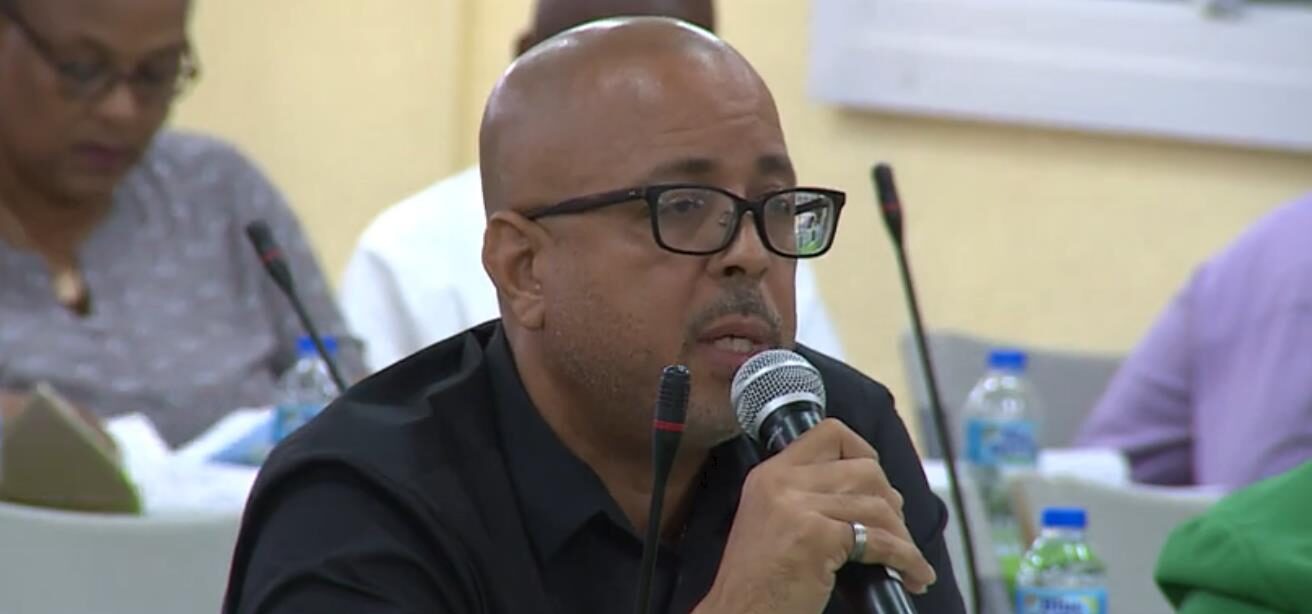
Kenny Green: Dominica’s CBI programme has delivered major benefits to the country
Against a backdrop of mounting European Union pressure to phase out citizenship-by-investment (CBI) schemes across five Eastern Caribbean nations, a prominent former business leader in Dominica has emerged as a vocal defender of the country’s program, outlining its transformative economic and social impact over decades.
Kenny Green, a well-established local businessman and former president of the Dominica Association of Industry and Commerce (DAIC), made his case during a recent special discussion on DBS Radio, hosted by journalist Daryl Titre titled “CBI Then, Now, The Future, A Look at the Industry”. Green’s remarks center on the program’s pivotal role in pulling Dominica back from the brink of economic collapse following the catastrophic 2017 Hurricane Maria, and its ongoing contribution to large-scale national development.
When the Category 5 storm made landfall in September 2017, it leveled thousands of homes, shuttered businesses across the island, and destroyed critical public infrastructure, leaving the private sector all but decimated. Green, who led the DAIC in the aftermath of the disaster, recalled that the survival of local business relied entirely on consistent consumer spending from the country’s large public sector workforce. What made that continued spending possible, he explained, was steady salary disbursements to government employees – even for those unable to carry out their regular duties amid the widespread destruction. “Within six months, people were still getting salaries, even though many of them were at home, and they were able to function and consume. That is what brought the private sector back. People forget that,” Green emphasized. This sustained household purchasing power allowed shuttered businesses to gradually reopen and laid the foundation for Dominica’s broader economic recovery, he added.
Beyond post-disaster recovery, Green stressed that CBI revenue has granted Dominica unprecedented financial sovereignty, allowing the government to fund major infrastructure projects without taking on crippling levels of international debt that would burden future generations. Launched in 1993, Dominica’s CBI program grants citizenship to vetted foreign investors who either contribute to the national Economic Diversification Fund or purchase pre-approved real estate, with all applicants subjected to rigorous security and due diligence screenings.
Successive Dominican administrations have long credited CBI revenue for enabling progress across key public sectors, including climate-resilient affordable housing, tourism infrastructure, healthcare facilities, educational institutions, and renewable energy projects. Green pointed to a long roster of completed and ongoing developments to back up his claims: new housing developments, upgraded sports facilities, geothermal energy exploration, expanded tourism offerings, and the construction of a new international airport. He noted that the island’s cable-car tourism project is approaching completion, while the planned marina development is on track to move forward in 2025. Of all these projects, Green argued that the new international airport will stand as the ultimate testament to the CBI program’s long-term value, saying “The real project, what will deem our CBI a perennial success—will be the completion of the airport.”
When compared to CBI programs in other member states of the Organization of Eastern Caribbean States (OECS), Green argued that Dominica’s program has delivered uniquely visible, widespread benefits to local citizens. He clarified that this is not a criticism of other regional CBI initiatives, but noted that Dominica can point to an extensive portfolio of transformative national projects that directly improve quality of life for residents. “In terms of the housing component, investment in sports, geothermal, now the international airport and hotel development, would that not be an attractive thing to say, ‘Look, this is what this thing has been doing for us’?” he asked.
Green’s defense comes at a critical juncture, as Dominica and four other Eastern Caribbean countries – Antigua and Barbuda, Grenada, St Kitts and Nevis, and St Lucia – face escalating pressure from the European Union to wind down their CBI programs. The European Commission has demanded that these nations phase out their schemes by June 2028, threatening the loss of visa-free access to the Schengen Area if they refuse. The EU has cited concerns over security risks, gaps in applicant screening, and the lack of what it terms a “genuine link” between successful applicants and host countries. In response, Caribbean governments have already strengthened due diligence protocols and deepened regional cooperation to address these concerns.
Green acknowledged that regional governments now face a difficult policy choice: eliminate their CBI programs, or retain them and risk losing Schengen visa-free access. A key next step is the European Commission’s upcoming assessment under its Visa Suspension Mechanism, scheduled for December 2026, though this assessment does not automatically trigger an immediate termination of visa-free access.
Despite the external pressure, Green urged regional governments to continue making a strong case for their programs by presenting clear evidence of their development impact, while continuing to refine due diligence processes to uphold program integrity. For Dominica, Green argued that the CBI program is far more than just a revenue stream for the government: it provided critical economic stability during an unprecedented crisis, supported working families when they were most vulnerable, helped save the private sector from collapse, and allowed the country to pursue transformative infrastructure projects that would otherwise have required massive debt accumulation. To date, no Caribbean CBI program has been shut down under the EU’s proposal, and all affected nations still retain visa-free access to the Schengen Area.
-
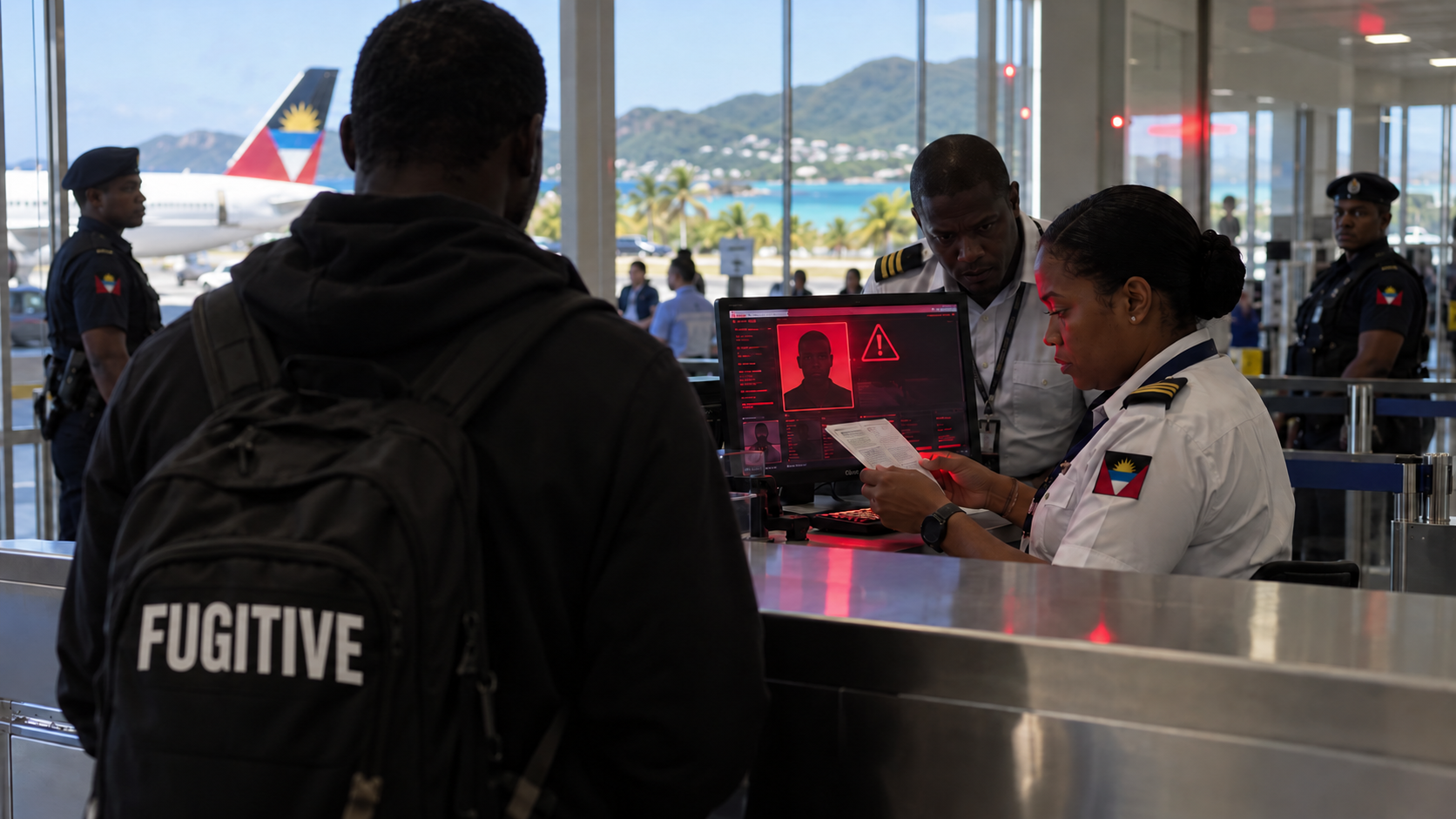
PM Browne Warns Foreign Fugitives Are Hiding in Antigua and Barbuda
Antigua and Barbuda Prime Minister Gaston Browne has issued a stark warning that the Caribbean nation is now confronting a growing national security threat: an increasing number of foreign fugitives wanted for serious crimes in other countries are secretly entering and settling within local communities.
Speaking during the recent episode of the Browne and Browne Show, the prime minister confirmed that authorities have already uncovered multiple such individuals who are actively sought by law enforcement agencies across other jurisdictions. At this stage, Browne has not released any identifying details, including the names, nationalities, or specific alleged offenses linked to the discovered fugitives, nor has he confirmed whether any of the suspects are currently facing extradition proceedings.
The revelation comes amid a broader discussion of a recent uptick in violent crime across Antigua and Barbuda, where Browne laid out a multi-pronged strategy to shore up public safety and reinforce the country’s security framework. Browne emphasized pointedly that Antigua and Barbuda will not tolerate becoming a safe haven for criminals fleeing prosecution in their home countries, adding that the discovery of these hidden fugitives underscores an urgent need for tighter collaboration between immigration officials, local police forces, and regional and international security partners.
Security analysts note that the public disclosure is likely to reignite scrutiny of Antigua and Barbuda’s current border screening protocols, as well as the capacity of local law enforcement to access real-time international arrest warrants and cross-reference global criminal databases. Local authorities also face unique practical challenges, including identifying suspects who travel under false aliases or use fraudulently obtained travel and identity documents.
To address rising crime and the threat of foreign fugitives, Browne has championed what he calls an “all-of-society approach” that combines upgraded technology, enhanced inter-agency coordination, and active public participation. The prime minister urged local residents to play a critical role by reporting any suspicious individuals or unusual activity to authorities.
As an incentive for public cooperation, Browne’s administration has significantly increased financial rewards for actionable information in major criminal investigations, raising the maximum payout to 500,000 Eastern Caribbean dollars. A separate reward of 5,000 Eastern Caribbean dollars is offered for information that leads to the recovery of illegal firearms, a major driver of recent violence in the country.
Beyond engaging the public, the government is also expanding its national surveillance infrastructure. The administration has acquired new night-vision drones to extend monitoring capabilities across hard-to-reach areas and is putting the final touches on a modern digital police records management system designed to streamline information sharing and case tracking. Browne reiterated that even the most advanced technology and cross-border intelligence sharing can only deliver results when paired with stronger collaboration between domestic agencies and consistent support from local communities.
-
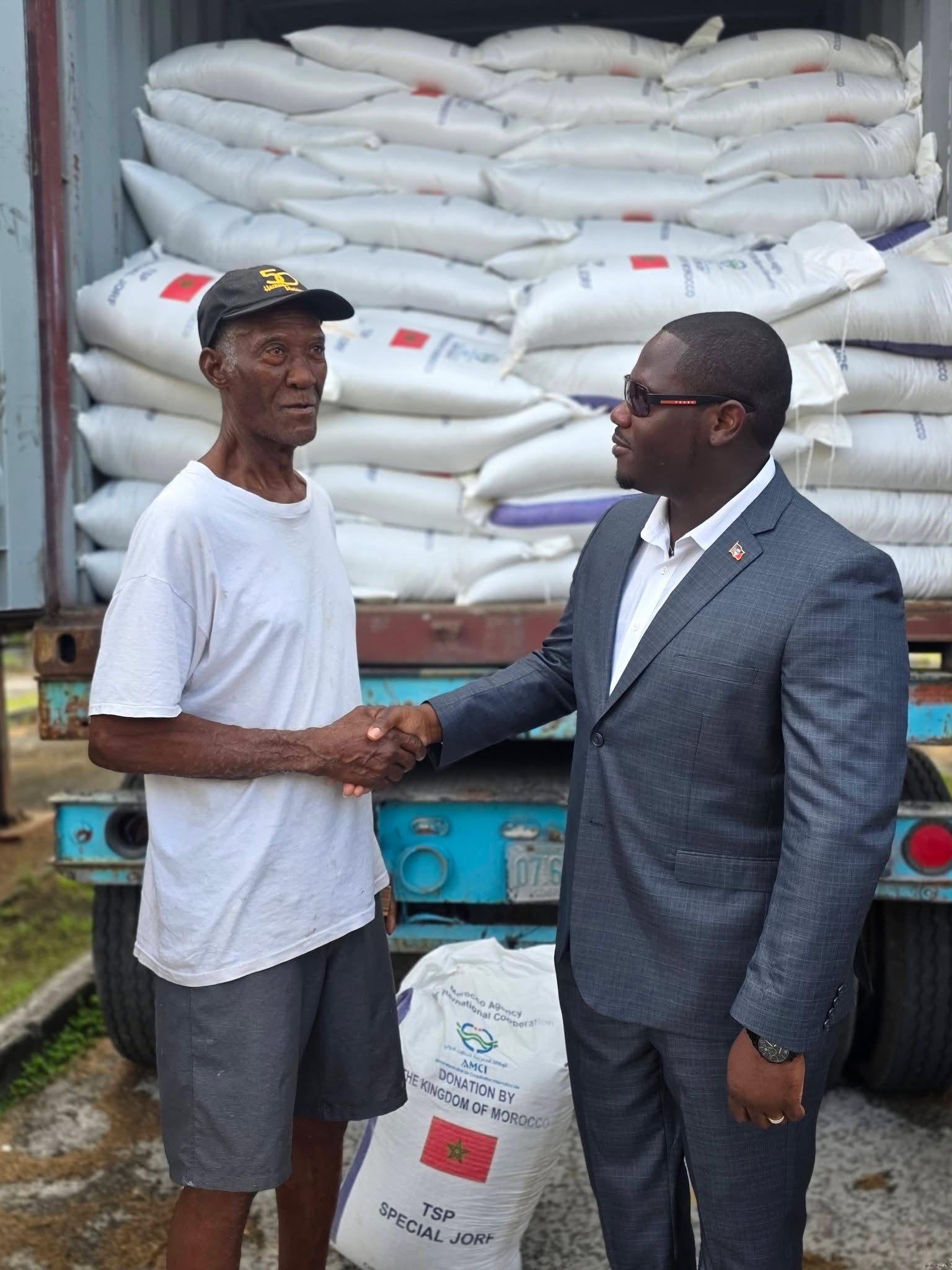
Agriculture Minister Anthony Smith Announces Arrival of 4,000 Bags of Fertilizer from Morocco
In a significant boost to Antigua and Barbuda’s domestic agricultural sector, Agriculture Minister Anthony Smith Jr. has confirmed the arrival of a 4,000-bag shipment of high-quality fertilizer sourced from the Kingdom of Morocco. This delivery marks the largest single shipment the Caribbean nation has received since the two countries launched their fertilizer cooperation initiative back in 2018.
Minister Smith shared his enthusiasm about the milestone, noting that targeted diplomatic negotiations and consistent, long-term engagement between the two partners made the expanded shipment possible. Agriculture officials across the country are now preparing to distribute the fertilizer to small-scale and commercial farming operations across both Antigua and Barbuda.
Beyond the immediate impact of the delivery, the shipment aligns with the Antigua and Barbuda government’s broader strategic goals to enhance national food sovereignty and reduce reliance on imported food staples. Smith emphasized that nutrient-dense fertilizer is a critical input for restoring depleted soil health, enabling farmers to maximize productivity from existing cultivated land without clearing additional territory for expansion. By boosting per-acre crop yields, the new fertilizer supply is expected to directly increase the volume of locally grown food available to domestic consumers.
This shipment is just one component of the current administration’s whole-of-government push to grow the domestic agricultural sector. In recent updates, Minister Smith has outlined parallel initiatives to upgrade national agricultural water infrastructure, which will address long-standing irrigation challenges for local farmers, and bring more underutilized parcels of land into active, productive agricultural use. The minister reiterated the government’s unwavering commitment to partnering with farmers at every stage, stressing that universal food security remains a top national priority for the administration.
-

Trump posts map depicting Dominican Republic under U.S. flag
Former U.S. President Donald Trump has reignited debate over his expansionist political rhetoric after posting an uncaptioned map to his Truth Social platform that depicts multiple North American and Caribbean nations, including the Dominican Republic, Mexico, Canada, Greenland, and Iceland, as falling under the coverage of the U.S. flag. The cryptic post, shared on Monday, comes as Trump has spent months rolling out a series of provocative proposals to redraw geographic boundaries and rename key North American waterways and land masses, fueling concerns about his territorial ambitions if he wins a second presidential term. The map was published just hours after Trump floated another controversial renaming suggestion on the same platform, arguing that the U.S. state of New Mexico should be rechristened “New America.” This proposal follows a string of similar renaming pushes, from rebranding the Gulf of Mexico as the “Gulf of America” to a recently signed executive order that would rename Lake Ontario — a transboundary body of water shared by the U.S. and Canada — as “Lake America.” The provenance of the map shared this week remains unconfirmed. Trump regularly reposts user-generated memes, fan-created graphics, and AI-generated content from his supporters, and there is no evidence to frame the image as an official U.S. government policy proposal or formal territorial claim. Even so, the post aligns with a pattern of aggressive territorial rhetoric Trump has deployed in recent months. He has repeatedly made public comments about U.S. interests in Greenland, pushed for closer integration of Canada into the U.S., and refused to rule out the use of military force to achieve political goals in Cuba. This pattern of commentary has already drawn formal and informal pushback from regional governments. On Monday, Mexican President Claudia Sheinbaum issued a sharp public statement that, while not referencing Trump’s map directly, made clear Mexico’s position on territorial sovereignty. “Mexican territory is not and will not a colony or protectorate of any foreign country,” she asserted. Though analysts and the public have focused particular attention on the unprompted inclusion of the Dominican Republic and other smaller Caribbean nations in the map, Trump has so far offered no context to explain why the countries were marked as falling under the U.S. flag, nor has he unveiled any formal policy proposal seeking to absorb those nations into the United States.
-
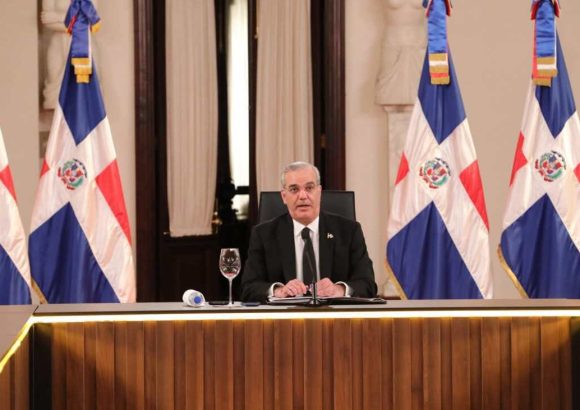
Dominican Republic hopes for fair and reciprocal U.S. tariff treatment
Santo Domingo — For the Dominican Republic, the United States holds an unshakable position as the nation’s primary strategic partner, according to President Luis Abinader, who has outlined the country’s core priorities in ongoing bilateral trade negotiations centered on the longstanding DR-CAFTA free trade agreement.
Speaking during his regular weekly address to the public, Abinader confirmed that Dominican officials have already formally flagged concerns about recent shifts in tariff rules applied to Dominican goods entering the U.S. market, raising the issue directly with both the U.S. Department of State and the U.S. Embassy based in Santo Domingo.
While the president stressed that broader diplomatic and cooperative ties between the two nations remain robust across a range of policy areas, he acknowledged that the current tariff framework has not delivered the level of fair, reciprocal treatment that the Dominican government expected when the agreement was implemented.
At the heart of the country’s negotiation demands is the preservation of the zero-tariff market access that Dominican exporters have relied on since DR-CAFTA entered into force. Abinader made clear that full adherence to the terms of the existing free trade deal is the non-negotiable top expectation for his administration as discussions with Washington progress.
The Dominican Republic is currently engaged in active negotiations with the U.S. to update and refine the bilateral tariff agreement, with the explicit goal of securing and expanding favorable market access for the country’s export-focused sectors. President Abinader has repeatedly classified these talks as one of his administration’s top economic and diplomatic priorities.
As the Dominican Republic’s single largest trading partner, the U.S. market shapes the trajectory of much of the country’s economy. Changes to tariff rules therefore carry outsized importance for key Dominican industries, from export-oriented manufacturing free zones to agricultural producers and the broader manufacturing sector, whose competitiveness depends heavily on preferential access to American consumers.
-

New gambling bill seeks to block minors from betting in Dominican Republic
In a significant move to protect underage individuals from the harms of unregulated gambling, the Chamber of Deputies of the Dominican Republic has greenlit a comprehensive new bill that enforces sweeping stricter controls across all forms of betting and gambling activity, with a particular focus on the fast-growing online gambling sector.
The centerpiece of the new regulatory framework is Article 82, a mandate that upends the current lax age verification system for digital gambling platforms. For years, online operators have allowed users to start depositing funds and placing bets based solely on a self-declaration that the user is of legal age. Under the new rule, operators will be legally required to cross-check every user’s identity and age directly against the official database managed by the Central Electoral Board (known locally as JCE) before granting access to any gambling services.
The bill does not limit strengthened protections to the digital space. It also puts in place new safeguards for physical gambling locations and public commercial spaces across the country. Article 27 codifies a total ban on entry for anyone under the age of 18 to all licensed gambling establishments, while Article 28 mandates that on-site operators must check official government-issued identification for every visitor at the point of entry. Additionally, the legislation bans the placement of slot machines in any minor-accessible venue that sells food or beverages, ranging from local neighborhood corner stores to family-focused entertainment centers.
New advertising rules add another layer of protection for young people. Article 37 prohibits any gambling marketing campaign that targets minors, as well as any advertisements that use imagery, language or storytelling crafted specifically to appeal to underage audiences.
One of the most impactful provisions of the bill is the strict penalty for non-compliance. Unlike the current regime that relies primarily on financial fines for violations, Article 44 establishes that any operator that fails to put in place effective controls to block minor participation can face permanent cancellation or full revocation of their operating license. This means regulators have the authority to shut down non-compliant gambling operations entirely, sending a strong signal about the government’s commitment to enforcing minor protection standards.
-
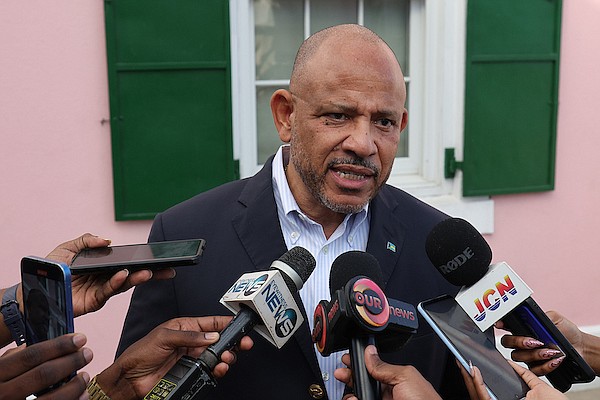
Sands pushes for early FNM convention
Following the Free National Movement’s (FNM) disappointing defeat in the May general election, the party’s chairman Dr. Duane Sands has publicly broken with the initial plan to delay a leadership convention until October 2027, arguing that the multi-year timeline is unreasonable and counterproductive to the party’s rebuilding efforts. In a televised interview on Our TV’s *On the Record* program last week, Sands laid out his vision for the party’s path forward, while stopping short of issuing a direct call for current leader Michael Pintard to step down.
Sands, who serves as the FNM’s administrative chief, argued that waiting until 2027 to hold a leadership convention is far too long for a party still reeling from an electoral loss that required deep internal reflection. The party’s Central Council, the second-highest governing body behind the convention itself, has already begun moving to adjust the timeline, according to Sands, with the first step being a transparent, objective post-mortem of the election defeat.
A core part of the planned evaluation, Sands emphasized, will be reaching outside the party’s inner circle to gather unfiltered feedback from voters who opted not to support the FNM in the recent vote. “If you only have FNMs talking, then you have an echo chamber,” he explained, noting that the goal is to collect honest input from non-supporters and abstaining voters on why the party failed to win their support, rather than reinforcing existing internal narratives. When asked to name a target timeline for the long-awaited convention, Sands said he believed the gathering should be held within the next several months, while clarifying that his personal position does not override the authority of the FNM’s governing bodies. “When you have the privilege of leading, as I do, my personal views are subject to the directives of the Council of the Free National Movement. But once a decision is made by Council, that is what I speak,” he noted.
Sands’ comments come amid mounting internal tension within the FNM, triggered by recent public remarks from former Prime Minister Hubert Ingraham, who urged the party to “find someone who could win” ahead of a recent Leadership Council meeting held at the home of ex-party leader Tommy Turnquest. Ingraham’s call drew a sharp rebuke from Pintard, who argued the former prime minister chose the wrong forum to question his leadership, while maintaining that he remains the best candidate to lead the party. But Sands pushed back against the interpretation that Ingraham’s comments were a direct attack on Pintard’s leadership.
“I don’t believe it was directed specifically — that this was a Pintard-specific message,” Sands said. “I think it is a message that says, whomever you choose to lead, make sure that they bring whatever it is to the table that can get FNM supporters, disaffected PLPs, independents to vote in large numbers.” He also noted that Ingraham’s recent comments do not contradict his public endorsement of Pintard issued four months before the election, explaining that the former prime minister likely expected the party to perform far better at the polls than it ultimately did.
When asked directly whether Pintard should resign in the wake of the election defeat, Sands noted that the FNM leader had already placed his political fate in the hands of the party membership. “It was very clear that he felt that his fate was not predetermined; that he thought it only appropriate, given the circumstances, that the party determined whether or not they would wish him to carry on or not,” he said. Pressed on whether Pintard should lead the FNM into the next general election, Sands gave a nuanced answer: while he confirmed Pintard is capable of holding the leadership role, he stopped short of saying it was the right choice for the party. “Can he? Yes, he can. That’s a different question,” he said.
Sands acknowledged that ongoing uncertainty around the party’s leadership has made Pintard’s day-to-day work more challenging, but praised the current leader for continuing to fulfill his duties. “He carries on because he’s a soldier. He carries on because he has a phenomenal and abiding love for this country,” Sands said.
Outlining his own analysis of the FNM’s May election defeat, Sands pointed to a range of contributing factors, singling out the party’s poor voter turnout operation as a key issue. “I think a number of persons did not feel inclined to come out and vote, and you know when you have an inability to get out the vote, you suffer,” he explained. In a final update on the party’s leadership structure, Sands confirmed that Deputy Leader Shanendon Cartwright remains an active and integral member of the FNM’s senior leadership team, with full access to platforms to address national issues, even though he was not appointed to the Senate following the election.
-
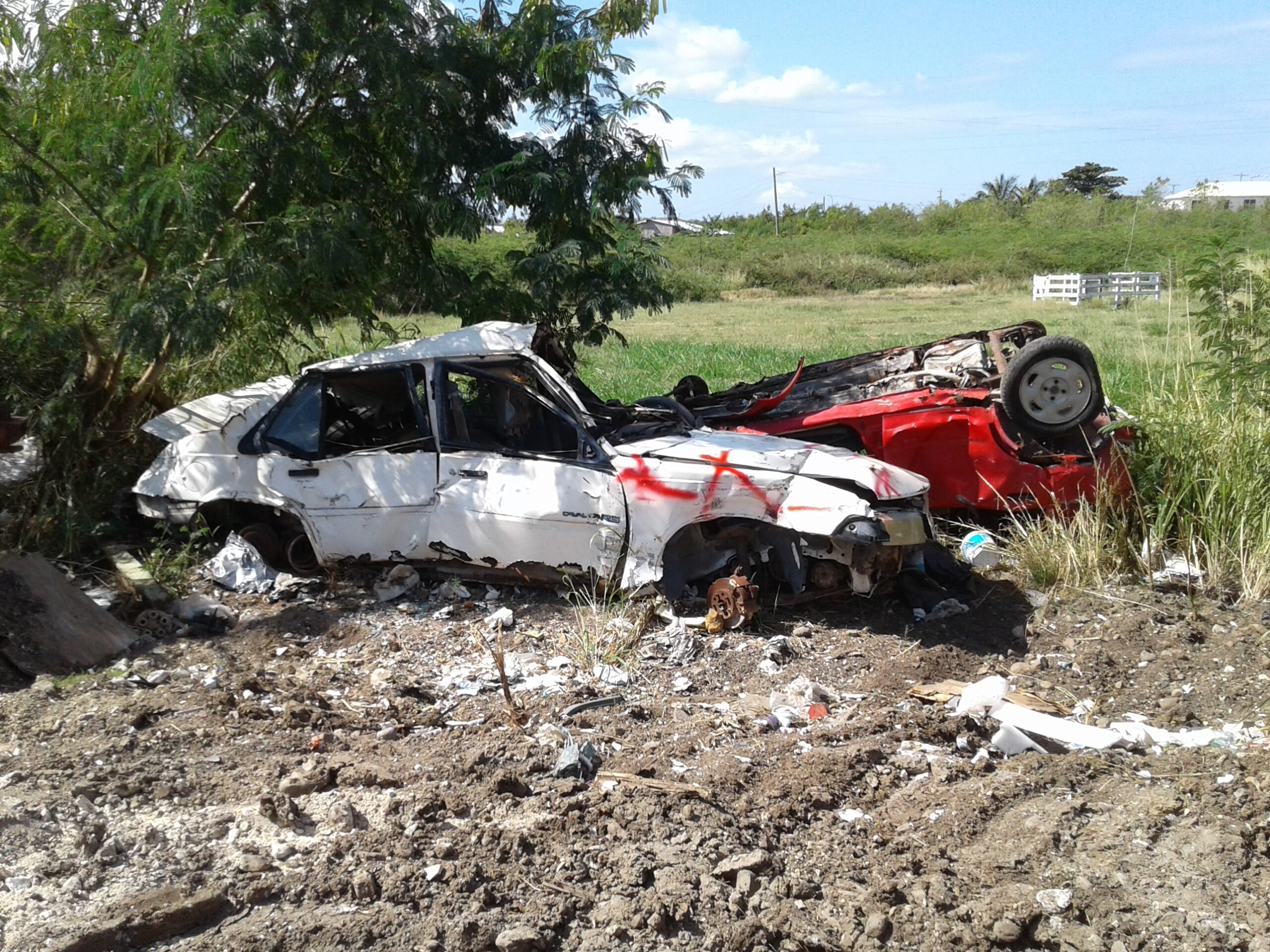
Derelict Vehicles Could Attract Fines of at Least EC$3,000 Under Planned Law
Across the twin-island nation of Antigua and Barbuda, abandoned unroadworthy vehicles left scattered along public roadways have emerged as a growing nuisance, clogging critical alternative routes and impeding smooth traffic flow. To tackle this persistent public problem, the country’s government has tabled plans to amend existing national legislation, introducing harsh new penalties that will categorize the practice as a form of unlawful littering.
During an appearance on the local *Browne and Browne Show* over the weekend, Prime Minister Gaston Browne laid out the details of the proposed regulatory changes. Under the current framework, abandoning derelict vehicles along public roads is not explicitly classified as littering, a gap that the amendment aims to close. “We’re going to change the law, and the parking of a vehicle that is not roadworthy at the side of the road will be constituted as littering,” Browne confirmed during the interview.
When it comes to penalties, the prime minister revised his initial proposal to set a higher starting fine. Early plans floated a penalty range between EC$2,500 and EC$3,000, but the updated proposal will mandate a minimum fine of EC$3,000, with the maximum penalty potentially climbing as high as EC$5,000 for repeat or severe offenders. Beyond monetary penalties, Browne has put forward an alternative penalty for non-payers: court-ordered community service valued up to the maximum fine amount, with tasks including public street cleaning and native tree planting. “If we don’t criminalize them, at least there must be some form of compensation by way of labor,” Browne explained, noting that stricter consequences are needed to deter the practice even among vehicle owners who have adequate private storage space on their own property.
The push for legislative change comes directly after senior traffic officials raised urgent concerns about the impact of abandoned vehicles on the country’s road network. Superintendent Elson Quammie, head of Antigua and Barbuda’s Traffic Department, told authorities that the problem has gotten worse as more motorists divert to secondary and community roads to avoid chronic congestion on the nation’s main highways. Many of these alternative routes, which are critical for easing peak-time travel, are now partially blocked by derelict vehicles and other unauthorised roadside obstructions.
Quammie added that ongoing targeted removal operations have already cleared abandoned vehicles from several high-problem communities, including Point and Villa. But the issue has bounced back quickly: within weeks of these areas being cleared, residents have begun leaving new unroadworthy vehicles along the road verges. With limited staffing and resources, traffic enforcement teams cannot maintain a permanent presence in every community across the country, Quammie noted, making legislative change a necessary long-term solution. Browne also highlighted specific problem spots, including a newly built concrete thoroughfare leading to Yorks Bay and Hermitage, where multiple abandoned vehicles have been left, blocking access for local residents and visitors.
While removal operations will continue in the short term to clear the most dangerous obstructions, the government is still drafting the amendment text. As of the latest announcement, no timeline has been set for the proposed changes to be introduced for debate and a vote in the national Parliament.