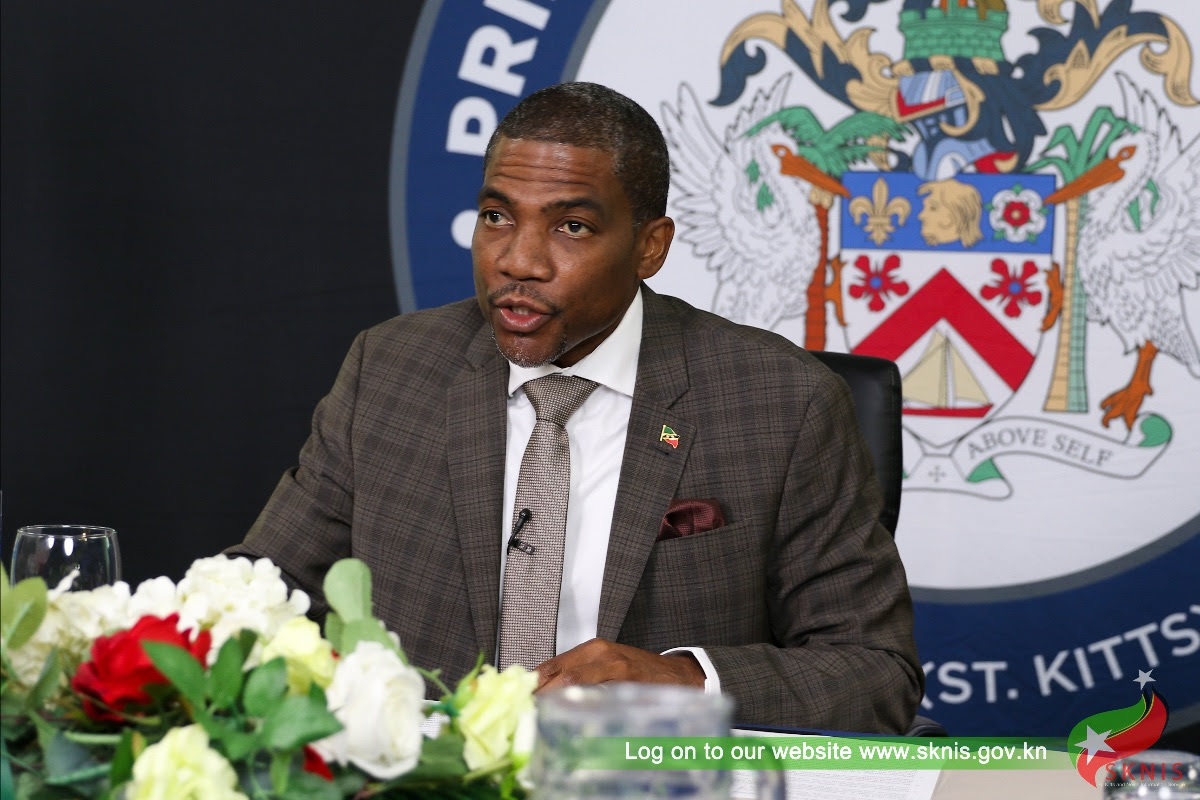
St. Kitts and Nevis Prime Minister Dr. Terrance Drew has moved to ease public anxiety over the country’s bilateral migration cooperation arrangement with the United States, emphasizing that rigorous multi-layered screening protocols are in place to block any individuals with criminal backgrounds from entering the federation.
The Prime Minister addressed widespread public questions about the transfer program during his monthly Prime Minister’s Round Table briefing held July 16, clarifying key details of the agreement that applies to all Caribbean Community (CARICOM) member state nationals. He stressed that St. Kitts and Nevis retains full, unilateral authority to reject any individual who fails to meet the country’s strict national security requirements, upholding the small island nation’s sovereign decision-making power over its borders.
Dr. Drew confirmed that earlier this year, the federal government finalized arrangements to accept three CARICOM nationals being transferred from U.S. custody, a transfer first formally announced by the government in May 2026. He pushed back against circulating public speculation that the transferred individuals had been convicted of crimes, explaining that their removal from the U.S. was tied exclusively to civil immigration violations, not criminal convictions.
Before any transfer is approved, every individual undergoes a full, multi-agency assessment covering criminal background checks, immigration eligibility, medical screenings and national security vetting, the Prime Minister explained. U.S. authorities share all available biographical, medical and criminal history data with St. Kitts and Nevis’ national security, immigration and law enforcement teams ahead of any planned transfer, to allow for a full review. The existing memorandum of understanding governing the arrangement explicitly prohibits the transfer of any individual convicted of violent felonies or sexual offenses, eliminating the risk of such individuals entering the country.
“These are not criminals. We have no reason to lock them up or anything like that,” Dr. Drew told attendees of the briefing. He added that if post-transfer information emerges that shows an individual does not meet the agreement’s eligibility terms, the federal government is prepared to take immediate and appropriate action to protect public safety. “There will be measures taken to ensure that St. Kitts and Nevis is not exposed to any criminals,” he reaffirmed.
The Prime Minister also noted that the International Organization for Migration (IOM) has played a key independent role in the transfer process, providing third-party oversight to confirm all proceedings align with international law, global humanitarian standards and protections for the human rights of transferred individuals.
On the topic of program costs, Dr. Drew clarified that all expenses related to transferred individuals – including housing, food, clothing, healthcare and other basic essential needs – are covered outside of the St. Kitts and Nevis government budget. “I can say broadly that one, it didn’t cost St. Kitts and Nevis one cent, and two, we made sure that the basics were covered for these people,” he said. Cost assessments are conducted on a case-by-case basis to account for varying individual needs.
Dr. Drew framed the transfer program as a measured effort to balance the country’s international and regional cooperation obligations with its core legal duty to protect the domestic security and national interests of St. Kitts and Nevis. He closed by offering a public assurance that the government will maintain full transparency around the arrangement, and will continue to apply the same strict immigration, security and law enforcement procedures to every individual considered for transfer under the bilateral agreement.