分类: politics

  • Suriname en Venezuela willen samenwerking uitbreiden op meerdere gebieden

    Suriname en Venezuela willen samenwerking uitbreiden op meerdere gebieden

    On the 50th anniversary of the formal establishment of bilateral diplomatic relations between Suriname and Venezuela, senior diplomatic officials from both nations gathered in Caracas on Friday to take tangible new steps toward deepening cross-border partnership. The high-level meeting brought together Melvin Bouva, Suriname’s Minister of Foreign Affairs, International Trade and Cooperation, and his Venezuelan counterpart Yván Gil Pinto, with discussions centered on expanding collaboration across a range of strategically critical sectors.

    As both sides marked this golden milestone in diplomatic history, the two ministers jointly underscored the long-standing value of the ties binding their nations, and reaffirmed their shared commitment to strengthening the historical bonds that have shaped bilateral relations over five decades. The talks covered priority areas identified by both governments for expanded cooperation, including agriculture, fisheries, oil and energy, cross-border trade, tourism, education and diplomatic coordination.

    Officials from both the Surinamese and Venezuelan delegations confirmed that the meeting has formally opened a new chapter of targeted strategic partnership between the Republic of Suriname and the Bolivarian Republic of Venezuela, laying clear groundwork for concrete collaborative projects in the coming months. The anniversary summit reflects both nations’ shared interest in leveraging geographic proximity and complementary economic strengths to drive mutual development and stability in the region.

  • Aanklacht tegen Raul Castro markeert escalatie in VS-Cuba relatie

    Aanklacht tegen Raul Castro markeert escalatie in VS-Cuba relatie

    Tensions between the United States and Cuba are on the brink of a sharp new escalation, as U.S. authorities are moving forward with plans to file formal criminal charges against former Cuban president Raúl Castro, multiple sources familiar with the matter confirm. The proposed charges stem from a 1996 incident in which the Cuban government shot down two civilian aircraft operated by Brothers to the Rescue, a U.S.-based anti-Castro dissident organization. Now 94 years old, Raúl Castro stepped down from the presidency in 2018 but remains widely recognized as the most powerful political figure in Cuba, leading the country’s long-ruling communist regime. Any formal charges will require approval from a U.S. grand jury before they can be officially filed, according to people briefed on the process.

    The news of the planned charges comes just days after a high-level U.S. delegation led by CIA director John Ratcliffe traveled to Havana for rare direct talks with Cuban officials. During that visit, the U.S. side offered up to $100 million in new humanitarian aid to the island, but tied the assistance to a requirement that Cuba implement what Washington calls “meaningful political and economic reforms.” The proposal was rejected by Cuban authorities, who view the conditional aid as unacceptable interference in the country’s internal affairs.

    This latest move against Raúl Castro comes amid a steady deterioration of U.S.-Cuba relations that began shortly after Donald Trump’s second inauguration as U.S. president in 2025. Trump has repeatedly made clear his goal of forcing the communist government out of power, openly identifying Cuba as the “next target” after Venezuelan leader Nicolás Maduro was removed from office in a military-led transition earlier this year. Since January 2025, the Trump administration has already implemented sweeping measures to increase economic pressure on Havana, including rolling back all remaining fuel shipments from U.S.-controlled Venezuela to Cuba and imposing harsh secondary sanctions on any third country that continues to supply crude oil and petroleum products to the island.

    Those sanctions have already created a catastrophic fuel crisis across Cuba, a country of 11 million people. The nearly complete fuel blockade has triggered widespread acute shortages of gasoline, diesel, and heating oil, as well as persistent, nationwide power outages that have crippled daily economic activity and public services. Earlier this month, Cuban Energy Minister Vicente de la O Levy issued a public warning confirming that the country has already exhausted its stockpiles of diesel and fuel oil, leaving critical sectors including transportation, agriculture, and public utilities on the brink of collapse. The fuel shortage has only deepened the already severe economic and social crisis that has gripped the island for years, driving widespread hardship for ordinary Cuban citizens.

    Beyond the charges against Raúl Castro, the U.S. Department of Justice’s Southern District of Florida, which has long overseen prosecutions related to the Cuban government, is also pursuing potential criminal charges against multiple senior Cuban officials believed to have been involved in the 1996 downing of the Brothers to the Rescue aircraft. U.S. officials frame the ongoing legal actions and planned charges as part of a broader, coordinated strategy to ramp up pressure on the Cuban government and force it to make the political and economic concessions Washington has demanded.

  • MORE COPS COMING

    MORE COPS COMING

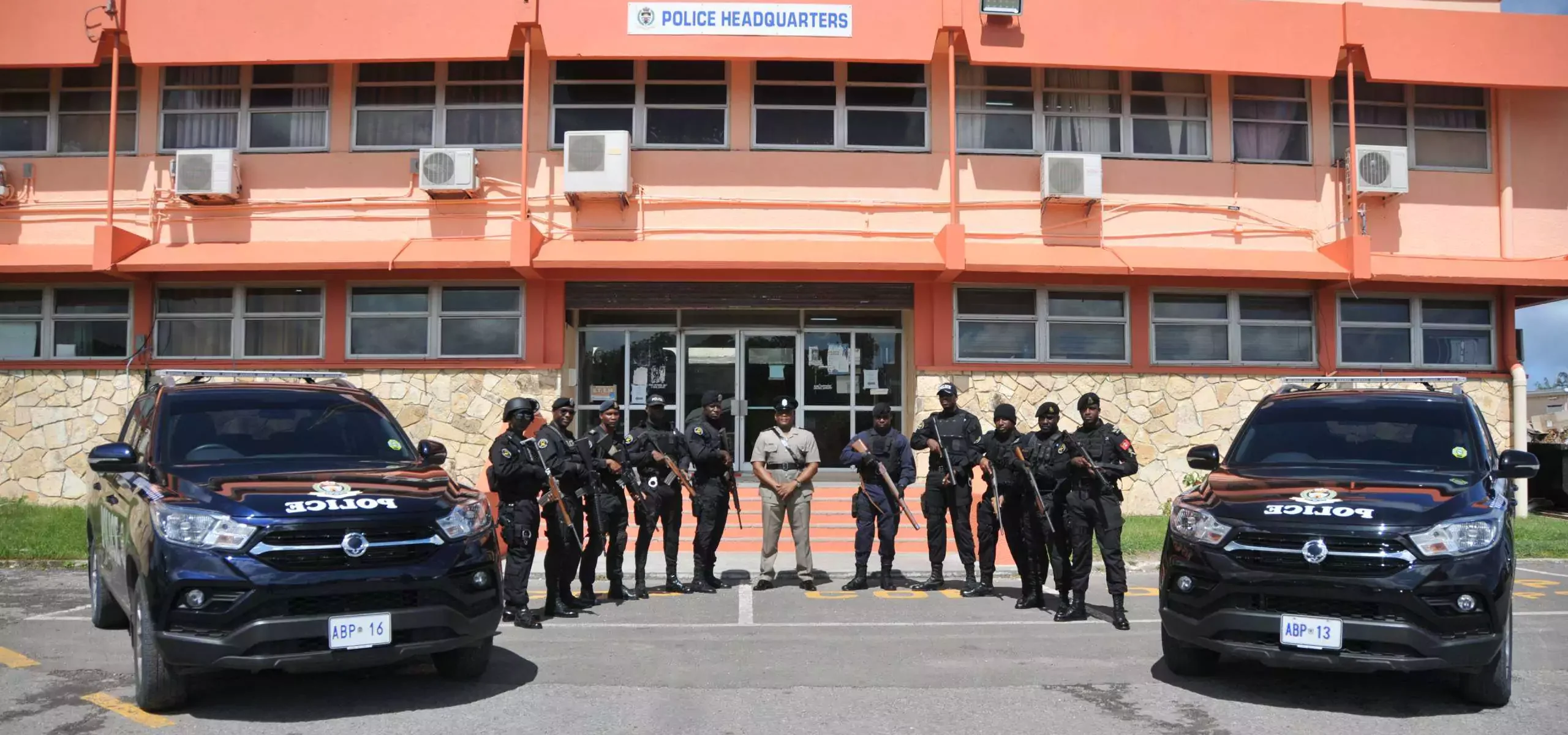
    The government of Trinidad and Tobago has unveiled a landmark plan to expand the Trinidad and Tobago Police Service (TTPS), raising the force’s authorized manpower ceiling from 7,884 officers to 10,200 in a bid to bolster on-the-ground law enforcement capacity across the twin-island nation.

    Homeland Security Minister Roger Alexander announced the Cabinet-endorsed initiative during a parliamentary address Tuesday, outlining that the expansion will roll out as a phased five-year recruitment drive. Under the approved timeline, 600 new recruits will join the force in both the first and second years of the program, followed by 372 new hires annually for the final three years. Parallel to recruitment efforts, the TTPS will also upgrade its police academy infrastructure and expand training capacity to ensure that existing recruitment quality standards and operational professionalism are not compromised by the growth, Alexander confirmed.

    The core objective of the manpower increase is to allow the TTPS to maintain a consistent nationwide operational presence of roughly 7,800 active officers – the minimum threshold security analysts identified as necessary to meet the demands of 21st-century policing and evolving national security threats. Currently, even with the full authorized strength of 7,884 officers, the force only has approximately 5,500 officers available for frontline deployment on any given day. This gap stems from officers being tied up in mandatory leave, training sessions, administrative tasks, court appearances, and specialized off-patrol assignments, meaning the TTPS has long been operating with a frontline force well below its official authorized size.

    Alexander explained that decades of incremental expansion of specialized policing units to address new threats – including cybercrime, transnational organized crime, gang activity, financial crime, and corruption – have created structural staffing imbalances. Every time a new specialized unit was launched to respond to an emerging risk, no corresponding increase in overall authorized manpower was approved, forcing leadership to reassign officers from community patrol and frontline policing roles to fill these technical positions. This shift has left communities with fewer visible patrols, stretched thin the remaining frontline force, and created a crippling reliance on excessive overtime that leads to officer fatigue.

    The new expansion initiative is designed to reverse this imbalance. It will allow the TTPS to fully staff specialized investigative and intelligence units while simultaneously rebuilding visible community policing across all regions of Trinidad and Tobago. Additional officers will deliver a range of operational improvements: increasing uniformed presence on neighborhood streets to deter criminal activity, speeding up response times to emergencies, violent incidents, and public safety threats, and boosting capacity across key priority areas including intelligence operations, cybercrime probes, gang suppression, financial investigations, anti-corruption enforcement, and community engagement.

    More officers will also improve outreach to schools, local businesses, community organizations, and vulnerable populations, strengthening public trust in law enforcement and improving intelligence gathering efforts. For the force itself, the additional manpower will reduce the crippling overtime burden that has contributed to widespread operational fatigue, improving long-term workforce sustainability, officer effectiveness, and professional performance.

    The expanded force will also enhance security at critical national infrastructure sites including ports and airports, and better position the TTPS to respond to large-scale national events, sudden spikes in criminal activity, natural disasters, states of emergency, and other national crises.

    Calling the strengthening of the TTPS a matter of critical national importance, Alexander framed the plan as a core part of the government’s effort to modernize law enforcement’s operational structure to match evolving criminal threats. “Criminals have modernised, organised and expanded their operations. The State must therefore ensure that law enforcement is equally equipped, equally organised and sufficiently resourced to respond decisively,” he told parliament.

    Responding to a question from Opposition Member of Parliament Marvin Gonzales, Alexander confirmed that the Cabinet’s decision followed a comprehensive manpower audit conducted in partnership with the International Association of Chiefs of Police.

  • Sapoen: Pg desavoueert De Nationale Assemblée

    Sapoen: Pg desavoueert De Nationale Assemblée

    In a sharp rebuke issued on May 16, ruling National Democratic Party (NDP) assembly member Raymond Sapoen has publicly condemned Prosecutor General Garcia Paragsingh for her refusal to engage in a verbal briefing with a parliamentary investigative committee. The panel has been tasked with reviewing impeachment motions against three former cabinet ministers, and Paragsingh’s recent letter to the National Assembly explicitly stated she has no intention of meeting the committee in person.

    Sapoen argues that the prosecutor general’s dismissive response amounts to an outright repudiation of the country’s highest state institution. The investigative committee, formally appointed by full parliamentary vote, holds every legal right to question Paragsingh and request clarification on the impeachment motions she brought forward, he stressed. Under existing governing rules, the committee’s interaction with the prosecutor general would not involve prejudging the merits of the allegations against the former ministers, a point Sapoen highlighted to counter any potential pushback on the committee’s mandate.

    “The committee, appointed by the entire parliament, has every right to call on the prosecutor general to explain the impeachment motions she submitted as part of its inquiry, and this process is structured to avoid prejudging the validity of the case, as clearly outlined in existing law,” Sapoen emphasized.

    While Sapoen acknowledged that Paragsingh may have legitimate reasons for preferring to communicate exclusively in writing, he maintained that her approach failed to meet basic standards of respect and protocol toward the legislative branch. The standoff highlights growing institutional friction between the office of the prosecutor general and the National Assembly as it moves forward with the high-stakes impeachment process. Paragsingh has yet to issue a public response to Sapoen’s criticism as of the time of reporting.

  • Somohardjo zal verschijnen voor DNA-commissie: Ik heb niets te verbergen

    Somohardjo zal verschijnen voor DNA-commissie: Ik heb niets te verbergen

    A senior former Surinamese political figure has announced he will comply fully with a parliamentary inquiry, breaking with the top law enforcement official who has declined to give in-person testimony to the panel.

    Bronto Somohardjo, who previously served as Minister of Internal Affairs and currently holds a seat in the National Assembly, confirmed in an interview with local outlet Starnieuws that he will appear before the special parliamentary commission tasked with questioning current and former political officeholders on May 22. The veteran politician emphasized his full commitment to cooperating with the ongoing inquiry, noting that upholding careful, objective, and transparent adherence to constitutional procedures is a core priority for the process.

    “Out of respect for the National Assembly and our democratic rule of law, I will appear before the commission and offer my full cooperation to the process,” Somohardjo stated.

    The former minister also drew attention to a notable decision from Prosecutor General Garcia Paragsingh, who has opted against appearing in person before the commission to answer clarifying questions. Instead, Paragsingh has indicated she will only respond to any inquiries in written form.

    Somohardjo argued that when the inquiry involves requests for extreme measures including the potential detention of a political officeholder, direct in-person explanation to the National Assembly’s commission is not just appropriate, but expected. “When such severe measures are requested against a political officeholder, the public and the legislature are owed open, direct accountability before the National Assembly’s commission,” he asserted.

    Closing his statement, Somohardjo made clear he has full confidence that the commission will conduct a thorough, careful assessment of all relevant facts, documents, and procedural steps. “I have nothing to hide,” he stressed.

  • Toledo Bus Operators Now Included in Fuel Subsidy

    Toledo Bus Operators Now Included in Fuel Subsidy

    On May 15, 2026, the Government of Belize moved to correct an oversight in its national public transportation reform program, extending eligibility for a newly introduced fuel subsidy to bus operators in the Toledo District who were initially locked out of the program.

    The exclusion stemmed from the fact that Toledo’s independent operators do not hold membership in the Belize Bus Association (BBA), the industry body that participated in initial negotiations over the fuel subsidy plan and accompanying adjustments to passenger fares. After the operators raised formal concerns about being left out of the reforms, Minister of Transport Dr. Louis Zabaneh held one-on-one consultations with the group to walk them through the application process for accessing subsidy funds.

    “When we met with BBA leadership initially, Toledo’s operators did not appear on their membership roster, so they were not included in early discussions,” Dr. Zabaneh explained during the meeting held in Belmopan. “After they reached out to the ministry to flag their exclusion, we arranged this meeting to hear their concerns and walk them through the steps to claim their subsidy allocations. Today, we have aligned all stakeholders, and every operator now has clear guidance on how to access the support they are eligible for.”

    Beyond the fuel subsidy correction, the meeting became a platform for rural bus operators to highlight the most pressing threat to their operations: systemic chaos created by an oversaturated permit system that has spawned cutthroat competition and dangerous road safety risks. Operators told the minister that the overabundance of permits has forced drivers to engage in reckless bus racing to compete for passengers, putting both drivers and commuters in grave danger on Belize’s highways.

    Dr. Zabaneh acknowledged the severity of the crisis, attributing the dysfunction to decades of unregulated permit issuing driven by political interference rather than public interest. He explained that ever since the collapse of the Novello company consolidation in the mid-2000s, which left the industry split between the Novello group and James Bus Line, subsequent transport ministers and department officials have issued hundreds of unplanned permits as political favors rather than through a structured, public interest-focused framework.

    To address this long-standing breakdown, the ministry has implemented an immediate moratorium on the issuance of any new road service permits as it works to restructure the system, currently in collaboration with the newly launched National Bus Company (NBC).

    Rising operational costs have pushed a growing number of small independent operators to explore joining the NBC model, which has already demonstrated benefits for early participants. Former Northern Transit owner Noel Codd, who integrated his operation into the NBC, described the consolidated model as a lifeline for struggling small operators.

    “I cannot afford the $500,000 to $800,000 investment required to upgrade to modern, safe buses that commuters deserve,” Codd explained. “As part of the National Bus Company, we gain access to economies of scale: bulk purchases of vehicles, fuel and tires cut costs dramatically, the company handles maintenance and operational logistics so I don’t have to worry about breakdowns at 3 a.m., and all members share revenue evenly, eliminating the cutthroat competition that endangered everyone. Seventeen of us operate under the NBC now, and it has completely transformed the industry for the better.”

    Dr. Zabaneh confirmed that multiple operators have reached out to request NBC membership in recent weeks, drawn by the cost and stability benefits of the consolidated corporate structure. He noted that the collective model does deliver clear advantages, from bulk purchasing power to rationalized scheduling that eliminates dangerous competition while improving service for passengers. However, the minister added that the government’s long-term vision leans toward a franchise-style system for many independent operators, rather than universal integration into the NBC. After just two and a half months of operation, Dr. Zabaneh said early results from the NBC model have already proven the value of industry consolidation as Belize works to repair decades of broken public transport policy.

  • CCJ Sends Andrew Bennett’s Case Back to Square One

    CCJ Sends Andrew Bennett’s Case Back to Square One

    In a landmark ruling that reshapes the path of a high-profile cross-border extradition matter, the Caribbean Court of Justice (CCJ), Belize’s highest judicial body, has vacated all prior lower court decisions in the Andrew Bennett case and ordered a complete new review by the nation’s High Court. The decision, delivered on May 15, 2026, centers on a critical legal error that undermined earlier proceedings: lower courts relied on a modern surveillance law that had not yet entered into force when the evidence at the heart of the case was collected.

    At the core of the legal dispute is a cache of WhatsApp messages that United States authorities have sought to admit as evidence against Bennett, who has fought extradition for an extended period. Bennett has consistently maintained that the private digital communications were obtained in violation of his constitutional rights to privacy and due process. While lower courts acknowledged that the messages were collected through improper channels, they nevertheless allowed the extradition process to move forward, arguing that the remaining body of evidence against Bennett was sufficient to justify his transfer to U.S. authorities.

    Justice Denys Barrow, speaking for the CCJ bench, explained that the lower courts’ entire legal reasoning collapsed once the timeline of the relevant legislation came to light during written submissions. The lower courts based their ruling on Belize’s Interception of Communications Act, a law that only came into force in November 2023 — years after the WhatsApp messages at the center of the case were intercepted.

    “This reliance on a non-existent statute at the time of the original proceedings constitutes an error in law, or per incuriam, as this type of legal mistake is historically termed,” Justice Barrow explained in the court’s formal ruling. Bennett’s legal team had urged the CCJ to go a step further after uncovering the error, asking the top court to directly rule that the use of the WhatsApp messages violated constitutional protections under broader, long-standing legal principles. However, the CCJ declined to issue a final ruling on that question, noting that the constitutional challenge has never been fully argued by both sides in a proper proceeding.

    The CCJ determined that the only fair path forward is to send the entire case back to the Belize High Court for an entirely fresh review. This procedural reset will give both the prosecution and the defense full opportunity to present arguments on the key unresolved question: whether the admission of the seized WhatsApp messages violates Bennett’s constitutional rights, regardless of the terms of the 2023 Interception of Communications Act. No order for costs was issued in connection with the CCJ appeal, leaving each side responsible for its own legal expenses from the appellate process.

  • From Recruits to Coast Guard: Forty-Nine Ready to Serve

    From Recruits to Coast Guard: Forty-Nine Ready to Serve

    On May 15, 2026, Belize marked a key milestone for its national maritime security when 49 newly trained Belizean men and women formally graduated from the Belize Coast Guard’s Recruit Intake #12, transitioning from civilian trainees to active service members tasked with protecting the nation’s territorial waters.

    The path to this graduation ceremony, held at the Belize Coast Guard headquarters, was anything but easy. Over 13 consecutive weeks, recruits pushed through grueling daily routines, starting before dawn each day, enduring relentless tactical and physical drills, and adhering to strict military discipline that left no room for cutting corners. Every physical hurdle, mental challenge, and long day of preparation was designed to forge civilians into capable, resilient coast guardsmen ready for frontline service.

    Speaking at the ceremony, Belize Coast Guard Commandant Rear Admiral Gregory Soberanis opened with a message of pride for the incoming class. Three months prior, he noted, these young people arrived at the training institution as ordinary civilians who had made the deliberate, consequential choice to serve their nation. They brought with them raw potential, hope for the future, and a willingness to put themselves through rigorous testing to earn their place. “Today they leave as Coast Guard men and women of Belize,” Soberanis said. “That transformation does not happen by accident, it is earned and you earned it.”

    Dolores Balderamos-Garcia, Minister of State in the Office of the Prime Minister, echoed that pride, framing the graduation as a milestone not just for the new service members, but for the entire Belizean Coast Guard and the nation as a whole. She extended personal congratulations to each graduate, noting they had endured physical hardship, mental strain, strict discipline, and personal sacrifice to earn the privilege of graduating and moving on to active duty.

    Commandant Soberanis also took a moment to acknowledge the critical role that loved ones played in the recruits’ success, extending gratitude to the family members and friends who supported the 49 graduates through the 13 weeks of intensive, isolated training.

    For the new coast guardsmen, the ceremony marks the end of one journey and the beginning of another. Having emerged from training sharper, physically stronger, and disciplined, they are now prepared to take on their core responsibility: guarding Belize’s maritime borders and upholding the nation’s commitment to protecting its coastal communities and territorial integrity. This report is a transcript of an evening television broadcast, with any Kriol language statements transcribed using a standardized spelling system.

  • FLASH : New minimum wages in Haiti for all sectors of activity (official 2026)

    FLASH : New minimum wages in Haiti for all sectors of activity (official 2026)

    In an official policy update released in mid-May 2026, the Haitian government has formally implemented a sweeping overhaul of the country’s minimum wage structure, enacting double-digit percentage wage hikes for workers across every sector of the national economy. The new wage regulations, which officially invalidate all prior conflicting decrees, were published in a special 21st issue of Haiti’s official government gazette *Le Moniteur*, with all adjustments taking effect starting May 6, 2026.

    The government divided the national economy into eight distinct segments, each receiving substantial raises from the minimum wage levels set in 2022 (or 2019 for one segment). For Segment A, which covers high-value service sectors including private power generation, banking and financial services, telecommunications, import-export trade, major retail outlets, media, private education and healthcare, and real estate, the daily 8-hour minimum wage has increased by 29.87% to 1,000 Gourdes, up from 770 Gourdes in 2022.

    Segment B, which includes construction, transportation, small-scale financial services, wholesale trade, light manufacturing for local consumption, and hospitality with lower ratings, saw an even larger 46.34% jump, bringing the daily minimum wage to 900 Gourdes from the 2022 level of 615 Gourdes. For Segment C, encompassing agriculture, food processing, small retail, community media, and non-governmental organizations, the 40.74% increase raises the daily minimum to 760 Gourdes, up from 540 Gourdes four years prior.

    Domestic service workers, categorized as Segment E, receive a 42.85% wage hike that lifts their daily minimum wage from 350 Gourdes to 500 Gourdes. Export-focused industries, grouped in Segment F, now have a standard daily minimum wage of 1,000 Gourdes, a 45.99% increase from 2022’s 685 Gourdes, with specialized export manufacturing production roles set at a higher 1,300 Gourdes per day. Private security firms and petroleum distribution companies in Segment G get the largest percentage increase at 50.41%, bringing their reference minimum wage to 925 Gourdes from 615 Gourdes. Finally, private vocational schools and large inpatient private healthcare facilities in Segment H see a 46.34% increase to 900 Gourdes, matching the Segment B wage level after rising from the 2019 baseline of 615 Gourdes.

    The across-the-board wage adjustments mark one of the most substantial updates to Haiti’s labor compensation policy in recent years, aimed at addressing cost-of-living pressures for working households across all industries and employment types.

  • Government Moves to Settle Village Boundary Disputes in Southern Belize

    Government Moves to Settle Village Boundary Disputes in Southern Belize

    For generations, residents of four southern Belizean villages have navigated ambiguous territorial lines, with basic questions like where Placencia ends and Seine Bight begins remaining officially unanswered. That decades-long uncertainty is finally on track for resolution, as the Belizean government has launched a formal process to settle these long-simmering boundary disagreements.

    At the heart of the intervention is a newly appointed six-member independent commission, led by Chief Magistrate Deborah Rogers. The panel draws cross-sector expertise, bringing together representatives from government agencies, the private sector, and the National Association of Village Councils to deliver a balanced, evidence-based resolution. Starting in mid-May 2026, the commission will kick off a country-wide first-of-its-kind public consultation tour centered on the four affected southern communities, designed to center resident voices in the boundary-setting process.

    Clifford King, Director of Local Government, explained the systemic scope of the problem that prompted this action. Currently, only a tiny handful of villages across Belize hold formally declared, gazetted boundaries. Two of the few exceptions are San Jose Palmar in the Orange Walk District and Western Paradise in the Belize District, King noted. For the vast majority of other communities, territorial lines have been governed only by unwritten “traditional boundaries” — informal understandings passed down through generations that mark where one village’s territory ends and another’s begins.

    Over time, as Belize’s communities have grown, developed, and expanded, these informal lines have become increasingly blurred, leading to frequent disagreements over land access, tax revenues, and governance authority. The Roaring Creek community exemplifies this ambiguity: for years, residents have informally marked the village’s start at the Guanacaste bridge and end before the curve approaching Camalote, but no official documentation confirms this line.

    “The independent commission is appointed by the minister to mediate the situation and to hear the views of the village council and key community stakeholders,” King explained. “These public consultation sessions that we’re going to be having are part of the methodology that we’re using to gather information.” The first public hearing is scheduled for 6 p.m. on the launch date at the Placencia Basketball Court, followed by a second session the next day at the Seine Bight community center. Additional hearings will be held across all four affected communities in the coming weeks, and all residents are invited to attend, raise questions, and share their on-the-ground perspectives on the disputed boundaries.

    Seine Bight, one of the communities at the center of the dispute, has already completed the initial stages of the process. Seine Bight Village Council Chairperson Jose Aleman confirmed in an interview that both Seine Bight and its neighboring disputing communities have already submitted formal written arguments and responded to each other’s submissions. Aleman noted that under the Village Council Act, the minister holds full authority to appoint an independent commission to formalize village boundaries, a power that is being applied to the four southern communities including Seine Bight, Placencia, and St. Mike that are locked in disagreement.

    Boundary disputes can stem from a range of competing interests, Aleman explained, from competing claims over expanding residential and commercial development to disagreements over how to split public revenue from land-based activities. “However, we have a mandate as a council that our people has given us,” he said. “And as such, after the independent commission had created their terms of reference, they consulted with both councils. And both councils received the opportunity to have made submissions and thereafter responded to each other’s submission. And this weekend, we’ll be giving an opportunity for the independent commission to come into both communities as well, where they will be doing public hearings.”

    Government officials are framing this initiative as a test case for addressing boundary disputes that are expected to become more common across Belize as population growth and economic development accelerate. To prevent long-running disagreements from escalating, officials are encouraging all village councils to proactively collaborate with neighboring communities, signing early memorandums of understanding to create a clear foundation for future official boundary mapping.

    This report is adapted from a transcript of a televised evening news broadcast.