分类: politics

  • ABLP Leader Says Unspent ABLP Campaign Funds Will Be Invested Following Election Victory

    ABLP Leader Says Unspent ABLP Campaign Funds Will Be Invested Following Election Victory

    Fresh off securing a landslide fourth consecutive term in the April 30 general election, where the Antigua and Barbuda Labour Party (ABLP) claimed 15 out of 17 available parliamentary seats, party leader and sitting Prime Minister Gaston Browne has outlined a prudent long-term strategy for managing leftover campaign funds: rather than diverting the remaining capital to short-term political activities, the party will invest the sizable sum to strengthen its institutional foundations.

    In an interview with local outlet Pointe FM, Browne explained that deliberate, forward-looking financial planning has been a core part of the ABLP’s election strategy for cycles. Rather than exhausting every dollar raised from campaign contributions during the election period, the party routinely sets aside a fixed portion of funds for ongoing institutional development, a practice that has already delivered tangible benefits for the organization.

    Past savings from previous election cycles, Browne noted, funded the construction of the party’s central headquarters at the People’s Place, as well as the installation of energy-efficient solar panels that have cut the building’s long-term electricity costs. For the 2024 post-election surplus, the party has opted for a different approach: with no new major infrastructure projects like a headquarters on the agenda, the ABLP has purchased a government bond with the funds to generate steady long-term returns for the party.

    Browne pushed back against implicit suggestions that the party might misuse campaign funds for corrupt purposes such as voter bribery, noting that if the leadership’s goal was simply to distribute cash to party members and candidates, it would have split the entire raised sum and spent all funds during the campaign. Instead, the party prioritized building durable organizational assets to eliminate the heavy reliance on ad-hoc fundraising between election cycles, creating more stable operations for the ABLP over time.

    In addition to the bond investment, Browne unveiled a new cultural project for the party: the creation of an ABLP museum dedicated to preserving the organization’s history. The space will house key historical records and iconic vehicles once used by two of the party’s most influential former leaders, Sir Lester Bird and Vere Cornwall Bird Jr., preserving the party’s legacy for current members and future researchers.

  • President wil landbouw- en waterprojecten bespreken met Braziliaanse ambtgenoot Lula

    President wil landbouw- en waterprojecten bespreken met Braziliaanse ambtgenoot Lula

    Suriname’s President Jennifer Simons is set to travel to Brazil this month alongside a government delegation, where she will hold high-level talks with Brazilian President Luiz Inácio Lula da Silva focused on expanding cross-border partnership in agriculture, securing foreign investment for Suriname’s water management systems, and advancing the development of the South American nation’s agrarian infrastructure.

    For the Simons administration, advancing food security, growing agricultural export volumes, and modernizing the country’s farming sector sit at the top of its policy priorities, the Surinamese leader confirmed. In comments shared through her spokesperson Roberto Lindveld, Simons emphasized that since her administration took office, agricultural development has been positioned as a central pillar of national governance. When the new leadership of Suriname’s Ministry of Agriculture, Livestock and Fisheries (LVV) assumed their posts, they inherited a sector riddled with systemic challenges, she added.

    “When we took office, the entire ministry was facing widespread problems. Multiple senior directors had to be detained, critical agricultural machinery was absent, and dysfunction affected nearly every part of the department,” Simons stated. Stabilizing the troubled sector required extensive time and effort, but Simons noted that multiple key agricultural development initiatives are now gaining momentum. One early success she highlighted is the recently launched Markoesa Outgrowers project, which marks the first visible progress after months of administrative and structural reform.

    A core focus of Suriname’s broader agricultural modernization push is the overhaul of water infrastructure in the western district of Nickerie, a key agricultural region for the country. Simons singled out the full replacement of the aging Wakay water pumps and the comprehensive upgrading of the district’s entire water management network as a flagship infrastructure project.

    “My administration is committed to delivering this project. Right now, my team and I are working through details with potential financiers and the relevant minister to finalize all planning,” Simons explained. She added that technical design work for the initiative is on track to be completed within roughly one month. Once blueprints are finalized, the tender process will open for contracts including the procurement of new pumping equipment and other critical infrastructure components.

    To ensure the project is delivered to global standards, Simons confirmed that both local specialists and international experts will be brought in to support implementation. The Surinamese president specifically highlighted plans to leverage Dutch expertise in water management, a field where the Netherlands has decades of global leadership.

    “We know the Netherlands is a global leader in water management, and its specialists have deep, proven expertise in these types of infrastructure projects,” Simons said. “That is why we are working to assemble mixed teams of local and international experts to bring the best possible knowledge to advise us on this work.” Simons set an ambitious timeline, expressing her expectation that the upgraded water infrastructure in Nickerie will be fully completed within 18 to 24 months.

    After the infrastructure overhaul is finished, the Simons administration plans to introduce reforms to Suriname’s water board legislation. The proposed regulatory changes will require system users to contribute to the ongoing maintenance of the upgraded water networks, ensuring long-term functionality. “Right now, the existing infrastructure has been severely neglected, so our first step is to get it back into working order before we implement the new maintenance framework,” Simons noted.

  • Colombia: Twee campagneleden vermoord temidden van toenemende verkiezingsgeweld

    Colombia: Twee campagneleden vermoord temidden van toenemende verkiezingsgeweld

    Just 14 days before Colombia’s May 31, 2026 presidential election, the country has been shaken by a fatal attack that left two senior members of a presidential campaign dead, renewing long-simmering concerns over political violence that has marred the lead-up to the contentious vote.

    The attack took place in central Meta Department, a region long plagued by rebel activity and illicit cocaine trafficking. Armed men on motorcycles shot and killed Rogers Mauricio Devia Escoba, the former mayor of Cubarral, and his political advisor Eder Fabian Cardona Lopez on the evening of Friday, according to an announcement from right-wing presidential candidate Abelardo de la Espriella, whose campaign the two men worked for. De la Espriella honored the fallen pair as dedicated defenders of Colombian democracy and individual freedom.

    Colombia’s national citizen rights ombudsman has sounded the alarm that this killing, combined with a string of other recent attacks targeting political figures including a former mayoral candidate, poses a severe threat to the integrity of the upcoming election. “Violence, threats, and intimidation damage public debate, raise risks for political leaders, and weaken democratic society,” the ombudsman said in an official statement following the attack.

    The wave of pre-election violence has emerged as a defining issue in the race to succeed outgoing President Gustavo Petro, Colombia’s first left-wing head of state. Current polling puts left-wing senator Ivan Cepeda, who has run on a platform of continuing Petro’s policy agenda and pushing for a negotiated resolution to the country’s long-running armed conflict, in the lead with 37% to 40% of voter support. De la Espriella, a populist right-wing candidate who has drawn comparisons to El Salvador’s Nayib Bukele and Argentina’s Javier Milei, trails in second place with just over 20% support, followed by center-right senator Paloma Valencia.

    Public safety has remained the top flashpoint issue of the campaign, with pre-election aggression stretching back months. At least three presidential candidates have received explicit death threats and now travel with heavy, permanent security details. Last year, Aida Quilcue, Cepeda’s running mate and a prominent Indigenous rights activist, was briefly abducted by a dissident rebel faction that split from the FARC rebel group after the organization signed a landmark 2016 peace deal with the Colombian government. In an even deadlier incident, presidential candidate and sitting senator Miguel Uribe was shot at a campaign rally in Bogotá in June 2025, and died from his injuries two months later.

  • Judiciary seeking to fill vacancies at dpp

    Judiciary seeking to fill vacancies at dpp

    Plans to expand Trinidad and Tobago’s High Court Criminal Division to clear a massive backlog of criminal cases have run into open staffing concerns, prompting the country’s Judiciary to issue a formal public assurance that recruitment for vacant prosecutorial positions is already well underway. The clarification comes after Director of Public Prosecutions Roger Gaspard sent an official warning letter to acting Supreme Court Registrar Kimberly Prescott, confirming that his office currently lacks the personnel to assign prosecutors to the newly created additional criminal courtrooms.

    Gaspard’s warning cast significant doubt over whether the Judiciary’s high-profile initiative to add more judges to tackle the nation’s growing criminal case backlog can deliver meaningful results without matching investments to expand prosecutorial capacity. The shortage of prosecuting staff has emerged as a critical bottleneck that could derail broader efforts to speed up criminal case resolution.

    In a formal statement released to the public this week, the Judiciary — issued through Kerry-Anne Roberts, the body’s Communications and Information Manager — addressed growing public uncertainty over the initiative’s viability. The statement confirmed that the Judicial and Legal Service Commission (JLSC), the body responsible for judicial and legal appointments, is already actively moving forward to fill all open vacancies at the DPP’s office. The Judiciary also emphasized that Gaspard and his team have been fully involved in the recruitment process from the start, as his office holds a core stakeholder role in selecting new hires.

    The Judiciary further clarified that the exchange of correspondence between Gaspard and the acting Registrar was part of routine administrative coordination ahead of the court expansion, rather than an open conflict between justice sector bodies. The registrar initially reached out to Gaspard to align on logistics for the new judge appointments and revised courtroom arrangements, prompting Gaspard’s response outlining the staffing gap.

    Beyond addressing the immediate staffing controversy, the Judiciary used the statement to outline its broader, long-term reform agenda for the national criminal justice system. Current ongoing initiatives include targeted improvements to case management protocols, specialized continuing training for sitting judges, enhanced cross-agency stakeholder collaboration, and strategic administrative overhauls designed to reduce bottlenecks. A central pillar of these coordinated reforms is the newly established Criminal Justice Board, a permanent coordinating body created to foster ongoing open dialogue and joint problem-solving across all agencies involved in criminal justice administration. The board is already advancing multiple targeted improvement initiatives, the statement noted.

    With a cohort of new High Court judges recently appointed to support the expansion, the Judiciary confirmed that it continues rolling out parallel improvements to strengthen how criminal cases are managed and moved through the court system. Earlier in the day, local outlet the Sunday Express had sent a formal inquiry to Chief Justice Ronnie Boodoosingh seeking comment on Gaspard’s leaked letter. The Judiciary explained that due to the tight media deadline, the Chief Justice required additional time to consult fully with JLSC members on the matter, leading to the unified institutional statement released in his place.

    Closing out its remarks, the Judiciary reaffirmed its unwavering commitment to delivering timely, fair resolutions for pending criminal cases across the country, and pledged to provide regular public updates on the progress of its reform and recruitment initiatives moving forward.

  • No prosecutors for new courts

    No prosecutors for new courts

    A brewing crisis in Trinidad and Tobago’s criminal justice system has come to light, with the Office of the Director of Public Prosecutions (ODPP) revealing it lacks the personnel to support the Judiciary’s planned expansion of the High Court’s Criminal Division, a initiative designed to tackle a years-long growing backlog of unresolved cases.

    Director of Public Prosecutions Roger Gaspard laid out the agency’s crisis in an April 30 correspondence to acting Supreme Court Registrar Kimberly Prescott, a document later obtained by the Sunday Express. Gaspard’s response came two weeks after Prescott’s April 8 letter notified him that three additional High Court judges would begin taking on backlog cases in early May, requiring the ODPP to assign prosecutors to support the new courts. In his letter, Gaspard made clear that despite the ODPP’s unwavering commitment to upholding its constitutional mandate to support efficient criminal justice administration, the office simply does not have the staff capacity to take on this new responsibility.

    Gaspard emphasized that the barrier is rooted in resource scarcity, not institutional resistance. “Our constraint is not one of unwillingness or recalcitrance, but rather of staff capacity,” he wrote, noting the ODPP has operated with extreme prosecutorial staffing deficits for an extended period.

    The scope of the staffing crisis is substantial. Over the past three years alone, three Deputy Directors of Public Prosecutions and two Assistant Directors have been promoted to the Judiciary, leaving all three Deputy DPP positions completely vacant. Of the six approved Assistant DPP posts, only three are currently filled, with just two new hires having been made recently. While recruitment efforts fall under the purview of the Judicial and Legal Service Commission (JLSC) and the Attorney General’s Office, Gaspard reported that hiring progress has glacial at best. Even after vacancies are advertised, he noted, there is no clear timeline for when new appointments will be finalized.

    Even when new prosecutors are hired, Gaspard explained, they cannot be immediately deployed to high-stakes criminal cases. New recruits must complete a rigorous training program and supervised onboarding period before they can independently handle serious matters. Skipping this critical step, he argued, would amount to a failure of professional responsibility and a betrayal of public trust.

    Existing staff are already pushed to their absolute breaking point, Gaspard added. Prosecutors not assigned to the Assize courts already manage crushing caseloads across a network of lower courts, including district courts, masters’ courts, children’s courts and bail courts. Every single one of these attorneys carries more than 70 active matters, requiring them to appear in court on a daily basis. Stretching this already overloaded workforce to cover three or four new courts would inevitably erode both the quality and timeliness of prosecutorial work across the entire system, Gaspard warned, calling the current request simply unworkable.

    Additional strains on the system come from emerging procedural changes, including a growing volume of fast-track court matters, an increase in both capital and non-capital bail applications, and new judicial partner and master case management arrangements. Capital bail hearings, in particular, demand the attention of experienced prosecutors due to their urgency and complexity, placing an even greater burden on the limited pool of senior staff.

    Gaspard also reminded Prescott that the ODPP has long held that each High Court judge requires a minimum of two assigned prosecutors to operate effectively, a standard that has been endorsed by multiple veteran judges. This two-prosecutor model is critical for managing trials and conducting required case management conferences. Furthermore, the recent practice of assigning multiple masters to a single judge’s case docket requires prosecutors to appear before multiple judicial officers at conflicting times, creating additional logistical chaos for a depleted team.

    Under the new Administration of Justice (Indictable Proceedings) Act (AJIPA), Gaspard noted, prosecutors assigned to the High Court are now required to file new indictments on a daily basis, with strict non-negotiable deadlines. If the ODPP cannot meet these deadlines due to understaffing, the core efficiency gains the legislation was designed to deliver will never materialize, defeating the entire purpose of the reform.

    Gaspard pointed out that these concerns were already raised at a February Criminal Backlog Reduction Dialogue hosted by Chief Justice Ronnie Boodoosingh, where all participating stakeholders agreed that eliminating the case backlog would be impossible without first expanding and strengthening the ODPP’s staffing capacity. The Judiciary’s current request to staff new courts without prior meaningful collaborative planning therefore came as an unexpected departure from the consensus reached during that dialogue.

    Gaspard also addressed a new problematic practice: teams of newly appointed judges have begun reaching out directly to individual prosecutors to coordinate scheduling and case matters. While he supports robust judicial case management, Gaspard warned that unvetted direct contact risks creating administrative inconsistency and can inadvertently place unfair pressure on individual prosecutors. All such communications, he requested, should be routed through the ODPP’s Indictment Department with a copy sent to the Director to maintain consistency and fairness.

    Staffing shortages are not the only challenge facing the ODPP. Gaspard also noted the office suffers from inadequate physical office space and a parallel shortage of administrative and clerical staff, forcing prosecutors to divert time away from legal work to handle routine administrative tasks. Gaspard characterized the challenges facing the ODPP as systemic, rooted in a failure to match judicial expansion with corresponding investment in prosecutory capacity.

    “While the expansion of judicial capacity is laudable and necessary, it must be accompanied by parallel investments in prosecutorial and administrative resources if the intended gains in efficiency are to be realised,” Gaspard wrote.

    Despite the current impasse, Gaspard reaffirmed that the ODPP remains committed to collaborative problem-solving with the Judiciary and other criminal justice stakeholders. The office is open to negotiating pragmatic, interim measures to ease pressure on the system, he said, as long as the ODPP is given sufficient advance notice to adjust staffing and plan appropriately.

  • TTPS launches probe

    TTPS launches probe

    An unauthorized landing of a cargo jet carrying tons of undeclared industrial explosives at Trinidad and Tobago’s Piarco International Airport has triggered a full national security investigation into the local procedural failures that allowed the high-risk flight to enter the country’s airspace, the Trinidad and Tobago Police Service (TTPS) confirmed in an official statement this week.

    Following initial inquiries and consultations with the Office of the Director of Public Prosecutions, law enforcement officials determined no existing laws were violated by the aircraft or its operators, clearing the jet and its eight-person Ukrainian crew to resume their journey after all local and international security checks were completed. But officials confirmed that the breakdown in pre-authorization protocols for a volatile cargo shipment has spurred a separate, active probe into how the unapproved landing was able to proceed, activating a national security response under the country’s ongoing State of Emergency.

    Key details of the incident, which unfolded Thursday evening, have been confirmed by local media and parliamentary testimony. The aircraft in question is an Antonov An-12BP operating as Flight CVK-7078, which was traveling from the Bahamas to Cape Verde en route to its final destination of Libya, with the cargo itself originating in Houston, Texas, according to shipping documents. The flight requested a technical refueling stop in Trinidad, with the crew initially declaring no cargo on official paperwork – a discrepancy that raised red flags for immigration and customs officials, who launched a deeper inspection.

    That inspection uncovered approximately 7,656 kilograms of oilwell explosives, classified under the dangerous goods designation UN0440, which had not been declared per international aviation and security standards. The revelation prompted an immediate coordinated response from multiple national agencies, with law enforcement initially impounding the aircraft and detaining the crew ahead of full security clearance.

    During a Friday parliamentary sitting, Homeland Security Minister Roger Alexander addressed public concerns, confirming that the situation remained fully under control and that there was no immediate threat to Trinidad and Tobago citizens or airport personnel. Responding to an urgent question from Opposition MP Marvin Gonzales, Alexander noted that the TTPS, national intelligence units, and the Ministry of Defence had already completed a preliminary assessment of the incident.

    Police Commissioner Allister Guevarro emphasized that the incident, while exposing procedural gaps, demonstrated the effectiveness of cross-agency collaboration in responding to sensitive cross-border security events. “This incident has again demonstrated the positive results that can occur when we have that extraordinary level of interagency cooperation which is required in matters involving international transit, sensitive cargo, and cross-border coordination,” Guevarro said. He publicly recognized the work of the Transnational Organized Crime Unit, the Trinidad and Tobago Defence Force, Customs and Excise Division, the Airports Authority of Trinidad and Tobago, and multiple specialized TTPS divisions including Special Branch, the Special Investigations Unit, the Multi-Option Police Section, and the Guard and Emergency Branch, all of which participated in the response.

    Authorities have not yet released additional details on the specific procedural missteps that allowed the unapproved landing, and have not commented publicly on why no legal breaches were found despite the undeclared volatile cargo. The incident has sparked new scrutiny of existing airspace monitoring, cargo clearance, and authorization protocols for international cargo flights, particularly during the ongoing State of Emergency that has heightened national security protocols across the country.

    The TTPS said in its statement that national security agencies remain “fully engaged, vigilant, and aligned” in protecting the country’s borders and airspace, and that further updates on the ongoing investigation will be released only when operationally appropriate to do so.

  • Cuba, Taiwan-trained professionals as SVG diplomats in Toronto

    Cuba, Taiwan-trained professionals as SVG diplomats in Toronto

    In a major push to reframe the role of its overseas diplomatic operations and unlock the economic and social potential of its global community of expatriates, the government of St. Vincent and the Grenadines (SVG) has announced key leadership appointments for its Toronto consulate general, alongside sweeping structural changes to prioritize diaspora engagement and foreign investment.

    Speaking at a diaspora outreach event hosted by Invest SVG in Toronto on Saturday, Foreign Affairs Minister Dwight Fitzgerald Bramble confirmed that SVG’s Cabinet has approved his recommendations for the top two diplomatic roles at the Canadian mission, with both appointees set to take up their posts by next month. The minister shared the early announcement with attending Vincentian expatriates and supporters, noting that the public formal reveal had not yet been made, but the community deserved advance insight into the changes.

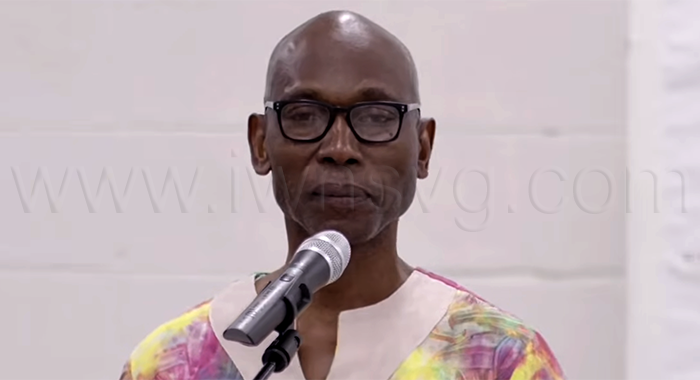
    The incoming consul general is Roderick Mc Kree, a native of Bequia and current lecturer at the St. Vincent and the Grenadines Community College. With more than 30 years of experience in education, Mc Kree holds a Doctor of Education degree from the University of the West Indies, a master’s and bachelor’s degree in psychology and psychosocial intervention from Cuba’s University of the Orient, and a Spanish language diploma from Cuba’s University of ISACA in Ciego de Avila. His deputy will be Lavern “Gypsy” Phillips, a Marriaqua native who earned a bachelor’s degree in international business from Taiwan’s Ming Chuan University and spent more than 20 years working at NICE Radio. Phillips also made two unsuccessful bids to secure the New Democratic Party (NDP) nomination for the Marriaqua constituency in the 2020 and 2025 general elections. Bramble expressed high confidence in the new leadership, telling attendees “Mc Kree is going to do wonders up here,” while emphasizing that the mission’s success would depend on broad collaboration with the local Vincentian community.

    Beyond leadership changes, the SVG government is transforming the core mandate of the Canadian consulate, moving away from a narrow focus on routine consular services such as passport processing and emergency assistance. The restructured mission will now center on attracting foreign investment and building structured, long-term engagement with the Canadian-based Vincentian diaspora. To support this new direction, two new specialized full-time positions — an investment officer and a dedicated diaspora officer — will be added to the Toronto mission’s staff. Bramble noted the new posts signal the government’s unwavering commitment to elevating investment and diaspora affairs as national priorities.

    These changes to the Toronto mission form part of a broader national strategy to reimagine and expand all of SVG’s overseas diplomatic missions, with the goal of making engagement with expatriate communities far more structured and targeted than in previous years. For the current NDP administration, which took office following the November 2025 general election, diaspora communities are not an afterthought to national development — they are a central pillar.

    Bramble, who holds combined portfolios for foreign affairs, foreign trade, foreign investment and diaspora affairs, explained that he explicitly requested the diaspora affairs portfolio when Prime Minister Godwin Friday was forming the new Cabinet. Despite widespread speculation that he would take on finance or sports portfolios (Bramble is a former national footballer and economist who worked as economic development coordinator for Estevan, Saskatchewan in Canada from 2017 to 2020 before returning to SVG to enter politics), he said he made his priority clear: “Give me diaspora, Prime Minister.” Having lived abroad for more than 20 years himself, Bramble said he has directly experienced the harmful artificial divide that sometimes separates domestic and expatriate Vincentians, with local residents often sidelining those who moved overseas. “That thinking is self-defeating, and it must stop,” he said, pledging that as long as he holds his ministerial post, diaspora Vincentians will never be treated as outsiders to national affairs.

    The Toronto announcements coincide with broader institutional changes to formalize SVG’s diaspora policy at home. The government has upgraded the former Regional Integration and Diaspora Unit into a fully independent Department of Diaspora Affairs, led by Ambassador Allan Alexander — SVG’s non-resident ambassador to CARICOM. Bramble explained that the upgrade was necessary because of the outsized importance of diaspora engagement, which could no longer be confined to a small internal unit. The new department will be staffed by at least four dedicated officers, including a diaspora projects officer and a diaspora liaison officer.

    One of the new department’s first core initiatives is the creation of a national diaspora registry, designed to collect accurate data on the size and distribution of SVG’s global expatriate community. “How can anybody guess how many Vincentians actually live outside of St. Vincent and the Grenadines?” Bramble asked, noting that evidence-based policy making requires reliable demographic data to guide engagement efforts. The registry initiative has already launched in New York, where the local consulate is circulating a questionnaire to gather information from Vincentian residents, and Bramble urged Canadian-based Vincentians to participate when the effort rolls out across the country. “We can’t be talking about engaging our diaspora and encouraging people in the diaspora to invest, and we don’t know who is where and what,” he said. “We have to know how many people are living where… what strengths our community holds, and how local organizations can collaborate more effectively to drive national progress.”

  • Suriname moet zich voorbereiden op nieuwe fiscale uitdagingen

    Suriname moet zich voorbereiden op nieuwe fiscale uitdagingen

    A cross-institutional symposium bringing together the Anton de Kom University of Suriname (AdeKUS) and the University of Curaçao has opened a much-needed dialogue on pressing modern developments in Suriname’s tax regulatory framework, drawing tax policy experts and legal scholars from across the Caribbean and Europe to address gaps and opportunities in the country’s current tax system. Held as Suriname prepares for a major expansion of its oil and gas sector, the event brought forward targeted analysis and actionable recommendations to align Suriname’s tax laws with regional standards and growing international investment expectations.

    Opening the proceedings, Romano Graves, a Dutch tax specialist currently conducting doctoral research in cross-jurisdictional tax alignment, delivered a presentation focused on legal concordance in Suriname’s tax code. He outlined how greater harmonization and alignment with established tax principles from the Netherlands and Dutch Caribbean could deliver tangible economic and administrative benefits to Suriname, streamlining cross-border commerce and reducing regulatory friction for international businesses operating in the country.

    Arno van Suilen, a professor of tax law at the University of Curaçao, next turned attention to Suriname’s pending draft General Tax Law, currently moving through the national legislative process. The proposed legislation is designed to consolidate scattered formal tax provisions that are currently spread across dozens of separate tax acts, while also clearly defining the rights and obligations of taxpayers and codifying the regulatory powers of tax inspectors. Professor van Suilen emphasized the urgent need to coordinate the passage of this general law with a separate pending bill focused on professional appeals processes in tax disputes, arguing that aligned implementation would prevent regulatory gaps and ensure functional tax governance.

    Fiscal specialist Marcel Persad followed with a deep dive into unaddressed tax questions emerging from Suriname’s recently implemented new Civil Code. His analysis centered on the tax treatment of trusts, highlighting the core unresolved question of which party should legally qualify as the taxpayer: the trust itself, its beneficiaries, the appointed trustee, or the trust’s creator (settlor). Persad noted that existing Surinamese tax law only provides partial answers to this question, meaning targeted legislative amendments will almost certainly be required to clarify the framework. He added that Graves’ earlier research on regulatory concordance could offer a useful blueprint to resolve this ambiguity. Persad also examined the tax classification of purpose-built asset funds (known as doelvermogen in Dutch regulatory terminology), addressing how these structures should be treated under Suriname’s new trust rules and existing income tax legislation.

    After a break in proceedings, fiscal expert Ismaël Kalaykhan addressed attendees on the evolving concept of tax justice. He unpacked related core principles including tax equity and tax fairness, examining how these terms are defined and applied both in academic research and practical tax administration across jurisdictions. A key takeaway from Kalaykhan’s analysis was that significant ambiguity remains around the application of these concepts in Suriname’s context, and global research confirms there is no universal one-size-fits-all model to achieve meaningful tax justice. Kalaykhan also opened a discussion on citizen tax morale, comparing high rates of tax compliance and voluntary participation observed in Scandinavian countries to current trends in Suriname. He recommended that Suriname launch targeted, community-centered research to understand the actual experiences and perceptions of domestic taxpayers, as well as to assess whether the national tax authority and government operate in line with internationally accepted good governance standards for a fair tax system.

    Closing the formal presentations, Arnaud de Graaf, another professor from the University of Curaçao with decades of experience as a member of international negotiation teams drafting double taxation avoidance agreements, turned to Suriname’s current tax treaty policy. De Graaf noted that Suriname currently only has two active tax treaties in force: one with the Netherlands and one with Indonesia, with a third agreement awaiting ratification by the country’s National Assembly. Against the backdrop of upcoming large-scale oil and gas development projects set to launch in Suriname, De Graaf stressed that developing a clear, proactive tax treaty policy has become increasingly urgent. He emphasized that Suriname must now set clear priorities for which countries will be targeted first for future treaty negotiations, and define what negotiating position the country will adopt to protect its national economic interests.

    Overall, the symposium delivered valuable, timely insights into the ongoing evolution of Suriname’s tax law landscape, and made clear that a wide range of unresolved legal and policy questions remain that require further in-depth study and careful deliberation as the country prepares for a new era of economic growth driven by its emerging energy sector.

  • Everything you need to know about the different levels of electronic signatures in Haiti

    Everything you need to know about the different levels of electronic signatures in Haiti

    Haiti’s National Telecommunications Council (CONATEL) has issued a public clarification of the country’s newly updated legal framework for electronic signatures, laying out clear tiered classifications that formalize the legal standing and appropriate use cases for each security level.

    Electronic signatures have been formally recognized under Haitian law since the original 2017 legislative act, but recent regulatory updates — including an August 2025 decree and a September 2025 implementing order — have refined the regulatory structure to bring greater clarity for public agencies, private businesses, digital service providers, and the general public. Under the revised regulatory scheme overseen by CONATEL, three distinct levels of electronic signature are codified, each differentiated by specific security protocols, identity verification requirements, and legal weight.

    The most basic tier is the Simple Electronic Signature (SES), designed for low-stakes, routine interactions. Common examples include checking a consent box on a digital form, scanning a physical handwritten signature to insert into a document, or clicking an “I accept” button for terms of service. While SES carries basic legal value and can be submitted as evidence in legal proceedings within defined limits, it offers minimal security protections: it does not provide ironclad confirmation of the signatory’s identity, nor does it guarantee the long-term integrity of the signed document. CONATEL recommends SES only for everyday transactions with minimal legal or financial risk, such as confirming receipt of a document, acknowledging service terms, or approving internal organizational memos.

    The intermediate tier, the Advanced Electronic Signature (AES), delivers significantly stronger security protections that require a unique electronic certificate tied exclusively to the individual signatory, enabling definitive verification of the signer’s identity. The AES leverages cryptographic technology that automatically flags any unauthorized changes made to the document after it is signed, guaranteeing both the identity of the signing party and the unaltered integrity of the document. Because of this enhanced security, CONATEL advises the use of AES for formal professional and commercial agreements, including employment contracts, non-disclosure confidentiality agreements, and binding commercial quotes.

    At the highest end of the security and legal spectrum is the Qualified Electronic Signature (QES), the most rigorous and trusted form of electronic signature available under Haitian law. To create a QES, users must employ a dedicated secure signature creation device, and the signature relies on a qualified certificate issued by a Trust Service Provider that has received official accreditation. QES also requires strict, thorough identity verification, completed either through an in-person appointment or a government-vetted remote video verification process. Under Haitian law, the QES carries the exact same legal weight as a traditional handwritten physical signature, and it is the only tier of electronic signature that provides undisputed probative value in legal disputes. CONATEL reserves recommendation of QES for high-stakes documents carrying major legal or financial risk, including notarial legal deeds, bank loan agreements, official government administrative documents, and public sector procurement contracts.

    This updated framework comes as Haiti continues to expand digital access and formalize digital transaction protocols, providing clear guidance that reduces legal uncertainty for both public and private actors operating in the country’s growing digital economy.

  • JCI Antigua Congratulates Members on Senate Appointments

    JCI Antigua Congratulates Members on Senate Appointments

    The Junior Chamber International (JCI) branch in Antigua has issued a formal statement celebrating multiple milestones achieved by its members, highlighted by the appointment of three young members to the country’s national Senate and a special service honor for another longstanding contributor.

    In the official release, the organization opened by extending warm congratulations to Shenella Govia, Angelica O’Donoghue, and Tiffany Strann-Peters, the three JCI Antigua members who have recently been tapped as government senators. JCI Antigua emphasized that these appointments are far from coincidental: they serve as a public, national validation of the consistent leadership, relentless dedication, and unwavering commitment to inclusive national development that each of the three women has demonstrated throughout their careers and volunteer work with the organization.

    Beyond celebrating the three new national senators, JCI Antigua also highlighted an internal win for the community: Nneka Hull James has been appointed a JCI senator, a prestigious recognition within the global JCI network that honors exceptional service and sustained contribution to the organization’s mission. The branch noted that this honor is thoroughly well-earned, crediting Hull James with years of visionary leadership and grassroots work that has strengthened the JCI movement across Antigua and the broader Caribbean region.

    Reflecting on the string of achievements, JCI Antigua shared that it takes immense pride in watching its emerging young leaders translate the organization’s core values of service and leadership into tangible impact at the highest levels of national governance. The organization stressed that these public and internal successes do more than honor the individual recipients: they set a powerful example for current and future JCI members, inspiring a new generation of young people to step into leadership roles, prioritize community service, and work to deliver tangible, positive change across Antigua’s neighborhoods and national institutions. Closing the statement, JCI Antigua extended its best wishes to all five honorees, expressing confidence that they will bring fresh energy and community-focused perspective to their new roles.