Forty-four years after Antigua and Barbuda secured its independence in 1981, a long-time local resident and patriotic citizen has opened up about his deep disappointment with the trajectory of national development, calling out a long list of harmful government policies that have eroded the rights and livelihoods of native-born Antiguans and Barbudans.
Looking back to the months immediately following independence, the author, Yves R. Ephraim, recalls how government officials visited his fifth-form class to recruit young people to join the national building effort. At that time, severe brain drain was already hollowing out the country’s talent pool, a trend that has only worsened over the decades: today, barely a handful of Ephraim’s former classmates still reside in the twin-island nation. To encourage young people to stay and serve, officials offered full engineering scholarships to students who would commit to working at the Antigua Public Utilities Authority (APUA) and the Public Works Department after graduation. Three of his classmates took the offer, completed their degrees, and went on to hold senior leadership roles in those two public entities.
Ephraim himself chose a different path. Even as a teenager, he had no interest in public sector work, and turned down the scholarship to pursue his passion for electronics at one of two local private firms that offered specialized training in the field. Despite rejecting public service, he remained deeply committed to the nation he loved. Born the first child of a struggling single mother facing significant economic hardship, he had few opportunities, but he made a vow to stay in his homeland, contribute to its growth, and prove that Antigua and Barbuda’s native talent could compete with the best minds across the globe. For decades, he has persisted through systemic barriers created by bad government policy, holding onto hope that meaningful change would come during his lifetime.
It was the government’s handling of the COVID-19 pandemic that pushed Ephraim to speak out publicly. It was during this public health crisis that he came to believe the current administration did not value the lives and rights of native Antiguans and Barbudans. He condemns the government’s forced COVID-19 vaccine mandate, which threatened to terminate the employment of public servants who refused to take what he describes as an experimental drug, stripping them of their right to work. In his view, this mandate amounted to a crime against humanity, implemented solely to reach an 80% vaccination target to prop up the country’s key tourism industry—even though the shot never prevented viral transmission, as the government had promised. Ephraim shares a personal example of the harm caused: one of his own employees suffered permanent, life-altering side effects after following the government’s public encouragement to get vaccinated. He argues that the drug caused far more harm than good, and that his greatest fear during the pandemic was not the virus itself, but the government’s seizure of extraordinary powers that eroded basic civil liberties under the guise of public safety.
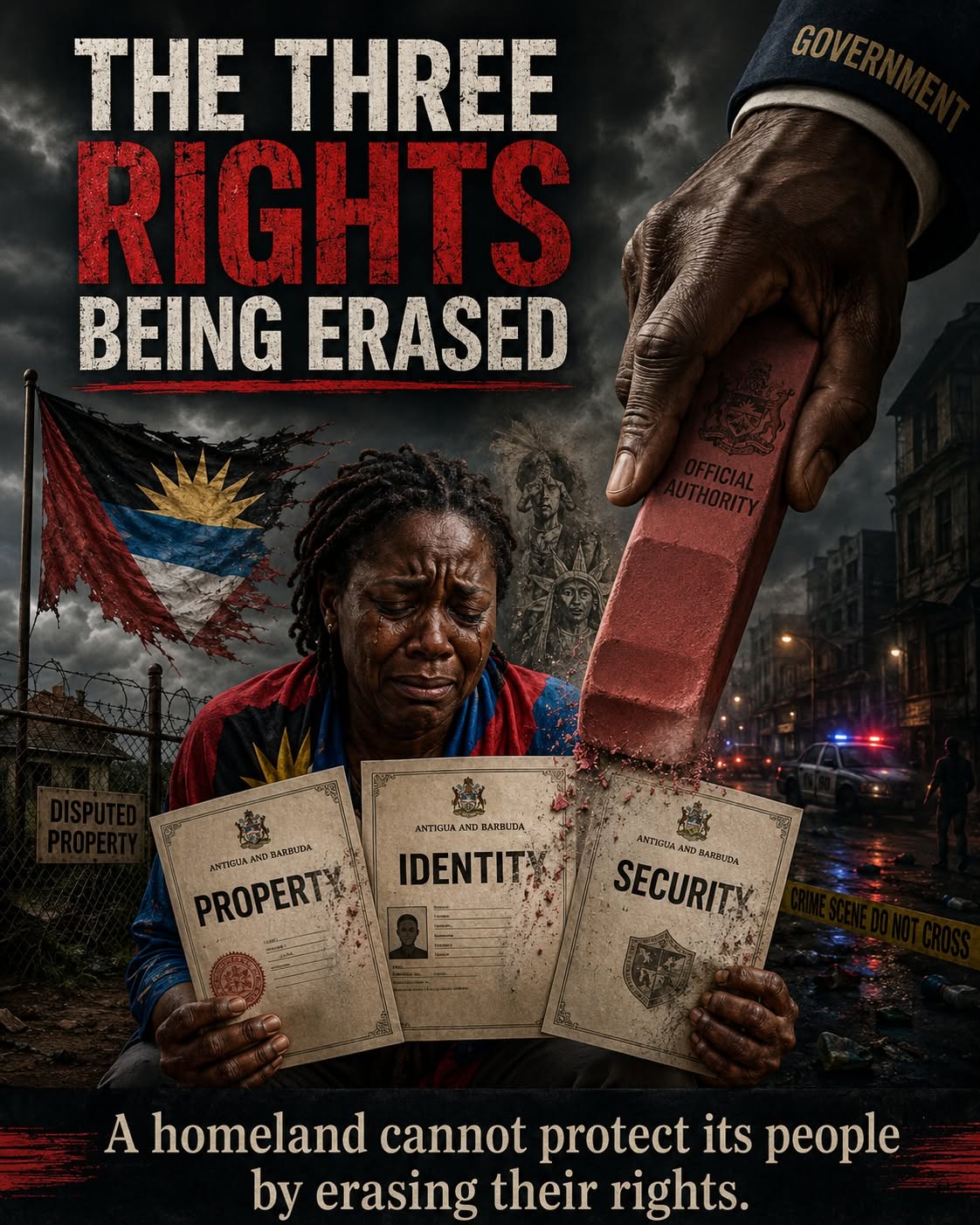
In the years following the pandemic, Ephraim argues, a string of increasingly harmful government policies have turned the nation into what he calls a “neo-plantation,” stripping native citizens of their national identity, private property rights, and ability to build secure lives in their own homeland. He outlines 15 key grievances against the current administration, ranging from long-running infrastructure failures to dangerous concessions of national sovereignty.
Among the most serious issues are the degradation of the country’s telecommunications infrastructure after the government confiscated spectrum rights from major providers Digicel and Flow, leaving Antigua and Barbuda with the highest per-bandwidth prices in the entire Caribbean region. He also criticizes the creation of a special economic zone in the country’s northeastern corridor that ceded national sovereignty without including any performance requirements or guarantees of economic benefits for local citizens. On Barbuda, he accuses the government of marginalizing native Barbudans and seizing their communal land to hand over to wealthy foreign investors. National legislation has also been amended to make it far easier for the government to seize private property from citizens, a policy Ephraim describes as unprecedented official theft that has become the administration’s default approach to governance.
Other long-running failures include the botched response to the country’s chronic water crisis: 14 years ago, the government promised to fix the crisis in just 14 days, and has spent hundreds of millions of dollars to date, only to recently acknowledge that the core problem all along was outdated pipes that needed replacement. The country has also lost visa-free access to the United States for travel and education, a blow that has upended the lives of many Antiguans and Barbudans seeking medical care and academic opportunities, despite previous government assurances this outcome was impossible. Violent crime and petty theft have surged, including an epidemic of car tire theft that authorities have failed to curb, while underfunding has left both the police service and the national justice system unable to function effectively, eroding public trust in institutions.
Ephraim also condemns the government’s policy of accepting deportees from third countries, a move he says contradicts the national interest and risks long-term destabilization. Most recently, the administration moved within 30 days of winning re-election to make Spanish an official language, and created a special desk in the Prime Minister’s office exclusively for Dominican Republic nationals, a step that formalizes the long-standing marginalization of native Antiguans and Barbudans in their own country. Proposed expansions of the Windfall Tax would hit struggling local businesses and push up prices for working households, effectively erasing any gains from recent minimum wage increases. The government has also made amnesty for undocumented immigrants a top priority, and is now considering using $50 million in unclaimed bank deposits to launch another national airline—after the failure of Antigua Airways—rather than directing the funds to fix the public hospital, boost police resourcing, or roll back the unpopular expanded Windfall Tax.
As a native-born citizen who has spent his entire life working to contribute to Antigua and Barbuda’s development, Ephraim says he no longer believes the current government is willing to create an enabling environment that protects his core rights: the right to private property, the right to national identity, the right to live safely in his homeland, and the freedom to thrive without unnecessary government interference. Echoing the words of beloved Antiguan artist King Short Shirt, also a native of Ephraim’s home district, he declares: “nobody go run me from whey me come from!”