
On September 11, diplomatic relations between Suriname and Venezuela entered a new phase of deepened engagement, as acting Venezuelan President Delcy Rodríguez carried out an official working visit to the South American Caribbean nation at the invitation of Surinamese President Jennifer Simons. The visit marks the first in-person meeting between the two heads of state, and centers on expanding cross-border economic partnerships across a range of high-priority sectors. Rodríguez and her delegation arrived in Suriname on the evening of Thursday ahead of the official schedule of meetings and ceremonies. On Friday, she received a formal ceremonial welcome at Suriname’s Presidential Palace, followed by plans to lay a wreath at the monument of Simón Bolívar, the iconic Venezuelan independence leader, located on Kerkplein. Later the same day, Rodríguez held scheduled talks with President Simons to advance bilateral cooperation discussions. According to the Surinamese government, the two countries have identified agriculture, fisheries, and hydrocarbons as core focus areas for expanded collaboration. Additional sectors including cross-border connectivity, tourism, education, and institutional capacity building are also on the negotiating agenda during the visit. Suriname’s top diplomat Melvin Bouva, who serves as Minister of Foreign Affairs, International Trade and Cooperation, noted that the two neighboring nations have long-standing ties and hold extensive complementary strengths that create mutual opportunities for growth through closer partnership. Suriname and Venezuela have maintained formal diplomatic relations for more than 50 years, and this high-level visit is intended to strengthen and deepen the long-standing bilateral connection. During the negotiations, the two sides are working to identify concrete, actionable avenues for expanded cooperation. Beyond individual sector projects, officials are also exploring pathways to scale up broader economic and technical partnerships between the two countries. As of the latest update, no specific projects or binding agreements resulting from the talks have been publicly announced. The Surinamese government has confirmed that any outcomes reached during the visit are expected to set a clear, forward-looking direction for a long-term sustainable and results-driven partnership between the two nations.
分类: politics
-

Army : Ongoing modernization of the FAd’H regulatory framework
Haiti’s defense sector is moving forward with a key phase of military institutional modernization, as senior leaders work to finalize updated governing rules for the country’s Armed Forces (FAd’H). On September 9, 2026, Defense Minister Mario Andrésol led a dedicated working session with top FAd’H High Command members during his weekly scheduled meeting, focusing specifically on wrapping up revisions to the force’s draft general regulations.
The updated regulatory document is designed to lay the groundwork for the armed forces’ long-term institutional evolution, establishing clear definitions for the service’s organizational structure, core responsibilities, and standardized operational protocols. During the day’s discussions, High Command officials conducted a full review of the FAd’H’s proposed overall organizational chart and the mandate of each of its individual branches and units. Attendees also contributed targeted observations and actionable proposals aimed at boosting internal structural coherence and streamlining cross-unit coordination across the force.
Addressing the meeting, Minister Andrésol stressed that modernizing Haiti’s armed forces cannot be reduced to upgrading hardware or physical infrastructure alone. True transformation, he argued, requires equally robust efforts to consolidate institutional structures, update outdated operational standards, and codify clear rules that help every rank and department within the force understand its unique role and accountabilities.
Andrésol emphasized that the ongoing regulatory development work must continue to be carried out in a collaborative spirit with the FAd’H High Command, to deliver a final regulatory framework that is sturdy internally consistent, and fully functional for on-the-ground operations.
In addition to finalizing the general regulation draft, Haiti’s Ministry of Defense is also in the late stages of developing an entirely new operational doctrine for the FAd’H. The two overlapping projects are core components of the government’s sustained national effort to modernize and professionalize Haiti’s armed forces, marking a key milestone in the institution’s ongoing restructuring.
-

Skerrit says special branch monitoring of public meetings is nothing new
A political controversy has emerged in Dominica after prominent local businessman Gregor Nassief accused the government of deploying plainclothes intelligence officers to monitor a private civic meeting he hosted, prompting a firm defense from Prime Minister Roosevelt Skerrit that frames the incident as standard national security practice.
Nassief’s allegation, made public in recent weeks, centers on a private gathering held August 26 at Fort Young Hotel. According to the businessman, two officers from Dominica’s Special Branch intelligence unit arrived at the venue and remained on the property for more than four hours. He has argued that their uninvited presence created an intimidating atmosphere for meeting attendees, framing the incident as an example of government overreach.
Speaking at a press conference this week, Prime Minister Skerrit pushed back against these claims. He confirmed that he only learned of the officers’ presence after the allegations became public, and explicitly denied ever issuing orders for law enforcement to attend or monitor the meeting. However, Skerrit stopped short of condemning the officers’ actions, instead defending the general practice of deploying Special Branch personnel near publicly announced gatherings as a core component of routine national security work.
Skerrit emphasized that the officers in question never entered the meeting space nor disrupted its proceedings. To contextualize the practice of intelligence gathering at public events, the prime minister recalled that even when his Dominica Labour Party (DLP) was in opposition prior to taking office, Special Branch officers routinely monitored political gatherings he attended — a longstanding institutional practice, he argued, not a new political tactic.
The prime minister rejected claims that the incident constitutes evidence of systemic political oppression. He pushed back against critics who have framed the monitoring as a deliberate attempt to stifle dissent, noting that Dominica remains a robustly free society where citizens openly and regularly criticize both him and his government without fear of retribution.
Skerrit closed by reaffirming the necessity of intelligence gathering for national security. He maintained that state security agencies must retain the authority to collect information on potential threats to public safety and share relevant intelligence with police leadership to prevent unrest or harm.
-

Cabinet Welcomes 4,000 Bags of Fertilizer from Morocco to Boost Local Food Production
A landmark step in Antigua and Barbuda’s push for strengthened food security has been confirmed, with the nation’s Ministry of Agriculture, Lands, Fisheries and the Blue Economy announcing it has taken delivery of a record 4,000-bag shipment of fertilizer donated by the Kingdom of Morocco. The delivery, secured after months of diplomatic and technical negotiations between agricultural officials from both nations, marks the largest single fertilizer consignment delivered under a bilateral cooperation framework that launched in 2018.
Distribution of the critical agricultural input to local farmers began this week, and will continue through the end of the week, according to Minister Anthony Smith Jr., who shared the update with the nation’s Cabinet. This shipment builds on years of incremental agricultural support from Morocco: in 2023, the North African nation delivered 1,700 bags of fertilizer for local crop producers, and followed that up with an 1,800-bag shipment in 2025. Beyond the direct donation of inputs, the partnership is structured as a broader technical cooperation initiative focused on boosting soil fertility, increasing on-farm productivity, and improving overall farming efficiency across Antigua and Barbuda.
Minister Smith emphasized that reliable access to high-quality fertilizer is a non-negotiable foundation for boosting domestic crop yields. Quality fertilizer replenishes the key soil nutrients depleted by repeated cultivation, he explained, allowing farmers to unlock greater productivity from existing agricultural lands without clearing new territory for production.
The new fertilizer delivery complements a suite of parallel government initiatives designed to expand domestic agricultural output, advance food self-sufficiency, and cut reliance on costly imported food. Earlier this year, the ministry repossessed roughly 150 acres of long-underutilized agricultural land, with Cabinet approving the allocation of 75 acres of that parcel specifically to young and women farmers. This policy aligns with the government’s broader goal of putting productive land into the hands of producers ready and able to increase domestic output.
In a separate major investment in agricultural resilience, the government secured approximately US$9 million in funding from the Caribbean Development Bank and the Food and Agriculture Organization earlier in June. The funding will support the construction of new dams, water catchment ponds, and other critical soil and water conservation infrastructure, addressing longstanding water access challenges that have limited local production.
Cabinet members formally welcomed the new fertilizer shipment, and extended formal gratitude to both the government and people of Morocco for their consistent, long-term support for Antigua and Barbuda’s agricultural development. Officials noted that the combination of expanded access to productive farmland, improved irrigation and water infrastructure, reliable access to key inputs like fertilizer, and ongoing technical support for producers is the core of the government’s strategy to boost local food production and reduce import dependence.
Cabinet also commended Minister Smith and his ministry’s negotiating team for successfully securing the expanded shipment, which marks a major milestone in the bilateral partnership. Minister Smith urged farmers who receive the donated fertilizer to use the support to maximize their output, expanding the supply of affordable, fresh locally grown produce for domestic consumers. He reiterated that national food security is a shared national objective that requires close collaboration between the government and the local farming community, and reaffirmed the ministry’s commitment to continue delivering the resources producers need to expand output.
The government renewed its gratitude for Morocco’s long-standing friendship and cooperative partnership, noting that the 4,000-bag shipment is a tangible, impactful contribution to Antigua and Barbuda’s ongoing work to build more resilient agricultural systems and achieve long-term food security. Local farmers seeking more information about the ongoing distribution process are advised to contact the Ministry of Agriculture and its Extension Division for updated arrangements.
-

All Police Stations in Antigua and Barbuda Ordered to Operate 24 Hours
In a decisive move to ramp up the country’s crime response framework and expand public access to critical law enforcement resources, the government of Antigua and Barbuda has ordered all police stations across both islands to begin round-the-clock operations effective immediately. This sweeping policy change comes as part of a broader government initiative to strengthen national policing capacity, spurred by growing public and official concern over the rise in serious offenses, particularly crimes linked to illegal firearms. Under the new directive, the national Commissioner of Police has been formally instructed to guarantee adequate staffing and full operational functionality at every police facility 24 hours a day, seven days a week. For residents across every community in Antigua and Barbuda, the order guarantees consistent, around-the-clock access to emergency and routine police services, eliminating gaps in coverage that previously left some areas underserved outside of standard operating hours. Beyond the shift to full-time station operations, national security authorities are already implementing complementary crime-fighting measures. These include stepped-up foot and vehicle patrols across high-risk areas, expanded surveillance networks in both urban and rural communities, and active progress on a number of ongoing criminal investigations. Law enforcement officials confirmed that additional arrests are on the horizon as investigators follow up on emerging leads linked to recent high-profile cases, signaling a sustained push to curb violent crime across the nation.
-

Dwayne Edwards Appointed to Social Security Board
A key leadership appointment has been confirmed for Antigua and Barbuda’s social protection framework, with Dwayne Edwards stepping into the role of government representative on the Board of Directors of the Antigua and Barbuda Social Security Scheme. The appointment went into effect immediately upon announcement, marking the final step in assembling the full governing body that oversees the country’s critical social safety net program.
With Edwards’ placement finalized, the board now holds its full complement of appointed members, who are collectively tasked with supervising the operations of the Social Security Scheme and setting strategic policy direction to guide its work supporting residents of the dual-island nation.
The board is led by Chairperson Joy Dublin-Baptiste, and brings together representatives from key stakeholder groups across the local economy. Sherri-Ann Brazier fills the seat representing the Antigua and Barbuda Employers’ Federation, while Martin Cave serves as the nominee of the Antigua and Barbuda Chamber of Commerce and Industry. Alrick Daniel takes on the role of employee representative, appointed by the Antigua Trades and Labour Union to advocate for worker interests on the governing body.
Completing the current lineup of board members is David Mathias, the director of the Social Security Scheme itself, who holds an ex-officio position on the board. In addition to his board responsibilities, Mathias oversees the day-to-day administrative operations that keep the scheme running smoothly for beneficiaries.
As the board moves forward with its full membership, two key positions on the governing body remain unfilled: the role of deputy chairperson and the position of board secretary, both of which are still awaiting appointment.
-

Brazil Appoints New Non-Resident Ambassador to Antigua and Barbuda
In a move designed to deepen bilateral diplomatic collaboration between South America’s largest nation and the Caribbean twin-island state, Brazil has named veteran diplomat Marcia Abreu as its new Non-Resident Ambassador to Antigua and Barbuda. This appointment marks a renewed commitment to nurturing the 42-year diplomatic relationship between the two countries.
Unlike full-resident postings, Abreu will carry out her duties from Brazil’s existing embassy headquarters in Bridgetown, the capital of neighboring Barbados. This week, she formally completed the credential acceptance process, presenting her official papers to Sir Clare Roberts, Deputy to Antigua and Barbuda’s Governor General, during a ceremony held at the nation’s Government House.
Speaking at the event, Sir Roberts reflected on the steady growth of bilateral ties since diplomatic relations were first formally established between the two countries back in February 1982. Over the decades, he noted, cooperation has expanded across a diverse array of high-priority sectors, ranging from agriculture, public health, and food security to national defense and professional diplomatic training.
Sir Roberts also highlighted Brazil’s long-standing leadership in advancing global South-South cooperation initiatives, which have been instrumental in supporting development goals across developing nations. He further recalled Brazil’s diplomatic history in Antigua and Barbuda, noting that the country maintained a full operational embassy in St. John’s, the capital of Antigua and Barbuda, starting in 2009, before the mission was eventually closed for administrative restructuring.
Today, the two nations continue to coordinate and collaborate through key regional multilateral bodies, including the Organization of American States (OAS) and the Community of Latin American and Caribbean States (CELAC), creating consistent channels for dialogue and joint action.
Looking ahead to future collaboration, Sir Roberts pointed to Antigua and Barbuda’s planned participation in the upcoming Brazil-Caribbean Summit, scheduled to take place in Brasília in June 2025. He framed the summit as a critical, timely opportunity to not only expand bilateral ties but also deepen strategic partnerships between Brazil and the broader Caribbean community.
Abreu takes over the post from former Ambassador Vera Lucia dos Santos Caminha Campetti, who has completed her regional diplomatic assignment and returned to Brazil to take on her next posting.
-
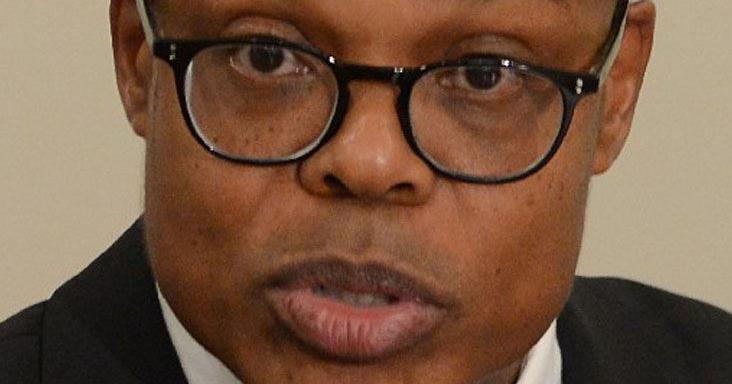
That’s not diplomacy
A major diplomatic row has erupted in Trinidad and Tobago this week, as former foreign affairs minister and opposition figure Dr. Amery Browne has publicly rejected Prime Minister Kamla Persad-Bissessar’s recent public expression of affection for Venezuela’s interim President Delcy Rodríguez, dismissing the comment as a disingenuous political pivot that does not fix already damaged bilateral ties.
Persad-Bissessar first made headlines with her remarks earlier this week, when she spoke to reporters on the steps of Port of Spain’s Hall of Justice during the annual ceremonial opening of the new law term. Alongside sharing her statement of “love” for Rodríguez, the Prime Minister confirmed she is planning to hold a bilateral meeting with the Venezuelan interim leader on the sidelines of the upcoming United Nations General Assembly, scheduled to take place later this month in New York.
Speaking from the Office of the Leader of the Opposition in Port of Spain one day after Persad-Bissessar’s announcement, Browne argued that the current administration is only now attempting to repair a bilateral relationship that its own leadership actively undermined during its time in office. The opposition leader also pointed out that Trinidad and Tobago’s government has yet to issue a formal apology to the Venezuelan government for past critical comments Persad-Bissessar made about Rodríguez.
Browne emphasized that warm personal remarks do not amount to substantive, principled diplomacy, noting that the ruling United National Congress (UNC) administration led by Persad-Bissessar bears full responsibility for the current frayed ties between the two neighboring nations. He recalled that just years prior, the Prime Minister publicly backed harsh international sanctions targeting Rodríguez, framing her sudden embrace of the Venezuelan leader as a move driven purely by political convenience rather than genuine change in policy.
He also pushed back on Persad-Bissessar’s reference to her own family ties to Venezuela – the Prime Minister has noted her mother-in-law is Venezuelan – arguing that personal connections to the country have no bearing on official state-to-state relations between neighboring countries. “One is anticipated to demonstrate principle. One is anticipated to demonstrate dignity. And one is anticipated and called upon to demonstrate consistency,” Browne said, adding that Persad-Bissessar has failed on all three counts.
Browne called for a full review of the Prime Minister’s long record on Venezuela policy, rather than only focusing on her recent remarks. “When the Prime Minister says to tell Delcy Rodríguez that I love her, we need to examine not just the words of today or yesterday, but also the actions and statements of the Prime Minister and the Government of Trinidad and Tobago, going back years since her appointment and even during her time as leader of the Opposition,” he explained.
Over years of inconsistent stances, Browne claimed, Persad-Bissessar has come to be seen internationally as an unreliable, unprincipled actor on regional diplomacy. “Previous statements by Persad-Bissessar have led to a view and those actions have led to a view, that this Prime Minister is being viewed as a pawn, as a vassal, as someone who is inconsistent and shifty,” Browne said.
The opposition leader rejected the framing of Persad-Bissessar’s comments as a genuine new chapter in bilateral relations, arguing that past actions cannot be erased with warm words. “When you spend years verbally abusing a neighbouring state, its people, its government, its positions, you cannot now cast that as love,” he added.
Browne also leveled a separate accusation that the Prime Minister lied to the Trinidad and Tobago public about the country’s role in efforts to remove former Venezuelan President Nicolás Maduro from power. He noted that before the UNC took office, bilateral relations between Trinidad and Tobago and Venezuela were at a strong, positive point, with no need for any diplomatic reset. “Relations were at an optimal level, and it is this Prime Minister, deliberately, against all warnings and good advice, who damaged those relationships,” he said.
In a final striking point, Browne reminded the public that the Prime Minister still holds persona non grata status in Venezuela, a restriction that has not been lifted even with her new public expressions of goodwill toward Rodríguez and the Venezuelan government.
-
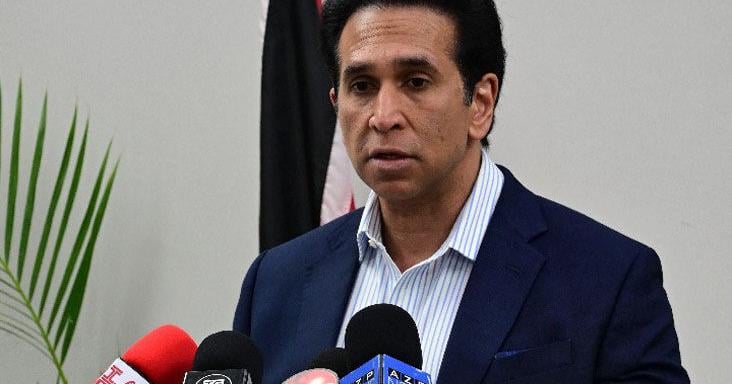
Star weeps after PDO revoked
After nearly four months of restricted detention, 69-year-old cheese maker Star Sabga has regained her personal freedom after Trinidad and Tobago’s Homeland Security Minister Roger Alexander formally revoked the Preventive Detention Order (PDO) that targeted her. Her attorney Faris Al-Rawi told reporters that when the revocation notice was delivered by Trinidad and Tobago Police Service (TTPS) officers at 10:15 a.m. yesterday, Sabga broke into tears, overwhelmed by a tangled mix of relief, disbelief and raw emotion after the long period of confinement.
Sabga’s detention timeline stretches back to June 26, when she was first taken into custody under the PDO. After several weeks held in a prison facility, she was transferred to home confinement at her Regents Towers apartment in Westmoorings starting July 23, a restriction that remained in place until the order was lifted yesterday. Throughout her house arrest, Al-Rawi explained, Sabga was only permitted two 15-minute visits from family members, was barred from leaving her apartment at all, and was completely unable to generate income from her cheese making business. Even now, following her release, Al-Rawi noted that the trauma of the detention will take time to fade: Sabga is still adjusting to the simple freedoms most people take for granted, like being able to lock her doors without unannounced midnight or early-morning checks from authorities while she sleeps. When family members were finally able to gather in her living room freely after the revocation, Sabga was completely overcome by the moment, Al-Rawi added.
Addressing the controversial remarks that formed the core of the state’s case against Sabga, Al-Rawi clarified the context of the intercepted private conversation at the center of the detention proceedings. Speaking on an affidavit Sabga filed regarding a recorded discussion with her niece Genevieve Hadeed, Al-Rawi said Sabga believed the conversation was completely private. She was only venting personal frustration about the country’s political direction, referencing historical events from 1970 and 1990, and never intended to threaten or cause harm to anyone, including government officials. Sabga has publicly expressed regret for using a racial slur during the discussion, and has firmly stated she has never and would never threaten violence against any person or member of the government.
While the revocation of the PDO has restored Sabga’s personal freedom, it has not closed the book on the broader legal proceedings that involve Sabga, Genevieve Hadeed and Dominic Hadeed. Two major High Court cases are still pending: one for judicial review of the state’s actions, and a constitutional claim that challenges the issuance of warrants, the PDOs themselves, the interception of private communications, and alleged breaches of core constitutional rights including the right to liberty, equal treatment under the law, and the right to private life. The proceedings also seek formal court declarations of wrongdoing and financial damages. Al-Rawi noted that a state appeal against a prior ruling allowing Sabga to serve her detention at home is now effectively moot after the PDO’s revocation, but all underlying legal questions remain to be decided by the courts — and could ultimately go all the way to the Privy Council, the highest appellate body for the country.
The case raises far broader questions than the circumstances of the three individuals involved, Al-Rawi emphasized. In particular, the legal team is challenging Section 6(2)(b) of Trinidad and Tobago’s Interception of Communications Act, which permits the Commissioner of Police, Chief of Defence Staff, and head of the Strategic Services Agency to request communication interception without first obtaining a judicial warrant. The defense argues this provision is unconstitutional, because it lacks the safeguards built into other sections of the law that require a judge to approve a warrant before surveillance can proceed.
Al-Rawi also pointed to critical discrepancies in the state’s evidence: the state has confirmed the interception at the center of the case happened on June 11, but the warrant approving the interception was not requested or granted until between June 18 and June 24, days after the surveillance was already completed. Of the 13 audio clips the state has submitted to the court, the defense disputes how the state has attributed statements to Sabga and the Hadeeds. Al-Rawi stressed that the June 11 conversation between Sabga and her niece is the foundation of the detention orders, but many of the statements the state attributed to Dominic and Genevieve Hadeed “simply never happened,” and Sabga’s remarks were made in a completely different context than the state has presented. These discrepancies will be a core part of the ongoing constitutional and judicial review challenges.
Despite the ongoing legal fight, Al-Rawi emphasized that Sabga and her co-defendants have no interest in escalating conflict with the government or the TTPS. “They don’t want a war with Government. They don’t want a war with the TTPS. They want their good names restored,” he said.
-

Peru sluit zich aan bij door VS geleide veiligheidsalliantie ‘Shield of the Americas’
On September 10, 2026, during a high-profile visit by U.S. Secretary of State Marco Rubio to Lima, Peruvian President Keiko Fujimori formally announced that her country would join the Shield of the Americas, a U.S.-led regional security bloc focused on intelligence sharing and coordinated military counter-narcotics operations against transnational drug cartels. Fujimori, a right-wing leader who took office following recent general elections, confirmed the decision after closed-door bilateral talks with Rubio at the Government Palace in Lima.
Fujimori emphasized that deepened security cooperation is a critical priority for her administration, which has struggled to contain rising violent crime and previously faced domestic insurgent threats. As a marker of the warming bilateral relationship, Rubio was awarded the Order of the Sun of Peru during his visit, one of the highest civilian honors bestowed by the Peruvian state.
Officially also named the Americas Counter Cartel Coalition (ACCC), the alliance advocates for a robust military response to transnational criminal organizations, many of which currently wield greater firepower and resources than the national security forces of some Latin American states. Rubio framed the alliance as a defensive bulwark, describing it as a “shield against threats to national sovereignty” and stressing that decisive collective action is required to counter the growing power of cartel networks across the Western Hemisphere.
Peru holds the unenviable position of the world’s second-largest cocaine producer, behind only Colombia, and has seen a sharp uptick in organized crime in recent years, including widespread extortion rings linked to drug trafficking groups. However, the decision to deepen security ties with the U.S. has ignited widespread concern over the erosion of Peruvian and broader Latin American sovereignty, particularly given the long history of U.S. military and political intervention in the region and Washington’s history of backing controversial right-wing leaders.
During his public remarks in Lima, Rubio sought to ease these concerns, stating that all U.S. security operations within Peruvian territory would only proceed with the explicit approval of Peruvian national authorities. Even with these assurances, hundreds of protesters gathered in central Lima to demonstrate against the alliance, holding signs and chanting slogans calling for Rubio to leave the country and rejecting the Shield of the Americas initiative.
Beyond counter-narcotics cooperation, Peru’s accession to the alliance aligns with a broader U.S. geopolitical strategy to counter growing Chinese influence across Latin America. China is currently Peru’s largest bilateral trading partner, and has poured billions of dollars into infrastructure projects across the country, most notably the megascale Chancay port project located just outside Lima — a development that U.S. policymakers have framed as a strategic threat to regional security and U.S. interests.
Peru occupies an outsize role in both U.S. security and economic strategy in the region, in large part due to its status as the world’s third-largest producer of copper, a critical mineral for global renewable energy and technology supply chains. Earlier this year in January, the U.S. designated Peru as a major non-NATO ally, a status that unlocks preferential defense cooperation and arms access, and approved a potential $1.5 billion arms deal to upgrade Peru’s main naval base at Callao, the country’s largest commercial port.