分类: politics

  • PM warns Pintard to drop ‘crazy antics’ ahead of vote

    PM warns Pintard to drop ‘crazy antics’ ahead of vote

    As the Bahamas approaches its April 30 advanced poll, political tensions between the ruling Progressive Liberal Party (PLP) and the opposition Free National Movement (FNM) have escalated sharply, with Prime Minister Philip Davis publicly calling on Opposition Leader Michael Pintard to abandon disruptive political tactics that threaten the integrity of the upcoming election process.

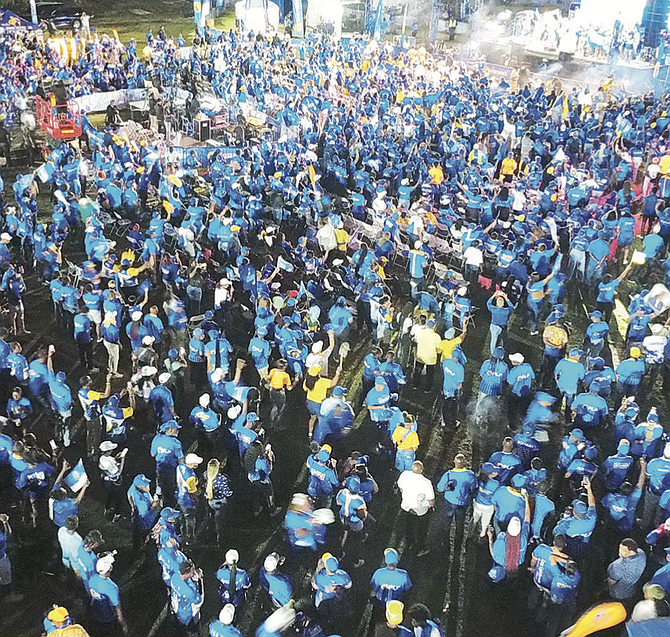
    Speaking to an energized crowd of PLP supporters at a rally hosted at Thomas A Robinson Stadium, Davis emphasized that the unrest that marred two recent by-elections must not be repeated on election day. He acknowledged that cultural expressions like traditional Junkanoo dancing have their place, but drew a clear line at actions designed to upend democratic voting procedures. “There is no need for constant commotion, physical conflict, and unruly behavior,” Davis told attendees. “We share one Bahamas, and we owe it to our country to conduct ourselves with dignity. At the end of the day, all parties should be prepared to accept the result gracefully.”

    Davis’ remarks come in direct response to the FNM’s recent moves to raise formal concerns over the accuracy of the national voter register and formally request international observers to monitor the election. The prime minister has already criticized Pintard for bypassing established domestic protocols to directly appeal to the United States for observation, labeling that move a breach of standard political procedure.

    To back up his warnings about potential opposition disruption, Davis referenced the 2023 Golden Isles advanced polling, which devolved into chaos after FNM and Coalition of Independents supporters blocked the removal of ballot boxes amid a dispute over transportation protocols for election materials. That incident, he argued, is a preview of what the opposition could bring to the upcoming national vote.

    Beyond warnings over electoral conduct, Davis launched pointed critiques of the FNM’s key campaign pledges, casting the opposition as unprepared to govern and arguing that an FNM election victory would roll back the progress the PLP has made in office and return the country to political instability and partisan conflict.

    The prime minister specifically dismissed the FNM’s promise to construct 5,000 new affordable homes, noting that the party has not delivered on large-scale housing development projects in more than 15 years. He called out an opposition candidate from the Garden Hills constituency who secured Crown land for a planned development of environmentally friendly affordable housing years ago, but has yet to break ground on a single unit.

    Davis also criticized the FNM’s proposal to provide a $200 monthly stipend to single mothers, dismissing the policy as a hollow, surface-level gesture that lacks the comprehensive support single-parent households actually need. He pointed out that the opposition has put forward no parallel plans to expand maternity leave protections, reduce the cost of essentials like diapers and groceries, or improve maternal health services in public hospitals. “It’s just a small monthly check to pretend they’re delivering for people, when they’re ignoring the root challenges these families face,” Davis said.

    The prime minister saved his final sharp rebuke for the FNM’s proposal to launch a national lottery. He argued that the plan would effectively turn the national treasury into a private gambling house, allowing connected private operators to pocket profits while offering little benefit to the general public. Davis questioned what the FNM was not disclosing about the plan, suggesting that unreported insider benefits would flow to the party’s wealthy political backers. “What they don’t tell you is which of their rich friends is actually going to walk away with the biggest jackpot,” he added.

  • Hermitage Dam to be upgraded at a cost of US$250 million, says Samuda

    Hermitage Dam to be upgraded at a cost of US$250 million, says Samuda

    Jamaica’s national government has given the green light to a landmark $250 million upgrade project for the Hermitage Dam, located in Stony Hill, St Andrew, marking one of the largest investments in the country’s water infrastructure in decades.

    Water, Environment and Climate Change Minister Matthew Samuda outlined the full scope of the initiative during his Tuesday address to the Sectoral Debate at Gordon House, confirming that the project will be led by the National Water Commission (NWC). The public utility will center its investment on two core goals: expanding the country’s total water storage capacity and boosting the overall resilience of Jamaica’s water distribution network in the face of changing climate patterns.

    At the heart of the major upgrade work is a multi-phase overhaul of the Hermitage Dam. The project will kick off with a rigorous full technical evaluation of the dam’s current structural integrity, current sediment accumulation levels, and the practical potential for expanding its overall storage capacity. To complement the dam upgrade, officials also plan to conduct a full diagnostic review of the nearby Mona Reservoir, which will assess both the feasibility of expanding its storage footprint and what critical rehabilitation work is urgently needed.

    Samuda emphasized to the legislative body that most of Jamaica’s active water storage infrastructure was designed and constructed nearly a generation ago, to serve a far smaller population. “That infrastructure has served Jamaicans well over the decades, but shifting demographics and changing climate conditions have left it outdated,” he explained. “Our population has grown significantly, weather patterns have become far less predictable, and the capacity that met our needs 30 or 40 years ago simply cannot keep up with modern demand today.”

    Beyond the major upgrades to large-scale storage infrastructure, the government is rolling out community-level resilience measures as well. A $7 million program focused on installing distributed community storage tanks will boost local water capacity and cut response times when service disruptions occur, ranging from pipe breaks to extended dry periods.

    The minister also highlighted incremental upgrades the NWC has already implemented to strengthen emergency response. The commission has added portable water treatment units to its emergency toolkit and forged new strategic partnerships with private water suppliers, creating a backup system to maintain adequate water access during droughts or unplanned network outages.

    To expand overall treatment capacity across the national network, the government is advancing two new public-private partnership projects to build brand-new water treatment plants at Roaring River and Rio Bueno. Once completed, these facilities will add 40 million gallons of clean treated water to the national network every day. Additional upgrade projects at existing treatment facilities in White River, Martha Brae, and Great River will contribute a further 30 million gallons per day of new capacity to the system, combined.

  • Former FBI director James Comey indicted again

    Former FBI director James Comey indicted again

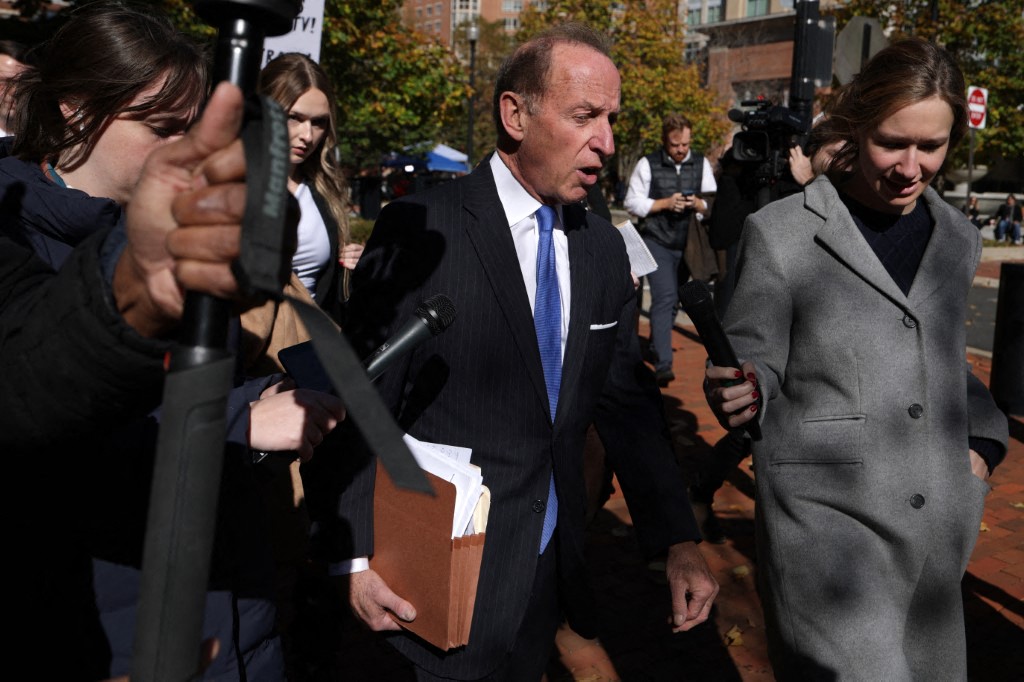
    Less than six months after a federal judge tossed out a politically charged case against James Comey, the former FBI director and persistent critic of President Donald Trump faces a new indictment, multiple U.S. media outlets reported Tuesday. The fresh legal action renewes questions about the Trump administration’s pattern of targeting political opponents through the Department of Justice, a departure from longstanding norms of prosecutorial independence.

  • Climate Change legislation coming this fiscal year, says Samuda

    Climate Change legislation coming this fiscal year, says Samuda

    Jamaica is moving forward with landmark climate governance reforms that could reshape the country’s approach to environmental action and economic development, according to top government official Matthew Samuda, Minister of Water, Environment and Climate Change.

    Samuda outlined the government’s climate agenda Tuesday during his address to the 2026/27 Sectoral Debate held in Jamaica’s House of Representatives, highlighting two core initiatives that frame the country’s long-term climate vision: pending national climate change legislation and the recently finalized Long-Term Emissions Reduction and Climate Resilience Strategy (LTS 2050).

    The proposed climate legislation, developed in partnership with the United Kingdom’s Foreign, Commonwealth and Development Office, will mark a major leap forward in strengthening Jamaica’s national climate governance framework, Samuda emphasized. Once enacted, the law will formalize legal foundations for national climate policies, enforce cross-sector accountability, and deliver a range of systemic benefits ranging from greater policy transparency to more consistent, measurable climate action outcomes. It will also streamline policy implementation and boost confidence among private and institutional investors looking to support Jamaica’s transition.

    Beyond immediate governance improvements, Samuda noted that embedding climate action into formal law will institutionalize sustainable development efforts across successive governments, ensuring long-term continuity regardless of political shifts. This robust legal foundation will also position Jamaica to unlock billions in additional international climate finance and expand strategic global partnerships, he added. Per the government’s current timeline, the legislation is on track to be finalized and passed within the ongoing 2026/27 fiscal year.

    Alongside the legislative push, Samuda highlighted the recently completed LTS 2050, which was finalized in July 2025, as a blueprint for Jamaica’s transition to a climate-smart, climate-resilient national economy. The strategy lays out a clear pathway for Jamaica to reach net-zero greenhouse gas emissions by no later than 2060, while tying climate action directly to inclusive, sustainable economic growth that benefits all Jamaican communities.

    Unlike traditional climate plans that focus solely on environmental targets, the LTS 2050 is framed as a holistic cross-sector development strategy that takes a whole-economy approach to planning. It maps out required transitions for eight key sectors that underpin Jamaica’s economy and environment: energy, transport, agriculture, infrastructure and urban development, and forestry and ecosystems, among others.

    The economic case for the long-term strategy is unambiguous, Samuda told lawmakers. LTS 2050 projections estimate that the plan will deliver approximately US$13.9 billion in net economic benefits to Jamaica by 2050, while generating more than 26,000 new jobs, concentrated primarily in fast-growing green and emerging climate sectors.

    These projections are more than just economic modeling, Samuda explained: they reflect a fundamental repositioning of Jamaica within the global low-carbon economy, shifting the country from a climate-vulnerable developing nation to a leader in sustainable Caribbean development. The strategy also explicitly maps out high-priority investment areas that will drive innovation, growth and resilience, including utility-scale renewable energy development, climate-smart sustainable agriculture, and flood and storm-resilient public infrastructure.

    By formalizing this long-term transition pathway, Samuda added, the LTS 2050 sends a clear, predictable signal to global investors and international development partners that Jamaica is fully committed to its climate and development goals. This certainty, he noted, is a critical prerequisite for attracting the large-scale financing, cutting-edge clean technology, and strategic global partnerships needed to turn the strategy’s vision into tangible action for Jamaican people.

  • Raise age of consent to 18 to combat teenage pregnancies, says Crawford

    Raise age of consent to 18 to combat teenage pregnancies, says Crawford

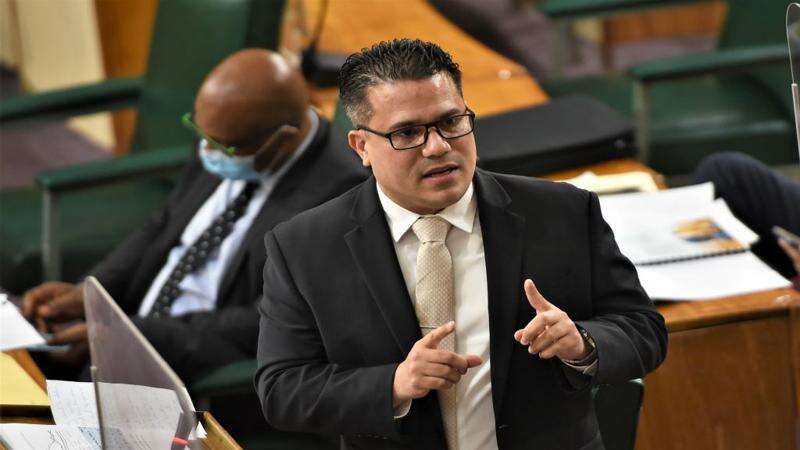
    A senior Jamaican opposition lawmaker has reignited debate over the nation’s age of consent, calling for a two-year increase from 16 to 18 to address the country’s long-standing crisis of teen pregnancy that pushes thousands of adolescent girls out of school annually.

    Damion Crawford, the opposition’s spokesperson on education, made the formal proposal during his scheduled address to the House of Representatives’ Sectoral Debate on Tuesday. The call comes amid stagnant high rates of unintended pregnancy among teenage students, a public health and social issue that has plagued Jamaican education systems for decades.

    Crawford told parliamentary colleagues that on average, 6,000 school-aged girls become pregnant each year across Jamaica. For the vast majority of these adolescents, an unplanned pregnancy leads to an early exit from formal education, derailing long-term academic and career trajectories and deepening cycles of socioeconomic disadvantage.

    “This is a major problem that we have to consider. Teen pregnancy has become an intractable problem in this country,” Crawford told the chamber.

    Linking the policy shift to ongoing changes to Jamaica’s secondary education structure, Crawford added: “We therefore are asking for a reconsideration once again of the age of consent, and I once again believe that this Parliament should consider the movement from 16 to 18 as we move from a five-year secondary institution to a seven-year secondary experience going forward.”

    The proposal is the latest effort by political leaders to tackle teen pregnancy in Jamaica, where the issue remains one of the highest barriers to educational equity for girls. It is expected to spark broader public and parliamentary discussion around youth protection, sexual health policy, and education reform in the coming months.

  • US regulator orders review of ABC license after Trump criticises Kimmel

    US regulator orders review of ABC license after Trump criticises Kimmel

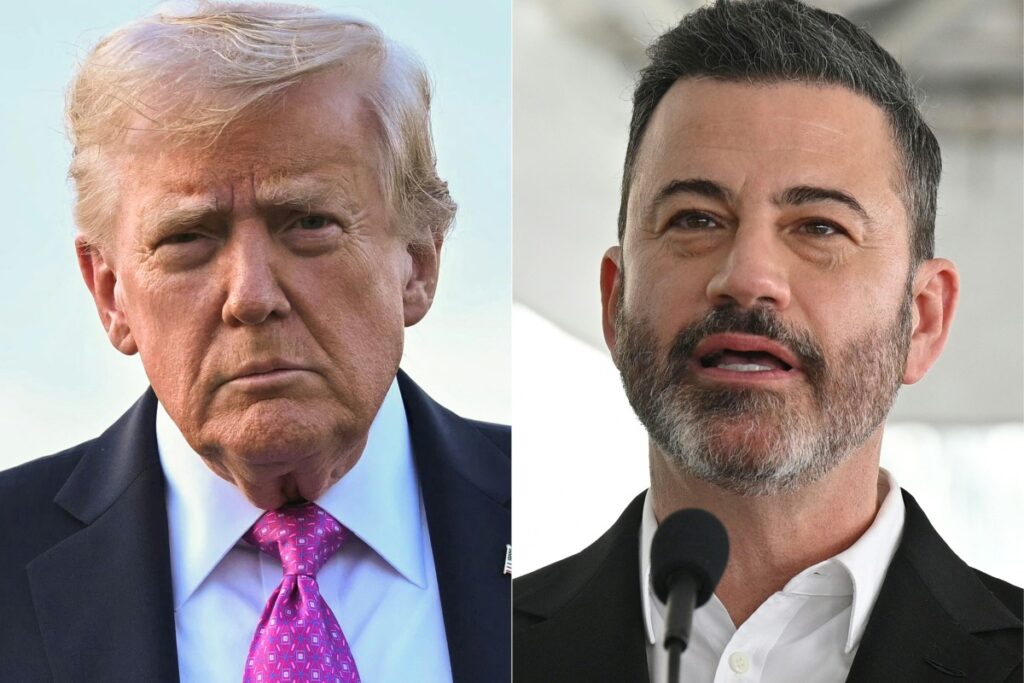
    A fresh chapter has opened in the escalating clash between former President Donald Trump and late-night political comedy, after the U.S. federal agency overseeing national broadcast regulations launched an expedited review of ABC’s operating license this week. The move from the Federal Communications Commission targets ABC’s parent company The Walt Disney Company and all of its broadcast television subsidiaries, and comes in direct response to public demands from both Donald Trump and former first lady Melania Trump for the network to sever ties with long-running late-night host Jimmy Kimmel.

    The controversy ignited last month, when Kimmel delivered a satirical bit during his show pretending to serve as emcee for the 2025 White House Correspondents’ Association dinner, an annual high-profile media event held in Washington D.C. Directing a playful jab at the former first couple’s 24-year age gap, Kimmel joked, “Mrs. Trump, you have a glow like an expectant widow.” Donald Trump, who will turn 80 this June and holds the distinction of being the oldest person ever to serve as U.S. president, called for Kimmel’s immediate termination over the quip, which he and his team have framed as a thinly veiled incitement to violence.

    The former president’s claims have gained new traction after a man was arrested last Saturday on charges of attempting to assassinate Trump at a campaign event just days after Kimmel delivered the joke. Melania Trump, 56, the Slovenia-born former first lady, released a public statement doubling down on the call for action, urging ABC leadership to “take a stand” against the comedian and distance the network from his commentary.

    Kimmel pushed back against the criticism during his show’s Monday broadcast, dismissing the accusations of inciting violence as a blatant misinterpretation. He clarified that the line was nothing more than a lighthearted “roast joke” centered entirely on the former couple’s well-documented age difference, noting that “it was not by any stretch of the definition a call to assassination, and they know that.”

    The White House, however, reaffirmed the administration’s opposition to Kimmel on Tuesday. White House Communications Director Steven Cheung took to social platform X to unleash a harsh personal attack, calling Kimmel a “shit human” for refusing to issue an apology and instead defending his original joke publicly.

    This is not the first time Kimmel, one of the most politically vocal late-night hosts in modern U.S. media, has found himself at the center of a national debate over the boundaries of First Amendment protected free speech. Last September, the comedian was briefly suspended from his show after facing intense pressure from the Trump administration over comments he made claiming Trump’s hard-line MAGA movement was attempting to exploit the assassination of conservative influencer Charlie Kirk for political gain.

    Media freedom advocates have raised alarm over the FCC’s decision to launch an expedited license review, noting that the move marks an unusual instance of executive pressure influencing regulatory action against a critical media voice, and has sparked renewed conversation about the intersection of political power, comedy, and free expression in modern American politics.

  • Current and former UHWI CEOs fail to appear before PAC over audit findings

    Current and former UHWI CEOs fail to appear before PAC over audit findings

    Jamaica’s Public Accounts Committee (PAC) faced a striking absence of senior leadership from the University Hospital of the West Indies (UHWI) on Tuesday, as the parliamentary panel pressed forward with its review of alarming operational shortcomings uncovered in a recent Auditor General’s report. Neither the sitting chief executive officer Fitzgerald Mitchell nor his predecessor Kevin Allen appeared before the committee, and former UHWI board chair Wayne Chai Chong also declined to attend. Chai Chong notified the PAC he was currently outside the country, and confirmed he would be available to give evidence at a rescheduled hearing on May 12.

    According to PAC chair Julian Robinson, Mitchell communicated his decision to skip the hearing through the UHWI board chair, citing legal advice recommending his non-attendance. Despite repeated formal requests from the parliamentary body for a written copy of this legal guidance or a formal explanation for Mitchell’s absence, no documentation has been submitted to the committee to date. Robinson added that Allen, who had previously confirmed he would attend Tuesday’s sitting, failed to show up without offering any advance notice or clear justification for his absence.

    Robinson emphasized that the failure of the sitting UHWI CEO to appear, paired with the complete lack of formal documentation explaining his absence, represents a severe disregard for parliamentary authority amid ongoing scrutiny of high-stakes audit findings. “Now, I find, particularly related to Mr Mitchell, his absence and the absence of any formal documentation indicating why he’s not here, to be contemptuous of the PAC and the Houses of Parliament, given the very serious issues that have been raised in the Auditor General report, and given that he is the chief executive officer of the hospital,” Robinson stated.

    The PAC launched its review of the Auditor General’s findings on UHWI operations after multiple previous sessions failed to resolve outstanding questions about the hospital’s management and practices. During Tuesday’s hearing, Robinson drew the committee’s attention to existing provisions under Jamaica’s Senate and House of Representatives Powers and Privileges Act, which grants parliamentary committees the legal authority to compel individuals to appear and testify under oath.

    Peter Bunting, an opposition Member of Parliament representing Manchester Southern, threw his support behind the committee pursuing stronger enforcement action to secure the attendance of the absent UHWI leaders. Bunting argued that receiving private legal advice does not automatically grant an individual exemption from a parliamentary summons. He noted that protections against self-incrimination, the most common legal grounds for declining to answer specific questions, only apply in the context of active police or prosecutorial investigations. Even in those cases, Bunting added, individuals are required to appear before the committee in person to formally assert that right, rather than ignoring the summons entirely. “To just not appear and ignore the first request and then the summons, I think it would be contemptuous, as you said, and would require some action,” he added.

  • Golding doubles down on call for police officers to wear body cams on specialised operations

    Golding doubles down on call for police officers to wear body cams on specialised operations

    KINGSTON, Jamaica — In a sharp rebuke of the ruling government’s stance on police accountability, Opposition Leader Mark Golding is standing firm in his demand that officers of the Jamaica Constabulary Force (JCF) wear body-worn cameras during all high-risk specialized operations.

    Speaking exclusively to Observer Online in an interview Tuesday, Golding argued that there is no justifiable policy or ethical reason to block the adoption of this widely used accountability tool. “Body-worn camera technology has already been successfully integrated into policing protocols across dozens of jurisdictions globally,” he noted. “Beyond meeting international policing standards, the measure would do critical work to rebuild public confidence and trust between local communities and law enforcement at a time when public distrust is running high.”

    Golding’s call comes amid ongoing public uproar over a string of controversial fatal police shootings that have sparked grave concerns about excessive use of force by JCF officers. According to the opposition leader, mandatory body cameras would not only improve transparency around police conduct, but also strengthen national public security overall by repairing the JCF’s standing with the Jamaican people.

    “This reform will boost our country’s security, reinforce the JCF’s positive reputation, and move us closer to the more just and equitable Jamaica all citizens deserve,” Golding said. He added that he believes Minister of National Security Dr. Horace Chang has taken the wrong approach to the growing demand for reform, calling out Chang for belittling and maligning civil society groups and ordinary citizens who have pushed for the body camera policy.

    Chang has faced intense backlash from the public and advocacy groups in recent days after dismissing calls for body cameras on high-risk operations targeting armed criminals, publicly deriding the proposal as “a crazy idea”. The minister’s comments have amplified partisan tensions over police accountability in Jamaica, a nation that has long grappled with public concerns over extrajudicial violence and a lack of transparency in law enforcement operations.

  • Customs flags six fraud cases a month as 103 recruits join

    Customs flags six fraud cases a month as 103 recruits join

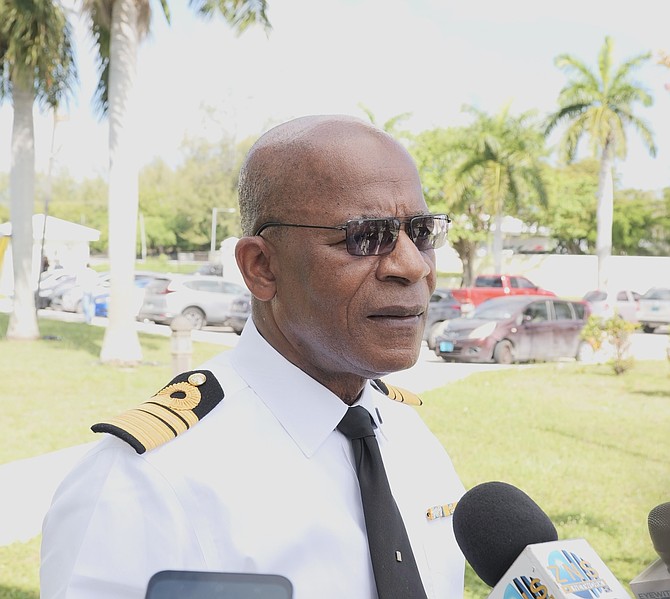
    Customs agencies in the Caribbean archipelago of the Bahamas are detecting as many as six fraudulent import cases every single month, with the vast majority involving importers deliberately misstating the value or volume of incoming goods to cut down on required duty payments, Comptroller Ralph Munroe confirmed publicly this week. The announcement coincided with a formal induction ceremony for 103 newly hired officers, a key step in the department’s multi-phase push to tighten enforcement of trade and tax regulations across the country’s sprawling network of ports.

    During an interview with local outlet the Tribune, Munroe detailed the most common forms of fraud the agency encounters on a regular basis. “The most widespread issue we see is fraudulent invoicing: an importer knows they paid $1,000 for a shipment, but they declare just $500 or $600 on their official paperwork,” Munroe explained. “When our officers cross-reference the stated prices against supplier records and current online market rates, the discrepancy is immediately obvious.”

    To identify these irregularities, the department has invested heavily in specialized training for frontline personnel, teaching officers how to spot inconsistencies by cross-checking declared invoice values against supplier documentation and prevailing industry price benchmarks. Munroe added that the agency also benefits significantly from informal intelligence sharing within the local business community, where competing companies often tip off authorities to suspicious low declarations from their rivals.

    “Competing businesses have the clearest insight into what market rates actually are, so when one competitor is bringing in goods at a declared value far below what everyone else pays, that’s a red flag that they’re very quick to report to us,” Munroe noted. “That community partnership has become one of our most effective tools for rooting out fraud.”

    Unlike many regulatory violations that require lengthy court proceedings, the vast majority of confirmed customs fraud cases are resolved through administrative channels, a process that the comptroller says cuts down on delays and reduces backlogs for the country’s court system. Under existing Bahamian law, the Comptroller of Customs is granted explicit authority to issue financial penalties or seize undervalued goods directly, eliminating the need to go through the judicial system for most cases.

    “In many instances, the comptroller’s office brings far more specialized expertise to these trade fraud cases than a generalist magistrate, which means we can resolve them faster and more accurately,” Munroe argued. “This administrative framework keeps our system efficient and keeps unnecessary pressure off of the overstretched court system.”

    The addition of 103 new frontline officers comes as the department works to address longstanding staffing challenges across its 28 operating ports spread across the Bahamas’ 100,000 square mile maritime territory. Many of these remote ports require 24/7 monitoring to combat smuggling and fraud, stretching existing personnel thin. Munroe emphasized that while the new recruits will ease workload strain for current officers, gaps in staffing still remain a persistent priority for the department.

    As the largest single contributor to the Bahamas’ national revenue, Customs collects approximately 40 percent of the country’s total government income – equal to around $1.5 billion annually – through duties, taxes, and user fees levied on goods entering the country through its ports of entry. Munroe added that the department has also adapted to shifting global trade patterns, increasing monitoring of small-parcel imports through international courier systems, and has not experienced major operational issues beyond temporary volume surges during peak shipping periods.

    Throughout his remarks, Munroe stressed that institutional integrity remains the core foundation of the department’s work, noting that sustained public trust is a non-negotiable requirement for effective enforcement of customs regulations. “We cannot do our job of protecting legitimate businesses and collecting critical revenue for the government if the public does not trust that we are acting fairly and transparently,” he said. “That focus on integrity will guide every expansion of our operations moving forward.”

  • Duitse bondskanselier Merz hekelt Iran en VS in conflict

    Duitse bondskanselier Merz hekelt Iran en VS in conflict

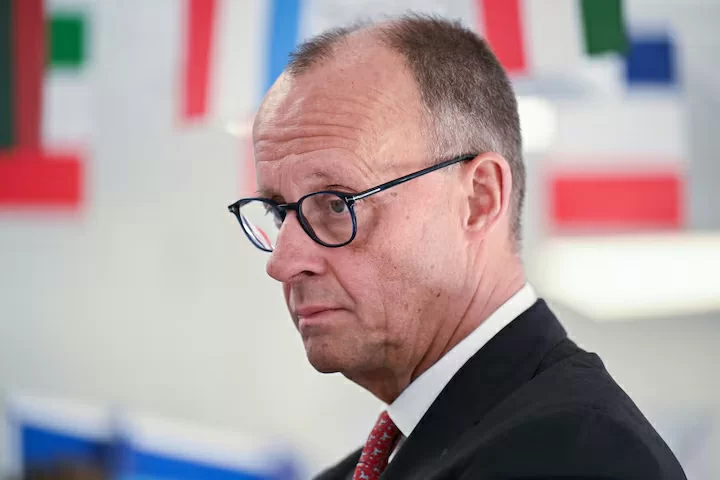
    The long-running standoff between the United States and Iran has pulled Germany’s top leader into the fray, with Chancellor Friedrich Merz issuing scathing criticism of both Tehran and Washington on Monday, laying bare growing frictions between Washington and its NATO allies in Europe that have already been fractured by disagreements over the war in Ukraine.

    Speaking to a gathering of students in Marsberg, North Rhine-Westphalia, Merz accused Iran’s ruling leadership of humiliating the U.S. by inviting American negotiators to travel to Islamabad for diplomatic talks only to walk away with no tangible progress. “The Iranians have clearly mastered the art of not negotiating. They let the Americans travel to Islamabad and leave again without any result,” Merz told the audience. “An entire nation is being humiliated by Iran’s leaders, particularly the so-called Revolutionary Guards. I hope this comes to an end as soon as possible.”

    Beyond his rebuke of Iran, Merz also criticized the U.S. and Israel for failing to consult Berlin and other European capitals ahead of their February 28 military strikes against Iran, confirming he had already directly shared his skepticism with U.S. President Donald Trump. “If I had known the conflict would drag on for five or six weeks and keep worsening, I would have expressed my opposition even more forcefully,” Merz said, drawing parallels between the ongoing escalation and past protracted U.S. military interventions in Iraq and Afghanistan.

    Prospects for a peaceful diplomatic resolution have dimmed further after Trump called off a planned peace mission by his envoys Steve Witkoff and Jared Kushner to Islamabad at the start of this past weekend. On Monday, Iranian Foreign Minister Abbas Araqchi departed for Russia after diplomatic talks held in Pakistan and Oman failed to produce any breakthrough.

    Merz also drew attention to the severe fallout from the partial mining of the Strait of Hormuz, the critical global oil chokepoint that has been effectively blocked since the conflict erupted. He confirmed that European powers, including Germany, have already offered to deploy German minesweepers to clear the waterway and reopen commercial passage.

    The ongoing blockade of the strait has already imposed heavy economic costs on Germany, Merz warned, saying “It is costing us a great deal of money, a lot of taxpayer funds and a significant hit to our economic strength.”

    Global energy markets have already been roiled by the closure of the key shipping route, pushing oil prices sharply higher. The disruption is adding new strain to the already fragile global economy and risks fueling a new wave of rising inflation around the world.

    Now in its third month, the ongoing conflict involving the U.S., Iran and Israel shows no clear path to de-escalation. Deteriorating diplomatic ties and persistent military violence have amplified global uncertainty, triggering widespread economic and geopolitical instability across the Middle East and beyond.