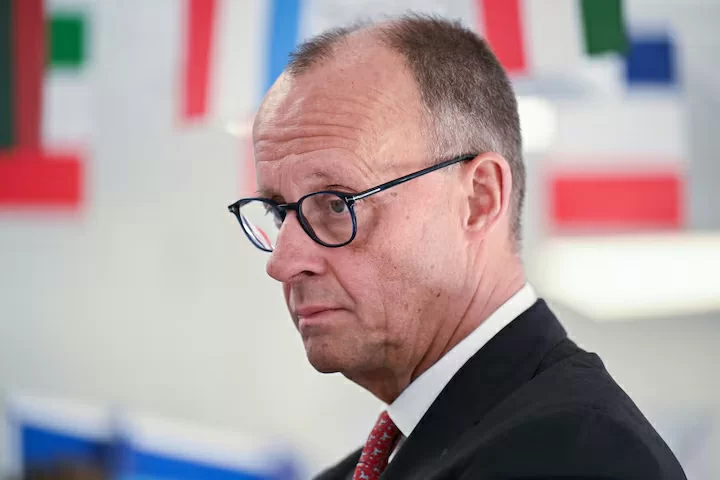
The long-running standoff between the United States and Iran has pulled Germany’s top leader into the fray, with Chancellor Friedrich Merz issuing scathing criticism of both Tehran and Washington on Monday, laying bare growing frictions between Washington and its NATO allies in Europe that have already been fractured by disagreements over the war in Ukraine.
Speaking to a gathering of students in Marsberg, North Rhine-Westphalia, Merz accused Iran’s ruling leadership of humiliating the U.S. by inviting American negotiators to travel to Islamabad for diplomatic talks only to walk away with no tangible progress. “The Iranians have clearly mastered the art of not negotiating. They let the Americans travel to Islamabad and leave again without any result,” Merz told the audience. “An entire nation is being humiliated by Iran’s leaders, particularly the so-called Revolutionary Guards. I hope this comes to an end as soon as possible.”
Beyond his rebuke of Iran, Merz also criticized the U.S. and Israel for failing to consult Berlin and other European capitals ahead of their February 28 military strikes against Iran, confirming he had already directly shared his skepticism with U.S. President Donald Trump. “If I had known the conflict would drag on for five or six weeks and keep worsening, I would have expressed my opposition even more forcefully,” Merz said, drawing parallels between the ongoing escalation and past protracted U.S. military interventions in Iraq and Afghanistan.
Prospects for a peaceful diplomatic resolution have dimmed further after Trump called off a planned peace mission by his envoys Steve Witkoff and Jared Kushner to Islamabad at the start of this past weekend. On Monday, Iranian Foreign Minister Abbas Araqchi departed for Russia after diplomatic talks held in Pakistan and Oman failed to produce any breakthrough.
Merz also drew attention to the severe fallout from the partial mining of the Strait of Hormuz, the critical global oil chokepoint that has been effectively blocked since the conflict erupted. He confirmed that European powers, including Germany, have already offered to deploy German minesweepers to clear the waterway and reopen commercial passage.
The ongoing blockade of the strait has already imposed heavy economic costs on Germany, Merz warned, saying “It is costing us a great deal of money, a lot of taxpayer funds and a significant hit to our economic strength.”
Global energy markets have already been roiled by the closure of the key shipping route, pushing oil prices sharply higher. The disruption is adding new strain to the already fragile global economy and risks fueling a new wave of rising inflation around the world.
Now in its third month, the ongoing conflict involving the U.S., Iran and Israel shows no clear path to de-escalation. Deteriorating diplomatic ties and persistent military violence have amplified global uncertainty, triggering widespread economic and geopolitical instability across the Middle East and beyond.