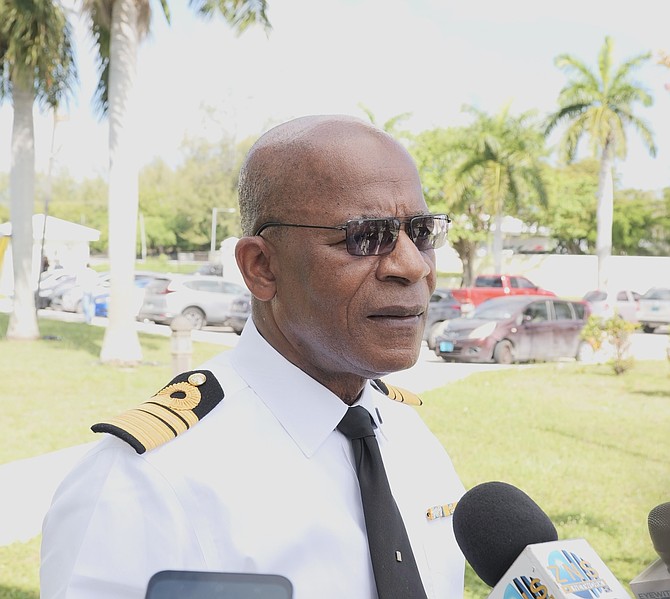
Customs agencies in the Caribbean archipelago of the Bahamas are detecting as many as six fraudulent import cases every single month, with the vast majority involving importers deliberately misstating the value or volume of incoming goods to cut down on required duty payments, Comptroller Ralph Munroe confirmed publicly this week. The announcement coincided with a formal induction ceremony for 103 newly hired officers, a key step in the department’s multi-phase push to tighten enforcement of trade and tax regulations across the country’s sprawling network of ports.
During an interview with local outlet the Tribune, Munroe detailed the most common forms of fraud the agency encounters on a regular basis. “The most widespread issue we see is fraudulent invoicing: an importer knows they paid $1,000 for a shipment, but they declare just $500 or $600 on their official paperwork,” Munroe explained. “When our officers cross-reference the stated prices against supplier records and current online market rates, the discrepancy is immediately obvious.”
To identify these irregularities, the department has invested heavily in specialized training for frontline personnel, teaching officers how to spot inconsistencies by cross-checking declared invoice values against supplier documentation and prevailing industry price benchmarks. Munroe added that the agency also benefits significantly from informal intelligence sharing within the local business community, where competing companies often tip off authorities to suspicious low declarations from their rivals.
“Competing businesses have the clearest insight into what market rates actually are, so when one competitor is bringing in goods at a declared value far below what everyone else pays, that’s a red flag that they’re very quick to report to us,” Munroe noted. “That community partnership has become one of our most effective tools for rooting out fraud.”
Unlike many regulatory violations that require lengthy court proceedings, the vast majority of confirmed customs fraud cases are resolved through administrative channels, a process that the comptroller says cuts down on delays and reduces backlogs for the country’s court system. Under existing Bahamian law, the Comptroller of Customs is granted explicit authority to issue financial penalties or seize undervalued goods directly, eliminating the need to go through the judicial system for most cases.
“In many instances, the comptroller’s office brings far more specialized expertise to these trade fraud cases than a generalist magistrate, which means we can resolve them faster and more accurately,” Munroe argued. “This administrative framework keeps our system efficient and keeps unnecessary pressure off of the overstretched court system.”
The addition of 103 new frontline officers comes as the department works to address longstanding staffing challenges across its 28 operating ports spread across the Bahamas’ 100,000 square mile maritime territory. Many of these remote ports require 24/7 monitoring to combat smuggling and fraud, stretching existing personnel thin. Munroe emphasized that while the new recruits will ease workload strain for current officers, gaps in staffing still remain a persistent priority for the department.
As the largest single contributor to the Bahamas’ national revenue, Customs collects approximately 40 percent of the country’s total government income – equal to around $1.5 billion annually – through duties, taxes, and user fees levied on goods entering the country through its ports of entry. Munroe added that the department has also adapted to shifting global trade patterns, increasing monitoring of small-parcel imports through international courier systems, and has not experienced major operational issues beyond temporary volume surges during peak shipping periods.
Throughout his remarks, Munroe stressed that institutional integrity remains the core foundation of the department’s work, noting that sustained public trust is a non-negotiable requirement for effective enforcement of customs regulations. “We cannot do our job of protecting legitimate businesses and collecting critical revenue for the government if the public does not trust that we are acting fairly and transparently,” he said. “That focus on integrity will guide every expansion of our operations moving forward.”