分类: politics

  • High voter turnout for PNM Council race: Shamfa, Kelvon confident

    High voter turnout for PNM Council race: Shamfa, Kelvon confident

    Members of the People’s National Movement (PNM) in Tobago headed to polling stations across the island on Wednesday to select the next political leader of the party’s Tobago Council, in an internal election that drew renewed engagement from party supporters even amid minor logistical hiccups. Polling operations kicked off at 8 a.m. local time and wrapped up at 6 p.m., with no official vote counts released as of the publication of this report. Two high-profile candidates are vying for the top leadership post, and both have expressed optimism about their chances of winning, while pledging to unify the fractured party once the election concludes.

    Former Member of Parliament for Tobago West, Shamfa Cudjoe-Lewis, cast her ballot at the Hampden/Lowlands Multi-Purpose Facility, where she spoke to reporters about her outlook on the race. Cudjoe-Lewis framed the internal election not as a contest between individual personalities, but as a critical step toward rebuilding the PNM Tobago Council after a period of division. She noted that a high voter turnout would be a win for the entire party regardless of which candidate claims victory, because it demonstrates broad continued investment in the organization’s future among PNM supporters across all ideological and factional groups.

    Ahead of the leadership vote, Cudjoe-Lewis pointed out that the election process had driven an unexpected surge in new party membership: at least 500 people have signed up as new PNM members specifically to participate in this leadership contest, and the majority of these new registrants joined through her campaign outreach. It is this ground-level momentum, she said, that leaves her confident she will secure the leadership post, and equally confident the party can heal and reunite once results are finalized.

    The other leading candidate for the role, former Tobago House of Assembly (THA) minority leader Kelvon Morris, cast his vote at Bishop’s High School, where he echoed Cudjoe-Lewis’s confidence in his own victory while acknowledging some growing pains in the day’s voting process. Morris explained that only two polling stations were open for the election, leading to long lines and extended wait times for voters. While he praised the election supervisory committee for making the best of the limited resources available to them, he confirmed he had reached out to election supervisors to request the addition of extra polling booths to speed up processing for the remaining voters.

    Morris also noted minor administrative issues, including some errors on the voter roll that left long-time PNM voters who had participated in past internal elections unable to find their names on registration lists. Even with these disruptions, Morris emphasized he was encouraged by the level of voter enthusiasm. Following a 15-0 defeat for the PNM in recent Tobago House of Assembly elections, many had predicted low turnout and fading support for the party, but Morris said large numbers of loyal members still turned out to exercise their democratic right to select the party’s next executive leadership team.

    Morris argued that his four years of consistent, committed public service in Tobago had earned him the trust of both PNM members and the broader Tobagonian public. He centered his campaign on uniting the divided party, noting that even rival political figures have acknowledged his track record of bringing together factionalized groups that have been separated for years. Like his opponent, Morris pledged that regardless of the election’s outcome, he would work to unify the PNM: he said all participating members, including his rival candidate, would be included in the party’s work moving forward to build a single, united PNM Tobago Council.

  • Rewards, risks in US alignment

    Rewards, risks in US alignment

    For the small twin-island Caribbean nation of Trinidad and Tobago, a quiet but significant shift in foreign policy has unfolded over the past 12 months: a deliberate alignment of national strategy with the United States, rooted in overlapping security priorities and tangible energy sector opportunities. This calculated reorientation, which leaves room for occasional independent stances on global issues, brings immediate advantages but also carries unaddressed long-term risks tied to the volatility of American politics, regional political analysts have warned in recent interviews.

    Speaking with local outlet the Express, leading Trinidadian political scientist Dr. Bishnu Ragoonath laid out the clear trajectory of the current administration, which took office one year ago. While the government has preserved independent positions on select high-profile issues – most notably its recent United Nations vote supporting global reparations for historical slavery – the overarching direction of its foreign policy is unmistakably tied to Washington, he argued.

    Ragoonath outlined two core drivers behind the shift: security cooperation and energy access. For decades, Trinidad and Tobago has faced a persistent challenge as a key transshipment hub for illicit trafficking, including drug smuggling and human trafficking, between Latin America, North America, and Europe. Local and regional institutions lack the resources and maritime capacity to effectively seal the nation’s porous borders, he noted, with no CARICOM (Caribbean Community) member state able to provide the necessary logistical or operational support. Turning to the U.S., which already maintains significant maritime patrol presence in regional waters, addresses this critical gap.

    The second, and arguably more compelling, driver is access to untapped natural gas reserves in Venezuelan territorial waters. Trinidad and Tobago’s domestic energy sector depends heavily on natural gas for domestic consumption and export, making new supply sources a core national priority. Ragoonath explained that the current administration has explicitly recognized that Washington’s influence over Venezuelan energy policy is critical to unlocking these reserves. Rather than pursuing direct bilateral negotiations with Caracas – which the country has so far avoided – Trinidad and Tobago is allowing U.S. energy firms to lead negotiations, with the expectation that Venezuelan gas will eventually be piped to Trinidadian processing platforms located near the bilateral maritime border. “To that extent the country is hoping that through the U.S. push into Venezuela that we will benefit indirectly,” Ragoonath told the Express.

    In the near to medium term, this strategy has already delivered measurable benefits. Beyond improved border security and the promise of new energy supplies, Ragoonath noted that closer ties have spared Trinidad and Tobago from the stricter U.S. visa restrictions imposed on some other Caribbean nations in recent months. Prime Minister Kamla Persad-Bissessar has framed the policy as rooted in pragmatic national interest: while some critics have labeled moves “anti-CARICOM”, the Prime Minister has long argued that her core mandate is to prioritize Trinidad and Tobago’s economic and security needs above regional consensus.

    Yet the strategy carries a major, unavoidable risk: the deep polarization and unpredictability of U.S. domestic politics, particularly ahead of November’s midterm congressional elections. Ragoonath pointed out that Persad-Bissessar’s administration has effectively aligned with the current Republican-led congressional majority, centered on Donald Trump’s policy agenda. If Democrats capture control of both houses of Congress in the upcoming vote, the direction of U.S. policy toward Venezuela and the Caribbean could shift dramatically, leaving Trinidad and Tobago exposed. “It is a risk Kamla Persad-Bissessar has taken in throwing her eggs into one basket but so far it has worked in her favour. How long it will continue to work, only time will tell,” Ragoonath said.

    Despite the rift over foreign policy alignment, analysts agree that tensions will not fracture the 15-member CARICOM regional bloc. Long-running disagreements over unanimity and institutional governance have plagued Caribbean integration efforts for decades, Ragoonath noted. Unlike the European Union, which has a dedicated parliamentary body to debate and reconcile differing national positions, CARICOM operates under the 1973 Treaty of Chaguaramas, which requires full unanimity for major policy decisions – a standard that has not been met for years. Even at the most recent CARICOM summit, Jamaican Prime Minister Andrew Holness openly affirmed that all member states retain full sovereignty over their individual foreign policy choices. Ragoonath added that he supports Persad-Bissessar’s calls for comprehensive reform of CARICOM’s governance structures, which have failed to adapt to changing regional priorities.

    International relations expert Dr. Anthony Gonzales echoed this assessment, telling the Express that recent public disagreements over CARICOM are targeted at the bloc’s current leadership, not the regional integration project itself. Once the current leadership dispute is resolved, Trinidad and Tobago’s working relationship with the bloc will return to normal, he argued. Core areas of cooperation, including trade rules, tariff coordination, and free movement of goods, remain fully intact, he noted. The current divergence over U.S. alignment is also far from unprecedented: during the 2019 Juan Guaido political crisis, CARICOM was openly split over whether to recognize Guaido as Venezuela’s interim president, with some members cutting diplomatic ties with Caracas entirely. “If Trinidad wants to support the U.S. on certain things, a lot of countries do. They may prefer a neutral position, but they are not necessarily against the U.S., so it is not uncommon,” Gonzales said.

    Gonzales confirmed that Trinidad and Tobago’s foreign policy shift toward closer U.S. alignment is clear, though he personally opposes elements of the strategy. “I find it hard to accept the support for the moves against our migrants, deportations and the anti-minority anti-black rhetoric, placing people in detention centres and so on. You do not know where you are with President Trump…but that is the reality of the world,” he said. Even so, he noted that closer ties with Washington are unlikely to cause lasting harm to Trinidad and Tobago: the U.S. has been a traditional security and economic partner for Caribbean nations for decades, and the current alignment is just a deepening of that long-standing relationship.

  • Minister ‘approved’ $250K from Lotto to contractor days before election

    Minister ‘approved’ $250K from Lotto to contractor days before election

    Fresh allegations of systemic misuse of public funds have emerged against St. Vincent and the Grenadines’ former Unity Labour Party administration, just months after the party lost its grip on power in the November 27 general election. The most prominent accusation centers on an unauthorized EC$250,000 payout from the National Lotteries Authority to a local contractor, earmarked for the long-delayed Langley Park Playing Field project, approved only eight days before voters headed to the polls.

    Internal documents obtained exclusively by iWitness News, whose authenticity has been verified by multiple senior insider sources, lay bare the questionable transaction. The contractor submitted an undated funding request to a senior NLA management official, referencing a prior conversation with a sitting ULP cabinet minister. The request, which contained several noticeable spelling and grammatical errors, listed vague planned works ranging from tree clearing and site grading to concrete work for on-site toilet facilities, with no formal cost breakdown or construction timeline attached. Despite the lack of detailed project documentation, the request carried a signature matching that of the former senior ULP minister, along with the date November 19, 2025 — just one week and one day before election day.

    What has raised further red flags for investigators and opposition officials now in power is the timeline of the payout. The contractor cashed the EC$250,000 check the very next business day after receiving it, walking away with the full sum in 2,500 EC$100 bills. When the NLA’s new board of directors, appointed by the incoming New Democratic Party government, conducted an on-site inspection of the Langley Park site in March 2026, inspectors found no evidence that any construction or preparatory work had ever been carried out on the project.

    The Langley Park Playing Field has been a flashpoint of political controversy in the North Windward constituency since 2020, when then-ULP Member of Parliament Montgomery Daniel first promised the facility ahead of that year’s general election, on the campaign trail in September 2020. “We would establish a playing field at Langley Park so that we will be able to move on,” Daniel told voters at the time, and he went on to win a fifth consecutive term in office for the ULP.

    By May 2023, with no visible progress on the project, then-opposition NDP candidate Shevern John seized on the unfulfilled promise as a core example of the ULP administration’s failed development commitments in the constituency. Speaking at an NDP campaign rally that month, John called out the ULP for performing two empty groundbreaking ceremonies for the same project without ever allocating budget to move construction forward. “Where is the playing field today? Where is it? It is nowhere because they have not allocated anything for it. They have no development plan for the people of this constituency,” John told supporters.

    In January 2025, during the annual budget debate in parliament, Daniel again reiterated the ULP’s pledge to deliver the playing field that year, saying, “At Langley Park, we continue to do several road programs. We continue to build a number of houses, and this year we will have the playing facility established in that area.” But by October 2025, on the eve of the general election, John again highlighted the project as a symbol of the ULP’s broken promises, noting, “There has been two groundbreaking ceremonies for the same playing field and nothing can be delivered.”

    After John won the North Windward seat and the NDP secured a majority in the November 2025 election, the new MP and cabinet minister reaffirmed her government’s commitment to finally delivering the long-awaited community facility to Langley Park residents. During the 2026 budget debate, John told parliament that the incoming administration would follow through where the ULP failed. “The Langley Park playing field, which … had a groundbreaking twice — twice, Madam Speaker. … We will ensure that it is graded properly and that the necessary infrastructure are in place so the people of Langley Park can play their games there,” she said.

    The newly uncovered transaction is one of multiple alleged cases of improper use of state resources being investigated by the new NDP administration, following the ULP’s election defeat late last year.

  • ABLP Leader Browne Dismisses UPP Plans as ‘ChatGPT Manifesto’ at Mass Gathering

    ABLP Leader Browne Dismisses UPP Plans as ‘ChatGPT Manifesto’ at Mass Gathering

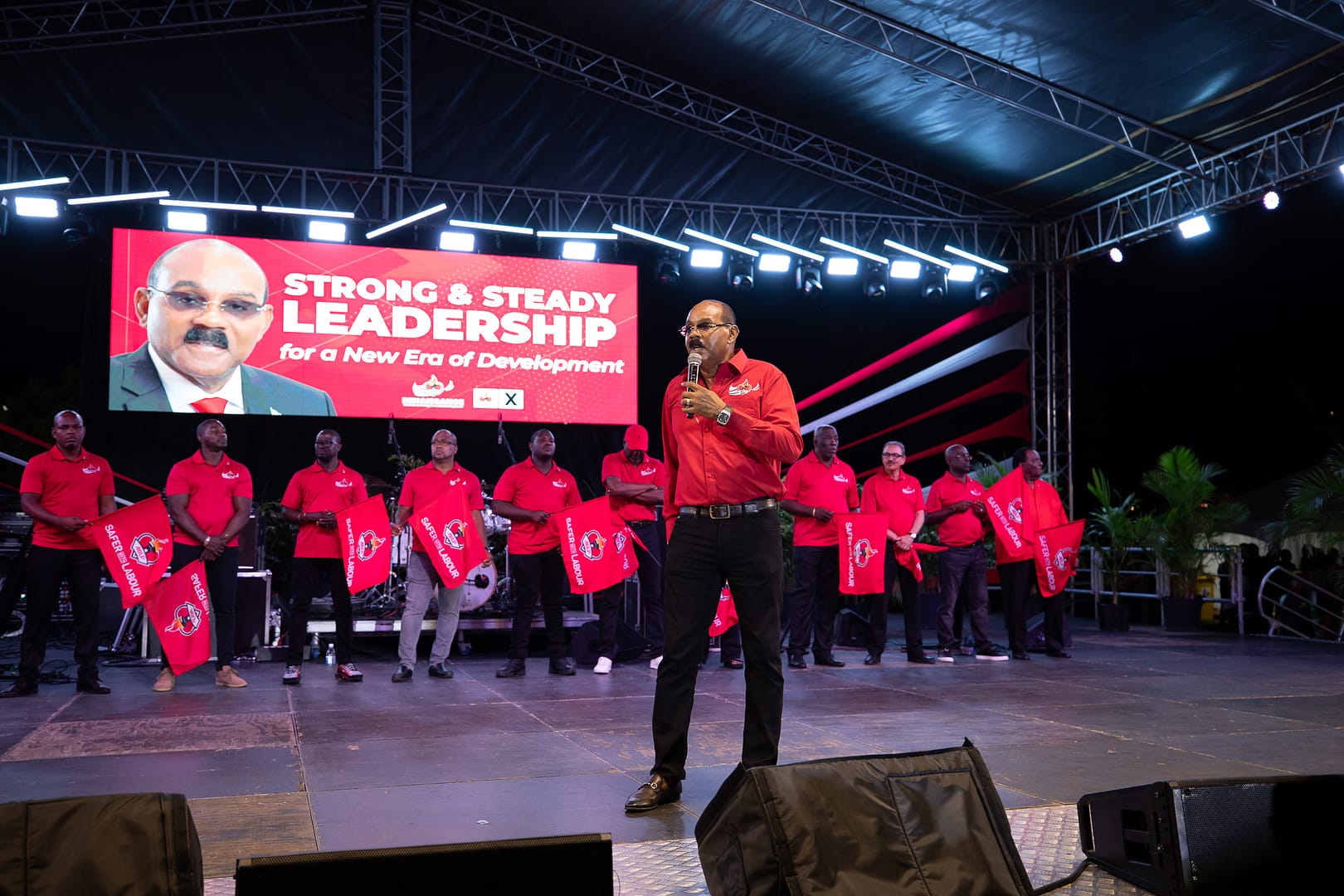
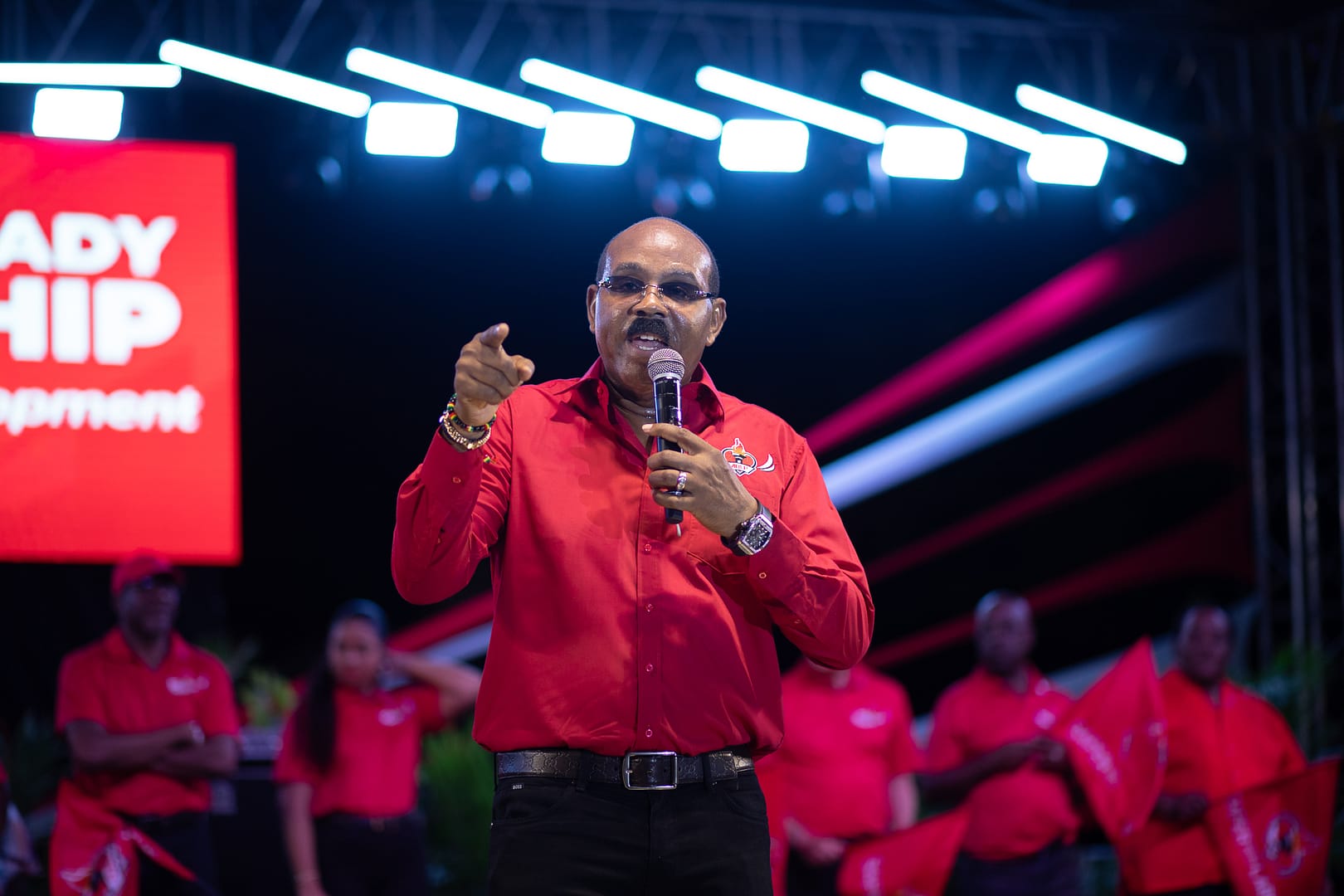
    As the April 30 general election in Antigua and Barbuda enters its final stretch, incumbent Prime Minister Gaston Browne launched a scathing attack on the opposition United Progressive Party (UPP) at a massive campaign rally Saturday night, dismissing the party’s entire policy agenda as a hastily generated “ChatGPT manifesto”.

    Addressing a crowd of roughly 10,000 gathered supporters of the governing Antigua and Barbuda Labour Party (ABLP), Browne used the viral AI tool to frame the opposition’s proposals as unvetted, unplanned, and economically unviable. The biting jab quickly became one of the most memorable and provocative lines of the entire election campaign, drawing loud, enthusiastic reactions from attendees and cementing the ABLP’s core narrative ahead of polling day.

    In his remarks, Browne argued that none of the UPP’s campaign pledges are backed by rigorous economic analysis or detailed implementation frameworks. He warned voters against what he framed as dangerously unrealistic campaign promises, noting that the opposition has failed to run the numbers to verify if their pledges are affordable, viable, reliable, or sustainable for the small island nation.

    “The opposition is just throwing vague, flashy promises out into the world with the sole hope of luring voters to the polls,” Browne told the crowd. “They have no clear roadmap to turn these pledges into action, no planning to back up their big words.”

    The Prime Minister went on to warn that the UPP’s unfunded, poorly planned proposals would carry severe long-term economic consequences for the country. He laid out two potential outcomes of an opposition win, arguing that a UPP government would either push Antigua and Barbuda back into crippling levels of national debt, or be forced to impose crippling new taxes on working and middle-class citizens to pay for their uncosted plans.

    Browne contrasted this projected path with his own administration’s 10-year track record on fiscal management, highlighting that the ABLP government has cut the country’s national debt from 110% of GDP in 2014 to just 61% today. “We pulled our country out of a fiscal hole, and we will not go back to the days of massive debt,” he emphasized.

    Saturday’s rally, one of the largest campaign events of the entire election cycle, blended political messaging with live entertainment and perfectly encapsulated the ABLP’s overall election strategy: framing the vote as a clear choice between proven, tested governance and untested, risky opposition proposals.

    With just days left before voters head to the polls, Browne’s “ChatGPT manifesto” jab is expected to remain a central talking point in national political discourse as both the ABLP and UPP ramp up get-out-the-vote efforts to secure victory on April 30.

  • Pringle ‘Not Ready Yet,’ – PM issues Warning to Voters-  ‘Don’t Risk the Future of This Country’

    Pringle ‘Not Ready Yet,’ – PM issues Warning to Voters- ‘Don’t Risk the Future of This Country’

    With just days remaining before Antigua and Barbuda’s critical April 30 general election, incumbent Prime Minister Gaston Browne used a massive rally drawing roughly 10,000 enthusiastic supporters to launch a sharp broadside against opposition leader Jamale Pringle, arguing that the challenger is unprepared to take the reins of national leadership.

    In a speech that anchored his ruling Antigua and Barbuda Labour Party’s final campaign push at one of the election cycle’s largest public gatherings, Browne doubled down on his central message: casting the upcoming ballot as a stark binary choice between proven, steady governance and untested, risky change. “Let us be honest, Jamale Pringle is just not ready yet,” Browne told the assembled crowd. “This is not a time… to risk the future of this country with proven failures.”

    Browne centered his entire address on the question of leadership readiness, repeatedly urging voters to prioritize proven capability over fresh faces at the polls. “This is not a time for you to stand back. This is not a time for you to watch on… this is not a time for you to risk the future of the country,” he said, calling on attendees to rally behind “certainty, with reliability, and strong leadership.”

    Beyond targeting Pringle personally, Browne turned his fire to the opposition United Progressive Party (UPP) as a whole, highlighting deep internal rifts that he claimed disqualify the group from governing. “The UPP is in chaos. They’re divided. They’re struggling for power. They’re literally pulling in different directions… sinking their ship,” he said, following up with a pointed rhetorical question: “If they can’t run a party, how can you expect them to run a country?”

    The incumbent also dismissed the UPP’s campaign policy pledges, arguing the proposals lack rigorous planning and threaten to undo years of economic progress made under his administration. “They’re making big promises, but they have no plans. They have not done the math… no analysis to determine affordability, viability, reliability, or sustainability,” Browne said.

    He pointed to his government’s signature economic achievement — a steep reduction in the national debt — as evidence of his administration’s competent stewardship, noting the debt ratio has fallen from 110% of GDP in 2014 to just 61% today. Browne warned that an opposition victory would reverse these gains, warning voters that a UPP government would either balloon national borrowing back to unsustainable levels or impose crippling tax hikes that would push the country back into the arms of the International Monetary Fund. “We brought down the debt from 110% in 2014 down to 61% today. We’re not going back there,” he said. “They will drive the country into massive debt once again… or they will tax you out of existence… and take you back to the IMF.”

    Wrapping up his address, Browne returned to his core theme of tested leadership, urging supporters to turn out confidently on polling day to back his administration’s proven track record. “This is your time… to stand tall with confidence, with pride, and with dignity,” he said.

    Saturday’s event, which mixed formal political appeals with entertainment for attendees, served as a high-profile demonstration of the ruling party’s momentum in the final stretch of the campaign. With polling day fast approaching, both major parties have ramped up their outreach and campaigning efforts to secure an advantage on election day.

  • Column: Wanneer loyaliteit boven bekwaamheid gaat…

    Column: Wanneer loyaliteit boven bekwaamheid gaat…

    Across nations, a deeply entrenched, destructive pattern continues to plague public governance: key leadership and senior positions are consistently awarded not to the most qualified, experienced candidates, but to partisan loyalists rewarded first and foremost for their unwavering allegiance to ruling political power. This long-standing, stubborn practice inflicts lasting damage on public institutions and imposes steep, widespread costs on society as a whole.

    What often begins as a seemingly harmless gesture of gratitude—a senior role or lucrative position handed out to a faithful party supporter—quickly snowballs into systemic dysfunction when the appointee lacks the necessary professional expertise and hands-on experience for the role. The ripple effects of these unqualified appointments stretch far beyond individual government departments: widespread administrative inefficiency, stalled public projects, and all too often, overt corruption and widespread mismanagement become the new norm.

    The recent scandal at Canawaima Management Company, where the entire board of commissioners was replaced after just a few months of chaotic leadership, followed by revelations of excessive negotiation payments to the union chair, is far from an isolated incident. In fact, conflicts of interest have become the rule rather than the exception in political patronage appointments, when loyalty is prioritized over proven competence.

    When unqualified individuals hold critical decision-making positions, policy choices are shaped not by evidence and public need, but by narrow political interests. Public projects fall behind schedule, public funds are misallocated or wasted, and the quality of services delivered to ordinary citizens declines sharply. This pattern breeds widespread public frustration and erodes trust in government: how can citizens be expected to trust a system that hands power to politically compliant individuals instead of the most capable candidates?

    Real-world outcomes repeatedly confirm this damaging trend. Whether the roles in question are senior leadership in government agencies, regulatory oversight positions, or board seats at state-owned public organizations, proven expertise is too often traded away for partisan loyalty. Even at the national civil aviation authority, a core agency responsible for the safety of air travel, unqualified leadership has undermined both service quality and public safety. This is not merely an internal administrative issue—it carries severe, tangible consequences for all of society. Unqualified leaders are far more vulnerable to external manipulation and far more likely to make costly, harmful decisions that put the public at risk.

    It is long past time to break this toxic political culture. All public sector appointments must be rooted in the principles of meritocracy: professional knowledge, proven experience, and unwavering integrity should be the only criteria for selection. Only through this shift can nations build strong, accountable public institutions that prioritize the public good and earn back the trust of citizens. Unfortunately, the same damaging pattern of patronage reappears with every change of government, perpetuating the cycle of dysfunction.

    Society deserves public leaders who are selected not just for their partisan alignment, but for their proven professional competence. At the end of the day, every member of society pays the price for unqualified governance: through higher costs, compromised public safety, and the permanent erosion of trust in democratic institutions.

    Reversing this decades-long trend requires bold political courage and a deep commitment to public accountability, to build a fairer, more effective system where competence is the deciding factor in all public appointments. Only then can nations build a future where the public good is truly placed at the center of governance.

  • More than 1,000 attend debate on Islam in the Dominican Republic

    More than 1,000 attend debate on Islam in the Dominican Republic

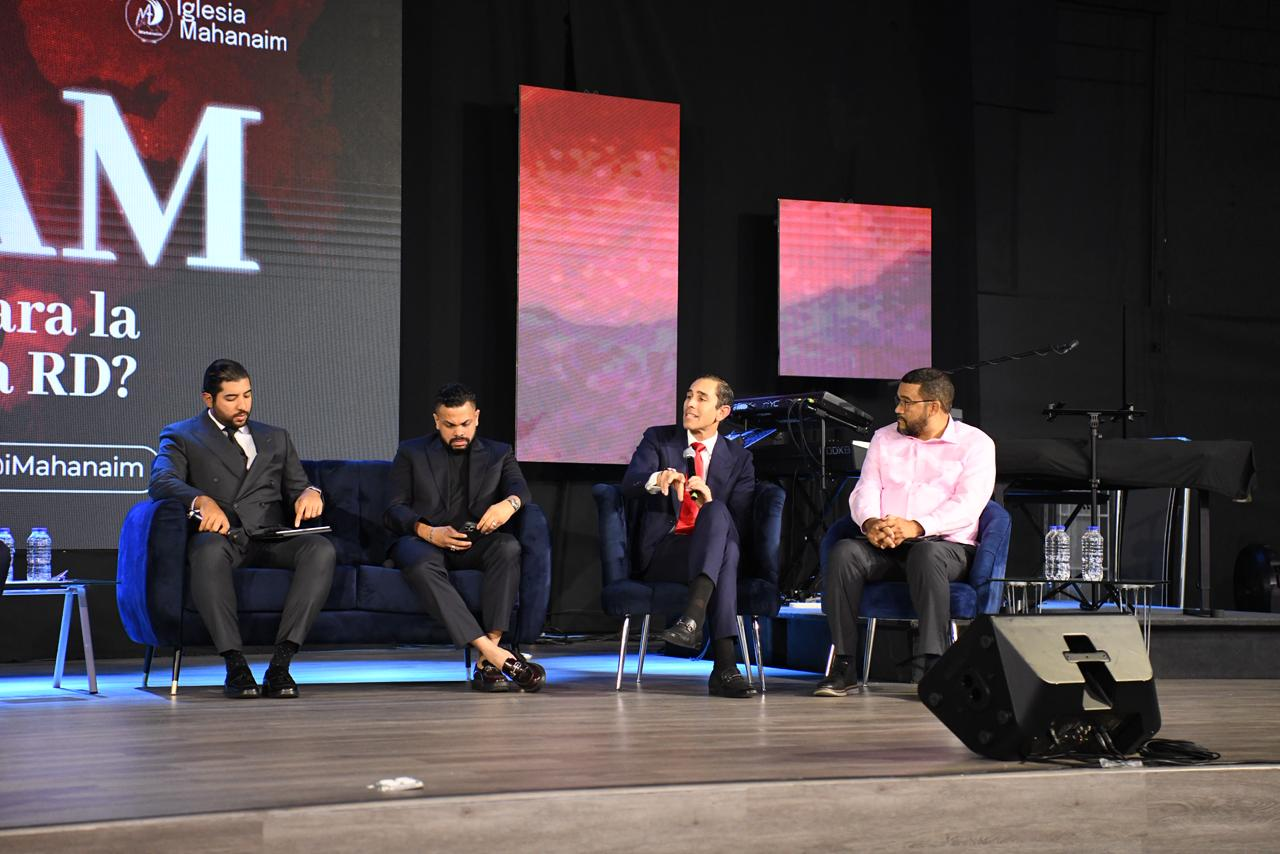
    A controversial public forum hosted by a local Christian movement in the Dominican Republic has drawn over 1,000 attendees to Santo Domingo, centering discussion on the expansion of Islam in the country and neighboring Haiti, alongside calls for new state oversight of Islamic religious practice. The event, titled “Islam: A Threat to the Church and to the Dominican Republic?”, was held at Mahanaim Miraflores Church and organized by the Trinitarios movement, a group that frames its public advocacy around Christian and nationalist perspectives.

    The gathering brought together a cross-section of prominent Christian leaders and a sitting national legislator to unpack the topic. Heading the event were organizers Isaac B. Colón, Víctor Medina, and Robert Martínez, with a featured panel that included senior and junior pastors Ezequiel Molina Rosario, Ezequiel Molina Jr., and Junior Ponciano. Sitting Congressman Elías Wessin Chávez also joined the panel, alongside guest speaker Daniel Blanco, a former Muslim who converted to Christianity and shared his personal conversion story with attendees.

    Over the course of the forum, speakers outlined their concerns about the rising footprint of Islam in both the Dominican Republic and Haiti, warning that this growth could create unaddressed cultural and religious challenges for the Dominican national identity and the country’s majority Christian establishment. Attendees unanimously expressed public support for a draft legislative proposal put forward by Wessin Chávez that would introduce new government regulations on the practice of Islam across the nation.

    This event is not an isolated initiative, but rather part of a broader campaign by the Trinitarios movement to foster public debate on key national issues through the lens of Christian faith and Dominican patriotism, organizers confirmed. The forum’s provocative framing, which explicitly questions whether Islam poses a threat to national and religious institutions, has brought heightened attention to growing religious tension in the Caribbean nation.

  • AEI welcomes approval of real estate intermediation law

    AEI welcomes approval of real estate intermediation law

    In Santo Domingo, the Dominican Republic’s real estate sector has reached a key legislative milestone, after the national Senate gave first-reading approval to a long-awaited bill that would formalize and regulate real estate intermediation services across the country.

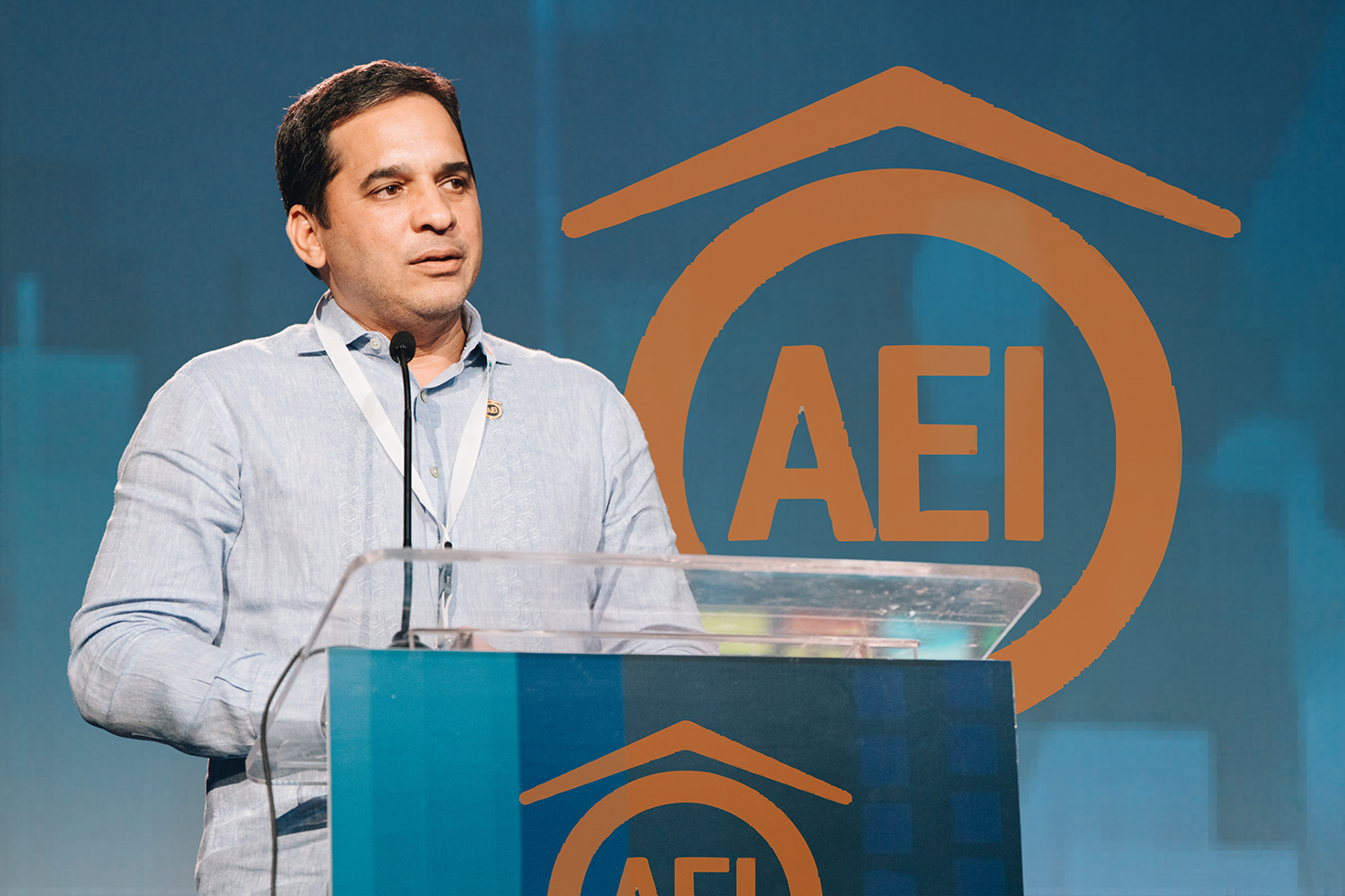
    The Association of Real Estate Agents and Companies of the Dominican Republic (AEI), the nation’s leading industry body for real estate professionals, has hailed the approval as a transformative step forward for the local property market. Industry leaders say the new regulatory framework will address longstanding gaps in oversight, boosting transparency, formalizing legal standards, and building greater public confidence in real estate transactions.

    Alberto Bogaert, president of AEI, extended public gratitude to the Dominican Senate for advancing the collaborative proposal. He emphasized that the core mission of the legislation is consumer protection: it will create clear safeguards for both international investors and domestic families investing in property, a demographic that makes up the large majority of participants in the local market.

    Bogaert also noted that the bill moving forward is the product of years of coordinated work between AEI members and other sector stakeholders, built on broad consensus across the organized real estate community. The legislation reflects input from agents, brokerage firms, and consumer advocates to address unregulated practices that have put buyers and sellers at risk in the past.

    Now that the bill has cleared its first reading hurdle, it proceeds to the remaining steps of the Dominican legislative process, including a mandatory second reading and review, before a vote on final approval can be held. AEI has reaffirmed its ongoing commitment to partnering with national legislative authorities, executive branch regulators, and cross-sector stakeholders to refine the bill into a balanced legal framework. The ultimate goal of the framework is to elevate industry-wide professionalism, enforce clear ethical standards for intermediaries, and establish stronger institutional oversight of the real estate brokerage sector, supporting long-term sustainable growth for Dominican real estate.

  • Abinader inaugurates Bajo Yuna Road Circuit connecting Duarte and María Trinidad Sánchez

    Abinader inaugurates Bajo Yuna Road Circuit connecting Duarte and María Trinidad Sánchez

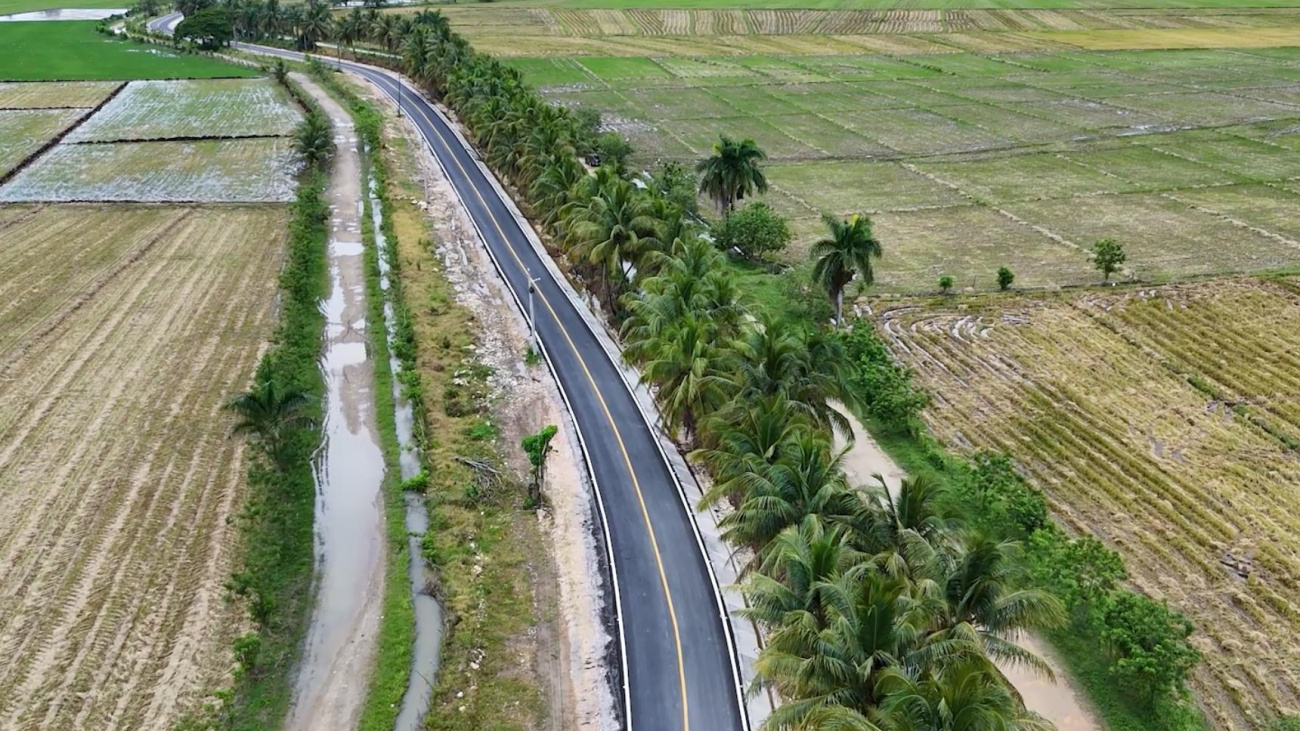
    Dominican Republic President Luis Abinader has formally opened the transformative Bajo Yuna Road Circuit, a 49-plus kilometer infrastructure project that bridges Duarte Province and María Trinidad Sánchez Province in a long-awaited upgrade for the underserved Lower Yuna region.

    Delivered by the nation’s Ministry of Public Works and Communications, the project comprises 42.8 kilometers of primary highway and an additional 6.2 kilometers of feeder roads connecting local settlements. It links a string of previously disconnected communities—including La Reforma, Las Coles, La Jagua, El Jobo, and La Garza—to critical national transport routes, namely the Juan Pablo Segundo Highway and the Nagua–Samaná road. For more than 20,000 people living in these areas, the new connection cuts travel times and removes long-standing barriers to accessing essential public services, from hospital care to primary and secondary schooling, as well as regional commercial markets.

    Beyond connecting people, the roadway is designed to revolutionize the movement of the region’s key agricultural exports, most notably rice and cocoa. Speaking at the inauguration ceremony, Public Works Minister Eduardo Estrella emphasized that streamlined logistics will directly strengthen the sector’s competitiveness, with rice producers set to see the most significant gains from reduced transit costs and faster delivery times.

    Project planners also prioritized climate resilience in response to the Lower Yuna region’s history of frequent flooding. Custom drainage systems were integrated into the circuit’s design to ensure the route remains passable through heavy rain and flood events, delivering reliable connectivity year-round rather than just during dry seasons.

    Local community leaders have welcomed the infrastructure as a game-changer for the region. They note that the elimination of transport bottlenecks will lift local agricultural productivity, open new economic opportunities for smallholder producers, and lay the foundation for broad-based, sustainable development across the entire Bajo Yuna catchment area.

  • GTUC president calls for cost of living subsidies

    GTUC president calls for cost of living subsidies

    As Guyana kicked off its annual Labour Week celebrations on Sunday, April 26, 2026, the country’s leading trade union chief has amplified pressure on the ruling administration to roll out broad new consumer subsidies, blaming cascading global conflicts for driving up everyday costs for working Guyanese.

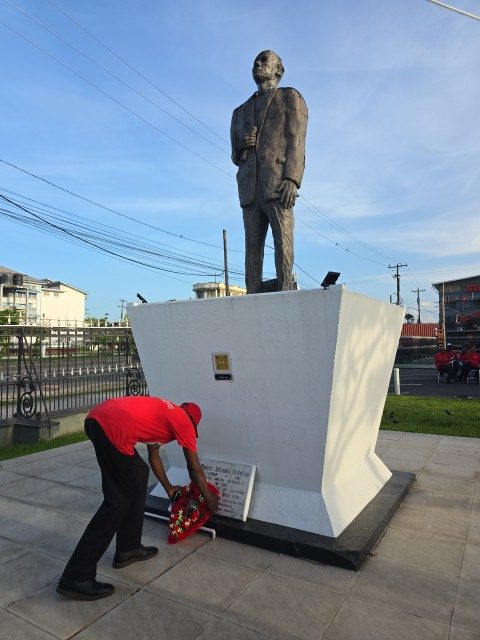
    Norris Witter, president of the Guyana Trades Union Congress (GTUC), made the appeal immediately after he joined fellow union representatives in laying a ceremonial wreath at the Hubert Nathaniel Critchlow monument, located on the grounds of Georgetown’s Parliament Building. The annual tribute opens the country’s Labour Week, which honors the legacy of Critchlow, widely recognized as the founding father of Guyana’s trade union movement.

    Speaking to reporters after the ceremony, Witter traced the current cost-of-living crisis in Guyana back to two overlapping global conflicts: the ongoing war between Russia and Ukraine, and the escalating tensions in the Persian Gulf. According to Witter, these dual crises have severely disrupted global supply chains, exacerbated fossil fuel shortages, and driven up prices for a wide range of essential goods nationwide.

    To counteract these inflationary pressures, Witter argued that targeted government subsidies — what he called the “invisible hand of the State” — are the most effective immediate tool to stabilize prices for basic commodities. The call comes as transportation providers across the country have already implemented fare hikes: public buses, private taxis, and domestic airlines have all raised ticket prices in response to sharp spikes in global fuel costs.

    Witter criticized the incumbent People’s Progressive Party Civic (PPPC) administration, arguing that the broad subsidy package the GTUC demands would require political will that the current government has so far failed to demonstrate. He accused the PPPC of overly aligning with Western geopolitical interests instead of prioritizing the economic needs of Guyanese workers, and called on the government to adopt a more inclusive approach that accommodates diverse perspectives from across Guyanese society.

    Currently, the government already implements limited energy-related subsidies: it covers extra fuel costs for the state-owned Guyana Power and Light utility and Guyana Water Incorporated to prevent them from passing higher fuel expenses on to residential and commercial customers. The administration has also eliminated all taxes on gasoline and diesel, and state-owned petroleum firm Guyana Oil Company (GUYOIL) sells fuel at below-market rates to act as a price anchor for private fuel importers and distributors.

    Witter acknowledged that many union members expect private and public sector employers to raise wages and salaries to help workers keep up with rising costs. However, he emphasized that the ultimate responsibility for taming inflation falls on national policymakers. “Even though the unions will have a right to engage the employers for meaningful increases, we must not lose sight of the fact that it is political managers who manage the national economy, who have that foremost responsibility to ensure that the kinds of policies and programmes are put in place to arrest the increase in the cost of living,” Witter said.

    Witter’s comments echo recent criticism from former Guyanese Finance Minister Winston Jordan, who has also called on the PPPC government to take stronger action to address the cost of living. Jordan recently recommended that the government distribute an interim salary increase to public workers using funds already allocated in the 2026 national budget, then revise the entire budget to cut non-essential spending on low-priority infrastructure projects. He has also faulted the administration for failing to roll out a public fuel conservation education campaign and implement formal policies to crack down on predatory price gouging by retailers and suppliers.