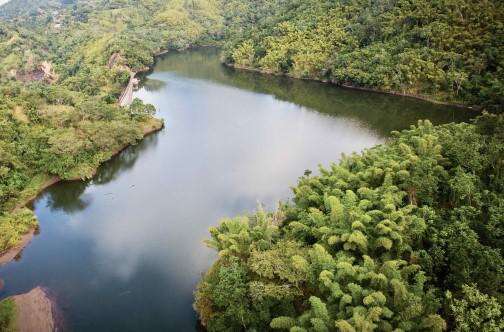
Jamaica’s national government has given the green light to a landmark $250 million upgrade project for the Hermitage Dam, located in Stony Hill, St Andrew, marking one of the largest investments in the country’s water infrastructure in decades.
Water, Environment and Climate Change Minister Matthew Samuda outlined the full scope of the initiative during his Tuesday address to the Sectoral Debate at Gordon House, confirming that the project will be led by the National Water Commission (NWC). The public utility will center its investment on two core goals: expanding the country’s total water storage capacity and boosting the overall resilience of Jamaica’s water distribution network in the face of changing climate patterns.
At the heart of the major upgrade work is a multi-phase overhaul of the Hermitage Dam. The project will kick off with a rigorous full technical evaluation of the dam’s current structural integrity, current sediment accumulation levels, and the practical potential for expanding its overall storage capacity. To complement the dam upgrade, officials also plan to conduct a full diagnostic review of the nearby Mona Reservoir, which will assess both the feasibility of expanding its storage footprint and what critical rehabilitation work is urgently needed.
Samuda emphasized to the legislative body that most of Jamaica’s active water storage infrastructure was designed and constructed nearly a generation ago, to serve a far smaller population. “That infrastructure has served Jamaicans well over the decades, but shifting demographics and changing climate conditions have left it outdated,” he explained. “Our population has grown significantly, weather patterns have become far less predictable, and the capacity that met our needs 30 or 40 years ago simply cannot keep up with modern demand today.”
Beyond the major upgrades to large-scale storage infrastructure, the government is rolling out community-level resilience measures as well. A $7 million program focused on installing distributed community storage tanks will boost local water capacity and cut response times when service disruptions occur, ranging from pipe breaks to extended dry periods.
The minister also highlighted incremental upgrades the NWC has already implemented to strengthen emergency response. The commission has added portable water treatment units to its emergency toolkit and forged new strategic partnerships with private water suppliers, creating a backup system to maintain adequate water access during droughts or unplanned network outages.
To expand overall treatment capacity across the national network, the government is advancing two new public-private partnership projects to build brand-new water treatment plants at Roaring River and Rio Bueno. Once completed, these facilities will add 40 million gallons of clean treated water to the national network every day. Additional upgrade projects at existing treatment facilities in White River, Martha Brae, and Great River will contribute a further 30 million gallons per day of new capacity to the system, combined.