分类: politics

  • Antigua and Barbuda advised to implement campaign finance reform

    Antigua and Barbuda advised to implement campaign finance reform

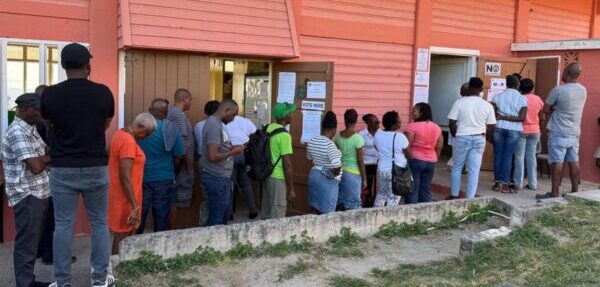
    Following its assessment of the April 30, 2026 general election in Antigua and Barbuda, the Commonwealth Observer Group has issued a renewed, urgent call for sweeping updates to the island nation’s campaign finance regulations, arguing that enhanced transparency and rigorous oversight are critical to shoring up public trust in the country’s electoral system.

    In the group’s final post-election report, observers stressed that long-standing concerns over inadequate campaign finance governance have gone unaddressed for years, despite identical recommendations being put forward after previous national elections. The organization is pushing both the Antigua and Barbuda Electoral Commission (ABEC) and the national parliament to prioritize advancing comprehensive political finance legislation that covers all aspects of electoral campaign funding.

    The report outlines core requirements that any new regulatory framework must meet: it must mandate clear tracking of where political funds originate and how they are spent, place legal caps on donations from individual and institutional donors, and set binding rules for campaign spending by both political parties and individual candidates. Beyond these baseline provisions, observers also recommend building a far more robust transparency architecture for political finance, including updated spending limits, mandatory public disclosure of all donor identities, and formal regulation of political advertising distributed through digital platforms. To ensure consistent enforcement of these new rules, the report suggests establishing a dedicated specialized regulatory unit within ABEC that is granted full authority to implement and uphold the regulations.

    The Commonwealth assessment highlights that current campaign finance rules in Antigua and Barbuda are extremely permissive, with minimal transparency requirements and almost no effective checks on political donations. While nominal spending caps do exist under existing electoral legislation, the report notes these limits are outdated, inconsistently enforced, and lack any meaningful penalties for violations. Compounding these gaps, the country currently has no system of public funding to support political parties, leaving most campaign operations almost entirely reliant on private donations — the majority of which are not required to be disclosed publicly. With limited disclosure rules in place, oversight bodies have little power to monitor or curb improper influence, creating persistent risks to the integrity of the electoral process.

    Overall, the observer group delivered a mostly positive assessment of the 2026 general election, confirming that the poll was carried out in a peaceful, orderly, and largely transparent manner. Even with that positive overall finding, the group singled out campaign finance transparency and accountability as the most critical unaddressed gap in the country’s democratic framework. Implementing the recommended reforms, the report argues, would bring Antigua and Barbuda into alignment with widely accepted international best practices for electoral governance, and rebuild public confidence in the nation’s democratic institutions.
  • PMs agree new push on Barbados–Canada partnership in Toronto talks

    PMs agree new push on Barbados–Canada partnership in Toronto talks

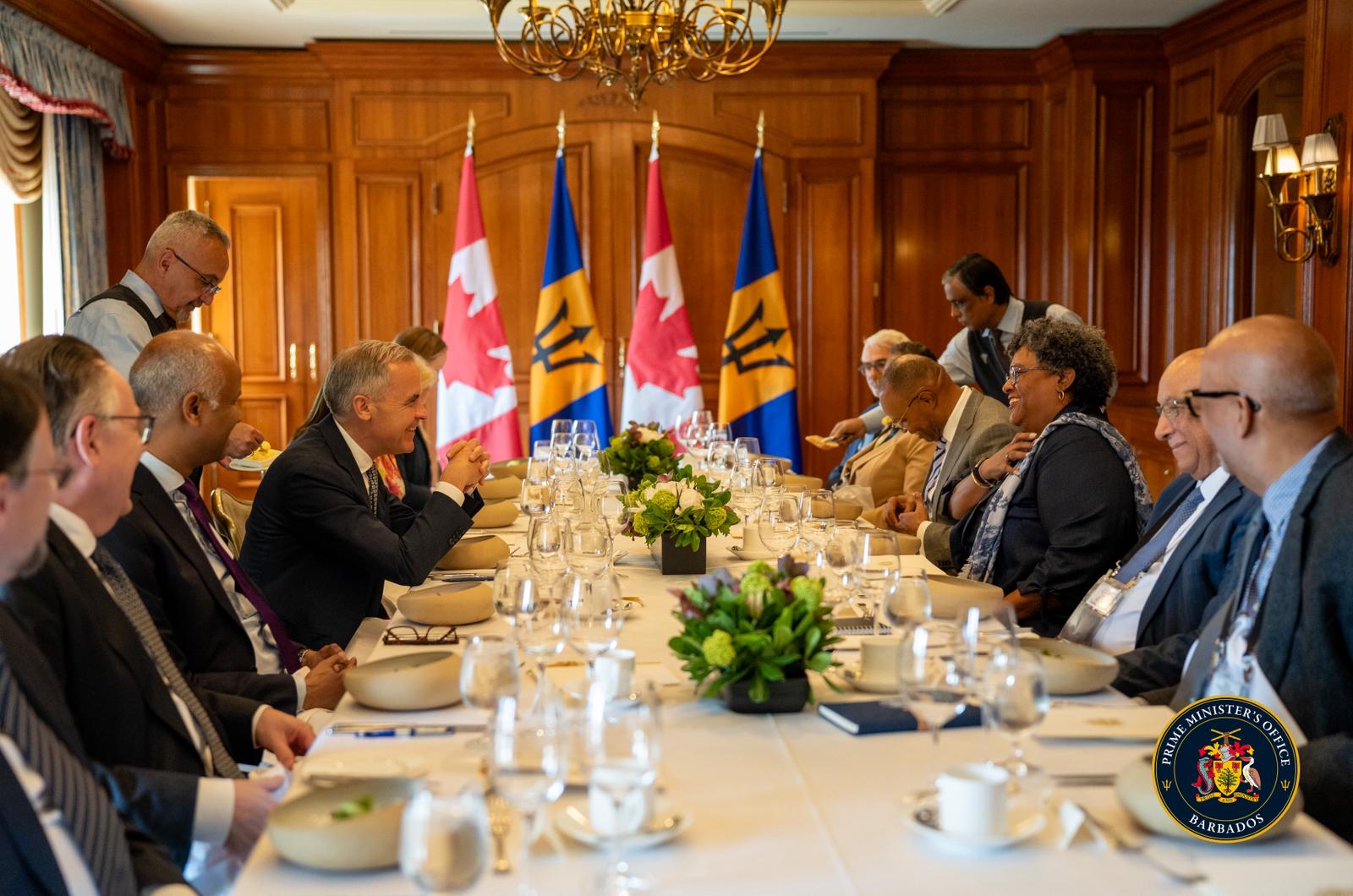
    Leaders from Barbados and Canada have concluded a high-stakes round of bilateral negotiations in Toronto, cementing a shared pledge to strengthen decades-long diplomatic and economic connections through targeted collaboration across a diverse range of emerging and critical sectors. The talks, led by Barbadian Prime Minister Mia Mottley and Canadian Prime Minister Mark Carney, were structured to revitalize a partnership rooted in historical ties, aligning it with 21st-century global challenges from climate change to technological innovation.

    Discussions spanned policy areas from creative industries and workforce skills development to climate resilience, maritime scientific research, quantum technology, cross-border professional movement, and global energy security. Carney opened remarks by emphasizing the enduring value of the bilateral relationship, and offered high praise for Mottley’s growing influence on the global stage, calling her a transformative “leader for tomorrow”. He centered much of his input on the urgent need for coordinated global action to tackle the climate crisis, covering priorities including climate adaptation, infrastructure resilience, accessible climate finance, and emissions mitigation. Carney also highlighted Barbados’ ambitious national goal to reach a 100 percent clean energy energy system, commending the island nation for its progressive climate commitments.

    A release from the Office of the Barbadian Prime Minister clarified that Mottley’s official visit was designed to reframe the bilateral relationship, identifying actionable, practical adjustments to streamline and strengthen collaboration between individuals, businesses, and institutions across both countries. A central priority of the visit was deepening engagement with Canadian firms already operating in Barbados, with the logistics sector and international film production identified as high-potential emerging areas for new joint initiatives.

    On the topic of cross-border professional mobility, the two leaders reached a consensus to develop mutually agreeable regulatory frameworks that will allow skilled workers to move more freely between the two jurisdictions, while upholding the strict professional standards each nation requires. Mottley highlighted a recently signed memorandum of understanding with Canada’s University of Waterloo focused on quantum computing research, as well as Barbados’ use of a regulatory sandbox mechanism that allows new technologies to undergo rigorous testing before they are approved for commercial launch. She reaffirmed that Barbados will maintain strict ethical and safety guardrails as it opens its economy to new technological innovation.

    Maritime research emerged as another key focus of the negotiations, with the Barbadian delegation noting that the two nations are uniquely positioned to combine their complementary geographic strengths: Canada’s vast, research-rich Arctic and Atlantic coastlines, and Barbados’ status as a large island nation with extensive exclusive ocean territory. Mottley put forward a proposal to launch a joint maritime research hub that will bring together academic institutions from both countries to address shared ocean challenges, from rising sea levels to overfishing and marine ecosystem degradation.

    As small coastal nations, both Canada and Barbados face growing climate-driven risks, prompting leaders to devote significant discussion to the growing crisis of affordable climate insurance. Mottley stressed that reliable access to affordable insurance and climate finance is a non-negotiable prerequisite for long-term economic stability, especially for Barbados’ critical tourism sector, which requires large-scale investment to upgrade infrastructure, protect local jobs, and build resilience against extreme weather events.

    The talks came just days after Mottley’s government opened Barbados’ offshore territory to new oil and gas exploration, and during the summit the prime minister reaffirmed the nation’s unwavering commitment to its long-term target of full transition to 100 percent clean energy. Acknowledging the urgent timeline for global decarbonization, Mottley argued that all nations must be afforded a “safe and practical pathway” to transition, particularly as countries grapple with soaring energy costs and the deeply unequal global distribution of climate finance.

    The official engagements concluded with a shared commitment to turn the two nations’ historical diplomatic bonds into forward-looking cooperation that delivers tangible benefits for citizens on both sides. Mottley closed by expressing confidence that ongoing collaboration between public sector leaders and private industry stakeholders across both countries will generate new, meaningful economic opportunities for decades to come.

  • Commonwealth Observers Call for Electoral Commission to Be Entrenched in Constitution

    Commonwealth Observers Call for Electoral Commission to Be Entrenched in Constitution

    Following its assessment of the 2026 general election held on April 30, the Commonwealth Observer Group has tabled a landmark set of democratic reform proposals for Antigua and Barbuda, led by a call to embed the Antigua and Barbuda Electoral Commission (ABEC) directly into the nation’s constitution. This top recommendation centers on formalizing the commission’s existence, governing structure, and core responsibilities through constitutional amendment, a change observers argue is critical to cementing ABEC’s institutional independence and shoring up public trust in the country’s electoral processes.

    In its final report delivered to Antigua and Barbuda’s Parliament, the observer group acknowledged that the Caribbean nation’s existing electoral legal framework already provides a functional foundation for holding democratic contests. The team’s on-the-ground monitoring confirmed that the 2026 general election unfolded in a peaceful, orderly, and transparent environment, with polling staff adhering to established protocols and executing their duties with consistent professionalism.

    Despite this overall positive assessment of the 2026 poll’s conduct, the report identifies three key areas where targeted reform is needed to strengthen long-term electoral integrity: upgrading the independence of election administration, tightening oversight of campaign financing, and conducting systematic reviews of parliamentary constituency boundaries.

    At the top of the reform agenda is the push for constitutional entrenchment of ABEC. Observers explain that currently, the electoral commission lacks the firm, highest-level legal standing that would protect its independence from political interference. Amending the constitution to formally establish ABEC, outline its composition, and grant it clear statutory powers would place the body’s mandate, authority, and institutional existence on a far more solid legal foundation. This change would also bring Antigua and Barbuda’s election management framework into closer alignment with widely accepted international best practices for democratic governance.

    The constitutional amendment recommendation is formally addressed to Antigua and Barbuda’s Parliament, which holds exclusive authority to initiate and approve changes to the national constitution required to implement the reform. The package of recommendations laid out in the final report forms part of a broader ongoing effort to deepen democratic norms and reinforce electoral institutions across Antigua and Barbuda, building on the foundation laid by the 2026 general election.

  • Antigua and Barbuda constituency boundaries must be urgently reviewed, says Commonwealth Observer Group final report

    Antigua and Barbuda constituency boundaries must be urgently reviewed, says Commonwealth Observer Group final report

    Nearly two months after the April 30, 2026 general elections in Antigua and Barbuda, the Commonwealth’s official observer mission has published its final assessment, delivering a balanced verdict that lauds the peaceful, transparent conduct of the vote while sounding the alarm on long-overdue changes to the nation’s electoral map.

    The mission, which was assembled at the formal invitation of Antigua and Barbuda’s government by Commonwealth Secretary-General Shirley Botchwey, brought together four distinguished democratic figures from across the 56-nation bloc, led by former Botswana Foreign Minister Pelonomi Venson. During its pre-election and election-day observation work, the team confirmed the initial positive conclusions it shared in a preliminary public statement just one day after voting closed. The mission found that polling workers carried out their responsibilities with consistent professionalism, standard electoral procedures were followed across nearly all voting sites, and the election unfolded in an orderly, violence-free atmosphere. It also extended praise to voters, participating political parties, national police forces, and independent media outlets, all of which contributed to upholding the credibility of the democratic process.

    Beneath this positive assessment, however, the report repeats and amplifies longstanding concerns first flagged by a 2023 Commonwealth observer mission: the nation’s constituency boundaries have remained almost entirely unadjusted since 1984, despite four decades of major demographic shifts that have left dramatic gaps in voter population across different districts. The observer group warned that these size imbalances directly threaten the core democratic principle of equal suffrage, as a vote in one constituency can carry significantly more weight than a vote in another, a gap that could erode public trust in the entire electoral system over time.

    To address this systemic issue, the group has laid out a clear set of urgent recommendations. It calls on Antigua and Barbuda’s government to immediately grant the independent Boundaries Commission the authority and resources it needs to conduct a full, data-backed redrawing of electoral districts, using population data collected between the 2022 and 2025 national censuses. Crucially, the report emphasizes that the redistricting process must be fully insulated from political interference, to guarantee fair outcomes and uphold the fundamental “one person, one vote” principle that underpins legitimate democracy.

    Following the report’s completion, Secretary-General Botchwey has distributed the full document to all relevant stakeholders, including Antigua and Barbuda’s national government, the national Electoral Commission, all registered political parties, and other civil society groups. In a statement accompanying the report’s release, Botchwey thanked the observer team for its rigorous, timely work, noting that the assessment arrives at a particularly pivotal moment for the nation: Antigua and Barbuda is set to host the upcoming Commonwealth Heads of Government Meeting (CHOGM) in the near future. Botchwey added that the report’s findings offer a valuable, honest assessment of the country’s electoral framework and broader democratic landscape, helping to reinforce Antigua and Barbuda’s commitment to shared Commonwealth democratic values while guiding the bloc’s future collaborative engagement with the nation’s stakeholders.

  • UPP Calls General Membership Meeting for June 10

    UPP Calls General Membership Meeting for June 10

    The United Progressive Party (UPP), the main opposition political force in Antigua and Barbuda, has officially called a general gathering of its dues-paying financial members, scheduled to take place on June 10. The official announcement of the meeting was made in a public notice signed by Jamale Pringle, the party’s current political leader. Per the details outlined in the notice, the session is set to kick off at 7 p.m. local time at the Antigua and Barbuda Workers’ Union headquarters, located on Lower Newgate Street. The invitation extended by the party opens the meeting to all financial members representing every constituency branch of the UPP across the country. In the notice, party leadership emphasized that every attending member’s input and participation is highly valued, as the organization continues to advance its core activities and deepen its outreach to its base of supporters across the nation. Notably, no specific agenda items were disclosed to the general public in the released notice. This closed-door membership gathering comes as the UPP carries out a series of internal organizational efforts and pre-planning work ahead of upcoming political activities on the country’s political calendar, as the opposition prepares for future electoral and legislative engagements.

  • Gonzales: PNM ready to fight SoE in court

    Gonzales: PNM ready to fight SoE in court

    Trinidad and Tobago’s main opposition party, the People’s National Movement (PNM), is gearing up to take legal action against any planned extension of the country’s ongoing state of emergency, a senior party figure has confirmed. Marvin Gonzales, former national security minister and the Member of Parliament for Arouca/Lopinot, laid out the opposition’s plans during a public party gathering held in San Juan’s Croisée district on Wednesday evening.

    Gonzales told attendees that the PNM has already put together a full legal team, ready to submit a constitutional motion to the courts if the ruling United National Congress (UNC) government moves forward with its reported plan to seek parliamentary approval for another extension of the emergency measures. According to Gonzales, the administration has already publicly indicated it will return to parliament to extend the state of emergency, prompting the opposition’s pre-emptive legal preparations.

    “Tonight, we serve formal notice to the government: we have assembled our legal team, which stands ready to file a constitutional motion to bring an end to this unlawful and unconstitutional state of emergency in Trinidad and Tobago,” Gonzales stated to assembled supporters.

    The core of the opposition’s argument centers on claims that the current use of emergency powers violates core constitutional rights and freedoms guaranteed to Trinidad and Tobago’s citizens. Gonzales emphasized that the PNM is seeking a definitive judicial ruling on whether the ongoing extension of emergency measures aligns with the country’s constitution, pointing to a landmark legal precedent set in neighboring Jamaica as supporting evidence for the PNM’s case.

    In 2023, a three-judge panel in Jamaica ruled that a series of state of emergency proclamations issued in late 2022 were invalid, on the grounds that the measures violated the constitutional principle of separation of powers. The ruling rejected the Jamaican government’s use of rolling states of emergency as a long-term crime-fighting tool, a position Gonzales says applies equally to the situation in Trinidad and Tobago.

    “Enough is enough. This was already tested in Jamaica, and the Jamaican courts ruled that you cannot use repeated, rolling states of emergency to control crime and lawlessness,” Gonzales said. He added that the PNM was pursuing the legal challenge “standing in defence of democracy” and “standing in defence of the people of Trinidad and Tobago.”

    Beyond the constitutional argument, Gonzales leveled a sharp accusation against the ruling government: he claimed that the state of emergency is not being used to curb rising criminal activity as the administration has claimed, but rather to suppress political opposition and silence dissenting voices across the country.

    “Today in Trinidad and Tobago, the state of emergency and its associated regulations are not being used to protect you. They were never intended to protect the people of this country,” Gonzales said. “They have always been intended to be weaponized to suppress the population, so that the government can act with impunity in every corner of this nation.”

    Gonzales also questioned the foundational justifications the government has used to bring in and extend previous states of emergency. He noted that the administration has repeatedly justified the measures by citing alleged threats against senior law enforcement leaders, sitting members of parliament, and judicial officials. However, he claimed that to date, not a single person has been arrested or charged in connection with any of these alleged threats.

    “They lied to the people of Trinidad and Tobago when they claimed there were threats against senior law enforcement officers and members of parliament,” Gonzales said. “Today, not one person has been arrested for these so-called threats against senior officials. Not one person has been arrested or charged for any purported threat against members of the Judiciary or members of the government.”

  • Phillip questions ‘differing’ police response to protests

    Phillip questions ‘differing’ police response to protests

    Trinidadian social and political activist Alyssa Phillip has ignited a public debate over law enforcement impartiality after leveling accusations of inconsistent policing against the Trinidad and Tobago Police Service (TTPS) in recent days. Her claims, shared across multiple social media posts between Wednesday and this weekend, center on starkly different police responses to separate public gatherings held in the same area on the same day, laying bare growing public concerns over unequal application of the law in the country’s protest space.

    The core of Phillip’s critique stems from a peaceful unity walk organized by the Peace Foundation TT on Piccadilly Street in Port of Spain, which was halted by police before it could get underway. She opened her series of posts with the cryptic line: “Monkey really know which tree to climb,” a direct reference to what she frames as the TTPS’ selective enforcement against groups aligned with the opposition protest movement. During the planned walk, Phillip says, popular social media influencer and recording artist Mouttxt, born Nicholas Mouttet, was barred from speaking to reporters by on-scene officers, who cited a lack of official permission for public address. Just moments earlier, however, Fuad Abu Bakr – a prominent local businessman and leader of the political party New National Vision – conducted an on-camera interview in the exact same area without any pushback or intervention from police.

    Phillip went on to contrast the TTPS’ aggressive response to the peace walk with another event that same day: a PNM (People’s National Movement) candlelight vigil held in San Juan, where no police orders to disperse or crowd control measures were implemented at all. “They run home everybody that came to the peaceful walk like dogs…go home!” she wrote in a passionate on-platform statement, emphasizing that the contrast could not be ignored. Crucially, Phillip clarified that she was not arguing any gathering should have been broken up; rather, her goal is to highlight that unequal treatment is being meted out to citizens based on their political ties and public standing. “All citizens have a right to speak out regardless of political affiliation or public profile,” she maintained.

    Beyond the selective treatment of gatherings, Phillip also addressed a separate recent incident involving the arrest of a young man who has attended multiple events tied to the protest movement she helps coordinate. Some online actors have attempted to tie allegedly inflammatory comments made by the young man to the broader movement, but Phillip rejected that broad brush characterization. She identified herself, her mother Camille Caresquero, and Mariah Walcott as the lead organizers of the “19 Bullets, 19 Protests” campaign, which advocates for greater government accountability, transparency, and judicial reform. The arrested man’s personal views do not reflect the positions of the campaign’s organizers, supporters, or core demands, she stressed.

    While she acknowledged that every person holds a right to their own individual opinions, Phillip added that she regretted the young man had chosen to frame his views in a way that was neither respectful nor responsible. She reaffirmed that the “19 Bullets, 19 Protests” movement remains strictly committed to peaceful, lawful advocacy, and that the actions of one individual will not distract supporters from the core issues that brought them together.

    Phillip also expanded her critique to broader, systemic issues of unequal enforcement of public order laws across Trinidad and Tobago. She noted that many citizens have long observed offensive, abusive, racial, and inflammatory comments directed at political leaders and public figures on social media that have not resulted in any enforcement action, reinforcing public perceptions that different standards apply to different groups based on their connections. Phillip stressed she is not endorsing that harmful rhetoric, but argued that the double standard in enforcement cannot be overlooked.

    In a direct rebuke of the TTPS’ approach to protest management, Phillip said: “The TTPS would better serve the public by leading with empathy and understanding rather than ego and defensiveness.”

    Looking ahead, Phillip used her social media reach to promote the movement’s next action: “Protest #18,” a nationwide stay-at-home protest scheduled for today. She encouraged the general public to review educational materials about the movement’s goals shared online, including explanatory videos and social media content accessible via scannable QR codes. For members of the public who are unable to stay home and must report to work on the day of the action, Phillip urged them to wear white clothing and share photos of their participation on social media using the hashtag #Protest18.

    This public statement comes just one week after Phillip and her mother were arrested during a protest held outside the Office of the Director of Public Prosecutions (DPP). The pair appeared before Magistrate Indira Ramnarine Misir-Gosine at the Port of Spain Magistrates’ Court this Monday, where both pleaded not guilty to the two charges stemming from the demonstration.

  • Gonsalves says ULP will make swift political comeback

    Gonsalves says ULP will make swift political comeback

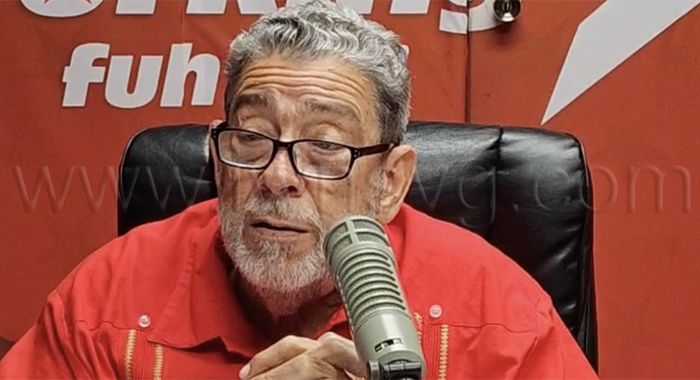
    KINGSTOWN, St. Vincent – Just months after suffering a landslide electoral defeat that ended a quarter-century of incumbency, the leader of St. Vincent and the Grenadines’ main opposition Unity Labour Party (ULP) Ralph Gonsalves is already positioning his party for a rapid return to national office, citing a burgeoning governance crisis that has eroded public trust in the ruling New Democratic Party (NDP) administration.

    In a wide-ranging interview broadcast on local radio, the former prime minister outlined what he frames as an undeniable “Labour resurgence” across the country, fueled by growing public discontent with the NDP’s first term in office. Gonsalves argued that the current government has overseen a rapid deterioration of national conditions that touches every sector of Vincentian life, from economic stability and public safety to core government administration.

    He accused the sitting administration of operating on unresponsive “autopilot”, claiming its leaders fail to grasp the full scope of the crises they have allowed to unfold, and lack the strategic vision to address the complex challenges facing the small island nation. “The present administration has no knowledge of how to proceed” on key issues impacting ordinary Vincentians, Gonsalves told radio listeners.

    The ULP leader highlighted a recent well-attended national council meeting that drew large participation from public sector workers, including teachers and police personnel, as proof of the growing momentum behind the opposition. He described the turnout as a demonstration of “the might and influence of the labour family”, noting that the display of grassroots support has left the current NDP government “dazed and frightened”.

    Gonsalves went further, claiming that even long-time staunch supporters of the NDP now privately predict the current administration will be limited to a single term, with some suggesting it could collapse and leave office ahead of the end of its scheduled mandate. He called on the ruling party to take accountability for its missteps, saying, “Grown men and women need to stand up when they’ve made mistakes and say ‘I made a mistake.’”

    For Vincentians disillusioned with the current government, Gonsalves asserted, “The only option available is the Unity Labour Party.” He added that growing numbers of citizens are reaching out directly to party headquarters and contacting him personally for guidance, a trend he says reflects eroding confidence in the NDP. Reaffirming the ULP’s deep roots in Vincentian politics, he said the party is ready to provide the decisive, competent leadership that is currently missing from national governance.

    Addressing the everyday concerns of working people, Gonsalves gave a direct assurance: “Labour has your back.” He urged ULP supporters to remain united, arguing that the ruling government’s attempts at “fear-mongering” and intimidation of civil servants who align with the opposition will ultimately fail. As public frustration grows, he noted, “people are getting less afraid” to openly associate with the Unity Labour Party, blunting the administration’s efforts to slow the opposition’s growing momentum.

    While Gonsalves remains actively engaged in regional and international affairs through his longstanding work with regional organizations, he made clear that his top priority right now is advancing the local resurgence of the ULP. Though he stopped short of predicting an exact timeline for a return to power, admitting he cannot know who will hold the prime minister’s office 12 months from now, he said mounting disarray within the NDP administration makes a swift ULP comeback far more likely than not.

    The ULP was ousted from power in a historic November 2025 election, losing by a lopsided 14-1 margin after 25 consecutive years leading the country. That defeat marked one of the most dramatic electoral upsets in Vincentian politics since 1989, when the NDP won all 15 parliamentary seats in another historic landslide.

  • Hermanos Martínez Tamayo Pre-University Institute: A Distinctive, Innovative, and Demanding Educational Model

    Hermanos Martínez Tamayo Pre-University Institute: A Distinctive, Innovative, and Demanding Educational Model

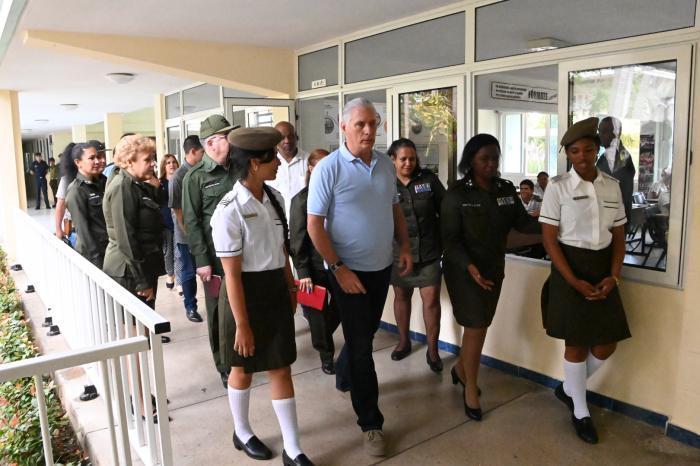
    On Thursday, June 5, 2026, Cuban President and First Secretary of the Central Committee of the Communist Party Miguel Díaz-Canel Bermúdez undertook an official visit to the unique Hermanos Martínez Tamayo Vocational Pre-University Institute, operated by the country’s Ministry of the Interior (Minint) in Havana’s Playa municipality. He was joined on the visit by Lázaro Alberto Álvarez Casas, Minint Minister, Army Corps General and member of the Communist Party Political Bureau.

    The visit came at the direct request of a student from the institute, who raised the invitation during a previous public event where the two leaders crossed paths. During an open, heartfelt exchange with students, graduates, faculty and institutional leadership, Díaz-Canel offered high praise for the institute’s educational framework, labeling it a “distinct, innovative, and demanding educational model” that aligns with the revolutionary vision first laid out by Fidel Castro during the development of the Battle of Ideas initiative.

    Díaz-Canel told attendees he was particularly impressed by the institute’s ability to maintain its high standards of operation for decades, including through the ongoing challenging period that has strained educational systems across Cuba. He noted that the Ministry of the Interior, already widely recognized by the Cuban people for its critical public service, has extra reason to take pride in hosting such an exceptional educational institution.

    Commenting on the institute’s well-maintained, orderly and welcoming campus, the president emphasized that holistic education extends far beyond textbook curriculum. Physical environments that nurture and inspire the spirit, he explained, are a core component of meaningful learning that prepares young people for public life.

    Throughout the conversation, which preceded a guided tour of the institute’s classrooms and research laboratories, Díaz-Canel stressed the ongoing importance of fostering critical thinking, revolutionary commitment, and well-rounded personal development to prepare young Cubans to contribute to the country’s socialist construction project as engaged, responsible citizens. After hearing personal accounts from students, professional insights from graduates, and reflections from teaching staff, the president noted that the visit offered a critical morale boost amid the country’s current complex context, which has been shaped by persistent external aggression from the United States. “Talking with you, seeing your willingness, your commitment, your training, and the way you express yourselves, also reaffirms the feelings of appreciation one has for this institution. This strengthens us greatly and also gives us a lot of energy,” he stressed.

    Díaz-Canel extended an invitation to students to join the Community Youth Network, a new grassroots initiative that organizes Cuban youth for neighborhood-focused public service work. He also urged attendees to prioritize rigorous study, deep exploration of history and science, and independent inquiry, explaining that these practices build the knowledge and critical perspective needed to make thoughtful, informed decisions that benefit the nation. The conversation also included open discussion of the severe economic and social strain placed on Cuba by the United States’ long-running suffocating embargo policy.

    In comments to reporters following the visit, institute director Colonel Vivian Sabuquet Larrondo outlined the institution’s 22-year legacy of public service. As the only pre-university of its kind in Cuba, the school holds a unique mission: training the next generation of Minint officers and personnel, while also preparing graduates who choose to pursue civilian higher education. To date, more than 4,000 young people have graduated from the program, many of whom now serve in the Ministry of the Interior.

    Sabuquet Larrondo explained that the institute delivers a fully holistic education that integrates patriotic formation, military preparation, physical education, cultural programming, athletic opportunities, and cutting-edge instruction in technology and scientific development. Students enter the institution between the ages of 14 and 15, graduate at 17, and learn from a faculty of highly experienced educators who bring strong professional expertise and a deep commitment to core revolutionary values. Beyond academics, the school instills foundational life skills including disciplined coexistence, strong work ethic, solidarity, humanism, and patriotism, with ongoing support from students’ family members. “I think the most important thing is the contribution we have made, not only to the Ministry of the Interior, but also to society,” Sabuquet Larrondo noted.

  • Column: Het rechtmatige onding dat WIPA heet

    Column: Het rechtmatige onding dat WIPA heet

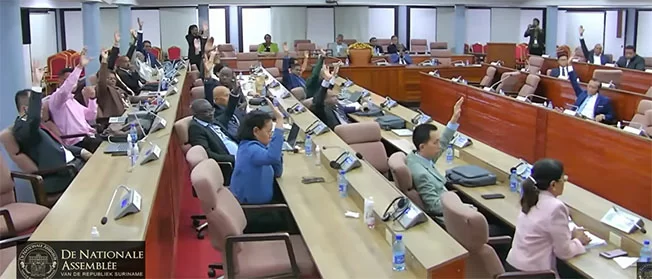
    After hours of heated debate, repeated suspensions, closed-door negotiations, faction caucuses and high-stakes political calculations, Suriname’s National Assembly has formally approved a motion to indict three former ministers — Riad Nurmohamed, Gillmore Hoefdraad and Bronto Somohardjo — clearing the path for full criminal prosecution to move forward.

    While supporters of the decision frame it as a victory for the rule of law, critics have already raised allegations that political motivations drove the outcome. The entire drawn-out process has also thrown a sharp spotlight on the quirky and contradictory structure of Suriname’s Law on the Indictment of Political Office Holders (known locally by its Dutch acronym WIPA), a piece of legislation long debated for its unusual place in the country’s legal order.

    Far from being unconstitutional, the WIPA is explicitly rooted in Article 140 of Suriname’s constitution. Under the terms of the law, the National Assembly (abbreviated DNA in Dutch) is not permitted to rule on the guilt or innocence of the accused officials. Nor is it allowed to weigh in on whether sufficient evidence exists to prove a criminal offense was committed — that responsibility is reserved exclusively for the Public Prosecution Service and ultimately the national courts.

    The DNA’s role under the law is intentionally narrow: parliament is only tasked with determining whether moving forward with prosecution of a sitting or former political officeholder serves the broader public interest. NDP parliamentarian Ebu Jones emphasized during debate that the DNA must also examine whether the proceeding amounts to political retaliation, reminding colleagues that the national legislature is not a court. It cannot determine guilt or judge the strength of evidence, Jones argued — those duties fall squarely to prosecutors and the High Court of Justice.

    Yet that very clarification lays bare the core structural weakness of the WIPA framework. If parliament is barred from assessing guilt or evidence, why is it granted the power to greenlight a criminal case in the first place?

    The explanatory memorandum accompanying the legislation amplifies this inherent tension. It notes that the special carve-out for ministers and senior political officials has nothing to do with the actions the accused are alleged to have committed, and everything to do with the “dignity of the office” they hold. Their unique position in the state structure, the memorandum argues, justifies an extra layer of political consideration before prosecution can proceed.

    At the same time, the same document stresses that the DNA cannot rule on evidence, guilt or whether an act meets the definition of a crime. Parliament’s only job is to assess whether moving forward with prosecution would cause administrative collapse or widespread social unrest.

    This structure effectively builds a political screening process into the pre-trial phase of criminal cases against political officials, even as it explicitly bars political actors from interfering with the substantive legal merits of a case. What was meant to be a purely legal proceeding, in the end, became a high-stakes test of political strength.

    The final vote laid bare deep divisions within Suriname’s six-party ruling coalition, which failed to unite around a single collective position on the indictment. Ultimately, the decision was left to individual assembly members to vote their conscience. While allowing representatives to think and vote independently is not inherently problematic, it underscores just how difficult it is to separate legal decision-making from partisan political interests once politicians are given formal authority over the process.

    Most notably, the vote exposed critical fractures within the NDP, the coalition’s largest party holding 18 parliamentary seats. The party’s numerical advantage did not translate to political unity, with deep internal disagreements leading to a split vote. Even with all of its aligned members voting against the indictments, the NDP lacked the numbers to block the combined 17 votes from the VHP and other coalition members who backed the prosecutor-general’s request for prosecution. As a result, the NDP emerged as the clearest political loser of the vote. Its defeat was not just about the outcome of the indictments: the vote made visible that the party’s 18 seats do not add up to a reliable governing majority, offering unflattering new clarity into the actual balance of power within the ruling coalition that goes far beyond the fates of the three former ministers.

    The PL faction voted against moving forward with indictment for Riad Nurmohamed. For Bronto Somohardjo, one thing remains undeniable: unwavering consistency. From the moment the prosecutor-general first filed the request for indictment, Somohardjo has publicly stated he is fully prepared to answer the allegations against him in court. He did not request political protection, instead calling for a full legal assessment of the claims against him. He stuck to that position through the final vote: he voted in favor of his own indictment, while voting against the motion to indict Nurmohamed.

    This brings the debate back to its core question: why should a national legislature get to decide whether a court can carry out its constitutional duty to hear a case? There are defensible arguments for granting political officeholders a special formal status under the constitution, as Suriname’s founding document does. But the reality remains that ordinary citizens do not need approval from a parliamentary majority before a court can hear their criminal case.

    It is for this reason that the WIPA remains such a peculiar legal construction. It is a legally valid and constitutionally sound law. But it forces politics and law to converge in a space where they ought, by principle, to remain separate. That does not make the WIPA illegal. But it has cemented its decades-long reputation: a legally authorized anomaly in Suriname’s legal order.