分类: politics

  • Commonwealth observers urge electoral boundary reform in Antigua & Barbuda

    Commonwealth observers urge electoral boundary reform in Antigua & Barbuda

    The Commonwealth Observer Group has issued a final assessment of Antigua and Barbuda’s April 30, 2026 general elections, calling for urgent and independent reforms to the nation’s electoral constituency boundaries while commending the overall peaceful and credible conduct of the polls. The mission was formally invited by the Antigua and Barbuda government to conduct an independent evaluation of the electoral process, and was convened by Commonwealth Secretary-General Shirley Botchwey, led by former Botswana Foreign Minister Pelonomi Venson.

    A core finding of the report centers on long-standing issues with constituency boundary delimitation that have not been addressed in decades. The observer group noted that the current boundaries have remained almost entirely unmodified since 1984, despite dramatic population shifts across the islands over the intervening 42 years. This stagnation has created substantial gaps in the number of registered voters across different constituencies, which the group warns poses a direct threat to the foundational democratic principle of equal representation. If left unaddressed, the imbalance could gradually erode public trust in the entire electoral system, the report added.

    Another key challenge identified during the 2026 election cycle was the compressed timeline for the entire process. Following the dissolution of the country’s parliament on April 1, 2026, the general election was announced just six days later, leaving electoral management bodies with a far shorter window than standard to prepare for voting. This accelerated schedule forced rapid adjustments to every stage of voter operations, from registration updates and voter transfers to identity verification and processing public claims and objections. While the Antigua and Barbuda Electoral Commission (ABEC) earned praise for its targeted voter outreach efforts, particularly its campaign to replace expired voter identification cards, the rushed timeline created uncertainty over whether all eligible voters had enough time to confirm their registration status and participate smoothly.

    To address the boundary issue, the observer group has formally recommended that the national government grant the independent Boundaries Commission full authority to conduct a comprehensive review and redraw constituency boundaries using population data collected in the 2022–2025 national census. The report repeatedly stressed that this entire review process must be protected from any political interference, to ensure outcomes are fair and uphold the fundamental democratic principle of one person, one vote.

    Despite the flagged concerns, the mission delivered a largely positive assessment of the on-the-ground conduct of the 2026 polls. Observers confirmed the elections unfolded in a peaceful, orderly, and transparent environment. They extended commendation to election administrators, the voting public, competing political parties, national law enforcement, and independent media, all of which contributed to holding a credible democratic exercise.

    Commonwealth Secretary-General Botchwey emphasized that the independent assessment provides a valuable roadmap for strengthening democratic governance in Antigua and Barbuda. She added that the findings will inform ongoing collaborative engagement with local stakeholders as the country prepares to host the upcoming Commonwealth Heads of Government Meeting (CHOGM) in the near future.

  • Dr Margaret Satya Rose appointed Opposition Senator

    Dr Margaret Satya Rose appointed Opposition Senator

    A new face has joined the Opposition ranks of Trinidad and Tobago’s Senate, with the People’s National Movement (PNM) announcing the appointment of Dr. Margaret Satya Rose, an experienced attorney-at-law, to fill the vacancy left by Janelle John-Bates.

    The ruling opposition party has highlighted Dr. Rose’s impressive multi-decade professional profile, which cuts across the legal, academic and public policy sectors. She brings internationally recognized specialized expertise in high-stakes areas including public procurement, institutional governance, commercial law and anti-corruption framework design, experience that party officials say makes her a uniquely valuable asset to the Opposition’s parliamentary caucus.

    Fellow Opposition Senator Sajiv Boodhu was among the first to offer public congratulations to Dr. Rose on her appointment to the 13th Republican Parliament of Trinidad and Tobago. In his official statement, Boodhu confirmed that Dr. Rose has been a licensed practicing attorney in the country for nearly 30 years, having been admitted to the bar on October 27, 1995. Beyond her legal work, he noted, she has established a reputation as a leading public procurement specialist and vocal anti-corruption advocate.

    Boodhu emphasized that he has full confidence in Dr. Rose’s capacity to deliver meaningful contributions to both parliamentary deliberation and the broader national development agenda. “I look forward to Senator Dr. Rose’s contribution to national development and wish her wisdom, courage, humility and strength as she takes her place in the Parliament under the leadership of the Hon. Pennelope Beckles-Robinson and the banner of the People’s National Movement,” Boodhu said.

    The appointment also comes as Boodhu reaffirmed the Opposition’s commitment to its core oversight mandate at this critical juncture for the nation. “The role of the Opposition is now more important than ever before in our country’s history,” he stated. “We remain dedicated to holding the Government to account to the people, and to discharge our responsibilities with diligence, transparency, equity and in the interests of all the people of Trinidad and Tobago, without favour, malice or ill-will.”

  • Grenada Transport Commission invest in public transport sector

    Grenada Transport Commission invest in public transport sector

    The Grenada Transport Commission (GTC), backed by full government funding, has released new details outlining more than EC$1.7 million in targeted investments made to the island nation’s public transportation sector over the 2025–2026 period. The funding was distributed through two key policy schemes: the Fuel Tax Rebate Programme and the Western Bus Passenger Relief Initiative, designed to ease cost pressures on bus operators and keep transit services affordable for everyday commuters.

    Under the flagship Fuel Tax Rebate Programme, registered operators affiliated with the National Bus Association (NBA) received a combined EC$1,449,037.52 in direct financial support. Disbursements were split across the two-year window, with EC$688,614.73 distributed to qualifying operators in 2025, followed by an additional EC$760,422.79 in 2026 as global fuel price volatility continued to impact operational costs for transit providers.

    The second scheme, the Western Bus Passenger Relief Initiative, allocated a total of EC$250,985 in targeted support specifically for operators running routes along Grenada’s high-traffic western commuter corridor. Of this total funding, EC$172,050 was released in 2025, with the remaining EC$78,935 disbursed in 2026 to help providers keep fares stable for local residents relying on western corridor routes.

    Beyond the completed disbursements for the two initiatives, the GTC confirmed Wednesday that it is currently putting the finishing touches on preparations to roll out a new, far-reaching policy: the government’s 50% Duty Free Concessions Programme. This new scheme will offer substantial duty exemptions on essential vehicle parts and replacement tires for all registered bus owners and licensed operators across the island.

    Officials frame the upcoming concession program as a landmark measure for Grenada’s public transit sector. By cutting the cost of critical vehicle components, the initiative aims to slash the long-term financial burden of routine maintenance and major repairs for operators. In turn, the savings are expected to support consistent, safe, and efficient operation of public transit fleets, benefiting both providers and the traveling public.

    Both the Government of Grenada and the GTC have reaffirmed their ongoing commitment to building and maintaining a public transportation system that is affordable, accessible, safe, and reliable for all residents and visitors across the island.

    This announcement was distributed via GTC. NOW Grenada notes that it does not take responsibility for the opinions, statements, or third-party content included in contributor-provided announcements, and provides a channel for users to report any abusive content related to published materials.

  • The Santiago Monorail: the hidden side of a multi-million dollar investment

    The Santiago Monorail: the hidden side of a multi-million dollar investment

    Proponents of Santiago’s high-profile Monorriel project have long framed the initiative as a transformative milestone for the Dominican city, touting its role as a catalyst for urban modernization, faster commutes, integration with existing cable car networks, and a polished new global image for the capital. Elevated rail infrastructure undeniably projects an aura of progress, and that shiny, visible narrative has dominated public discussion of the project from its inception. But behind this polished public face lies a far more contentious story of flawed planning, questionable contracting, skyrocketing cost overruns, and repeated delays that raise fundamental questions about whether the project prioritizes private business interests over the public good it claims to serve.

    Critics of the process do not argue that Santiago does not need upgraded public transportation. The core dispute is not with the idea of improving mobility, but with how the monorail solution was chosen, and whether the city was forced to adapt to pre-selected technology and private business terms rather than selecting a solution tailored to its actual needs. Standard best practice for large public infrastructure projects follows a clear, public-centered sequence: first define the mobility problem, compare all viable alternatives against standardized metrics, then select the option that delivers the greatest benefit to the public at the lowest sustainable cost. In the case of the Santiago Monorail, all available evidence suggests this process was reversed: a specific technology was locked in early, separate contracts were structured around that choice, and the city was left to adjust its planning to fit the pre-determined project, rather than the other way around. This reversal inherently puts public interest at risk, as private interests end up guiding public planning that should remain the core responsibility of the state.

    A 2019 study conducted by Spanish consulting firm IDOM, financed by the Inter-American Development Bank (IDB) and known as PIMUS, offers a stark counterpoint to the monorail approach. Rather than proposing a single iconic project, the study laid out a holistic, city-wide integrated mobility network built around actual passenger demand patterns. After modeling Santiago’s existing mobility flows, the study found that the city’s busiest corridors saw peak demand of only 1,150 to 1,400 passengers per hour in each direction. For this level of demand, the most technically and economically reasonable solution was not an oversized premium rail system, but high-capacity articulated buses operating on dedicated and semi-dedicated lanes. The proposed trunk-feeder bus network, designed to expand gradually as demand grew, would have covered most of the city at a total projected cost of just $471 million, including vehicles, stations, fare infrastructure, and road upgrades.

    By comparison, the monorail concentrates nearly all its investment in a single corridor, with a stated capacity of 20,000 passengers per hour per direction – more than 14 times the maximum peak demand the PIMUS study identified. The cost gap is equally stark: the original 2022 civil works contract was awarded to the Santiago Monorail Transportation System Consortium (CSTM), a joint venture of Grupo Estrella and Sofratesa, for 25.028 billion pesos, equivalent to roughly $450 million at the time – nearly matching the entire cost of the alternative bus network. Since the award, major project adjustments including route changes and a new tunnel to bypass the Santiago Monument area have already been approved, and the final total cost is expected to rise dramatically, though updated figures have not been released to the public.

    The technological portion of the project – covering rolling stock, signaling, electromechanical systems, power infrastructure, and commissioning – was awarded directly to French firm Alstom and local partner Sofratesa for roughly 500 million euros, with no new competitive bidding process. This structure creates a problem known as technological encapsulation: because the civil works were built specifically to fit Alstom’s monorail technology, no other supplier could fairly compete for the technological contract, as the existing infrastructure already dictates strict technical specifications that lock in the pre-selected provider. As a result, the state lost all leverage to compare alternative technologies, renegotiate better terms, or adjust the project to fit public needs. The total projected cost of the monorail has now ballooned to between $1.2 billion and $1.3 billion for the single corridor, according to recent official comments.

    Delays have mirrored cost overruns. The original civil works contract stipulated an 18-month construction period, with work scheduled to wrap up between late 2023 and early 2024, followed by testing and commercial operation. The contract was awarded in March 2022, but Fitram – the Dominican Republic’s public Mass Transit Development Trust managing the project – has repeatedly pushed back completion dates. Initially, officials targeted the end of 2025, then pushed it to the first quarter of 2026, and now project operational testing will not begin until the end of 2026 – nearly four years after the original contract award, and 30 months past the original completion deadline. Much of the delay stems from the fact that core project details, including final engineering, land acquisition, urban adjustments, and inter-agency coordination, were not finalized before the contract was signed. Every additional month of delay adds further financial and fiscal costs that will ultimately be paid by Dominican taxpayers.

    The project also exposes deep institutional and transparency flaws. Fitram operates as a public trust managing public funds for mass transit, but its structure has been used to reduce transparency rather than enforce accountability. Splitting the project into multiple separate packages for civil works, technology, rolling stock, oversight, and financing makes it far harder for the public and auditors to trace how public funds are being spent. Officials claim the trust is audited, but transparency requires far more than internal review: it requires full public access to updated total costs, all contract addenda, scope changes, adjusted timelines, risk assessments, and all fiscal commitments tied to the project. Without this information, public debate is trapped between one-sided official promotion and unproven criticism, rather than being grounded in verifiable facts. A project of this size requires more than public trust in officials; it requires formal, accessible public accountability.

    This lack of accountability is not unique to the Santiago Monorail. The project is part of a broader regional wave of large public transport investment backed by multilateral loans, sovereign guarantees, and public trust structures, which have delivered a string of large urban rail projects including the Santo Domingo Metro expansion, new urban cable cars, and additional monorail proposals across the Dominican Republic. The issue is not that governments should invest in public transportation – improving mobility is a critical public good. The problem is that these investments are often advanced without full public disclosure of the comparative studies, risk assessments, updated costs, and long-term fiscal obligations that would allow citizens to verify whether the projects actually solve mobility problems, or simply add to public debt to build high-profile showcase infrastructure.

    There is no question that the Santiago Monorail will deliver on its promise of a visible, modern, iconic landmark. What remains in question is whether it was ever the best solution for the city, once all costs, tradeoffs, and alternatives are considered. What Santiago needed was a comprehensive, sustainable mobility system tailored to the actual needs of its residents, not a single technological showcase built to impress. The monorail stands as a cautionary example of what happens when technology and branding override careful, public-centered planning. The visible result is a gleaming elevated train; the hidden cost is a $1.3 billion oversize investment concentrated in one corridor, marked by unrelenting cost growth, years of delay, and dozens of unanswered questions about public funds. Santiago deserved a better, more transparent, more accountable public decision – one that prioritized functional mobility for all over a single iconic infrastructure project.


  • Senators spar over NHT withdrawals

    Senators spar over NHT withdrawals

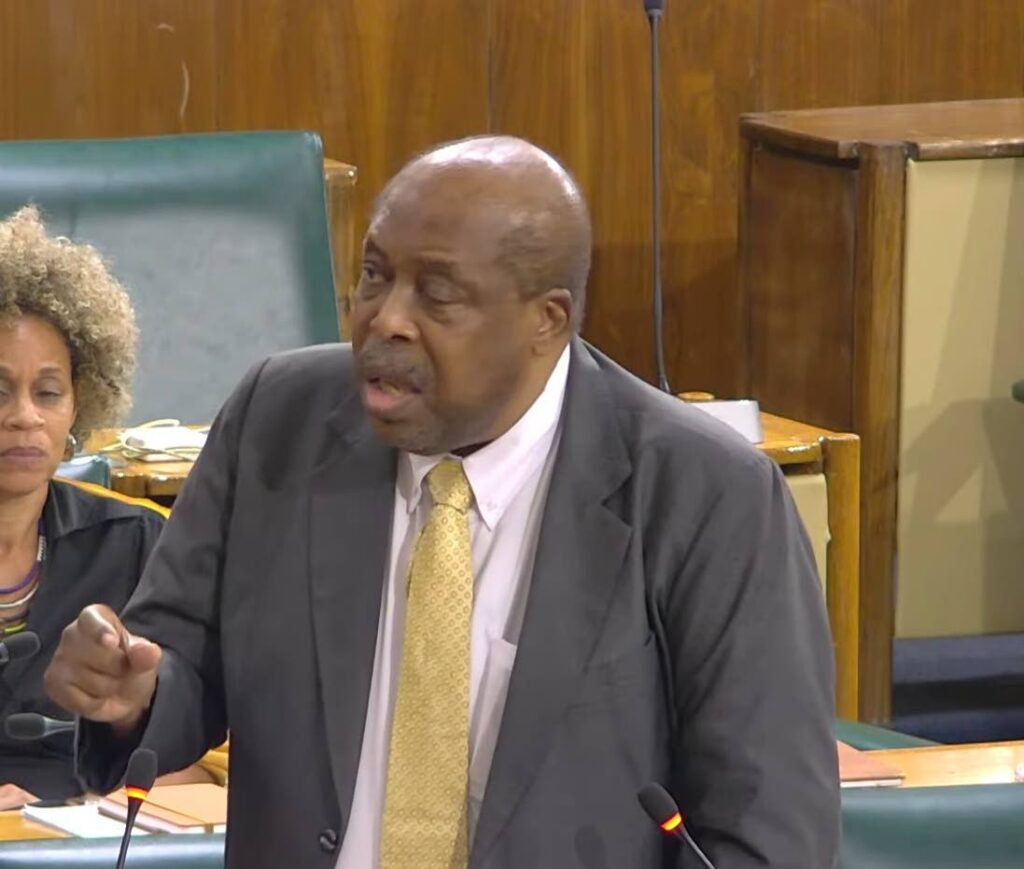
    A heated debate unfolded in Jamaica’s Senate on Friday surrounding the National Housing Trust (Amendment) (Special Provisions) Act, 2026, culminating in the unamended passage of legislation that extends the government’s authority to siphon up to JMD 11.4 billion annually from the state-run National Housing Trust (NHT) into the national Consolidated Fund for another five years. The controversial extension has sparked sharp pushback from opposition lawmakers, who are calling for a significant portion of the withdrawn funds to be directed toward long-overdue housing recovery for communities devastated by Hurricane Melissa.

    Leading the opposition’s proposal is Senator Lambert Brown, who is urging the administration to allocate a minimum of $4 billion each year from the annual drawdown to construct new permanent homes for storm victims across western Jamaica. In his address to the chamber, Brown noted that thousands of families in the parishes of St Elizabeth, Westmoreland, Hanover and St James continue to live in precarious conditions more than eight months after the Category 5 storm swept across the island in October last year, destroying or damaging thousands of residential properties.

    Brown’s call for targeted housing funding was echoed by fellow opposition Senator Floyd Morris, the party’s housing spokesperson. Morris criticized the ongoing withdrawals from the NHT, a public fund established to support affordable homeownership for contributing Jamaicans, calling it a systematic plunder of public resources. He told senators that the government has already pulled a total of $114 billion from the trust since 2016, and the new five-year authorization would open the door for an additional $57 billion in total transfers. Morris proposed an amendment to the bill that would cut the extension from five years to two and require all withdrawn funds to be directed to Hurricane Melissa housing recovery, a change that was not adopted before the final vote.

    The opposition’s proposals were firmly rejected by Kamina Johnson Smith, Leader of Government Business in the Senate, who pushed back on the claim that a lack of funding is the core barrier to solving Jamaica’s ongoing housing crisis, including post-hurricane recovery. Johnson Smith argued that the country’s housing challenges stem not from insufficient capital, but deep-rooted structural bottlenecks, including limited local construction capacity, widespread shortages of licensed contractors, unresolved land titling disputes, and bureaucratic delays in development planning. She emphasized that redirecting a portion of NHT withdrawals would do nothing to break these logjams or speed up the delivery of affordable homes to affected families.

    Defending the five-year extension, Johnson Smith rejected claims that the annual transfers would undermine the NHT’s ability to fulfill its core mandate of delivering housing solutions to Jamaican contributors. She added that the government is committed to a strategic, long-term “build back better” approach to post-hurricane recovery, rather than a scattered, short-term fix that fails to address the root causes of slow progress. Temporary measures like tarpaulins, she noted, are an immediate stopgap rather than a permanent solution to the housing crisis, aligning with the government’s focus on addressing underlying structural barriers instead of just injecting new funding.

  • Jess bats for stipend for JPs

    Jess bats for stipend for JPs

    KINGSTON, Jamaica — In a sharply worded address to Jamaica’s House of Representatives during the annual Sectoral Debate on June 3, opposition justice spokesperson Zuleika Jess has launched a scathing critique of the government’s treatment of the country’s Justices of the Peace (JPs), calling the complete absence of any form of financial or logistical support for the volunteer officials a clear case of institutional exploitation.

    As a first-term Member of Parliament representing St Elizabeth North Eastern, Jess centered her remarks on what she frames as a fundamental inequity embedded in Jamaica’s community justice system. She pointed out that more than 7,000 active JPs across the island are required by law to provide their services strictly on a volunteer basis, and are legally prohibited from accepting any form of payment or gratuity for their work. Despite this volunteer status, Jess emphasized that the Jamaican state depends heavily on JPs to carry out core justice functions, ranging from processing bail applications and conducting out-of-court mediations to conducting regular inspections of police lock-up facilities.

    What makes this arrangement indefensible, Jess argued, is that JPs are forced to cover all operational and work-related costs out of their own personal funds. From basic stationery, printer ink and office supplies to fuel and travel costs for trips to courts and prisons, even when serving as lay magistrates, JPs receive no reimbursement for these routine expenses. “This is not sustainable volunteerism; it is institutional exploitation,” Jess told parliamentary colleagues.

    The opposition spokesperson also called out Justice Minister Delroy Chuck for his consistent rejection of all proposals to introduce even a modest stipend for JPs. Chuck has repeatedly defended the current model by framing the role as purely voluntary, but Jess countered that this stance ignores the growing financial barrier that uncompensated service creates. By requiring JPs to cover all their own costs, the current system effectively restricts the role to wealthy people who can afford to absorb these ongoing expenses as a form of charity. “True justice cannot run on charity alone,” Jess stressed, adding that the current administration is completely disconnected from modern global standards for justice volunteer work.

    Drawing on international examples to back up her call for reform, Jess noted that clear and widely accepted precedent exists for providing financial support to volunteer JPs and magistrates around the world. In the United Kingdom, for instance, volunteer magistrates and JPs receive formal reimbursement for travel costs and a loss-of-earnings allowance to offset income they forfeit to carry out their justice duties. “They do not pay out-of-pocket to serve the Crown. The state actively reimburses them for the costs incurred while delivering justice,” Jess explained.

    She further cited the United Nations Volunteers system, the world’s largest global volunteer network, which does not pay full salaries but provides a structured living allowance to cover volunteers’ basic expenses. This framework ensures that volunteer service is not a luxury reserved only for people with significant personal wealth, she said. Similar models are already in place in Australia and Canada, where JPs receive operational support, training stipends and travel subsidies to prevent them from facing personal financial penalties for carrying out official duties like notarizing documents or processing bail requests.

    Jess emphasized that the opposition is not calling for full, generous salaries for JPs. Instead, she said the demand is for an enforceable, transparent expense stipend structured to align with international best practices. “It is time to treat Jamaica’s JPs with the global standard of dignity they deserve,” Jess said. She closed by questioning the government’s inconsistent approach: “We pay notaries public to notarise documents and judges to hear cases, why shouldn’t we offer our JPs a stipend to cover out of pocket expenses?”

  • Bridging the bureaucracy

    Bridging the bureaucracy

    TRELAWNY, Jamaica — The long-awaited $230-million Troy Bridge officially opened to the public Friday, with Jamaican Prime Minister Dr. Andrew Holness using the milestone to call for sweeping public sector reform, arguing the five-year construction timeline drove unnecessary costs and exposed deep flaws in the country’s bureaucratic approval processes.

    The new crossing replaces a 152-year-old bridge that was irreparably damaged when Tropical Storm Grace swept across Jamaica in 2021. For years after the original structure collapsed, residents of Troy and neighboring communities faced daily disruptions: students were forced to take longer, more costly routes to reach their classrooms, while local agricultural producers saw their transportation expenses surge when moving crops to regional markets.

    In his opening address, Holness drew a clear, hard lesson from the half-decade-long project: the bridge would have cost taxpayers at least 30 percent less if construction had been completed just four years earlier. He told the gathered audience that overly rigid, process-obsessed bureaucracy had needlessly delayed what was a widely supported priority, noting that calls for a replacement bridge crossed political lines — with both Marisa Dalrymple Philibert, the then-Speaker of the House and MP for Trelawny Southern, and Mikael Phillips, MP for Manchester North Western, uniting behind the project.

    Holness emphasized that while transparency and accountability remain non-negotiable pillars of good governance, the Troy Bridge project demonstrates that following procedural checkboxes is not enough. “Good governance must also be in delivering outcomes,” he said. “A modern State must be capable of asking the necessary questions without endlessly delaying the necessary answer. We’re not going to allow critical infrastructure to be tied up in procedures and processes that satisfy procedures and processes and don’t deliver. Let Troy be a lesson to Jamaica.”

    Addressing the repeated public questions about why the project took so long to complete, Holness acknowledged the concerns were entirely legitimate. He argued that far too often, Jamaican public institutions prioritize process over the end results communities rely on, writing off the human cost of delayed action. “The people of Troy did not need an endless debate, they just simply needed a bridge,” he said. “Empathy requires us to reconsider not only the risk of action, but the cost of inaction.”

    For local residents, Holness noted, the bridge’s value only became universally clear after it was lost. “Like much of our infrastructure, people scarcely note it when it was working, but when Tropical Storm Grace destroyed the bridge in 2021 everyone suddenly understood its value,” he said, framing the new crossing as far more than concrete and steel — it is a critical connection that will unlock economic opportunity for the region for generations to come. Holness added that he expects the new structure to remain a vital community link for at least 150 years, matching the lifespan of its predecessor.

    Beyond the infrastructure itself, Holness positioned the Troy Bridge as a turning point for Jamaica’s approach to public investment. His administration has already launched the National Agency for Reconstruction and Resilience (NaRRA), a new body designed to cut through unnecessary red tape for critical projects while retaining strong safeguards for accountability, transparency, and procedural integrity.

    “NaRRA will seek to structure projects, order them, cut unnecessary bureaucratic red tape, but at the same time gives a high level of accountability, transparency, and ensures the integrity of the processes,” Holness explained. “NaRRA will not only help us to recover from the hurricane and build resilience, but more importantly, NaRRA will show us that there is a better way to build Jamaica.”

    The prime minister pushed back against the framing that Jamaica must choose between accountability and efficiency, arguing that both goals can coexist with smarter regulatory design. “The purpose of a process is to produce a result. When the process itself becomes an obstacle to result, then responsible leaders have an obligation to improve the process,” he said. “The objective is not to choose between accountability and efficiency. The objective is to achieve both. The objective is not to weaken safeguards. The objective is to make our safeguards smarter.”

    Holness confirmed that the government remains fully committed to modernizing the country’s public investment and approval systems, cutting redundant layers of review, shortening approval timelines, and creating dedicated accelerated pathways for all critical infrastructure projects. “Because efficiency is not the enemy of accountability,” he stressed, closing by framing the new bridge as the first marker of a more effective, outcome-focused government for Jamaica.

  • Jamaica advancing plans for use of nuclear energy, says Wheatley

    Jamaica advancing plans for use of nuclear energy, says Wheatley

    Against a backdrop of rising global energy instability and costly domestic grid disruptions, Jamaica is taking deliberate, structured steps to position itself among the first small developing nations to integrate nuclear power into its national energy portfolio. Science, Technology and Special Projects Minister Dr. Andrew Wheatley outlined the government’s progressive plan during a recent address to the House of Representatives’ Sectoral Debate, framing the move as a critical response to two pressing threats to Jamaica’s energy security: the widespread grid damage caused by Hurricane Melissa in October 2023, and the sharp spike in global oil prices driven by the ongoing Middle East conflict.

    Dr. Wheatley emphasized that the Caribbean island’s overreliance on imported fossil fuels has created deep structural vulnerabilities that recent events have laid bare. “Hurricane Melissa did not simply damage our electricity infrastructure — it exposed how fragile our entire energy system is when it depends so heavily on one source of imported energy,” he told lawmakers. “Every supply disruption, every global price hike, every severe hurricane season leaves Jamaican consumers and businesses paying the price. Our energy future demands that we look beyond conventional fossil fuel sources.”

    Against this context, the minister noted that Jamaica is breaking with historical precedent among small island developing states, which have long put off exploring nuclear energy as a viable option. Crucially, Dr. Wheatley clarified that the government is not moving immediately to construct a full-scale nuclear power plant. Instead, the country is focusing on the foundational, pre-development work that responsible policy requires: building national technical expertise, strengthening institutional capacity, and forging high-level international partnerships to inform a future evidence-based decision.

    “We are moving forward deliberately, transparently, and with full scientific rigor, every step of the way,” he said.

    The first major milestone in this process came in October 2024, when the Jamaican government signed a Memorandum of Understanding (MOU) with two of Canada’s leading federal nuclear research and technology institutions: Canadian Nuclear Laboratories and Atomic Energy of Canada Limited. The collaboration covers a range of areas including Small Modular Reactor (SMR) technology development, nuclear medicine, and industrial and agricultural applications of nuclear science. Canadian Nuclear Laboratories operates the Chalk River facility, one of the world’s most advanced nuclear research centers, and both organizations are key players in Canada’s own domestic SMR development program. Dr. Wheatley noted that the partnership gives Jamaica formal access to world-leading nuclear expertise at the highest global level.

    Jamaica already has an established domestic foundation for this work through the International Centre for Environmental and Nuclear Sciences (ICENS), based at the University of the West Indies. Operating the institution’s SLOWPOKE research reactor, ICENS has decades of experience fulfilling reporting requirements for the International Atomic Energy Agency (IAEA), delivering national environmental monitoring and radiation protection services, and serving as Jamaica’s official liaison to the global nuclear community.

    To coordinate the new national assessment effort, the government has reactivated the Nuclear Energy Working Committee under the Ministry of Science and Technology, with a clear mandate to conduct a systematic feasibility study for nuclear power in Jamaica and advance all required foundational actions. Dr. Wheatley stressed that these early steps are focused on institutional, legislative, and diplomatic capacity building, and do not require heavy upfront capital investment.

    Key initial actions include launching a national public consultation and education program, which the minister says is a non-negotiable step for responsible governance: “No responsible government moves forward with a plan for nuclear energy without first engaging its people honestly and openly.” The government also intends to begin negotiations for a formal Nuclear Cooperation Agreement with Canada, which is required to unlock the full scope of technology transfer outlined in the existing MOU. Jamaica will also formally notify the IAEA of its intent to explore the deployment of small nuclear reactors, a step that opens access to no-cost technical assistance from the global nuclear watchdog. Finally, the government will begin drafting a national nuclear regulatory framework, to ensure an independent oversight architecture is in place before any commercial development decisions are made.

    Dr. Wheatley told parliament that preliminary assessments of Jamaica’s energy needs have already converged on two key conclusions: SMR technology is the most appropriate fit for Jamaica’s smaller national grid, and a Build-Own-Operate-Transfer commercial model paired with a Power Purchase Agreement is the optimal structure for development. This framework, he explained, keeps large upfront infrastructure costs off the government’s national balance sheet while still delivering the long-term benefits of clean, reliable baseload power for the country.

    “This is not some distant fantasy,” Dr. Wheatley concluded. “It is the clear energy pathway that serious small nations across the world are already pursuing. With our existing research infrastructure at ICENS, our new partnership with Canada, and a reactivated working committee to drive progress forward, Jamaica is positioning itself to join their ranks.”

  • Difficulty finding retired high court judge delays work of Data Protection Oversight Committee —Wheatley

    Difficulty finding retired high court judge delays work of Data Protection Oversight Committee —Wheatley

    KINGSTON, Jamaica — Jamaica’s ambition to build a robust national data protection regime has hit multiple unforeseen roadblocks, with a shortage of willing qualified retired high court judges emerging as a key bottleneck for the critical Data Protection Oversight Committee, Science, Technology and Special Projects Minister Dr Andrew Wheatley has confirmed. The minister shared the update during his June 3 address to the House of Representatives’ Sectoral Debate, where he also detailed long-running delays in activating the full mandate of the Office of Information Commissioner (OIC) — the country’s national data regulator established under the 2020 Data Protection Act.

    On the Oversight Committee front, Wheatley told legislators that all other member selections are complete, with final approvals nearing conclusion. But he pulled no punches on the root cause of the holdup: a legislative mandate requiring the panel to include a retired High Court Justice, a requirement designed with good intentions that has created an unexpected logjam. “Finding a willing and qualified retired Justice proved far more difficult than the law assumes, and I want to signal to this House that this warrants legislative review,” Wheatley told the chamber. “The current formulation places the timeliness of a critical governance appointment at the mercy of a very small pool of eligible candidates.”

    Despite the implementation delays, the minister emphasized that the 2020 Data Protection Act remains one of the most transformative pieces of legislation passed by the current administration. The law lays out the foundational framework for how personal data is collected, used and safeguarded across Jamaican institutions, and established the OIC as the independent body to oversee industry compliance. “It is a law we should be proud of,” Wheatley noted.

    Even so, the minister was direct with parliament about a persistent gap: five years after the legislation was passed, its core enforcement provisions remain unactivated. These are the very rules designed to hold data controllers accountable and protect the personal information of every Jamaican whose data is collected and processed by public and private entities.

    Wheatley explained that the delay stems from deep structural shortcomings in the OIC’s original interim setup, which was never resourced to match the full scope of the regulator’s mandate. Key functional roles were left unaccounted for, overall staffing levels sit far below required thresholds, and core leadership positions lack the specialized technical training needed to carry out effective compliance oversight.

    While the OIC has made incremental progress with its limited resources, building out foundational frameworks and expanding public education campaigns around data protection rights, Wheatley stressed that outreach alone cannot replace formal regulation. “Awareness without enforcement is not regulation. It is education,” he said.

    To address these gaps, the government has now approved the full budget the OIC requested for the current financial year, unlocking the resources the regulator needs to begin long-overdue internal restructuring. A dedicated OIC Data Protection Working Group has also been formally established, bringing together cross-sector experts in technology, law and operational management to guide the restructuring process and speed up preparations for full enforcement. Restructuring work is already ongoing, the minister confirmed.

    With budget secured, the working group active, and Oversight Committee appointments in their final stage, the OIC is now on a clear trajectory to become the fully functional, technically proficient enforcement-ready national regulator it was originally envisioned to be, Wheatley said. Once the body is fully operational, the Data Protection Act’s enforcement provisions will be activated, requiring all data controllers to register, meet compliance standards, and face consequences for failing to protect user data.

    “Jamaicans who trust organisations with their personal data have a right to expect that trust to be protected — not just in law, but in practice,” Wheatley added.

  • Dominican Republic’s electronic passport, “the best new travel document in Latin America”

    Dominican Republic’s electronic passport, “the best new travel document in Latin America”

    The Dominican Republic’s cutting-edge electronic passport has earned top regional recognition, taking home the High Security Printing Latin America Award in the prestigious Best New ID/Travel Document Series category. This honor is specifically designed to celebrate the most innovative and security-forward identity and travel document projects across the Latin American region.

    The award was officially conferred during the annual High Security Printing Latin America conference, the region’s premier gathering focused exclusively on security technologies for government-issued documents. The event brings together leading government authorities, global intergovernmental organizations, and top industry experts from every corner of Latin America to exchange insights and advance industry standards.

    An independent panel of judges evaluated competing entries across multiple critical metrics, including the overall design concept of the new travel document, the integration of next-generation identity protection technologies, the robustness of both physical and digital security features, and the document’s ability to meet the strictest global benchmarks for authentication and fraud mitigation.

    The award was accepted on behalf of the project by two key stakeholders: Lorenzo Ramírez, Director General of Passports for the Dominican Republic, and Daniel Ureña, President of Midas, the local representative of the consortium that led the design and development of the advanced security solutions integrated into the new electronic passport.

    In remarks following the award presentation, Ramírez confirmed that the Dominican Republic now issues travel documents that comply with the highest international security standards, delivering enhanced reliability and protection for both ordinary citizens and border control officials tasked with verifying document authenticity.

    Ramírez emphasized that the award represents independent international validation of the modernization agenda championed by President Luis Abinader, which targets upgrades to core government-issued identity documents including passports, national identity cards, and driver’s licenses. He noted that the recognition proves the Caribbean nation has successfully implemented world-class security solutions that strengthen national border security and safeguard the personal identity of all Dominican citizens.

    Beyond the honor itself, the award solidifies the Dominican Republic’s standing as a trailblazer in identity protection and document innovation across Latin America, boosting public trust in the country’s travel credentials domestically and reinforcing international confidence in the document’s security protocols.