分类: politics

  • Key Labor Issues Dominate Gov’t–Union Meeting

    Key Labor Issues Dominate Gov’t–Union Meeting

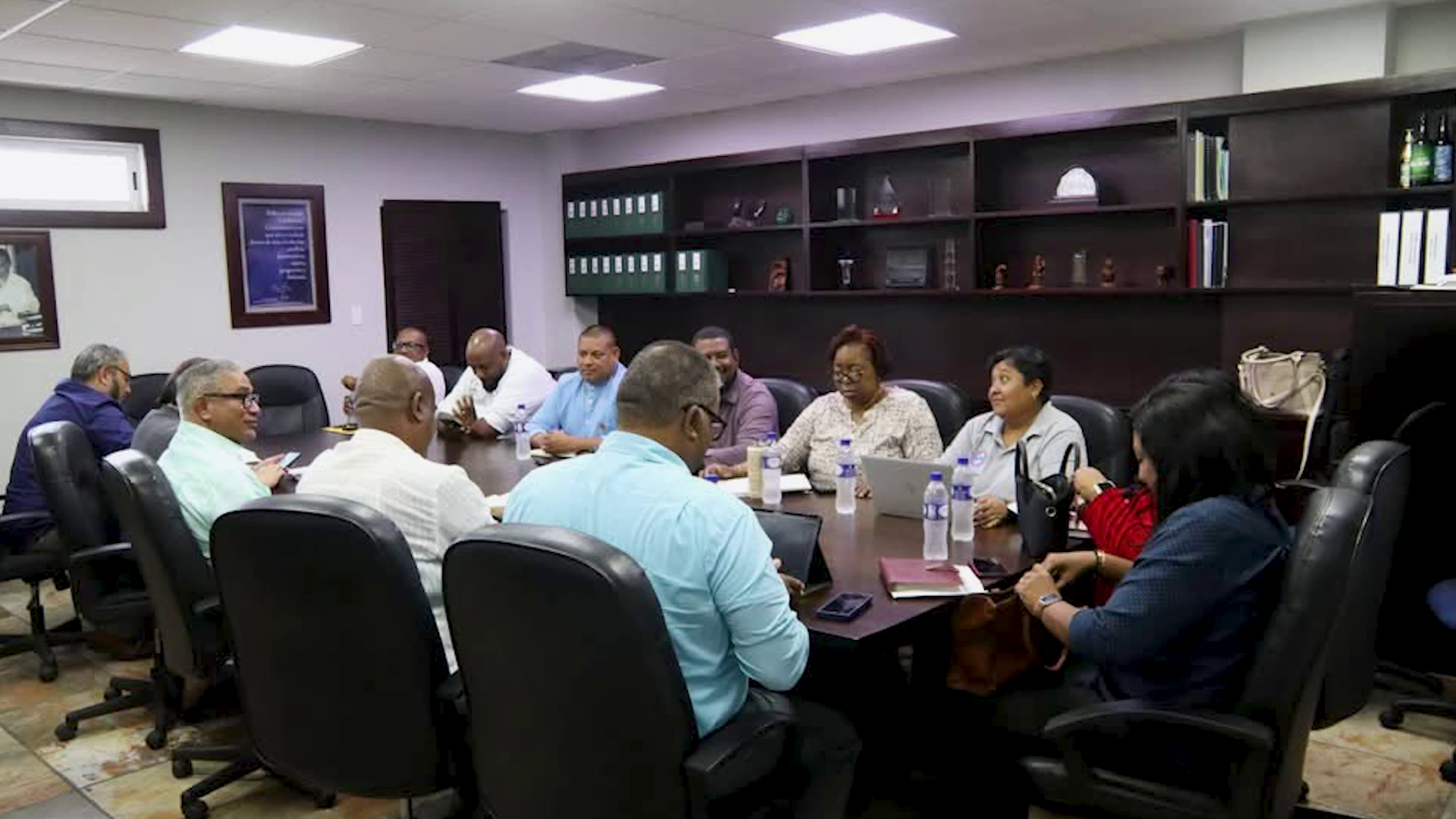
    On a Wednesday session in 2026, Belizean Prime Minister John Briceño led a high-stakes meeting between the Government’s Union Consultation Team and senior delegates from the National Trade Union Congress of Belize (NTUCB), continuing ongoing dialogue on priority labor reforms and key national policy matters.

    Joining Prime Minister Briceño on the government delegation were Deputy Prime Minister Cordel Hyde, along with cabinet ministers Kareem Musa and Henry Charles Usher. The meeting structure was designed to center union voices, giving representatives dedicated space to outline pressing concerns impacting workers across their respective membership bases.

    Both government and union leaders engaged in constructive, solution-focused discussion, working collaboratively to map out practical strategies to address the raised issues and identify clear pathways to eventual resolution.

    When contacted for comment by reporters, NTUCB President Ella Waight stated that the union’s executive body would first convene to brief the organization’s general council before releasing any official public statement on the meeting’s outcomes.

    Confirmed topics on the meeting’s agenda included two widely debated labor policy initiatives: the long-delayed Occupational Health and Safety Bill and a widely anticipated overhaul of the national pension system. Both measures have been flagged as urgent priorities for Belizean labor groups, which have pushed for faster legislative progress to improve working conditions and retirement security for workers across the country.

  • House Approves $47 Million Loan to Build Preschools

    House Approves $47 Million Loan to Build Preschools

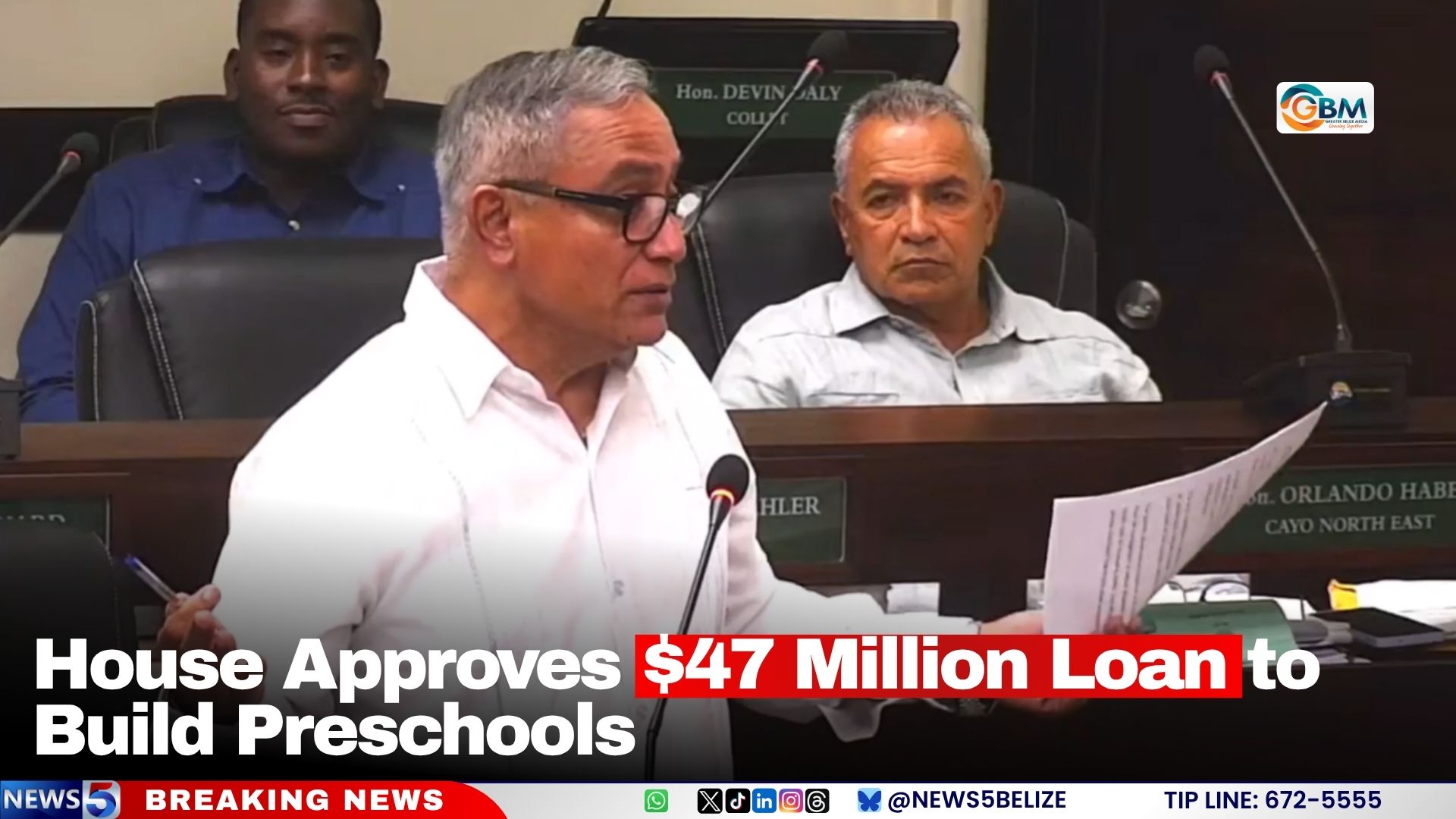
    In a landmark vote held June 4, 2026, Belize’s House of Representatives has given final approval to a BZ$47 million loan agreement sourced from the World Bank’s International Development Association, backing the Briceño administration’s flagship initiative to expand access to early childhood education and create new work pathways for women out of the labor force. Alongside the low-interest loan, the project will also receive an additional US$1.28 million in grant financing from the global development body.

    Prime Minister John Briceño framed the initiative as a forward-thinking dual investment that addresses two pressing national priorities at once: strengthening the country’s education foundation for the next generation and expanding economic inclusion for women. Under the plan, the bulk of the funding will go toward constructing dozens of new preschool classrooms across the country and upgrading under-resourced existing early childhood education facilities to meet modern quality standards. Briceño emphasized that expanding affordable, accessible preschool care will remove a major barrier that keeps many women out of paid work, as they are often forced to stay home to care for young children.

    While the opposition parliamentary bloc ultimately voted to support the legislation, its leader Tracy Panton raised pointed questions about the government’s lack of concrete detail in the approved proposal. Panton argued that the motion approved by lawmakers provides no specific breakdown of which districts and underserved communities are targeted for new classroom construction, leaving the project’s allocation plan unclear to both legislators and the public.

    “The motion tells us that the project will operate in targeted areas, but which areas, which district, which communities have been identified as the beneficiaries of new preschool classroom construction? The motion is silent on this,” Panton told the House during debate. She called on the Briceño administration to prioritize communities with the most urgent unmet need for early childhood infrastructure, specifically naming Punta Negra as a community she hopes will be prioritized for inclusion in the project rollout.

  • Trinidad and Tobago Wins Seat on UN Security Council in Historic Landslide

    Trinidad and Tobago Wins Seat on UN Security Council in Historic Landslide

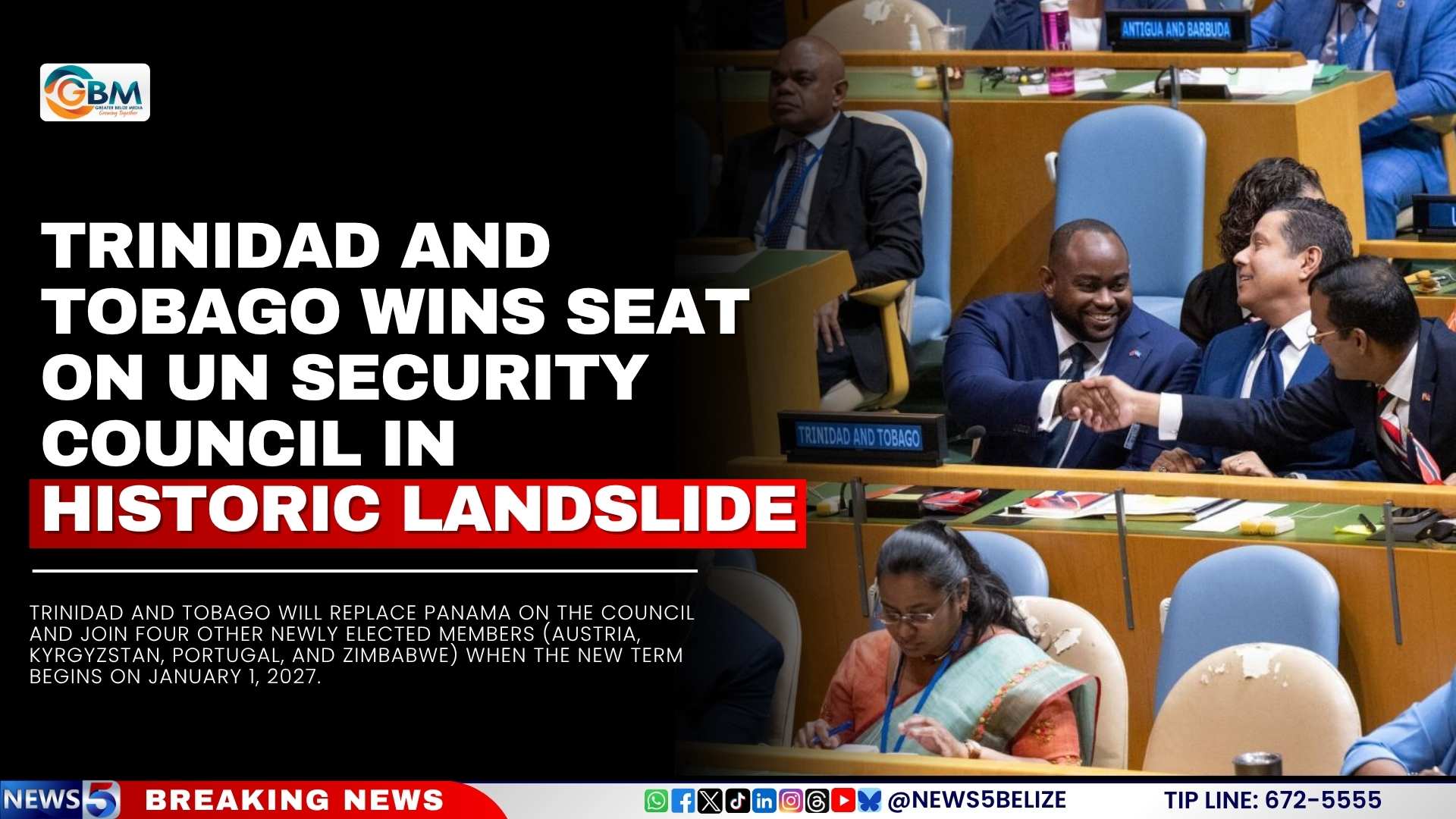
    On June 4, 2026, Trinidad and Tobago made global diplomatic history by winning a non-permanent seat on the United Nations Security Council for the 2027–2028 term in a historic landslide victory.

    Out of 191 valid votes cast by UN member states, the Caribbean nation secured 181 votes – a resounding total that far surpassed the required two-thirds majority threshold of roughly 129 votes, and earned the backing of all five permanent Security Council members: China, France, Russia, the United Kingdom, and the United States. The outcome was decided in a single round of voting, marking the most successful electoral result for any candidate in the day’s contests.

    This victory stands as one of the most consequential diplomatic milestones in Trinidad and Tobago’s modern history, granting the small island nation a formal voice at the world’s most influential multilateral security body. The country’s successful bid was personally led by Prime Minister Kamla Persad-Bissessar, who officially launched the campaign during an address to the UN General Assembly in New York back in September 2025. Over the subsequent months, Persad-Bissessar maintained direct, high-level engagement with leaders from across the globe to build support for the candidacy.

    Trinidad and Tobago’s campaign centered on the overarching theme “Building Consensus for the Realization of Sustainable Peace and Security”, anchored around three core strategic priorities: cracking down on the illegal trafficking of small arms and light weapons, advancing the global women, peace and security agenda alongside protection efforts for children in conflict zones, and addressing the emerging security challenges and opportunities linked to artificial intelligence in the global context.

    When the new Security Council term begins on January 1, 2027, Trinidad and Tobago will take over the seat currently held by Panama, joining four other newly elected members – Austria, Kyrgyzstan, Portugal, and Zimbabwe – in the 15-member body.

    To contextualize the significance of the role: The UN Security Council holds unique authority within the UN system, tasked explicitly with upholding international peace and security across the globe. It is the only UN body whose formal policy decisions carry legally binding weight for all 193 UN member states, with the power to implement targeted international sanctions and formally authorize collective military action. While the five founding permanent members retain veto power over major decisions, the body’s 10 non-permanent seats are filled through staggered rotating elections held by the UN General Assembly.

    Regional leaders across the Caribbean have celebrated the outcome as a landmark win for the entire bloc. The Caribbean Community (CARICOM) Heads of Government noted that the victory is “a proud moment not only for Trinidad and Tobago, but for the Caribbean Community as a whole.” The regional integration bloc emphasized that Trinidad and Tobago will bring the long-overlooked unique perspectives of Small Island and Low-lying Coastal Developing States to Security Council deliberations, elevating regional priorities that are critical to Caribbean peace and stability that have often been sidelined in global discussions.

    For Trinidad and Tobago, the two-year term is expected to dramatically expand the country’s global influence, amplifying its voice in high-stakes negotiations covering global peace, collective security, sustainable development, and cross-border international cooperation. It will also open unprecedented new pathways to build strategic partnerships with major global powers and regional blocs across the international community.

  • Virgin Islands launches CXC customer service programme to strengthen public service delivery

    Virgin Islands launches CXC customer service programme to strengthen public service delivery

    On June 3, a landmark collaboration between the Government of the Virgin Islands and the Caribbean Examinations Council (CXC®) reached a major milestone, with the official launch of the regionally adaptable *Excellence in Customer Service CXC®* programme, an initiative crafted to uplift service standards across the territory’s public sector. The launch ceremony, hosted at the Virgin Islands Public Service Learning Institute (VIPSLI), drew a roster of key stakeholders including Deputy Governor David D. Archer Jr., senior public sector leaders, and CXC representatives, according to an official press statement from the partners.

    Two years in the making, the programme traces its origins back to a 2023 concept developed by CXC’s Research and Educational Development Division. What began as an idea to address public service skill gaps evolved into a full partnership bringing together CXC’s Professional Learning Institute, CXC’s Business Development Office, and VIPSLI, with specialized training delivery support from Customer 1st Caribbean Ltd., a Trinidad and Tobago-based industry leader in professional skills development. The initiative has been framed as a forward-thinking strategic investment in regional human capital, with a scalable framework that can be adopted by public sector entities across the entire Caribbean.

    Unlike ad-hoc training workshops, the *Excellence in Customer Service CXC®* programme uses a structured, multi-tiered curriculum tailored directly to the unique operational realities of the Virgin Islands Public Service. Built around real-world case studies of service challenges encountered by local public officers, the inaugural course covered core competencies ranging from professional ethics, core values, and interpersonal communication to accountability, operational efficiency, and proactive service recovery for customer complaints. Its scope spans all levels of the public service, targeting everyone from entry-level frontline staff to C-suite senior managers, with the overarching goal of systemic transformation of how government services are delivered to residents.

    Early signs of the programme’s impact have already emerged, even before the official launch. VIPSLI confirmed that participants began rolling out process improvements to their respective departments mid-course, revising outdated operational procedures and piloting new customer-centric approaches to streamline service delivery. During the launch event, 14 founding participants who completed the pilot course received formal certificates recognizing their achievement, marking the first cohort of certified customer service excellence trainers for the territory’s public service.

    In remarks at the certificate presentation and launch, Dr. Eduardo Ali, Pro-Registrar and Deputy Chief Executive Officer of CXC®, emphasized that the initiative extends far beyond basic skills training. “This programme was designed not only to put in place new systems and processes that drive greater efficiency and excellence in public service, but also to empower individual public officers to grow as better citizens and agents of meaningful change within their institutions,” Ali explained. “This landmark collaboration demonstrates that CXC® stands ready to provide robust technical expertise to regional governments and organizations working to transform their education and public service systems.”

    Dr. Connie E. George, Director of VIPSLI, shared that the institute partnered with CXC specifically to leverage the organization’s decades-long reputation as the Caribbean’s leading credentialing authority. “We identified a critical gap for a formal, accredited professional development programme that would help the government reach its goal of building a world-class public service,” George explained. “We turned to CXC® because when they back a programme, it carries the weight of regional recognition, academic rigor, and institutional integrity that we could not develop independently locally.”

    Looking ahead, the partners have laid out plans to expand the programme across every department of the Virgin Islands public service. The 14 inaugural graduates will undergo additional train-the-trainer instruction to enable them to lead future cohorts of public officers, creating a self-sustaining model for continuous upskilling. “Our goal is to make excellence in customer service more than just a one-off initiative,” George noted. “It should become a standard, expected part of every public officer’s professional development journey across the Virgin Islands.”

  • DNA wijst vorderingen pg tegen Nurmohamed, Hoefdraad en Somohardjo toe

    DNA wijst vorderingen pg tegen Nurmohamed, Hoefdraad en Somohardjo toe

    In a landmark procedural vote completed June 4, Suriname’s Nationale Assemblee (DNA), the country’s national parliament, has granted approval to three prosecution motions brought by the nation’s Prosecutor General against three former cabinet ministers, officially greenlighting the public prosecutor’s office to move forward with full criminal proceedings against the ex-officials.

    The final public vote followed a tense, contentious closed-door preparatory session that stretched across multiple hours. Disputes erupted over the absence of a final investigative report from the special parliamentary committee tasked with reviewing the prosecution motions, forcing a lengthy adjournment before lawmakers agreed to issue an interim report and proceed with the public review process as scheduled.

    All deliberations and votes were conducted under the country’s 2021 Law on the Indictment of Political Office Holders (WIPA), which requires parliament to assess whether pursuing criminal charges against sitting or former political officials aligns with the broader public interest from a political and governance perspective. Crucially, lawmakers emphasized repeatedly throughout the session that the vote did not represent a finding of guilt or innocence, a determination reserved exclusively for the independent judiciary.

    Lawmakers took up the motion against Riad Nurmohamed, former Minister of Public Works, first. After debate covering procedural compliance and allegations of potential political bias behind the prosecution, the motion passed with 33 votes in favor, just 2 votes against, and a small number of abstentions from undecided lawmakers.

    Next, the body considered the prosecution motion against Gillmore Hoefdraad, the former Minister of Finance. Discussion centered on lingering questions from prior prosecution attempts against Hoefdraad and coordination between this domestic case and ongoing international legal proceedings connected to the former minister. In the final vote, 29 lawmakers supported advancing the prosecution, while 5 voted against.

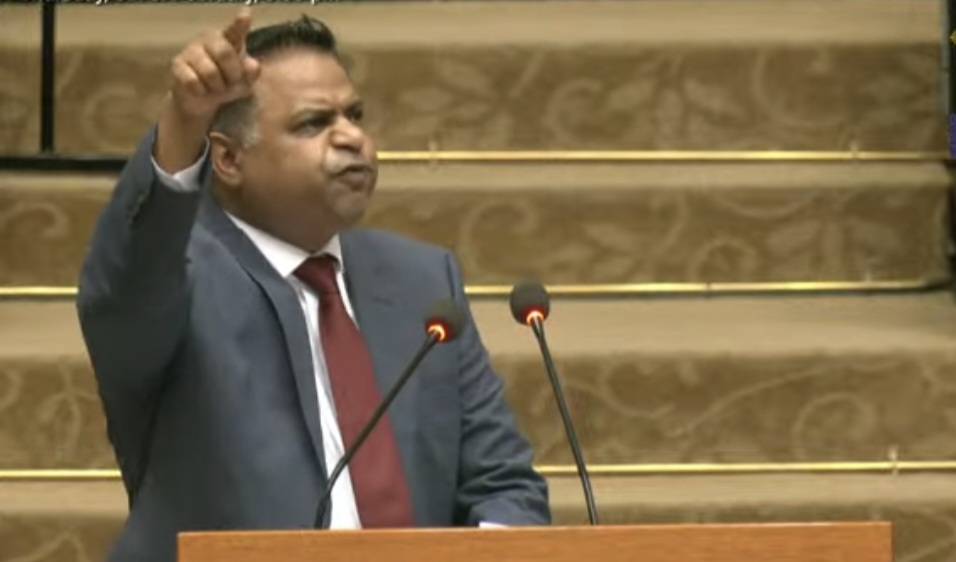
    The final motion to be debated was that against Bronto Somohardjo, former Minister of Home Affairs. In an unexpected appearance before the plenary session, Somohardjo told lawmakers he did not seek parliamentary immunity or protection from prosecution, and openly called on assembled members to vote in favor of allowing the case to move forward. The motion ultimately passed with 32 votes in favor, zero votes against, and a small number of abstentions.

    Stark divides in opinion emerged during deliberations, split largely along government coalition and opposition lines. Ruling coalition factions including VHP, NPS, ABOP, BEP and A20 argued that the judicial process must be allowed to run its course, noting that the accused former ministers retain the right to prove their innocence before an independent court. Meanwhile, opposition lawmakers raised sustained questions about the justifications for the prosecution motions, adherence to proper legal procedure, and the risk that the proceedings amount to politically motivated targeting of former officials.

    With the approval of all three motions, DNA has met its statutory deadline to rule on the Prosecutor General’s requests, which was set to expire on June 9. The cases will now advance through the formal court process, with next steps falling to the Office of the Public Prosecutor to schedule hearings and move forward with litigation.

  • APNU’s parliamentary question on powership negotiations triggers govt’s response

    APNU’s parliamentary question on powership negotiations triggers govt’s response

    Almost one full week of public silence on the future of Guyana’s powership electricity supply came to an end on Thursday 4 June 2026, after the country’s parliamentary opposition tabled an urgent oral question without notice to press for answers on the critical energy deal.

    Public Utilities and Aviation Minister Deodat Indar broke the informational drought in a public statement posted to Facebook, addressing growing public and political commentary around the renewal of the contract for two Turkish-owned Karpowerships that currently supply a large share of the country’s electricity.

    Indar emphasized that negotiations are actively ongoing, with the government focused exclusively on securing the lowest possible commercial rate for the continued supply of power, framing the work as aligned with the best interests of all Guyanese citizens. “I would like to assure the public that the Government of Guyana is working in the best interests of the people of Guyana to get the best possible commercial rate for the renewal of the contract,” Indar said in the statement.

    Prior to Thursday’s public update, all senior government officials—including President Irfaan Ali, Vice President Bharrat Jagdeo, Finance Minister Ashni Singh, and Indar himself—had declined repeated requests for comment on the status of the talks. This silence came even after Karpowership issued a formal warning that power supplies could be interrupted after the end of a grace period on 1 June, when the previous contract expired.

    While Indar moved to reassure Guyanese that the national grid has not experienced any power disruptions to date, he confirmed that no additional details will be released publicly until negotiations conclude between state-owned utility Guyana Power and Light Inc., UCC JV, and Karpowership. “We continue to be in the negotiation process, while the powership maintains an uninterrupted supply of electricity to the national grid. The public will be apprised at the appropriate time on the completion of the contractual negotiations,” he added.

    The government’s statement came just two hours after A Partnership for National Unity (APNU), the country’s main parliamentary opposition, submitted its urgent question to National Assembly Speaker Manzoor Nadir. APNU parliamentarian Ganesh Mahipaul, who filed the question around 11:15 AM Thursday, is seeking answers to a series of pressing public concerns: whether Karpowership has demanded additional payments outside the terms of the original contract, the total amount of any such demands and their legal or commercial basis, and whether the government has conducted a formal assessment of grid risks if one or both powerships suspend operations before the long-delayed Wales Gas-to-Energy Project comes online. Mahipaul also pushed for clarity on contingency plans to prevent a return to widespread blackouts and rolling load shedding that would harm households and businesses across the country.

    Currently, the two Karpowerships are anchored off Guyana’s coast: one at Meadowbank in Greater Georgetown on the Demerara River, and the second at Everton on the Berbice River. The status of their contract has emerged as a critical flashpoint amid ongoing delays to the 300 megawatt Wales Gas-to-Energy Project, which has already missed multiple publicly announced completion targets. Without power supplied by the two powerships, Guyana Power and Light does not have enough domestic generation capacity to meet the country’s peak demand of just over 200 megawatts, leaving the national grid heavily dependent on the Turkish firm’s output.

  • US Sanctions Bite Hard: Cuba Loses Visa and Mastercard Access

    US Sanctions Bite Hard: Cuba Loses Visa and Mastercard Access

    On Wednesday, Cuba’s Central Bank made a formal announcement confirming that the island nation will lose all access to Visa and Mastercard payment processing starting June 6, 2026. This disruption comes as a direct consequence of expanded United States sanctions that pressured a key foreign financial partner to cut all operational ties with Cuban financial institutions.

    The policy trigger for this latest economic restriction traces back to an executive order signed by former US President Donald Trump on May 1 that dramatically widened the scope of US economic sanctions on commercial activity with Cuba. The executive order specifically targeted Fincimex, the financial division of GAESA – a Cuban military-administered conglomerate that dominates the country’s most lucrative economic sectors, including international tourism, cross-border remittance processing, and domestic logistics.

    The Trump administration has long claimed that GAESA redirects its corporate profits to fund the Cuban military and the country’s ruling political elite, an allegation that Cuban authorities have repeatedly and categorically denied.

    In its official statement, the Central Bank confirmed that the suspension will cut off all revenue streams for Cuban businesses that come from sales of goods and services processed through the widely recognized global card networks Visa and Mastercard. This development marks the most recent in a steady series of economic setbacks for the island nation. Over the past several weeks, a growing number of major foreign stakeholders – including multinational hotel chains, international airlines, and global shipping companies – have wound down their operations in Cuba to avoid penalties for violating US sanctions regimes.

    For everyday Cuban citizens and international tourists currently on the island, the elimination of Visa and Mastercard access leaves only a limited set of payment alternatives: physical cash, locally issued prepaid domestic cards, and cards tied to two non-Western international networks – Russia’s Mir and China’s UnionPay.

  • Behandeling in DNA over vordering pg tegen 3 voormalige ministers

    Behandeling in DNA over vordering pg tegen 3 voormalige ministers

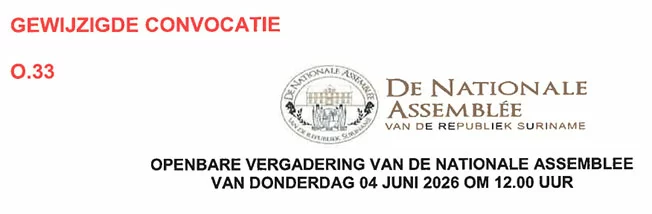
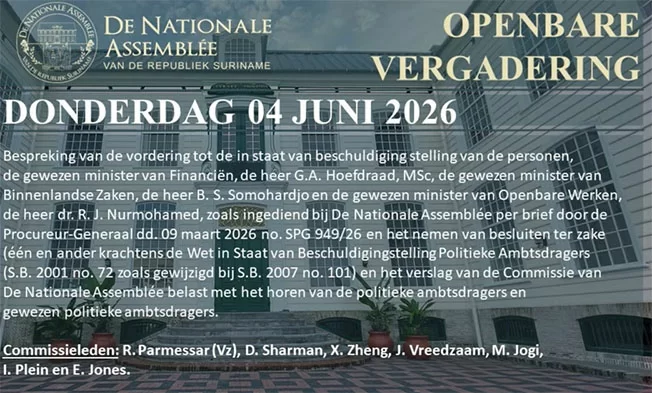
    On June 4, Suriname’s National Assembly (DNA) convened a public plenary session to process three formal requests from the country’s Prosecutor General (PG) seeking approval to launch criminal proceedings against three former senior cabinet ministers. The high-stakes gathering comes as the body faces a tight legal deadline to rule on the requests, with a 90-day window for a decision set to expire on June 9.

    After a lengthy round of debate and an extended recess, assembly members reached a key procedural agreement: the three requests will each be considered individually in open session. This marked a resolution of an earlier deadlock over whether the committee review of the requests, which has now been completed, would be held behind closed doors. Following the resumption of the suspended procedural meeting, lawmakers confirmed that all three motions would be debated and voted on publicly.

    The first request up for consideration targets Riad Nurmohamed, former Minister of Public Works in the outgoing Santokhi administration. Next, the assembly will take up the request against Gillmore Hoefdraad, who served as Minister of Finance during the Bouterse administration. The final motion on the agenda concerns Bronto Somohardjo, another former Santokhi-era minister who held the portfolio of Internal Affairs; Somohardjo is already the subject of an investigation into suspected unlawful activities committed during his time in office.

    All three requests follow the formal legal process laid out in Suriname’s Act on the Prosecution of Political Office Holders. Under the country’s law, the National Assembly must grant explicit approval to the Prosecutor General’s request before any criminal prosecution can proceed against sitting or former cabinet members. The PG submitted the requests to the legislature months earlier, and the 90-day statutory deadline for the assembly’s decision mandates that a vote be held before the end of this week.

    The proceeding has drawn intense public and political attention, as it involves high-profile former officials from two consecutive opposing administrations in Suriname. The outcome of the assembly’s votes will directly shape the future legal path for the three ex-ministers: any approval will clear the way for formal criminal investigation and prosecution, while rejection would bring the process to a halt. Updates on the progression of the public session are being tracked in real time via an associated live blog.

  • DNA vergadert openbaar over vorderingen pg tegen drie voormalige ministers

    DNA vergadert openbaar over vorderingen pg tegen drie voormalige ministers

    After hours of procedural delays, extended adjournments and last-minute negotiations, Suriname’s National Assembly (DNA) has formally approved holding a public plenary session to debate the Prosecutor General’s motions against three former senior political office holders, bringing a days-long parliamentary standoff to a temporary resolution. The green light for the public hearing came only after the parliamentary committee tasked with reviewing the motions finally tabled its final report, a step that was thrown into doubt earlier the same day.

    When the assembly convened for an internal procedural meeting on Wednesday, committee chair Rabin Parmessar initially told lawmakers he could not deliver the committee’s final report. The announcement triggered immediate heated debate across the chamber, with multiple assembly members stressing that the full National Assembly holds the ultimate authority to decide whether to proceed with a public hearing. Following closed-door consultations and a lengthy adjournment, the committee ultimately submitted its report, clearing the way for the assembly to vote to advance the debate to an open public session.

    The Prosecutor General’s motions relate to three former cabinet members: Riad Nurmohamed, ex-Minister of Public Works, Gillmore Hoefdraad, former Minister of Finance, and Bronto Somohardjo, ex-Minister of Home Affairs. The assembly is required to vote on requests connected to a potential impeachment and formal indictment of the three former officials, a process that carries significant weight for Suriname’s ongoing efforts to address alleged past official misconduct.

    Procedural tensions emerged even before the internal meeting got underway, centered on the requirement to establish a quorum to validate proceedings. Initially, the parliamentary factions of the National Democratic Party (NDP) and Pertjajah Luhur (PL) declined to sign the attendance register, a move that put the meeting’s validity at risk. It was only after it was confirmed that a sufficient quorum had already been reached through the attendance of lawmakers from the VHP, NPS, ABOP, BEP and A20 parties that the NDP faction agreed to add their signatures to the register.

    The entire process is playing out against a strict legal deadline that binds the National Assembly to reach a final decision no later than June 9, leaving lawmakers just days to complete their debate and vote on the next steps for the three former ministers.

  • Government Opens Consultation on Barbuda Road and Wharf Rehabilitation Works

    Government Opens Consultation on Barbuda Road and Wharf Rehabilitation Works

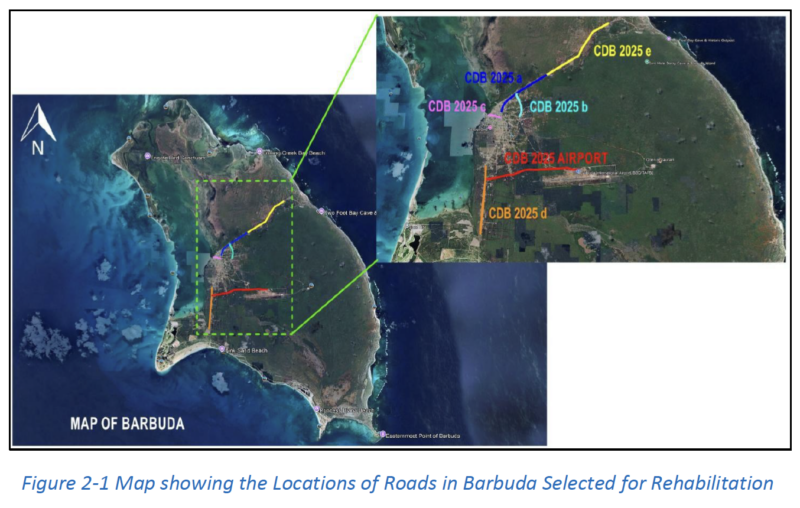
    Antigua and Barbuda’s government has launched a public consultation period for a transformative 12.6-kilometer road rehabilitation initiative on the island of Barbuda, releasing all required planning, engineering and environmental assessments to invite input from residents and industry stakeholders ahead of construction. The project, which forms a core part of the national post-Hurricane Irma recovery program, is backed by financing from the Caribbean Development Bank and falls under the country’s Hurricane Irma Rehabilitation and Reconstruction Loan framework.

    The Ministry of Housing and Works has made a full suite of planning documents available for public review, including a comprehensive Environmental and Social Management Plan, an initial engineering inception report, a corridor characterization and priority ranking analysis, and a groundbreaking social and gender sensitisation study. Upgrades are targeted at six high-priority road corridors across the island, spanning key routes that serve critical public and economic infrastructure: sections of River Road, the Codrington Wharf access zone, routes connecting to Sir McChesney George Secondary School, the Green Barbuda Solar Hybrid Power Station, and Burton-Nibbs International Airport. These routes were selected specifically for their outsize role in supporting daily transportation, emergency response operations, community access to services, and long-term economic growth for the island.

    Environmental assessors have categorized the project as a Category B development, meaning all potential negative environmental and social impacts are predicted to be geographically limited and fully manageable through targeted mitigation strategies. The initial environmental review identified a set of key risks that will require continuous monitoring throughout the construction phase, including potential contamination of local groundwater reserves, excess water consumption during works, risks to community health and safety, occupational hazards for construction crews, and potential harm to sensitive marine and coastal ecosystems surrounding the protected Codrington Lagoon. To address these concerns, project planners have pre-approved a series of protective measures: targeted erosion control infrastructure, expanded and upgraded drainage networks, ongoing third-party environmental monitoring, formalized waste management protocols, and specific protocols to protect any unknown archaeological or cultural resources that may be uncovered during excavation.

    A key priority integrated into the project design is a comprehensive set of climate resilience upgrades, developed to address Barbuda’s long-standing geographic vulnerabilities. The proposed road design uses reinforced concrete pavement engineered to withstand severe flooding, alongside larger, upgraded culverts, a fully redesigned island-wide drainage system, and pre-construction geophysical surveys to map and fill underground voids before heavy building works begin. These changes are designed to resolve persistent challenges tied to Barbuda’s flat terrain, naturally poor drainage, and ongoing high risk of storm-related flooding as climate change increases the frequency of extreme weather events in the Caribbean.

    The corridor characterization report positions the road upgrades as a foundational piece of Barbuda’s broader long-term development strategy. The document notes that the island is poised to see a wave of new private and public investment in coming years, including expanded tourism infrastructure, expansion of Burton-Nibbs International Airport, construction of a new combined cargo and tourism port, new residential housing developments, and additional renewable energy projects. Improved, more resilient road networks will be critical to supporting this growth while also making daily travel easier for residents and cutting response times for emergency services during crises.

    The accompanying gender sensitisation study also highlights a long-standing equity gap in Antigua and Barbuda’s construction sector: official employment data shows just 138 women working in construction across the country, compared to more than 3,400 men. The study’s findings will be used to help government agencies and private contractors implement policies that advance gender equality and social inclusion across all future infrastructure projects on the island.

    Once construction gets underway, the full build-out is expected to take between 18 and 24 months to complete. Following the conclusion of construction, a mandatory 12-month monitoring period will be held to assess the performance of the new drainage systems and resolve any remaining unforeseen environmental impacts. Government officials have emphasized that public input is a core part of the project development process, and are encouraging all residents and interested stakeholders to review the full set of released documents and submit comments, concerns, or recommendations to help refine the project’s final design and implementation plan before works break ground. All full documents are available for review via the official website of Antigua and Barbuda’s Department of Environment.