分类: politics

  • OPINION: Is Extending and Expanding the Windfall Tax the Correct Answer?

    OPINION: Is Extending and Expanding the Windfall Tax the Correct Answer?

    A fresh debate over the future of Antigua and Barbuda’s temporary windfall tax has erupted following a June 2026 opinion piece calling for the policy’s extension and expansion to advance national education goals. Responding to Professor C. Justin Robinson’s argument that the proposal deserves full national deliberation, a veteran policy analyst with over 35 years of decision-making experience has pushed back against the rushed framing of the conversation, while calling for greater transparency and dispassionate cost-benefit analysis before any final policy vote.

    The analyst emphasizes that effective problem-solving does not prioritize being seen as correct, but rather making the right, contextually informed decision. A robust decision-making process requires first defining clear, measurable outcomes, diagnosing why current systems are falling short, evaluating emerging trends and alternative solutions, and only then deliberating on a path forward. In the analyst’s view, the current conversation around the windfall tax has inverted this process: the solution—extending and expanding the levy—has been presented to the public before any clear consensus on the underlying problem has been established.

    While the analyst acknowledges alignment with some of the equity-focused education outcomes Professor Robinson aims to achieve, they reject the windfall tax as the appropriate funding mechanism. They also note a structural conflict of interest: Professor Robinson is affiliated with the University of the West Indies (UWI), the primary beneficiary of the tax revenue, so full objectivity on the policy cannot reasonably be expected.

    For context, the windfall tax was first introduced in 2019 as a three-year temporary measure to fund the construction of UWI’s Five Islands Campus. Levied at a 10% rate on net profits, it applies exclusively to private businesses operating in banking, telecommunications, insurance, and petroleum distribution—on top of the existing 25% corporate tax already paid by these firms. Despite its original temporary mandate, the government has repeatedly extended the tax without public justification, a move the analyst describes as convenient and dishonest.

    Critically, the analyst argues that the sacred cow of public education should not shield the proposal from rigorous scrutiny. Before committing scarce public resources to expanded education funding, policymakers must first answer a fundamental question: what measurable return on public investment do Antiguans and Barbudans expect from expanded education spending? Is the goal to produce more tourism-sector workers, legal professionals, or tech and AI specialists? Without clear outcome metrics, strategic budget allocation is impossible.

    Limiting their critique to the funding components of the proposal, the analyst has laid out nine core questions that demand public answers from the government before any vote to extend and expand the tax. These include: what is the annual revenue yield of the current tax, and how is that money currently spent; how much additional revenue does the new education plan require; what happened to revenue from the existing Education Levy; with a total national budget exceeding EC$2 billion, can funds be reallocated from existing priorities instead of raising new taxes; how is the government addressing widespread public sector waste to free up additional revenue for education; how long can the increased tax burden be sustained before it pushes struggling private firms out of business, particularly when they face unfair competition from tax-exempt state-owned enterprises and ongoing global economic shocks; what is the plan to make new education initiatives self-sustaining after the windfall tax is eventually withdrawn; when will state-owned enterprises operating in the taxed sectors start contributing their fair share to the fund, and is it fair to require private firms to compete against state competitors that do not pay the levy; and finally, how will expanded funding guarantee improved education quality, rather than just more spending with no accountability for outcomes.

    The analyst rejects Professor Robinson’s framing that policymakers should only focus on what new programs the tax can fund, ignoring the concept of opportunity cost and the growing financial strain already faced by private sector businesses. No discussion has yet addressed how expanding the tax net will push up business costs, which will inevitably be passed on to consumers, already strained by a per-capita annual public spending burden of $20,000. The analyst also questions whether the country can afford to expand public spending programs without risking sovereign fiscal instability.

    For the proposal to qualify as a genuine national consideration, the government must first release all relevant data to the public to allow for informed public feedback. Echoing the core principle of democratic governance, the analyst concludes: “No taxation without representation!”

  • CARICOM Eminent Persons Group preparing for Haiti visit as political consultations continue

    CARICOM Eminent Persons Group preparing for Haiti visit as political consultations continue

    As Haiti’s volatile political landscape continues to shift, the Caribbean Community (CARICOM) Eminent Persons Group (EPG) has confirmed it is maintaining active, continuous oversight of unfolding developments in the crisis-stricken nation, according to an official public statement.

    Over recent weeks, group members have held frequent, structured virtual consultations with a wide range of Haitian stakeholders, drawing input from across the country’s political and social divides. These conversations have included direct dialogue with sitting government representatives, leaders of opposition and other political organizations, and a diverse array of civil society advocates. The outreach is part of the EPG’s ongoing mandate to build a comprehensive, nuanced understanding of the layered challenges that have plunged Haiti into instability.

    Through these remote engagements, the EPG has succeeded in staying up to date on breaking developments and collecting firsthand perspectives from the key actors shaping Haiti’s political and social future, the group noted in its statement. But despite the value of remote consultations, the EPG emphasized that in-person, on-the-ground engagement remains a critical uncompleted step in its monitoring mission.

    Citing the irreplaceable value of direct, on-site observation and face-to-face dialogue, EPG members confirmed their intention to deploy a delegation to Haiti as soon as logistical and security conditions allow. The upcoming visit will create space for the delegation to hold in-person meetings with government officials, national political leaders, and civil society representatives, creating opportunities for deeper, more candid discussions than can be held virtually.

    These in-person talks are expected to help the group refine its grasp of the interconnected economic, political, and security issues confronting Haiti, and allow for more accurate, context-rich assessments of the current situation that can inform future regional mediation and support efforts. Parallel to its visit preparations, the EPG is continuing its diplomatic push to encourage all Haitian stakeholders to pursue collaborative, dialogue-centered solutions to the country’s ongoing crises, stressing that collective cooperation is the only path to lasting stability.

    Preparations for the visit are already moving forward, the group confirmed, and the trip will be launched as soon as all logistical and security arrangements are finalized, clearing the way for the EPG to resume direct engagement with Haiti’s key national stakeholders.

  • This Day in History: 19 June 1980

    This Day in History: 19 June 1980

    On June 19, 1980, the Caribbean island nation of Grenada was shaken by a senseless act of violence that cut short three young lives and left dozens injured, just as the country gathered to celebrate its revolutionary legacy. On that fateful Wednesday, thousands of passionate supporters had flocked to Queen’s Park, the island’s iconic public gathering space, for a commemorative rally meant to formally recognize two of the movement’s most iconic figures: Tubal Uriah “Buzz” Butler and Alister Strachan, who had been designated Heroes of the Grenadian Revolution.

    As attendees prepared to hear remarks from the nation’s leadership, a hidden explosive device detonated beneath the venue’s main grandstand. The blast immediately transformed a day of national celebration into a scene of chaos and grief: three young women lost their lives in the attack, and dozens more people suffered injuries of varying severity. In the hours after the tragedy, Prime Minister Maurice Bishop addressed the nation in a special evening broadcast on Radio Free Grenada, titled *New Martyrs, New Heroes, New Patriots*, to respond to the attack and honor the lives lost. The original account of this tragic event draws from two key historical sources: Beverley A. Steele’s authoritative work *Grenada: A History of its People*, and archival materials published on the independent historical platform Grenada Revolution Online. This article, published via NOW Grenada, adheres to the platform’s contributor content guidelines, which hold contributors responsible for the claims and context included in shared historical materials, with an open channel for reporting potential content violations.

  • Reyme pleit voor moderne invulling dienstplicht om jongeren voor Defensie te winnen

    Reyme pleit voor moderne invulling dienstplicht om jongeren voor Defensie te winnen

    During ongoing budget deliberations in Suriname’s National Assembly, parliamentarian Steven Reyme from the A20 party has put forward a bold proposal to reimagine national conscription as a developmental opportunity for young people, rather than the punitive mandate it has often been framed as in public discourse.

    Reyme’s call follows recent comments on conscription by fellow legislator Michael Marengo of the National Democratic Party (NDP), and comes amid a crippling wave of departures from Suriname’s National Army that has eroded the force’s personnel capacity over the past five years. Between 2020 and 2025, the country lost nearly 1,150 active service members, with more than 300 of those exits recorded in 2025 alone. “We have to figure out how to reignite enthusiasm for service and encourage people to return to the military, but this will not happen on its own,” Reyme told the assembly.

    At the core of his proposal is a push to shift widespread public perception of Suriname’s national defense sector. Reyme argues that policymakers must work to build a new mindset among young Surinamese: framing military service not as a punishment, but as a life-changing stepping stone. For disadvantaged youth who have faced systemic barriers to opportunity, he says, modernized conscription offers a structured environment to build critical life skills including discipline, personal accountability, and collaborative problem-solving. Beyond individual growth, Reyme frames the policy as a tool to strengthen national social cohesion and embed a culture of civic engagement among the country’s younger generation, positioning it as “an opportunity to boost societal involvement and rebuild shared social unity.”

    The lawmaker also tied his proposal to deeper structural and financial challenges facing Suriname’s defense sector. He noted that the vast majority of the current defense budget is allocated exclusively to personnel salaries, leaving only a tiny fraction of funding available for critical infrastructure upgrades, capability-building programs, and long-term institutional investments. He pointed to the border outpost at Albina as a stark example of the substandard conditions troops face across the country. “It’s embarrassing to visit that post. Troops are working in extremely poor conditions, and this is the first impression of Suriname that many cross-border visitors take away with them,” Reyme said.

    Reyme has issued an official call for Suriname’s Minister of Defense and the Minister of Transport, Communication and Tourism to develop targeted policy interventions to upgrade facilities at border posts and all military detachments across the country. He emphasized that improving working conditions is a critical first step to boosting retention and morale among current service members, addressing the root of the ongoing personnel exodus.

    At the same time, Reyme extended public praise to current Defense Minister Uraiqit Ramsaran for recent steps taken to address longstanding personnel backlogs, including the promotion of 151 service members and the authorization of new living and duty allowances that improve career prospects for active troops. Despite this positive note, he called on the minister to publicly clarify the criteria used for these promotions, noting that hundreds of additional service members remain waiting for career advancement. “A budget on paper is not enough,” Reyme reminded the sitting government. “The Surinamese public wants to see visible, tangible results that improve daily life for service members and the nation.”

    On the day of Reyme’s address, the government was scheduled to respond to the questions and proposals raised during the National Assembly debate.

  • Antigua and Barbuda Cabinet Recommends Sir David Harrison to Lead UWI Five Islands Campus Council

    Antigua and Barbuda Cabinet Recommends Sir David Harrison to Lead UWI Five Islands Campus Council

    The Cabinet of the twin-island nation of Antigua and Barbuda has formally approved a recommendation to appoint prominent British business leader Sir David Harrison to two key leadership positions at the University of the West Indies (UWI) Five Islands Campus. Under the proposal, Sir David will serve as both Chairman of the campus’s governing Council and Chairman of its dedicated Campus Endowment Fund.

    Sir David boasts a 40-plus year track record as one of the United Kingdom’s most accomplished entrepreneurs, building his reputation through transformative growth in the financial services and fintech sectors. He currently leads True Potential LLP, a Newcastle-based financial technology and services firm that ranks among the UK’s fastest-growing businesses in the industry. Before taking the helm at True Potential, Sir David founded and scaled Positive Solutions into the United Kingdom’s largest independent financial advisory network.

    Beyond his impressive corporate success, Sir David has long been recognized as a vocal champion for expanded educational access and improved social mobility, causes he has prioritized both through his advocacy and direct philanthropic giving. The Antigua and Barbuda Cabinet specifically highlighted Sir David’s ongoing extraordinary generosity to the country, noting his targeted support for local educational and youth empowerment programs, alongside millions of pounds in pledged investment to advance learning and opportunity for young Antiguans and Barbudans.

    In recognition of his decades of contributions to business, education, and social advancement in the country, Antigua and Barbuda awarded Sir David its highest civilian honor in 2022: Knight Grand Cross of The Most Distinguished Order of the Nation.

    Cabinet officials expressed unwavering confidence in Sir David’s ability to drive the Five Islands Campus forward, noting that his decades of leadership experience, forward-thinking strategic vision, and deeply rooted commitment to educational equity align perfectly with the institution’s growing mission. Launched in 2019 as the UWI system’s fifth permanent landed campus, the Five Islands location was established specifically to expand access to high-quality tertiary education across the Eastern Caribbean. It has since become a central pillar of the Antigua and Barbuda government’s long-term strategy to build national human capital and establish regional leadership in post-secondary learning, serving students across the entire Organisation of Eastern Caribbean States (OECS).

    According to the Cabinet’s statement, Sir David’s stewardship of both the governing council and endowment fund is expected to strengthen the campus’s institutional governance, boost large-scale fundraising capacity, and speed up progress toward the institution’s ambitious, transformative vision for higher education development across Antigua and Barbuda.

  • New Seed Bank and Sweet Potato Projects Aim to Strengthen Antigua and Barbuda’s Food Supply

    New Seed Bank and Sweet Potato Projects Aim to Strengthen Antigua and Barbuda’s Food Supply

    Antigua and Barbuda’s Minister for Agriculture has presented a progress update to the nation’s Cabinet on ongoing collaborative work between the Ministry of Agriculture and the Inter-American Institute for Cooperation on Agriculture (IICA), a longstanding key partner in the government’s strategic push to reframe agriculture as a foundational driver of economic expansion, national food security, and climate adaptive capacity across the twin-island nation.

    Per the Minister’s briefing, multiple development projects are moving forward under IICA’s 2025 Technical Cooperation Programme, with Antigua and Barbuda counted among the primary beneficiaries of region-wide initiatives focused on three core priorities: boosting agricultural output, reinforcing disaster preparedness frameworks, and advancing holistic food and nutrition security across the Caribbean.

    One of the highest-priority flagship initiatives is the Next Generation Sweet Potato Production in the Caribbean Project, delivered through a three-way partnership between IICA, Antigua and Barbuda’s Ministry of Agriculture, and the Caribbean Agricultural Research and Development Institute (CARDI). The project centers on increasing sweet crop yields, expanding the use of diverse sweet potato genetic resources, and directly contributing to stronger national food security.

    Key activities rolled out under the sweet potato initiative include the introduction of genetically improved planting stock, field testing of high-yield varieties bred to withstand extreme climate conditions, hands-on training for smallholder farmers on climate-smart good agricultural practices, and upgrades to regional pest management systems that cut post-planting crop losses.

    Beyond the sweet potato project, the Minister highlighted major advancements in the Mobile Seed Bank Project, another collaborative effort between IICA and CARDI built to strengthen regional disaster preparedness and speed post-disaster agricultural reconstruction across the Caribbean. Antigua and Barbuda, alongside Dominica, has been selected as a core pilot country for the initiative thanks to its existing robust seed production and storage infrastructure.

    The project will roll out a first-of-its-kind mobile seed banking system that enables rapid conservation and distribution of viable seeds during climate and weather emergencies, while also building long-term local technical capacity for seed and germplasm production and conservation. Additional components of the initiative include digitizing regional inventories of seeds and planting materials to improve supply chain traceability and quality control, and creating centralized reserve stocks of planting material to support immediate restart of crop production immediately after hurricanes, droughts, or other climate shocks.

    Already, CARDI has launched on-the-ground seed production activities in Antigua and Barbuda, focused on multiplying pumpkin and eggplant seeds that will be stored in reserve and distributed to local farmers to support recovery following future natural disasters.

    In addition to crop-focused initiatives, the Minister updated Cabinet on regional cooperation to strengthen monitoring and response capacity for African Swine Fever (ASF), a highly transmissible viral pathogen that threatens both commercial and wild pig populations. Through IICA and its network of regional partners, Antigua and Barbuda is taking part in cross-border programs to upgrade national ASF surveillance protocols, improve sample collection and laboratory testing capabilities, and develop coordinated cross-boundary response frameworks to protect both local and regional livestock industries from outbreak.

    Following the briefing, Cabinet members formally welcomed the measurable progress delivered through the ongoing partnership with IICA, and reaffirmed the Antigua and Barbuda government’s unwavering commitment to agricultural modernization, expanded climate resilience, and long-term achievement of full national food security and sustainable agricultural development.

  • Antigua toughens legislation dealing with cybercrime

    Antigua toughens legislation dealing with cybercrime

    In a decisive move to modernize the country’s criminal investigation framework, the Parliament of Antigua and Barbuda has approved sweeping amendments to the nation’s electronic crimes legislation, introducing unprecedentedly harsh financial penalties and potential prison time for individuals and corporate entities that refuse to surrender requested digital data to law enforcement during active criminal probes.

    Attorney General Sir Steadroy Benjamin, the lead sponsor of the Electronic Crimes Amendment Bill, told lawmakers the updated regulatory framework was crafted to resolve a persistent, years-long barrier that has stymied investigators working on cases ranging from financial fraud to violent organized crime. For years, Benjamin explained, service providers have repeatedly stonewalled police requests for critical digital evidence—including cell phone location pings, social media posts, and user activity logs that are essential to tracing the mechanics of criminal activity and building prosecutable cases.

    “Police require this evidence to map out how crimes were committed, but providers have consistently refused to comply with these lawful requests,” Benjamin stated during parliamentary debate.

    The new legislation outlines a tiered system of penalties for non-compliance. For defendants facing summary conviction, any individual or entity that fails to comply with a court-issued production order within the mandated timeframe—without a verifiable reasonable excuse—will be subject to fines reaching as high as 100,000 Eastern Caribbean dollars, alongside potential prison time, or both. For more severe charges brought by indictment, penalties jump to a maximum fine of one million Eastern Caribbean dollars, up to seven years of imprisonment, or both.

    A key targeted provision addresses a common loophole that service providers have long used to delay investigations: passing the buck to overseas corporate headquarters. Benjamin noted that local managers of telecommunication firms and other digital service providers have frequently claimed they lack the authority to comply with information requests, insisting that formal approval must come from executives based outside the country. To close this gap, the amended legislation explicitly holds on-island managers and local executives legally responsible for complying with production orders. Any company operating within Antigua and Barbuda’s borders is now legally required to cooperate with lawful information requests, rather than shifting responsibility to foreign leadership to stall investigative progress.

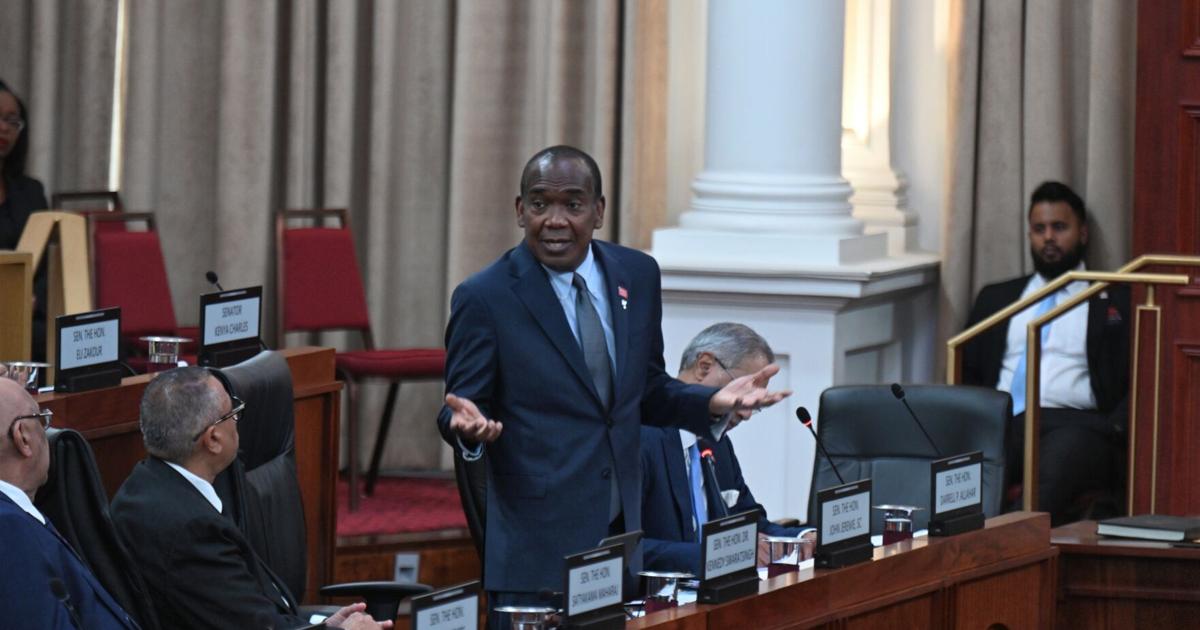
    The debate around the bill featured a personal testimony from Education Minister Daryll Matthew, who shared that he had recently fallen victim to a sophisticated financial scam, highlighting the urgent need for stronger digital investigation powers. “I was a target of financial crime,” Matthew confirmed, noting that his bank is currently working to resolve the incident.

    Cross-party support for the legislation was widespread, with opposition lawmakers backing the government’s effort to streamline criminal investigations. One opposition legislator praised the initiative, noting that the government’s move to update regulatory powers to enable faster access to digital evidence was a commendable step forward for public safety.

    Government officials emphasized that the amendments are just one component of a broader, long-term strategy to boost Antigua and Barbuda’s capacity to combat evolving criminal threats. As transnational cybercrime, financial fraud, and other modern offenses increasingly depend on digital communications and electronic record-keeping, updating legal frameworks to allow for timely evidence gathering has become a critical priority for national security.

  • Judicial data gaps undermine court efficiency, chief justice warns

    Judicial data gaps undermine court efficiency, chief justice warns

    As a regional workshop focused on standardizing case management procedures for Caribbean judicial bodies got underway this week, Chief Justice Leslie Haynes has delivered a stark warning: the absence of reliable, systematically collected judicial data is actively undermining regional efforts to cut through crippling case backlogs and boost overall court performance across the Caribbean. He is calling for immediate action to build formal, structured frameworks for gathering and analyzing court data to evidence-based justice reform.

    Opening the two-day workshop on judicial case management standard operating procedures (SOPs) at Hotel Indigo on Thursday, Haynes emphasized that meaningful, lasting change to the region’s justice systems will remain out of reach without consistent, credible information to guide policy and operational decision-making. Currently, the region lacks any standardized, institutionalized framework for judicial data collection, he explained. Instead, data gathering tasks are most often delegated informally to overstretched legal assistants, judicial support staff and court clerks, with no clear, unified protocols in place to standardize collection or storage.

    Even in jurisdictions where some data is collected, Haynes noted, continuity of records is frequently broken when staff transition to new roles or leave their positions, leaving gaps that erase institutional knowledge. Without a formal data collection framework, Haynes argued, judicial leaders are forced to make critical reform decisions based on anecdotal observation rather than hard evidence. “There is a necessity for us to create a framework for the collection of this data because if we do not, we will be unable to make the necessary decisions that we ought to make, and our decisions will be based on anecdotal evidence,” Haynes told attendees.

    Haynes was careful to reframe judicial data not as a tool for disciplinary blame, but as a diagnostic instrument to pinpoint and resolve systemic inefficiencies across court operations. “We need data to understand where the bottlenecks exist, and having gathered the data, to resolve the issue,” he said. Beyond data infrastructure, the chief justice also pushed back on the common assumption that technology alone can solve the judiciary’s most pressing challenges. Organizational culture and institutional accountability, he argued, are equally critical to sustainable reform. He put it bluntly: “Culture eats technology for breakfast.” Meaningful change, he explained, requires a fundamental shift in institutional mindset that cannot be achieved through digital upgrades alone. Successful reform, he added, demands greater operational discipline, consistent accountability, respect for procedural timelines, a shared commitment to efficiency, and a widespread willingness to adapt to new processes across the judiciary.

    Haynes stressed that the regional workshop could not be more timely, noting that criminal justice systems across every Caribbean territory are facing growing, unsustainable pressures. The region can no longer be reduced to the outdated, romanticized image of a laid-back tropical paradise, he argued: shifting social and economic realities have brought new, complex security and public safety challenges that demand a modernized justice response. “The Caribbean region can no longer be described as an easy-going paradise where we drink coconut water in various mixtures,” he said. “That crime is now an everyday reality for us is reflected in the songs that we sing, the movies that we watch, the news reports that we listen to, and the day-to-day stories shared by our friends and neighbours.”

    Rising crime rates have driven a sharp increase in court caseloads, placing unprecedented demand on a justice sector already constrained by limited resources. Combined with evolving complex social issues and rising public expectations for faster, fairer justice, these pressures have made systemic reform an urgent priority, Haynes said. He highlighted that collaborative discussions across the two-day workshop will play a pivotal role in strengthening three core pillars of the regional criminal justice system: credibility, efficiency, and fairness. Improvements to these areas, he added, will in turn rebuild and strengthen public trust and confidence in how justice is administered across the Caribbean.

  • Rodrigues-Birkett hopes to use ‘good offices’ process to address conflict

    Rodrigues-Birkett hopes to use ‘good offices’ process to address conflict

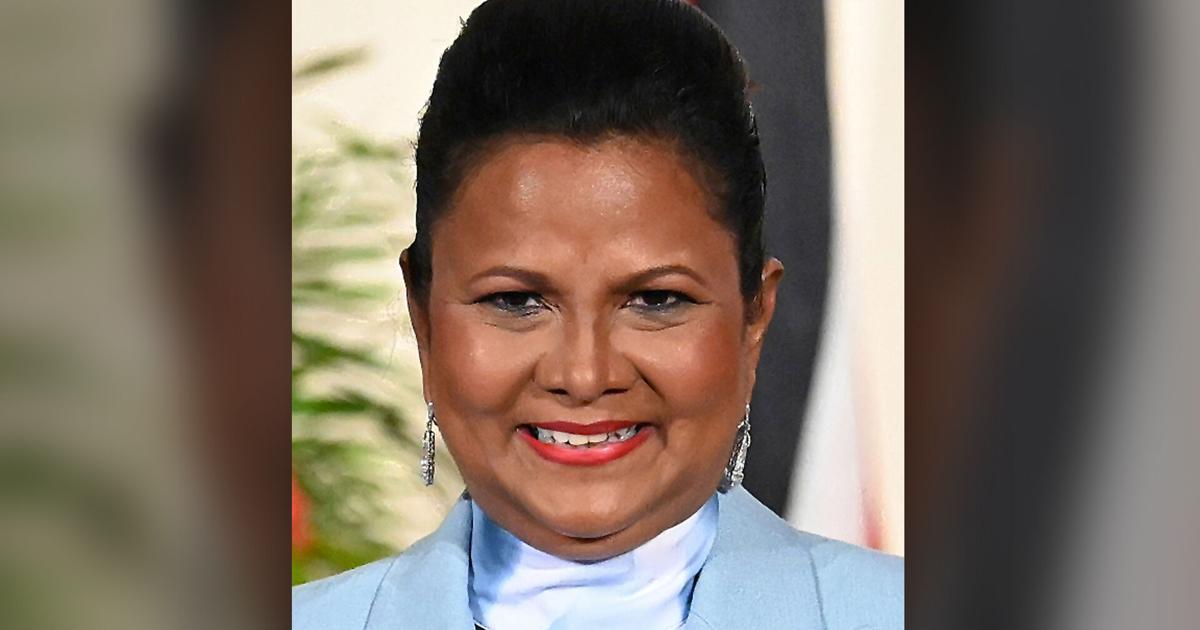
    As the race to succeed outgoing United Nations Secretary-General António Guterres heats up, Guyanese nominee Carolyn Rodrigues-Birkett has laid out her core vision for global conflict mitigation, leaning on the UN’s longstanding “good offices” mechanism as a central tool to de-escalate rising international tensions.

    Rodrigues-Birkett, who currently serves as Guyana’s Permanent Representative to the UN and recently completed a term on the UN Security Council, drew from her own nation’s decades-long territorial dispute with Venezuela to frame her approach to peacebuilding. “On conflict resolution, all the tools that are available to me as Secretary General, the good offices, I think that this is something we can use more. My own country benefited from the good offices process of the UN,” she told member states during an interactive question-and-answer session for candidates.

    The UN’s good offices process supported negotiations between Guyana and Venezuela for half a century over a long-running territorial dispute stemming from the 1899 Arbitral land boundary award. After decades of mediated talks, Guyana ultimately brought the case to the UN’s International Court of Justice, where it remains pending with Guyanese officials holding out hope for a favorable ruling.

    If elected to take the top UN post when Guterres’ term ends on December 31, 2026, Rodrigues-Birkett pledged to take a proactive approach to deploying the UN’s full suite of peacebuilding and conflict resolution tools to tackle rising global instability.

    Beyond peace and security, the candidate linked sustainable development, educational investment, and human rights as interconnected pillars of a more stable global order. Drawing from her early political experience as Guyana’s Minister of Amerindian Affairs in 2001, she highlighted how targeted investment in education transformed underrepresented Indigenous communities. When she took office, she noted, there was just one Amerindian doctor serving Guyana’s Indigenous populations. After sustained public investment in accessible education, dozens of doctors and other professional leaders have emerged from these remote communities.

    “I also see the investment in development and the investment in peace and security as also investment in human rights because when conflicts arise, many times, human rights is one of the things that suffer immediately,” she added.

    However, during the interactive session, Rodrigues-Birkett chose not to directly respond to a pointed question from Cuba’s representative to the UN, which pressed her on two critical principles: curbing rising “war-like rhetoric” and upholding the global norm of non-use of force in international relations. The Cuban representative asked: “Given the growing escalation of conflicts and the proliferation of war-like rhetoric, what action would you take as Secretary General to promote a culture of peace and the peaceful settlement of disputes and respect for the principle of non-use of force?”

    The question comes against a fraught geopolitical backdrop for Cuba: former U.S. President Donald Trump has recently openly floated the idea of forcing regime change in the communist-run Caribbean nation via military intervention. In recent months, the U.S. has expanded sanctions on top Cuban government officials and state-run entities, and sweeping U.S. trade restrictions have effectively crippled the Cuban economy by blocking most fuel imports, leaving the country reliant on sporadic fuel deliveries from Russia.

    The non-response also comes amid worsening bilateral ties between Guyana and Cuba in recent months. Earlier this year, Guyanese President Irfaan Ali spoke on the sidelines of Trump’s “Shield of the Americas Summit”, where he stated that it was time for a “political transition” in Cuba. “There must be dialogue but those changes must lead to the improvement of the people of Cuba. It must lead to better conditions for the people of Cuba, must lead to a society in which the rule of law, in which democracy, in which freedom is celebrated,” Ali said at the event.

  • LETTER: COVID-19 Salary and Wage Payments for Public Sector Employees

    LETTER: COVID-19 Salary and Wage Payments for Public Sector Employees

    Six months after the government’s stated deadline for disbursing pandemic-related wage compensation to eligible public sector employees, hundreds of affected workers in Antigua and Barbuda are still waiting for the funds they were promised, pushing one affected staffer to publicly call for clarity from government authorities.

    Back when the compensation program was first announced, the Antigua and Barbuda administration laid out a clear roadmap for delivering backpay to public workers whose salaries were interrupted or cut off amid the COVID-19 public health crisis. Permanent Secretaries across government departments were directed to lead the initial phase of the process: identifying eligible workers, compiling their submitted claims, and cross-verifying the information to confirm eligibility. Claimants were given a firm deadline of December 31, 2025, to submit all required documentation, after which verified claims would be passed to the national Treasury Department for final processing. According to the original timeline, disbursements were scheduled to begin in January 2026.

    It is now June 2026, half a year after payments were supposed to start. A large number of compliant claimants who followed all procedural rules and had their verified files sent to the Treasury have yet to receive any form of compensation. To date, hundreds of affected employees across multiple public departments have reported receiving no funds at all, with no official explanation for the hold-up.

    In an open letter addressed to the editor of the local publication, one concerned public sector employee has called on relevant government bodies to break their silence and deliver a formal update on the program’s status. The letter outlines four key questions that eligible workers are demanding answers to: First, has the Treasury Department completed its internal verification and processing of all submitted claims that were transferred over by department heads? Second, what is the revised, realistic timeline for disbursing the owed compensation to approved claimants? Third, what specific outstanding issues, if any, are responsible for the six-month delay beyond the original launch date for payments? Finally, when can eligible workers reasonably expect to receive the money the government pledged to them?

    The letter notes that most affected workers have remained patient throughout the process, abiding by all the requirements laid out by the government. An official public update, the author argues, would provide much-needed clarity and ease the financial uncertainty that many workers have been grappling with for months. The author closed by thanking the publication for drawing attention to the unaddressed issue.