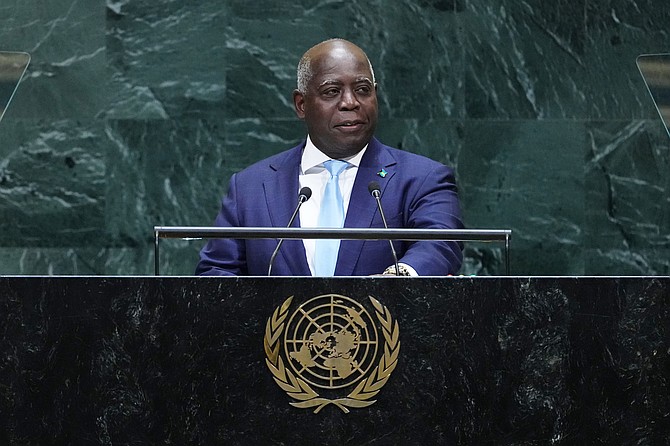
During the 81st United Nations General Assembly (UNGA) General Debate in New York on Wednesday, Bahamas Prime Minister Philip “Brave” Davis delivered a fiery, principle-driven address that centered on defending the sovereign equality of small and developing nations across the global stage, while calling out systemic inequities and pressing for urgent international action on two longstanding Caribbean crises.
分类: politics
-
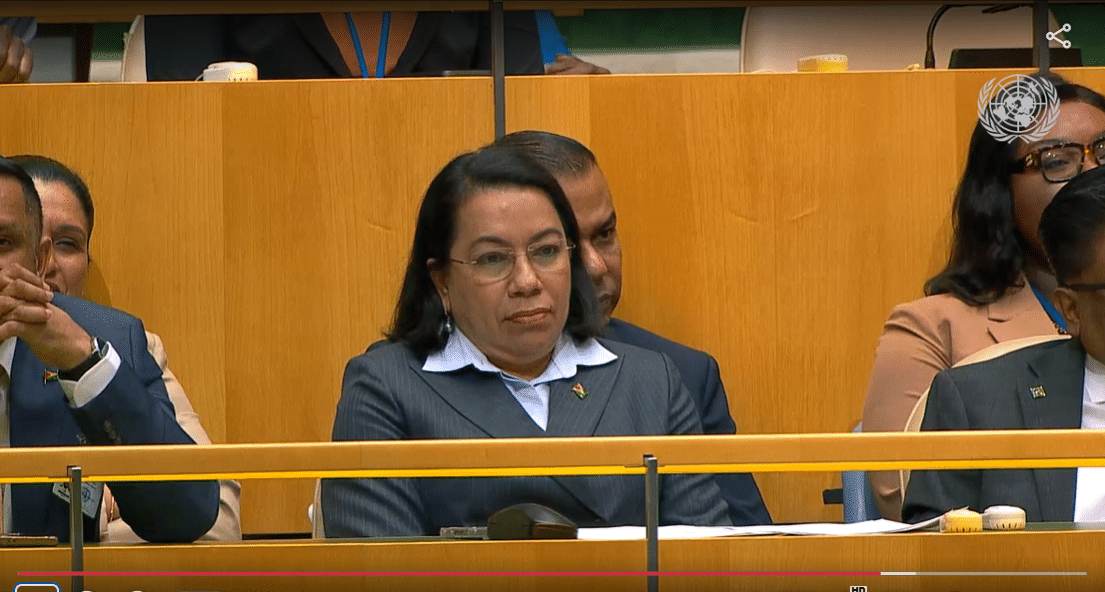
Ali urges Permanent Members of UN Security Council to support Rodrigues-Birkett to become next Secretary-General
NEW YORK – September 24, 2026 – Speaking during the 81st session of the United Nations General Assembly, Guyana’s President Irfaan Ali has issued a formal, impassioned appeal to all UN member states and particularly the Permanent Five (P5) members of the UN Security Council to throw their support behind his country’s candidate, Ambassador Carolyn Rodrigues-Birkett, for the post of UN Secretary-General.
Rodrigues-Birkett, who currently serves as Guyana’s Permanent Representative to the UN and was jointly nominated by Guyana and the Caribbean Community (CARICOM), has previously faced a reported veto from the United States over her characterization of the ongoing crisis in Palestine as genocide. President Ali did not directly address this reported veto during his address, but made a point to explicitly call for support from all P5 members – China, France, Russia, the United Kingdom, and the United States – urging the body to evaluate the nominee on her qualifications rather than geopolitical divisions.
“The responsibility for recommending the next Secretary General rests in the first instance with the Security Council, and we therefore respectfully place before its members the candidature of Carolyn Rodrigues-Birkett endorsed by the Caribbean Community,” President Ali told the assembled delegates. “We invite all to consider her candidacy on its merits, and to judge whether her vision, experience, expertise, and record can help restore confidence in the United Nations at this critical moment.”
Rodrigues-Birkett brings deep UN institutional experience to the role, having led Guyana’s delegation during the country’s 2024–2025 term as a non-permanent member of the Security Council. President Ali argued that the UN is currently at a crossroads, marked by growing divides between the Global North and Global South, large and small nations, and developed and developing economies, and that Rodrigues-Birkett’s background uniquely positions her to bridge these gaps.
“What we need now is leadership capable of restoring trust without compromising principles, of listening without surrendering conviction, of building bridges across the widening chasms between these groups,” President Ali said. “We need a Secretary-General who will defend the Charter not only when it is politically convenient, but precisely when its principles are under pressure.”
Off-script from his prepared remarks, President Ali highlighted Rodrigues-Birkett’s personal journey as an Indigenous woman from a small village in Guyana’s Barima/Waini Region, who overcame systemic barriers related to Indigeneity, gender, and poverty to rise to senior leadership roles in Guyana, including serving as Minister of Amerindian Affairs and later Foreign Minister. “Her character is built on struggle, sacrifice, commitment. Her accomplishments are crafted in her humanity,” he added.
On the topic of the Middle East, President Ali reaffirmed Guyana’s longstanding position, reiterating a call for a just and durable resolution to the Palestinian crisis that ends civilian suffering, upholds the Palestinian people’s inalienable right to self-determination and a sovereign, secure homeland. “We reiterate our support for a two-state solution,” he confirmed.
-
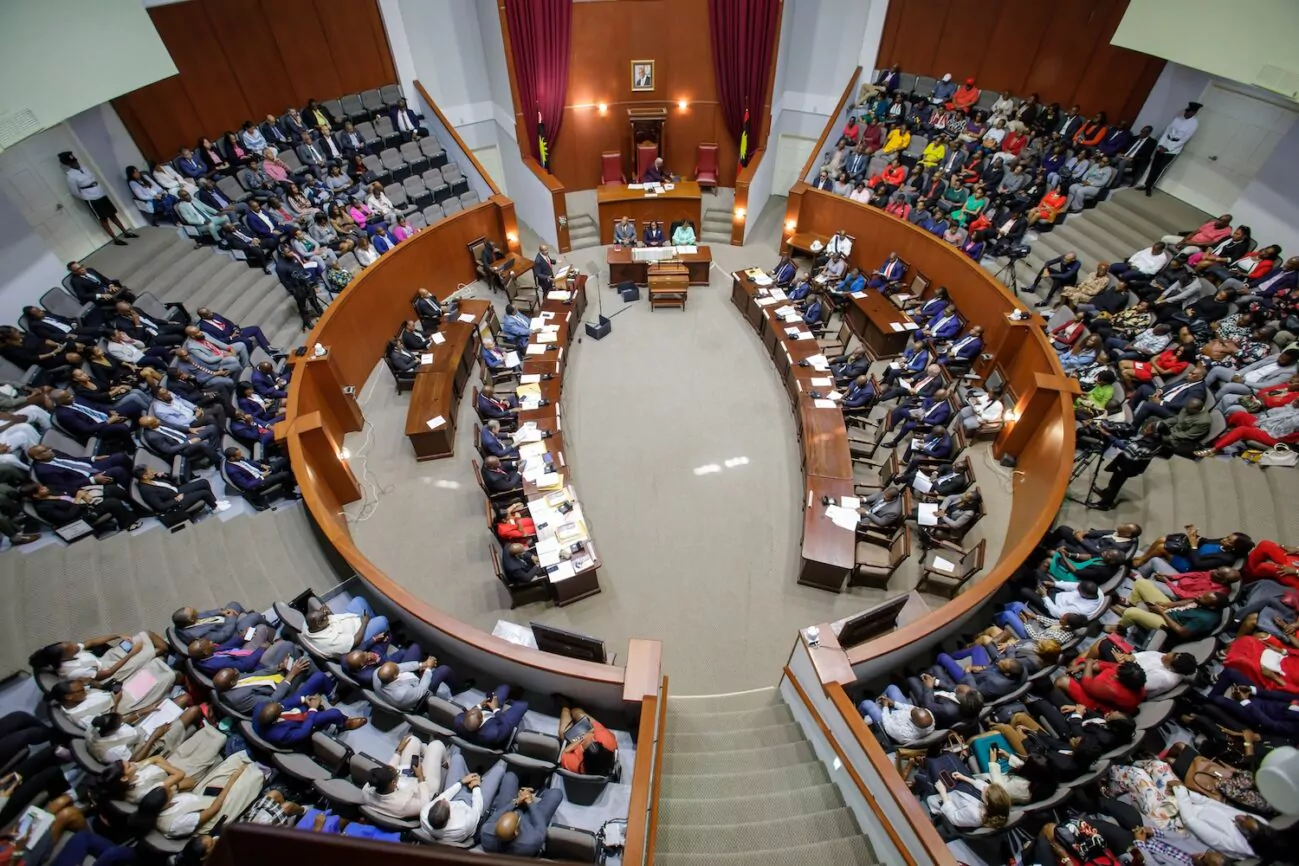
Bail, Sentencing and Repeat Offenders Heading to Parliament Next Week
Lawmakers in Antigua and Barbuda are gearing up to take up pressing public safety issues when the national parliament convenes for its next scheduled sitting next Monday and Tuesday. Top items on the unofficial agenda include a review of current bail protocols, sentencing guidelines, and the growing challenge of repeat offending, according to official statements from the country’s Cabinet.
The push for a legislative debate on these topics comes directly from the nation’s senior law enforcement leadership, who brought their unaddressed concerns to a closed-door meeting with Cabinet members this past Wednesday. Law enforcement officials specifically zeroed in on two high-priority groups: individuals currently out on bail while facing charges for severe violent offenses, and defendants who have been arrested and prosecuted multiple times for violating the same criminal statutes.
Cabinet officials emphasized that the upcoming discussion is not an isolated review of narrow procedural issues, but rather a component of a broader, ongoing national conversation about reducing violent crime and improving the fairness and effectiveness of the country’s justice system. Beyond adjustments to bail and sentencing rules, the national government is simultaneously evaluating a suite of additional policy changes aimed at boosting law enforcement capacity, hardening border security protocols, and cracking down on the illegal flow of firearms into the twin-island nation—all key drivers of local crime rates, according to government analysts.
Notably, official public notes released by the Cabinet following Wednesday’s meeting did not disclose any draft piece of legislation or specific formal proposal that parliamentarians will be asked to vote on during the upcoming sitting. Government insiders indicate the session will likely serve as an opportunity for open debate among elected representatives, with formal policy proposals expected to be drafted and released in the weeks following the preliminary discussion.
-
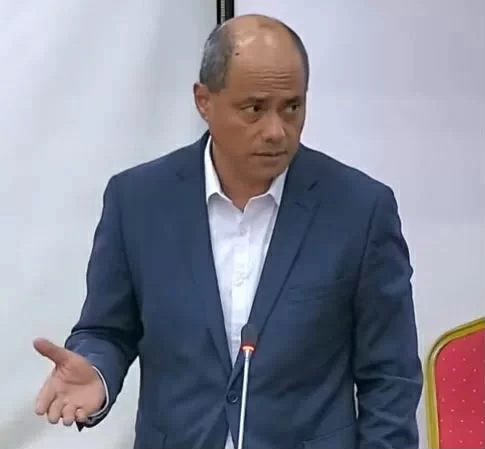
Pawiroredjo licht initiatiefvoorstel over bezoldiging President toe
A heated national debate has erupted in Suriname over top government and judicial officials’ salary increases ever since the November 2024 wage adjustment law came into effect, and a cross-party legislative push is now underway to address the fundamental structural and constitutional flaws at the heart of the controversy.
Jerrel Pawiroredjo, parliamentary faction leader of the National Party of Suriname (NPS), says public discussion of the issue is healthy, and it is critical that community concerns over the new salary framework are heard. What makes the current system problematic, he argues, is not just the total amount of compensation paid to senior officials, but the opaque, constitutionally questionable process used to set those salaries.
Under the 2024 law, the President’s salary is set indirectly, tied via a fixed multiplier to a base pay rate that is determined by state decree in line with the country’s Civil Service Law. This creates an automatic knock-on effect: any adjustment to the salary of a Director General of the General Service automatically changes the President’s own pay. Pawiroredjo explains that this automatic update triggers after every collective bargaining negotiation between public sector unions and the government, effectively allowing the President’s salary to change without a direct vote by the National Assembly.
This automatic linkage directly contradicts Article 112 of Suriname’s Constitution, which explicitly requires the National Assembly to set the President’s salary by law, Pawiroredjo says. The constitutional flaw has been thrown into sharp relief by the government’s upcoming 15 percent general pay increase for all civil servants. Under the current framework, that across-the-board raise would automatically boost the President’s salary, and through pre-existing legislative linkages, would also increase pay for members of the National Assembly, cabinet ministers, and senior judicial officials.
Pawiroredjo notes that public opinion on the appropriate level of senior officials’ compensation is deeply divided, making the ongoing societal debate entirely understandable. “It is of great importance that the objections raised by communities are heard,” he says.
Earlier attempts to address public dissatisfaction date back to February 23, 2026, when Pawiroredjo and fellow lawmaker Poetini Atompai submitted separate legislative proposals to bring senior officials’ salaries more in line with public expectations. But those bills did not resolve the core constitutional issue around how salaries are set, so Pawiroredjo has partnered with Asis Gajadien, a lawmaker from the ruling coalition’s VHP party, to submit a new, targeted initiative that would set the President’s salary directly, in full compliance with the Constitution.
An initial calculation error was identified in the draft text, but Pawiroredjo confirms the error has now been corrected. The core policy priority of the bill — decoupling the President’s salary from civil service pay scales — remains fully intact. Pawiroredjo says the proposal also addresses urgent concerns raised by other public figures, including Jennifer Vreedzaam, over the current flawed system.
Under the proposal, once this fundamental constitutional issue is resolved, lawmakers can open debate on other outstanding questions, including potential adjustments to salary levels for the President, judiciary, and other independent state bodies.
Pawiroredjo also pointed out that while the executive branch has temporarily paused the scheduled salary increases for the President and other senior political and judicial officials, the pause lacks a clear legal foundation. If the underlying legislation is not amended to fix the structural flaw, the higher salaries will eventually have to be paid out by law, he said.
The NPS leader emphasized that the bill’s cross-party sponsorship — pairing an opposition lawmaker with a coalition legislator — underscores the broad consensus that fixing this fundamental flaw in the country’s salary-setting framework is a critical national priority.
-
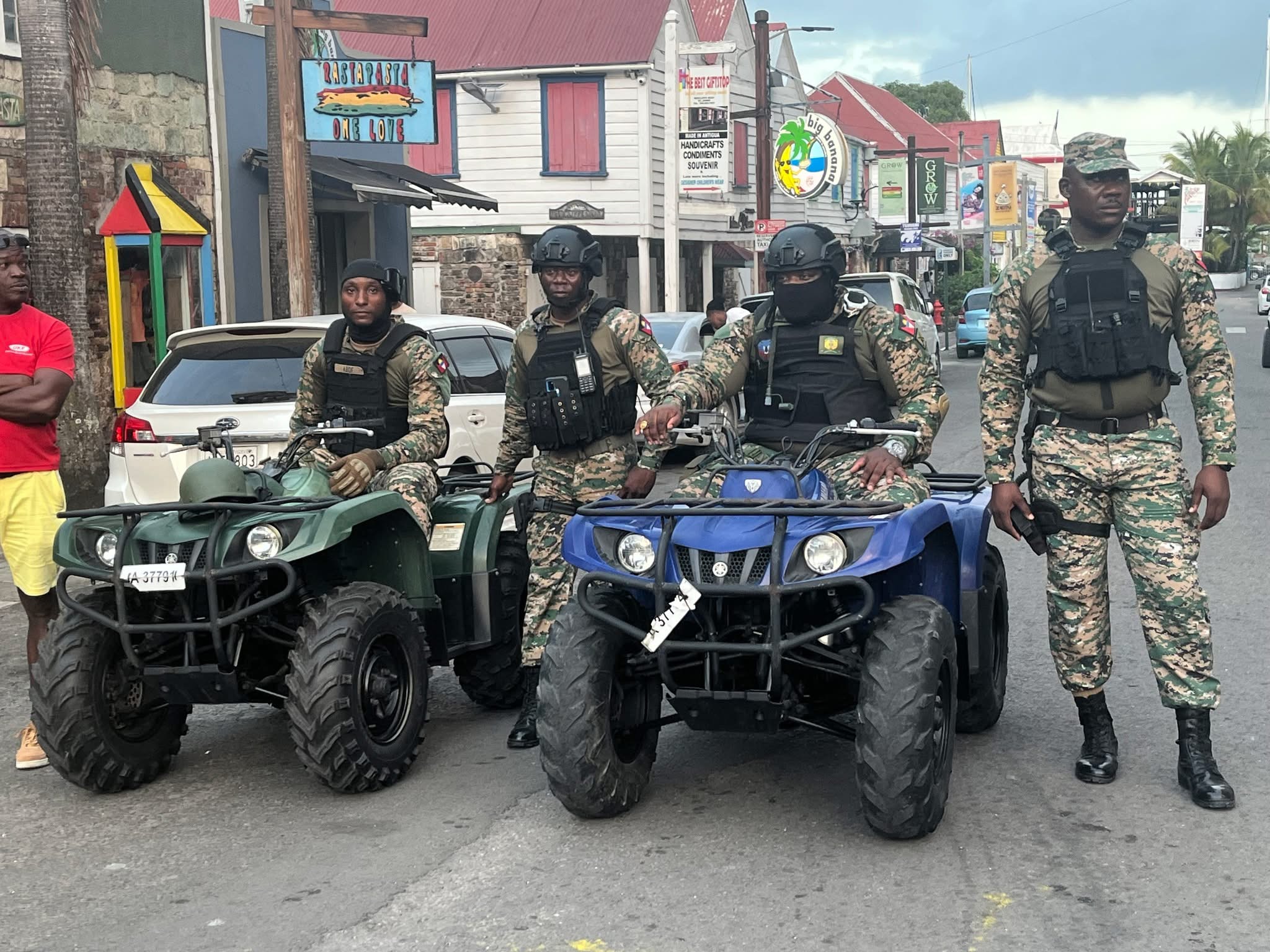
Antigua and Barbuda Cabinet Approves More Equipment for Police and Military Ahead of CHOGM
As the Caribbean nation of Antigua and Barbuda makes final preparations to welcome global leaders for the upcoming Commonwealth Heads of Government Meeting (CHOGM), its national Cabinet has given the green light to procure additional security equipment for the country’s police force and military, according to Director General of Communications Maurice Merchant. Speaking directly to reporters after the closed-door Cabinet session, Merchant confirmed the approval but declined to release key details including the specific type of equipment, total procurement cost, and expected delivery timeline. He noted that the government intends to share a full breakdown of the plan at a future, unspecified date.
The approval of the new security assets came during a meeting focused heavily on pressing national security threats, where senior law enforcement and customs leadership joined Cabinet members to discuss the escalating crisis of gun violence, the flow of illegal firearms across borders, and gaps in current border protection infrastructure. During the discussions, the acting prime minister reiterated the government’s unwavering commitment to equipping all national security bodies including police and customs with the tools they require to protect public safety.
Beyond approving new equipment, Cabinet issued formal directives to law enforcement to ramp up intelligence-driven anti-criminal operations, increase visible police presence across residential communities, and step up pursuit of individuals linked to organized criminal activity. For border control operations, officials ordered closer inspection of all incoming shipping containers, accelerated efforts to roll out portable scanning devices, and moves to fully activate the permanent container scanner already installed at the nation’s main port.
Merchant emphasized that Cabinet frames robust border management as a foundational pillar of broader efforts to stop illegal firearms and ammunition from being smuggled into Antigua and Barbuda. To further strengthen detection capabilities at ports, Cabinet also formally approved the acquisition of specialized detection dogs trained to locate hidden firearms, ammunition, and undeclared currency.
The meeting also opened with an official moment of condolence for the family of Saquania Anthony, a recent victim of fatal gun violence in Bathlodge. Cabinet also expressed its sincere concern for two other people who were injured in the same shooting attack. Merchant highlighted that this recent violence has underscored the urgent need for decisive government action to address the ongoing gun violence crisis gripping the nation.
-
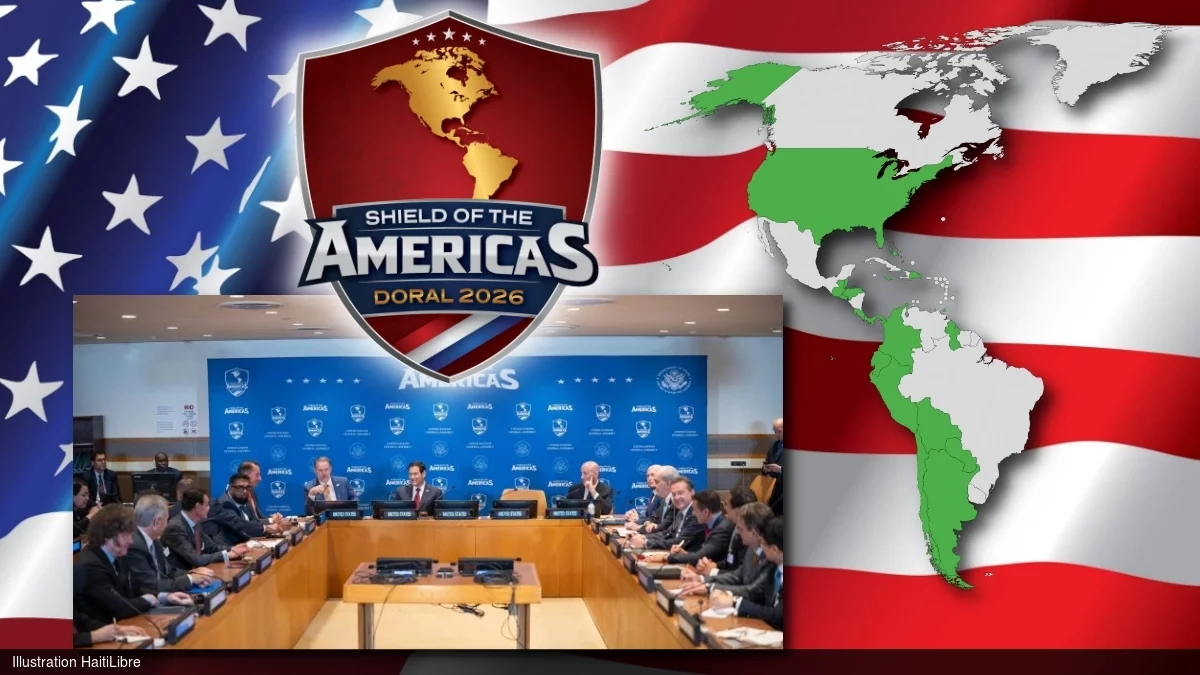
Politic : Joint Declaration on the Defense of Hemispheric Sovereignty
In a landmark display of regional cooperation, 15 governments across the Western Hemisphere have unveiled a coordinated framework called the ‘Shield of the Americas’, built to defend hemispheric sovereignty through three interconnected core pillars: economic resilience, collective security, and multilateral coordination. The joint declaration, released publicly on September 24, 2026, counts the United States, Argentina, Bolivia, Chile, Colombia, Costa Rica, the Dominican Republic, Ecuador, El Salvador, Guyana, Honduras, Panama, Paraguay, Peru, and Trinidad and Tobago among its founding signatories.
The first pillar of the initiative focuses on safeguarding regional economic sovereignty through targeted collaborative actions. Signatory nations have committed to deepening cross-border economic cooperation, exploring shared investment screening mechanisms, and securing critical mineral supply chains via diversified, reliable sourcing networks. The framework also calls for the development of non-discriminatory trusted supplier regulations for digital infrastructure, emphasizing that long-term regional security depends on inclusive economic growth, stable employment, and transparent, verifiable capital flows into member states.
Addressing rising threats to democratic rule, the second pillar centers on countering armed narco-terrorist networks that have destabilized communities across the region. Signatories agreed to coordinate cross-border sanctions, targeted designations, and financial actions against terrorist and criminal groups, expand the capacity of civilian law enforcement, and deliver humanitarian and public messaging support to protect the popular will of affected communities. Two Haitian criminal groups, Gran Grif and Viv Ansanm, were specifically named as high-priority targets of the new initiative.
The third pillar reinforces shared commitments to mutual respect for national sovereignty and self-determination, with a focus on coordinating policy through multilateral forums to advance collective goals. Beyond counter-narcotics work, member states also support targeted reforms to key multilateral institutions to better address 21st-century regional challenges.
To operationalize the framework across all three pillars, participating nations have laid out a series of cooperative next steps. These include expanding real-time intelligence sharing between member states, facilitating access to advanced security technologies where appropriate, investing in professional training and development for law enforcement and governance personnel, and expanding exchanges of evidence-based best practices for countering criminal activity and advancing economic development. Member states also committed to deepening economic and investment cooperation, and strengthening coordinated policy positions on shared issues in regional and global multilateral forums.
In the first concrete collective action under the new framework, signatories are launching a coordinated campaign to counter the immediate, widespread threat that transnational narco-terrorist organizations pose to regional peace, citizen safety, and shared prosperity. In line with each nation’s domestic and international legal obligations, member states will implement a suite of punitive measures, including asset freezes, immigration and visa restrictions for group members, associates, and supporters, and criminal liability for any individual that knowingly provides material or logistical support to designated organizations. The initial crackdown will target 24 transnational groups operating across the region, with country-specific naming conventions respected across all member jurisdictions.
To formalize and institutionalize this collective effort, participating nations plan to submit an official request to the President of the Organization of American States (OAS) Permanent Council, calling for a consultation meeting to establish an Organ of Consultation under Articles 6 and 13 of the Inter-American Treaty on Reciprocal Assistance, commonly known as the Rio Treaty. Once the consultation body is convened, member states will participate at the ministerial level to consider adopting a formal resolution that enables and facilitates collective counter-narco-terrorism action under the treaty. Signatory nations that are not currently parties to the Rio Treaty have expressed full support for the initiative and committed to contributing to the effort within the bounds of their own domestic and international legal obligations, including participating in the Organ of Consultation to the full extent permitted by its rules of procedure.
-
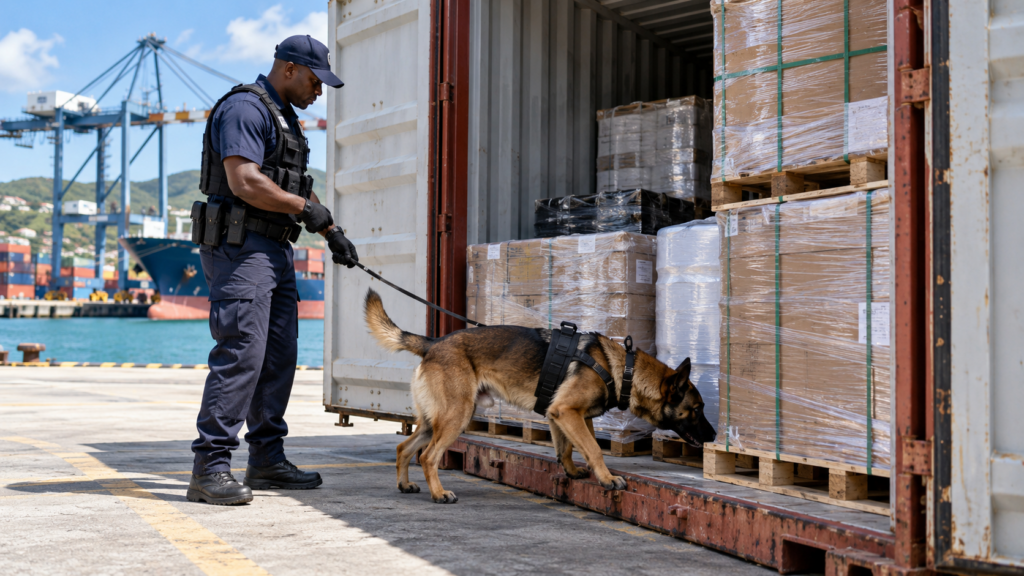
Antigua and Barbuda Cabinet Approves Detection Dogs for Ports to Find Guns and Ammunition
Antigua and Barbuda’s national cabinet has formally approved a plan to introduce specialized detection dogs at the country’s ports, a key new measure in the nation’s ongoing campaign to block illegal firearms and ammunition from crossing its borders. The announcement came following a post-Cabinet briefing led by Maurice Merchant, Director General of Communications, who outlined that the canines will undergo specialized training to assist port security, police and customs teams in identifying concealed firearms, ammunition and undeclared currency being smuggled into the country. As of the briefing, Merchant declined to disclose key details including the number of dogs to be acquired, the total budget allocated for the program, or a firm timeline for deploying the new detection teams. The approval of this initiative comes after extensive consultations between cabinet members and senior leadership from both the national police force and customs department, focused on addressing the growing challenge of gun crime and illicit weapons trafficking into Antigua and Barbuda. During these discussions, cabinet members conducted a thorough questioning of the customs comptroller regarding current protocols for inspecting and clearing incoming shipping containers, which represent a major entry point for contraband. Beyond the detection dog program, the cabinet has issued new directives to strengthen border security protocols: officials have called for heightened inspection scrutiny during the container clearance process, ordered customs teams to accelerate the acquisition of portable scanning devices, and pushed for faster progress to bring the port’s main fixed container scanner into full operational service. Merchant once again did not provide a specific timeline for the delivery or deployment of these new scanning technologies. For national security officials, the addition of detection dogs creates a complementary layer of security for checking cargo and high-risk areas across port facilities, designed to intercept illegal weapons before they can enter domestic circulation and fall into the hands of criminal groups. Merchant emphasized that cabinet views robust border enforcement as an indispensable pillar of its national strategy to combat gun crime, working in tandem with active police operations to seize and recover illegal weapons that have already been smuggled into the country. The urgency of these new measures was underscored by a recent fatal shooting in the community of Bathlodge that claimed the life of 29-year-old Saquania Anthony, leaving two additional people injured. During the cabinet meeting, members extended formal condolences to Anthony’s family and reaffirmed their growing alarm over the frequency of gun-related violence across the nation. In addition to border security reforms, cabinet has also instructed national police forces to ramp up enforcement actions and expand intelligence-led targeted operations to disrupt organized criminal activity that fuels the local gun trade.
-
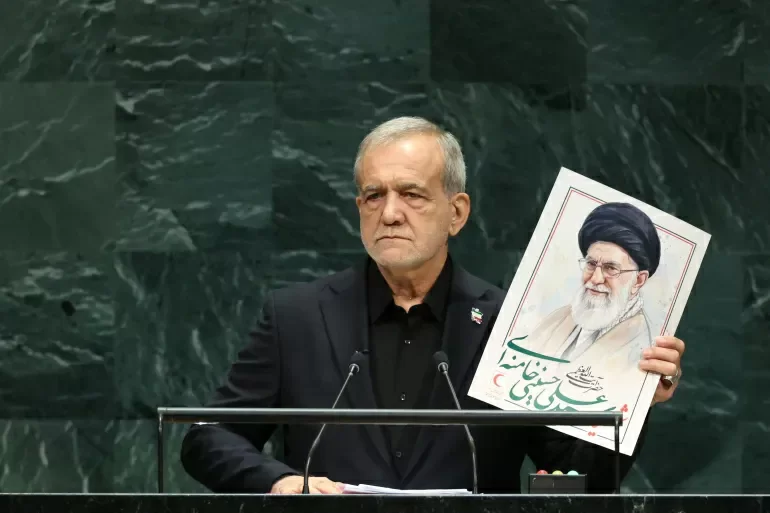
Pezeshkian haalt uit naar Trump bij VN, maar houdt deur naar onderhandelingen open
On Wednesday, at the 79th United Nations General Assembly in New York, Iranian President Masoud Pezeshkian delivered a fiery address that sharply criticized the United States and U.S. President Donald Trump, while reaffirming Iran’s openness to diplomatic negotiations so long as they are not conducted under military duress. The high-stakes speech came just 24 hours after Trump warned in his own UN address that the U.S. reserves the right to “annihilate” the Islamic Republic of Iran if no negotiated agreement is reached, even as he acknowledged that backchannel diplomatic contacts between the two nations were already underway and expressed optimism that a resolution could be found.
-
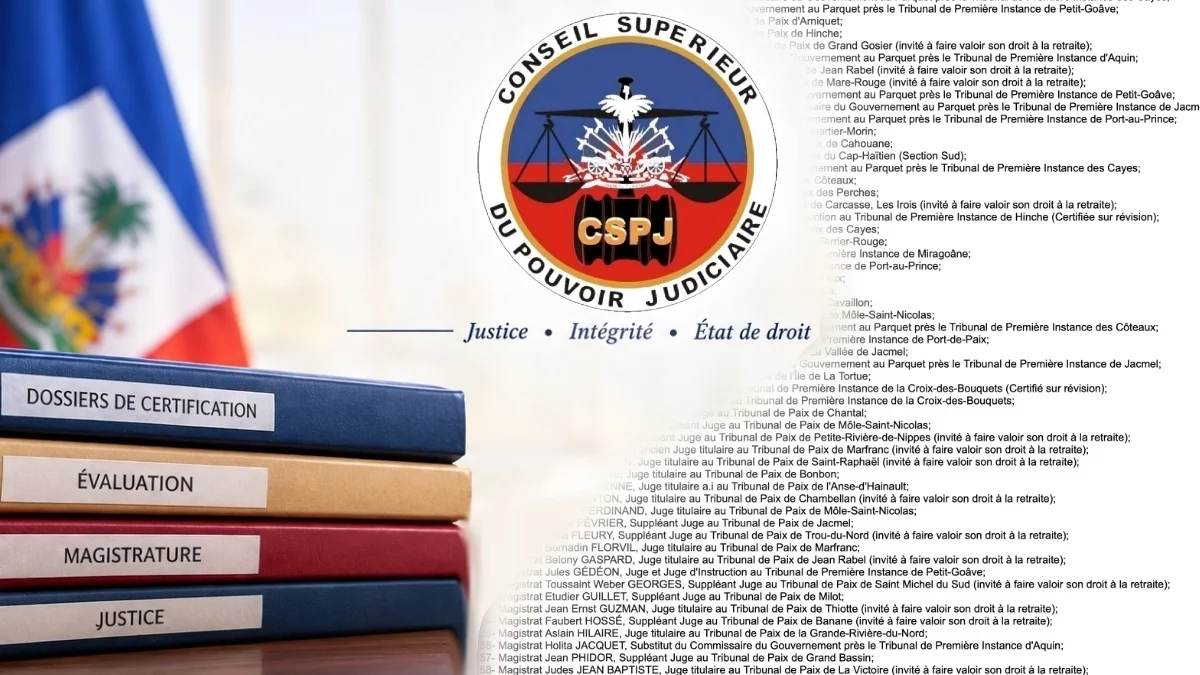
CSPJ : Certification of magistrates (lists of certified and non-certified magistrates)
In a landmark step for judicial reform in Haiti, the Superior Council of the Judiciary (Conseil Supérieur du Pouvoir Judiciaire, CSPJ) published the long-awaited results of its magistrate certification review on Wednesday, September 24, 2026. The outcome follows three consecutive days of closed-door deliberations, administrative and legal vetting, and thorough review of 159 submitted candidate files.
After completing the comprehensive evaluation process, the CSPJ has formally certified 119 sitting magistrates across Haiti’s local, first-instance, and appellate courts to continue in their judicial roles. Of the remaining 40 files reviewed, 17 magistrates have been stripped of certification and disqualified from judicial service, all cited for failing to meet basic standards of professional and moral integrity. One disqualified magistrate, Dieuveuil Boileau, was additionally found to hold a fraudulent Baccalaureate II diploma, further justifying his removal.
Two additional magistrates were formally requested to exercise their retirement rights, a move that clears the way for institutional restructuring of the lower judiciary. Seven other certification files remain open, with the CSPJ announcing that further investigation will be conducted to resolve outstanding questions about the candidates’ eligibility before a final ruling is issued.
Among the 119 certified magistrates are a range of sitting judicial officers, from local justices of the peace to senior court leaders. Notably, the certification includes one posthumous approval for Jacques Philippe Vincent, acting presiding judge at the Magistrate’s Court of Acul Samedi, confirming the court’s recognition of his service even after his passing. Several senior former judges, including Lionel Ralph Dimanche, former dean of the Court of First Instance of Croix-des-Bouquets, and Yvon Jean Noel, deputy government commissioner at the Port-au-Prince Court of Appeal, also received certification after mandatory review.
The 17 non-certified magistrates hold roles across multiple jurisdictions, including deputy government prosecution positions in Port-au-Prince, Petit-Goâve, and Croix-des-Bouquets, as well as substitute judge seats in Limonade, Camp-Perrin, and Kenscoff. All were disqualified on the grounds of failing to maintain the professional and ethical standards required of Haiti’s judiciary, a decision that represents a significant push by the CSPJ to root out corruption and unethical conduct within the country’s legal system.
This certification process comes as Haiti continues its multiyear effort to reform its judicial institutions, rebuild public trust in the rule of law, and address longstanding systemic challenges including widespread corruption, backlogged court dockets, and inconsistent adherence to professional standards among judicial officers. The publication of the full certified and disqualified lists marks an unprecedented level of transparency in the country’s judicial reform process.
-
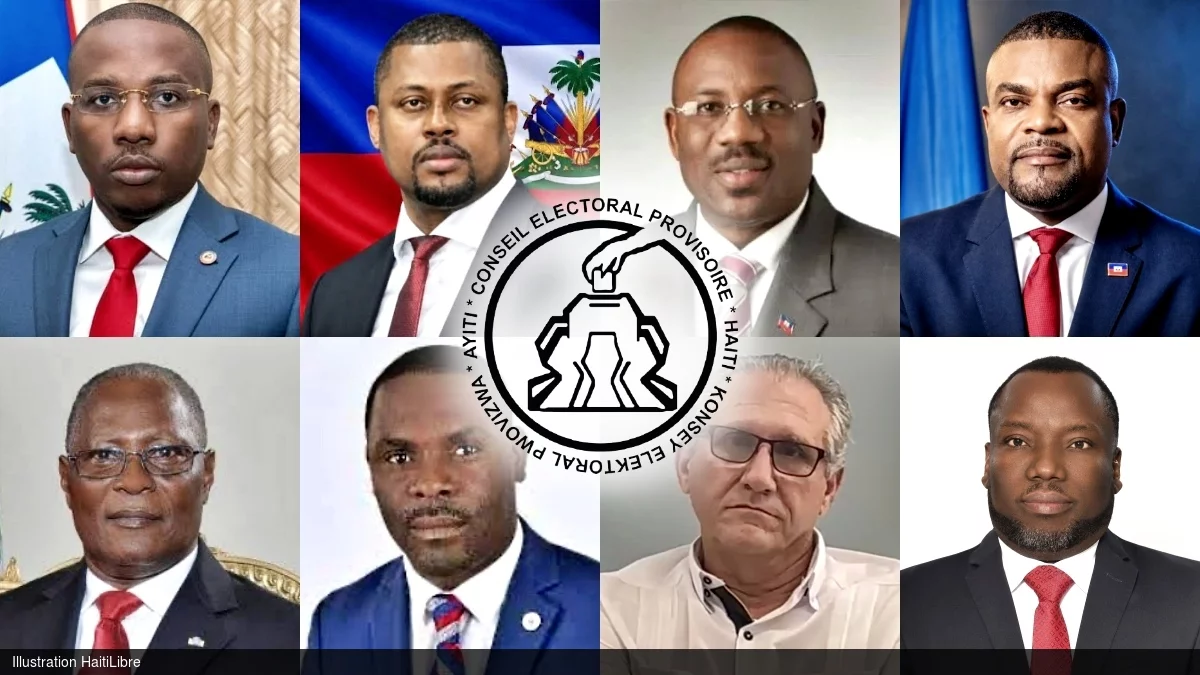
Provisional List of the 9 Candidates Registered for the Presidency in Haiti
On September 23, 2026, Haiti’s Provisional Electoral Council (CEP) released its first provisional roster of registered candidates for the country’s upcoming December 2026 presidential election, revealing nine names that have completed initial registration — while leaving the much-anticipated candidacy of former Haitian president Michel Martelly in administrative limbo, amid ongoing questions over whether international sanctions will disqualify his bid under new electoral rules.
The nine candidates that appear on the published preliminary list are Claude Joseph of Les engagés pour le Développement, Ricardo Jean-Pierre of Parti Nationaliste Haïtien, Gary Bodeau of PLATFÒM REKONSILYE, Wilson Jeudy of Vision-Action-Réalisation, Wilner Joseph of VIKTWA, Jocelerme Privert of AYITI TRANSFOME, Maxo Joseph of Réveil des Citoyens Haitiens, Munir Joseph Mourra of Mobilisation pour le Progrès d’Haïti, and Gandhy Dorfeuille of Ansanm Nou Fò. All nine have completed initial paperwork to appear on the roster, but CEP officials stress that the entire list remains provisional, with full eligibility still pending completion of rigorous compliance checks.
CEP teams are currently conducting deep dives into the physical documentation submitted by each prospective candidate, with two key eligibility criteria under review: confirmation that each candidate meets constitutional requirements for the presidency, and verification that each candidate’s political party has secured the required 30,000 registered affiliated members. No candidate will receive final official approval until this verification process is concluded.
Martelly, whose candidacy has dominated pre-election speculation, does not yet appear on the published list. CEP confirmed that the former president submitted his registration just one day before the preliminary list was released, and the council’s digital administrative systems require additional time to process, validate, and update the new entry alongside other applications.
The delay in processing Martelly’s registration is not the only barrier his candidacy faces, however. Under a 2026 electoral decree, any individual subject to United Nations Security Council sanctions is barred from qualifying as a candidate. While Martelly is not currently named to the UN Security Council’s sanctions list, he faces sweeping unilateral sanctions from multiple Western governments and major international blocs over allegations of criminal activity and ties to Haitian armed gangs.
The UN Panel of Experts on Haiti first publicly linked Martelly to gang activity in an October 2023 official report, which accused the former president of funding and backing armed gangs to expand his personal political influence. Canada became the first nation to impose direct sanctions on Martelly in November 2022, targeting him over allegations of corruption and gang financing. In August 2024, the United States government added Martelly to its sanctions list, citing his alleged role in transnational cocaine trafficking, money laundering, and continued support for violent gangs. Most recently, in December 2025, the European Union Council added Martelly to its sanctions blacklist, imposing an asset freeze and global travel ban over his proven complicity in organized gang violence.
Haitian legal analysts are now at the center of a growing national debate over whether these international sanctions and expert findings meet the legal threshold to disqualify Martelly under the 2026 electoral decree’s requirements for candidate probity and moral integrity. The CEP’s upcoming ruling on Martelly’s eligibility has emerged as the most contentious and closely watched issue in the lead-up to the December vote, with major implications for the legitimacy of Haiti’s electoral process as the country works to emerge from years of political and security crisis.