分类: politics

  • Senator urges mandatory bodycam policy for JCF

    Senator urges mandatory bodycam policy for JCF

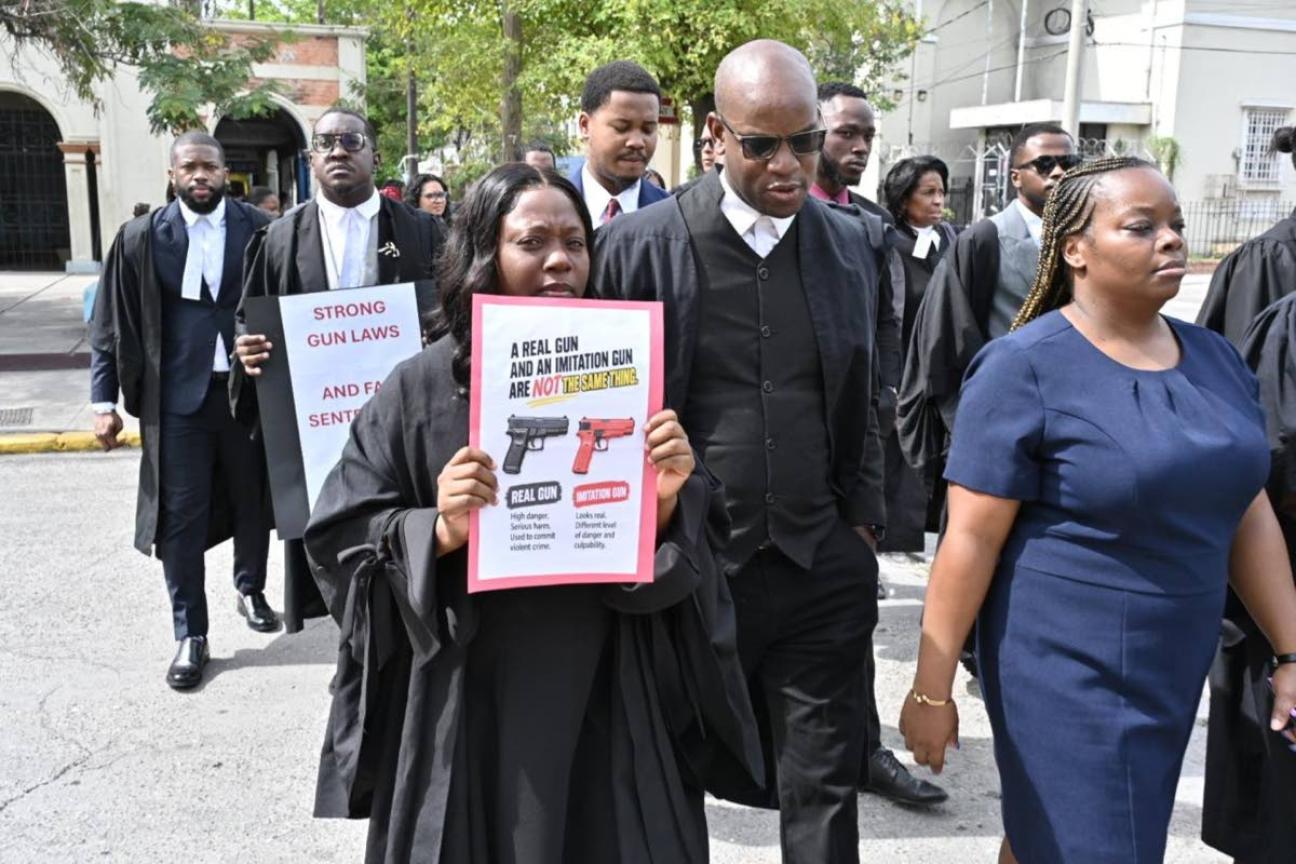
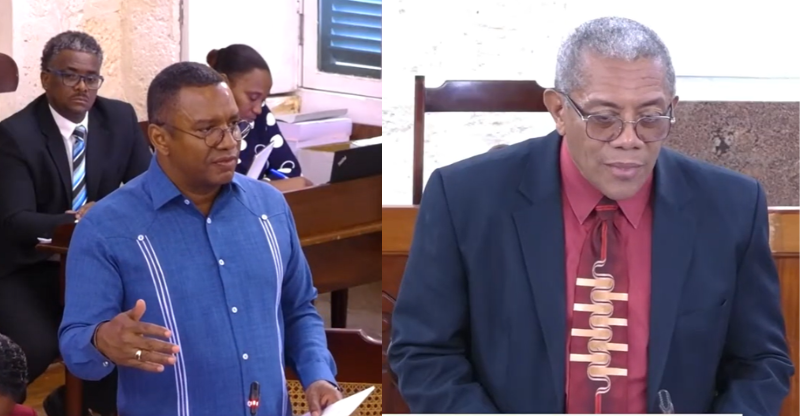
    During Friday’s upper house Senate debate over amendments to Jamaica’s 2026 Cybercrimes Bill, opposition Senator Allan Bernard ignited a heated debate by calling for the creation of a national digital accountability framework that would mandate a statutory body-worn camera policy for the Jamaica Constabulary Force (JCF).

    Bernard tabled his proposal against a troubling backdrop: a sharp year-over-year surge in fatal police shootings across the island that has already spurred widespread demands from civil society organizations for mandatory camera use during high-risk specialized police operations. Data released by the Independent Commission of Investigations (Indecom) underscores the scale of the trend: 115 people have been killed by Jamaican security forces in reported confrontations since the start of 2026, a 32% jump from the 87 fatalities recorded during the same period in 2025.

    While confirming the Opposition would support the updated Cybercrimes Bill, Bernard argued that any meaningful approach to national security must be rooted in constitutional protections. “Public safety must be rights-based safety, and digital accountability must apply not only to the governed but also to those who govern,” he told the chamber, pointing to the systemic lack of transparency around police actions including searches, seizures, arrests and the repeated extrajudicial killings that have plagued Jamaica’s security landscape.

    His proposal directly pushes back against recent comments from National Security and Peace Minister Dr. Horace Chang, who dismissed civil society calls for body-worn cameras as a “crazy idea” during an April 22 post-Cabinet media briefing. Chang has claimed that equipping officers with visible cameras during high-risk confrontations with armed criminals would unnecessarily put police at greater risk of being targeted. Bernard rejected this reasoning outright, calling out a fundamental contradiction at the heart of the government’s position.

    “The government comes to Parliament asking for more digital tools, stronger investigative powers, expanded criminal offenses, harsher penalties, and clearer search and seizure procedures under the Cybercrimes Act, yet it refuses to adopt one of the most basic digital accountability tools of modern policing: body-worn cameras,” Bernard argued. “The government wants cameras, court records, search powers, and electronic evidence when it pursues citizens, but when citizens ask for cameras to protect life, liberty and truth during police operations, we are told it is a crazy idea.”

    Bernard further highlighted the inconsistency by pointing to remarks from Science, Technology and Special Projects Minister Dr. Andrew Wheatley, who shepherded the bill through the House of Representatives. Wheatley emphasized that Clause 9 of the legislation requires the JCF Commissioner to develop a formal code of standard procedures for handling digital evidence to ensure effectiveness and integrity. Yet, Bernard noted, when it comes to evidence surrounding fatal police shootings, that same principle of integrity is treated as optional. “This contradiction borders on hypocrisy,” he said. “The government cannot say Jamaica needs a trusted digital society while resisting the very technologies that would help citizens trust the state.”

    Bernard extended his argument to align the push for body cameras with the core goals of the Cybercrimes Bill itself. “If the law criminalizes the nonconsensual publication of an intimate image because dignity matters, then surely the law can require recording of state encounters where life may be taken, because life matters even more,” he said. “If the law can impose up to 20 years in prison for cybercrimes against children, then surely the state must answer when minors are among those killed in police operations.”

    Before he could conclude his remarks, Senate President Tom Tavares-Finson interrupted Bernard, ordering him to stay on topic and adhere to the debate’s focus on the Cybercrimes Bill. Tavares-Finson noted that despite Bernard’s skillful framing of the issue, the debate was not the appropriate venue to advance policy on police body cameras. Undeterred, Bernard pushed back, noting that the core question of selective accountability is inherently tied to the legislation. After Bernard reiterated his call for a formal digital accountability framework and statutory body camera policy, Tavares-Finson again intervened, criticizing the senator for straying from the bill’s text despite acknowledging the strength of his presentation.

    Opposition Senator Lambert Brown stepped in to defend Bernard, noting that government senators had ample opportunity to respond to the arguments, but Tavares-Finson dismissed Brown’s intervention, citing Senate standing orders that require all contributions to remain relevant to the matter under debate. The Cybercrimes Act amendments were originally approved by the House of Representatives on February 3, and the ongoing upper house debate has evolved into a broader discussion of state accountability beyond cybercrime policy.

  • Johnson Smith to welcome India’s foreign minister to Kingston

    Johnson Smith to welcome India’s foreign minister to Kingston

    KINGSTON, Jamaica — A landmark chapter in Jamaica-India diplomatic relations is set to open this weekend, as Jamaica’s Minister of Foreign Affairs and Foreign Trade, Senator Kamina Johnson Smith, prepares to welcome India’s Minister of External Affairs, Dr. S. Jaishankar, for the first-ever bilateral visit by an Indian External Affairs Minister to the Caribbean nation.

    Dr. Jaishankar is slated to touch down at Kingston’s Norman Manley International Airport this Saturday, kicking off a three-day itinerary focused on deepening bilateral cooperation across multiple priority sectors. Ahead of the visit, Jamaica’s Ministry of Foreign Affairs and Foreign Trade released an official statement noting that the high-level trip will give both top diplomats a chance to review the current state of bilateral ties and move forward with talks to activate existing Memoranda of Understanding covering three key areas: public health, energy solarisation, and public broadcasting.

    Beyond operationalizing these existing agreements, the two sides are also set to explore new and expanded collaboration in high-impact areas including agriculture, digital technology and innovation, tourism, and align on regional and multilateral issues that are of shared interest to both nations.

    “This visit builds on the strong foundation between Jamaica and the Republic of India, rooted in history, shared values and a common vision for inclusive and sustainable development. I look forward to welcoming Minister Jaishankar to Kingston as we continue to strengthen the longstanding ties between our countries,” Johnson Smith said in a statement. “It presents an excellent opportunity to translate the strong political will demonstrated by our leaders into tangible outcomes that benefit our peoples.”

    Johnson Smith also highlighted that the visit will serve as a key moment for Jamaica’s government and people to formally renew their sincere gratitude to India for the generous relief supplies New Delhi donated in the wake of Hurricane Melissa, and to reaffirm both countries’ shared commitment to advancing long-term economic resilience across the Global South.

    Official bilateral talks between Dr. Jaishankar, Johnson Smith, and a select group of Jamaican cabinet ministers are scheduled for Monday, May 4. Following the plenary discussions, the Indian External Affairs Minister will pay a courtesy call on Jamaica’s Prime Minister Dr. Andrew Holness at Jamaica House, and hold engagements with private sector leaders and other senior Jamaican government officials.

    The bilateral relationship between Jamaica and India stretches back more than six decades: the two countries formally established diplomatic relations on August 12, 1962, just months after Jamaica gained its independence. The partnership has gained significant momentum in recent years, starting with Jamaica’s launch of its first resident diplomatic mission in India in September 2020. Earlier this year, the Jamaican High Commission in New Delhi was formally opened during Prime Minister Holness’ official trip to India, which marked the first official visit by a sitting Jamaican head of government to the South Asian nation.

  • Toward a digital dividend: Making Grenada’s digital VAT work for everyone

    Toward a digital dividend: Making Grenada’s digital VAT work for everyone

    Grenada has marked a landmark shift toward integrating its economy into the global digital age, with the House of Representatives recently passing legislation to extend the country’s existing Value Added Tax (VAT) regime to international digital platforms and services.

    Far from a dry, technical policy adjustment, this change carries tangible implications for everyday Grenadians, touching the monthly household budgets that shape most citizens’ financial lives. Crucially, the reform is not the introduction of an entirely new tax: it is an update to the nation’s longstanding 15% VAT structure, designed to close a long-standing fairness gap in the country’s tax code. For decades, domestic brick-and-mortar and local businesses have operated under Grenada’s VAT rules, while large multinational technology companies providing cross-border digital services operated entirely outside the local tax system. As consumer spending has steadily shifted from physical retail locations to digital platforms accessed via smartphones and laptops, bringing these offshore-provided services into the existing tax framework has become an unavoidable step for leveling the playing field. Contributor Rochelle, however, notes that the policy can only deliver on its promise of fairer taxation if implementation prioritizes household affordability, clear transparency, and continued support for Grenada’s emerging digital sector.

    One of the most pressing vulnerabilities facing policymakers as the law rolls out is the threat of double taxation. Many Grenadians currently pay for popular digital services through foreign-registered accounts or international credit cards, which already levy taxes from the service provider’s home country, such as U.S. sales tax or U.K. VAT. Without careful cross-border coordination, the new 15% local VAT will be applied on top of these existing foreign levies, leaving consumers to pay two separate taxes on a single digital subscription or purchase.

    To mitigate this risk, Rochelle outlines three targeted policy solutions. First, she urges the government to adopt the international destination principle for digital taxation, which requires service providers to waive their home country’s tax for services sold to Grenadian consumers, ensuring only Grenada’s local VAT is applied. Second, she calls for the expansion of Grenada’s network of Double Taxation Agreements (DTAs) to explicitly cover cross-border digital services, preventing residents from being financially penalized for participating in the global digital economy. Third, she proposes collaboration between the government and local financial institutions to implement bank-level filtering, which ensures the 15% VAT is only applied to the pre-tax base price of a service, rather than stacked on top of already applied foreign taxes.

    Beyond addressing double taxation, Rochelle argues that targeted safeguards are needed to ensure the new tax does not become an unnecessary barrier to digital inclusion and economic growth. A 15% cost increase for essential digital tools ranging from educational software used by local students to online advertising platforms relied on by small Grenadian entrepreneurs represents a substantial additional financial burden for these groups.

    To turn this policy reform into a net benefit for all Grenadians, Rochelle proposes that all revenue collected from the new digital VAT be designated as a national “Digital Dividend.” These funds should be explicitly earmarked for reinvestment in national digital infrastructure. For example, revenue could be used to subsidize affordable high-speed internet access for underserved rural communities, or to fund free digital literacy training programs that expand access to digital opportunities across all income groups. This model would ensure that every dollar of VAT paid by households circulates back to the public in the form of improved services and expanded economic opportunity.

    The core goal of the reform, Rochelle emphasizes, is not to discourage use of essential digital services, but to grow government revenue without placing an unfair financial burden on ordinary citizens. She encourages Grenadians to be deliberate about their digital spending, auditing recurring subscriptions and prioritizing core services to manage household costs. At the same time, she calls on the Grenadian government to uphold the same standard of intentionality in managing the new revenue stream.

    If policymakers successfully address the risk of double taxation and commit to full transparency around how digital VAT funds are reinvested, the reform will do more than just update Grenada’s tax code: it will lay the foundation for a more fair, inclusive digital economy that benefits every Grenadian.

    (Disclaimer: NOW Grenada does not take responsibility for the opinions and statements shared by contributors. Readers may report inappropriate content through official channels.)

  • Premier Gaston Browne wint vierde termijn met belofte van economische groei

    Premier Gaston Browne wint vierde termijn met belofte van economische groei

    In a decisive election outcome that reshapes the political landscape of the Caribbean twin-island nation, Gaston Browne, the incumbent Prime Minister of Antigua and Barbuda, has secured a landslide victory to earn a fourth consecutive term in office, according to preliminary official election results.

    Browne’s ruling Antigua and Barbuda Labour Party expanded its parliamentary majority dramatically, winning 15 out of the 17 available legislative seats. The main opposition bloc, the United Progressive Party, was left with just a single seat in the new parliament, a stark drop in its political representation following the election held on Thursday.

    Shortly after the preliminary results were announced, the Labour Party released a statement via social media expressing gratitude for the public’s mandate. “We are humbled and honored by your support and trust,” the party said.

    The 59-year-old prime minister, a former banker and entrepreneur who has led the Labour Party since 2014, centered his entire re-election campaign on a platform of delivering sustained economic stability and driving growth through targeted foreign investment. Browne anchored his policy credibility on two key achievements of his previous administration: the robust post-pandemic recovery of the country’s critical tourism sector, and the large-scale expansion of national infrastructure that has unlocked new economic opportunities across the islands.

    The election campaign was significantly shaped by an international dispute that emerged earlier this year. In January, the United States announced a temporary freeze on visa processing for applicants from Antigua and Barbuda, a move that delivered a major blow to many residents who regularly travel to the U.S. for work and family visits. Washington’s decision stemmed from longstanding concerns over Antigua and Barbuda’s popular Citizenship by Investment (CBI) program, which grants nationality to foreign investors in exchange for major capital contributions to the country. U.S. authorities have warned that bad actors and criminal networks could exploit the program to gain visa-free access to U.S. territory.

    Browne’s administration moved quickly to address these concerns throughout the campaign, emphasizing that the government has maintained close collaborative working relations with U.S. authorities and has already implemented sweeping reforms to make the CBI program more transparent and secure against misuse.

    In a strategic political move that surprised many regional observers, the Labour Party called the snap election two years earlier than its constitutionally required end date, arguing that the country needed a fresh mandate to navigate ongoing global economic and geopolitical crises. Prior to the snap vote, the party held a nine-seat majority in the outgoing parliament, a margin that has now more than doubled in the latest result.

    A full second recount is scheduled for Friday to formalize and confirm the final official election result. Independent international election observers are on the ground monitoring the entire post-vote process to ensure compliance with international democratic standards.

  • WATCH: Gaston Browne sworn in for fourth term as Prime Minister

    WATCH: Gaston Browne sworn in for fourth term as Prime Minister

    In a historic milestone for the twin-island Caribbean nation of Antigua and Barbuda, Gaston Alfonso Browne has officially taken office for an unprecedented fourth consecutive term as the country’s prime minister. The low-key but symbolic swearing-in ceremony was held at Government House, led by the nation’s Governor General Sir Rodney Williams, who opened the event by emphasizing the unparalleled nature of Browne’s electoral achievement.

    Williams remarked that no prime minister in Antigua and Barbuda’s modern political history has ever secured four straight terms at the helm of the national government, calling the occasion a truly monumental moment in the country’s democratic journey. Reflecting on the results of the recent general election, Williams noted that the mandate from voters was clear and unambiguous, stating, “The people have spoken with a thunderous voice.”

    Following Williams’ opening remarks, Browne completed the formal requirements for assuming office: he took the required oaths of office, allegiance, and official secrecy, before formally signing the national government’s register of incoming ministers. In a move that signals policy continuity for the new administration, Browne will retain the key cabinet portfolios he held in his previous administration, including the ministries of Finance, Corporate Governance, and Public-Private Partnership. The ceremony also concluded with the swearing-in of Attorney General Sir Steadroy Cutie Benjamin, completing the first formal step of forming the new national government.

  • ‘Leave Barbuda Alone’ Trevor Walker says, as he again raises separation

    ‘Leave Barbuda Alone’ Trevor Walker says, as he again raises separation

    Longstanding calls for political and administrative separation between Barbuda and its larger neighboring island Antigua have gained fresh momentum, as local political figure Trevor Walker has reignited the debate with his uncompromising slogan “Leave Barbuda Alone”.

    Barbuda, the smaller of the two islands that make up the twin-island nation of Antigua and Barbuda, has for decades grappled with unique challenges that residents argue are consistently overlooked by the national government centered in Antigua. These grievances range from unequal resource allocation and slow post-disaster recovery to limited local decision-making power over the island’s land and development projects.

    Walker, a prominent voice for Barbuda’s autonomous movement, has reaffirmed his campaign for separation in recent public comments, doubling down on demands that the island be granted full autonomy to manage its own internal affairs. “Leave Barbuda Alone” has emerged as the core mantra of his renewed movement, encapsulating the frustration many Barbudans feel over outside interference in their island’s social, economic, and environmental future. The issue gained heightened attention after the 2017 Hurricane Irma, which destroyed most of Barbuda’s infrastructure and displaced nearly all of its 1,800 residents. Critics of the central government say the national response to the disaster was slow and inadequate, and that reconstruction efforts have prioritized outside commercial interests over the needs of local Barbudan communities.

    Walker’s renewed push has reignited national discussion about the constitutional future of the twin-island nation, with supporters of autonomy arguing that separation would allow Barbuda to craft policies tailored to its small population and unique economic base, which relies heavily on artisanal fishing, ecotourism, and sustainable land management. Opponents of the split counter that a divided Antigua and Barbuda would be too economically vulnerable to remain viable on the global stage, and that greater devolution of power rather than full separation is the more practical path forward. For now, the “Leave Barbuda Alone” movement continues to galvanize local support, putting the long-simmering issue of Barbuda’s self-determination back on the national political agenda.

  • “This is not a time for gloating,” Browne says after decimating opposition

    “This is not a time for gloating,” Browne says after decimating opposition

    Fresh off a historic landslide victory in Antigua and Barbuda’s general election that has secured his fourth consecutive term in office, Prime Minister Gaston Browne is striking a measured, unifying tone, rejecting triumphalism and calling on both his supporters and the broader nation to turn toward shared progress and increased national productivity.

    The Antigua and Barbuda Labour Party (ABLP) delivered one of the most decisive election outcomes in the country’s modern political history, claiming 15 out of 17 available parliamentary seats — a result that grants Browne’s incoming administration an unusually strong popular mandate to advance its policy agenda. Speaking to assembled supporters immediately after the final results were confirmed, Browne emphasized that the scale of the win did not justify division or celebratory arrogance.

    “This is not a time for gloating,” Browne told the crowd, urging ABLP backers to stay grounded in the aftermath of the landslide. Rejecting the kind of triumphalism that often follows lopsided election results, he framed the victory as a collective opportunity rather than a partisan prize, stressing that the moment called for bridge-building instead of deepening existing political divides.

    “We must remain united as a people… this victory is about building Antigua and Barbuda for everyone,” Browne added, cementing his core message of cross-partisan inclusion. Moving beyond calls for unity, the Prime Minister outlined the early priorities of his incoming term, noting that sustained national progress will require more than just policy action from the government. He emphasized that active participation and improved productivity from all citizens are equally critical to driving long-term growth across the islands.

    Browne confirmed that his administration’s four-year agenda will center on three core pillars: expanding the national economy, delivering transformative infrastructure development, and creating sustainable new jobs for local communities. A core commitment of the new term, he added, will be advancing inclusive growth that reaches every corner of the country, regardless of how residents voted in the election. “No one will be left behind,” he said, reinforcing his commitment to governing for all Antigua and Barbuda residents, not just political supporters.

    Browne’s post-victory remarks mark a clear shift from the heated rhetoric of campaign season to the practical work of governing. With one of the largest parliamentary majorities in modern Antigua and Barbuda history, the Prime Minister now enters his fourth term with a reinforced popular mandate to implement his policy vision.

  • Official Declaration of Results by ABEC

    Official Declaration of Results by ABEC

    On April 30, 2026, the official Electoral Commission of Antigua and Barbuda, based on High Street in St. John’s, formally published the certified results of the country’s 2026 general election, fulfilling the legal requirement laid out in Section 30 (5) of the 2001 Representation of the People (Amendment) Act. The national election, held the same day the results were declared, filled all 17 parliamentary seats allocated across the nation’s electoral constituencies.

    The final outcome delivered a decisive majority to the Antigua and Barbuda Labour Party (ABLP), which secured victory in 15 of the 17 contested seats. Among the ABLP’s elected representatives is party leader Gaston Browne, who won the St. John’s City West constituency. Additional ABLP winners include Melford Nicholas for St. John’s City East, Maria Browne for St. John’s Rural East, Michael Joseph for St. John’s Rural West, Daryll Matthew for St. John’s Rural South, H. Charles Fernandez for St. John’s Rural North, Philmore Benjamin for St. Mary’s North, Dwayne George for St. Mary’s South, Anthony Smith Jr. for All Saints East & St. Luke, Michael Freeland for St. George, Rawdon Turner for St. Peter, Randy Baltimore for St. Philip North, Kiz Nathaniel Johnson for St. Philip South, and E. P. Chet Greene for St. Paul.

    Only two seats went to opposing political parties. The United Progressive Party (UPP) claimed victory in All Saints West, where candidate Jamale Pringle secured the seat. The Barbuda People’s Movement (BPM) won the constituency of Barbuda, with candidate Trevor Walker declared the duly elected representative.

    The official declaration was signed by His Excellency Arthur G. B. Thomas, Chairman of the Antigua and Barbuda Electoral Commission, formalizing the results that will shape the country’s next governing term. The outcome cements the ABLP’s position as the dominant political force in Antigua and Barbuda for the 2026-2030 parliamentary cycle.

  • Gaston Browne secures fourth term in Antigua election landslide

    Gaston Browne secures fourth term in Antigua election landslide

    In a historic outcome that has reshaped the political landscape of the Eastern Caribbean, Prime Minister Gaston Browne has secured an unprecedented fourth consecutive term in office, after leading the Antigua and Barbuda Labour Party (ABLP) to a dominant landslide win in the country’s snap general election.

    Preliminary official results confirm the scale of the ABLP’s triumph: the incumbent party captured 15 out of the 17 available seats in the national parliament, a dramatic expansion of its existing legislative majority that solidifies its long-standing control of the national government. The main opposition bloc, the United Progressive Party (UPP), was left with only a single seat, while the Barbuda People’s Movement held onto its traditional constituency seat representing the island of Barbuda.

    Browne, who has held the office of prime minister since first leading the ABLP to victory in 2014, built his 2025 campaign around a platform focused on delivering sustained economic stability, accelerating post-pandemic tourism recovery, expanding critical national infrastructure, and driving inclusive growth through targeted foreign investment. Within hours of the preliminary results being announced, the ABLP released an official statement expressing gratitude to voters across both islands for placing their continued trust in the party’s leadership and its long-term development agenda.

    The election itself was called nearly two years ahead of its constitutionally required schedule, a move Browne justified by arguing that Antigua and Barbuda needed a fresh popular mandate to effectively address mounting international and domestic economic headwinds. One of the most contentious central issues of the campaign was the diplomatic and economic fallout from the United States’ decision to suspend non-immigrant visa processing for Antiguan and Barbudan nationals earlier this year. U.S. officials raised national security concerns over the country’s popular Citizenship by Investment Programme (CIP), claiming the initiative contained unaddressed vulnerabilities that could be exploited by bad actors.

    In response to those criticisms, Browne’s administration pushed back aggressively, noting that senior officials had already implemented sweeping reforms to the CIP to boost transparency, strengthen background screening processes, and align the program with international security standards. Browne also emphasized that his government has maintained open, constructive dialogue with U.S. authorities to resolve the dispute, even as he framed the issue as a test of Antigua and Barbuda’s national sovereignty.

    Beyond the visa controversy, the campaign centered heavily on the government’s recent economic track record and its plans to boost the country’s climate resilience. Browne repeatedly highlighted the nation’s strong post-COVID-19 tourism rebound, which has seen visitor numbers surpass pre-pandemic levels, as well as a pipeline of major ongoing infrastructure projects as proof of his government’s effective governance amid a period of unprecedented global economic volatility. The prime minister also positioned his administration as the only party capable of delivering the investment needed to protect low-lying coastal communities from the growing impacts of climate change, a top priority for voters across the twin-island nation.

    International observer delegations were present across the country to monitor election day proceedings, and a formal second count of ballots is scheduled to take place in the coming days to officially confirm the final election results. Even before the formal confirmation, the outcome has already cemented Browne’s status as one of the longest-serving sitting heads of government in the Caribbean, and makes clear the ABLP’s unchallenged dominance over Antigua and Barbuda’s modern political system.

  • Lamin Newton thanks supporters after election defeat

    Lamin Newton thanks supporters after election defeat

    Following an unsuccessful bid in Antigua and Barbuda’s recent general election, former candidate Lamin Newton has publicly extended his heartfelt appreciation to every individual who stood behind his campaign. In an official statement released after the final results were confirmed, Newton emphasized that he remains deeply grateful to the 1,239 voters who placed their confidence in his platform and vision, even when the final outcome did not swing in his favor. Newton went on to acknowledge the unwavering support, constant encouragement, and genuine belief that constituents of the All Saints East and St Luke (ASESL) constituency extended to him throughout the entirety of the election cycle, noting that this backing holds a value that goes far beyond what any written or spoken statement could capture. Contrary to assumptions that an election defeat would mark the end of his engagement with the constituency, Newton made clear his firm intention to continue his public work and maintain his longstanding commitment to serving the ASESL community. In a defiant yet reassuring note to his supporters, he stressed: “This is not the end.” He added that his close, collaborative connection with the people he hoped to represent will remain unbroken, and that he will continue to advocate for their needs long after the election results have been finalized. Newton’s defeat comes as part of a broader province-wide general election that has reshaped the national political landscape of Antigua and Barbuda. Multiple competitive, closely contested races across the country drew significant public attention, with outcomes that are expected to shift legislative dynamics and policy priorities for the incoming government.