分类: politics

  • I won’t be bullied

    I won’t be bullied

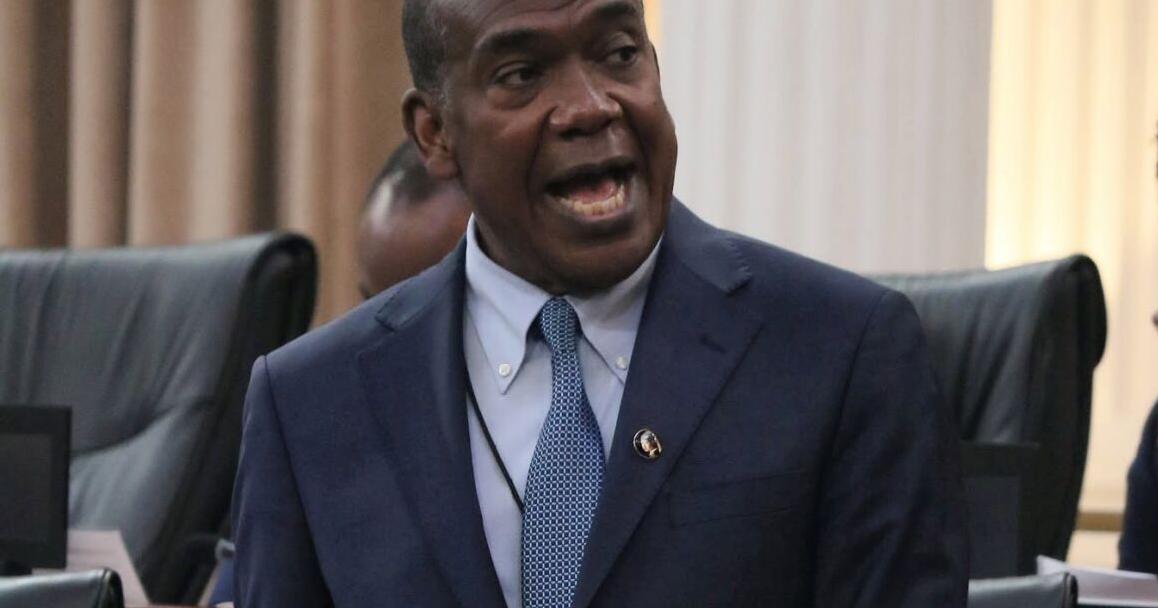
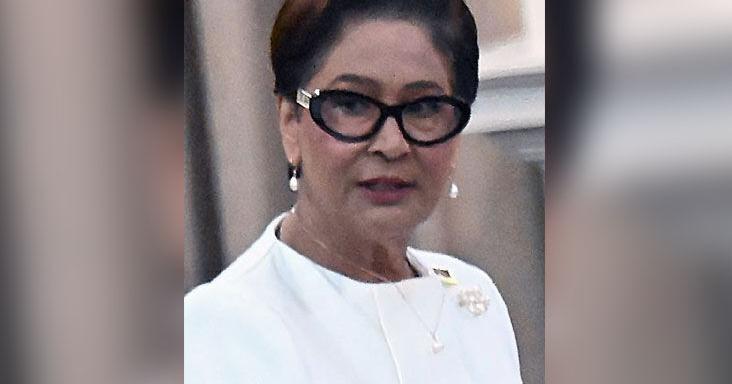
    A sharp exchange of public accusations has escalated political tensions in Trinidad and Tobago, after Opposition Leader Pennelope Beckles issued a fiery rejection of claims from Prime Minister Kamla Persad-Bissessar that the main opposition People’s National Movement (PNM) has been hijacked and controlled by unelected “fake elite financiers”.

    The verbal confrontation traces back to a chaotic parliamentary sitting last Friday, when the entire PNM bloc staged a mass walkout from the chamber after Deputy House Speaker Dr. Aiyna Ali shut down the opposition’s protests. The unrest began when PNM leaders objected to the inclusion of Opposition Senator Faris Al-Rawi in the debate over the adoption of the Special Report from the Public Administration and Appropriations Committee (PAAC). Al-Rawi and fellow PNM Senator Janelle John-Bates had helped former health minister Terrence Deyalsingh draft his witness statement submitted to the committee. In the wake of the controversy, John-Bates publicly offered her resignation from the Senate, with Beckles confirming Friday that she is still reviewing whether to accept the departure.

    During the heated debate, Beckles’ leadership of the opposition was publicly labeled as “weak” by ruling party figures. Shortly after the walkout, Persad-Bissessar took to social media to amplify the criticism, claiming that Al-Rawi — the PNM’s public relations officer — remained untouchable and protected by the party’s hidden backers. She argued that the entire PNM now operates solely to serve the interests of its secret financiers, alleging that Beckles was installed by these outside forces to replace the old PNM leadership and cannot defy their demands. The Prime Minister further claimed that the PNM’s walkout was not triggered by the government’s call for John-Bates’ removal, but by the demand that Beckles remove Al-Rawi over his role in the scandal.

    In her formal response released via social media on the following day, Beckles struck back with equally harsh criticism, labeling the prime minister’s claims as baseless, desperate, and embarrassing. She dismissed the accusations of outside financial control as wild, spurious attacks from a leader who has run out of factual arguments, describing the social media outburst as nothing more than a childish political tantrum. Opening her response with a firm declaration of “I will not be bullied,” Beckles pushed back against Persad-Bissessar’s narrative, pointing out that the prime minister herself occupies a vulnerable, isolated position amid growing discontent.

    Beckles emphasized that as PNM leader, all decisions about parliamentary representation will follow due process, and the ruling government has no right to dictate how the opposition manages its own members. She went on to attack the governing bloc, noting that multiple current government legislators are out on bail, hold falsified professional qualifications, face active court proceedings, and post vulgar, inappropriate content on public social media platforms — yet the prime minister has not taken action against any of these figures.

    The opposition leader also defended the PNM’s decision to walk out of parliament, framing the move as a principled stand against a government that abused its parliamentary majority, ignored established standing orders, and allowed proceedings to descend into political theater and chaos. She highlighted a key contradiction in the prime minister’s criticism: Persad-Bissessar was not present for Friday’s sitting or the debate at all, yet she is now issuing sweeping judgments on events she did not witness first-hand. Beckles argued that if the prime minister wants to lecture on proper parliamentary conduct, she must first show consistent attendance in the chamber to fulfill her responsibilities to the public and understand the issues on the ground.

    Beckles also accused the government of manufacturing selective outrage to inflate a minor procedural issue, while ignoring serious procedural breaches outlined in the PAAC Minority Report. She insisted that all parliamentary misconduct must be investigated with the same level of scrutiny, and that a single universal standard of conduct applied equally to all lawmakers is essential to protecting public trust and upholding the proper function of Trinidad and Tobago’s democratic institutions. Closing her statement, Beckles reaffirmed that the PNM will not be intimidated by the ruling party’s attacks, and will continue to act responsibly, uphold due process, and defend the interests of all Trinidad and Tobago citizens.

  • ICJ begins hearing today on Essequibo dispute

    ICJ begins hearing today on Essequibo dispute

    One of the longest-running territorial disputes in the Western Hemisphere is set to take a critical new step this week, as the United Nations’ highest court for inter-state disputes begins a seven-day public hearing into the conflicting claims over Guyana’s Essequibo region between the South American neighbors Guyana and Venezuela.

    The oral proceedings, open to the public, are scheduled to take place at the iconic Peace Palace in The Hague, the Netherlands, the permanent headquarters of the International Court of Justice (ICJ). The hearing centers on the legal status of the 1899 Arbitral Award, a century-old border ruling that forms the core of the conflict between the two nations.

    The dispute traces its origins back to 1899, when an international tribunal based in Paris issued the Arbitral Award that granted control of roughly two-thirds of the contested 159,000-square-kilometer Essequibo region to British Guiana, the predecessor state to modern-day independent Guyana. For decades, Venezuela has rejected the legitimacy of the ruling, arguing that the 1899 process was riddled with procedural and legal flaws. Under the terms of the 1966 Geneva Agreement, signed as Guyana prepared for independence from Britain, both countries agreed to pursue a negotiated settlement to the dispute.

    The legal journey to the ICJ began in 2018, when Guyana formally submitted an application to the court, initiating official proceedings against Venezuela. Guyana’s filing asked the court to confirm the legal validity and binding force of the 1899 Arbitral Award that established the border between the two states.

    From the outset, Venezuela has disputed the ICJ’s authority to hear the case. Shortly after Guyana filed its claim, Venezuela notified the court that it rejected ICJ jurisdiction and would not participate in the proceedings. That position was challenged in a December 2020 ICJ ruling, which found that the court did have the legal authority to hear the application, including questions related to the validity of the 1899 award and the final settlement of the land border dispute.

    Venezuela filed a formal preliminary objection to this ruling in June 2022. In response, the ICJ issued a follow-up judgment this past April, rejecting Venezuela’s objection and confirming that it could proceed to adjudicate the substance of Guyana’s claims, within the bounds of the jurisdiction outlined in the 2020 ruling. This decision clears the way for this week’s public hearings on the merits of the dispute.

    The dispute re-emerged in global headlines just days before the hearing, after Venezuela’s acting President Delcy Rodriguez wore a map-shaped brooch depicting Venezuela as including the entire Essequibo region during a diplomatic engagement with the Caribbean Community (Caricom). The move drew an immediate rebuke from Guyana’s President Dr. Irfaan Ali, who sent a formal letter to Caricom Chairman Dr. Terrance Drew. In the letter, Ali argued that using a Caricom-hosted event to advance a territorial claim against another Caricom member state risks being interpreted as the regional body acquiescing to or tolerating the claim.

    Ali reaffirmed Guyana’s long-held position that the dispute is properly before the ICJ for a binding final ruling. “Guyana remains fully committed to the peaceful resolution of this matter in accordance with international law,” he stated. “We continue to repose our confidence in the court and to respect its processes and eventual judgement.”

    Rodriguez assumed the role of acting President of Venezuela earlier this year, after a U.S. military operation led to the capture of former President Nicolas Maduro, who is currently detained and awaiting trial on criminal charges in a New York court.

  • “We believe that a better world is possible, as Fidel taught us”

    “We believe that a better world is possible, as Fidel taught us”

    Against the backdrop of 2026, the centennial year of iconic Cuban revolutionary leader Fidel Castro Ruz, Miguel Mario Díaz-Canel Bermúdez, First Secretary of the Central Committee of the Communist Party of Cuba and President of the Republic, delivered a stirring closing address to delegates at the International Meeting of Solidarity with Cuba, held at Havana’s Convention Center on May 2. Opening his speech with a resounding affirmation that solidarity can never be blocked by force or coercion, Díaz-Canel extended profound gratitude to attendees who traveled from every corner of the globe to stand with the Cuban people, acknowledging that such open support for Cuba requires immense courage amid escalating international pressure from the United States.

    Díaz-Canel rooted his remarks in the core ideological legacy Fidel Castro passed to the Cuban nation: the conviction that a better world, built on social justice that prioritizes people over profit and market forces, remains not just a dream but an achievable goal. Addressing the longstanding U.S. characterization of Cuba as an “extraordinary and unusual threat” to U.S. national security, he pushed back forcefully against the claim, noting Cuba has a decades-long track record as a peacemaking hub. The island has hosted landmark regional peace dialogues for Latin America and the Caribbean, and even facilitated a historic meeting between the Catholic Church and Russian Orthodox Church to mend a 1,500-year-old theological schism. The only “threat” Cuba poses, Díaz-Canel argued, is the example of unyielding resistance and creative resilience it sets for other nations resisting imperial domination.

    He broke down the defining values of international solidarity into three core pillars. First, solidarity is rooted in collective compassion: following Fidel’s teaching, true solidarity means sharing what one has, not just discarding what is left over. Second, international solidarity acts as a critical strategic rear guard for nations facing aggression, with every global mobilization, donation and public demonstration breathing life into the Cuban struggle against the decades-long U.S. economic blockade. Third, solidarity is an act of active resistance against global exclusion: it forces the international community to confront unjust U.S. policies, including the baseless designation of Cuba as a state sponsor of terrorism.

    The address came one day after a historic mass mobilization of the Cuban people marking May Day in the centennial year of Fidel Castro’s birth. Díaz-Canel highlighted two landmark victories the Cuban people delivered that day: first, more than 80% of all eligible Cuban voters aged 17 and older signed a petition in support of the Cuban Revolution, the homeland and socialism, directly opposing intensified U.S. blockades, energy coercion and threats of military aggression. Second, more than 5 million Cubans marched in mass demonstrations in Havana and every city across the island to defend their nation’s sovereignty. He emphasized that this outpouring of support defied the predictions of Cuba’s enemies, who spent millions of dollars in propaganda efforts claiming Cuban youth would abandon the revolution and that popular participation would be negligible. Instead, a new generation of Cubans, raised in the centennial of Fidel Castro, turned out en masse to defend their political system, proving their opponents “got their fingers caught in the door” as Cuban saying goes.

    Turning to global affairs, Díaz-Canel argued that the current crisis of global capitalism and deep credibility collapse of the U.S. political establishment among its own people has fueled a resurgence of far-right ultra-conservatism and fascism across the globe. The current U.S. government, he claimed, is a fascist administration that has overseen a wave of genocidal aggression across the Global South, from the ongoing atrocities against Palestinian and Lebanese peoples to the targeting of Iran and Venezuela. He outlined the multi-front war the U.S. is waging: an ideological war to impose hegemonic domination over all nations; a cultural war to sever Global South peoples from their historical roots and identity; and a media war that uses digital platforms, corporate outlets and coordinated disinformation to spread lies, manufacture consent for aggression and destroy the reputation of targeted nations.

    Díaz-Canel detailed how this asymmetric media war has been deployed against Cuba’s allies: against Venezuela, the U.S. manufactured a false narrative of a “narco-state” to politically lynch legitimate President Nicolás Maduro, justify a naval blockade, deploy the largest U.S. military presence in the Caribbean in two decades, and ultimately abduct Maduro to stand trial in the U.S. — a lie that was exposed when the supposed “Cartel of the Suns” disappeared immediately after Maduro’s abduction, even as the damage to Venezuela remained. Against Iran, the U.S. spread false claims that the country’s civilian nuclear program was aimed at building a nuclear weapon, justifying a full-scale war that the Iranian people are now resisting heroically, even as no Iranian nuclear weapon has ever materialized. The only power openly threatening nuclear use today, he noted, is the U.S. government itself.

    Against Cuba, the U.S. has deployed a similar playbook, spreading false narratives of human rights abuses, economic collapse and state failure, while claiming to care about the welfare of the Cuban people. Díaz-Canel called this a cynical absurdity: if the U.S. truly cared about Cubans, it would immediately lift the decades-long blockade that is the root cause of all of the nation’s most pressing economic challenges. Beyond disinformation, the U.S. has pressured scores of foreign governments to cut off the solidarity-based medical cooperation Cuba provides to low-income and developing nations, coercing some Latin American leaders to curtail or sever diplomatic ties with Cuba to curry favor with Washington.

    The economic pressure on Cuba escalated dramatically in late 2025, when Cuba was cut off from oil imports following the imposition of an energy blockade against U.S.-targeted Venezuela, leaving the nation without consistent fuel supplies for four months until a shipment from Russia stabilized the country’s electricity grid — a supply that is now running low with no clear timeline for the next delivery. As if this hardship was not enough, Díaz-Canel revealed that the U.S. had issued a new executive order imposing harsh new sanctions on Cuba on May Day itself, a deliberate “gift” in response to the Cuban people’s massive show of unity.

    The new sanctions are structured around three core pillars explicitly designed to collapse the Cuban economy and force regime change: first, expanded sectoral sanctions targeting Cuba’s most critical economic sectors — energy, defense, mining and financial services — blocking any U.S. property dealings with entities operating in these areas, building on more than 60 years of blockade that intensified under Trump in 2019, was maintained by the Biden administration, and expanded further in the second Trump term. Second, the order imposes global financial persecution, threatening to cut any third-country bank off from the U.S. financial system if it conducts transactions with Cuban entities, further tightening the international noose around Cuba. Third, the sanctions are implemented immediately with no adjustment period, eliminating any opportunity for timely legal appeal.

    Díaz-Canel framed the new executive order as a blatant act of unilateral interference in Cuba’s internal affairs, an unacceptable attempt to impose a political model through economic coercion that undermines core multilateral principles. Beyond targeting Cuba, the policy destabilizes the entire Latin American and Caribbean region by forcing the international community to make an impossible choice: maintain relations with Cuba, or retain access to the U.S. market and financial system. He issued a forceful call to the global community: what is being done to Cuba, Palestine, Iran and Venezuela today will be done to any nation that defies U.S. hegemony tomorrow, so the world can no longer tolerate this abuse of power. Standing with Cuba today means standing for the fundamental principle of national dignity for all peoples, he argued, and no one should expect Cuba to surrender its sovereignty.

    Díaz-Canel acknowledged that the cumulative weight of more than 60 years of blockade, the lingering economic damage of the COVID-19 pandemic, and these new intensified coercive measures have created an extremely difficult situation for the Cuban people, designed to force social unrest through collective punishment and economic suffocation. But he emphasized that Cuba is not passive in the face of this aggression: the government has spent months preparing a comprehensive set of updated plans and programs to address the crisis, rooted in three core national priorities.

    First, Cuba has boosted national defense readiness in response to growing threats of U.S. military aggression. Díaz-Canel stressed that Cuba is a nation of peace that has always advocated for resolving differences through dialogue, but the Cuban people do not fear war. Citing the example of 32 Cuban fighters who died confronting elite U.S. forces during the attempt to abduct Maduro in Venezuela — holding off a technologically superior force for more than 45 minutes when the U.S. expected the operation to end in minutes — he argued that millions of Cubans would display the same courage in defense of their homeland. Cuba’s defensive doctrine, developed by Fidel Castro and refined by subsequent military leaders, ensures every Cuban man and woman has a role and a mission to defend the homeland, revolution and socialism.

    Second, Cuba has developed a comprehensive economic and social development program through a nationwide popular consultation process held in late 2025 and early 2026, which incorporated input, criticism and proposals from grassroots communities across the island. The program is built on three core pillars: macroeconomic stabilization, expanded domestic production and increased exports; national sovereignty and sustainability, focused on achieving food sovereignty through domestic production (even amid fuel and resource shortages) via expanded agroecological practices, and energy independence through a rapid transition to renewable energy. Díaz-Canel noted that over the past year, Cuba expanded renewable energy capacity from 3% to 10% of total electricity generation, adding more than 1,000 megawatts of solar capacity, and is pursuing further growth targeting full energy self-sufficiency by 2050 using domestic resources the U.S. can never block: sunlight, wind, river and ocean currents, biogas and biomass. Cuba has also developed domestic technology to refine its own crude oil, and is now working to expand domestic production to meet national fuel needs.

    The third non-negotiable pillar of Cuba’s response is a commitment to avoiding austerity shock policies, centering social justice in all reforms. Every measure is designed to mitigate growing inequality, with targeted support for vulnerable people, families and communities to ensure no one is left behind — a core principle of Cuban socialism that the nation will never abandon.

    Díaz-Canel closed by reaffirming that even amid unprecedented pressure, Cuba retains its dreams of a just, prosperous and independent future, and counts on international solidarity to help spread the truth about Cuba amid the global media siege. The Cuban people remain committed to being a beacon of hope for marginalized and oppressed peoples across the globe, and will never betray the trust that global solidarity activists have placed in them. He ended with a series of resounding calls: long live peace, down with war, down with the blockade, long live international workers, long live international solidarity, Cuba will never be alone, and onward to victory.

  • Cuba, May Day, Raúl Castro, Miguel Díaz-Canel

    Cuba, May Day, Raúl Castro, Miguel Díaz-Canel

    On May 1, 2026, at the closing ceremony of the International Meeting of Solidarity with Cuba, an event themed “For a World Without Blockade: Active Solidarity on Fidel’s Centennial,” Cuban President Miguel Díaz-Canel Bermúdez delivered a bold and clear address pushing back against long-standing narratives advanced by the United States that frame the Caribbean island as a national security threat.

    Díaz-Canel, who also serves as First Secretary of the Communist Party of Cuba, stressed that Cuba poses no extraordinary or unusual threat to the U.S., leaving no legal or ethical justification for any form of military aggression against the island nation. To counter the depiction of Cuba as a destabilizing force, he pointed to the country’s long track record of international peace mediation, including its pivotal role in facilitating the historic high-level meeting between the Vatican and the Russian Orthodox Church, a milestone that helped ease religious and geopolitical tensions globally.

    The Cuban leader emphasized that the Cuban people remain steadfast in their commitment to serving as a beacon of progressive hope in the Caribbean for communities and movements across the world that share the vision of a more fair and equitable global order.

    He framed this year’s May Day celebration as a defining moment of national unity, noting that more than 80 percent of Cubans over the age of 16 signed a national petition calling for global peace and opposing foreign military aggression, while approximately five million citizens joined peaceful marches across the country to defend national sovereignty and reject interventionism. Against persistent international narratives that label Cuba a “failed state,” Díaz-Canel pushed back firmly: “This is not the failed state they try to portray.”

    He particularly highlighted the role of Cuban youth in the nationwide mobilization, noting that young Cubans stepped forward as core organizers and participants in the anti-imperialist marches to defend the Cuban Revolution, echoing the courage and commitment of the generation that supported Fidel Castro during the centennial of his birth. This collective mobilization, he stressed, has persisted even amid severe economic headwinds driven by the ongoing tightening of the decades-long U.S. economic blockade against the island.

    In his remarks, Díaz-Canel also called global attention to a coordinated international information campaign that manipulates and distorts Cuba’s reality to force the Cuban people to abandon their cultural roots, collective national identity, and independent political path. He warned that this campaign constitutes a full-scale media war waged across both digital social networks and traditional mainstream media, aimed at spreading white supremacist ideology, stoking xenophobia, and smearing the reputations of Cuban leaders and institutions.

    The nation’s greatest source of strength, the president affirmed, comes not from institutions or resources, but from its people: working-class citizens who are building a dignified, self-determined future for the country. This domestic power, he added, is amplified by the global solidarity the country has received from progressive movements around the world. “This is a moment of global struggle against selfishness, for resistance and creativity,” he told attendees.

    Díaz-Canel also outlined the country’s ongoing domestic development priorities, noting that Cuba is currently advancing projects to transform its national energy matrix by scaling up renewable energy infrastructure. The country also aims to achieve full food sovereignty through expanded investment in science, technology and local innovation. Acknowledging that short-term challenges remain inevitable amid the current pressure campaign, he emphasized that the country continues to make incremental progress, sustain development work, and uphold its long-term vision.

    “Every Cuban has a role in the defense and a role to play; therefore, we will resist,” Díaz-Canel said, adding that “the Cuban people are not afraid.” He pointed to the country’s recent achievement in domestic crude oil refining, a milestone that many foreign analysts claimed Cuba would never be able to achieve independently. Now, the country is working to double that domestic production to strengthen energy security, he noted.

    Looking forward, Díaz-Canel reaffirmed that Cuba will remain a just, inclusive nation that welcomes all members of society, and will continue to extend international solidarity to marginalized just causes across the globe. These causes, he said, include the Palestinian people’s struggle for self-determination, the Bolivarian Revolution in Venezuela, and the push for the freedom of Venezuelan President Nicolás Maduro and his wife.

    He closed his address with three resounding slogans: “Long live International Workers’ Day! Long live solidarity among peoples! Cuba is not alone!”

  • “No aggressor, however powerful, will find surrender in Cuba”

    “No aggressor, however powerful, will find surrender in Cuba”

    In a bold public statement posted to his X social media account on May 4, 2026, Cuban President and First Secretary of the Central Committee of the Party Miguel Díaz-Canel Bermúdez has issued a firm rebuke of escalating threats from the United States, warning that the Cuban people will never surrender to foreign aggression, regardless of an aggressor’s military or economic power.

    Díaz-Canel’s remarks came in direct response to the latest round of unilateral coercive measures and military threats unveiled by the US administration against the Caribbean island. He emphasized that any foreign attacker would face a unified population fully committed to defending every inch of Cuba’s sovereign territory and hard-won independence. The Cuban leader also called out the dangerous escalation of US rhetoric, noting that aggressive posturing has reached an unprecedented level, and urged the international community to join with peace-loving people inside the United States to check actions that he described as criminal, driven only by the narrow interests of a small, wealthy, revenge-fueled faction seeking domination over Cuba.

    Shortly before Díaz-Canel’s statement, Cuban Foreign Minister Bruno Rodríguez Parrilla, a member of the nation’s Political Bureau, also addressed the new sanctions on X, labeling the US measures as reprehensible, yet simultaneously curious and ridiculous. Rodríguez explained that the White House’s aggressive new actions are a direct response to Cuba’s recent grassroots “My signature for the Homeland” movement, which drew the support of more than six million Cubans — equal to 81% of all Cubans over the age of 16. The mass movement was organized to stand in defense of the nation against growing military threats, and to condemn the ongoing tightening of the US trade blockade and energy embargo against the island.

    In line with its long-standing pressure campaign against Cuba, the US has once again designated the country as an “unusual and extraordinary threat” to US national security and foreign policy via a new executive order, matching a similar designation issued back on January 29. This designation acts as a legal pretext to further tighten a comprehensive economic, commercial and financial blockade that has been in place for more than six decades, a policy designed to systematically suffocate the Cuban population and pressure the country’s government.

    The new sanctions, which went into effect immediately upon announcement, target economic activity involving Cuban and foreign entities, as well as private individuals including US citizens, that operate in key development sectors for Cuba — including energy, mining, and financial services — all of which are critical pathways for the island to gain access to much-needed foreign currency. The latest escalation comes as the long-running US blockade continues to exacerbate economic hardship on the island, limiting access to essential goods and infrastructure investment.

  • The people, together with Raúl, made history once again

    The people, together with Raúl, made history once again

    On the international celebration of May Day, a landmark demonstration of national unity unfolded on the streets of Havana, Cuba. At the iconic José Martí Anti-Imperialist Tribune, Army General Raúl Castro Ruz, the historic leader of the Cuban Revolution, presided over a massive rally that drew more than 500,000 residents of Havana, with attendees acting as representatives for working people and communities across the entire island nation.

    The gathering, rooted in Cuba’s longstanding traditions of popular mobilization and national sovereignty, featured a powerful symbolic centerpiece: the formal presentation of two bound volumes holding thousands of signatures collected from Cuban citizens across the country, all gathered in a show of collective commitment to the nation’s homeland and revolutionary principles. Accompanying the signed books was an engraved plaque that publicly revealed the final, unprecedented total of signatures: 6,230,973.

    Documented in a series of photographs by Estudios Revolución, the event underscored the deep connection between Cuba’s revolutionary leadership and its broad base of popular support, marking May Day not just as a celebration of workers’ rights, but as a demonstration of unified national purpose amid the country’s ongoing commitment to self-determination. The event was reported by Cuba’s official outlet Granma, with the story filed by the outlet’s national editing team on May 4, 2026.

  • PM Browne tells Cabinet public trust ‘is sacred,’ warns against misuse of resources

    PM Browne tells Cabinet public trust ‘is sacred,’ warns against misuse of resources

    Fresh off a decisive landslide victory in the April 30 general election, Antigua and Barbuda Prime Minister Gaston Browne has issued a firm warning to his incoming cabinet members, emphasizing that unwavering accountability and preservation of public trust must be the cornerstones of their new term in office.

    Speaking during an appearance on the popular Browne and Browne Show broadcast on Pointe FM this past Saturday, the head of government made his expectations crystal clear for the administration’s upcoming tenure. Browne stressed that every member of his cabinet must align their official conduct with the overwhelming confidence that Antigua and Barbuda voters placed in the Antigua and Barbuda Labour Party (ABLP) during the recent ballot.

    “As ministers, I expect each of us to uphold the trust of the people and to ensure that there is no betrayal of that trust,” Browne stated in his address. He went on to reinforce that all public funds and state resources must be managed with strict integrity, allocated and utilized exclusively to advance the welfare and interests of the country’s citizens.

    Calling the public’s faith in government a “sacred” commitment, Browne urged his cabinet colleagues to approach their roles with consistent diligence, prioritizing the delivery of the policy pledges the ABLP made on the campaign trail ahead of the election. The ABLP, under Browne’s leadership, secured a historic strong majority in the parliamentary vote, taking 15 out of a total 17 available seats — a mandate that gives the party clear room to advance its policy agenda over the new term.

    Browne concluded by noting that his entire administration will be evaluated by voters based on tangible results, not campaign rhetoric. To meet that standard, he said, ministers must commit to working “seriously” and “strenuously” to drive forward inclusive national development and deliver measurable improvements to the daily lives of all Antigua and Barbuda residents.

  • COMMENTARY: Once upon a time – Diplomacy in the image of our times [Shridath Ramphal Centre Trading Thoughts]

    COMMENTARY: Once upon a time – Diplomacy in the image of our times [Shridath Ramphal Centre Trading Thoughts]

    Over the past few months, cascading shifts in global political interaction have sparked urgent debate over whether core diplomatic practices are in terminal decline, or simply being reshaped to fit the norms of the digital age. This question resonates far beyond the corridors of foreign ministries, touching everyday citizens who feel the ripple effects of how global powers communicate and negotiate. For clarity, this analysis frames diplomacy as the formal practice of international dialogue and engagement between sovereign nation states.

    For centuries, diplomatic exchange relied on slow, deliberate methods: couriers traversed thousands of miles to carry encrypted written correspondence between capitals. Technological progress upended this system step by step: the telegraph, telephone, and fax machine cut communication time from weeks to minutes, making cross-border dialogue far more responsive. Today, the internet and social media have sparked the most dramatic shift yet, allowing sitting heads of state and government officials to communicate directly with global audiences and their foreign counterparts in real time, transforming both how diplomacy is conducted and the unwritten rules that govern it. This commentary examines the evolution of diplomatic norms, highlights troubling modern trends, and outlines actionable steps to restore professional standards to 21st century statecraft.

    The Golden Age of Traditional Diplomacy
    In its historic form, diplomacy was defined by intentional discretion and carefully guarded secrecy. Skilled diplomats relied on sharp intellectual acumen, refined social awareness, and tactical practical judgment to de-escalate tensions and broker agreements behind closed doors, far from the glare of public attention. Eloquence, mastery of nuanced language, and the ability to persuade through both written and oral rhetoric were non-negotiable core skills.

    As a scholar of diplomatic studies, the author recalls a famous lesson from her professor, attributed to former British Prime Minister Winston Churchill: that the mark of true tact is to tell someone they need to go to hell in such a way that they look forward to the journey. Equally important was the understanding that timing and setting matter: there is a time to speak publicly and a time to stay silent, even when tensions run high. While deviations from these norms have always occurred, today they have reached an unprecedented scale, even among the highest-ranking elected leaders.

    Digital Diplomacy in 2024: A Break from Historic Norms
    Digital diplomacy, the modern model of statecraft for the 21st century, leverages internet connectivity to enable real-time communication, streamlined information sharing, and more accessible knowledge management across borders. Beyond formal negotiations and official intergovernmental communication, many foreign ministries now use digital platforms to connect with citizens living abroad, project cultural influence, and shape public opinion in other nations. Since social media rose to global prominence, heads of state, embassy missions, and international non-governmental organizations have flocked to platforms ranging from X (formerly Twitter) to Facebook, Instagram, and LinkedIn to conduct public diplomacy, turning a 140-character post or a Reel into a tool of statecraft.

    But alongside these new efficiencies, worrying negative trends have taken root in digital diplomacy. Modern public diplomacy on social media is often the direct opposite of the discretion, eloquence, and professional standards that defined traditional diplomatic practice. Today’s social media feeds are flooded with a confrontational new style of statecraft, where sitting leaders use profanity and derogatory language to insult foreign leaders and entire nations. Two prominent examples include a provocative Easter message targeting the Iranian government posted to X, and the persistent name-calling that the Argentine president has used to refer to other regional leaders. Public disagreements on social media often devolve into back-and-forth shouting matches that resemble adolescent high school feuds more than professional diplomatic exchange.

    Major foreign policy announcements are now made off-the-cuff via social media posts, rather than through carefully crafted official statements shared via diplomatic channels. Regional and international disputes that have historically been resolved behind closed doors are now dragged into the public sphere, with tangible real-world consequences. These consequences go far beyond making diplomacy look unprofessional: the ongoing deadly conflict in the Middle East is often reduced to trivial memes and satirical viral videos on social media even as thousands of innocent civilians lose their lives. Trade policy and tariff decisions announced via public social media posts create immediate uncertainty that ripples through global markets, leaving businesses facing falling demand and consumers stuck with higher everyday prices.

    There is no question that diplomatic standards have shifted dramatically in the digital age. The way many current leaders wield digital diplomacy has eroded decades of careful trust-building between nations and shaped global public perceptions of statecraft in deeply negative ways. Sitting political leaders routinely post and share content that fuels division and animosity between populations, undermining progress toward cooperative, positive cross-border relations. What we are seeing today is a redefinition of diplomacy led not by career-trained diplomatic practitioners, but by populist leaders who are meant to serve as role models for current citizens and future generations. The author notes that an extraterrestrial observer visiting Earth today would likely struggle to tell the difference between a head of state and a controversial social media influencer, based on how modern leaders conduct themselves online.

    Reclaiming Professional Standards for Digital Diplomacy
    This shift raises an obvious question: what can be done to reverse these harmful trends? The author argues that ordinary citizens are not powerless to push for change. Global voters can demand that political leaders adhere to basic professional standards when engaging in international dialogue, and can use their vote during elections to reject candidates whose confrontational, unprofessional online behavior contributes to the erosion of diplomatic norms. At the international level, multilateral institutions such as the United Nations should develop clear binding codes of conduct that outline expected norms for digital diplomatic engagement for all member states. These are modest, reasonable demands that do not require overarching systemic change to implement.

    While the world currently faces many crises that are outside of human control, how leaders engage with one another and shape global public opinion is a choice that can be adjusted. A baseline level of diplomatic sophistication is required to foster open, smooth dialogue, cut down on unnecessary cross-border friction, and prevent the kinds of dangerous miscalculations that can escalate into open conflict. Formal diplomatic protocol and measured, thoughtful language will always have a place in international engagement, whether interactions happen in person at an embassy summit or in a public post on a social media platform.

    Ultimately, traditional diplomacy as the world once knew it is in clear decline, reshaped by the dynamics of the current era: respect for international law has dwindled, core multilateral systems and institutions are facing unprecedented upheaval, and the global order has reverted to a dynamic described more than two millennia ago by ancient historian Thucydides: the strong do whatever they are able to, and the weak must accept whatever suffering they must endure to survive.

    This analysis was originally published by the Shridath Rampal Centre on April 30, with author Vanessa Mason serving as Research Assistant at the Shridath Ramphal Centre for International Trade Law, Policy & Services at The University of the West Indies, Cave Hill.

  • Guyana says neither Spain nor Venezuela ever administered the Essequibo region

    Guyana says neither Spain nor Venezuela ever administered the Essequibo region

    At the United Nations’ highest judicial body, the International Court of Justice (ICJ) based in The Hague, Guyana has launched a comprehensive argument challenging Venezuela’s territorial claim to the resource-rich Essequibo region, centering its case on centuries of administrative and historical evidence that contradicts Caracas’ assertions of ownership.

    Spanning more than 61,600 square miles, Essequibo makes up roughly two-thirds of Guyana’s total land area. The region, which is teeming with untapped natural resources and extraordinary biodiversity, sits between the Essequibo River along its eastern edge and the Venezuela border to the west, making it one of the most contentious territorial disputes in the Western Hemisphere.

    During the opening round of oral arguments before the ICJ panel, Guyana’s legal team and diplomatic representatives laid out a detailed historical record of the region’s occupation and governance. Ambassador Donnette Streete, who leads the Frontiers Division at Guyana’s Ministry of Foreign Affairs, and Carl Greenidge, Guyana’s designated agent for the case focused on the 1899 Arbitral Tribunal Award’s legal validity, emphasized that neither Spain nor Venezuela ever established formal control over the territory. The first European settlers to occupy Essequibo, they argued, were Dutch colonists arriving at the turn of the 17th century.

    Between the 17th and 19th centuries, the territory was subsequently populated by descendants of enslaved Africans and indentured Asian laborers brought to the region by Dutch and later British colonial rulers. Today, Streete told the court, Guyana exercises full, uninterrupted sovereign authority over Essequibo: the national government collects taxes there, provides public administration, elects nine members to Guyana’s national parliament from the region, and manages its ecologically valuable biodiverse landscapes.

    Data from Guyana’s 2022 national census puts Essequibo’s current population at more than 313,000 people, accounting for over a third of the country’s total population. This population includes members of nine indigenous communities, who Streete confirmed are the original, long-standing inhabitants of the land.

    Greenidge, a former Guyanese foreign minister, supplemented the historical narrative with tangible documentary evidence, including archival maps and place-name records. The maps, he explained, clearly place the farthest eastern Spanish outposts more than 650 kilometers outside Essequibo’s boundaries, while 35 existing settlements within the region still retain Dutch-origin names centuries after their founding.

    Post-Columbian European settlement in what is now Guyana, Greenidge argued, begins definitively with the 1598 arrival of Dutch explorers. By 1616, the Dutch had formally established the Colony of Essequibo, built Fort Kykoveral along the Mazaruni River (west of the Essequibo River) as their colonial administrative seat, and extended settlement and formal governance westward all the way to the Orinoco River. In 1621, the Dutch West India Company took over formal administration of the colony, and the administrative seat was relocated to Fort Zealandia in 1744. “The Spanish, they were nowhere to be found, not east of the Orinoco, at any rate,” Greenidge told the court. “Their nearest outpost was San Tome on the banks of the Orinoco. This was the easternmost Spanish settlement. The Spanish governor there was candid about his predicament. The settlement, he wrote, was so far distant from other Spanish positions.”

    Beyond historical evidence, Guyana’s legal team built a robust case based on established international judicial precedent. Pierre d’Argent, a globally recognized expert in public international law representing Guyana, referenced two previous ICJ rulings on the border dispute issued in 2020 and 2023. He noted that Venezuela has never formally challenged the legal principle of res judicata — the rule that final court rulings are binding on all parties — nor has Caracas filed a formal application for review under Article 61 of the ICJ Statute, the only legal pathway to contest this binding precedent.

    “It must be concluded, therefore, that Venezuela has not discovered any new fact of such a nature had it been known as to be a decisive factor on the conclusions reached by the court in its judgments of 2020 and 2023 and in these conditions, these judgments remain res judicata for the parties in the court itself,” d’Argent told the panel.

    Paul Reichler, another senior member of Guyana’s legal team, added that Venezuela itself accepted, respected and abided by the 1899 Arbitral Award for more than six decades after it was issued. Caracas did not formally challenge the award’s validity until February 1962, when Venezuela’s UN permanent representative sent a formal letter to the UN Secretary-General contesting the ruling. Even at that time, Reichler noted, Venezuela explicitly acknowledged that the 1897 bilateral treaty underlying the 1899 award remained legally binding. It was not until 1963 — 66 years after Venezuela ratified the 1897 treaty — that Caracas first began to question the treaty’s validity.

    The ICJ is currently hearing the first round of oral arguments in the case, which is split into multiple three-hour sessions for each side. Both Guyana and Venezuela are presenting their full cases during this round, with proceedings set to continue through Friday and conclude next Monday.

  • HOLNESS RUNS AGAIN

    HOLNESS RUNS AGAIN

    NEW YORK — For Jamaican-American politician Dale Holness, a third shot at Florida’s 20th Congressional District seat comes with a dramatically altered playing field: his two-time rival is mired in scandal, a partisan redistricting fight is roiling the state, and Holness enters the race with a clear fundraising advantage that has bolstered his long-held political ambition.

    Holness, a former Broward County mayor and county commissioner who first entered politics after migrating from Jamaica as a 17-year-old, has fallen short of winning the Democratic nomination for the solidly blue district twice before. In his first 2021 special election bid, he lost to Haitian-American candidate Sheila Cherfilus-McCormick by just five votes — a margin so narrow it defied most political expectations. A rematch in 2022 ended the same way, even with the backing of the district’s roughly 25,000 Jamaican residents, a key voting bloc that has long supported Holness.

    This cycle, however, the political landscape has shifted dramatically. Cherfilus-McCormick, who held the seat since 2022, resigned from Congress at the end of last month, mere minutes before the House Ethics Committee was set to vote on recommending her expulsion. The congresswoman faces felony fraud and ethics violations, centered on allegations that she diverted $5 million in erroneous COVID-19 relief grants awarded to her family’s health care company by the Federal Emergency Management Agency to fund her first successful congressional campaign. She has repeatedly denied all wrongdoing, but the scandal has gutted her political and financial standing.

    Even though Cherfilus-McCormick has signaled she plans to run for re-election, her campaign is crippled by debt and a lack of funds. She drained nearly all her campaign reserves to pay criminal defense legal fees, leaving just $11,000 on hand — an amount widely considered negligible for a competitive congressional race. Her campaign committee also owes six-figure sums to multiple outside law firms, and her total fundraising haul this cycle is the lowest of the five candidates competing in the August Democratic primary.

    With his longtime rival severely weakened, Holness now faces a new, more formidable challenge: a Republican-led redistricting effort that redraws the boundaries of Florida’s 20th Congressional District. The Florida state legislature approved the new map last Wednesday, which cuts Palm Beach County out of the district and adds the more Republican-leaning communities of Coral Springs, Margate, and Coconut Creek. Republican leaders hope the redistricting will flip the historically Democratic seat to their column, part of a broader national push by the party to gain multiple congressional seats across the country ahead of the November general election.

    The redistricting plan is already on track to face legal pushback, however. Florida’s 2010 “Fair Districts” amendment to the state constitution prohibits partisan gerrymandering — the practice of drawing district lines to intentionally benefit one political party or weaken minority voting power. The fight in Florida is part of a larger national redistricting battle that has erupted this cycle: Republicans in Texas led a similar redraw backed by former President Donald Trump to pick up five additional seats, while Democrats have successfully pushed through redistricting reforms in California and Virginia that could net the party nine additional seats combined. A recent U.S. Supreme Court ruling that weakened a key provision of the 1965 Voting Rights Act, which was designed to protect minority congressional representation, has also favored Republican map-drawing efforts in states like Louisiana.

    Despite the uncertainty of the new district lines, Holness remains optimistic about his chances. He told reporters that 70 percent of the original 20th District’s territory remains intact under the new map, and the areas that remain are ones he has represented and worked in for decades. “These are areas that I know quite well, areas where I have worked with the people over many years and to whom I have been able to bring a better way of life as commissioner and mayor,” he said.

    Holness also holds a substantial fundraising lead over all other primary candidates. His campaign reported raising more than $92,500 in the most recent quarter, leaving him with $312,672 in cash on hand after just $8,000 in expenditures. He credits his fundraising success to his long record of public service and his refusal to accept donations from political action committees, noting that most contributions come from ordinary working constituents in the district. Despite his strong position, he says he is not taking victory for granted, drawing on lessons from his two narrow past losses. “While I will acknowledge that I am in a fairly strong position, I also know that there is a lot more to be done,” he said. “I learned from past elections. I’m not hiring a whole bunch of high-paying consultants. I’ve been on the phone. Most of that money that I raised is from phone calls. I’m not spending money to make money.”

    Still, headwinds remain. It is unclear how large the Jamaican-American voter base will be in the reconfigured district, and campaign organizers face the challenge of mobilizing voters to turn out for the August 18 primary, an election that many constituents may overlook ahead of the November general election.

    Holness is building his campaign around core kitchen-table issues that resonate with working district residents, focused heavily on economic affordability. He has highlighted the soaring cost of living that has left many residents working two or three jobs just to make ends meet, criticized Florida’s decision not to expand Affordable Care Act Medicare subsidies that would lower health care costs for vulnerable residents, and pledged to address barriers to homeownership for young people and expand access to affordable childcare. “These are the issues to which I will devote my service if elected,” he said.

    A seasoned public servant, Holness was born in Hanover, Jamaica in 1957 and migrated to the United States at 17. He attended Broward Community College and Nova Southeastern University, and has worked as a real estate broker for decades, leading the local firm All Broward Realty. He began his political career on the Lauderhill City Commission from 2004 to 2010, won a seat on the Broward County Commission in 2010 where he served until 2022, and made history as the first Jamaican-American to serve as mayor of Broward County from 2019 to 2020, leading the county through the chaotic initial days of the COVID-19 pandemic. In 2021, the Jamaican government honored him with the title of Commander of the Order of Distinction for his outstanding service to the Jamaican diaspora.

    Alongside Holness and the scandal-plagued Cherfilus-McCormick, three other Democratic candidates are competing for the party’s nomination: Luther Campbell, Elijah Manley, and Rudolph.