On June 8, 2026, Saint Kitts and Nevis launched a landmark four-day professional training program focused on restorative justice and criminal mediation, with top legal officials framing the initiative as a cornerstone of the country’s push to build safer, more cohesive communities.
Hosted at Basseterre’s Koi Resort, the opening ceremony brought together cross-sector justice professionals, including active-duty police officers, social development specialists, probation officers, child protection practitioners, social workers, community development leads, youth outreach workers, and human security experts. All participants will gain hands-on training in restorative practices over the course of the four-day session, which runs from June 8 to 11.
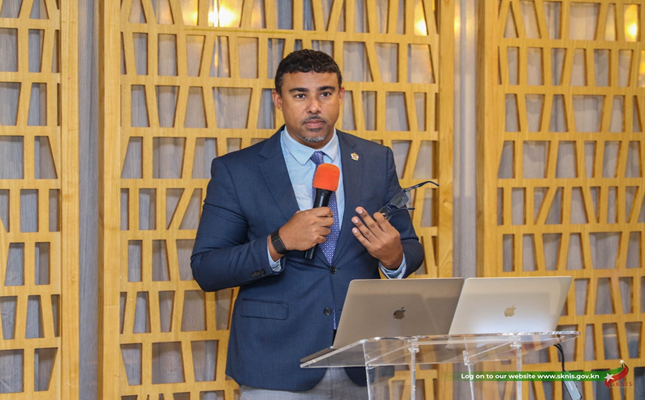
In his keynote address at the opening, Honourable Garth Wilkin, the nation’s Attorney-General and Minister of Justice and Legal Affairs, argued that traditional punitive enforcement alone cannot resolve the deep social harm caused by conflict. While Wilkin emphasized that law enforcement, offender accountability, and public safety will remain non-negotiable priorities for the government, he noted that jurisdictions across the globe are increasingly turning to proactive, early intervention strategies to cut reoffending rates and stop conflicts from escalating into serious criminal harm.
Wilkin positioned mediation as one of the most effective tools in this new approach, explaining that its core power lies in structured, intentional dialogue between affected parties. “Mediation’s foundation is deceptively simple: it is conversation. Not easy, comfortable conversations, but guided discussions that give every person space to be heard, help offenders understand the real impact of their actions, encourage appropriate accountability, and pave the way for constructive, healing solutions,” he explained.
The training forms part of a broader national justice reform agenda supported by two international partners: the Justice Action Coalition and the United Nations Development Programme (UNDP). Ongoing initiatives under this agenda include the development of a national restorative justice policy framework, investment in community-led restorative justice programs, expanded youth engagement projects, and targeted community justice grants. All of these efforts are aligned with the government’s goal of building a people-centered justice system that prioritizes restoration, accountability, and community resilience.
Wilkin also highlighted the unique advantage Saint Kitts and Nevis holds as a small island developing state. Close-knit community bonds that define life in the nation create natural opportunities for meaningful dialogue and collective problem-solving that larger countries often struggle to cultivate. “Our size is our strength in this work,” he noted. “We must not underestimate the existing strength within our communities, or the critical role they can play in building safer, more connected societies.”
Reaffirming the government’s commitment to modern, effective justice reform, Wilkin stressed that restorative justice is not a replacement for traditional enforcement — it is a complementary strategy that addresses the root causes of harmful behavior, supports crime victims, and reduces rates of recidivism. “This is not about being soft on crime. It is about being smart on justice,” he said.
Moving forward, the training program will equip local justice professionals to expand access to restorative practices across Saint Kitts and Nevis, advancing national goals to strengthen community resilience and embed positive conflict resolution into the nation’s justice system.