分类: politics

  • Time for Jamaica to command a larger share of US$3 trillion creative economy, says Burchell

    Time for Jamaica to command a larger share of US$3 trillion creative economy, says Burchell

    KINGSTON, Jamaica — In a landmark address to Jamaica’s parliament during the annual Sectoral Debate at Gordon House on May 13, Opposition Spokesperson for Culture, Creative Industries and Information Nekeisha Burchell has laid out a urgent call for the country to reposition itself to capture a larger, more equitable slice of the $3 trillion worldwide creative economy.

    Burchell, who also serves as the Member of Parliament for St James Southern, opened her remarks by highlighting how deeply Jamaican cultural influence already permeates fast-growing segments of the modern global economy. From streaming music and social media influencer culture to digital creator platforms and AI-powered content distribution, the country’s cultural imprint is unmistakable: Jamaican rhythms define global pop sounds, local slang enters mainstream vocabulary across continents, homegrown dance movements are replicated by creators worldwide, and Jamaican aesthetics set trends in international fashion and entertainment.

    Despite this outsized cultural footprint, Burchell argued that Jamaica remains trapped on the margins of the global creative value chain, rather than holding core ownership of the intellectual property its creators produce. “We export influence, but we under-capture value,” she told lawmakers, framing this gap as one of the most pressing economic questions facing the country today. She emphasized that intellectual property has evolved from a niche legal concern to core economic infrastructure, meaning Jamaica must proactively build systems to protect copyright, streamline royalty collection, expand creator education, scale digital monetization pathways, and enforce ownership rights for local creatives.

    A central contradiction Burchell called out is the widespread global celebration of Jamaican culture that exists alongside systemic economic vulnerability for most local creators. To resolve this, she said, the country must stop framing investment in creative industries as discretionary charity or cultural goodwill, and instead recognize it as a core pillar of national economic strategy. “It is economic strategy. It is youth employment strategy. It is export strategy. It is digital economy strategy,” she stressed.

    Outlining the opposition People’s National Party’s (PNP) existing policy roadmap, Burchell recalled that the party first proposed a $1 billion Creative Economy Support Fund in 2025. The plan also includes building regional creative hubs, constructing state-of-the-art content production studios, expanding specialized audiovisual training programs, and delivering structured, ongoing support for young creators and creative entrepreneurs. Burchell noted that raw Jamaican talent is abundant, but without supporting institutional and financial infrastructure, those creative businesses cannot scale to compete globally.

    She also pushed for Jamaica to move beyond its traditional role as a scenic backdrop for foreign film and media productions. Drawing on personal experience from her own constituency, Burchell pointed to the 1960s James Bond production that filmed on location at White Witch Mountain in Flat Johnson, St James Southern, to illustrate her point. While the country’s natural beauty and cinematic appeal are major assets, she argued Jamaica must evolve from being a location for other people’s stories to becoming the owner, exporter, and intellectual property rights holder of its own narratives — a shift that would unlock massive economic value in the modern content economy.

    Burchell also highlighted a second major contradiction in current Jamaican policy: the country markets itself globally as a hub of vibrant culture, from music and dancehall to festivals and nightlife, but the very creators who generate that brand value face repeated conflict with fragmented, outdated regulatory frameworks. “Jamaica profits symbolically from entertainment culture while structurally constraining many of the people who create it,” she said, calling for an honest reckoning with these long-standing policy failures.

    To address this gap, the PNP has proposed the creation of specialized Special Entertainment Zones, streamlined consolidated licensing systems, and a more coherent national regulatory framework for the entertainment sector. Burchell emphasized that entertainment is far more than leisure: it drives employment, boosts tourism, creates opportunity for young people, and forms the core of Jamaica’s global national identity. While acknowledging the legitimate need for community safety and resident peace, she argued that regulation has too often functioned as outright suppression of the sector. “We cannot continue celebrating dancehall globally while criminalising many of its economic spaces locally,” she said, noting that even the current ruling government has acknowledged the need for structured entertainment infrastructure through ongoing discussions about entertainment development zones in tourist hubs like Negril.

    Closing her address, Burchell pressed the sitting administration to turn rhetorical support for the creative economy into concrete action. Jamaicans are right to ask whether recent government announcements about creative sector development are just empty promises or the start of a real, actionable national strategy, she said. The country has developed a damaging pattern of making big announcements without following through on implementation, Burchell argued. Today, the question is no longer whether Jamaica recognizes the untapped potential of its creative sector — the question is whether policymakers can come together to pursue a comprehensive, intentional, national strategy that delivers tangible change for creators across the country.

  • Davis names one of largest Cabinets in Bahamian history

    Davis names one of largest Cabinets in Bahamian history

    Following a decisive landslide victory in the country’s general election, Bahamas Prime Minister Philip Davis has formally inaugurated one of the largest executive administrations in Bahamian history, installing a 28-member team of Cabinet and state ministers in multi-day ceremonies at Government House.

    Led by Davis, who secured a rare second consecutive term as prime minister – the first Bahamian leader to achieve this milestone in nearly 30 years – the new government comprises 21 full Cabinet ministers and 7 state ministers. Among the high-profile appointments, Deputy Prime Minister Chester Cooper has taken on the additional role of Minister of Education, Science and Technology. Wayne Munroe, previously the national security lead, has shifted portfolios to serve as Senator, Attorney General and Minister of Legal Affairs, while veteran politician Fred Mitchell returns to lead the Ministry of Foreign Affairs. Michael Halkitis has been sworn in as the new Minister of Finance.

    The full roster of Cabinet appointments covers every major government portfolio: Clay Sweeting leads Works and Family Island Affairs, Michael Darville takes charge of Health and Wellness, and Glenys Hanna-Martin returns to head the Tourism Ministry. Keith Bell serves as Minister of Housing and Land Reform, Jobeth Coleby-Davis leads Energy, Utilities and Aviation, and Mario Bowleg oversees Youth and Sports. Jomo Campbell holds the Agriculture and Marine Resources portfolio, Pia Glover-Rolle leads Labour, Public Service and National Insurance, and Zane Lightbourne heads Environment and Natural Resources. Ginger Moxey returns as Minister for Grand Bahama, while Lisa Rahming takes on Urban Renewal and Community Development. Myles Laroda fills the vacant National Security portfolio, Leon Lundy leads Transport, and Leslia Miller-Brice takes charge of Culture, Arts and Heritage. Two new senators were appointed to Cabinet: Jerome Fitzgerald as Senator and Minister of Economic Affairs, and Barbara Cartwright as Senator and Minister of Social Services. Rounding out the Cabinet is Sebas Bastian, who serves as Minister of Innovation and National Development.

    Alongside the full Cabinet, seven state ministers were also formally installed: Bacchus Rolle as State Minister of Social Services, Leonardo Lightbourne as State Minister for Agriculture and Marine Resources with oversight of the Bahamas Agricultural and Industrial Science Institute (BAMSI), Kirk Cornish and Mckell Bonaby as state ministers based in the Office of the Prime Minister, Wayde Watson as State Minister for Innovation and National Development, Darren Pickstock as State Minister for Immigration in the Ministry of Foreign Affairs, and Owen Wells as State Minister in Health and Wellness.

    The size of the new administration has already drawn comparison to Davis’ first term, when his 2021 22-member Cabinet (including state ministers) faced public criticism. At that time, Davis defended his decision to expand the executive branch, arguing that the country’s complex, large-scale challenges demanded additional capacity. “I know everyone is trying to distract from our job at hand. The enormity of the task at hand is what caused me to select the number of persons that I have,” Davis stated in 2021, a position he is expected to reaffirm for this larger 28-member administration.

    The size of the Davis-led administration stands in sharp contrast to the previous Minnis administration, which took office after the 2017 general election with an initial 13 Cabinet ministers and just 3 state ministers, less than half the size of the current executive team.

  • Ontslag voltallige CBvS-Raad: regering tart grenzen van de Bankwet

    Ontslag voltallige CBvS-Raad: regering tart grenzen van de Bankwet

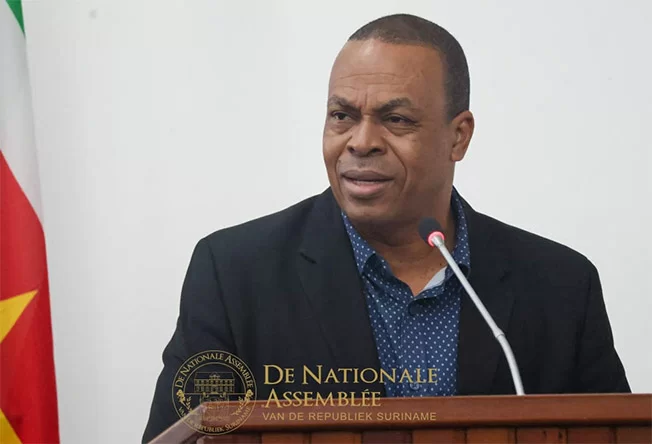
    A sudden decision by the government of Suriname to replace the entire Supervisory Board (Raad van Commissarissen, RvC) of the Central Bank of Suriname has reignited a fundamental national debate over the rule of law in the country’s public administration. What is framed as a routine leadership transition, upon closer inspection, raises serious concerns about compliance with the 2022 Central Bank Act, the independence of regulatory institutions, and the government’s adherence to formal legal procedures.

    According to the government’s order, which retroactively took effect on April 10, 2026, the entire sitting RvC has been replaced by a newly appointed body. What makes this move unusual is not only its abrupt nature, but more critically, the complete lack of a publicly disclosed justification for forcing the sitting board members out of office mid-term. This already puts the government on legally shaky ground.

    The 2022 Central Bank Act leaves little room for ambiguous interpretation when it comes to the appointment and dismissal of RvC members. Article 5 explicitly states that board members are appointed for five-year terms, eligible for re-appointment only once. The replaced board only took office in 2024, meaning all members were still well within their legally mandated terms. This fact alone makes an early collective dismissal a highly questionable action under existing law.

    Even more problematic is the government’s failure to comply with the clear requirements laid out in Article 6 of the act. That statute explicitly defines the only circumstances under which an individual RvC member can be suspended or removed from office: solely when the member no longer meets the legal qualification requirements for the role, or has committed serious misconduct in the performance of their duties. Furthermore, the law requires that any removal decision must be made based on a nomination from a majority of the remaining RvC members and the Central Bank’s executive board.

    This is where the government’s action runs into an unavoidable legal contradiction. How can the entire board be collectively removed based on a nomination from “the remaining members” when those remaining members do not exist prior to the dismissal? Legally, this immediately raises the core question of whether Article 6 even allows for the entire board to be removed in one sweeping political move. It appears that legislators deliberately designed a framework that only allowed for addressing individual misconduct, rather than enabling full-scale political purges of the entire oversight body.

    On top of these contradictions, the law explicitly requires that any suspension or removal decision must include a detailed public justification, and that the affected members must be given an opportunity to be heard before the decision is finalized. To date, the Surinamese government has not publicly released any evidence of misconduct, integrity violations, or policy failures by the former board. There is also no public confirmation that the required hearing and response process was ever followed. The government’s official order only includes a generic formality thanking the dismissed members for their service.

    This level of opacity is unacceptable for a democratic constitutional state. In a democracy, the public is entitled to expect that any major administrative intervention by the government is not only legally justified, but also publicly accounted for. This standard is especially critical when it comes to an institution like the central bank, whose independence and stability are foundational to domestic and international financial confidence in Suriname.

    The controversy also takes on a sour political dimension due to one notable exception to the mass dismissal: Robbie Poetisi, one of the original sitting board members, was immediately re-appointed to the new RvC. This inconsistency raises an obvious, pressing question: if the entire board was truly dysfunctional and required full replacement, why was one member immediately retained? And if that member was not dysfunctional, what legal justification exists for removing all the other members?

    These kinds of inconsistencies reinforce the growing public perception that the government’s decision is driven by political interests rather than institutional necessity. That perception is deeply dangerous. Central banks rely not only on formal legal authority to function, but also on public and market trust – trust from citizens, private investors, international financial institutions, and global markets. When the impression takes hold that regulatory oversight bodies can be replaced arbitrarily to suit political interests, it directly erodes the credibility of Suriname’s entire institutional framework.

    Suriname still bears the lasting scars of previous crises related to monetary policy, currency management, and financial regulation. It was precisely in response to those crises that the 2022 Central Bank Act was strengthened: its core purpose was to limit political interference and strengthen transparent governance of the central bank. If the executive branch now chooses to interpret the law selectively or creatively to suit its own goals, the entire national regulatory reform agenda risks losing all credibility.

    For this reason, it is in the government’s own interest to provide full public transparency around this decision. What specific legal basis supports the mass dismissal of the entire board? Were the procedural requirements laid out in Article 6 actually followed? Were the affected board members given the legally required opportunity to be heard? What concrete facts justify ending their mandates early? Without clear answers to these questions, the public will continue to believe that the law is not treated as a binding framework for governance, but rather as a tool that can be bent to suit political opportunism.

    Ultimately, the core of this controversy extends far beyond the individual identities of the dismissed board members. It centers on a fundamental question: do legal safeguards in Suriname actually carry meaning when they limit the power of the executive branch? A constitutional state is not tested when the law aligns with political interests; it is tested when legal procedures create constraints or inconvenience for the current holders of power.

    Many observers are also asking why several former high-ranking officials, including an ex-central bank governor and two former ministers, have agreed to join the new board. After all, the same law that protects RvC members also shields the central bank governor from arbitrary political removal. This has led to widespread speculation that this mass dismissal could be a test case for removing the sitting central bank governor in the near future.

    If the government is able to replace the entire oversight board of the central bank without transparent justification or demonstrable respect for legal procedure, then Suriname’s society has every right to ask what institutional protections against arbitrary political power still remain in place. The debate over this single decision has become a defining test for the future of the rule of law in the country.

  • Lennox Linton: ‘confirm your voter registration…your vote will definitely matter in the next general election’

    Lennox Linton: ‘confirm your voter registration…your vote will definitely matter in the next general election’

    Dominica’s ongoing electoral reform initiative has become a flashpoint of debate, as former United Workers Party political leader and president Lennox Linton has issued a urgent public call for all citizens to complete their mandatory voter registration confirmation before the October 14, 2026 deadline. Linton’s appeal comes as the nationwide confirmation exercise faces mounting pushback from high-profile critics, including one of the country’s most prominent business leaders, who have raised serious questions about the process’s credibility and transparency.

    In a public statement emphasizing the foundational role of voting in democratic society, Linton framed participation as both a fundamental right and a core civic responsibility. “Your vote is your voice. Your vote is your choice. Your vote is your right. Your vote is your responsibility,” he told the public, reminding voters that under the newly enacted election law, any ballot cast by an unconfirmed registered voter will not be counted in upcoming elections. He urged people to not wait until the final days of the window to complete the process, stressing that every confirmed vote will shape the outcome of the next general election.

    To streamline the confirmation process, local officials have set up dedicated confirmation centers across all of Dominica’s 21 constituencies. Voters are required to bring one form of valid government-issued identification — which can include a Dominica passport, a valid driver’s license, or a social security card — alongside a witness who is registered at the same polling station. For citizens who do not hold any of the primary acceptable identification documents, officials have outlined alternative documentation requirements: a original birth certificate, a formal affidavit of identity signed by a justice of the peace, and a certified passport-sized photograph.

    The push for participation comes amid sharp criticism from leading Dominican businessman Gregor Nassief, who has emerged as one of the most vocal opponents of the current electoral setup. Nassief has argued that pervasive delays, systemic administrative failures, and a persistent lack of transparency have already eroded public trust in the country’s electoral system. Among his top concerns are the temporary suspension of continuous voter registration, slow processing times for voters who have already completed confirmation, and the absence of dedicated government-issued voter ID cards — all flaws he says threaten the legitimacy of the upcoming general election.

    In a series of open public letters, Nassief has called for the entire Electoral Commission to step down, and demanded that the national government delay calling a general election until the system is fully functional and has earned widespread public trust. He has also proposed two key policy adjustments to address gaps in the current process: an extension of the voter confirmation deadline and a expanded, more aggressive public awareness campaign to boost participation rates. Nassief’s criticisms have been echoed by other opponents of the current reform framework, who warn that other unresolved issues — including unregulated campaign finance, unclear residency requirements for voters, and insufficient safeguards against electoral bribery — continue to undermine confidence in the fairness of upcoming polls.

    Despite the widespread criticism of the process, Linton has maintained that individual citizen action remains critical, repeating his call for people to complete their confirmation as soon as possible. “Confirm your registration. Do it today. Ensure your name is on the new voters list. Your vote will definitely matter in the next general election,” he said.

  • More Than 60 Culture Department Workers Expected Back to Office After Building Retrofit

    More Than 60 Culture Department Workers Expected Back to Office After Building Retrofit

    Antigua and Barbuda’s government is moving forward with long-overdue upgrades to its public infrastructure, with dozens of public employees poised to get back to full-time in-office work in the coming weeks. The announcement was made during this week’s post-Cabinet briefing, where government officials shared new details on a nationwide audit of all state-owned buildings aimed at addressing longstanding occupancy and safety issues.

    Maurice Merchant, the nation’s Director General of Communications, explained that unsafe or inadequate building conditions have disrupted public service operations for months, forcing hundreds of civil servants to adjust their work arrangements drastically. “You would be shocked – or maybe not even surprised – to learn that a large share of government workers have either been heading home by midday or working entirely remotely because of problems with their assigned office buildings,” Merchant told reporters during the briefing.

    The Ministry of Works has been leading the multi-phase project, conducting full structural and safety assessments across all public facilities, completing targeted repairs, and compiling a final audit report to present to Cabinet for further action. Among the government departments most severely impacted by poor building conditions was the Department of Culture, which has operated entirely remotely for an extended period, according to Merchant.

    After the government finished full retrofitting work on a newly designated building that has now passed all safety and occupancy inspections, more than 60 Department of Culture employees will be required to return to in-office work at the updated facility within the next few weeks. The retrofitting project addressed all structural, accessibility, and safety concerns to bring the building up to modern public sector occupancy standards.

    In addition to the Department of Culture update, Cabinet also confirmed that the Office of National Drug Control Policy’s building has been declared safe for full occupancy after technical assessments from the Ministry of Works, clearing the way for that department’s staff to also return to normal in-office operations. As a long-term measure to maintain safe working conditions across all public buildings, the government has also created a dedicated deep-cleaning division within the Ministry of Works. This new unit will be responsible for regular inspections and maintenance to ensure all state-owned facilities continue to meet public health and occupancy safety standards moving forward.

  • Trump vertrekt uit Beijing zonder grote doorbraken, maar met warme woorden voor Xi

    Trump vertrekt uit Beijing zonder grote doorbraken, maar met warme woorden voor Xi

    On Friday, May 15, Chinese President Xi Jinping and U.S. President Donald Trump concluded a two-day state visit to Beijing capped with a private meeting between the two leaders. While the visit left Trump publicly praising his Chinese counterpart and calling the trip an “incredible visit” with strong long-term potential, it delivered little tangible progress on the high-stakes issues that brought the U.S. leader to Beijing, from trade cooperation to diplomatic action over the Iran war.

    Behind closed doors, President Xi issued a stark warning to Trump that mishandling the Taiwan question would push bilateral relations into “very dangerous territory,” reaffirming China’s consistent stance against any form of Taiwanese independence. Though Trump acknowledged Xi’s position on the issue, he offered no binding commitments to reverse planned U.S. arms sales to the self-governing island. The U.S. has maintained its long-standing policy of “strategic ambiguity”: it formally recognizes Taiwan as part of China while continuing to provide military support for the island’s self-defense, and Trump confirmed his administration would issue a final decision on the proposed arms deal in the near future.

    On the trade front, the only major announcement to emerge from the summit was a Chinese order for 200 Boeing commercial aircraft — a figure far smaller than the 500 jets that markets had previously anticipated. The underwhelming deal triggered a more than 4% drop in Boeing’s share price immediately after the announcement. No other major trade breakthroughs were announced, and key long-standing agenda items such as Chinese structural economic reforms and global economic governance were not addressed during the talks. This marked a notable shift from Trump’s 2017 state visit to Beijing, where such high-level economic issues occupied a central place in negotiations.

    On the topic of the ongoing war in Iran, both leaders agreed on the shared goal of keeping the Strait of Hormuz, a critical global energy chokepoint, open to commercial shipping. However, China refused to offer a concrete commitment to exert significant diplomatic pressure on Iran to move toward a peace agreement. While Beijing has formally expressed frustration with the conflict and publicly supports international peace efforts, regional analysts widely doubt that China would be willing to take a hard line against Iran, a key strategic partner that balances U.S. influence in the Middle East.

    The summit also failed to resolve uncertainty surrounding an expiring temporary trade arrangement, under which the U.S. cut import tariffs in exchange for increased Chinese exports of rare earth minerals. These materials are an essential input for U.S. semiconductor and aerospace manufacturing, and the unclear future of the trade deal leaves the issue as a persistent point of friction in bilateral economic relations.

    Political observers note that Trump entered the Beijing visit seeking to shore up his domestic political standing ahead of upcoming elections, but left with a clearer, more grounded understanding of the deep-seated challenges shaping U.S.-China ties. For his part, President Xi introduced a new framing for bilateral relations: “constructive strategic stability,” a term framed as less confrontational than the “strategic competition” framework that guided the prior U.S. administration’s approach to China.

    After their formal talks, the two leaders walked through the gardens of Zhongnanhai, China’s central leadership compound, pausing to admire the grounds’ greenery and floral displays before closing the summit with warm public remarks and a shared statement of commitment to bilateral stability. Despite the cordial public-facing tone of the visit, analysts emphasize that core disagreements over trade, Taiwan, and regional security will remain the central forces shaping the future of the world’s most important bilateral relationship.

  • CIA head meets with Cuban officials during high-level visit to island

    CIA head meets with Cuban officials during high-level visit to island

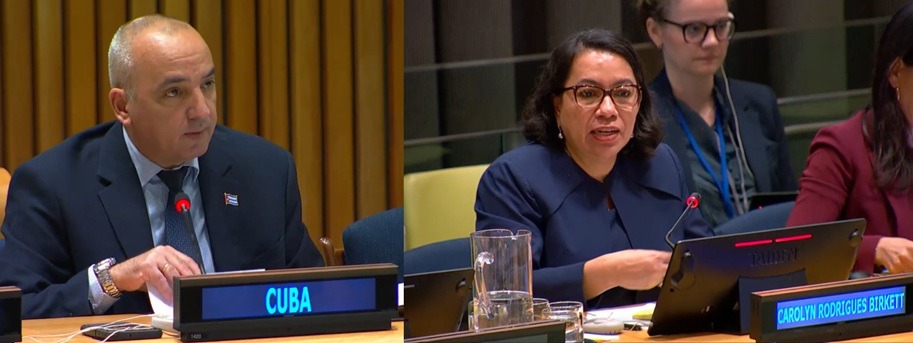
    In a rare, high-profile diplomatic encounter between two long-adversarial nations, a United States delegation headed by CIA Director John Ratcliffe traveled to Havana for official talks with Cuban government representatives on May 14, 2026. The meeting was held at the explicit request of the U.S. government, as part of ongoing efforts to sustain structured political dialogue between Washington and Havana, Cuban state authorities confirmed in an official public statement released following the closed-door discussions.

    Cuba’s revolutionary leadership granted formal approval for both the visit and the scheduled meeting between the U.S. delegation and senior officials from Cuba’s Ministry of the Interior, the statement confirmed. The talks unfolded against a uniquely challenging backdrop for bilateral relations, which have remained fraught with decades-long tensions, alongside a growing domestic crisis in Cuba that intensified just 24 hours before the U.S. delegation arrived. On Wednesday, May 13, Cuban Energy Minister Vicente de la O Levy publicly announced via state media that the island nation faced a total shortage of crude oil and diesel fuel, triggering spontaneous civilian protests in the streets of the capital just one day ahead of the scheduled diplomatic meeting.

    Throughout the negotiations, Cuban officials forcefully pushed back against longstanding U.S. claims that have placed the island on the U.S. list of state sponsors of terrorism. Cuban representatives categorically reiterated that the country poses no legitimate threat to U.S. national security, arguing there is no valid or justifiable basis for its continued inclusion on the contentious terrorism sponsorship list.

    The Cuban side reaffirmed the country’s decades-long, unwavering official position opposing all forms of international terrorism. Officials emphasized that the Cuban government and its relevant national agencies have consistently confronted and unequivocally condemned terrorism in every form and manifestation, regardless of its origin or target. Cuba further maintained that it does not harbor, provide assistance to, finance, or tolerate any terrorist or extremist organizations operating within its borders, and confirmed that no foreign military or intelligence bases operate on Cuban territory.

    “Cuba has never supported any hostile activity against the United States, nor will it allow actions against another nation to be carried out from Cuban soil,” the official Cuban statement read.

    Beyond addressing the status of the terrorism list, the talks also highlighted a shared mutual interest between both parties in expanding collaborative work between their respective security and law enforcement agencies. Officials on both sides noted that enhanced cross-border cooperation in these areas would not only improve domestic safety and security for both nations, but also contribute to broader stability across the Caribbean region and the international community more broadly.

  • US seeks indictment of former Cuban leader Raul Castro

    US seeks indictment of former Cuban leader Raul Castro

    In a move that reignites long-standing diplomatic tensions between the United States and Cuba, federal prosecutors in the U.S. are actively working to secure a criminal indictment against former Cuban president Raúl Castro, multiple sources familiar with the matter have confirmed.

    The development, first reported by U.S. news outlets, marks an extraordinary escalation in Washington’s decades-long adversarial stance toward Havana’s revolutionary leadership. While specific details of the alleged charges remain under seal as of this reporting, people familiar with the investigation have indicated the case centers on longstanding allegations of narcotics trafficking, human rights abuses, and alleged conspiracy related to Cold War-era and post-revolutionary activities that date back decades.

    Raul Castro, 92, stepped down as Cuba’s president in 2018 after leading the country as head of state and the Communist Party for nearly a decade, following the retirement of his older brother Fidel Castro. He ceded leadership of the Communist Party, the country’s dominant political institution, in 2021, formally stepping back from all public office after more than 60 years as a core figure in Cuban governance.

    Diplomatic analysts note that pursuing an indictment against a former head of state of a sovereign nation is an extremely rare action that carries significant geopolitical ramifications. It comes at a time of fragile, incremental improvement in U.S.-Cuba relations that began under the Obama administration, with the re-opening of embassies in 2015, followed by rollbacks of many of those policy shifts under the Trump administration, and a largely status quo approach under the Biden administration amid ongoing political disputes over human rights, trade sanctions, and migration.

    The Cuban government has not yet issued an official response to the reports of the pending indictment, but it has long rejected any U.S. legal actions against its leadership as illegitimate violations of Cuban sovereignty and international law. Foreign policy experts warn that the move could further derail any prospects for normalized relations between the two nations for years to come, and complicate ongoing cooperation on issues of shared interest, including counter-narcotics, climate change, and migration management.

    U.S. officials have declined to comment on the ongoing investigation, citing the sensitivity of the grand jury process, which operates confidentially in federal criminal cases.

  • Governor General to Deliver Throne Speech on May 26

    Governor General to Deliver Throne Speech on May 26

    Following the April 30 general election that formed Antigua and Barbuda’s new government, government spokesperson and Director General of Communications Maurice Merchant has officially locked in the full schedule for the launch of the new parliamentary session, announcing the timeline during a pivotal swearing-in event at Government House.

    The ceremony where Merchant made the announcement marked the formal induction of two new senate members, Joel Anderson-Rayne and Tiffany Strann-Peters. With Strann-Peters’ swearing-in completed, Merchant confirmed that the government has now filled its full allocation of 11 senate seats in the country’s Upper House, bringing the upper legislative chamber to its full planned composition ahead of the new session.

    Per the released timeline, the first major step in convening the new parliament will take place on May 18, when the Lower House gathers for its inaugural sitting. The core business of this opening session will be the internal election of a Speaker and Deputy Speaker, two leadership roles that will steer procedural operations for the lower legislative body over the coming term.

    Two days after the Lower House convenes, the Senate will hold its first official sitting on May 20. During this session, all appointed senators will take their formal oaths of office before moving forward with the required organizing business for the Upper Chamber.

    The highlight of the opening process, the ceremonial opening of parliament and delivery of the Throne Speech, is scheduled for May 26. On this date, Governor General Sir Rodney Williams will deliver the address on behalf of the administration, laying out the government’s full policy and legislative roadmap for the 2026-2027 parliamentary year, outlining the priorities the administration plans to advance through the legislative branch over the coming term.

  • Sir Rodney Williams Urges New Appointees to Serve With ‘Humility’ and ‘Professionalism’

    Sir Rodney Williams Urges New Appointees to Serve With ‘Humility’ and ‘Professionalism’

    In a recent formal address to individuals stepping into new public roles, Governor General Sir Rodney Williams has delivered a clear and compelling call to action, urging his appointees to anchor their service in two core values: unwavering humility and strict professionalism.

    The address, delivered during an official swearing-in ceremony for new government and public service positions, comes as the country works to rebuild public trust in state institutions amid growing public demand for transparent, accountable governance. Sir Rodney emphasized that public office is not a platform for personal gain or status advancement, but a sacred responsibility entrusted to individuals by the general public.

    “Those who accept these appointments carry the hopes and expectations of every community they serve, from the largest urban centers to the most remote rural villages,” Sir Rodney stated in his remarks. He added that humility allows leaders to listen to the needs of constituents rather than imposing their own agendas, while professionalism ensures that decisions are made based on merit, public interest, and adherence to ethical standards.

    The Governor General also highlighted that the performance of these new appointees will play a critical role in shaping the government’s ability to deliver on key policy promises, including infrastructure development, social welfare expansion, and economic recovery post-pandemic. He warned that complacency and disregard for public trust would undermine not only individual legacies but also the stability and progress of the nation as a whole.

    Attendees at the ceremony included senior government officials, family members of the new appointees, and representatives of civil society organizations. Many observers note that the strong emphasis on ethics and values comes ahead of a series of key policy rollouts scheduled for the coming months, as the current administration works to demonstrate its commitment to cleaner, more responsive governance.