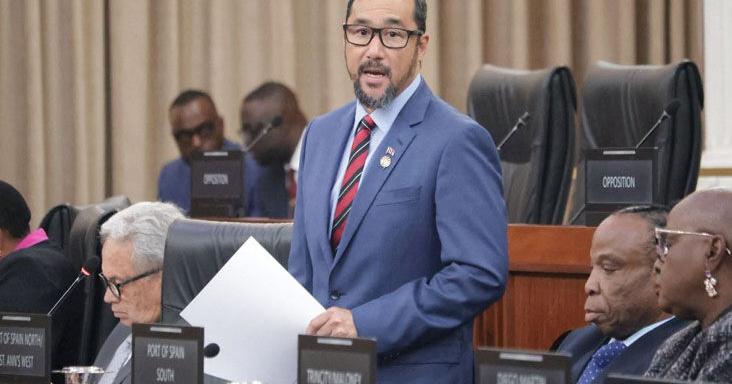
A heated parliamentary debate over Trinidad and Tobago’s energy sector has reignited tensions over the legacy of the defunct Petrotrin refinery, as former energy minister Stuart Young has issued a stark warning that the current government’s proposal to restart operations at the shuttered facility could inflict irreversible fiscal damage on the small island nation.
Speaking on the floor of the House of Representatives during deliberations over the 2026 Miscellaneous Provisions (Heritage Petroleum, Paria Fuel Trading and Guaracara Refining Vesting) (Amendment) Bill, Young doubled down on his defense of the 2018 restructuring of Petrotrin carried out by the former People’s National Movement (PNM) administration. He firmly rejected claims that the restructuring amounted to union busting, a charge frequently leveled by opponents of the original overhaul.
The bill under debate would formalize the extension of all collective bargaining agreements originally signed by Petrotrin, and legally designate two state-owned holding companies, Heritage Petroleum Company Ltd and Paria Fuel Trading Company Ltd, as the official successors to Petrotrin for the purposes of these agreements and the country’s Industrial Relations Act. The legislation paves the way for the current government’s campaign promise to bring the idled refinery back online.
Young pushed back against the plan, arguing that Trinidad and Tobago simply cannot shoulder the massive financial burden that the refinery would place on public coffers. He emphasized that the PNM never permanently closed Petrotrin – instead, it split the struggling entity into separate holding companies to manage its viable assets, isolating the refinery’s crippling debts and operational inefficiencies.
He criticized the current government for ramming the legislation through parliament, scheduling the debate just one day ahead of Labour Day with what he called empty, voter-pleasing rhetoric. Young explained that even at the time of restructuring, the refinery was draining Petrotrin’s resources: the facility was losing between $5 and $6 US dollars for every single barrel of crude it processed, a gap that could not be sustained by public finances. Compounding these operational challenges, Trinidad and Tobago’s own domestic oil reserves have been in steady decline for years, forcing the refinery to import roughly 120,000 barrels of crude per day to keep operating, adding even more to its costs.
Outlining the scale of the refinery’s unsustainable losses, Young noted that the facility racked up $4.3 billion in losses in 2016 alone, and accumulated a total of $5.9 billion in red ink over the three years leading up to restructuring. In contrast, he pointed out that Heritage and Paria – the two companies that took over Petrotrin’s viable upstream and midstream assets – have operated profitably for the eight years since the restructuring, with Petrotrin’s restructured debt already fully paid off by Heritage. Under the current government’s revival plan, Young argued, the crippling costs, liabilities and labor obligations of the refinery will now be forced onto these two profitable firms, putting their strong financial standing at risk.
Young warned that the plan would create massive, far-reaching fiscal consequences for the entire country, shifting a massive unsustainable burden onto the national treasury that could ultimately sink the nation’s finances. He also pushed back against claims from the Oilfield Workers’ Trade Union (OWTU) that its members were victimized in the original restructuring, noting that the former PNM government granted the OWTU exclusive bargaining rights in the refinery restructuring process, contradicting claims of unfair treatment.
In a closing rebuke to the ruling United National Congress (UNC) for its repeated criticism of the PNM’s original decision to idle the refinery, Young highlighted that the UNC previously laid off more than 40,000 workers from government programs including the Unemployment Relief Programme (URP), the Community-based Environmental Protection Enhancement Programme (CEPEP) and the Forestry Division without providing any severance compensation to affected workers.