分类: politics

  • Doorbraak in slepende grondkwesties Mariënburg

    Doorbraak in slepende grondkwesties Mariënburg

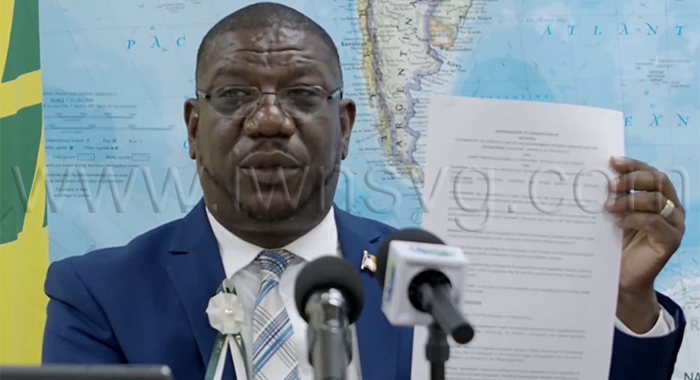
    After years of lingering uncertainty over land ownership, dozens of households in Mariënburg have finally crossed a major milestone toward resolving their long-running land disputes. Following months of intensive dossier inventory, verification and evaluation, multiple outstanding land claims have been successfully closed, bringing an end to a prolonged period of legal and financial insecurity for local residents. On May 15, Stanley Soeropawiro, the country’s Minister of Land Policy and Forest Management, formally handed over official land documents to eligible Mariënburg residents in a ceremony marking the breakthrough.

    In remarks following the handover, Minister Soeropawiro framed the resolution as a landmark development for both the local community and public trust in national governance. He emphasized that the achievement was not the work of any single individual, but the product of collective, cross-stakeholder effort. “I want to extend my sincere gratitude to the ministry’s civil servants, who put in countless long hours to process each of these dossiers with meticulous care,” the minister said. “I also owe a debt of thanks to the Mariënburg residents, who have shown extraordinary patience, faith, and trust in the government through this long process. We know people have waited years for this outcome, so it is critical that they finally see tangible results today.”

    Local residents have greeted the news with widespread relief and heartfelt emotion, after decades of unmet promises and unresolvable uncertainty. One attendee at the handover ceremony shared that the community had grown accustomed to disappointment and instability over the years. “We have heard all kinds of pledges before, but today is the first time we can actually feel that progress is being made,” the resident said. “People are starting to have hope again that their problems really can be solved.”

    Minister Soeropawiro confirmed that the ministry will continue its systematic review of the remaining unprocessed land claims in Mariënburg, with the overarching goal of establishing structural order, legal certainty and clear ownership rules across the entire area. Insiders familiar with the government’s agenda add that the targeted resolution of Mariënburg’s land issues is part of a wider national initiative to steadily address long-standing land disputes in residential communities across the country, one case at a time.

  • PNCR-APNU knew of recent planned defections before – Mahipaul

    PNCR-APNU knew of recent planned defections before – Mahipaul

    On Friday, May 15 2026, senior leadership of Guyana’s main opposition coalition A Partnership for National Unity (APNU), led by the People’s National Congress Reform (PNCR), publicly acknowledged that five of seven high-profile current and former party figures are preparing to cross the floor to join the ruling People’s Progressive Party Civic (PPPC). Speaking at a formal press briefing, PNCR executive member Ganesh Mahipaul pushed back against claims that the impending departures caught the party off guard, noting that shifting social media activity and dramatic changes in public positioning had long signaled the members’ impending exit.

    When asked why the coalition had not taken preemptive disciplinary action against the members planning to leave, Mahipaul explained that concrete evidence of disloyalty remained insufficient for formal action, adding that the PNCR has no inherent desire to expel or push away any of its members. He drew a parallel to the high-profile 2018 case of former APNU+AFC parliamentarian Charrandass Persaud, whose plans to vote in favor of a PPPC-sponsored no-confidence motion were widely rumored in political circles long before the official vote, mirroring the open speculation around this latest round of defections.

    Over the past five years, multiple senior PNCR figures including two former general secretaries and one former chairman have already left the party to join either the PPPC or the new opposition outfit We Invest in Nationhood (WIN). But Mahipaul stressed that none of the members planning the latest exit, nor the previous defectors, have access to the PNCR’s confidential internal strategy or core decision-making processes. He clarified that the seven individuals – three former members of parliament (Rickly Ramsaroop, Shurwayne Holder, and Dinesh Jaiprashad) and four sitting regional councillors (Ravoldo Birbal, Sheik Yaseen, Prince Holder, and Gangadai Lloyd) – hold no key responsibilities in the coalition’s ongoing operations, so their departure will not disrupt APNU’s forward progress. Notably, Guyana currently has no recall legislation that would force sitting regional councillors to give up their seats after switching party affiliation.

    Mahipaul also pointed to a potential driver for the defections, suggesting that many members who leave the PNCR for the ruling party are motivated by the prospect of securing lucrative multi-million-dollar government contracts. He emphasized that the party values unwavering loyalty, commitment, and dedication among its ranks, while noting that recent membership growth has offset losses from departures: despite widespread reports of PPPC-led voter intimidation and victimization of opposition supporters, the coalition has recently added 397 new registered members. Since the 2025 general and regional elections, Mahipaul added, the PNCR has launched a sustained outreach campaign to expand its grassroots presence across Guyana and retain its relevance to voters.

    The briefing also addressed growing public calls for PNCR leader Aubrey Norton to step down, following the coalition’s worst-ever electoral defeat in 2025 that saw it reduced to just 12 of 65 seats in the National Assembly, and pushed it out of the position of main opposition to the new political party WIN, which secured 16 seats. Mahipaul rejected external pressure on Norton’s leadership, stating that decisions about the party’s top leadership are exclusively for party members to make at an official congress, not for outside observers or non-members. “Our political party does not work on what Jim Jones or Tom Jones want to say on the outside. We work based on structure and order,” he said, adding that any member of the public who wants a say in party governance is welcome to join the organization.

    Mahipaul made clear that he personally hopes Norton will not resign, which would leave the party in a state of leadership chaos. He argued that even if Norton steps down from the leadership role in the future, he should remain within the party to share his decades of institutional knowledge and guide newer leaders. “You just can’t drop off the sky and come off the map and abandon your ship. What kind of a leader will you be should you just run away and leave the ship?” Mahipaul said.

  • The Bennett Extradition Case Just Hit a Major Reset

    The Bennett Extradition Case Just Hit a Major Reset

    One of Belize’s most closely followed legal disputes, the long-running extradition case of attorney Andrew Bennett, has entered a new phase following a landmark ruling from the Caribbean Court of Justice (CCJ) issued on May 15, 2026. The regional appellate court has ordered the matter back to Belize’s High Court for reconsideration after identifying a critical legal error in earlier lower court decisions.

    At the heart of the legal conflict is the question of whether WhatsApp messages allegedly tying Bennett to a U.S.-linked money laundering conspiracy can be used as admissible evidence in extradition proceedings. The messages, which prosecutors claim document direct communications between Bennett and an American undercover agent, had already been ruled inadmissible by lower courts, which found that using the private digital communications violated Bennett’s constitutional rights to privacy.

    However, the CCJ’s review uncovered a fundamental flaw in those earlier rulings: lower courts had based their decision on a piece of legislation that was not legally in effect at the time the messages were collected, nor when the initial judgements were issued. The law in question, Belize’s Interception of Communications Act, only came into force in November 2023, years after the relevant digital communications were obtained as part of the investigation into the alleged money laundering scheme.

    Instead of issuing a final ruling on the underlying constitutional question of whether admitting the messages would violate Bennett’s rights, the regional court opted to remand the entire matter back to the Belize High Court. CCJ judges explained that this step will give both the prosecution and the defense a full, fair opportunity to present their arguments on whether the use of the digital evidence clashes with broader constitutional privacy protections, rather than relying on an inapplicable statute.

    The court also emphasized that the case is far from a straightforward legal dispute, noting that it raises complex, evolving questions around digital privacy, modern communication technology, and the standards courts should apply when handling digital evidence in extradition proceedings. For now, the future of the high-profile extradition battle remains unresolved as it heads back to the lower court for a fresh review, continuing a years-long legal process that has drawn sustained public attention across Belize and the Caribbean region.

  • Guyana, Suriname presidents discuss use of Corentyne River, fisheries

    Guyana, Suriname presidents discuss use of Corentyne River, fisheries

    On Friday, 15 May 2026, the presidents of neighboring Caribbean nations Guyana and Suriname held a productive virtual diplomatic meeting focused on resolving long-standing cross-border disagreements and expanding bilateral cooperation across multiple key sectors.

    Guyanese President Irfaan Ali was joined in the meeting by Agriculture Minister Zulfikar Mustapha and Foreign Affairs Minister Hugh Todd, while Surinamese President Jennifer Geerlings-Simons led her country’s delegation to the talks. While Ali shared only broad reflections on the discussion in a public Facebook post following the meeting, Geerlings-Simons offered detailed insights into the agenda and outcomes of the bilateral dialogue.

    At the top of the meeting’s agenda were two long-running cross-border disputes that have strained economic ties between the two nations. The first is a disagreement over access to the shared Corentyne River (called Corantijn by Suriname), sparked when Suriname implemented steep new access fees for Guyanese cargo vessels moving quarry and timber products from Guyanese concessions to Guyana’s side of the waterway. Under the new fee structure, charges can reach as high as US$1,500 per ton, a dramatic increase from the previous flat rate of US$75 per vessel that Guyana is pushing to reinstate. As a path forward, Suriname has requested that Guyana submit a formal application for fee exemptions for specific vessels.

    The second unresolved issue on the agenda is access to fishing waters for Guyanese fishermen. Successive Surinamese administrations have failed to follow through on past commitments to formalize access: the previous Chandrikapersad Santokhi government, which left office after last year’s general election, had pledged to establish a special mechanism to issue fishing licenses to Guyanese crews, but no progress was made on the promise during its term.

    Beyond dispute resolution, the two leaders also discussed expanding bilateral collaboration in high-growth sectors, including oil and gas, and agreed to actively involve the private sector in future cooperation initiatives to drive tangible economic gains for both nations. Climate change and its immediate impacts also featured prominently on the meeting’s agenda, coming on the heels of extreme heavy rainfall that triggered severe widespread flooding across Guyana, Suriname, and neighboring French Guiana in the week leading up to the talks. The two leaders agreed that their respective Public Works ministries will collaborate at the technical level to address flood-related water management challenges and develop coordinated infrastructure adaptations to boost regional resilience to climate-driven extreme weather.

    Both presidents characterized the talks as positive and constructive. Geerlings-Simons described the exchange as “constructive and friendly”, while Ali noted in his Facebook post that he was “delighted today to speak to my friend and our neighbour” on “various opportunities and challenges ahead of us.” He added, “I was pleased at our shared commitment in deepening our partnership and friendship to ensure further economic cooperation, expansion of trade, and integration of our economies.”

    To keep momentum on the discussed issues, the two leaders have agreed to hold another meeting on short notice under the framework of the existing Suriname-Guyana Strategic Dialogue and Cooperation Platform, with a focus on advancing the resolutions agreed upon during this virtual session.

  • Trump’s Two Days of Talks with China Ends With No Clear Deal

    Trump’s Two Days of Talks with China Ends With No Clear Deal

    After two days of high-stakes bilateral discussions hosted in Beijing, former U.S. President Donald Trump has concluded his summit meeting with Chinese President Xi Jinping, leaving the international community with little clarity on concrete progress and conflicting narratives from both sides. The talks, held on May 14 and 15 2026, addressed many of the most contentious and urgent issues shaping global geopolitics and economic cooperation, but failed to deliver any officially confirmed, mutually agreed-upon deals.

    On the economic front, Trump claimed in an interview with Fox News that China had committed to purchasing 200 commercial aircraft from U.S. manufacturing giant Boeing, framing the arrangement as a major win that would deliver mutual economic benefits to both nations. However, neither Chinese officials nor Boeing representatives have issued any confirmation of this alleged agreement. Following the summit, Boeing’s stock price dropped by more than 4 percent in trading on Friday, reflecting investor uncertainty over the outcome of the talks.

    Official statements released by both governments outline the topics covered by the two leaders, but the content of these documents only aligns in a small number of areas, highlighting deep divisions on key geopolitical issues. When addressing the ongoing war in Iran, for example, the two sides offered starkly different framing. The White House stated that both leaders had reached a joint commitment that “Iran can never have a nuclear weapon.” By contrast, China’s official readout of the meeting made no mention of this specific pledge, instead noting that the conflict “should never have happened” and calling for all parties to pursue a negotiated political resolution to end the violence.

    Discussions over the Strait of Hormuz, a critical global shipping chokepoint that is central to international energy supplies, also revealed mismatched accounts. The White House claimed that Xi voiced opposition to the militarization of the waterway and indicated China was interested in expanding imports of U.S. crude oil. Neither of these points appears anywhere in China’s official statement on the summit.

    The deepest rift between the two sides emerged over the issue of Taiwan, which Beijing considers an inalienable part of its sovereign territory. During the talks, Xi identified Taiwan as “the most important issue in China-US relations” and issued a clear warning that mishandling the sensitive topic could lead to “clashes and even conflicts” between the two major powers. Notably, the White House’s post-summit public statements made no mention of Taiwan at all, an omission that underscores the ongoing disagreement over the status of the island.

    The only concrete, mutually confirmed outcome of the two-day summit is an agreement that Xi will conduct an official state visit to the United States in the autumn of 2026, a planned diplomatic engagement that is expected to open another window for high-level talks between the two powers.

  • La Altagracia: the problems that “punish” the largest tourist province in the Dominican Republic

    La Altagracia: the problems that “punish” the largest tourist province in the Dominican Republic

    The booming tourism hubs of Punta Cana and Bávaro have brought significant economic attention to the Dominican Republic’s La Altagracia province, but this rapid expansion has come at a steep cost, according to local Senator Rafael Barón Duluc. During a recent plenary session of the national Senate, the legislator laid out a stark picture of systemic dysfunction plaguing the province, arguing that La Altagracia has been “punished by its own success” — a surge in tourism and development that has never been matched by proactive government planning or targeted public investment.

    Duluc emphasized that despite the province’s global reputation as a top travel destination, it holds the unenviable title of having the Dominican Republic’s highest rate of accumulated poverty. What growth has occurred, he explained, has been chaotic, unregulated, and deeply unequal, with large swathes of the local population pushed into marginalized, informal settlement with limited access to basic public resources.

    The senator’s remarks came as he advocated for a recently Senate-approved resolution that calls for a one-of-a-kind special population census to be conducted exclusively across La Altagracia. Per reporting from local outlet Diario Libre, the measure formally asks the Dominican President to direct the National Statistics Office (ONE) to carry out this targeted data-gathering effort, a step Duluc frames as the foundational first step to solving the province’s mounting crises.

    Current official demographic figures drastically undercount La Altagracia’s actual population, Duluc explained. While unofficial estimates place the province’s total resident population above one million, thousands of people who have settled in high-growth areas including Verón, Punta Cana, Bávaro, and Higüey have not updated their official residential or electoral registration. This massive data gap, he argued, is the root cause of widespread underprovision of critical public services from education to infrastructure.

    As a pressing example, Duluc pointed to ongoing classroom shortages across Verón, noting that thousands of school-aged children in the area are locked out of access to formal education each year due to a lack of learning facilities, a problem that has never been properly addressed because official population counts do not reflect the actual number of residents. Beyond education, the senator warned that unplanned growth has gutted regional mobility, with traffic congestion in Punta Cana and Verón now regularly outpacing gridlock in the capital city of Santo Domingo during peak periods. Where a trip from Punta Cana International Airport to local resort hotels once took just 10 minutes, Duluc said commuters and travelers now face 40-minute to hour-long delays on a regular basis.

    The senator’s assessment echoes recent warnings from prominent Dominican tourism leader Frank Rainieri, who recently labeled the unregulated, unplanned expansion of real estate and tourism development across Punta Cana fundamentally unsustainable. Duluc noted that Rainieri’s assessment was actually a prudent framing of the crisis, adding that on-the-ground conditions in La Altagracia are far more severe than the entrepreneur has described.

    In closing, Duluc made an urgent plea to national authorities, stressing that the special census is the single most critical priority for the province right now — even more pressing than building new roads, hospitals, or other traditional infrastructure projects. Without accurate, up-to-date demographic data, he argued, no government intervention can effectively address the province’s deep-seated inequalities and growing systemic pressures that threaten both local residents and the long-term sustainability of the region’s core tourism economy.

  • Jamaica completes draft 10-year National Agricultural Development Plan with FAO, says Green

    Jamaica completes draft 10-year National Agricultural Development Plan with FAO, says Green

    KINGSTON, Jamaica — In a key step forward for the Caribbean nation’s food systems and agricultural growth, the Jamaican government, in partnership with the United Nations Food and Agriculture Organization (FAO), has finalized drafting of an ambitious 10-year National Agricultural Development Plan. The landmark announcement was made on May 13 by Floyd Green, Jamaica’s Minister of Agriculture, Fisheries and Mining, during his address to the Sectoral Debate in the country’s House of Representatives. The new framework centers on four core priority areas: building resilient, sustainable and efficient production systems; nurturing competitive and innovation-driven agri-businesses and value chains; streamlining efficient cross-border agricultural trade; and strengthening national food security and public nutrition. Beyond these four primary pillars, the plan also integrates a set of critical cross-cutting priorities that address systemic gaps in the sector: agricultural research, innovation and technological adoption, expansion of skilled agricultural workforce development, targeted support for youth and gender inclusion in the sector, and targeted measures to curb long-standing issues of praedial larceny. To ensure the plan reflects the needs and perspectives of all groups involved in Jamaica’s agricultural sector, Green announced that the draft will be released publicly to collect feedback and input ahead of final approval. The document has already been distributed to all sitting parliamentarians, and a full public version is now available for download on the official website of the Ministry of Agriculture and Fisheries, hosted at www.moa.gov.jm. Green emphasized that the government is committed to inclusive policymaking, noting that every agricultural stakeholder — from small-scale independent farmers to large agribusiness operators, industry associations, and civil society groups — will have the opportunity to contribute their insights before the plan is finalized. Members of the public and stakeholders can submit written comments and suggestions via a dedicated email address, nadp@moa.gov.jm. Looking ahead to the finalization process, a formal validation workshop bringing together key critical stakeholders has been scheduled for May 21, 2026, where participants will deliver targeted input to refine the draft into its final, actionable form. Green described the long-term plan as a vital strategic document that will shape the future of Jamaica’s agricultural sector for the next decade, aligning growth goals with sustainability, equity, and national food security objectives.

  • Pay the principal

    Pay the principal

    Two months have passed since Jamaica’s Supreme Court issued a landmark ruling ordering the reinstatement of Dr. Marjorie Fullerton as principal of Merl Grove High School, alongside full payment of all outstanding wages and benefits accrued since her unlawful termination. But as of this week, the veteran educator has yet to receive a single cent of the compensation she is legally owed, prompting urgent concern from Jamaica’s largest education sector union.

    Speaking with the Jamaica Observer on Thursday, Jamaica Teachers’ Association (JTA) Assistant Secretary General Doran Dixon voiced deep frustration over the ongoing delay, noting the court’s ruling leaves no room for noncompliance. “The lower court’s original decision to uphold her removal was quashed entirely, so she is legally entitled to every dollar of salary and benefits owed to her over the period she was unjustly out of office,” Dixon explained.

    Dixon emphasized that there is no legitimate legal ground for withholding payment, as Fullerton complied fully with every step of the judicial process throughout her years-long dispute. “She respected the court, she followed all procedures, and now that the court has ruled in her favor, the Ministry of Education and relevant stakeholders have a binding obligation to respect that ruling and act on it promptly,” he added. “Dr. Fullerton, her legal team, and the JTA all share this deep concern over the unnecessary hold-up.”

    As of press time, multiple requests for comment from Education Minister Senator Dr. Dana Morris Dixon and ministry permanent secretary Kasan Troupe have gone unanswered.

    According to Dixon, while the Merl Grove High school board has stated it intends to appeal the Supreme Court’s ruling, no formal stay of execution — which would pause enforcement of the judgment pending appeal — has been granted by the court. What is more, the board filed its notice of appeal past the legal deadline, forcing it to seek special court permission to even move forward with the appeal process. “Under Jamaican court procedure, an appeal filed even one minute past the deadline is still considered late,” Dixon noted. “While the board has applied for an extension to proceed, the court has not yet issued a stay on the original ruling, which remains fully in effect.”

    Fullerton’s dispute with the school dates back to 2021, when she was first suspended from her post at Merl Grove, a prominent all-girls institution owned by the Associated Gospel Assemblies Church. In 2022, the school’s personnel committee held a disciplinary hearing into allegations against her, concluded the claims were proven, and the school board moved to remove her from the principal position permanently.

    That decision was upheld by both the Ministry of Education and the church, before being fully overturned in the Supreme Court’s March 6, 2026 ruling, which ordered Fullerton’s immediate reinstatement and back payment.

    Dixon stressed that the ministry’s obligation to comply is even more pressing given Fullerton’s personal circumstances throughout the legal battle: the principal has been undergoing treatment for cancer during her years out of office. The ruling entitles her to close to four years of unpaid salary and benefits, a sum that is critical for her ongoing care and financial stability, Dixon said.

    He also issued a clear warning that if the Ministry of Education and school officials continue to ignore the court’s order, Fullerton’s legal team will move forward with contempt of court proceedings against the responsible parties. “Because no stay of execution has been granted, the original judgment remains fully enforceable. Stakeholders that refuse to comply are in open violation of the court’s order, and we have every right to initiate contempt proceedings to enforce the ruling,” Dixon confirmed.

  • Phillips blames Transport Authority for the ‘chaos’ in the public transportation system

    Phillips blames Transport Authority for the ‘chaos’ in the public transportation system

    KINGSTON, Jamaica — Jamaica’s crumbling public transportation system has come under fresh fire from opposition transport spokesman Mikael Phillips, who has placed full blame for the sector’s chaotic state on the national Transport Authority during recent parliamentary proceedings. Speaking on May 13 as part of the annual Sectoral Debate in the House of Representatives, Phillips laid out a scathing critique of the regulatory body’s policy choices and the ruling administration’s stalled reform efforts, backed by official licensing data that lays bare the scale of unplanned expansion. Phillips zeroed in on the dramatic surge in issued transit licenses over the past nine years, a growth he argues has not been matched by even basic investment in supporting infrastructure. From 2016 to 2025, the total number of taxi licenses nationwide more than doubled, jumping from just under 14,000 to nearly 28,000. Broken down by region and license class, the expansion is even starker: In the densely populated Kingston Metropolitan Transport Region (KMTR), the number of active Hackney carriage licenses surged 225 percent, climbing from 1,600 in 2016 to 5,200 this year. Route taxi licenses have also skyrocketed, growing 168 percent nationwide to hit 20,275, with the KMTR seeing its own Route taxi count jump from 363 to 2,466 over the same period. “Consider the sheer absurdity of doubling taxi licenses… while providing no meaningful parking facilities or logistical support,” Phillips told lawmakers. He characterized the unregulated expansion as the most clear-cut example of systemic government negligence, arguing that the policy intentionally created the crippling congestion and widespread operational disorder that now clog every major urban center across Jamaica. The opposition spokesman stressed he does not condone the rule-breaking widespread across the public transit sector, but emphasized that systemic failures from top regulators are the root cause of the current chaos. For years, the current administration has promised to table amending legislation to update the outdated Transport Authority Act, but Phillips noted that the bill has yet to be introduced, a delay he calls a defining example of the government’s legislative lethargy and consistent failure to deliver meaningful policy reform. Going a step further, Phillips accused the Transport Authority of operating solely as a revenue-generating body with zero commitment to improving service quality for Jamaican commuters. Beyond the stalled legislative reform, license growth has not been paired with any expansion of much-needed parking infrastructure, any rationalization of the disjointed existing network, or any coherent long-term strategic plan for the country’s public transit sector as a whole. This failure, he argues, has created the daily chaos visible across every Jamaican town: operators and commuters are packed into overcrowded vehicles in conditions Phillips compared to the inhumane Middle Passage of the transatlantic slave trade, reducing transit users to second-class treatment in their own country. Phillips also touched on the growing frequency of violent clashes between law enforcement officers and transit operators, noting that these confrontations put commuters at unnecessary risk and project an image of widespread public disorder to both Jamaicans and international visitors. He closed by reiterating that the overwhelming majority of the current systemic chaos stems directly from the critical deficit in parking infrastructure. Rules of the road cannot be fairly enforced in an environment where there is nowhere legal for operators to park, he said, placing full responsibility for the crisis firmly at the feet of the current government and its regulatory arm.

  • Time for Jamaica to command a larger share of US$3 trillion creative economy, says Burchell

    Time for Jamaica to command a larger share of US$3 trillion creative economy, says Burchell

    KINGSTON, Jamaica — In a landmark address to Jamaica’s parliament during the annual Sectoral Debate at Gordon House on May 13, Opposition Spokesperson for Culture, Creative Industries and Information Nekeisha Burchell has laid out a urgent call for the country to reposition itself to capture a larger, more equitable slice of the $3 trillion worldwide creative economy.

    Burchell, who also serves as the Member of Parliament for St James Southern, opened her remarks by highlighting how deeply Jamaican cultural influence already permeates fast-growing segments of the modern global economy. From streaming music and social media influencer culture to digital creator platforms and AI-powered content distribution, the country’s cultural imprint is unmistakable: Jamaican rhythms define global pop sounds, local slang enters mainstream vocabulary across continents, homegrown dance movements are replicated by creators worldwide, and Jamaican aesthetics set trends in international fashion and entertainment.

    Despite this outsized cultural footprint, Burchell argued that Jamaica remains trapped on the margins of the global creative value chain, rather than holding core ownership of the intellectual property its creators produce. “We export influence, but we under-capture value,” she told lawmakers, framing this gap as one of the most pressing economic questions facing the country today. She emphasized that intellectual property has evolved from a niche legal concern to core economic infrastructure, meaning Jamaica must proactively build systems to protect copyright, streamline royalty collection, expand creator education, scale digital monetization pathways, and enforce ownership rights for local creatives.

    A central contradiction Burchell called out is the widespread global celebration of Jamaican culture that exists alongside systemic economic vulnerability for most local creators. To resolve this, she said, the country must stop framing investment in creative industries as discretionary charity or cultural goodwill, and instead recognize it as a core pillar of national economic strategy. “It is economic strategy. It is youth employment strategy. It is export strategy. It is digital economy strategy,” she stressed.

    Outlining the opposition People’s National Party’s (PNP) existing policy roadmap, Burchell recalled that the party first proposed a $1 billion Creative Economy Support Fund in 2025. The plan also includes building regional creative hubs, constructing state-of-the-art content production studios, expanding specialized audiovisual training programs, and delivering structured, ongoing support for young creators and creative entrepreneurs. Burchell noted that raw Jamaican talent is abundant, but without supporting institutional and financial infrastructure, those creative businesses cannot scale to compete globally.

    She also pushed for Jamaica to move beyond its traditional role as a scenic backdrop for foreign film and media productions. Drawing on personal experience from her own constituency, Burchell pointed to the 1960s James Bond production that filmed on location at White Witch Mountain in Flat Johnson, St James Southern, to illustrate her point. While the country’s natural beauty and cinematic appeal are major assets, she argued Jamaica must evolve from being a location for other people’s stories to becoming the owner, exporter, and intellectual property rights holder of its own narratives — a shift that would unlock massive economic value in the modern content economy.

    Burchell also highlighted a second major contradiction in current Jamaican policy: the country markets itself globally as a hub of vibrant culture, from music and dancehall to festivals and nightlife, but the very creators who generate that brand value face repeated conflict with fragmented, outdated regulatory frameworks. “Jamaica profits symbolically from entertainment culture while structurally constraining many of the people who create it,” she said, calling for an honest reckoning with these long-standing policy failures.

    To address this gap, the PNP has proposed the creation of specialized Special Entertainment Zones, streamlined consolidated licensing systems, and a more coherent national regulatory framework for the entertainment sector. Burchell emphasized that entertainment is far more than leisure: it drives employment, boosts tourism, creates opportunity for young people, and forms the core of Jamaica’s global national identity. While acknowledging the legitimate need for community safety and resident peace, she argued that regulation has too often functioned as outright suppression of the sector. “We cannot continue celebrating dancehall globally while criminalising many of its economic spaces locally,” she said, noting that even the current ruling government has acknowledged the need for structured entertainment infrastructure through ongoing discussions about entertainment development zones in tourist hubs like Negril.

    Closing her address, Burchell pressed the sitting administration to turn rhetorical support for the creative economy into concrete action. Jamaicans are right to ask whether recent government announcements about creative sector development are just empty promises or the start of a real, actionable national strategy, she said. The country has developed a damaging pattern of making big announcements without following through on implementation, Burchell argued. Today, the question is no longer whether Jamaica recognizes the untapped potential of its creative sector — the question is whether policymakers can come together to pursue a comprehensive, intentional, national strategy that delivers tangible change for creators across the country.