分类: politics

  • PM Orders Independent Probe Into Mira Family Payments

    PM Orders Independent Probe Into Mira Family Payments

    Amid mounting public pressure and swirling questions about hundreds of thousands of dollars in public funds directed to businesses linked to the family of Belizean Minister Oscar Mira, Prime Minister John Briceño has formally announced plans for an independent probe into the transactions.

    Speaking to reporters during a public appearance in Orange Walk Town on June 18, 2026, Briceño confirmed to local outlet CTV 3 that he has instructed the Financial Secretary to coordinate with the Office of the Auditor General to launch a full review of the contested payments. The core goals of the independent audit are twofold: to verify whether all required government procurement protocols were properly followed throughout the contracting process, and to confirm that public spending delivered the intended value to the state.

    Briceño emphasized that he would not pre-judge the results of the investigation, noting that any disciplinary or policy changes following the review would be dictated entirely by the Auditor General’s final findings.

    The controversy erupted after leaked official records showed that MP Farms — an agricultural operation owned by Brian Mira, Minister Mira’s brother — has received multiple government payments adding up to nearly $400,000. A closer look at the transactions has raised red flags: the total sum was split across dozens of individual invoices, each worth less than $10,000, a structure that critics suggest was deliberately designed to bypass existing procurement oversight safeguards.

    Scrutiny has since expanded beyond Brian Mira’s business. Additional public funds have previously been paid to Jenny Mira, the minister’s sister, and new reports involving another of Mira’s brothers, Stanley Mira, have only intensified public anxiety over potential malfeasance.

    Defense Minister Florencio Marin Junior has pushed back on claims of improper intervention, stating that all payment processes are managed by career finance officers and trained procurement specialists, and confirming that an initial internal procedural review is already ongoing. Retired Brigadier General Dario Tapia, former Chief Executive Officer of the Ministry of Defense, has also publicly stated he will make himself fully available to the Auditor General and cooperate completely with the independent investigation.

    Minister Mira himself has repeatedly denied any personal involvement in the award of the government contracts in question. In a separate move tied to the allegations, Prime Minister Briceño is also moving forward with plans to reconstitute the board of directors of Reconstruction and Development Corporation Limited, amid claims of undue influence by Mira over the state-owned entity.

  • All Eyes on Briceño as Mira Controversy Moves to Cabinet

    All Eyes on Briceño as Mira Controversy Moves to Cabinet

    As June 2026 unfolds, a growing corruption and nepotism controversy centered on Belizean Minister Oscar Mira is set to command the full attention of the national Cabinet at its upcoming Tuesday meeting, with all momentum pushing Prime Minister John Briceño to make a final call on the scandal.

    At the heart of the dispute are allegations that government contracts and tens of millions in payments were awarded to Mira’s immediate family members, raising red flags over improper influence and improper enrichment. Julius Espat, the country’s Minister of Infrastructure Development and Housing, has made clear that the issue cannot be swept under the rug. He confirmed that he will raise pointed questions about the contract awards during the scheduled Cabinet session, forcing a full, on-the-record discussion of the claims that have roiled Belize’s political sphere in recent weeks.

    Espat emphasized that the controversy offers a critical opportunity for the government to address past gaps in oversight and strengthen its practices moving forward. “All of these things that are happening and have happened in the past should give us an opportunity to learn and to do better,” he stated, noting that once all facts are laid out and Mira has had the opportunity to defend himself, ultimate authority to act rests with Briceño. All Cabinet ministers are appointed by the prime minister, Espat noted, and only Briceño can decide whether Mira will retain his post or step down. “At the end of the day we hope we can make the right decision. He is a colleague of mine and I wish him well. I hope that he can answer the questions properly and if it is that they are in error then a decision has to be made,” Espat said.

    The opposition has already taken a hard line, escalating public pressure on the ruling government to act immediately. Opposition Leader Tracy Panton, head of the United Democratic Party, is calling for Mira’s prompt removal from office, pointing to what she calls overwhelming concrete evidence of wrongdoing. Panton highlighted that 44 separate payments to entities tied to Mira’s family were processed on a single day, a pattern she argues is clear nepotism and core corruption.

    “Being elected to political leadership is not a license to enrich yourselves, your family, companies that are affiliated with your family,” Panton told reporters. She added that public anger is growing over the lack of accountability from top government officials, noting that neither Prime Minister Briceño – who also serves as Minister of Finance – nor the country’s financial secretary has addressed the claims directly, leaving only politically appointed chief executives to defend Mira. “These are not just allegations. We have proof,” Panton said, calling on all Belizeans to back demands for Mira’s resignation or removal.

    For his part, Mira has repeatedly denied all wrongdoing, insisting he never used his position to influence the award of contracts to his siblings or secure improper payments for his family members.

    The controversy has also drawn intervention from Belize’s leading labor body, which is pushing for systemic reform alongside a full independent review. The National Trade Union Congress of Belize (NTUCB) is calling for a independent, transparent audit of the contracts and payments to confirm that all public funds delivered value for taxpayers and that all proper procedures were followed. NTUCB President Ella Waight explained that the audit is not intended to prematurely assign blame, but to ensure public trust in government contracting. At present, the payments in question are linked to the supply of vegetables to public programs, and Waight said the audit should verify that products met quality standards and that prices aligned with fair market rates.

    While Waight acknowledged that current information suggests no overt illegal activity took place, she stressed that the current process that allows multiple separate payments under $10,000 to a single recipient must be reformed. This structure creates an unnecessary risk of circumventing standard accounting oversight, she argued. Waight also called on the government to follow through on long-promised whistleblower protections, pointing to the Social Security Board’s existing whistleblower policy as a successful model that protects public workers who come forward with information about improper activity.

    In a recent development, NTUCB leaders confirmed that after a meeting with Prime Minister Briceño, the government has agreed to share a draft of the long-awaited Whistleblowers Act with the union by June 26, 2026. Waight added that fair contracting is critical to ensuring that small Belizean farmers can benefit from public sector opportunities, noting that “this a small pie, and we must share that pie” to allow hardworking local producers across the country to compete for contracts equitably.

  • LIU Continues Despite Controversial Employment Program Pause

    LIU Continues Despite Controversial Employment Program Pause

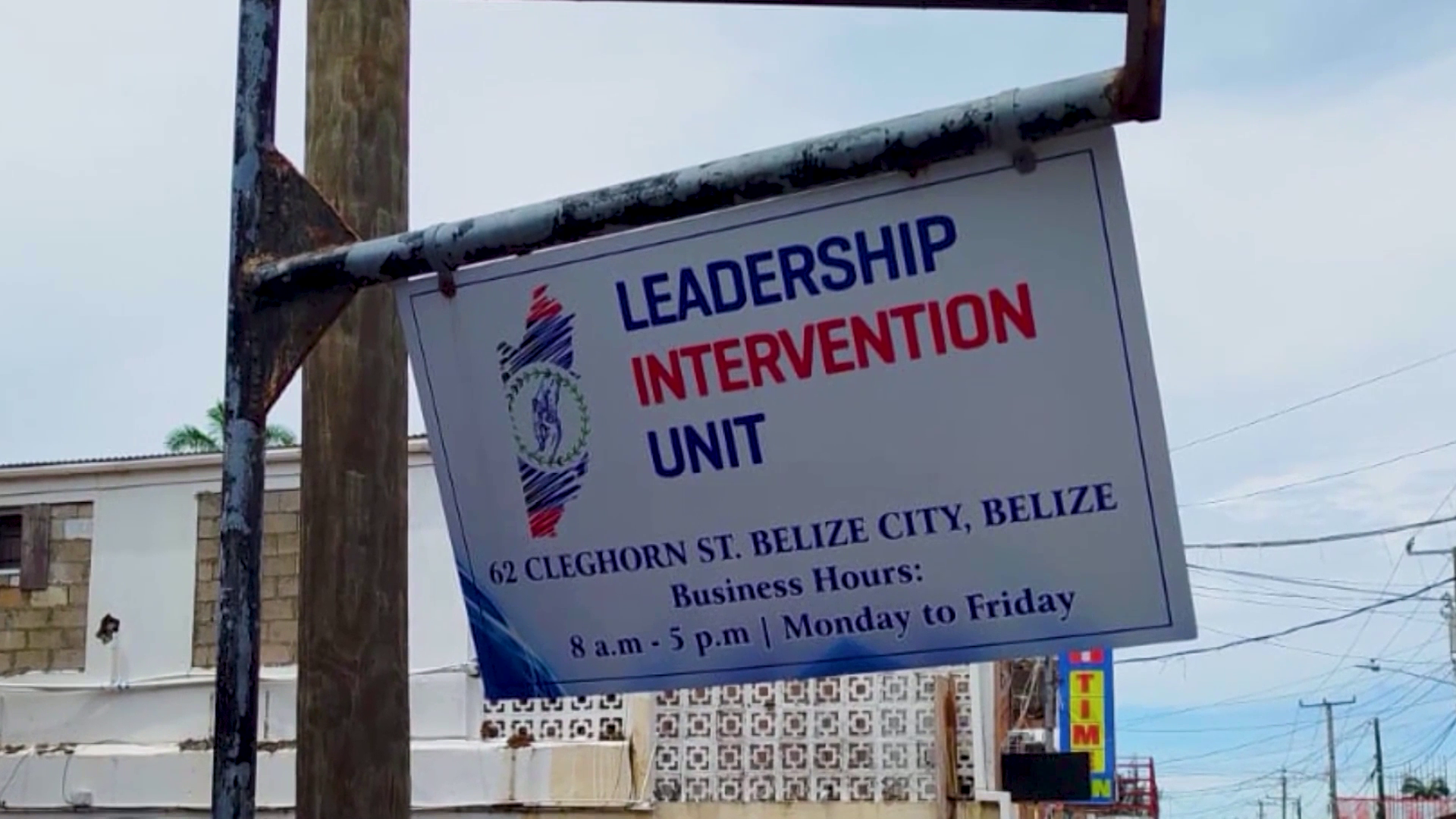
    Weeks after a controversial pause to one employment component of Belize’s flagship Leadership Intervention Unit (LIU), senior government officials are moving to clarify the program’s status, reassuring the public that core community-focused work continues while ongoing fiscal audits are completed.

    In an on-site interview Wednesday in Belmopan, Minister of Home Affairs Oscar Mira pushed back against widespread speculation that the entire LIU initiative had been shuttered, calling for public patience as the government reviews the paused employment segment. Mira emphasized that the temporary hold was implemented solely to uphold fiscal responsibility for public funds.

    “Only one part of the broader work program has been paused for review,” Mira clarified. “The entire LIU has not stopped operations. A wide range of core initiatives are still active and delivering results across the country right now. Our only goal with this review is to ensure every dollar of taxpayer money is spent correctly, and that every investment we make delivers the tangible outcomes Belizeans deserve. That is all that has taken place – the program remains active, interventions are still in place, and much of LIU’s work continues unchanged.”

    The temporary pause of the employment segment has left many residents wondering what parts of the LIU are still operating, a question reporters put to Andrew Dawson, the acting director of the unit, earlier this week. Dawson confirmed that operations have not halted, and the agency is instead using the pause as an opportunity to restructure and realign its priorities with the government’s broader vision, particularly for high-need vulnerable communities.

    Dawson outlined the range of active LIU initiatives still running: “Right now, LIU continues all its core efforts. While the beautification program was the component that was paused, our partnerships with local vocational training institutions remain fully operational. We still run our popular community sports programs, and our community council network – which includes local representatives running small-scale, hyper-local programs across underserved neighborhoods – is still active. We are in a restructuring phase right now: I am in ongoing discussions with the minister and the ministry to align our work with their strategic vision, and integrate those priorities into LIU to strengthen our impact moving forward. There is critical work to be done across the country’s most vulnerable communities, and we cannot afford to slow down. We have to keep pushing forward and deliver this work collectively.”

    As of June 18, 2026, weeks after the employment segment was first put on pause, the government has not yet issued a clear timeline for when the review will conclude, nor has it confirmed whether the employment program will eventually be restarted in its original form or revised as part of the LIU’s restructuring. This report is a transcript of a televised evening newscast, with all Kriol-language remarks transcribed using a standardized spelling system for accuracy.

  • Khalid Belisle Calls Out Mira Family’s Alleged Belmopan Land Grab

    Khalid Belisle Calls Out Mira Family’s Alleged Belmopan Land Grab

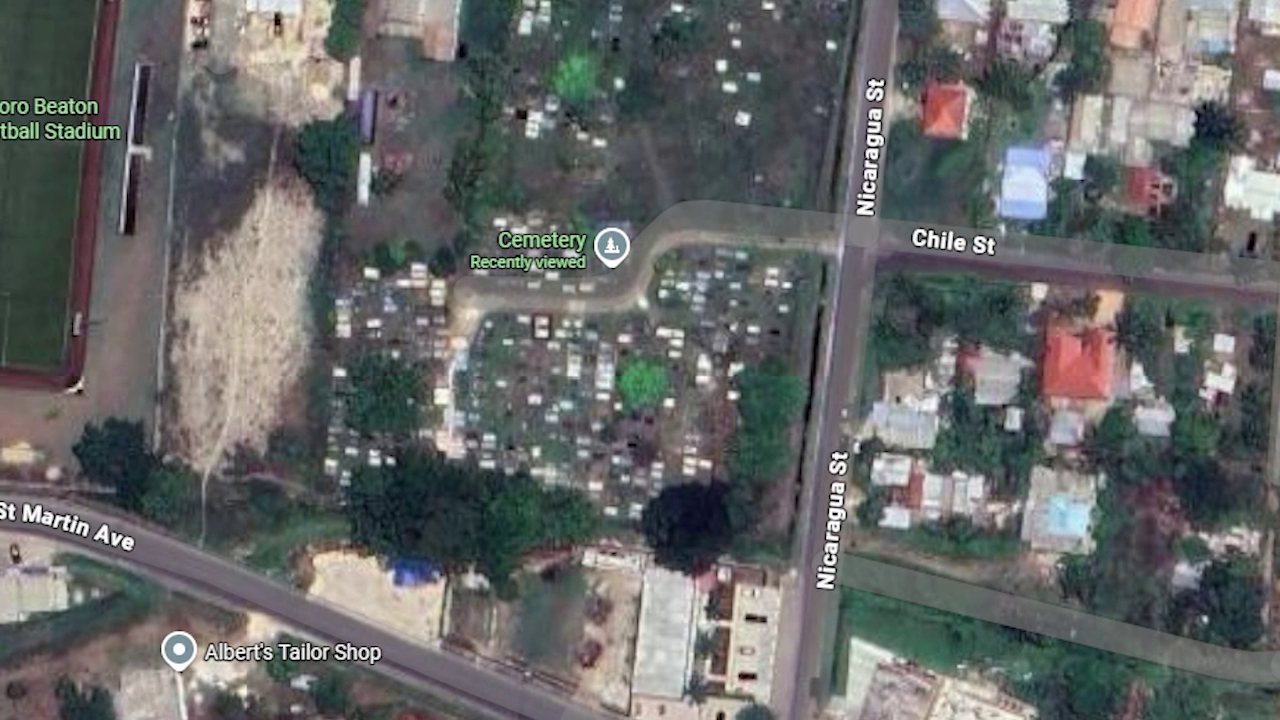
    A new controversy has erupted in Belmopan as of June 18, 2026, centered on allegations that the family of local Area Representative Oscar Mira has taken control of a substantial plot of public land marked for industrial development on the city’s outskirts. Khalid Belisle, a former mayor of Belmopan and current United Democratic Party (UDP) caretaker for the area, has publicly raised alarm over the questionable transfer of more than 31 acres of prime land in the far eastern edge of Belmopan, a parcel that abuts the city boundary near the capital’s new public cemetery.

    According to Belisle, the plot in question was originally zoned exclusively for industrial projects, a status that made the sudden transfer of ownership to Mira’s close relatives, and potentially Mira himself, all the more unusual. Compounding public frustration over the deal, Belisle notes that widespread complaints have circulated across social media for months from ordinary Belizean residents claiming that no public land is still available for distribution to general applicants in Belmopan.

    “If there is truly no more public land left to allocate to everyday residents, then the public deserves an explanation as to why members of the area representative’s inner circle were able to secure these 31 acres before other applicants who have waited in line for years,” Belisle argued in comments during a televised evening newscast. He stopped short of making an outright allegation of illegal activity, but emphasized that the situation carries poor public optics that demand a full, independent investigation.

    Belisle also expressed support for opposition leader and UDP party head Tracy Taegar Panton, who has already filed a formal Freedom of Information Act request to obtain full documentation of the land transfers, laying out the history of the parcel’s reclassification and change in ownership. “I am not rushing to pass judgment before all the facts come to light,” Belisle said, echoing the assessment shared by the current Chief Executive Officer of Belize’s Ministry of Defense: the appearance of the deal is far from what the public should accept from elected officials. “We are waiting for the full story to be released, and until then, the public has every right to ask tough questions about how this public resource was handled.”

  • Mayor Wally Lashes Opposition for Desperate Allegations

    Mayor Wally Lashes Opposition for Desperate Allegations

    On a scheduled Wednesday in San Pedro, a highly anticipated opposition press conference, which had been marketed to deliver damning revelations from a San Pedro Town Council financial audit, failed to go forward after opposition leaders abruptly pulled the plug on the event. The last-minute cancellation has sparked sharp pushback from sitting Mayor Wally Nuñez, who is accusing the political opposition of intentional misrepresentation of public financial documents to manufacture a political scandal.

    According to Nuñez, the statistics the opposition had been circulating in advance of the press conference do not originate from a completed official audit of municipal spending, as the group claimed. Instead, the numbers are pulled from a draft budget prospectus that only lays out proposed future expenditures for the town, not verified accounting of past spending.

    Nuñez argued that the opposition’s misrepresentation of the document stems from one of two deliberate goals: either the opposition intentionally twisted the text of the prospectus to gain partisan advantage ahead of upcoming political discourse, or they failed to correctly interpret a standard public financial document. In on-the-record comments following the cancellation, Nuñez called the opposition’s missteps deeply disappointing, noting that the group had incorrectly misidentified proposed line items to falsely implicate his office in improper spending.

    “It is quite disappointing to see that the opponent probably don’t know their arm from their elbow,” Nuñez stated in his remarks. “When you see these things what they have posted is of perspectives. It is not the financial audit. I know that they have been trying very hard to try to pin something on me personally. If you realize they have highlighted there the office of the mayor. And they are trying to point out certain things that are not factual.”

    One key misrepresentation Nuñez highlighted involves a line item for allowances that the opposition framed as excessive pay for just one or two senior officials, including the mayor himself. In reality, Nuñez explained, that allocation is set aside for the entire town council, not a small group of leaders. He added that the opposition also pulled numbers out of context to inflate the perceived size of spending tied to the mayor’s office, omitting critical context that the budget line includes not just official allowances, but also staff salaries and proposed funding for annual public celebrations.

    Those public festivities, Nuñez noted, are a deliberate investment designed to drive foot traffic and stimulate San Pedro’s local economy throughout the year, a core municipal function that falls under the purview of the mayor’s office. All the figures the opposition cited, he emphasized, are only proposed spending targets, not a record of money that has already been spent.

    The mayor went on to refute any suggestion of hidden financial activity, noting that all completed official audit reports for the San Pedro Town Council from the past five years are fully accessible to any member of the public who requests them. This report is a transcript of a broadcast evening newscast, with all non-standard speech rendered via a standardized spelling protocol for published distribution.

  • Julius Espat Clashes with UDP Over Flood-damaged Highway

    Julius Espat Clashes with UDP Over Flood-damaged Highway

    What was once a debate over the structural resilience of a flood-battered Belizean highway has erupted into a sharp public political clash, with ruling party infrastructure minister Julius Espat hitting back at opposition claims that the government misrepresented cost savings on the 2023 Coastal Plain Highway project.

    After heavy floodwaters damaged multiple stretches of the Coastal Plain Highway earlier this year, the United Democratic Party (UDP) ramped up criticism of the government’s handling of the project, arguing the highway’s compromised condition proves the ruling party’s reported cost savings were either misleading or misallocated – questioning why a newly opened route suffered such severe damage from seasonal flooding.

    But in a recent public address carried on local television, Espat pushed back firmly against the opposition’s claims, labeling the criticism a cynical political distortion of facts. “That is politics. You twist the truth to suit your needs,” Espat said, pushing back on the UDP’s claim that the government originally advertised $28 million in total project savings on the highway. “At no time did we say we saved twenty-eight million dollars on the Coastal Highway, at no time.”

    Breaking down the project’s budget structure for the public, Espat explained that the savings in question came from unspent contingency funds set aside during construction. All major infrastructure contracts include layered budget allocations: core construction costs, administrative overhead, social impact mitigation, warranty reserves, and a contingency buffer reserved to address unforeseen issues that arise during building work. These contingency funds are held in partnership with international financial institutions (IFIs) that fund many of Belize’s large infrastructure projects, and require formal approval to reallocate if they go unused.

    Espat confirmed that during the Coastal Plain Highway’s construction, no unexpected complications emerged that required drawing on the contingency reserve. Rather than leaving the funds idle, the ministry successfully requested approval from IFIs to reallocate the unused contingency to upgrade two critical secondary access routes: paving the Manatee entrance road and the connection to Mollins River. That reallocation, he said, is the full extent of the “savings” the government referenced in prior briefings in 2023 and 2024, not broad, across-the-board cuts to the main highway project that would have compromised structural integrity.

    The Coastal Plain Highway, a key transport link connecting multiple communities along Belize’s coast, was officially opened to public use in 2023. The flood damage that sparked the current dispute occurred in recent months, reigniting long-running political tensions over infrastructure investment and government budget transparency in the country. This report is adapted from a transcribed broadcast of local evening news programming.

  • CARICOM Eminent Persons Group | Postponed Visit to Haiti

    CARICOM Eminent Persons Group | Postponed Visit to Haiti

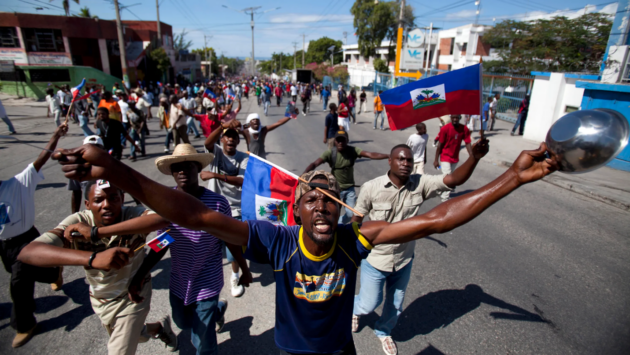
    As the political landscape in Haiti remains fluid and uncertain, the CARICOM Eminent Persons Group (EPG) is maintaining close, real-time monitoring of developments through continuous virtual dialogue with a broad cross-section of Haitian stakeholders. These conversations span across government leadership, opposition political blocs, and grassroots civil society organizations, giving the group a grounded, multi-faceted understanding of the crisis unfolding on the ground.

    Recognizing that digital engagements cannot replace the nuance and trust-building of face-to-face interactions, the EPG has made clear its intention to deploy an on-the-ground delegation to Haiti as soon as logistical and security conditions allow. Once in the country, the group plans to hold direct talks with all major stakeholders to facilitate dialogue and support Haitian-led efforts to resolve ongoing political divisions.

    To provide context, the Caribbean Community (CARICOM) – the regional bloc that convened the EPG – was founded in 1973 following the signing of the Treaty of Chaguaramas, with a major 2001 revision of the accord that paved the way for a single integrated market and economy across the Caribbean. Today, the bloc counts 15 full member states and six associate members, representing a combined population of roughly 16 million people, 60 percent of whom are under the age of 30.

    CARICOM structures its work around four core pillars: deepening economic integration across member states, coordinating collective foreign policy, advancing inclusive human and social development, and strengthening cross-border security cooperation. The bloc’s overarching mission is to build an integrated, inclusive, and resilient regional community powered by innovation, knowledge, and shared productivity. It aims to position the Caribbean as a unified competitive force on the global stage, where every resident has equal access to opportunity, guaranteed human rights, and social justice, and can share in the region’s collective economic, social, and cultural prosperity.

    Widely recognized as one of the most successful regional integration projects among developing nations, CARICOM carries out its day-to-day operations through its central administrative body, the CARICOM Secretariat, which is permanently based in Georgetown, Guyana.

  • Established math formula determines membership of parliamentary committees, as FGM’s Walton-Desir cries “hypocrisy”

    Established math formula determines membership of parliamentary committees, as FGM’s Walton-Desir cries “hypocrisy”

    On June 18, 2026, a heated political controversy over parliamentary committee representation has emerged in Guyana, centered on a decades-old mathematical seat allocation formula that has left the tiny Forward Guyana Movement (FGM) locked out of all legislative committees. The dispute comes after FGM leader Amanza Walton-Desir, the party’s sole elected representative in the 65-seat National Assembly, was formally deemed ineligible to claim a committee seat, prompting her to accuse the governing People’s Progressive Party/Civic (PPP/C) of blatant hypocrisy in applying parliamentary rules.

    Shortly after Walton-Desir raised public concerns about the process, National Assembly Clerk Sherlock Isaacs released the full text of the long-used formula to both the government and opposition chief whips, confirming the outcome that excludes FGM. Isaacs emphasized in an official statement that the proportional allocation method is not a new policy crafted for this situation, but a framework that has guided committee composition for decades. The system, he explained, allocates committee seats proportionally based on each political party’s total share of seats in the full National Assembly, a requirement explicitly backed by two sections of the National Assembly’s Standing Orders. Standing Order 94(1) mandates that every select committee be constituted to reflect the overall party balance of the full legislature as closely as possible, while Standing Order 94(2) grants the Committee of Selection authority to set the size of each committee unless the assembly votes otherwise. Isaacs also clarified that the committee selection process follows a separate set of rules from the election of the Speaker and Deputy Speaker, which are held via floor vote in a full sitting of the assembly regardless of party size.

    The released calculation results confirm that FGM, which holds just 1.54% of assembly seats, does not meet the threshold for a committee seat. But Walton-Desir, a lawyer and former Shadow Foreign Affairs Minister, has pushed back hard against the decision, arguing that the governing PPP/C and its Chief Whip Gail Teixeira are selectively applying the formula to shut out opposition voices. She frames the dispute not as a personal bid for a position, but as a matter of democratic accountability for the Guyanese people.

    In her critique, Walton-Desir points to two recent precedents that she says expose the inconsistency of the government’s approach. In 2020, Teixeira nominated Lennox Shuman for Deputy Speaker, despite Shuman’s Liberty and Justice Party only winning 2,657 votes in that year’s general election. The PPP/C used its parliamentary majority to push through Shuman’s election without any reference to a vote-count eligibility threshold. Similarly, in 2023, Teixeira nominated Dr. Asha Kissoon of The New Movement – a small party that won just 244 votes in the 2020 election – for the same Deputy Speaker position, and again the PPP/C majority secured her election without any debate over vote share eligibility. By contrast, Walton-Desir notes that FGM won 4,585 votes in the September 2025 general election, more than both of the previous small-party nominees, yet the same government and same chief whip are now invoking a formal formula to block her from a committee seat. “The hypocrisy is glaring,” she said.

    Walton-Desir added that she has already reached out to Foreign Relations Sectoral Committee Chair Primus, offering to lend her expertise to support the committee’s work and any other legislative panel that could benefit from her input. She also pushed back against what she described as the PPP/C’s attempts to consolidate control over the opposition through obstruction, misinformation spread via social media, and abuse of public communication channels. “The work continues, and it will continue in spite of PPP’s attempts to control the opposition,” she emphasized.

  • President bij bevordering 150 militairen: Hogere rang, grotere verantwoordelijkheid

    President bij bevordering 150 militairen: Hogere rang, grotere verantwoordelijkheid

    On June 18, a major milestone ceremony was held for the National Army of Suriname, where more than 150 active-duty service members received promotions to the next higher rank in their military careers.

    Leading the ceremony, President Jennifer Simons, who also holds the position of Supreme Commander of the Surinamese Armed Forces, opened her remarks by framing the promotions as a formal state recognition of the consistent dedication, unwavering discipline, loyal service, courage and proven competence that these soldiers have demonstrated while serving the nation and its people.

    According to official statements released by the Suriname Communication Service, Simons emphasized that a military promotion carries far more meaning than simply wearing an upgraded rank insignia. “You have carried the core values of discipline, loyalty and courage with dignity throughout your service in the National Army,” she told the promoted service members. “Today, you advance to a new rank, and I congratulate you on this well-earned step forward in your careers.”

    The president also highlighted that the promotions reflect not only the professional growth of the individual soldiers, but also the constant personal sacrifices that service members and their families make on a daily basis to support national security. “When we see the men and women in green uniform, we do not always stop to acknowledge the person and the waiting family behind the uniform,” she added.

    Simons went on to stress that higher rank brings with it expanded responsibilities for the military personnel. “With your new rank, your authority increases, but so does the weight of accountability placed on your shoulders,” she said. “Higher expectations are placed on you now in terms of leadership and decisive decision-making. A higher rank also means a higher standard of duty to the nation.”

    She also publicly acknowledged the challenging working conditions that Surinamese soldiers face in their day-to-day service. “We know you operate under difficult circumstances, with limited resources at your disposal. Many of you are stationed deep in the country’s interior, far away from your loved ones for long stretches. The government is fully aware of these hardships, and we will never leave you or Suriname behind,” she assured the assembled service members.

    Per Simons, the Surinamese government has made a formal commitment to strengthening the country’s security institutions across both personnel and material infrastructure. A key part of this ongoing effort is improving the legal and employment status of active-duty military personnel. “Legal job security is the foundation for service stability, unity and motivation among our ranks,” she explained. “Our goal is clear: sustainable institutional strengthening and long-term capacity building for our armed forces.”

    Defense Minister Uraiqit Ramsaran echoed the president’s remarks, adding that the current round of promotions is part of a deliberate, step-by-step strategy to address long-standing backlogs in military career advancement. “This is not an isolated, one-off process,” Ramsaran noted. “It is a deliberate approach to deliver justice to our personnel, and to address existing backlogs one step at a time — not just with empty words, but with tangible, visible results that service members can see.”

    Closing the event, the minister called on all newly promoted soldiers to continue their dedicated service to advance the development of a strong, forward-looking defense organization that remains fully committed to serving Suriname and its population.

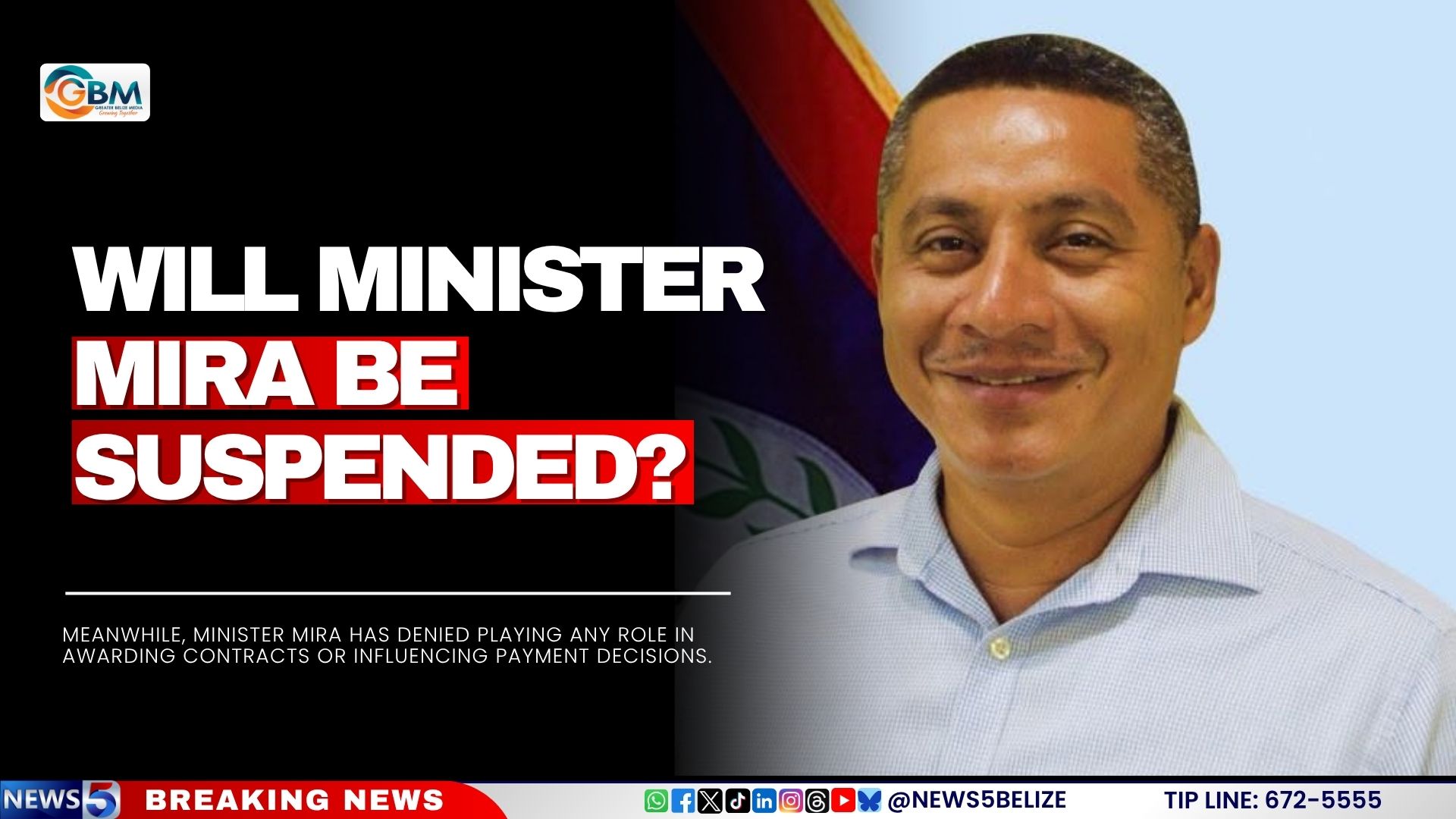
  • Will Minister Mira Be Suspended?

    Will Minister Mira Be Suspended?

    In the wake of growing public scrutiny over hundreds of thousands of dollars in questionable state payments to enterprises connected to the family of Belizean Minister Oscar Mira, Prime Minister John Briceño has announced the launch of a fully independent review to investigate the controversial transactions.

    During an exclusive interview with CTV3 News held in Orange Walk Town, Briceño outlined that his administration will formally ask the Financial Secretary to formally request the Auditor General carry out a comprehensive audit of the time period at the center of the controversy. The core objectives of this probe are to verify whether all required public procurement protocols were strictly followed throughout the process, and to confirm that the government received fair value for every dollar disbursed through these payments. Briceño emphasized that he will not pre-judge the outcome of the independent investigation, stressing that any future administrative or disciplinary action, including the potential suspension of Minister Mira, will be determined exclusively by the audit’s final findings.

    The controversy gained new momentum after leaked internal records from government services provider Smart Stream, obtained by local outlet News Five, revealed that MP Farms — a company owned by Brian Mira, Oscar Mira’s younger brother — received 44 separate payments on September 25, 2025, adding up to a total of $389,796.85. Each individual payment was registered below the $10,000 threshold that triggers mandatory formal procurement oversight, a pattern that has sparked widespread allegations that official procurement safeguards were intentionally bypassed to avoid scrutiny.

    This latest disclosure is not an isolated incident. It follows previous public concerns over separate state payments made to Jenny Mira, Oscar Mira’s sister, as well as unconfirmed reports of a major public contract awarded to another brother, Stanley Mira. Against this backdrop, Defence Minister Florencio Marin Jr. has clarified that routine payment processing falls under the remit of career finance officers and independent procurement professionals, rather than political appointees. Marin Jr. also confirmed that the Ministry of National Defence is currently holding active discussions with the Ministry of Finance to conduct a full review of existing procurement procedures, with the goal of closing any existing loopholes that could enable abuse.

    For his part, Minister Mira has issued a categorical denial of any wrongdoing. He has repeatedly stated that he never intervened in the contract award process or attempted to influence any payment approval decisions, noting that all public tenders are openly advertised and award decisions are the sole responsibility of independent procurement committees, not sitting cabinet ministers.

    Beyond the audit into the questionable payments, Prime Minister Briceño also announced plans to dissolve and reconstitute the full board of the Reconstruction and Development Corporation Limited (ReconDev), the state-owned development entity at the heart of the contracting allegations. The move comes amid persistent claims that members of the Mira family hold undue influence over decision-making within the organization.