分类: politics

  • Shooting incident at White House; suspect killed after opening fire on Secret Service

    Shooting incident at White House; suspect killed after opening fire on Secret Service

    A violent incident near the heart of U.S. government power ended with a suspect dead Saturday evening, after the 21-year-old gunman opened fire at a White House security checkpoint, according to a recent report from CBS News.

    Law enforcement and intelligence sources confirmed the attacker has been identified as Nasire Best, a young man already on the Secret Service’s radar prior to the shooting. Officials familiar with the case have confirmed Best had a documented record of mental health challenges, a detail that adds context to the pre-existing awareness of the suspect among federal security agents assigned to protect the presidential complex.

    Following the confrontation, former U.S. President Donald Trump publicly commended the responding Secret Service officers for their rapid, disciplined response to the threat. In a public statement posted to his Truth Social platform, Trump noted that the suspect carried a history of violent behavior and what he described as a possible obsession with the White House, one of the most iconic and heavily protected buildings in the United States.

    This latest security breach attempt comes exactly one month after another armed incident near the White House, when a separate gunman opened fire in the vicinity of the annual White House Correspondents’ Dinner, an event that draws hundreds of high-profile journalists, political figures, and celebrities to Washington D.C. each year. The back-to-back security incidents near the presidential residence have renewed conversations about the vulnerabilities of perimeter security around the White House complex, even as federal security officials highlight the training and quick response that prevented broader loss of life in both cases. As of this reporting, no additional details about possible motives for Best’s attack have been released to the public, and an investigation into the incident remains ongoing.

  • Luxury lives, corrupt deals

    Luxury lives, corrupt deals

    A sprawling, transnational corruption scheme that has penetrated every layer of Trinidad and Tobago’s Immigration Division has been uncovered, revealing that dozens of immigration officers have used their public positions to amass illicit wealth far beyond their legitimate earning capacity, senior government and law enforcement officials have confirmed.

    For years, many implicated officers have flaunted their unexplained wealth openly: they drive high-end luxury SUVs and sports cars, purchase multi-million-dollar residential properties, fund lavish home renovations, and take frequent international vacations—all on public service salaries that rarely exceed $12,000 Trinidadian dollars per month. One mid-ranking officer, for example, earns just $7,000 to $10,000 monthly but has built multiple apartment complexes and owns a luxury sports car, while another suspended officer built a $3 million mansion on a salary of less than $9,000 a month, according to multiple insider sources.

    Homeland Security Minister Roger Alexander confirmed the exposed racket last week, detailing how corrupt officers collect hundreds of thousands of dollars in illicit bribes to speed up or approve high-stakes immigration applications, including citizenship status, residency permits, work permits, and priority passport appointments. Alexander described the entire division as “rotten to the core” and announced an immediate organizational shake-up that has already placed multiple senior officials on administrative leave pending investigation.

    Alexander outlined the brazen tactics used by the corrupt ring: officers often deliberately withhold already approved application documents, telling applicants they must wait for his signature before extorting cash payments to release the paperwork. Some transactions are conducted openly in plain sight, including outside a private car park in Port of Spain, the nation’s capital. The minister also confirmed credible allegations that some Chinese nationals have built residential properties for immigration officials in exchange for being granted permanent residency.

    But insiders within the Immigration Division say the minister’s disclosures have only scratched the surface of the systemic corruption. Senior officers familiar with the racket told the *Sunday Express* that the bribes collected are far larger than the $90,000 maximum figure cited by Alexander, with full residency approvals fetching as much as $150,000 per applicant and work permits commanding up to $50,000 apiece. Foreign nationals from China, India, Bangladesh, and Middle Eastern countries, who rely on third-party immigration consultants to navigate the system, are the primary targets of the extortion scheme.

    The corruption extends to Piarco International Airport, where arriving foreign nationals from the targeted regions are routinely stigmatized, falsely flagged as security risks, and wrongfully refused entry. After being denied entry, their local hosts are forced to negotiate with senior immigration officials to reverse the decision, with bribes for entry reaching as high as $25,000 per person. One senior officer was even reported to have bragged about collecting US$65 for every detained foreign national held in local hotels while waiting for entry decisions, netting thousands of dollars in illicit income when hotels hold more than 100 detainees at a time. Alexander confirmed authorities are currently investigating who issued the unofficial orders to block these entries.

    Insiders also revealed additional unreported schemes: in 2019, two senior immigration officials allegedly accepted a $350,000 bribe to release a detained Bangladeshi national, who continues to operate an unlicensed business in North Trinidad under the officials’ protection today. The racket is facilitated by a network of well-connected external agents, including one woman reportedly related to a senior government official who operates out of her car and charges up to $50,000 per work permit approval. These agents regularly access immigration offices to broker deals directly with corrupt officials on behalf of their foreign clients.

    Multiple insiders confirmed that the vast majority of the corruption involving Chinese nationals is conducted through informal backdoor meetings at local restaurants and businesses, where bribes are passed in plain brown envelopes to secure approvals for work permits, residency, and smooth entry through the airport. One senior immigration officer based in Central Trinidad even operates an informal illicit processing center out of his home, where he interviews Chinese applicants, keeps their confidential files, and charges $25,000 for work permits and up to $150,000 for residency approvals.

    Law enforcement and immigration sources confirm that all the illicit proceeds from these schemes have allowed corrupt officers to acquire luxury assets that are completely out of reach on their official salaries. One officer currently on administrative leave, who works closely with Chinese business associates, is renovating his mother’s West Trinidad home for more than $1.4 million, purchased a $2.4 million condominium in the same area, owns additional property in Arima, and has a collection of multiple high-end SUVs. Multiple other implicated officers own three or more high-value properties and luxury vehicles despite earning less than $12,000 per month.

    Crucially, insiders note that the rank-and-file officers collecting bribes do not have the final authority to approve most high-level immigration applications, meaning the large-scale corruption could not operate without collusion from senior officials within the Ministry of National Security who hold the power to approve or expedite applications. Multiple current immigration officials are calling for a full investigation of all ministry personnel who may have aided the racket, noting that many officers already under investigation remain on active duty, while others will return from administrative leave in the coming months.

    The investigation into the racket is now being led by regular police and the national Cyber Crime Unit, with authorities working to trace illicit assets and identify all co-conspirators at every level of the system.

  • Kaia supporters to stage ‘standstill’ protest today

    Kaia supporters to stage ‘standstill’ protest today

    A planned ‘standstill protest’ will kick off this afternoon at 3 p.m. outside the Police Administration Building in Port of Spain, as friends and supporters rally around Kaia Sealy, a widow facing criminal charges connected to the January police shooting that killed her husband Joshua Sealy. The demonstration marks a dramatic turning point in a high-profile case that has already roiled discussions over police accountability and institutional transparency in Trinidad and Tobago.

  • ‘We followed the OPR list’

    ‘We followed the OPR list’

    A major public housing initiative launched by Trinidad’s Housing Development Corporation (HDC) has emerged as a subject of political scrutiny, after years of procedural silence from the country’s top procurement oversight body prompted an opposition-led call for investigation. The core of the controversy centers on a 3,000-unit affordable housing development project valued at $3.4 billion, which HDC plans to deliver through a longstanding state agency procurement approach: limited bidding.

    Limited bidding is a restricted procurement framework that differs from open, public competitive bidding. Rather than advertising project contracts to all interested firms globally or domestically, government entities using this method only solicit bids from a pre-vetted pool of pre-qualified contractors that meet pre-set eligibility criteria. For this particular project, HDC drew its shortlist of 11 private contractors exclusively from the existing pre-qualified depository maintained by the Office of the Procurement Regulator (OPR), Trinidad’s national procurement oversight agency.

    Internal procurement records obtained by the *Sunday Express* detail the step-by-step approval process HDC completed for the project, which was first formalized in December 2025. On December 9 that year, both the National Procurement Officer and Accounting Officer signed off on the project’s board proposal, and the HDC board, led by chairman Feeroz Khan, gave final approval to the full Annual Procurement Plan (APP) via a round robin voting process the same day. The following day, December 10, HDC uploaded the finalized APP schedule to three public platforms: ProcureTT, the OPR’s official website, and HDC’s own corporate website. Records confirm OPR official Hafzah Sooknanan sent an acknowledgment email confirming receipt of the plan, to verify HDC’s compliance with regulatory requirements.

    Regulatory rules mandate that state agencies submit their annual procurement plans within six weeks of national budget approval, and HDC’s documentation confirms the agency met this deadline. The project is structured as a public-private partnership (PPP), with the majority of the $3.4 billion in project funding coming from the 11 selected private contractors, rather than public coffers.

    The APP breaks the construction timeline into two fiscal periods. For the 2025/2026 fiscal year, $750 million is allocated to single-family and multi-unit construction, with a target of 625 completed units after an initial three-month design phase. During that design period, 23 units including model homes for pre-sale and staging are scheduled to be completed, followed by a production ramp-up that will see 200 to 250 units delivered per month for the remainder of the fiscal year. For the 2026/2027 fiscal period, the APP allocates a further $2.731 billion to complete the full 3,000-unit portfolio across 11 development sites across Trinidad.

    Per the project timeline, the formal Request for Proposals (RFP) is scheduled to be released on January 29, 2026, with all model homes across the 11 development sites targeted for completion by September 2026.

    A formal signed extract of the HDC board’s unconfirmed decision, dated December 10, 2025 and signed by corporate secretary Viveka Pargass, confirms the board approved the APP by majority vote during the December 9 round robin process.

    For months after HDC submitted the plan, the OPR raised no objections to the limited bidding approach or the project structure. That changed in April of this year, after the Opposition submitted a formal request for a full investigation into the procurement process, following HDC’s public announcement of the housing initiative.

    In responses to questions from the *Sunday Express*, HDC Chairman Khan defended the agency’s process and pushed back against suggestions of impropriety. He confirmed the plan was submitted to OPR in December 2025, noting that the limited bidding methodology used for the project is the same framework HDC has utilized for past projects as a state enterprise.

    Khan emphasized that the shortlist of contractors was not arbitrarily selected: “We didn’t go to all the world and say you are invited to bid for these houses; we went to the OPR depository for persons who are registered with the OPR and who are qualified to build houses, who have experience doing civil works, sewer systems and electrical power systems. We went to the OPR and would have extracted from the OPR depository a list of all of the contractors who met those requirements. We did not just get up one morning and pulled names from a hat.”

    Khan also highlighted key benefits of the PPP structure and limited bidding approach, noting that the private-sector led funding model will deliver 3,000+ units at an average cost of just $900,000 per unit, a lower per-unit cost than past public housing projects delivered through alternative procurement methods. He added that HDC is currently providing all additional documentation requested by the OPR as part of the ongoing review.

  • Agriculture Minister urges Vincies to focus on ‘food sovereignty’

    Agriculture Minister urges Vincies to focus on ‘food sovereignty’

    Against a backdrop of growing global market volatility and climate uncertainty, St. Vincent and the Grenadines (SVG) has launched a transformative three-year agricultural initiative aimed at addressing long-standing vulnerabilities in the nation’s food system. The Agricultural Productivity Recovery and Young Farmers Training Project, a $3.1 million collaboration between SVG and Taiwan, was formally introduced at the Orange Hill Agricultural Biotechnology Centre by Agriculture Minister Israel Bruce, who opened the event by sounding a clear alarm over the Caribbean nation’s overreliance on imported food.

    Bruce emphasized that decades of heavy reliance on foreign food supplies have left SVG dangerously exposed to cascading global shocks, from geopolitical tensions to commodity price spikes. He specifically noted that ongoing conflicts involving the United States and Iran have driven sharp increases in fertilizer and fuel costs, pressures that other Caribbean nations have already passed to consumers. In SVG, Prime Minister Godwin Friday’s administration has absorbed these extra costs to protect local households from immediate price hikes, but Bruce warned this temporary relief can not mask the urgent need for systemic change.

    Beyond geopolitical volatility, the initiative also directly confronts four interconnected challenges: rising production costs, the accelerating impacts of climate change, an ageing national farming population, and fragmented, inefficient market structures. Bruce clarified that the project is far more than a post-disaster recovery measure; it is a deliberate effort to drive intergenerational renewal for SVG’s agricultural sector, framing the initiative as centered on three core pillars: partnership, purpose, and possibility.

    A key focus of Bruce’s speech was drawing a clear distinction between two critical concepts for SVG: food security and food sovereignty. He explained that true food security requires the nation to produce enough staple food to feed its population without excessive reliance on imports, pointing to current unhealthy dependencies: SVG imports Irish potatoes, onions, and garlic from Trinidad and Tobago, while lettuce and tomatoes arrive from the United States. This supply chain model, he argued, is inherently unstable, leaving the nation’s food access dependent on shipping schedules and cross-border trade dynamics that are completely outside SVG’s control. Food sovereignty, by contrast, centers on growing and celebrating food products unique to SVG’s identity as a sovereign nation, he added.

    To demonstrate that local innovation already points the way forward, Bruce highlighted ongoing agro-processing work by students at SVG’s community college, where young people are developing value-added local products ranging from cheese and barbecue-flavored dasheen chips to breadfruit tacos. He challenged local consumers, particularly secondary school students, to choose these homegrown alternatives over imported global products, swapping Mexican tacos sold in supermarkets for SVG’s own breadfruit version to build demand for local agriculture.

    The new project backs both goals: strengthening national food security while advancing SVG’s food sovereignty, with a strategic priority on core staples and high-nutrition crops grown for domestic consumption. A total of 75 young farmers will receive advanced targeted training through the initiative, while hundreds of additional smallholder farmers and agricultural extension officers will gain access to new agricultural technologies and business development support. Taiwan is contributing $2.5 million to the total project budget, with SVG’s government providing the remaining $630,000.

    Bruce pushed back against outdated perceptions of farming as an old-fashioned industry, stressing that the initiative is inviting young people into a dynamic, future-facing sector rather than asking them to step back in time. Modern Vincentian agriculture, he explained, leverages cutting-edge tools including drones, data sensors, farm management software, and climate-smart growing practices. It blends rigorous agronomic science with entrepreneurial creativity, training young producers to fill multiple roles: farm manager, technologist, digital marketer, and community leader. The training curriculum covers practical hands-on farming skills, business planning, digital farm management, value-added processing, and market access strategy, all designed to create a clear growth pathway for young agri-entrepreneurs, from small startup operations to scalable, profitable enterprises.

    Closing his remarks, Bruce framed the project as an investment in both literal and figurative seeds that will shape the nation’s future. The outcomes of this work, he said, will determine not only the food on Vincentian tables, but the long-term strength of rural communities and local economies, and the overall resilience of St. Vincent and the Grenadines for generations to come.

  • Refurbishment of Little Tokyo could begin in June

    Refurbishment of Little Tokyo could begin in June

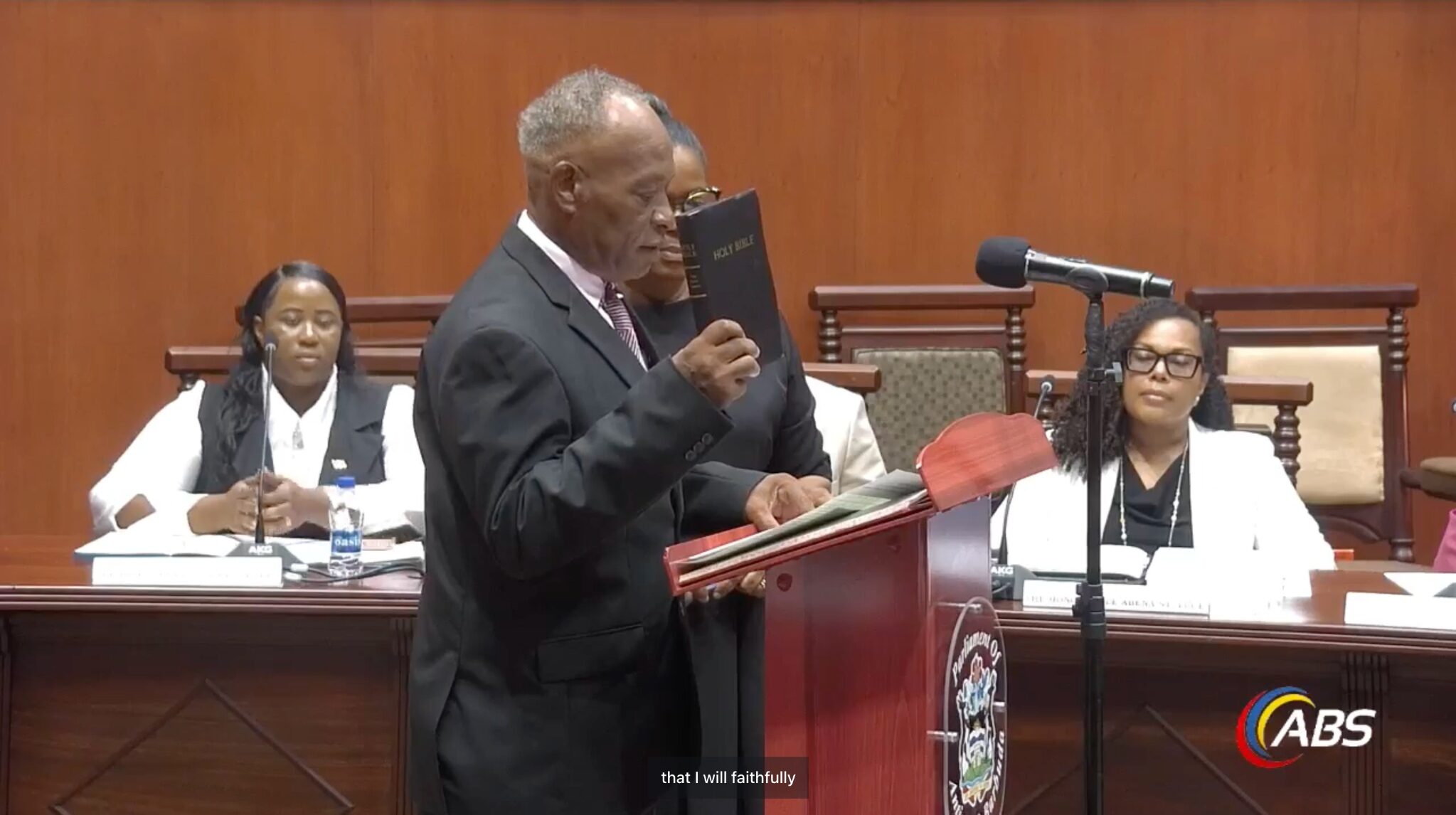
    Following its return to power in November’s general election, Saint Vincent and the Grenadines’ New Democratic Party (NDP) administration has given final approval to a sustainability-focused renovation project for Little Tokyo, Kingstown’s primary bus terminal, with construction poised to launch as early as June, according to Minister of Housing, Land Management, Urban Development and Informal Settlement Upgrading Andrew John.

    The bus terminal itself dates back more than 35 years, originally constructed with Japanese funding during the NDP’s previous term in office. After the Unity Labour Party (ULP) held office for 25 consecutive years, the infrastructure gradually fell into severe disrepair. John noted that the outgoing ULP administration had already drafted its own redevelopment plan for the site, which centered on large-scale concrete construction. Upon taking office, the new NDP government opted to conduct a full review of the inherited proposal before advancing.

    “Kingstown has no need for additional large concrete developments,” John explained in a public statement. “Instead, we tasked the Urban Development Corporation with designing a new concept that delivers an eco-conscious, business-friendly public space where visitors and locals can gather, relax, and even enjoy a cup of coffee.”

    The newly approved plan incorporates expanded green space across the terminal precinct, alongside comprehensive repairs to existing retail outlets and public restroom facilities. All upgrades are aimed at boosting the aesthetic appeal of Kingstown’s central transport hub, a key destination for commuters and visitors to the capital. The project is currently pegged at an estimated cost of 1 million Eastern Caribbean dollars, though John confirmed the final budget may shift slightly as the design team finalizes technical details.

    “I am impressed by the level of detail and care the team has put into this plan, and I am eager to see work get underway,” John added.

    Beyond the Little Tokyo project, the minister addressed longstanding public complaints about inadequate public toilet access across Kingstown. For years, residents have reported a lack of facilities that has forced some individuals to use outdoor public spaces, a problem that disproportionately harms elderly and vulnerable residents. John confirmed that upgrading these facilities is a top priority for the ministry to resolve this quality-of-life issue.

    The ministry is also advancing plans to renovate Kingstown’s historic former Court House and Parliament building, a project currently on hold awaiting technical guidance from the Eastern Caribbean Supreme Court. Once approved, the renovated structure will be repurposed to house the island’s civil court system. John also confirmed that a proposed new Hall of Justice planned for Beachmont is unlikely to break ground in 2024, and plans for a new permanent Parliament building have been paused indefinitely. Parliament currently operates out of a purpose-built temporary facility in Calliaqua, which John said meets all operational needs effectively. “The temporary facilities are excellent, and we will continue using them for the foreseeable future,” he noted.

  • Hoefdraad verdedigt handelen rond SPSB en gebruik staatsmiddelen

    Hoefdraad verdedigt handelen rond SPSB en gebruik staatsmiddelen

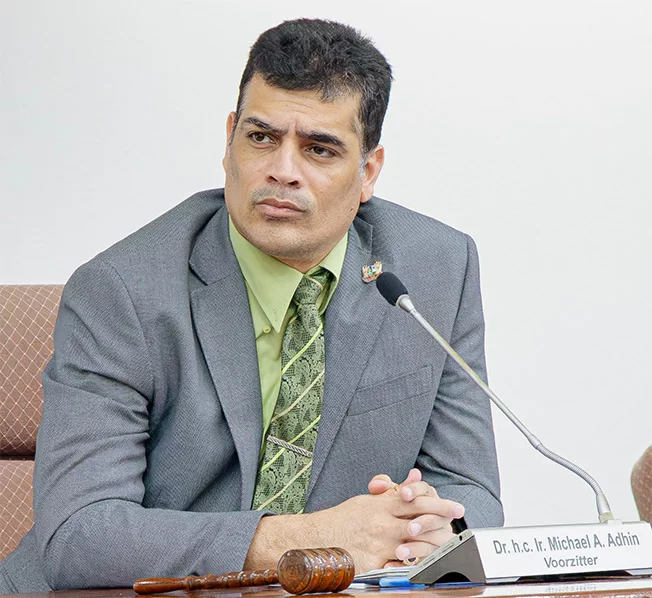
    A high-stakes parliamentary hearing in Suriname has brought fresh attention to long-running allegations of misappropriation of state funds involving former finance minister Gillmore Hoefdraad, with the ex-official delivering a sweeping written defense of his actions amid claims of political targeting. The case centers on accusations that Hoefdraad oversaw the diversion of public funds outside of official budget and oversight frameworks through arrangements at the Surinaamse Postspaarbank (SPSB), with prosecutors alleging fraud, abuse of power and intentional circumvention of regulatory checks. The Suriname Public Prosecution Service says it has compiled substantial evidence supporting these claims, and the attorney general has formally petitioned the National Assembly to allow Hoefdraad to stand trial on the charges. As a fugitive, Hoefdraad did not appear in person at the closed-door hearing, and was represented by defense attorneys Murwin Dubois and Milton Castelen. In his extensive written statement submitted to the National Assembly’s investigative committee, Hoefdraad forcefully rejects all accusations brought by the prosecution, framing the charges as an unjust criminalization of policy decisions made during an unprecedented national financial crisis. Hoefdraad argues that the emergency financial measures he approved were adopted at a time when the Surinamese government faced severe economic and liquidity collapse, when extraordinary circumstances required urgent action to let the state meet its core obligations to citizens. He emphasizes that none of the decisions were made for personal gain or outside of existing government and institutional frameworks, noting that multiple state agencies, financial regulators and policy bodies were fully aware of the operational approach used at the time. A core pillar of Hoefdraad’s defense is that policy choices made during a national emergency should not automatically be reclassified as criminal offenses after the fact. He notes that during severe economic downturns, cabinet ministers are often forced to adopt difficult and unorthodox measures to preserve financial stability and guarantee the continuity of core government functions. He also pushes back against what he calls a deliberate failure to distinguish between political accountability for policy outcomes and criminal liability, arguing that financial policy decisions made collectively as part of the sitting government are now being selectively and improperly blamed on him alone. Going further, Hoefdraad claims the prosecution against him forms part of a broader political and legal campaign targeting him, saying prosecutors have failed to properly account for both the severe domestic economic conditions and the international context Suriname was operating in at the time of the decisions. The ball now lies with the National Assembly committee, which will ultimately deliberate and vote on whether to grant the attorney general’s request to move forward with criminal prosecution. This is not the first legal blow for Hoefdraad: he was previously convicted in a separate case connected to the Central Bank of Suriname, where an appeals court reduced his original 12-year prison sentence to 10 years behind bars.

  • Launch of the ONA’s monthly Assizes in Haiti

    Launch of the ONA’s monthly Assizes in Haiti

    In a historic move that marks a shift toward collaborative public sector governance in Haiti, the National Old-Age Insurance Office (ONA) officially launched its recurring monthly ONA Assizes on Friday, May 22, 2026. Headed by ONA Director General Lovely Francois, the inaugural gathering brought together more than 90 frontline inspectors and screening specialists under one roof, a unprecedented level of cross-team engagement in the institution’s recent history.

    Far from framing the event as a routine administrative check-in, Francois emphasized that the monthly Assizes represent a deliberate, values-driven vision for the institution: one centered on open internal dialogue, reconciliation, and collective alignment to better serve the Haitian public. The initiative was designed explicitly to dismantle barriers between leadership and frontline staff, creating a structured, safe space where no employee voice is overlooked and no concern relevant to institutional improvement is brushed aside.

    Over the course of several hours of open discussion, participants spoke candidly about the realities of their day-to-day work. As core contributors to ONA’s two critical functions — collecting insurance contributions and vetting affiliated companies — these frontline workers shared detailed insights into operational bottlenecks, logistical shortfalls, unmet support needs, and on-the-ground challenges that are often invisible to senior leadership. Alongside these challenges, attendees also outlined clear expectations, innovative proposals, and shared ambitions to build a more effective, resilient ONA. Every contribution was received with intentional seriousness, aligning with Francois’ commitment to inclusive decision-making.

    Senior leadership reaffirmed a core conviction driving this initiative: no meaningful, lasting reform of ONA can succeed without full participation from frontline employees, a nuanced understanding of on-the-ground realities, and intentional investment in the institution’s human capital. Going forward, the monthly Assizes will be held on the last Friday of every month, giving all staff regular access to a platform to share perspectives, raise concerns, and actively shape the future of the institution they will pass on to the next generation of public servants.

    The ONA Assizes are also slated for gradual national expansion, ensuring that every ONA employee across the country — regardless of their job title or level of responsibility — can join the open exchange of ideas focused on collective growth and institutional improvement. This launch comes at a time when public institutions across Haiti and the broader region are facing growing pressure to strengthen engagement with their workforces and improve service delivery. By prioritizing internal listening as a foundation for transformation, ONA is positioning itself as a trailblazer for responsive public sector governance in the country.

  • Bouva pleit voor sterkere regionale samenwerking en economische weerbaarheid

    Bouva pleit voor sterkere regionale samenwerking en economische weerbaarheid

    At the 57th Community Council Meeting of the Caribbean Community (CARICOM), Suriname’s Minister of Foreign Affairs, International Trade and Cooperation Melvin Bouva has delivered a clarion call for accelerated regional collaboration, strengthened economic resilience, and improved cross-border connectivity across the Caribbean basin. The gathering, held Friday at Yogh Hospitality, comes at a time of growing global geopolitical turbulence, and Bouva used his address to push Caribbean nations to move beyond decades of rhetorical discussion about regional integration toward tangible, actionable progress.

    Bouva emphasized that small Caribbean economies are disproportionately exposed to global shocks beyond their direct control, a vulnerability laid bare by ongoing international conflicts and mounting cross-border economic tensions. “When a war breaks out on the other side of the world, a conflict we have no influence over, we will continue to suffer its impacts unless we prepare properly in advance,” he told attendees.

    Against this backdrop, the minister argued that the Caribbean region holds untapped potential across key sectors including energy, agriculture, and natural resource management that can only be unlocked through coordinated strategic action. He highlighted the Caribbean’s abundant renewable energy resources as a critical pathway to collective energy independence, noting that the region has extensive wind and solar capacity that can reduce reliance on imported fossil fuels, even beyond the oil and gas reserves of Suriname and Guyana.

    Bouva outlined Suriname’s strong commitment to advancing regional integration across priority areas, including trade, food security, energy infrastructure, and transportation links between CARICOM member states. He pointed to ongoing proposals to establish new ferry connections linking Suriname, Guyana, Jamaica, and Barbados, alongside plans to expand air connectivity and deepen intra-regional trade ties.

    The meeting also addressed pressing cross-cutting issues of regional security and border management. Bouva shared that Suriname is already cooperating with neighboring partners including Brazil and French Guiana to counter transnational organized crime and address maritime security challenges. He closed by reaffirming that coordinated regional cooperation remains the only viable strategy for Caribbean nations to withstand the economic and geopolitical challenges of the 21st century. “The goal is to build our collective resilience to face every global challenge that comes our way,” Bouva said.

  • Suspect accused of opening fire toward the White House killed by Secret Service

    Suspect accused of opening fire toward the White House killed by Secret Service

    A violent incident unfolded near the White House Saturday afternoon, when an unidentified armed man opened fire on a U.S. Secret Service checkpoint before being killed by return fire from agents, a service spokesperson has confirmed to Fox News. The confrontation began at the intersection of 17th Street and Pennsylvania Avenue NW, a heavily secured area just blocks from the executive residence. According to official accounts, the suspect approached the checkpoint, pulled a firearm from his personal bag, and immediately began shooting at the officers stationed at the post. Secret Service agents responded quickly, returning fire and striking the suspect. He was rushed to a nearby medical facility for emergency treatment, but was pronounced dead shortly after arrival. One unintended casualty occurred during the chaos: a civilian bystander was hit by gunfire. As of the latest update, the extent of the bystander’s injuries and their current condition remain undisclosed. Investigators have not yet determined whether the bullet that struck the bystander came from the suspect’s initial attack or the subsequent exchange of gunfire between the suspect and law enforcement. Preliminary background checks have revealed that the suspect had a previously documented history of mental health challenges. Importantly, no Secret Service personnel were hurt in the shooting. Former President Donald Trump was present on the White House grounds at the time of the incident, but the spokesperson confirmed that he was never in danger and experienced no disruption to his activities as a result of the confrontation.