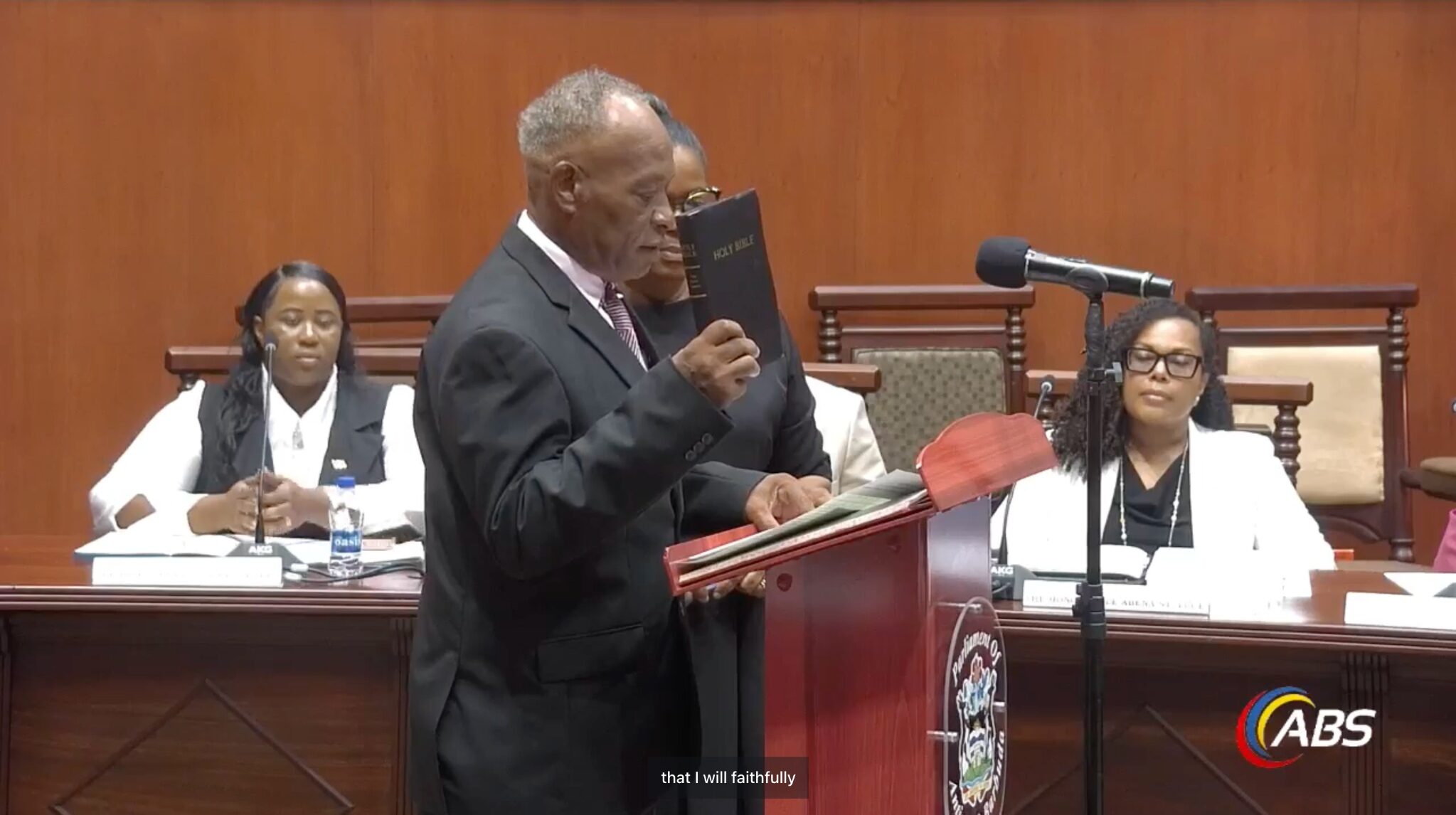
After a formal reappointment process that placed him back in the upper legislative chamber, Senator Fabian Jones of the Barbuda People’s Movement officially resumed his Senate duties on Monday. The path to his return opened when the Barbuda Council formally recommended his appointment to Governor General Sir Rodney Williams, clearing the way for him to take the oath of allegiance and retake his seat. The swearing-in ceremony took place immediately after the weekly sitting gaveled open, with Senate President Alincia Williams-Grant extending an official welcome to Jones as he reclaimed his position among the body’s membership.
Jones’ comeback fills the last remaining vacancy in the Senate, bringing the chamber back to its full authorized roster of members. The vacancy was one of several created by a recent wave of appointments that saw both ruling and opposition factions elevate a new cohort of younger lawmakers to the body, reshaping its membership composition before Jones’ return completed the process.
In his first floor remarks since reclaiming his seat, Jones weighed in on the debate over the proposed Fatal Accidents Bill 2026, drawing immediate attention to a critical structural flaw he identified between two core provisions of the legislation. He explained that Clause 2 of the bill expands the statutory definition of a “dependent” to cover any individual who has cohabitated with a deceased person in a shared household for a minimum of three years in a spousal-like relationship. Despite this explicit inclusion in the bill’s interpretation section, Jones pointed out that the same group of cohabitating partners is entirely omitted from Clause 4, the provision that lays out the full list of individuals eligible to file claims for bereavement damages following a fatal incident.
Jones emphasized that this discrepancy creates an unjust gap in the legislation, calling on his fellow legislators to revise the bill to align its provisions. He stressed that any person classified as a dependent under the bill’s own definition should be guaranteed the right to seek compensation for bereavement in eligible cases, rather than being excluded from benefits they are formally recognized to qualify for.
Following the conclusion of the clause-by-clause debate and committee stage review, the Fatal Accidents Bill 2026 moved to a final vote. The government’s original version of the legislation defeated all opposition-proposed amendments, and ultimately secured approval by a clear majority of voting senators, moving the bill forward in the legislative process despite the inconsistencies flagged by Jones.