分类: politics

  • PM Extends Condolences Following Death of Sir Aziz Hadeed

    PM Extends Condolences Following Death of Sir Aziz Hadeed

    The passing of Sir Aziz Hadeed, a renowned businessman, dedicated philanthropist and former senior government official in Antigua and Barbuda, has prompted an outpouring of condolences from across the nation, with Prime Minister Gaston Browne remembering him as a close friend and political comrade.

    Speaking during an interview with local radio outlet Pointe FM this Saturday, Browne revealed that news of Sir Aziz’s death caught the country completely off guard. “On behalf of the entire leadership and rank-and-file membership of the Antigua Barbuda Labour Party, I want to extend our deepest, most sincere condolences to the entire Hadeed family at this painful time,” the prime minister stated, adding that the party would stand in full solidarity with the family through their period of grief.

    Widely regarded as one of the most impactful business leaders in Antigua and Barbuda’s modern history, Sir Aziz leaves behind a decades-long legacy of entrepreneurial growth and national development. He began his career with the family-owned Hadeed Group of Companies in 1965, stepping into the role of chairman in 1980. Under his strategic leadership, the small family firm evolved into one of the Eastern Caribbean’s most prominent corporate entities, growing into a multi-million-dollar conglomerate with diverse operations spanning critical sectors including aviation and energy.

    Beyond his private sector achievements, Sir Aziz left an indelible mark on regional and national public infrastructure. He served as chairman of the board for regional airline LIAT (1974) Limited between 1995 and 1998, and was a key founding figure behind the Antigua Power Company, which continues to power economic activity across the islands today.

    In his public service career, Sir Aziz first accepted an appointment as an Independent Senator in 1994, going on to serve two full terms in the upper parliamentary chamber. He later joined the national Cabinet between 2004 and 2006, bringing his decades of business expertise to bear on national policy making.

    In the final chapter of his public life, Sir Aziz committed himself to expanding educational opportunity for Antiguans and Barbudans. He worked closely with the University of the West Indies Five Islands Campus, serving as chairman of the campus council. In that role, he guided ambitious campus expansion projects and championed new scholarship programs to open higher education access to more local students.

    Just last year, Sir Aziz received one of the nation’s highest honors when he was knighted by Prince William at Windsor Castle, in recognition of his decades of contributions to national development and charitable giving across Antigua and Barbuda.

  • VES Inzicht waarschuwt voor gevolgen van politieke benoemingen zonder juiste deskundigheid

    VES Inzicht waarschuwt voor gevolgen van politieke benoemingen zonder juiste deskundigheid

    A new analysis published by the Suriname Association of Economists (VES) in its quarterly journal *VES Inzicht* has raised urgent alarms about the growing systemic risks posed by political appointments to public sector leadership positions, where candidates’ professional expertise and alignment with formal role requirements are consistently sidelined in favor of political affiliation. The report makes clear that in 2026, public sector board members and supervisors can no longer hide behind the longstanding excuse of “political reality” to justify unqualified appointments, as updated legislation, strengthened oversight mechanisms, and rising public expectations have imposed far stricter requirements for transparent and accountable governance across all state institutions.

    The analysis outlines the shifting regulatory landscape that has raised the stakes for improper appointments in recent years. It notes that the legal responsibilities and personal liabilities of public sector leaders have been firmly codified in updated national legislation, most notably the New Civil Code enacted in May 2025. Beyond legal changes, independent auditors now apply far more rigorous scrutiny to leadership decision-making, while commercial banks, grant providers, and regulatory oversight bodies have tightened their requirements to mandate demonstrated good governance and accurate financial accountability for any public entity seeking funding or regulatory approval.

    According to the VES analysis, public governance failures have accumulated at an accelerating rate in recent years, creating a clear pattern that points to a deep, structural problem rather than isolated missteps. Contrary to common critique, the association emphasizes that political appointments themselves are not the core issue. The critical flaw lies in the persistent mismatch between the qualifications of appointed individuals and the formal role requirements explicitly outlined for the position. These role profiles are already legally mandated, written into institutional statutes, national good governance guidelines, and internal organizational regulations. Deviating from these established requirements does not just undermine the day-to-day functioning of state-owned enterprises and government agencies, the report argues. It also erodes morale among career civil servants and institutional employees who possess the required expertise but are passed over for political connections.

    The report further highlights that national governments have a core strategic interest in converting political power into sustained public legitimacy. This legitimacy can only be maintained, the analysis stresses, if members of the public retain trust in the professional quality and institutional independence of public sector leaders and supervisors. To uphold this trust, the VES calls for oversight bodies to be constructed based on a deliberate, balanced balance of criteria: professional expertise, relevant practical experience, core competencies, institutional independence, gender representation, age diversity, and varied societal backgrounds. It also reinforces the critical need for clear, public role profiles for all commissioners and supervisory board members, with expertise, institutional size, and operational independence as central guiding criteria for candidate selection.

    In closing, the journal article issues an urgent call to Suriname’s policymakers and ruling officials to conduct a critical, retroactive evaluation of recent public sector appointments and nominations, and implement corrective changes where misalignments are found. *VES Inzicht* stresses that urgent action is needed to prevent past, isolated appointment errors from hardening into a permanent, damaging structural pattern across Suriname’s entire public administration.

  • Trump sends warship to Caribbean in Show of Force Toward Cuba

    Trump sends warship to Caribbean in Show of Force Toward Cuba

    In a high-profile demonstration of American military power amid a sharp escalation of tensions between Washington and Havana, the USS Nimitz aircraft carrier and its accompanying strike group arrived in the southern Caribbean this week. The deployment comes as the former Trump administration ramped up diplomatic and legal pressure on Cuba, just after federal law enforcement officials unsealed rare criminal charges against former Cuban President Raúl Castro.

    U.S. Southern Command has publicly clarified that the movement of the massive naval contingent is designed as a show of force, not a precursor to imminent direct military action against the island nation. Prior to repositioning to Caribbean waters, the carrier and its crew had been completing joint maritime training exercises with the Brazilian Navy, a routine partnership activity that predated the current escalation.

    The timing of the strike group’s arrival aligned exactly with the Justice Department’s decision to publicly unseal the long-sealed charges against Castro. The allegations tie Castro directly to the 1996 shooting down of two civilian aircraft piloted by members of Brothers to the Rescue, a prominent anti-Castro exile group based in the United States.

    The heavily equipped strike group, which consists of the nuclear-powered supercarrier, advanced fighter aircraft squadrons, guided-missile destroyers, and dedicated logistics support vessels, marks a measurable expansion of already growing U.S. military and intelligence surveillance activity in the maritime region surrounding Cuba. This deployment is the most visible step in a steady build-up of American pressure on the Cuban government in recent years, as bilateral relations between the two nations deteriorated sharply during the administration’s tenure.

  • Trump’s Green Card Policy Forces Immigrants Back Home

    Trump’s Green Card Policy Forces Immigrants Back Home

    In a major overhaul of the U.S. legal immigration system scheduled to take effect ahead of 2026, the Trump administration has announced a sweeping revision to the permanent residency application process that will upend decades of established policy. Under the new rule unveiled by U.S. Citizenship and Immigration Services on Friday, most applicants seeking green cards will no longer be permitted to complete their entire application process while residing in the United States. Instead, they will be required to return to their countries of origin to submit and finalize their applications from abroad.

    This policy shift marks the end of a longstanding practice that has allowed would-be permanent residents to remain in the U.S. throughout the often lengthy application timeline. For thousands of affected immigrants, the new requirement means uprooting their lives: leaving stable U.S.-based employment, separating from family members who may remain in the country, and stepping away from established communities, all for a process that can stretch on for months or even years.

    The change is projected to impact a substantial share of the U.S. legal immigration population. Data from fiscal year 2024 shows that roughly 1.4 million people obtained lawful permanent resident status in the U.S. that year alone, giving a clear indication of the scope of people who could be affected by the new rule going forward.

    Administration officials have defended the policy, framing it as a targeted measure to cut down on the number of people who overstay their legal status in the U.S. Officials argue that requiring applicants to complete the process from their home countries “reduces the need to find and remove those who decide to slip into the shadows and remain in the U.S. illegally after being denied residency”. The administration notes that exemptions will be available for extraordinary circumstances, but has so far released no detailed guidance on what will qualify for an exemption.

    Critics across the political and policy spectrum have pushed back sharply against the new rule. Democratic lawmakers have labeled the policy “cruel”, warning that it will cause irreversible harm to America’s global reputation as a destination for top global talent. One sitting congressman argued that the policy will directly benefit U.S. geopolitical competitors including China and Russia, by pushing skilled immigrant professionals to relocate their careers and expertise to other countries. Immigration policy analysts have additionally criticized the rule as logically flawed, arguing that it will erode the United States’ competitive position in the global business landscape by restricting access to skilled immigrant labor.

    While cracking down on unauthorized immigration has remained a top policy priority for the Trump administration since it took office, legal experts widely expect the new green card requirement to face immediate and extensive legal challenges in federal courts over the coming weeks, as immigrant advocacy groups prepare to file lawsuits to block the policy from taking effect.

  • Judges hang up their robes and caps during a nationwide work stoppage

    Judges hang up their robes and caps during a nationwide work stoppage

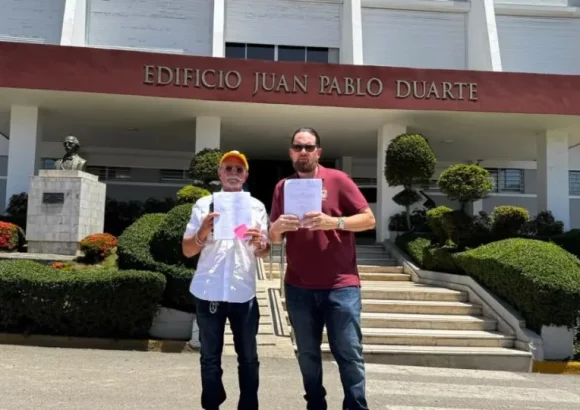
    SANTO DOMINGO — In an unprecedented show of collective action across the Dominican Republic’s judicial branch, nearly 400 judges from every level of the national court system joined a coordinated work stoppage Thursday, alongside hundreds of other judicial employees, to demand sweeping reforms to their substandard working conditions and unfair pay structures.

    The protest, which included justices of the peace, first-instance judges, and appellate court judges, suspended all routine scheduled hearings with the sole exception of Permanent Attention courts, which continued to process urgent hearings on coercive measures to avoid endangering ongoing criminal cases. The strike was organized jointly by the Association of Judges of the Dominican Republic (Asojurd), the Network of Judges of the Dominican Republic, the Association of Dominican Judges for Democracy (Judemo), the Association of Justices of the Peace, and independent judges unaffiliated with the organizing groups.

    The day of peaceful protest opened with a solemn, unified ritual across courthouses nationwide: after singing the Dominican national anthem and the Judicial Power anthem, all participating judicial workers, dressed in black and carrying protest signs emblazoned with slogans including the rallying cry “justice for justice”, gathered to read the movement’s founding document, the *Manifesto for the Dignity of Justice*, under the central slogan “Let dignity begin at home!” Gatherings were held at major judicial hubs including the Ciudad Nueva Palace of Justice, the Santo Domingo East Judicial City, the Real Estate Jurisdiction courthouse, and regional courthouses across the country.

    At the Ciudad Nueva Palace of Justice, Magistrate Suinda Brito delivered the manifesto’s text, outlining the core grievances driving the action. Brito highlighted systemic understaffing that forces individual judges and court employees to handle the workload of three or four full-time positions, stagnant salaries that have not kept pace with the country’s soaring cost of living despite the enormous legal and ethical responsibilities of judicial roles, and a wave of mass resignations among administrative staff driven by chronic burnout. Protesters also pointed out severe disrepair to court facilities and a total lack of adequate personal safety protections for staff working in courthouses.

    The strikers argue that a functional justice system cannot rely solely on personal vocation, individual sacrifice, and private commitment from the people who run it. To deliver timely, efficient, and impartial justice to the public, the branch requires sufficient material, human, and financial resources that it has long been denied, they said.

    The most contentious complaint centers on stark economic inequity within the judicial branch. Strikers condemned that while local courts operate with crippling basic deficiencies, senior internal management bodies control multi-million-dollar budgets allocated to luxury travel, hotel accommodations, fine dining, advertising, public events, and payments to social media influencers. They added that some senior administrative secretaries and top management staff take home salaries that far outpace the earnings of active sitting judges.

    The national strike has received broad backing from across the Dominican legal community, including the national Bar Association, multiple legal professional associations, and prominent individual jurists such as Carlos Olivares. Olivares expressed unwavering support for the industrial action, calling the current salary structure for sitting judges completely unacceptable. He emphasized that the judicial sector deserves public backing, noting it is long past time judges stopped earning what he described as “miserable wages” and faced routine institutional disrespect.

    The Dominican Association of Prosecutors (Fiscaldom) has also publicly expressed its support and solidarity with the striking judges, joining calls for salary improvements and broader reforms to strengthen the national justice system. In an official statement, Fiscaldom confirmed it recognizes the right of judicial worker organizations to advance demands for improved working, salary, and institutional conditions for public servants, so long as actions remain within the bounds of the country’s legal framework, principles of social democracy, and the rule of law. The association reiterated its backing for the judges’ demands, stressing that ensuring dignified working conditions for judicial staff is a core requirement for institutional strengthening and improved public access to justice. Fiscaldom also called on relevant authorities to open spaces for frank, respectful, and urgent dialogue to address the strikers’ demands and advance fair, sustainable solutions that benefit the entire Dominican justice system.

    In the country’s second-largest city of Santiago, regional judicial staff joined the national movement, with the area outside the Santiago Palace of Justice filled with demonstrators dressed in black, including dozens of judges, court employees, and local lawyers gathered to back the strike. Representatives from regional jurisdictions unified around demands opposing excessive workloads, systemic wage inequality, and what they describe as the “industrialization of justice” — a backlogged system that prioritizes speed over fair process. The regional strike canceled roughly 200 routine hearings in the area.

    Demonstrators in Santiago recalled that the Judicial Council, the judicial branch’s governing body, first issued a formal response to the group’s demands on May 19. But judges dismissed the council’s proposal as “vague, conditional, and ineffective.” The council’s offer includes a salary indexation plan that is contingent on approval from the Ministry of Finance, with no set timeline for implementation or clear mechanisms to roll out changes. Judicial mobility reforms were reduced to a non-binding “roadmap” with no concrete policy measures, the strikers said. Core outstanding issues including rules for horizontal substitution, wage gaps created by the current remuneration manual, and advancement opportunities for administrative staff have all gone completely unanswered, they added.

    Protesters also questioned senior management’s resource allocation across the judicial branch, noting that the Judiciary has spent more than 400 million Dominican pesos on international air travel and accommodations since 2021, while structural and salary deficiencies remain unaddressed in local courts. They also denounced institutional inaction on more than 18 formal communications sent by judges to the Judicial Council dating back to May 2021, requesting solutions to a wide range of systemic issues that have never received a response.

    Despite the full-scale work stoppage, strikers have guaranteed that all urgent judicial services remain operational throughout the country. Single-judge courtrooms, the Second Court of Instruction, and Permanent Attention Offices all remained open to handle emergency matters.

    In addition to the core grievances around wage inequality and misallocated budgets, the movement’s key demands include addressing severe understaffing, a nationwide shortage of sitting judges, excessive workloads, ongoing mass resignations of burned-out administrative staff, crumbling judicial infrastructure, and inadequate on-site security for courthouse employees.

    Protesters emphasized they remain open to good-faith dialogue with the Judicial Council, but warned that if they do not receive concrete, actionable responses to their demands in the near future, they will launch additional collective actions to press their case.

  • LMD admits that the Municipal Police operate without clear legal limits

    LMD admits that the Municipal Police operate without clear legal limits

    In the Dominican capital of Santo Domingo, the nation’s leading municipal governance body has publicly confirmed a long-standing systemic gap: the country currently lacks a detailed, clear legal framework to govern the operations of Municipal Police forces across all jurisdictions. The admission comes directly after local newspaper Listín Diario published an investigative report that exposed the absence of defined boundaries for municipal law enforcement officers, alongside findings that many on-duty agents prioritize personal cell phone use over monitoring public spaces in their patrol areas.

    In an official press statement, LMD President Víctor D’Aza outlined the core flaw in the existing regulation. Current governing provisions, laid out in Articles 173 and 174 of 2007’s Law No. 176-07 covering the National District and municipal governance, fail to fully outline the necessary tools, legal authority, and operational mechanisms required for Municipal Police to carry out daily duties. This regulatory vacuum has created two contrasting problematic outcomes: in some instances, officers remain inactive out of uncertainty over their powers, while in others, unclarified boundaries open the door to excessive use of authority and potential abuses of power.

    To address this out-of-date legislation, D’Aza confirmed that the Dominican Municipal League (LMD), the umbrella organization supporting the country’s municipalities and local municipal boards, is currently developing a new Draft Organic Law of Local Administration. The proposed legislation will expand and update the 17-year-old 2007 law, which D’Aza notes has become inadequate amid major shifts to the Dominican Republic’s broader national legal system. Most critically, the 2007 law does not align with the mandates of the country’s current Constitution, which requires dozens of existing laws—particularly regulations governing municipal legal frameworks—to be adapted to the new constitutional governance model.

    The new proposed law is designed to strengthen key components of local governments’ sanctioning authority across a range of critical municipal matters, including urban planning violations, territorial organization, municipal fee non-compliance, and misuse of public spaces. Once enacted, the updated framework will equip both Municipal Police officers and municipal inspectors with clearer legal authority to address violations that disrupt municipal order and citizen coexistence, D’Aza explained.

    As the new regulatory framework remains in the drafting phase, LMD has already taken preliminary steps to clarify Municipal Police roles for the public and local authorities. In January 2024, the organization published a public informational brochure titled *Municipal Police: Questions and Answers*, which breaks down key details of officers’ work: core functions, their formal relationship with the National Police, hiring requirements, operational guiding principles, roles during emergency responses, responsibilities for violence prevention and neighbor conflict mediation, and other frequently asked topics.

    Through the brochure, LMD has also called on local governments to implement immediate interim measures to ensure Municipal Police operate under clear operational protocols, robust internal institutional controls, and full adherence to due process and constitutional citizen rights. While the Dominican Republic Bar Association has publicly expressed support for updated regulation of municipal law enforcement, LMD identifies one major barrier to advancing the new legislation: a lack of consistent cooperation with the Public Prosecutor’s Office.

    The organization emphasized that limited specialized understanding of municipal regulation among Justice of the Peace Courts has left many violation reports filed by local governments stalled, without progressing through required judicial proceedings. Despite this hurdle, the LMD has reaffirmed its commitment to continuing work on the new draft law and advancing institutional strengthening for Municipal Police nationwide. The end goal, D’Aza stressed, is to ensure that local authority is exercised in a accessible, efficient, and consistent manner—always operating within clearly defined legal limits that protect both public safety and citizen rights.

  • From Top Alston to top command

    From Top Alston to top command

    As the world’s only female head of a national armed force, Vice Admiral Antonette Wemyss-Gorman, Jamaica Defence Force (JDF) Chief of Defence Staff, is opening up about her decades-long groundbreaking military career in an upcoming memoir, pushing back against early assumptions that her account frames the JDF as a patriarchal or misogynistic institution.

    Published first in digital format, with hardcover editions set to hit shelves in coming weeks, *Life, Duty and Command* traces Wemyss-Gorman’s journey from her childhood growing up in Top Alston, Clarendon, through her 1994 enlistment in the JDF Coast Guard, to her historic appointment as CDS in January 2022. The memoir does not shy away from candid accounts of the barriers women still face in military spaces — a challenge that persists across armed forces globally, where long-standing masculine-centric traditions have slowed gender integration, despite incremental progress in closing opportunity gaps.

    Far from criticizing the JDF, however, Wemyss-Gorman frames the institution as a global leader in inclusive transformation. In a composed, confident interview with the Jamaica Observer, she emphasized that the JDF has made steady, meaningful progress in evolving its gender culture, noting that the force’s successful integration of women and men into all ranks stands as a model for other militaries worldwide — a milestone that extends beyond her own historic appointment to the service’s top role.

    Notably, Wemyss-Gorman reveals in the book that she never actively sought the position of CDS. Her early career ambition was centered on commanding a ship and serving at sea, rather than taking on a desk-bound leadership role in headquarters. She also cites the heavy personal toll of senior military service: her young son made significant sacrifices to accommodate the demanding pace of her career, and she saw firsthand the weight of the CDS role while serving as force executive officer, working closely alongside the previous chief. Convinced other equally competent candidates aspired to the post, she had no personal ambition to take the top job herself.

    The memoir also includes unflinching accounts of controversial career incidents that have drawn public scrutiny. One high-profile episode dates back more than a decade to Wemyss-Gorman’s tenure as the first female commanding officer of the JDF Coast Guard. At the time, she discovered a fellow senior officer had hidden information from her: the driver assigned to her was under active investigation for drug trafficking, but her colleague never alerted her to the probe.

    In her book, Wemyss-Gorman describes the experience as one of the most devastatingly disappointing and betraying moments of her professional life. The unsuspecting admiral continued carrying out sensitive operations with the driver, who had access to classified information, putting her personal safety, her family’s security, her unit’s operations and her entire command at serious risk. To this day, she says she remains uncertain of her colleague’s motive — whether he suspected her of involvement, intended to damage her reputation, or had another reason for silence. Immediately after uncovering the hidden information, Wemyss-Gorman acted quickly to remove the driver from the JDF.

    When asked why she chose to include the difficult incident in her memoir, she explained that documenting the failure was critical to preventing similar oversights from harming other service members in the future. As a personal memoir, she added, it was important to include the full reality of her experiences, both positive and negative. She stressed that the JDF has progressed significantly since the incident occurred more than 10 years ago, noting that the force now moves rapidly to investigate breaches of civil or military rules, and the core failure in the case was the deliberate concealment of information that put her and her operations at risk.

    Despite the challenges and setbacks she has navigated as a trailblazer for women in the military, Wemyss-Gorman says her decades-long career with the JDF has been deeply fulfilling. When asked if enlistment was the right choice for her, she answered without hesitation: she would make the exact same decision again, noting that military service never promises an easy path, but has given her unparalleled opportunities to serve her country and make history.

  • New dairy rules aim to close loopholes

    New dairy rules aim to close loopholes

    During a legislative sitting held Friday, Jamaica’s Senate advanced two key industry-focused bills, drawing heated debate over proposed changes to the island nation’s dairy regulatory framework and bipartisan support paired with pointed oversight concerns for reforms to conch export levy rules. The most contentious of the two pieces of legislation is the amendment to the 2026 Jamaica Dairy Development Board Act, which redefines qualifying dairy products to include items containing as little as 5% milk solids — a sharp drop from the previous 50% threshold set in alignment with European Union regulations. The bill also expands the formal definition of milk beyond cattle to include milk from all animal sources, a change framed by government legislators as a long-overdue modernization aligned with global industry trends. Piloting the legislative debate, Government Senator Aubyn Hill framed the amendments as a targeted fix for longstanding regulatory gaps that have allowed unregulated imported dairy-containing products to enter Jamaican markets. He noted that major North American markets including the United States and Canada have already updated their own dairy classifications to include milk from small ruminants like goats and sheep, and Jamaica’s update brings the nation into line with these shifting international standards. Explaining the rationale for the dramatically lower milk solids threshold, Hill emphasized that the original 50% requirement was far too restrictive, creating a loophole that allowed a wide range of processed products with significant dairy content to avoid classification as dairy products entirely, slipping past regulatory oversight and skipping required cess payments. “To create a clear, consistent regulatory framework in Jamaica, we are establishing a five per cent milk solid content threshold for set purposes in relation to the trade of milk products and milk by-products,” Hill told the chamber. Under the new rule, any product with more than 5% milk solids will be formally classified as a dairy product, requiring official import approval and falling under full regulatory supervision, a change Hill argues will strengthen, rather than weaken, the nation’s food import oversight. But the changes have drawn sharp pushback from opposition legislators, who warn the amendment threatens Jamaican food safety standards, hurts local dairy producers, and creates unaddressed regulatory ambiguity. Opposition Senator Allan Bernard argued that the new, lower threshold will disproportionately benefit importers of heavily processed imported dairy substitutes, while putting additional economic strain on local dairy farmers who are already grappling with spiking input costs for feed, land and energy. Bernard also raised questions about the vague, broad language of the updated definition of milk, which now includes milk from “any animal.” “Jamaicans will legitimately ask, what exactly does any animal mean? What limitations exist? What protections are established? And who determines what may ultimately enter the Jamaican food chain under the label of dairy?” Bernard asked. Hill rejected these criticisms, asserting that Bernard had misinterpreted the core purpose of the amendment, repeating that the lower threshold brings more imported products under regulation rather than opening the market to uninspected goods. Alongside the dairy amendments, the Senate also unanimously approved the 2026 Conch (Export Levy) (Amendment) Act, a bill designed to give conch exporters much-needed financial flexibility during periods of industry disruption. The new framework authorizes the relevant government minister to approve instalment payments for export levies tied to licences and health certificates, extend payment deadlines for up to 12 months, and waive or reduce levy obligations under specific circumstances, following formal recommendations from Jamaican fisheries authorities. Hill explained that the reform is a direct response to the growing frequency of disruptive events that upend conch fishing operations, from severe weather events driven by climate change to unexpected external trade shocks. “The rationale for this amendment is that, in the event of a disruption in the fishing season, for instance severe weather conditions and or other external trade factors, this enlarged period would provide adequate time for an exporter of conch to make the relevant payment of the levy,” he said. While opposition legislators supported the bill, they used the debate to highlight longstanding concerns about unsustainable fishing practices, including illegal poaching and overfishing in Jamaican waters, and questioned the effectiveness of the Fisheries Management and Development Fund in protecting the nation’s wild conch stocks. In response, Hill confirmed that the Andrew Holness administration has significantly bolstered maritime enforcement capacity by expanding the coast guard’s fleet of well-armed patrol vessels, cracking down on unauthorised foreign vessels that enter Jamaican waters to poach fish and other marine resources. “No country really is going to get rid of illegal fishing entirely…but what we have to do is make sure we reduce the level — and that is a continuing work,” Hill added. Both pieces of legislation have now passed the Senate and will move forward to the next stage of implementation.

  • OPINION: The People’s Power

    OPINION: The People’s Power

    At the core of democratic governance lies a widely invoked but often poorly defined concept: people’s power. What does this phrase actually entail, and what role do established working-class organizing bodies like trade unions play in translating this abstract idea into tangible action?

    At its simplest, people’s power refers to the collective ability of ordinary citizens to shape policy and decisions that directly impact their daily lives, rather than leaving all governance authority exclusively in the hands of elected representatives or established power structures. Broader comparative frameworks frame it as a populist political rallying cry that centers the authority of grassroots public will, typically standing in opposition to the agendas of entrenched corporate or institutional political power. Both definitions align with the core premise of democracy itself: that governing authority should be rooted in the will of the people, a collective will that emerges not from isolated individual action, but from coordinated group organizing.

    This connection between collective organizing and people’s power makes the concept particularly relevant to trade unions, whose core mission revolves around protecting workers’ shared interests, expanding workplace rights, and lifting community living standards. For trade unions to deliver on these foundational goals, solidarity is not just a rhetorical value—it is a functional necessity. When unions cultivate solidarity, they unify disparate workers into a single cohesive bloc capable of advancing shared demands. This unified structure creates the foundation for collective bargaining, the cornerstone of effective trade union action.

    The collective solidarity built through intentional union organizing creates far more than just a louder voice for workers. A unified movement gives representatives far greater leverage when advocating, agitating, and lobbying for worker-centric policy, and sheer numerical strength makes the movement a far more impactful actor when engaging with governing authorities on key decisions. For workers, this collective structure creates a tangible sense of empowerment when pushing for social justice and equal treatment: when formal negotiation processes break down, an organized movement has the capacity to launch targeted industrial action to win recognition of their demands.

    Crucially, this dynamic upends the traditional narrative that all political and economic power flows exclusively from the top down—from governments, corporate boards, and employers to ordinary workers. When workers are organized, they generate bottom-up pressure that can reshape outcomes and hold power-holders accountable. This principle lies at the heart of healthy democratic governance. The will of the people is the very bedrock of democratic society, serving as the primary source of all legitimate political authority. Governments only hold their power through the consent of the governed, and people’s power, exercised through collective action, is the mechanism that keeps this system functional: it holds leaders accountable, drives progressive social and political change, and blocks the rise of authoritarian dictatorship.

    At the end of the day, people’s power is fundamentally about ordinary citizens, united by a shared vision, who come together to shape their nation’s future. And in this process, trade unions fill an irreplaceable role: they are the organized voice of the working class, working to align economic, social, and government policy with the collective will of ordinary people. This analysis is shared by Dennis De Peiza, a Labour Relations and Employment Relations Consultant with Regional Management Services Inc.

  • Candlelight Vigil Honors Mary Clare Hurst’s Political Legacy and Personal Impact

    Candlelight Vigil Honors Mary Clare Hurst’s Political Legacy and Personal Impact

    Under a starlit Antiguan sky, hundreds of supporters of the Antigua and Barbuda Labour Party gathered with flickering candles, hymns and prayers to bid farewell to one of the nation’s most beloved political figures, former Senator Mary Claire Hurst. Over the nearly two-hour commemoration, Hurst was universally remembered as a steadfast political warrior, nurturing mentor and unifying force whose impact stretched from the most rural grassroots communities to the halls of the country’s most important national institutions.

    Affectionately nicknamed “Tanti” or “MC” by friends, colleagues and protégés, Hurst was hailed by dozens of speakers as the backbone of the Labour Party during some of its most turbulent decades. Speakers from party branches, trade union representatives, musicians, family members and political allies took turns sharing personal anecdotes and highlighting the far-reaching contributions Hurst made over her decades of public service.

    The most notable announcement of the evening came from the Antigua Port Authority, where Hurst served as chairperson for many years. General Manager Dalma Tulliman revealed that with the formal approval of Prime Minister of Antigua and Barbuda, the port’s three-story main administrative building — which currently houses both the Port Authority and the Antigua and Barbuda Customs service — will be permanently renamed the Mary Claire Hurst MC Administrative Building in her honor.

    Tulliman detailed Hurst’s transformative leadership at the port, crediting her with turning the once-struggling, financially unstable institution into one of the most efficient and respected ports across the Caribbean. When she took leadership, the port grappled with unpaid retiree benefits, persistent budget shortfalls and deep organizational disarray. Undeterred by these challenges, Tulliman explained, Hurst traveled globally to consult on the port’s redesign and modernization, leaving her indelible mark on the infrastructure that stands today. He also recalled her relentless work ethic even as she battled illness, sharing a story of Hurst insisting on attending a critical meeting despite severe physical discomfort, refusing to step back from her responsibilities.

    Across the night of tributes, speakers repeatedly emphasized that Hurst never lost connection to working-class and community members, even while holding senior national office. “She did not help people for praise. She helped people because she believed it was the right thing to do,” one speaker noted, adding that Hurst treated every person she met with equal dignity, regardless of their background or status. Hurst was also credited with holding the fractious Labour Party together during its long years in opposition after the party’s 2004 general election defeat. “She fought battles that many people will never fully understand. She stood firm when others gave up,” the tribute read.

    A core theme of many remembrances was Hurst’s lifelong commitment to nurturing emerging young leaders for both the Labour Party and the Antigua Trades and Labour Union. Speakers from across party constituencies highlighted that nearly all of the party’s current younger leadership, which led the party to a decisive 15-seat election victory, were direct beneficiaries of Hurst’s mentorship. “When you look around today, when you look at the individuals that led the last election where we won 15 seats, it was led by the children, so to speak, of Tanti,” a representative from St. John’s Rural East shared. A speaker from St. John’s Rural North added that Hurst prioritized intergenerational continuity, intentionally preparing younger generations to step into leadership roles in both party and labor movement spaces. The speaker also compared her sharp, grounded political instincts to that of Antiguan national hero V.C. Bird, noting she maintained intimate knowledge of the needs and priorities of every constituency across the twin-island nation.

    Beyond her well-documented political work, the vigil also shed light on Hurst’s lesser-known contributions to national sports. Longtime football administrator Luther Lee told the crowd that Hurst was one of the first women to break into football administration in Antigua and Barbuda, serving for years with the Villa Lions Football Club. Lee praised her deft negotiating skills during club disciplinary disputes, and credited her with building a culture of professionalism and organizational structure that persists at the club today, drawing loud applause from the gathered crowd.

    The evening shifted seamlessly between moments of quiet grief and joyful celebration of Hurst’s life, with tributes shared through music, prayer and personal storytelling. Attendees were reminded of Hurst’s love for reggae music, community sports, choir performance and neighborhood gatherings. Members of the Labour Party choir, which Hurst helped found, performed two of Hurst’s favorite Bob Marley classics, “Three Little Birds” and “No Woman, No Cry.” “Tonight’s tribute is even more special because this choir she founded carries her voice, her passion, and her spirit forward,” a choir representative said.

    Prayer was a central pillar of the vigil, fitting for Hurst, who never opened an executive meeting without opening with a prayer. Speakers described her life as defined by “love, strength, encouragement, commitment, sacrifice,” highlighting the countless quiet, unrecognized contributions she made that have shaped generations of Antiguan leaders and community members.

    As the ceremony drew to a close, speakers urged attendees not only to grieve Hurst’s passing, but to carry forward the work she spent her life championing. “This evening we cry, but tomorrow we get back to work,” one speaker declared. In summing up the collective mood of the night, another speaker reminded the crowd that Hurst’s legacy would live on forever, through the people she mentored and the institutions she helped build.