分类: politics

  • Prime Minister Pays Tribute to Former Senator Mary Clare Hurst

    Prime Minister Pays Tribute to Former Senator Mary Clare Hurst

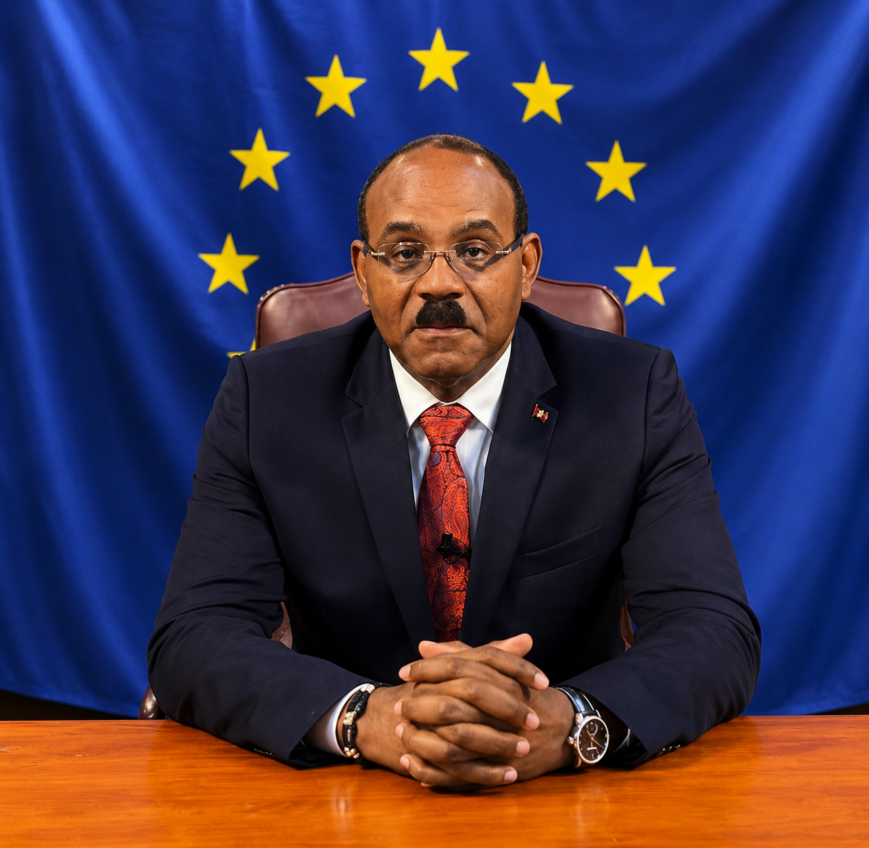
    In an emotional gathering of party members and supporters, Antigua and Barbuda Prime Minister Gaston Browne has delivered a heartfelt full tribute to Mary Clare Hurst, a former senator, state minister and lifelong stalwart of the Antigua and Barbuda Labour Party (ABLP), who recently passed away.

    Browne opened his tribute by noting that while those assembled carried heavy hearts in mourning Hurst’s passing, they also gathered to honor her decades of unwavering commitment to the ABLP and the people of the twin-island nation. Opening up about his personal connection to Hurst, Browne described her as not just a political ally, but a former schoolmate, a trusted “sister friend” and a “sister warrior” who stood by him through some of the party’s most turbulent moments.

    Hurst’s affiliation with the ABLP stretched back to her childhood, Browne confirmed, and her loyalty never wavered across decades of political triumph and hardship. “She was more than a political supporter and officer of our party. She was a stalwart,” Browne emphasized, noting that Hurst embodied the ABLP’s core values: a commitment to people empowerment, good governance, poverty elimination, full employment, equal opportunity and justice for all Antiguans and Barbudans.

    During her time in public office as a state minister, Browne recalled, Hurst carried out her duties with remarkable dignity, discipline and humility. She held a deeply held conviction that public service was never about personal privilege, but about responsibility to the public good, a principle she embodied in every role she undertook. Across all her assignments, she worked diligently to lift up community members and advance sustainable national development.

    One of the defining tests of political loyalty comes during moments of crisis, Browne argued, when many allies step back or abandon their principles. He pointed specifically to the period after the 2023 general elections, when a number of figures distanced themselves from the ABLP amid public criticism, while Hurst stood firmly alongside the party and its leadership, never wavering in her commitment to the party’s vision of inclusive progress.

    Browne specifically highlighted Hurst’s key support during the ABLP’s 2005 internal convention, a period of intense internal party struggle, where she openly backed Browne’s leadership and became his most trusted ally through the contentious process. “Over the past couple of decades, we fought and won many battles within and without the ABLP. I will miss her immensely,” Browne said.

    Widely known affectionately as “Tanty” to generations of party members who she mentored and nurtured, Hurst left a mark far beyond her formal political roles. Browne praised her signature grace, quiet strength, relentless commitment to service and unshakable belief in the potential of the Antiguan and Barbudan people, traits that earned her respect across the political spectrum.

    Extending the party’s deepest condolences to Hurst’s family, Browne thanked her relatives for sharing her with the entire ABLP family and the broader nation. He noted that her passing is a profound loss for all those who knew her, but that her legacy of dedication, patriotism and unwavering loyalty will continue to inspire generations of Labourites and young women pursuing careers in public life.

    Closing his tribute, Browne offered a final message to his departed comrade: “You have fought the good fight. You have kept the faith. Well done thou good and faithful servant. May your legacy endure in the history of the Antigua and Barbuda Labour Party and in the hearts of our people. May the soul of our fallen Comrade, Maryclare Hurst rest in eternal peace and rise in glory.”

  • 100 days: Mixed views as Bajans assess govt

    100 days: Mixed views as Bajans assess govt

    Three months after Barbados held its general election, the island nation finds itself grappling with deep public divisions over the current administration’s policy trajectory, with widespread concerns over violent crime, soaring living costs, and a lack of economic opportunities for youth dominating public discourse gathered in the capital Bridgetown this Friday.

    For many first-time eligible voters, the disconnect between young people and the country’s political establishment runs so deep that they opted to sit out the historic poll entirely. Chadavia Edwards, one such young voter, explained her choice to abstain from the election, noting that the political process had failed to deliver tangible benefits for her and her generation. “Everybody kept pushing me to vote for their preferred candidate, but nothing in any platform actually addressed the needs of people my age,” Edwards told local outlet Barbados TODAY. She added that political campaigns overwhelmingly centered on courting middle-aged and older millennial voters, leaving younger demographics like herself completely overlooked. Despite facing sustained pressure from family members to back a specific party, Edwards said she stood by her choice to skip voting, as she saw no meaningful outcome from participating.

    Across different segments of the population, violent crime has emerged as the most widely cited urgent issue demanding immediate government intervention. Andrea Parris, a local resident, emphasized that coordinated, top-down action is required to rein in rising violence, calling for collaboration between national leaders and the judicial system to get the security situation under control. Pointing to a recent string of deadly violent incidents across the island, Parris argued that all Barbadian citizens are owed a fundamental sense of safety in their own homeland. “This is our home, we build our lives here,” she said. “The government has a core responsibility to deliver calm and peace, so that no one has to live in constant fear of gun violence.”

    Street vendor Nikki, who sells snowcones to local customers, echoed these concerns, noting that even when violence is framed as gang-related, innocent bystanders remain constantly at risk. “A bullet doesn’t have a name,” she warned. “No matter who the conflict is between, ordinary people can get caught in the crossfire, and that’s completely unacceptable.” Nikki called for far harsher legal penalties for violent offenders to deter further attacks.

    Allan Cadogan, a shoe and bag repair technician working in Bridgetown, joined the call for tougher punishments for weapon-related crime, adding that early intervention in school systems is also critical to curb youth involvement in violence. “Violent crime is the single biggest problem hurting Barbadians right now, and it is disproportionately young people who are perpetrating these acts,” Cadogan said. He stressed that authorities need to take aggressive, decisive action, including implementing stricter consequences for anyone caught carrying or using illegal weapons.

    Despite the widespread anxiety over security and economic conditions, a number of Barbadians argued that the new administration deserves more time to deliver on its campaign promises. Donville Mayers, a supporter of the current government, said that he believes the leadership has already done excellent work in its first 100 days, noting that large-scale systemic change cannot happen overnight. “You can’t fix years of challenges in just three months,” Mayers said. “We have to give the government time to implement its plans and see results.”

    Mark King shared this measured, optimistic take, arguing that even amid ongoing economic headwinds, the current government has made clear progress that outpaces previous administrations. “A lot of people say they haven’t seen big changes yet, but from what I can see, the government is doing its best with the resources it has,” King explained. “This administration is showing more forward momentum than any we’ve had in recent years, and they’re putting in the work.”

    The split public opinion 100 days into the new government’s term underscores the deep set of challenges facing Barbados’ leadership as it works to address long-simmering public concerns across the country.

  • Khan outlines legal reasoning

    Khan outlines legal reasoning

    Weeks after a fatal police-involved shooting left Joshua Samaroo dead in St Augustine, the issuing of an arrest warrant for his common-law wife Kaia Sealy on manslaughter and firearms-related charges has ignited fierce public discussion and legal scrutiny over the case. Samaroo was killed on January 20 during an encounter at the intersection of College Road and Bassie Street Extension, and circulating cellphone footage of the shooting on social media triggered widespread public outrage, street protests from Samaroo and Sealy’s loved ones, and ongoing demands for answers over the circumstances of his death.

    On Thursday, law enforcement authorities confirmed via an official statement that two warrants have been issued against Sealy: one for shooting with intent to cause grievous bodily harm to responding officers, and a second for manslaughter in connection with Samaroo’s death. The unexpected manslaughter charge has left many observers confused, but leading legal figure Israel Khan, head of the Criminal Bar Association, has offered a potential framework for how the prosecution could pursue this case.

    Khan explained that the manslaughter allegation does not claim Sealy directly killed Samaroo. Instead, prosecutors are expected to argue that her actions prompted officers to open fire on the vehicle while acting in the legitimate execution of their duties, ultimately leading to Samaroo’s death. Under established legal principle, he noted, if an individual fires on police and officers respond with defensive gunfire that accidentally kills an unarmed uninvolved person, the person who initiated the gunfire can still be held legally liable for manslaughter, as there is no legal justification for attacking police.

    “Right now, we do not know what evidence the Director of Public Prosecutions (DPP) reviewed before authorizing these warrants,” Khan said in a telephone interview Monday. “We cannot jump to conclusions based solely on claims that Samaroo had his hands raised when shots were fired. We also cannot rule out that officers had justifiable reason to believe there was an imminent threat, that someone inside the vehicle reached for a weapon, or that shots were fired from the vehicle toward police first. All of these details will come out in open court, where the full evidence will be presented.”

    Leading defense attorney Saira Lakhan, who heads the Assembly of Southern Lawyers, said the high-stakes case underscores a longstanding urgent need to improve transparency within policing, build public trust in the criminal justice system, and expand the mandatory use of body-worn cameras for all officers on duty.

    While Lakhan emphasized that the constitutional independence of the DPP’s office and ongoing legal process must be respected, she noted that public confidence in the justice system depends on all investigative and prosecutorial decisions being rooted in verifiable evidence, fairness, open process, and adherence to due process.

    “These are extremely serious allegations, so all evidence must be tested thoroughly in a court of law, not debated through public statements or unsubstantiated social media speculation,” Lakhan said, stressing that she was speaking in a personal capacity. “Every person accused of a crime is entitled to the presumption of innocence and a fair hearing before an impartial tribunal. Given the level of national public interest and concern around this tragic incident, this case makes clear just how urgent it is to boost policing transparency, roll out body-worn cameras more widely, and continue rebuilding public trust in our criminal justice institutions.”

    Lakhan added that her thoughts remain with all families affected by the January shooting, an incident that has sent ripples of shock and concern across the national community. As of Monday, a public demonstration calling for solidarity with Sealy, scheduled to take place tomorrow at 3 p.m. outside the Police Administration Building in Port Spain, was actively circulating on social media platforms, drawing hundreds of expressions of support from community members.

  • Abdulah knocks TTPS messaging in Samaroo case

    Abdulah knocks TTPS messaging in Samaroo case

    A top opposition political figure in Trinidad and Tobago has publicly criticized the Trinidad and Tobago Police Service (TTPS) over its disjointed, confusing rollout of information regarding arrest warrants for Kaia Sealy, arguing the botched communications strategy has further eroded already fragile public trust in the country’s law enforcement agency.

    David Abdulah, political leader of the Movement for Social Justice, laid out his critique in comments delivered yesterday, breaking down how a fragmented 12-hour sequence of announcements left the public misinformed and uneasy. The timeline began with a Thursday morning press conference led by Police Commissioner Allister Guevarro, who confirmed that arrest warrants were forthcoming in a high-profile case but stopped short of naming any suspects or confirming that any arrests had already been carried out. At that stage, Abdulah noted, many members of the public held out hope that the warrants would target police officers implicated in the incident, a development many saw as a long-overdue step toward accountability.

    That public optimism shifted dramatically by Thursday evening, when the TTPS issued a surprise follow-up release naming Sealy as the sole suspect, charging her with manslaughter, attempted shooting of police officers, and a slate of other criminal offenses. The abrupt, uneven reveal left many members of the public confused and unsettled, Abdulah said. “One moment people felt police officers may be charged, next moment the headlines were saying ‘shocking development,’” he explained, adding that the disjointed rollout “didn’t sit right” with many observers. He questioned why Commissioner Guevarro did not disclose Sealy’s name and the specific charges during the initial morning briefing, arguing the uncoordinated release raised serious red flags about internal communication protocols within the TTPS.

    In the wake of the conflicting announcements, Abdulah said the TTPS now bears the full burden of proving its case against Sealy, noting that attorneys, criminologists, and social media users have all raised widespread questions about the charges. “The question now is on the police to be able to prove and provide proper evidence of what happened,” he stressed.

    Abdulah tied the communication failure to deeper, long-standing issues of public distrust in the TTPS, pointing to two high-profile recent incidents that have shaken public confidence: last month’s theft of firearms from the San Fernando Municipal Police Station, and the fatal shooting of acting corporal Anuska Eversley at that same facility. He also argued that the Sealy case highlights ongoing concerns around police-involved civilian killings, specifically calling out the framing language used to describe these incidents. Phrases like “police-involved shootings,” he argued, intentionally skew public perception of events where officers kill unarmed civilians, softening the impact of the harm caused.

    To address the gap in transparency, Abdulah renewed long-standing calls for the mandatory use of police body cameras during all confrontational interactions between officers and civilians. He argued that relying solely on officer testimony to investigate police-involved incidents is insufficient to maintain public trust. “We cannot rely simply on the words of police officers,” he said, adding that body camera footage would dramatically improve transparency and help rebuild public confidence in investigations into police shootings. He clarified that his call for greater transparency is not an indictment of all officers, noting that most serve honorably, but that systemic transparency is a non-negotiable requirement to reverse the ongoing collapse of public trust in the TTPS.

    Abdulah also called for sweeping legislative reform of the country’s Police Complaints Authority (PCA), the independent body tasked with investigating police misconduct. Currently, he noted, the PCA lacks the legal authority to conduct independent forensic investigations into police-related incidents, as its investigators are not legally permitted to handle firearms, ammunition, or spent bullet casings as part of their work. This leaves the PCA entirely dependent on the TTPS itself to turn over evidence in cases of alleged police misconduct, creating an inherent conflict of interest that undermines the body’s independence. To fix this structural flaw, Abdulah is calling for amendments to the PCA’s governing legislation that would grant the authority full power to conduct its own independent forensic examinations of evidence connected to police investigations. “We need to amend the Act related to the PCA to give the PCA the power to do its own independent forensic investigation,” he said.

  • ‘Move swiftly to strengthen PCA’

    ‘Move swiftly to strengthen PCA’

    Public anger and uncertainty have surged across Trinidad and Tobago following Thursday’s confirmation that arrest warrants have been issued for Kaia Sealy, the widow of January 20 shooting victim Joshua Samaroo. At the center of growing national unrest, Opposition Leader Pennelope Beckles is pushing for immediate legislative changes to bolster the investigative authority of the country’s Police Complaints Authority (PCA), demanding decisive action from the sitting prime minister.

    In a viral social media statement published over the weekend, Beckles declared “Trinidad and Tobago is on fire”, emphasizing that the public would not accept anything less than immediate intervention from Prime Minister Kamla Persad-Bissessar. Her call for reform has been backed by a growing coalition of senior legal practitioners, leading criminologists and fellow political figures, who have all joined the expanding public debate over police accountability in officer-involved fatal shootings.

    The controversy stems from a January 20 confrontation at the intersection of College Road and Bassie Street Extension in St Augustine. The Trinidad and Tobago Police Service (TTPS) confirmed this week that acting on formal guidance from the Office of the Director of Public Prosecutions (DPP), it has issued warrants for Sealy on charges of manslaughter and discharging a firearm with intent to cause grievous bodily harm to responding officers. The incident sparked national outrage after user-shared security footage circulated widely across social media, showing officers opening fire on the vehicle occupied by Samaroo and Sealy. Samaroo was pronounced dead shortly after the encounter, while Sealy was hospitalized for her injuries and remains at large as of this report.

    Beckles argues that the latest procedural twist in the high-profile case has amplified long-simmering national concerns over police transparency, accountability, and the effectiveness of the country’s months-long state of emergency (SoE). While she acknowledged that the Opposition respects the institutional independence of the DPP’s office, she noted that large segments of the public are openly questioning the legal and procedural foundation for the recent decision to charge Sealy. “Society is now confronted with more questions than answers regarding the rationale behind this sudden development,” Beckles said, adding that public anxiety has been further stoked by the steady rise in police-involved shootings throughout the SoE, even as the PCA’s own independent probe into the Samaroo killing remains ongoing.

    The Opposition Leader stressed that while the government must respect the integrity of active criminal proceedings, the state carries a non-negotiable responsibility to safeguard the constitutional rights of all citizens. “Many have been stunned and are calling for clarity on the outcome and direction of the Samaroo investigation,” she added.

    Beyond the Samaroo case, Beckles launched a broad critique of the administration’s crime-fighting strategy under the extended state of emergency, which has been in place for multiple months. She contended that despite sweeping expanded security powers that have allowed police to detain hundreds of people, violent criminal activity has continued unabated across the archipelago nation. “Home invasions remained rampant, and murders and violent crime continued unabated in broad daylight,” Beckles said. “The country was left to conclude that both of the States of Emergency had failed.”

    She also raised red flags over the government’s proposed Zones of Special Operations framework, warning that the policy would grant security forces expanded authority without implementing sufficient checks and independent oversight mechanisms. Beckles added that the administration has also failed to release key public information about detentions carried out during the SoE, including how many of those detained have ultimately faced formal criminal charges.

    For Beckles and the Opposition, the ongoing controversy surrounding the Samaroo case underscores a critical need for stronger independent oversight of all police operations. “In these circumstances, living under a perpetual State of Emergency and witnessing the deeply unsettling developments in the Samaroo matter, the Opposition holds the view that it is imperative for the Government to move swiftly to strengthen the Police Complaints Authority through legislative reform,” she said. The Opposition is calling for the PCA to be granted the same broad investigative powers held by Jamaica’s Independent Commission of Investigations (Indecom), a model for independent police oversight in the Caribbean. “The rights and privileges of citizens must be protected and guaranteed,” Beckles added.

    Beckles also pressed the government for clarity on its future emergency plans, questioning whether the administration intends to extend the current SoE or roll out a new state of emergency once the current authorization expires. She called on Prime Minister Persad-Bissessar, who also serves as chair of the National Security Council, to deliver a public address addressing the full suite of outstanding questions surrounding national security policy and police accountability.

    In its own statement released Thursday, the PCA confirmed that its independent investigation into the shooting of Samaroo and Sealy remains active. The authority also noted that high-profile cases like this one highlight the urgent need for mandatory body-worn cameras for all frontline police officers, a policy the PCA has long advocated for. “Incidents of this nature highlight why the PCA has consistently advocated for the use of body-worn cameras by police officers to provide an objective record of events and help reduce discrepancies and speculation such as in this matter,” the PCA said.

  • Hoefdraad haalt hard uit naar OM en spreekt van politieke vervolging

    Hoefdraad haalt hard uit naar OM en spreekt van politieke vervolging

    A high-stakes political and legal dispute has unfolded in Suriname, as former Finance Minister Gillmore Hoefdraad has launched a blistering attack on the country’s Public Prosecution Service (OM), the Prosecutor General and segments of the judiciary, alleging systemic political manipulation of the justice system.

    Hoefdraad was scheduled to appear Friday before the National Assembly committee tasked with vetting public officials, which is currently reviewing the OM’s fresh request to formally indict him on corruption-related charges. Instead of appearing in person, the former minister submitted a 59-page written statement to the committee through his defense attorneys, Murwin Dubois and Milton Castelen, who did answer legislative questions related to the legal technicalities of the case.

    In the extensive filing, Hoefdraad said he has completely lost confidence in the ability of Suriname’s justice system to deliver an objective hearing. He argues that both the OM and parts of the judiciary have been tainted by political interference, backing his claim with reference to prior legal proceedings against him and public criticism of judicial operations from civil society leaders, fellow attorneys and former government officials.

    At the core of his accusation is the claim that the OM has turned legal processes into a political weapon. He frames the ongoing action against him as “lawfare” — the deliberate weaponization of the judicial system, where criminal investigations are deployed to eliminate political opposition. If this practice continues unchecked, he warns, public trust in Suriname’s rule of law will suffer irreversible, severe damage.

    A key pillar of Hoefdraad’s argument centers on the prior INTERPOL Red Notice issued against him. He confirmed that INTERPOL ultimately revoked the red notice after concluding the case was politically motivated, adding that a subsequent attempt to reissue an international alert against him was also rejected by the global police body. He points to these international decisions as clear evidence that global law enforcement bodies harbor serious doubts about the independence and impartiality of the prosecution against him.

    Hoefdraad also leveled harsh criticism at the Prosecutor General and Suriname’s Justice Intervention Team, arguing that the entities hold an outsized concentration of power with insufficient oversight mechanisms or transparency. He goes so far as to claim that the OM functions in practice as “a state within a state.” He further supports his critique by citing public criticism of the prosecution apparatus previously made by former Justice Minister Jennifer van Dijk-Silos and prominent attorney Raoul Lobo, among others.

    The former minister also called into question the 2020 parliamentary vote that approved his prosecution, noting that the OM resubmitted a request that had already been rejected, with no new evidence or changed circumstances to justify the new filing. He argues this move violates fundamental legal principles including legal certainty and the ban on double jeopardy. He also notes that he was not personally questioned by the legislature in 2020, a step he says is required by Surinamese law.

    On the substance of the allegations against him, Hoefdraad defended policy decisions he made during his tenure as finance minister, which came amid a severe national financial crisis. He explained that difficult, sometimes unorthodox policy choices were necessary to keep the Surinamese government operational at the time. He added that financial arrangements involving the Surinaamse Postspaarbank (SPSB) and state funds were developed within the context of a national emergency, with full knowledge of multiple state institutions. What were legitimate crisis-era policy decisions, he argues, are now wrongfully being criminalized.

    For its part, the OM has pushed back against Hoefdraad’s claims, asserting that its criminal investigation has uncovered sufficient evidence to justify prosecution over alleged irregularities in the management of state funds and SPSB assets. The prosecution alleges that public money was diverted outside of regular budgetary and oversight structures, with potential offenses including fraud, abuse of power and circumvention of financial regulatory checks.

    The ball now sits with the National Assembly committee, which will ultimately decide whether to approve the Prosecutor General’s request and clear the way for Hoefdraad’s further prosecution.

  • Juliette Shillingford to vie for Roseau Central Constituency on UWP ticket

    Juliette Shillingford to vie for Roseau Central Constituency on UWP ticket

    In a formal press briefing held Thursday, United Workers Party (UWP) leader Dr. Thomson Fontaine announced a key candidate addition for the upcoming electoral contest: Juliette Shillingford, the former Chief Physical Planner for the Government of Dominica, will stand as the party’s nominee for the Roseau Central Constituency.

    The vacancy on the UWP ticket for Roseau Central opened after Glenroy Cuffy, who represented the party in the 2019 general election, confirmed he would not seek re-election this cycle. Dr. Fontaine confirmed that Cuffy is no longer available to run, but expressed enthusiasm that the party has filled the spot with a highly qualified contender who has already begun engaging with constituents in the constituency.

    Shillingford brings deep local roots to her campaign, a point Dr. Fontaine emphasized in his announcement. Born and raised in Roseau, she comes from a prominent, well-established local family. Her father is one of Dominica’s leading physicians, and her late brother Dorian Shillingford is widely recognized across the country for his tenure as general manager of the Dominica Water and Sewerage Company (DOWASCO). Beyond her family connections, her decades of professional work in public planning have given her intimate, first-hand knowledge of the community’s needs and infrastructure challenges, Dr. Fontaine noted.

    As a trained planning professional with decades of public sector experience, Shillingford also brings a rare combination of expertise and institutional maturity to the UWP’s candidate slate, according to the party leader. Dr. Fontaine described her as a consummate professional, adding that party leadership is confident she will not only compete strongly for the Roseau Central seat but also lift the entire ticket by supporting fellow candidates and contributing meaningful, data-driven policy perspective to the party’s platform ahead of the election.

  • Nurmohamed stelt tijdens hoorzitting dat procedures correct zijn gevolgd

    Nurmohamed stelt tijdens hoorzitting dat procedures correct zijn gevolgd

    A closed-door parliamentary hearing for former Surinamese Public Works Minister Riad Nurmohamed concluded this Friday, with the ex-official pushing back against prosecution demands over alleged irregularities in a low-income housing development project. Appearing alongside his lawyer Benito Pick before the special parliamentary committee tasked with reviewing cases against current and former political office holders, Nurmohamed has repeatedly asserted that every step of the Pan American Real Estate housing initiative followed all legally required procedures.

    The hearing was convened to examine a request from the Surinamese prosecutor general, who has formally asked to put Nurmohamed on trial over claims of procedural misconduct tied to the affordable housing project. In his testimony before the committee, the former minister detailed that all standard oversight bodies and regulatory mechanisms were involved throughout the project’s planning and implementation phases. He confirmed that his own ministry maintained the required system of checks and balances, and that all relevant government institutions including the Ministry of Finance, the Vice President’s Cabinet, and the President’s Cabinet were kept fully informed of every procedural step taken.

    Nurmoahmed also told the committee he is surprised by the prosecutor general’s request to indict him, noting he has already provided voluntary testimony to the Public Prosecution Service at least five times in previous investigations, none of which listed him as an official suspect. He further dismissed the prosecution’s claim that he collaborated with unknown unregulated actors in the project, emphasizing that all activities were carried out through official channels and approved by relevant government bodies.

    Committee chair Rabin Parmessar, when reached for comment by local outlet Starnieuws, confirmed that the hearing proceeded in an orderly manner. He explained that the committee intentionally avoided wading into substantive debates over the former minister’s guilt or innocence, noting that the body’s role is not to act as a court but only to evaluate the merits of the prosecutor general’s request. Due to the closed nature of the proceeding, Parmessar declined to share further detailed information on the content of testimony.

    Once all related hearings are completed, the special committee will draft a formal advisory opinion for the internal meeting of the National Assembly. After the review process concludes, the National Assembly will hold a public vote to decide whether to approve the prosecutor general’s request and open the way for formal criminal prosecution of Nurmohamed.

  • ‘Misleading and Political’: Elvin Penner Rejects Land Grab Narrative

    ‘Misleading and Political’: Elvin Penner Rejects Land Grab Narrative

    A political firestorm has erupted in Belize around long-simmering accusations against former government minister Elvin Penner, who is now pushing back forcefully against claims that he improperly fast-tracked land titles for multiple parcels located inside a Belize Defence Force (BDF) training zone in the lead-up to the 2020 general election. The allegations, first leveled by Defense Chief Executive Officer Francis Usher, frame the land acquisition as a hasty, last-minute power grab carried out during the COVID-19-disrupted election cycle. But Penner has rejected every element of the narrative, calling the claims misleading, factually inaccurate, and motivated entirely by partisan political opportunism.

    In a detailed on-camera rebuttal of the accusations, Penner laid out a timeline that directly contradicts claims of rushed approval. He emphasized that the full process from initial application to final title transfer stretched across half a decade, rather than the accelerated months-long timeline alleged by his critics. A core point of contention in Penner’s defense is the location of the disputed parcels: he clarifies that the military training zone was formally established around existing privately held land, not that he acquired land already designated for military use. In his view, the narrative that he encroached on defense property has been intentionally inverted for political gain.

    Penner also pushed back against claims that he seized hundreds of acres of prime government land, dramatically downplaying the total size of the disputed holdings. The parcels at the center of the controversy add up to just 35 acres total, he explained, a plot that was originally registered entirely in his name before he subdivided it into seven smaller parcels for family members. He confirmed that he does own a much larger adjacent holding of roughly 1,000 acres, but stressed that this property was privately purchased through fully legal channels and has been held as private land for decades, with no connection to the government allocation at the heart of the allegations.

    The former minister also addressed insinuations that he received special preferential treatment from the then-ruling United Democratic Party (UDP) government to secure the land. Penner, who is a member of the UDP, countered that the 12-year timeline to complete the subdivision and approval process is itself proof that no favors were extended. “Am I not entitled to a little piece of Belize where nobody else wanted it – with some other family members through the proper process?” he asked in his remarks, arguing that he followed every regulatory requirement. He noted that the land went through official survey, inspection, and review steps, with approval from the sitting minister at the time, resulting in a five-year wait just to secure an initial lease for the property.

    This report is adapted from a verbatim transcript of a televised evening news broadcast from Belize, originally published online on May 22, 2026.

  • Sixty-One Percent Young; So Why Is Power So Old?

    Sixty-One Percent Young; So Why Is Power So Old?

    Dated May 22, 2026, a deep generational mismatch has emerged as one of the most pressing tensions in Belize’s political ecosystem, pitting a majority-youth population against an overwhelmingly aging ruling class. Today, 61% of all Belizeans are under the age of 35 — a demographic majority that holds barely any reflection in the nation’s top governing bodies. Across the country’s 31 electoral districts, only one sitting area representative is younger than 35, and the appointed Senate offers no greater space for young voices. As the average age of national leadership continues to climb, public pressure to address this stark disconnect is growing louder.

    For decades, electoral politics in Belize has been framed as an arena reserved for seasoned, well-established political names. Parties have repeatedly leaned on incumbent, long-serving candidates rather than opening pathways for fresh, young contenders to compete, leaving millions of young Belizeans sidelined from formal decision-making. Faint signs of shift are beginning to appear at the municipal level, however, as parties prepare for the 2027 local elections and new young candidates are stepping forward to claim their place on the ballot.

    Among the emerging young contenders are two United Democratic Party (UDP) hopefuls vying for Belize City municipal seats: 30-year-old Melvin Sutherland, who also leads the UDP’s national youth wing, and 33-year-old Kerwick Samuels. Sutherland, who developed an early passion for political affairs growing up following veteran party leader Dean Barrow, pushes back against the common criticism that young people are unfit for office. He calls out the contradictions in current policy, noting, “You cannot raise minimum wage with one hand while taking back the same money at our gas station, the light bill, grocery store, NHI, social security.”

    Samuels echoes that frustration, arguing that young Belizeans already demonstrate clear capacity to lead across every sector of society. “Go to the high schools, the primary schools, the sixth forms, the universities, and you engage with these young people and see what they are doing and come and tell me that they don’t have the potential to serve at a different capacity,” he says, pointing to the widespread energy and initiative young Belizeans already bring to community and public life.

    On the governing side, 33-year-old Malcolm Nunez, who already serves as a Belize City councilor for the People’s United Party (PUP) and heads the party’s youth organization, has made expanding youth representation his life mission. He rejects the argument that age inherently disqualifies young people from office, noting that “Everyone has their own perspective of what they believe and your age. Once you are in a position anywhere in life. The maturity develops overtime and you become comfortable in the position you currently hold.”

    When asked whether a new generation of leaders can avoid the corruption and self-serving politics that have plagued long-entrenched political establishments, all three young candidates framed their work around legacy and principle. Nunez, a father, says he wants his own son to grow up in a system where young people have an equal shot at leading: “I have a son, a young son and I want when it is his turn to do whatever he wants in life, he can look back and say my dad was instrumental in making sure young persons have a voice in whatever capacity.” For Sutherland, leadership boils down to unwavering moral conviction: “For me it all comes down to morality, right or wrong, my conviction. That is what I go on.”

    Leaders of both of Belize’s major political parties have recently made public pledges to prioritize youth representation ahead of the 2027 municipal elections. UDP leader Tracy Panton stated that “The youth voice is going to be an integral part of leadership for the UDP moving forward.” PUP Prime Minister John Briceño also endorsed the two young UDP candidates, noting “I know about two young men that are considering running, and I think they are excellent choices for Belize City.”

    That public support comes with a notable contradiction, however: in 2023, when another young contender, Pollard, announced his interest in running for mayor, Briceño publicly advised him to “sit back and think things through” before moving forward, a moment that many young aspirants point to as evidence of the persistent barriers to entry. Tonight, the question remains unanswered: will 2027 mark the beginning of a true shift toward reflective representation in Belize, or will the nation’s youth majority continue to wait on the sidelines for their chance to lead? Reporting for News Five, Paul Lopez contributed to this investigation.