分类: politics

  • Strengthening of external security at the National Police Academy of Haiti

    Strengthening of external security at the National Police Academy of Haiti

    Against a backdrop of persistent instability and growing security challenges in Haiti, a landmark infrastructure project focused on strengthening the National Police Academy (ENP) located on Road of Frère has reached completion, with an official handover ceremony held on April 22, 2026. The event brought together key stakeholders: Vladimir Paraison, Acting Commander-in-Chief of the Haitian National Police (PNH), Japanese Ambassador to Haiti Kazuhiko Nishiuchi, and Xavier Michon, Resident Representative of the United Nations Development Programme (UNDP).

    This critical security upgrade project, made possible through full funding from the Japanese government and implemented on the ground by UNDP, was designed to address long-standing vulnerabilities at the academy, which operates in one of Haiti’s high-risk security zones. The goal of the initiative is to establish sustained protective infrastructure for the ENP’s facilities and guarantee uninterrupted training operations for new police recruits, a core priority for Haiti’s efforts to rebuild its national security capacity.

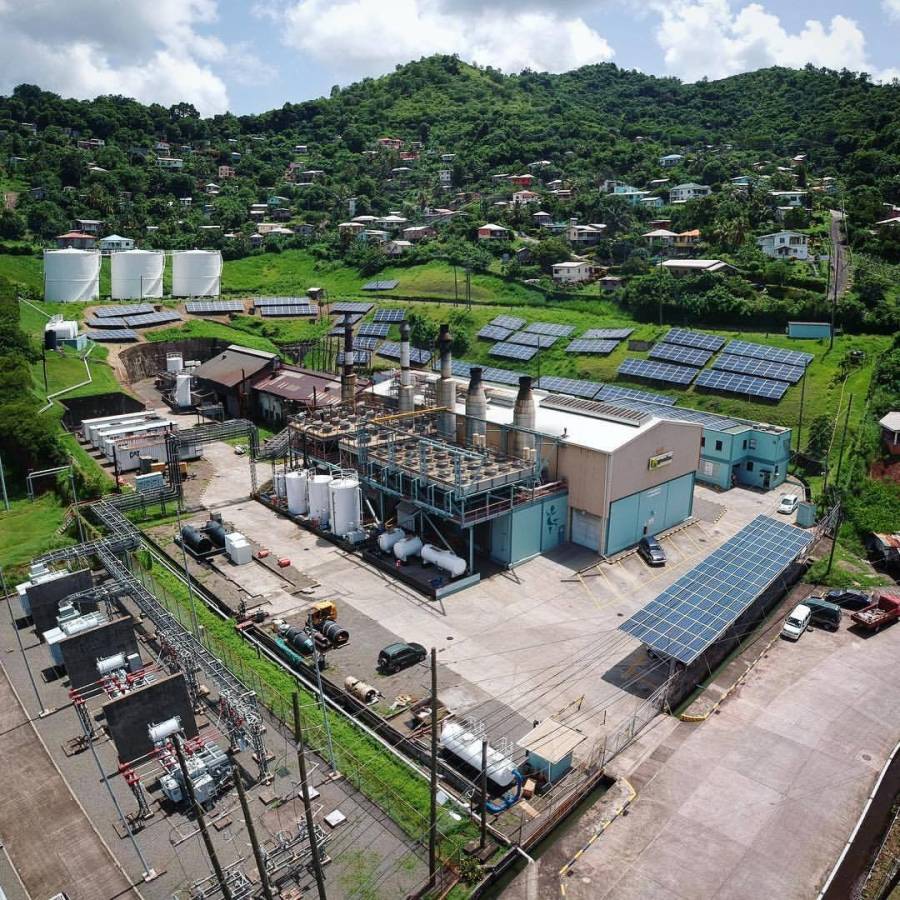
    The completed upgrades encompass a comprehensive range of improvements spanning security, utilities, and healthcare. For perimeter defense, the project delivered 1,350 linear meters of reinforced perimeter wall, topped with 850 meters of new barbed wire to block unauthorized access. The ENP’s lead security post received a full structural renovation, while a complete 360-degree video surveillance system covering the entire academy perimeter was installed, alongside a dedicated centralized surveillance room purpose-built to help security teams detect and respond to external threats proactively. In a sustainable energy upgrade, the outdated diesel-powered campus lighting was replaced with solar-powered streetlights that deliver more reliable, consistent illumination across the academy grounds. The project also included critical support for the on-site infirmary, with a donation of essential medications and new medical equipment including three fully functional X-ray machines. Finally, the ENP’s aging water supply network was fully repaired, eliminating long-standing service interruptions that have disrupted training activities in the past.

    Beyond the completed security upgrades, the ceremony brought announcements of upcoming development projects to expand PNH training capacity across the country. Michon confirmed that UNDP will soon break ground on a new facility that will add multiple classrooms and purpose-built dormitory space specifically for future female police recruits, a step designed to boost gender diversity within Haiti’s national police force. Additionally, two new regional PNH training centers are planned, one in northern Haiti and one in the south, to allow new recruits to complete training closer to their home communities, removing barriers to entry for candidates from remote areas.

    In his remarks at the ceremony, Ambassador Nishiuchi reaffirmed Japan’s unwavering solidarity with the Haitian people and government as the country works toward long-term political and social stability. He emphasized that Japan’s partnership with Haiti is rooted in a steady, incremental approach, advancing progress “one step at a time” through consistent, collaborative development and security support.

    Paraison extended formal gratitude to UNDP for the expert execution of the project and to the government and people of Japan for their critical financial investment, which he described as a powerful demonstration of international solidarity with Haiti’s security efforts. He also used the occasion to outline the PNH’s most pressing unmet needs, including the development of a specialized national trauma center for first responders, the reconstruction of multiple damaged police stations across the country—most notably the station in Miragoâne, which requires rebuilding of a rear dock, the acquisition of 500 new patrol vehicles to ensure sustained police presence in hard-to-reach rural areas, particularly ahead of upcoming national election periods.

    Following the formal handover, the delegation conducted an on-site visit to the pre-construction sites for the upcoming new dormitory and classroom facility. To mark the occasion and recognize the enduring cooperative relationship between Haiti and Japan, Paraison presented Ambassador Nishiuchi with an honorary plaque, a symbolic gesture highlighting the fraternal ties between the two nations.

  • Address by the Prime Minister of Haiti to the UN Security Council (video)

    Address by the Prime Minister of Haiti to the UN Security Council (video)

    In a high-stakes address to the United Nations Security Council on April 23, 2026, Haitian Prime Minister Alix Didier Fils-Aimé delivered an urgent appeal to the global community, calling for rapid, concrete and scaled-up support to curb the country’s spiraling insecurity crisis.

    The prime minister was joined by a senior Haitian government delegation that included Foreign Minister Raina Forbin, Minister of Planning and External Cooperation Sandra Paulemon, Special Advisor Guerly Leriche, and Erick Pierre, Haiti’s Permanent Representative to the UN headquarters in New York.

    Opening his remarks against the backdrop of one of the most severe security crises the Caribbean nation has faced in recent decades, Fils-Aimé reaffirmed that reestablishing full state authority across Haitian territory stands as his administration’s top policy priority. He stressed a foundational point for the country’s future: “Without security, there can be neither democracy nor development.”

    The prime minister acknowledged the early progress that national security forces, backed by the Gang Repression Force (FRG), have made in pushing back against armed gang control. Even so, he emphasized that the full, rapid deployment of the FRG is a critical unmet need, and that the force must be paired with sufficient funding, equipment and personnel to match the scale of the challenge at hand. Rejecting vague pledges of future support, Fils-Aimé made clear that the Haitian people require immediate action rather than empty promises, calling on all international partners to follow through on the commitments they have already made to Haiti’s stability.

  • Inheemse diaspora doet eerste stap naar structurele samenwerking

    Inheemse diaspora doet eerste stap naar structurele samenwerking

    On April 21, 2026, a landmark first consultation convened at the Embassy of the Republic of Suriname in The Hague, bringing together embassy officials and a broad coalition of Indigenous organizations from the Surinamese diaspora. Sixteen representatives spanning multiple community groups and professional disciplines gathered to share unified perspectives, long-held concerns, and actionable policy proposals, marking an unprecedented moment: for the first time, the Indigenous diaspora has intentionally presented itself as a cohesive collective in formal dialogue with Suriname’s diplomatic mission.

    The collective nature of the delegation emerged as a defining strength of the gathering, a point explicitly recognized by embassy leadership. Rejecting the historical pattern of separate, fragmented engagements, participating organizations deliberately chose to speak with one united voice. “The fact that you decided not to come individually, but as a collective, that is a powerful step forward,” embassy representatives noted during the opening session. This strategic choice reflects a growing shared awareness across the diaspora community: coordinated collaboration and aligned messaging are essential to driving meaningful policy influence.

    A clear throughline ran through all contributions from the Indigenous delegation: after decades of centering demands for formal recognition, the community is now moving toward a new priority: tangible implementation of rights. The generations-long struggle for land rights was framed in clear historical context, with delegates emphasizing, “This fight has been ongoing for more than 50 years.” The collective message was unambiguous: formal recognition alone is no longer sufficient. The community now demands concrete policy action, binding legislation, and consistent enforcement of Indigenous rights.

    Much of the discussion centered on the urgent, ongoing crisis unfolding in Suriname itself. Core topics included threatened land tenure, unregulated extractive concessions, and widespread environmental damage. Delegates highlighted the severe, immediate impacts of unregulated mining and industrial pollution as a top urgent priority, stressing, “This is not an Indigenous problem — this is a problem for all of Suriname.” The overlapping harms of environmental contamination, elevated public health risks, and limited legal protections have transformed what was once framed as a future risk into an active, ongoing crisis requiring immediate intervention.

    Beyond legal and political demands, delegates also emphasized the foundational role of cultural preservation and intergenerational knowledge transfer. Multiple participating organizations already lead active work to protect and pass down Indigenous languages, traditional music, ceremonial practices, and ecological knowledge across both Suriname and the Netherlands. The diaspora plays a unique dual role in this work: as stewards of traditional knowledge, and as a bridging force connecting Indigenous communities in Suriname with global advocacy networks and resources.

    The consultation opened with a traditional Indigenous ritual and a collective performance of the Surinamese national anthem, setting a tone distinct from standard bureaucratic negotiations: this was not only a policy meeting, but a cultural encounter rooted in mutual connection. Discussions unfolded in an atmosphere marked by radical openness, shared investment in the outcome, and reciprocal respect. The space made room for sharp substantive debate, as well as emotional reflection on centuries of struggle and displacement.

    Embassy officials affirmed that these consultations are intended to create space for listening to and centering the perspectives of the diaspora community, while also echoing the delegation’s emphasis on unity and collaborative problem-solving. “We must nurture this solidarity and bring collective solutions to the table,” embassy representatives stated. The mission has committed to consolidating all input shared during the gathering and forwarding it to policymakers in Suriname, with the explicit goal of advancing concrete follow-up actions.

    The first consultation included a diverse cross-section of Indigenous diaspora organizations and stakeholders, including Stichting Herdenking Slavernijverleden en Global Indigenous (SHS-GI), Nationale Reparatie Commissie Suriname (NRCS-NL), Platform Oorspronkelijke Rechten Suriname, Empowering Indigenous Suriname, Stichting Wasjikwa, Sociaal-Culturele Vereniging Masaraipono, Stichting Ma-Jong.net, Lottacam Studio – Indigenous music collective Yakua, Sambura-groep Anuana Maro, Arumjo Styling, and spiritual counselor Evert van der Bosch. Several additional groups, including Stichting Recht & Ontwikkeling Inheemsen (ROI), SCV Wajonong and IKC-I, shared written input ahead of the meeting, and their contributions were integrated into the collective agenda. Organizers note that the current participant list reflects only those able to join this initial gathering, and the broader Indigenous community includes many stakeholders not present for this first session.

    As such, the meeting is explicitly framed as a first step in an open, ongoing process, with intentional space reserved for additional community members and organizations to join, contribute, and shape future efforts moving forward.

    The core objectives of this initial gathering were to build introductions, share community perspectives, and lay a shared foundation for future collaboration between the Indigenous diaspora and the Surinamese embassy. Beyond the substantive exchange of policy priorities and concerns, the meeting delivered a clear signal of the diaspora community’s collective strength and shared commitment to collaboration.

    Correspondingly, high expectations for follow-up have been articulated by participating Indigenous organizations. The community hopes this consultation will evolve into structured, ongoing coordination, concrete action on the issues discussed, and sustained inclusion of the diaspora in relevant policy processes, including governance, representation, and knowledge sharing. Proposed next steps include deepening the ongoing dialogue and exploring formal, structural frameworks for long-term collaboration.

    Ultimately, the meeting marks not an endpoint, but a clear shift in the trajectory of Indigenous advocacy for Suriname. The Indigenous diaspora has now positioned itself as a visible, organized, and substantive stakeholder in national conversations about rights and policy. The question moving forward is no longer whether there will be follow-up to this historic gathering, but how this first step will translate into lasting collaboration and tangible, transformative change for Indigenous communities in Suriname and across the diaspora.

  • Senate approves first reading of real estate regulation bill in the Dominican Republic

    Senate approves first reading of real estate regulation bill in the Dominican Republic

    In a key step to clean up the Dominican Republic’s property market, the national Senate has given preliminary approval to a sweeping piece of legislation designed to oversee real estate brokerage services and crack down on deceptive advertising. The reform is rooted in growing concerns over unethical practices and rising consumer fraud in the country’s booming real estate sector, with lawmakers aiming to bring clearer accountability and structure to property transactions.

    The bill was put forward by a cross-group trio of sitting senators: Rafael Barón Duluc, Félix Ramón Bautista, and Eduard Alexis Espiritusanto. At its core, the legislation sets mandatory ethical and transparency benchmarks that cover every stage of real estate activity, from initial property promotion and marketing through to the final execution of sales or rental agreements. Unlike loose existing guidelines, the new framework is built to protect all stakeholders in the sector – not just prospective home buyers and tenants, but also licensed agents and registered agencies, while fostering sustainable, orderly growth across the industry.

    To align the new rules with existing national consumer protection legislation, the bill formalizes a clear definition of misleading advertising. Any commercial messaging that misleads consumers about core property details – including structural features, unit availability, listed pricing, purchase agreement terms, or promised move-in deadlines – will be classified as a violation, matching the standards already set out in the country’s existing Law 358-05 on Consumer Protection. The legislation carves out key exceptions to avoid overreach: it does not apply to private property owners selling their personal residences directly, nor to legal professionals carrying out their standard advisory duties during property transfer processes.

    To enforce the new standards, the bill outlines a tiered system of penalties for violators. Sanctions range from temporary operational shutdowns and license suspensions to financial fines that can reach as high as 50 times the country’s current minimum wage. Oversight and enforcement of the new rules, if the bill passes its final reading, will be assigned to the Dominican Republic’s Ministry of Housing, Habitat and Buildings, which will set up a dedicated specialized department to handle agent registration, ongoing regulatory compliance, and regular monitoring of all real estate intermediation activities across the country.

  • BMCLA urges banks to rethink stance after US reclassifies ganja

    BMCLA urges banks to rethink stance after US reclassifies ganja

    Just days after the United States government made a historic shift in federal cannabis policy by reclassifying the substance from a heavily restricted Schedule I to a more lenient Schedule III controlled substance, Barbados’ top medicinal cannabis regulator is leveraging this global policy change to pressure local commercial banks to finally provide financial services to the island nation’s licensed legal cannabis operators. This long-running banking impasse has left the fledgling regulated industry locked out of basic financial services, even after the island legalized medicinal cannabis years ago.

    In an official statement released hours after the U.S. Department of Justice announced its rescheduling decision Thursday, Shanika Roberts-Odle, acting chief executive of the Barbados Medicinal Cannabis Licensing Authority (BMCLA), framed the U.S. move as a long-overdue validation of what Barbados’ Rastafarian community has argued for generations.

    “This development represents a meaningful acknowledgment of what our Rastafarian brethren and many others have articulated for generations — that cannabis is a natural plant with significant medical and wellness potential,” Roberts-Odle said.

    She noted that the U.S. policy shift is expected to resolve many of the persistent banking barriers that have hampered the legal cannabis industry across the United States, and she called on local Barbadian banks to use this global momentum to revisit their own blanket refusal to serve licensed local operators. Despite the policy shift abroad, Roberts-Odle acknowledged that the decision has not yet changed the official position of the Barbados Bankers’ Association, which has continued to bar accounts for cannabis companies.

    “We implore the banking sector to take yet another look at this matter and to communicate with their correspondent banking partners toward the potential of allowing the banking of medicinal cannabis funds in Barbados,” she added.

    The BMCLA chief said the regulator remains “cautiously optimistic” about the future growth of the local medicinal cannabis industry, as it continues to build out the sector aligned with evolving international standards, evidence-based regulation, and ongoing national stakeholder dialogue focused on advancing the public good. Currently, the BMCLA regulates just two fully licensed commercial medicinal cannabis facilities operating in Barbados: Island Therapeutics and Island Naturals. Roberts-Odle stressed that both operators operate in full compliance with the authority’s strict regulatory requirements.

    She also issued a public reminder to Barbadians that while medicinal cannabis is legally available to patients with a valid doctor’s prescription dispensed through a licensed pharmacist per national law, recreational cannabis use and distribution remains fully illegal across the island.

    Local financial institutions, however, maintain that their hands remain tied by the policies of their international correspondent banking partners, which handle cross-border transactions and have refused to create pathways for cannabis-related funds. While the BBA president Shimon McIntosh could not be reached for direct comment on the regulator’s new appeal, Steve Belle, chief executive of the City of Bridgetown Cooperative Credit Union (COB) — the island’s second largest credit union — explained why the local financial sector still cannot open accounts for licensed operators.

    “We can’t; because, as it stands now, the situation is that our correspondent banks typically don’t have those systems in place to actually accept funds from medical marijuana. Until that is done, we can’t go and expose ourselves because we depend on correspondent banking relations,” Belle told local outlet Barbados TODAY.

    The U.S. rescheduling has been broadly welcomed by Rastafarian leaders in Barbados, who have long campaigned for full recognition of cannabis’ cultural and medicinal role in their community. Ras Paul Simba Rock, a senior Rastafarian leader, president and founder of the African Heritage Foundation, and a key member of the National Rastafarian Registry and Trust, applauded the U.S. for acknowledging cannabis’ inherent medicinal properties, but argued that the classification distinction between recreational and medical cannabis is an artificial separation.

    “I, personally, and I know the rest of the Rastafari community welcome the acknowledgment of the US, that we love to follow and look up to, to say that, within its raw state, it’s medicinal. There is no difference between medical cannabis and regular cannabis. All cannabis is medicinal. That is the trick that has been played on Barbados. The only difference is the regulation,” he said.

    Rock added that the most valuable therapeutic properties of cannabis come from the whole plant, not processed cannabinoid extracts or modified forms of the substance created through scientific manipulation. He also noted that the general public of Barbados has long accepted and used cannabis for its natural medicinal benefits, long before formal legalization of the medicinal form.

    To clarify the context of the U.S. policy change, Schedule III substances are defined as drugs with a lower potential for abuse than the more tightly restricted Schedule I and II categories, with officially accepted medical uses in the U.S. Abuse of Schedule III substances can lead to moderate low physical dependence or high psychological dependence. By contrast, Schedule I substances are categorized as having a high abuse potential, no accepted medical use in the U.S., and lack accepted safety for use under medical supervision. Under U.S. federal law, Schedule I substances cannot be legally prescribed or dispensed for medical use, and are restricted almost exclusively to approved research settings.

  • Gun Board Lifts Restrictions While Tightening Requirements

    Gun Board Lifts Restrictions While Tightening Requirements

    Scheduled to take effect on June 1, 2026, a sweeping overhaul of Belize’s gun licensing framework will bring mixed changes for firearm owners and dealers across the country. The Firearms and Ammunition Control Board (FACB), a newly convened body that first convened in December 2025, has unveiled a revised set of rules that eases certain long-standing restrictions while strengthening oversight, pre-application requirements, and public transparency around the licensing process.

    After months of cross-stakeholder consultations with the general public, licensed firearm dealers, current gun owners, and agricultural industry groups, the board announced it will end a 28-month moratorium on new .223 caliber rifle licenses. The ban was initially implemented in February 2024 following a high-profile public incident involving a .223 rifle at a funeral, and was meant to allow time for a full audit of existing regulations governing the caliber. While that audit remains incomplete, FACB officials cite urgent pressure from Belize’s cattle industry as the key catalyst for lifting the restriction early.

    Cattle ranchers operating in northern Belize and along the Guatemala border have faced a growing crisis: widespread coyote predation that is killing as many as two to three head of cattle per night for some operations, translating to thousands of dollars in lost income per week. According to Francis Usher, Chief Executive Officer of Belize’s Ministry of National Defense and Border Security, smaller-caliber weapons and shotguns are ineffective for managing the predator population, as coyotes’ strong sense of smell prevents hunters from getting close enough for a lethal shot. While the moratorium is being lifted, Usher emphasized that strict vetting criteria for .223 rifle licenses remain fully in place, and the change will also allow existing .223 owners to legally access regulated ammunition for their firearms.

    Alongside the eased restrictions on .223 rifles, the board has updated its rules on permitted firearm accessories, eliminating the requirement for additional government approval for common modifications including scopes, red dot and green dot sights, weapon-mounted flashlights, lasers, and micro-conversion kits. The board draws a clear regulatory line between accessories that do not alter a weapon’s muzzle velocity or bullet discharge mechanics, and modifications that change a firearm’s core classification or lethality. Usher explained that since licensed firearm owners have already passed rigorous background and safety vetting, allowing approved accessories that improve shooting accuracy aligns with the board’s core goal of promoting safe, legal gun ownership.

    To address a long-standing public complaint that clear information on the licensing process was not readily accessible, the board has published a full public outline of all application requirements, in an effort to crack down on unlicensed agents that exploit confused applicants. Usher stressed that no third-party agent is required to submit or process a firearm license application: applicants can submit all required documentation directly to the FACB office for full board deliberation.

    The overhaul also introduces new, stricter accountability measures that shift more responsibility to licensed dealers and pre-licensing training. All new applicants will now be required to complete certified firearms training and pass a formal competency test at an approved firearm school before their application can be reviewed. Licensed dealers have broadly welcomed the new framework, noting that licensed firearm owners in Belize already maintain an extremely high compliance rate, with less than 1% of all crime involving legally licensed weapons.

    Babil Abner, owner of local firearms retailer Locked and Loaded Guns and Ammo, commended the board for basing its new rules on empirical data rather than public panic. He noted that the revised framework balances increased accessibility for legitimate gun owners with strengthened public safety safeguards, a balance that aligns with the long-term public interest.

    Overall, the FACB’s reform package frames gun ownership in Belize as a regulated privilege rather than an inherent right, and aims to strike a deliberate balance: easing unnecessary regulatory barriers for legitimate, vetted users while tightening oversight, transparency, and competency requirements to reduce public safety risk.

  • PM puts distance from Transport Board sell-off

    PM puts distance from Transport Board sell-off

    A heated debate over the future of Barbados’ state-owned Transport Board has taken center stage at a recent public policy forum, where Prime Minister Mia Mottley pushed back hard against growing speculation that her administration intends to fully privatize the public transit entity. Instead, Mottley has reframed the widely discussed restructuring effort as a worker empowerment initiative that pairs expanded employee ownership with stricter island-wide regulation to guarantee reliable service for all communities, including underserved rural areas.

    The controversy reignited Wednesday during the Ideas Forum, where opposition St Peter candidate Jason Phillips of the Democratic Labour Party raised long-simmering public concerns about the government’s restructuring plans. Phillips echoed warnings first circulated late last year, when an official three-page letter from the Ministry of Transport and Works, signed by then-Permanent Secretary Jehu Wiltshire, was leaked to the public. The document confirmed that Cabinet had approved a transition to a new governing body, the Barbados Mass Transit Authority (BMTA), which would take over regulatory oversight of all public transit and hold the legal bill of sale for the Transport Board’s bus fleet. The leak triggered immediate pushback from the Congress of Trade Unions and Staff Associations of Barbados, which raised alarms about potential job insecurity and diminished service for rural residents.

    At the forum, Phillips doubled down on those concerns, arguing that profit-driven private operators would inevitably abandon low-revenue rural routes — such as those serving Boscobel and Indian Ground, where ridership is often thin during early morning and late-night trips. “I can’t see a businessman wanting to take his vehicle… to deep Boscobel with three people in it,” Phillips said, calling for binding legislation to mandate that critical routes and consistent schedules be maintained regardless of profitability. He emphasized that his concern centered on reliable access, not opposition to worker ownership, stressing that the priority must be protecting vulnerable rural commuters who depend entirely on public transit.

    Mottley drew a clear distinction between traditional privatization and what she calls “enfranchisement” to counter Phillips’ arguments, flatly stating: “There is no divestment of the Transport Board or privatization.” She explained that the proposed restructuring model would give Transport Board drivers and existing workers ownership stakes within the new system, rather than selling the entire entity to outside private investors. “We have said from the beginning that there is no divestment in the traditional sense. There is enfranchisement,” the prime minister said. “At the end of the day… the enfranchisement that is being entertained is to allow the drivers and the workers at the Transport Board to own.”

    Under the plan, the newly created BMTA will serve as a centralized regulator overseeing all public transit services across the island, including the Transport Board’s buses, independent minibuses, and route taxis. Mottley noted that the fragmented current system lacks consistent day-to-day oversight, a gap the BMTA will fill by enforcing strict licensing requirements. Operators that fail to meet their scheduled route obligations will lose their licenses, and the authority will implement a route rotation system to ensure no operator is stuck with only unprofitable routes, while no entity can hoard high-traffic, high-revenue corridors at the expense of rural communities. “If at the end of the day you are not operating your route to the terms and conditions of the license… you are out,” Mottley said, adding that the structure guarantees equitable service for all regions.

    Transport and Works Minister Kirk Humphrey reinforced Mottley’s position, dismissing any claims that outside private companies would take over the Transport Board. “There’s no company that’s coming in to own the Transport Board or none of those things you’re alluding to,” Humphrey said. He outlined that the government will retain supporting oversight while transferring bus ownership directly to workers, with the BMTA enforcing service standards to close long-standing gaps in rural transit. “The people will get a better service as opposed to less quality of service by the route that we are going,” he added.

    Critics have pointed out that Mottley and other senior members of her administration previously openly described the restructuring as a divestment effort, even as they framed it as worker-focused. During prior parliamentary debates and media appearances, top officials repeatedly used the term “divestment of the Transport Board” to describe the project. Deputy Prime Minister Santia Bradshaw, who previously served as Transport and Works Minister, told Parliament that the “divestment of the Barbados Transport Board” was “a serious exercise in enfranchisement” and guaranteed that concessions for elderly residents and schoolchildren would remain in place. At a ceremony marking the handover of 35 new electric buses at Bridgetown Port, Bradshaw told reporters: “the government is moving ahead with divesting the Transport Board amid growing public opposition and establishing a new mass transit system,” adding that “when we speak of divestment, we also equally speak of the enfranchisement of the workers of Barbados and the workers of the Barbados Transport Board.”

    The restructuring effort comes in response to decades of financial and operational instability at the Transport Board, which has required hundreds of millions in state subsidies to remain operational. Successive governments have called for a more sustainable funding model, while activists and opposition leaders have pushed to protect service access for low-income and rural commuters. The Mottley administration has repeatedly stated that vulnerable groups, including schoolchildren, pensioners, and low-wage essential workers, will retain their existing fare concessions and service access under the new framework. Despite the prime minister’s clarifications at the forum, Phillips maintained that the risk of profit-driven service cuts remains, and that ongoing public scrutiny will be needed to hold the government accountable to its promises.

  • As Gun Rules Ease, Where Are the Bullets Going?

    As Gun Rules Ease, Where Are the Bullets Going?

    In a policy shift set for April 23, 2026, Belize’s Firearms Control Board has moved to roll back regulations on select gun accessories and end a long-standing ban on .223 caliber rifles, reopening a long-simmering public debate: with looser gun rules in place, will illegally diverted ammunition end up in the hands of criminal groups?

    For decades, residents of Belize have raised persistent alarms that legally purchased ammunition is flowing through a covert pipeline from licensed gun owners to the black market, fueling violent crime across the country. Now, as the country expands civilian access to firearms and ammunition, communities and policymakers are questioning whether existing regulatory frameworks can stop this diversion from growing into a larger public safety threat.

    Francis Usher, CEO of Belize’s Ministry of National Defense and sitting member of the Firearms Control Board, laid out the government’s strategy to address the risk in an interview with local media. The core of the regulator’s approach is a major modernization of tracking and oversight, moving away from outdated paper-based systems to a fully digital ammunition monitoring infrastructure.

    Under the new framework being rolled out, every round of ammunition sold to a licensed holder will be logged in a centralized digital system immediately after purchase. The platform will record key details: the number of rounds bought, the date of transaction, and the manufacturing batch number of the product. To enforce accountability, regulators will implement unannounced random spot checks, cross-referencing a license holder’s purchase records with their reported use.

    For example, if a gun owner purchased 200 rounds of ammunition but reports no recent trips to an authorized shooting range, regulators will follow up to confirm the location and quantity of the unspent rounds, closing loopholes that previously allowed unaccounted-for ammunition to be diverted to criminal networks. Usher emphasized that while the new system is still under development and will never be completely flaw-proof, the Firearms Control Board is continuously refining the framework to improve public safety for all Belizeans.

    “It’s not a perfect system yet. It probably never will be a perfect system but every day that the board is there, we try to develop it so that it gets safer for Belizean,” Usher said, adding that regulators are prioritizing closing regulatory gaps before they can be exploited by criminal actors, with the ultimate goal of ensuring every round of legally sold ammunition can be traced and accounted for.

  • Construction of Caye Caulker Police Station to Resume

    Construction of Caye Caulker Police Station to Resume

    Community pressure has forced a major policy reversal from the Belizean government, clearing the way for the long-awaited construction of the Caye Caulker Police Station to restart on the originally earmarked public parcel. The controversy ignited after a private offer was made for Parcel 815 – the plot of land reserved years ago for the new police facility – sparking widespread panic among island residents that the critical public safety project would be scrapped, and the valuable coastal property would be transferred to private ownership.

    For weeks, Caye Caulker residents organized to oppose the proposal, staging public protests, gathering signatures for a formal petition led by the local Village Council, and escalating demands for the government to honor its original commitment to build the police station on the designated site. Following the sustained public backlash, Belize Rural South Area Representative Andre Perez announced on April 23, 2026 that the government would reject the unsolicited private offer and immediately restart construction on Parcel 815.

    Perez clarified that the proposal to redevelop the parcel was never a finalized deal, emphasizing that the offer had only been under preliminary review when the Easter contractor break created a natural pause in the project. “We are listening to the concerns of the Caye Caulker community, and they have made clear they want the police station built on Parcel 815, where it was originally planned,” Perez stated in an interview. “As a result, we have agreed to move forward as planned, and contractor mobilization will get underway next week. I respect the will of the people of Caye Caulker, and there was never any confirmed sale, signed paperwork, or finalized negotiation for the property. It was just an unsolicited offer, and we have chosen to set it aside.”

    But while the government’s reversal has been hailed as a win for community organizing, the controversy has exposed deep-rooted concerns over transparency in public land decision-making on the island. Caye Caulker Village Council Chairlady Seleny Villanueva-Pott, who led the community’s pushback, said residents remain cautious, noting that the government’s public announcement lacks clarity and the core issue of land ownership remains unresolved.

    The parcel was originally donated to the Caye Caulker community by a private owner, and the Village Council is now moving forward with formal efforts to secure full legal ownership of Parcel 815 for the local government. “The community has shown incredible unity over the past two weeks, and we have made it clear we will accept nothing less than full control of Parcel 815 for the people of Caye Caulker,” Villanueva-Pott explained. “We have launched a formal petition and are still gathering signatures, and we are already in consultation with two legal teams to explore our options. If we need to pursue legal action to secure ownership, the full community stands behind this effort. We are hopeful that this announcement means Parcel 815 will be returned to the community, but we will continue our fight until that is formally finalized.”

  • Guyana recalls High Commissioner to Canada

    Guyana recalls High Commissioner to Canada

    On April 23, 2026, Guyana’s Minister of Foreign Affairs Hugh Todd confirmed in an interview with local outlet Demerara Waves Online News that the country has recalled its High Commissioner to Canada, Keith George, who will now take up a new role as a senior advisor to Todd directly. While declining repeated questions about whether unstated personal factors contributed to the diplomat’s recall, Todd framed the move as a strategic adjustment tied to the rapidly expanding scope of Guyana’s diplomatic work, most notably the ongoing border dispute case the country has brought before the International Court of Justice (ICJ) against Venezuela.

    According to unidentified sources, George left his Ottawa diplomatic posting back in September 2025 to travel home for the funeral of Elisabeth Harper, the former Permanent Secretary of Guyana’s Ministry of Foreign Affairs who passed away after a battle with cancer. He never resumed his post in Canada following that trip, the sources added. When pressed repeatedly on whether personal issues prompted his recall, Todd repeatedly declined to comment, eventually cutting short the phone interview before ending further discussion of the topic.

    Instead of addressing speculation, Todd highlighted George’s decades of diplomatic experience and professional standing, describing the long-serving diplomat as an exceptional public servant with an unblemished, outstanding record of service to Guyana. “He served us well. There is nothing wrong with his record of service. I think he has done exemplary in terms of his diplomacy and in terms of his experience,” Todd told reporters.

    Prior to his appointment as High Commissioner to Canada, George held the position of Director of Frontiers at Guyana’s Ministry of Foreign Affairs, giving him deep specialized expertise in the long-running border dispute with Venezuela that is currently before the ICJ. That case centers on legal challenges to the validity of the 1899 Arbitral Tribunal Award that established the current border between the two South American nations. It is this specific background that makes George a critical addition to the country’s legal and diplomatic team for the ICJ proceedings, Todd explained.

    In recent months, Guyana’s ICJ legal team has lost two key figures: co-agents Elisabeth Harper and Sir Shridath Ramphal, both of whom have passed away. To fill these vacancies, the government has appointed Sharon Roopchand-Edwards, current Permanent Secretary of the Ministry of Foreign Affairs, and George as the new co-agents for the case. Carl Greenidge, a former minister under previous PNC and APNU+AFC administrations, will remain as Guyana’s lead agent for the proceedings.

    Todd added that even while George was stationed in Canada, he remained an active member of the ICJ case working group. However, coordinating the complex work of the case remotely created significant logistical and operational challenges. Given George’s unparalleled institutional knowledge of the border dispute, bringing him back to headquarters to work on the case full-time was the most pragmatic decision for the country, the minister concluded.