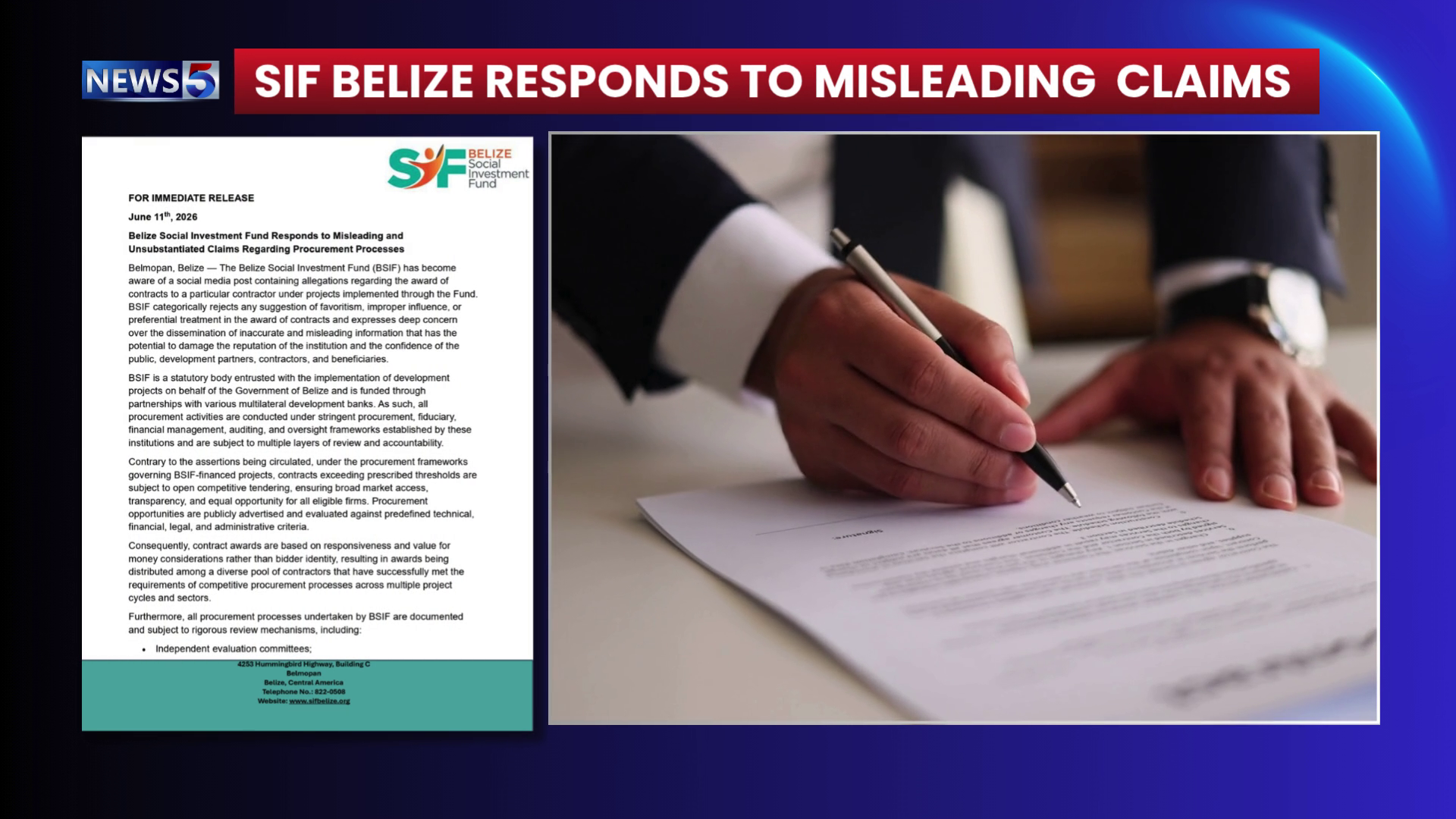
On June 11, 2026, the Belize Social Investment Fund (SIF), a state agency responsible for overseeing large-scale national development projects across the Central American nation, issued a firm public rebuttal to unsubstantiated favoritism claims that have been spreading across online platforms regarding its public contract awarding processes.
In a strongly worded official statement released Wednesday, the fund categorically rejected all accusations of biased contracting and improper external influence, warning that the unproven circulating allegations pose a tangible risk to eroding public trust in the agency and damaging confidence among its funding partners and community beneficiaries. SIF emphasized that its institutional reputation and the core integrity of its development work are currently being called into question by these baseless claims.
To counter the accusations, the agency detailed the strict safeguards that govern its procurement operations, stressing that its entire contracting framework is structured around radical transparency and rigorous accountability. According to SIF’s explanation, all public contracts, particularly those exceeding pre-established value thresholds, are awarded through fully open, competitive bidding processes. Bidding firms are assessed exclusively against clear, pre-published benchmarks spanning technical capability, financial stability and legal compliance, leaving no room for arbitrary favoritism.
The fund also highlighted the multi-layered oversight system that oversees every step of its procurement workflow. This system includes independent evaluation committees that review bids, mandatory annual external financial audits, and ongoing monitoring from the international development partners that co-fund many of SIF’s projects. Each of these checks is explicitly designed to prevent the type of misconduct that has been alleged, the agency noted.
Despite the persistence of the unconfirmed claims online, SIF reaffirmed its commitment to fair, accountable contracting that prioritizes maximum public value for every dollar spent, maintaining that no preferential treatment has been extended to any connected bidders in its project work.