分类: politics

  • New Gun Rules…Old Concerns(?)

    New Gun Rules…Old Concerns(?)

    Scheduled to take full effect in less than two months, a pair of controversial firearms policy adjustments announced by Belize’s Firearms and Ammunition Control Board (FACB) has reignited longstanding debates over regulatory oversight, public safety, and government transparency, even as the agency frames the changes as a common-sense update to outdated rules.

    In an official policy notice published April 23, 2026, the FACB outlined two key shifts to the country’s firearms regulatory framework. First, the board issued a formal clarification that four common types of firearm accessories — red dot sights, telescopic scopes, weapon-mounted lights, and micro conversion kits — no longer require separate government approval when installed on a already legally licensed firearm. Under the current Firearms Act, owners must seek additional authorization for modifications that alter a weapon’s core characteristics, but the FACB argues these accessories do not change a firearm’s mechanical function, original caliber, or official classification, putting them outside the bounds of restricted modifications.

    This regulatory clarification removes a layer of red tape for licensed firearm owners, registered dealers, and commercial importers, who will now be able to outfit weapons with these accessories without navigating lengthy additional approval processes. The FACB has emphasized that it still reserves the right to review any accessory on a case-by-case basis, and that modifications that do alter a weapon’s core functionality — such as converting a semi-automatic weapon to automatic fire or changing its native caliber — remain strictly banned under national law.

    The second major change set to go into effect June 1, 2026 is the end of a two-year moratorium on new .223 caliber rifle license applications. The licensing suspension was first implemented in February 2024 to allow the FACB to conduct a full audit and comprehensive review of the country’s firearms licensing system. As of the policy announcement, however, that audit remains incomplete. The FACB justified lifting the suspension early by noting that an extended hold on new applications was no longer justified, after licensed firearm users and dealers repeatedly raised concerns that the ban was disrupting lawful activity in the sport and recreational hunting sectors.

    The dual policy moves have quickly sparked public pushback and debate over whether the regulatory changes put public safety at risk, while also raising questions about the FACB’s decision-making process. Gun safety advocates and critics argue that even if accessories like micro conversion kits do not change a firearm’s official classification on paper, they can meaningfully alter how a weapon is handled and used in practice, potentially increasing its risk in dangerous scenarios. The FACB’s conclusion that these accessories do not boost a weapon’s lethality is rooted in a narrow legal interpretation, critics say, and it places undue responsibility on the agency’s discretionary oversight to police problematic modifications.

    The changes also bring long-simmering questions about the FACB’s operational capacity to the forefront. While the board will retain case-by-case oversight of firearm accessory modifications, observers have questioned whether the agency has sufficient staffing, funding, and technical resources to effectively monitor evolving firearm technologies and enforce compliance with existing regulations. Even as supporters of the changes frame them as a long-overdue clarification of ambiguous rules that unfairly burdened legal gun owners, concerns persist about the lack of transparency around the early end to the .223 license moratorium, which is being lifted before the original audit of the licensing system is even completed.

  • Grenada to launch major labour reform plan on May Day

    Grenada to launch major labour reform plan on May Day

    Grenada is set to launch a sweeping five-year national labour transformation initiative this May Day, alongside marking the holiday’s first-ever celebration on the country’s sister island of Carriacou, Attorney General and Labour Minister Claudette Joseph confirmed following a recent Cabinet meeting in St. George’s.

    The centerpiece of the reform agenda is the Decent Work Country Programme (DWCP) for 2026–2031, a collaborative framework developed through tripartite negotiations between government, employer representatives, and worker bodies, with technical guidance from the International Labour Organisation (ILO). The initiative is designed to align targeted labour market improvements with Grenada’s broader national development goals, addressing longstanding gaps that have held back inclusive economic growth.

    According to Joseph, the programme targets three core priority areas to upgrade Grenada’s labour ecosystem. The first focuses on strengthening overall labour market functionality through coordinated policy governance and expanded institutional capacity, with the goal of building a more skilled, productive national workforce. A key deliverable already in advanced planning is the new Public Employment Services Agency, which will streamline job matching by connecting unemployed workers to open positions matching their skills, while helping employers source qualified candidates. The government is also working to boost the quality and relevance of the country’s Technical and Vocational Education and Training (TVET) system, to smooth transitions for graduates moving from training programs into full-time employment.

    The second priority area centers on expanding formal, decent work opportunities across key economic sectors, with a particular focus on Grenada’s vital tourism and hospitality industries. The programme will roll out targeted business development support to drive increased formalisation of employment, raise productivity, and improve working conditions through sustained social dialogue between industry stakeholders.

    The third priority focuses on reinforcing fundamental labour protections for all workers across the country. To advance safe working conditions, a new draft Occupational Safety and Health Bill is already undergoing intergovernmental review, with plans to implement the legislation in the near term. The government is also moving to strengthen national labour dispute resolution systems, with a tripartite-agreed action plan to upgrade the institutional framework for resolving workplace conflicts.

    In a landmark change to family leave policies that has been greenlit by Cabinet, Grenada will extend paid maternity leave from 12 weeks to 14 weeks, and introduce two weeks of paid paternity leave for new fathers for the first time in the country’s history. Adoptive parents will also be eligible for the same leave benefits under the new policy. Government officials are currently finalizing amendments to the National Insurance System (NIS) Act and Employment Act, which will be tabled for parliamentary approval in the coming weeks.

    Multiple components of the DWCP are already underway with continued support from the ILO, and Cabinet has approved a dedicated subcommittee under the Labour Advisory Board to oversee full implementation of the programme. Joseph expressed strong confidence that the ambitious reform agenda is fully achievable, noting that if delivered as outlined, it will fundamentally reshape employment structures and worker protections across Grenada for years to come.

    Alongside the launch of the reform plan, this year’s May Day celebrations will make history as the first time the national holiday event is hosted on Carriacou, after being held exclusively on mainland Grenada in previous years.

  • CCC loses High Court Challenge To Reinstated Teacher

    CCC loses High Court Challenge To Reinstated Teacher

    In a landmark ruling delivered in late March 2026, the Belizean High Court has thrown out a legal challenge launched by Corozal Community College (CCC) seeking to overturn a disciplinary tribunal’s decision that reduced a teacher’s penalty from dismissal to a lesser sanction. The outcome leaves the teacher’s reinstatement firmly in place, and has set clear new guidance on the legal standing of unincorporated educational institutions in domestic litigation.

    The case stems from a 2025 disciplinary action against Renan Ruiz, a teacher at CCC who was originally fired by the Belize Teaching Service Commission following a finding that he sent inappropriate messages to minor students during out-of-school hours. Ruiz appealed the dismissal to the Teaching Service Appeals Tribunal (TSAT), which in September 2025 revised the penalty. While the tribunal explicitly confirmed that Ruiz’s conduct was unacceptable and violated professional teaching standards, it ruled that permanent termination was an excessively harsh punishment. Instead, TSAT imposed a penalty of one and a half months’ lost pay and required Ruiz to complete mandatory professional counselling, clearing the way for his return to the classroom.

    Unwilling to accept the tribunal’s ruling, CCC launched a judicial review challenge, bringing the case before High Court Justice Rajiv Goonetilleke. The college based its challenge on two core legal arguments: first, that TSAT had acted irrationally by slashing the original dismissal penalty, and second, that Ruiz’s initial appeal to the tribunal contained fatal procedural errors that should have invalidated his case entirely.

    Justice Goonetilleke rejected both of CCC’s claims out of hand after hearing arguments in the case on March 18 and 20, 2026. On the allegation of irrationality, the justice ruled that the tribunal’s reasoning was legally sound and fell well within the discretionary authority granted to TSAT under education law. “The tribunal’s view cannot be said to be so unreasonable as to be irrational,” Goonetilleke wrote in his formal judgment, noting that the panel had carefully weighed the circumstances of the case and properly evaluated whether a lesser penalty aligned with the severity of Ruiz’s misconduct.

    The court also dismissed CCC’s procedural argument, which claimed Ruiz had filed his appeal outside the required 30-day window and that discrepancies on his appeal form invalidated the submission. Evidence presented during the hearing confirmed that Ruiz submitted all required documentation within the statutory deadline after receiving formal notice of his dismissal. Discrepancies between different copies of the appeal form were fully explained to the court, and the explanation was deemed credible, with no finding of procedural irregularity recorded in the judgment.

    Beyond rejecting the college’s substantive arguments, the ruling also addressed a foundational legal issue: CCC’s status as an unincorporated educational institution. The court confirmed that as an unincorporated body, CCC holds no separate legal personality, meaning it does not have the legal standing to bring or defend lawsuits in its own official name. While Justice Goonetilleke noted that this finding was not strictly required to dismiss the challenge, he relied on a 2024 Court of Appeal precedent involving the Claver College Extension to address the issue when ruling on litigation costs.

    The judge further found that CCC had failed to comply with mandatory procedural rules for bringing a representative action on behalf of its staff and governing body. As a result of the dismissed application, the court ordered CCC to pay all litigation costs awarded to Ruiz, and granted nominal costs of $1,000 to the Teaching Service Appeals Tribunal. In a key final provision, the court ruled that if CCC fails to satisfy the cost award, Ayonie Briceno — the individual who submitted the supporting affidavit for CCC’s challenge — can be held personally liable for the unpaid amount.

  • U.S. Nominates New Ambassador to Belize; Senate Confirmation Pending

    U.S. Nominates New Ambassador to Belize; Senate Confirmation Pending

    A new chapter in U.S.-Belize diplomatic relations is set to unfold after the White House officially announced the nomination of Rudolph Bauer, a native of South Carolina, to the post of Ambassador Extraordinary and Plenipotentiary of the United States to Belize, according to official public records from Washington. The nomination document has already been transmitted to the U.S. Senate, where it will enter a mandatory review and approval process that includes committee hearings and a full chamber vote before the appointment can take effect.

    Under long-standing U.S. federal law governing ambassadorial appointments, all presidential nominees for top diplomatic posts are first routed to the Senate Foreign Relations Committee. The panel conducts thorough evaluations of the nominee’s professional background, policy expertise, and qualifications for the role before advancing the nomination to the entire Senate for a final up-or-down vote. Bauer can only be sworn in and take up his official duties at the U.S. Embassy in Belmopan, Belize’s capital, if he secures a majority confirmation vote from the full Senate.

    Bauer’s nomination fills a long-running vacancy that has left Belize without a permanent, Senate-confirmed U.S. ambassador for months. Since the last confirmed envoy departed the post, all diplomatic operations at the U.S. Embassy in Belmopan have been overseen by an interim Chargé d’Affaires, a temporary appointment that is common during prolonged gaps in confirmed leadership.

    A review of recent U.S. diplomatic history in Belize reveals that such gaps in permanent ambassadorial representation have become an intermittent pattern. The last confirmed U.S. ambassador to Belize was renowned figure skater and public figure Michelle Kwan, who held the post from December 2022 until her departure in January 2025. Before Kwan, Carlos Moreno served in the role from 2014 to 2017, and Vinai Thummalapally held the appointment between 2009 and 2013. Following Moreno’s exit in 2017, the country entered an extended stretch without a confirmed ambassador, and this pattern of intermittent vacancies has continued in the years since.

  • MTW to remove unauthorised billboards on highways

    MTW to remove unauthorised billboards on highways

    Barbados’ Ministry of Transport and Works (MTW) has launched a crackdown on unregulated outdoor advertising cluttering public road infrastructure, announcing a mandatory removal order for unauthorized billboards and sidewalk sandwich boards that have increasingly appeared along local highways in recent months.

    Jason Bowen, MTW’s Deputy Chief Technical Officer for Design Services, confirmed in an official statement that ministry authorities have been monitoring the spread of these unpermitted advertising structures across public right-of-way areas. The ministry is now giving business owners a 30-day window to voluntarily take down any unauthorized advertising materials placed on sidewalks, traffic islands, road verges, official road signs, and other public street furniture. Only advertising structures that have received prior formal approval from MTW will be allowed to remain in place.

    The enforcement action is backed by existing national legislation: Section 13 of the Highway Act, Chapter 289, explicitly grants MTW’s Chief Technical Officer the legal authority to remove and dispose of any object or material intentionally placed on any highway in Barbados without proper authorization. Business owners that fail to comply with the voluntary removal order will not only face financial penalties but also be held responsible for covering all costs associated with the ministry’s enforced removal.

    MTW has also issued guidance for businesses seeking to use sandwich boards and similar small-format advertising materials. The ministry advises all operators to only place such advertising on private land after securing approval from property owners, and strictly avoid placing any commercial signage on public road-related property to prevent running afoul of the Highway Act. This crackdown comes as part of the ministry’s ongoing efforts to maintain clear, safe road infrastructure and reduce visual clutter that can distract drivers and block pedestrian pathways.

  • Update on Public Service regularisation and wage negotiations

    Update on Public Service regularisation and wage negotiations

    On April 22, the Government of Grenada released a comprehensive public update on two cornerstone initiatives of its public sector transformation agenda: the ongoing public service employment regularisation exercise and multi-year wage negotiations with major public sector unions. The administration reaffirmed its commitment to guiding all processes through the core principles of fairness, full transparency, and long-term fiscal and institutional sustainability.

    ### Steady Advancement in Public Service Regularisation
    Launched to resolve decades of unaddressed employment irregularities across the public sector and strengthen formal job security for public servants, the regularisation programme has recorded substantial measurable progress as of March 31, 2026. To date, 1,240 public officers have completed the transition to formal, regularised employment roles. This milestone includes 410 regularised teaching positions, 286 confirmed appointments for frontline public workers across critical sectors including law enforcement, correctional services, nursing and other core public services. The government has also established 537 entirely new mission-critical positions to fill long-standing gaps in public service delivery and recognise roles that were previously unbudgeted or unformalised.

    Additional outcomes of the ongoing initiative include the transition of 80 public service trainees into full-time formal employment, 132 targeted salary upgrades to resolve long-standing pay stagnation for undercompensated workers, and interim placement arrangements for 232 employees pending the final approval and establishment of their formal mission-critical roles. Government officials noted that the structured regularisation process is designed to embed greater equity, consistent employment standards, and long-term workforce stability across the entire public sector.

    ### Update on Multi-Year Wage Negotiations With Unions
    The government’s national negotiating team has maintained consistent, active engagement with public sector unions since collective bargaining launched in October 2024. While the administration has already reached finalized wage agreements with several smaller collective bargaining units, discussions remain ongoing with the Grenada Public Workers’ Union (GPWU) and the Grenada Technical and Allied Workers’ Union (GTAWU), the two largest public sector unions in the country.

    The government’s standing final wage offer remains a three-year phased salary adjustment package: a 4% across-the-board salary increase in 2026, a second 4% increase in 2027, and a 5% increase in 2028. This tiered proposal is designed to deliver sustained, incremental income growth for public workers over the three-year period, and is paired with expanded professional allowances, improved employee benefits, and enhanced social protection provisions for public servants.

    To date, the GPWU and GTAWU have not accepted the government’s current proposal, but both parties have committed to keeping negotiations active. Scheduled working meetings continue to address outstanding sticking points, most notably discussions around additional fringe benefits, with both sides aiming to reach a mutually agreeable balanced resolution within Grenada’s established industrial relations legal framework.

    ### Reform Rooted in Broader Public Sector Transformation
    Government stakeholders emphasized that the ongoing regularisation and negotiation processes must be viewed as core components of a wider, long-term public sector transformation agenda. This broader package of reforms includes three key pillars beyond wage adjustments: modern pension reform that will introduce a flexible defined contribution pension system to strengthen long-term retirement security for public workers; the ongoing employment regularisation process to transition casual and contract workers into stable, formal employment arrangements; and the rollout of a new Integrated Performance Management System (IPMS) to boost accountability, consistent performance standards, and continuous improvement across government departments.

    ### Government Reaffirms Core Guiding Principles
    Lyndonna Hillaire-Marshall, Permanent Secretary in the Department of Public Administration and Deputy Chair of the Government Negotiating Team, underscored that the current proposal balances competing priorities: delivering meaningful improvements to public servants’ wages, benefits, and working conditions, while protecting Grenada’s broader macroeconomic stability and long-term fiscal health. The entire process remains guided by three non-negotiable core principles: fairness to all public sector workers, responsible fiscal management that avoids unsustainable spending, and long-term sustainability that benefits both current public servants and future generations of Grenadians.

    The administration once again reiterated its commitment to constructive, good-faith dialogue with all represented unions and called for accelerated final discussions to resolve remaining outstanding points. The negotiation process remains active, structured, and focused on delivering outcomes that deliver tangible benefits to public officers while advancing the shared national interest of the people of Grenada. This update was released through the Office of the Prime Minister of Grenada.

  • Nieuwe RvC Canawaima een feit

    Nieuwe RvC Canawaima een feit

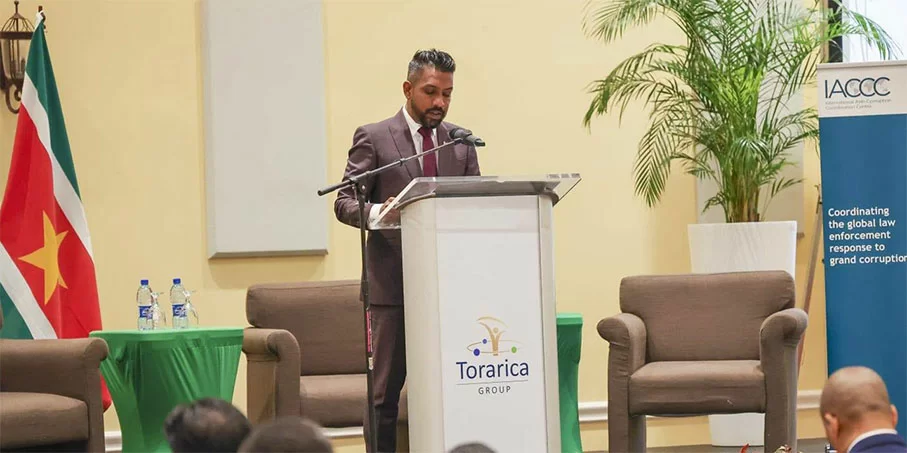
    PARAMARIBO, Suriname – April 23 – A key leadership transition has been completed at one of Suriname’s key transportation-linked management entities, with the formal installation of a new Supervisory Board (Raad van Commissarissen, RvC) at Canawaima Management Company N.V. taking place during the firm’s Annual General Meeting of Shareholders.

    The official installation ceremony was attended by multiple high-ranking domestic officials, confirming the legitimacy of the new leadership lineup. According to an official announcement from the Communication Service of Suriname, the event was graced by Raymond Landveld, Minister of Transport, Communication and Tourism of Suriname, alongside Verno Prijor, Acting Director of Transport, and Lenie Josafath, President-Commissioner of the Shipping Corporation of Suriname (Scheepvaart Maatschappij Suriname).

    Following the formal appointment process completed at the general meeting, the new three-member Supervisory Board has been confirmed to take up its governance responsibilities immediately. Seopershad Naraindeth will serve as the board’s President-Commissioner, while Jayant Prakash Raghoebir and Fandi Enzo Bogor have been installed as ordinary board members. Canawaima Management Company N.V. operates in a sector closely linked to Suriname’s transportation and logistics industries, which falls under the oversight of Minister Landveld’s portfolio, making the new board’s work relevant to the country’s ongoing infrastructure and tourism development plans.

  • Emotional testimony marks Klansman gang trial on Thursday

    Emotional testimony marks Klansman gang trial on Thursday

    The ongoing high-profile trial of 25 alleged members of the Klansman Gang’s Tesha Miller faction resumed Thursday morning at the Supreme Court’s Home Circuit Division in downtown Kingston, with a emotional prosecution witness delivering a harrowing account of identifying one of the gang’s 2018 double murder victims. The chilling repetition “HE’S dead, he’s dead, Sir, he’s dead” has become the defining testimony of this week’s proceedings, encapsulating the trauma of a witness called to confirm the identity of Kemar Williams, one of two men killed in the February 24, 2018 attack in St Catherine’s Pineapple Lane.

    The witness told the court she first received word of Williams’ murder shortly after 10 p.m. on the night of the shooting, but did not travel to the Spanish Town funeral home for formal identification until March 7, alongside a group of other acquaintances. Upon arrival, the party waited in a public holding area before a police officer escorted her to an interior examination room, where a medical examiner and another official awaited. Describing the grim space to the court, she noted “some bodies in there, like duppy, dead bodies” — a turn of phrase that drew quiet chuckles from several defendants seated in the courtroom.

    When the sheet covering Williams’ remains was pulled back, the witness said she immediately recognized his features: his distinct full head of hair made identification unmistakable. The shock of seeing Williams’ body left her overcome with emotion, and court staff quickly advised her to step outside to regain her composure. “I was crying to see [Kemar] in that situation,” she told acting deputy director of public prosecutions, who is leading the prosecution’s case. When pressed to elaborate on what she meant by “that situation”, she again repeated the same shaken line, her gaze distant as she recounted the moment.

    Williams’ killing is one of multiple homicides included in the 32-count indictment the Crown has brought against the accused gang members. The February 24 attack unfolded at a combined bar, retail shop and cookshop in Pineapple Lane, Bog Walk, St Catherine, leaving both Williams and Leon Burke — the establishment’s owner — dead, and a third bystander with life-threatening injuries. According to prosecution charges, Klansman faction leader Tesha Miller and co-accused Kirk Forrester are the masterminds behind the double shooting and subsequent attack, laid out in counts nine through 11 of the indictment.

    Count nine charges Miller and Forrester with facilitating a serious criminal offense on behalf of a criminal organization for Burke’s murder; count ten brings the same charge for Williams’ killing; and count 11 accuses the pair of knowingly facilitating the intentional wounding of the third surviving victim, whose name has been withheld for privacy.

    Earlier this week, the lead detective who initially handled the double murder investigation testified that when the case was reassigned to other investigators in 2019, he had not made any arrests nor identified any persons of interest in connection with the attack. The trial, which is being heard by Supreme Court Justice Dale Palmer without a jury, is scheduled to resume next Monday. Prosecutors have alleged the defendants are all active members of the violent Klansman Gang faction, linked to a string of murders, shootings and organized crime activities across Jamaica.

  • FID, RPD sign MoU to protect revenue and the financial system

    FID, RPD sign MoU to protect revenue and the financial system

    KINGSTON, Jamaica — Two of Jamaica’s leading financial regulatory and law enforcement agencies have cemented a new strategic alliance to tackle pervasive illicit financial activity across the island. The Financial Investigations Division (FID) and the Revenue Protection Department (RPD) have officially signed a Memorandum of Understanding (MoU) that establishes a formal structure for deepened collaboration against a range of threats, including money laundering, terrorist financing, revenue fraud, and other systemic financial crimes.

    Dennis Chung, Chief Technical Director of the FID, emphasized that the agreement builds on a already productive working relationship between the two agencies, while formalizing critical processes that will amplify their collective impact. Under the new framework, clear protocols for cross-agency information sharing, case referrals, and coordinated enforcement actions are now in place. These structured arrangements, Chung explained, will drastically boost both bodies’ capacity to identify, probe, and disrupt illegal financial activities that erode government revenue and undermine the stability and integrity of Jamaica’s entire financial system. He noted that this kind of targeted strategic partnership is a foundational requirement for effective national regulatory enforcement and crime mitigation.

    Cranston Morgan, who serves as both Chief Technical Director of the RPD and Commissioner of Revenue Protection, echoed Chung’s optimism, highlighting that the alliance will strengthen both agencies’ ability to rapidly respond to financial misconduct and guard the broader public interest.

    Morgan framed the MoU as another measurable milestone in the ongoing effort to tighten inter-agency cooperation. It creates a reliable foundation for timely information exchanges, more cohesive operational coordination, and more strategic utilization of each agency’s unique institutional expertise when addressing revenue offenses and linked financial crimes. He emphasized that the partnership delivers mutual benefits for both bodies, while also advancing the Jamaican government’s wider national goals: protecting public funds and bolstering domestic and international confidence in Jamaica’s financial regulatory ecosystem.

    At its core, the MoU outlines a formal legal framework for consultation, collaborative action, and lawful information sharing that aligns with both agencies’ statutory mandates. Beyond information sharing, the agreement is designed to strengthen intelligence gathering, streamline cross-agency coordination, and enable more effective criminal and civil investigations as well as enforcement outcomes.

    The agreement details clear reciprocal obligations for both agencies. The FID will supply the RPD with raw data and supporting materials required for intelligence development and ongoing investigations, alongside advance notification of any upcoming criminal probes that involve individuals or entities of interest to the RPD. It will also share requested statistical data to support RPD work.

    In exchange, the RPD will provide the FID with its own relevant data and materials to aid the FID’s intelligence and investigation activities. This includes alerts of suspected revenue crimes and other financial offenses involving parties the FID is tracking, plus relevant statistical data, specialized technical assistance, and compliance data that can support the FID’s investigation and prosecution of financial crimes.

    Additional provisions of the MoU cover expanded collaborative activities: case referrals between agencies, joint enforcement operations, parallel criminal investigations, cross-training for personnel from both bodies, and coordinated public outreach initiatives. These outreach efforts are designed to educate key stakeholders on the full range of risks linked to corruption, violations of revenue law, money laundering, and terrorist financing. The agreement also formalizes governance protocols to ensure all shared information is handled securely, protected from unauthorized access, and used only for appropriate, legally permitted purposes.

  • Observe the boundaries

    Observe the boundaries

    As Jamaica’s legislative committee weighs proposed changes to expand the national Child Diversion Programme into school disciplinary spaces, Education Minister Dr. Dana Morris Dixon has drawn a critical line, urging policymakers to preserve the separation between criminal offenses and school-based behavioral misconduct. She warned that ill-considered expansion of the diversion program could erode the foundational function of the country’s existing child protection infrastructure.

    Speaking during Thursday’s sitting of the Joint Select Committee tasked with reviewing the Child Diversion Act, Morris Dixon acknowledged that persistent disruptive behavior in Jamaican schools demands more robust, targeted intervention. However, she pushed back against framing every campus incident through the lens of the criminal justice system.

    Her comments were delivered in direct response to proposals put forward by University of the Commonwealth Caribbean student Daniel Barnes, who had called on the committee to incorporate common school disciplinary issues—including physical fights, persistent bullying, and petty theft—into the Child Diversion Programme. The push for reform stems from growing public anxiety over rising rates of youth violence across Jamaican educational institutions.

    Barnes, who serves on a school disciplinary committee, told the panel that current pathways for addressing escalating misconduct are fragmented and ineffective. He noted that even when schools refer students with persistent behavioral issues to existing agencies such as the Child Protection and Family Services Agency (CPFSA) and restorative justice practitioners, interventions often fail to drive meaningful long-term behavior change. To address this gap, he put forward a three-tiered framework designed to intervene early, before minor misconduct escalates into criminal activity or severe violent harm.

    Morris Dixon countered that welfare-focused interventions for at-risk students are already well-established under Jamaica’s Child Care and Protection Act (CCPA), delivered primarily through the CPFSA, which maintains direct ongoing partnerships with schools and families across the island. “In the situations that have come up in recent times, the CPFSA has been involved with the schools. They have taken the children, they have visited the families, visited the homes, done the psychological support, given that kind of support, and given lots of other support to the children, very similar to what happens in the Child Diversion Programme,” the minister explained. “There’s just a difference between children who come into conflict with the law and those who are seen to be somewhat uncontrollable or having issues.”

    While the two systems use similar supportive approaches, Morris Dixon stressed that the distinction between them is fundamental and must not be eliminated. She urged committee members to conduct a full mapping of all existing youth support frameworks operating in Jamaican schools before moving forward with any legislative amendments.

    “It’s important that we understand the whole lay of the land, which is something I have been saying, so that we understand where child diversion starts and ends, where CCPA starts and ends, and where there are any gaps, in terms of some of the approaches and techniques, and then when we find the gaps, we figure out which legislation is appropriate to do it under,” she added.

    The minister also suggested that many of the perceived gaps in addressing school misconduct stem from administrative shortcomings rather than gaps in legislation, warning against creating duplicative systems that waste resources and confuse institutional roles. Her intervention has reframed the committee’s debate, shifting focus from sweeping expansion to targeted gap-fixing that preserves the core purposes of both the child protection and criminal diversion frameworks.