分类: politics

  • Skerrit urges patience as geothermal plant commissioning continues amid power outages

    Skerrit urges patience as geothermal plant commissioning continues amid power outages

    Dominica’s Prime Minister Roosevelt Skerrit has issued a public call for patience from customers of Dominica Electricity Services (DOMLEC), following widespread recent power disruptions tied to the ongoing commissioning of the country’s landmark geothermal power plant.

    Addressing reporters during a Wednesday press conference, Skerrit highlighted that Dominica has made history as the first country in the Caribbean region to integrate geothermal energy into its national power grid. As a trailblazer in this regional energy transition, he emphasized, the nation is navigating uncharted technical and logistical territory that comes with being the first mover.

    “The geothermal facility is still in its commissioning phase, which involves extensive testing, fine-tuning of equipment, and full system integration before it can launch into full commercial operations,” Skerrit explained. “I am not downplaying the disruption and inconvenience these rolling outages have caused for households and businesses across the country. But these growing pains of recent weeks are the necessary price we pay for pioneering a new energy future for our nation.”

    Once all commissioning work is finalized, Skerrit outlined the transformative long-term benefits the project will deliver for Dominica. Consumers will see reduced electricity rates, the national power supply will gain far greater reliability, and the country will cut its heavy dependence on costly imported fossil fuels that have long left its energy market vulnerable to global price volatility.

    Since the plant began initial power generation in March, Skerrit confirmed that temporary service interruptions have stemmed from technical challenges inherent to testing and integrating brand-new energy infrastructure into the existing national grid. Crucially, he added, every issue that has emerged during the testing process has already been identified, targeted, and fully resolved as part of standard commissioning protocols.

    Beyond the main geothermal generation facility, commissioning work is also progressing on a suite of associated critical infrastructure: a new 33-KV underground transmission line, the Fond Cole substation, and an on-site battery energy storage system. All these components must work in perfect synchronization to form a fully functional, integrated national power system, Skerrit noted.

    The Dominican government remains fully confident in the geothermal project and its ability to deliver sustained, long-term benefits to the country, the prime minister reaffirmed. “While we recognize the frustration caused by recent outages, rolling out a project of this scale requires rigorous, meticulous testing to guarantee that when it enters full commercial service, it operates safely, reliably, and efficiently for decades to come,” he said. Skerrit closed by thanking the Dominican public for their ongoing understanding and patience as the project nears completion.

  • PM Browne Rejects DPP’s ‘I Owe the Public No Explanation’ Position

    PM Browne Rejects DPP’s ‘I Owe the Public No Explanation’ Position

    A high-profile public dispute has erupted between Antigua and Barbuda’s Prime Minister Gaston Browne and Director of Public Prosecutions (DPP) Clement Joseph, centered on a fundamental question: are top prosecutorial officials obligated to explain their case decisions to the general public?

    The conflict was sparked after Joseph recently made public comments arguing that the country’s Constitution grants his office broad prosecutorial independence, and does not require him to justify individual case rulings to the public. His remarks came amid mounting public criticism following his office’s dismissal of two high-profile recent criminal cases.

    In a sharp public rebuke, Browne pushed back directly against Joseph’s stance, warning that the DPP’s position could erode public trust in the nation’s entire justice system. In a scathing public post, Browne questioned: “Really Mr DPP? You are El supremo – Beyond reproach? As a public servant, you are not accountable to the public who pays your bill and at whose ultimate discretion and pleasure you serve?”

    The Prime Minister added that he holds out hope Joseph’s controversial comments were the result of misquotation, framing the claim that the DPP owes no public explanation as a reckless statement that risks damaging public confidence in the prosecutorial office. “For any avoidance of doubt, no one is above the law and no one is beyond reproach,” Browne emphasized.

    For his part, Joseph has stood by his original position, while acknowledging that judicial oversight provides a check on his authority. He clarified that parties aggrieved by his decisions are permitted to challenge rulings in court if they are deemed unreasonable or amount to an abuse of power. The DPP also noted that while he supports transparency as a core principle, some prosecutorial matters must remain confidential, only disclosed on a strict need-to-know basis. He rejected calls to break confidentiality for political gain or to appease public criticism, adding that his office already publishes annual updates on broad prosecutorial trends at the opening of each law term, and the constitutional framework does not mandate explanations for individual case outcomes.

    The debate has drawn perspectives from other legal experts in the country, with Wendell Alexander, an attorney-at-law and former Police Commissioner, aligning with the Prime Minister’s position. Alexander argued that proactive transparency around high-interest cases strengthens, rather than weakens, public confidence in the justice system. “In the interest of transparency, I would say that the public has a right to know because the Office of the Director of Public Prosecutions is a public office,” he explained.

    Alexander added that when a prosecutorial decision sparks widespread public concern, offering a clear public explanation benefits the entire administration of justice. He also echoed Joseph’s note that the DPP’s constitutional powers are not unlimited, noting that all decisions remain open to judicial review by the High Court if found to be unreasonable or abusive.

    The public clash has now reignited a broader national debate over the delicate balance between three core principles of Antigua and Barbuda’s justice system: prosecutorial independence, the need for case confidentiality, and the public’s right to government accountability.

  • New Sexual Offences, Mental Health and Workplace Safety Bills Head to Parliament Next Week

    New Sexual Offences, Mental Health and Workplace Safety Bills Head to Parliament Next Week

    The Cabinet of Antigua and Barbuda has formally thrown its support behind a sweeping package of legislative reforms set to move forward in the country’s House of Representatives when the chamber convenes on Monday, June 16, 2026. Senior government officials have framed the full slate of proposed bills as transformative milestones that will update the nation’s legal architecture, boost public safety, bring governance practices into the 21st century, upgrade public health systems, and deepen collaborative ties with global partners.

    Among the key measures scheduled for their first parliamentary reading are nine priority bills spanning multiple policy areas. These include an update to the nation’s popular Citizenship by Investment programme, a completely restructured Sexual Offences Act, a revised Theft Bill, new frameworks for voluntary indictments and court-approved plea negotiations, amendments to existing cannabis regulations, groundbreaking legislation to prevent workplace violence and harassment, a modern overhaul of the country’s mental health laws, and new regulatory standards for medical laboratories across the twin-island nation.

    Government leaders emphasized that each of these proposals forms a core part of a years-long ongoing effort to modernize Antigua and Barbuda’s national legal system. The reform agenda is explicitly designed to update judicial processes, expand safeguards for workers, strengthen oversight of the healthcare sector, and ensure that domestic laws keep pace with the rapidly evolving social, economic and public health challenges facing the country in the modern era.

    Beyond the new bills introduced for first reading, a number of additional measures are already advancing through later stages of the parliamentary approval process, with second and third readings scheduled in the coming session. These include the Fatal Accidents Bill, amendments to the Magistrates Code of Procedure, updates to the Electronic Crimes Act, and the same voluntary indictment and plea negotiation bills that will also complete their final legislative steps during this sitting. Officials project that these targeted adjustments will streamline court operations, expand legal protections for ordinary citizens, and eliminate bureaucratic bottlenecks that have slowed the delivery of justice in recent years.

    In the critical domain of border security and immigration management, Cabinet highlighted steady progress on two key bills: the Immigration and Passport (Amendment) Bill and the Advanced Passenger Information and Passenger Name Record Bill. Once enacted, these pieces of legislation will equip national authorities with more robust tools to regulate migration flows, reduce security risks at ports of entry, and bring Antigua and Barbuda’s border management systems in line with the latest international standards adopted by peer nations across the globe.

    The legislative package also includes a series of proposed resolutions to ratify a host of new bilateral and multilateral international agreements. Most notably, these cover mutual visa exemption arrangements that streamline travel for diplomatic and official passport holders between Antigua and Barbuda and five nations: Kenya, Benin, Ghana, Rwanda, and the United Arab Emirates. Cabinet officials noted that these travel agreements will strengthen diplomatic ties, open new doors for cross-border business collaboration and tourism growth, and advance the country’s core strategic foreign policy goals in the Caribbean and beyond.

    Additional ratifications on the agenda include an amendment to the Constitution of the International Labour Organization (ILO), a step that reaffirms Antigua and Barbuda’s longstanding commitment to upholding globally recognized labour standards and participating in multilateral cooperation on workers’ rights. The government also plans to ratify updates to the Convention on International Civil Aviation, a move that will deepen the nation’s active engagement with the global aviation community, a critical sector for Antigua and Barbuda’s tourism-driven economy.

    Closing out its announcement, Cabinet reaffirmed its unwavering commitment to advancing a forward-looking legislative agenda that prioritizes inclusive economic growth, social equity, enhanced public safety, expanded international cooperation, and sustainable national development for all residents of Antigua and Barbuda.

  • St. Kitts and Nevis invests over EC$60M to achieve 24/7 water access – WIC News

    St. Kitts and Nevis invests over EC$60M to achieve 24/7 water access – WIC News

    Amid ongoing severe drought conditions that have strained water resources across the islands, the government of St. Kitts and Nevis is pouring more than EC$60 million into a historic overhaul of the nation’s water infrastructure to deliver reliable round-the-clock water access for all residents.Prime Minister Dr. Terrance Drew laid out the scope of the ambitious initiative during an address to the National Assembly on June 11, framing universal 24/7 water access as a core political promise and a top national priority tied to the administration’s long-term national development strategy.“Everyone will have access to 24/7 water, which is our political objective,” Drew confirmed to lawmakers. He stressed that the multi-million-dollar investments are far more than short-term emergency fixes: they are designed as long-term, system-changing upgrades that will build national climate resilience and guarantee water security for generations to come.The six-figure investment pool – the largest single investment in water infrastructure in the country’s history – is allocated across a range of critical projects: new well drilling operations, construction of a new desalination plant, upgrades to aging existing infrastructure, expansion of distribution networks, and procurement of new pumps, motors and other essential equipment to boost system reliability.Drew highlighted early progress already visible in communities like Cayon, where a newly completed well has dramatically boosted water availability even amid ongoing drought. “We invested hundreds of thousands of dollars to secure a well in Cayon, and today Cayon is one of those communities where 90 plus percent of the members of that community have access to 24/7 water, even under the drought situation at this time,” he said.Work is already underway on additional infrastructure improvements, including new transmission connections that link untapped water sources to the community of St. Peter’s and surrounding neighborhoods. Installation of new high-capacity pumps is on track to improve distribution efficiency across the region in the coming weeks.The prime minister acknowledged that persistent drought conditions continue to create hardships for some residents, and that the full rollout of universal access will take time, particularly given the outdated state of water infrastructure inherited by the current administration when it took office in 2022.“While some citizens continue to experience difficulties because of the severity of the drought, we want the nation to know that we are working every day to provide both immediate relief and permanent solutions,” Drew said. Despite the challenges, he offered confident reassurance that the ongoing infrastructure investments will continue to deliver measurable, steady improvements to water access across the country.The initiative underscores the government’s commitment to delivering tangible quality-of-life improvements while building the Federation’s capacity to withstand growing climate-related pressures, including more frequent and intense drought events linked to global climate shifts.

  • PM: No one is above the law

    PM: No one is above the law

    A political firestorm has erupted in Trinidad and Tobago after Attorney General John Jeremie made explosive parliamentary claims about a self-identified elite group called the “1%”, prompting Prime Minister Kamla Persad-Bissessar to publicly back her cabinet minister while standing firm on the government’s commitment to equal application of the law across all citizens.

    Jeremie first sparked controversy during Wednesday’s parliamentary session, when he confirmed that the United States government has revoked visas for multiple members of the “1%”, citing U.S. security intelligence assessments of the group’s activities. The Attorney General went on to describe the 1% as a loosely organized criminal-linked group that has accumulated outsized influence over the nation’s economy, alleging it flourished unchecked during the previous administration of the People’s National Movement (PNM). He claimed the group controls major economic sectors, has unfettered access to hundreds of thousands of dollars in monthly foreign exchange through revolving credit arrangements—even as ordinary citizens struggle to secure just $200 in foreign currency for personal travel—and directly funded, infiltrated, and influenced the opposition PNM, which he claimed acts as the group’s willing political proxy.

    Jeremie also told parliament his investigation into the matter was triggered after a journalist from Guardian Media Ltd, which he claimed is owned by the 1% group, first questioned him about the revoked visas. Though he initially ignored the inquiry, he said multiple members of the group later visited his office to confirm their U.S. travel privileges had been revoked. He noted that U.S. intelligence agencies have advanced surveillance and analysis capabilities, and the visa action followed the U.S. government’s determination that the individuals’ activities made them ineligible for entry to the country.

    Addressing questions from the *Express* newspaper one day after Jeremie’s remarks, the Prime Minister pushed back against growing criticism and defended the Attorney General’s statements, stressing that her administration’s core commitment to equal justice leaves no room for exceptions for wealthy or well-connected groups. “Pursuant to the maxim ‘Justice is blind’ the law applies equally to every citizen, regardless of their financial status, social standing, political connections, or influence,” Persad-Bissessar stated.

    She clarified that Jeremie’s core message was a simple reaffirmation that no individual or collective group stands above Trinidad and Tobago’s laws. “Whether criminal elements identify themselves as the ‘Sixx’, the ‘Seven’, the ‘1%’, or by any other name, they are all subject to the laws of Trinidad and Tobago and will be treated accordingly by the justice system,” the Prime Minister added. Persad-Bissessar emphasized there would be no special treatment or immunity for any person, no matter their wealth, social status, or political ties.

    The Prime Minister also made clear that the Trinidad and Tobago government plays no role in the U.S. visa application or revocation process, noting that local law enforcement’s only responsibility is to ensure national laws are applied evenly to all people living in the country. She pushed back on premature speculation about the scope of the case, saying “We will review the data at time to make appropriate decisions. It’s too early to speculate. All law-abiding citizens have nothing to fear.”

    In a pushback against claims that the 1% is defined by a single ethnic identity, Persad-Bissessar confirmed the group includes members from multiple ethnic communities across the nation. She also revealed a major breakthrough in the long-running fight against transnational crime and money laundering: the state has secured foreign assistance to trace billions of U.S. dollars that were illegally moved out of Trinidad and Tobago over the past two decades.

    The Prime Minister detailed the breadth of the alleged illegal activity, saying “Some current and former high-ranking officials of local banks facilitated the sale of massive amounts of foreign currency to local businesses which was then transferred to foreign accounts linked to cartels and also used to purchase real estate holdings and businesses in collaboration with cartels.” She added that billions of dollars worth of illegal narcotics have transited Trinidad and Tobago over the past 25 years, with no clear accounting for how these drug shipments were paid for. “The State is finally getting assistance to deal with drug trafficking and money laundering and we will let the chips fall where they may,” Persad-Bissessar said, signaling the government’s willingness to pursue all individuals involved regardless of their standing.

  • Evidence (Amendment) Bill, 2026, modernises DNA evidence law while strengthening fair trial protections in Saint Kitts and Nevis

    Evidence (Amendment) Bill, 2026, modernises DNA evidence law while strengthening fair trial protections in Saint Kitts and Nevis

    BASSETERRE, Saint Kitts and Nevis – In a landmark move to update the Caribbean nation’s justice framework, lawmakers tabled the Evidence (Amendment) Bill 2026 in the National Assembly on June 11, 2026, a piece of legislation crafted to bring DNA evidence regulations into line with 21st-century forensic advances while reinforcing core fair trial safeguards.

    Presenting the bill to the legislative body, Attorney General Garth Wilkin, who also serves as Minister of Justice and Legal Affairs, framed the reform as a measured, critical response to rapid evolution in forensic science and modern investigative practices. He noted that the legislation addresses a fundamental question at the core of functional justice: how modern judicial systems ought to leverage scientific evidence that can both definitively clear wrongfully suspected individuals and confirm the identity of perpetrators, while supporting courts in their pursuit of truth.

    Unlike the outdated provisions of the original Evidence Act, the amendments update rules governing DNA evidence to reflect cutting-edge scientific and statistical methodologies, including the software-powered analytical tools now widely used to untangle complex criminal cases. The new legislation creates explicit, streamlined rules for every stage of DNA evidence handling: from the initial collection of genetic material, to its use in court proceedings, mandatory disclosure to opposing parties, and judicial evaluation of its validity.

    Wilkin stressed that the reform is structured to deliver benefits on two fronts: boosting the effectiveness of criminal investigations while shoring up longstanding procedural protections for all parties involved in the justice process. “This legislation updates our legal code and it reinforces fairness,” he explained. “It provides investigators and prosecutors with a transparent, consistent framework. It offers clearer protections for accused people and their defense counsel. It strengthens judicial oversight over the entire process. It clarifies the professional duties of forensic experts, and it builds public trust that DNA evidence will be collected, used, explained, challenged, and evaluated in full compliance with the law.”

    Among the bill’s most notable provisions is a provision granting courts authority to approve compelled DNA sampling only in specifically defined serious cases, alongside requirements for mandatory expert testimony, full disclosure of evidence to the defense, strict limits on how genetic material can be stored and used, and explicit protections for individual privacy, bodily dignity, health, and procedural fairness. All compelled sampling is subject to judicial review, with new safeguards requiring that any such order meet strict tests of necessity and proportionality.

    Crucially, the powers granted under the new legislation are restricted exclusively to serious arrestable offences. A police officer may only submit a request for a court-ordered bodily sample, and a judge may only grant such an order, if two conditions are met: there must be reasonable grounds to suspect the individual in question is involved in a qualifying serious offense, and there must be reasonable belief that the DNA sample will either confirm or disprove that involvement. “This means the mechanism is reserved only for serious cases,” Wilkin clarified.

    The bill formalizes the definition of serious arrestable offences to cover all indictable offenses, any crime punishable by five or more years of imprisonment, violent and sexual offenses, weapons and firearms violations, offenses involving major property damage, and other court-defined qualifying offenses.

    Wilkin added that the reform grows out of a broader, guiding principle: national legislation must evolve in step with scientific and technological progress, without abandoning the core legal principles that underpin fair justice. “Modern legislation must recognize modern science, while maintaining timeless principles: fairness, due process, judicial independence, disclosure, proportionality, and the right to challenge evidence,” he said.

    Once enacted, the Evidence (Amendment) Bill 2026 will mark a key milestone for Saint Kitts and Nevis, enabling the nation to maintain a judicial system that is both modern, effective at fighting crime, and firmly committed to protecting the fundamental rights of all citizens amid the evolving landscape of criminal investigation.

  • MP Marsha Henderson gives strong support to passage of Evidence (Amendment) Bil

    MP Marsha Henderson gives strong support to passage of Evidence (Amendment) Bil

    BASSETERRE, Saint Kitts – On June 11, 2026, the National Assembly of Saint Kitts and Nevis advanced a key piece of justice system reform with the passage of the Evidence (Amendment) Bill 2026, a legislation that has earned vocal, full-throated support from ruling party MP and Tourism Minister Marsha Henderson.

    Sponsored by Attorney General and Minister of Justice and Legal Affairs Garth Wilkin, the bill targets long-overdue updates to the nation’s legal framework governing the collection and use of DNA evidence in criminal proceedings. Beyond modernizing outdated regulations, the legislation enshrines new critical safeguards designed to uphold core judicial principles: trial fairness, individual privacy protection, judicial independence, and adherence to due process of law.

    Henderson, who previously built her career as a criminal defence attorney, brought on-the-ground professional perspective to her endorsement of the reform. She emphasized that properly regulated DNA evidence stands as one of the most powerful tools available to modern criminal justice systems, with dual benefits for both sides of adversarial proceedings. “DNA can move the prosecution forward to secure a conviction when guilt is clear, but it is equally critical for eliminating wrongful suspicion and clearing innocent people who have been wrongfully tied to a crime,” Henderson explained in remarks to the National Assembly. “That is why our laws must guarantee every step of DNA evidence handling—from collection to courtroom presentation—is done properly, transparently, and fairly.”

    The core provisions of the amendment center on expanding rights protections for individuals who interact with the criminal justice system through DNA sampling. Under the new rules, all individuals must be fully informed of their rights before providing a sample: they must be told what type of biological sample law enforcement is seeking, the purpose for collecting it, how it will be used in evidence, and the legal ramifications if they refuse to comply.

    Additional guardrails rein in overreach by law enforcement. Police can no longer compel DNA sampling on demand; instead, all requests for compelled samples must be justified to and approved by an independent judicial officer. The legislation also restricts the use of collected DNA: samples may generally only be used for the investigation or prosecution of the specific offense they were collected for, related proceedings stemming from the same incident, or other uses explicitly authorized by a court order. For individuals who are acquitted, receive a police caution, or are never prosecuted, the bill mandates that all DNA samples and associated test records must be destroyed as soon as practically possible, with exceptions only for active pending appeals or related ongoing proceedings.

    Addressing the National Assembly speaker, Henderson framed the reform as a balanced, much-needed update to Saint Kitts and Nevis’ justice system. “As a former defence counsel, I stand behind this bill because it strengthens the rule of law without eroding the fundamental rights of accused people,” she said. “It makes criminal investigations more effective, and it makes the process fairer. It aids prosecution’s work to secure just outcomes, and it protects the rights of the defence. It modernizes how we handle DNA evidence, and it enshrines non-negotiable requirements of judicial oversight, full disclosure, proportional use of state power, privacy, and clear communication with defendants. This is exactly the kind of thoughtful reform our justice system needs.”

    This report is based on a press release from the St. Kitts and Nevis Information Service (SKNIS) published June 12, 2026.

  • High Court’s criminal case backlog reduced significantly

    High Court’s criminal case backlog reduced significantly

    On June 11, 2026, Guyana’s Director of Public Prosecutions Shalimar Hack announced major progress in clearing the country’s long-standing High Court criminal case backlog, crediting targeted support from the Partnership of the Caribbean and European Union (PACE) Justice Project for the transformation. Speaking at the opening ceremony of a two-day joint training workshop for members of the Guyana Police Force and DPP Chambers, Hack detailed how multi-faceted assistance from the UNDP-implemented, EU-funded initiative has driven systemic improvement in the nation’s criminal justice sector.

    Between 2020 and 2024, the High Court’s criminal assizes division regularly carried a docket of roughly 300 pending cases. As of 2025, that number has fallen to just over 100, a reduction of two-thirds that Hack called a remarkable milestone for the justice system. This progress came after the PACE project invested in specialized professional training, upgraded forensic infrastructure, and delivered new information technology hardware and software to DPP Chambers and law enforcement agencies.

    Beyond clearing the existing backlog, Hack emphasized that the DPP is implementing permanent procedural reforms to prevent case backlogs from reaccumulating, with a core goal of guaranteeing timely trials for all defendants. As evidence of the new system’s efficiency, she noted that a murder trial for an offense committed only two years ago is set to begin next week, while defendants accused of crimes committed in 2025 have already completed their trials.

    A key procedural change driving ongoing improvement is the adoption of the new paper committal system, which Hack said will allow her office to manage residual backlogged cases and new incoming caseloads simultaneously. Beyond streamlining court proceedings, the reform is expected to reduce Guyana’s pre-trial prison population, complementing government investments in new prison facilities that are designed to hold inmates in more humane, comfortable conditions while they await timely adjudication of their cases.

    Dhiraj Singh, officer in charge of the United Nations Development Programme (UNDP) Guyana, outlined the broader scope of the PACE Justice Project, which centers on reducing case backlogs and expanding equitable access to justice across the Caribbean region. The European Union, the project’s primary funding partner, has allocated approximately €9.75 million (equivalent to US$11.4 million or GYD$2.3 billion) to support criminal justice administration improvements across eight Caribbean nations, including Guyana.

    Singh added that the Guyana Police Force has reaped substantial benefits from the initiative’s capacity-building components. In addition to receiving upgraded IT equipment, senior police officers have taken part in regional investigative training hosted in Barbados, while two senior leaders completed a professional study visit to Spain and Italy, where they observed cutting-edge investigation techniques and technological applications. Singh noted that these trained officers will now cascade their new skills and knowledge to broader ranks of the national police force, lifting the overall investigative capacity of Guyana’s law enforcement sector for long-term systemic improvement.

  • Permanent training of police needed, amid numerous constitutional rights lawsuits

    Permanent training of police needed, amid numerous constitutional rights lawsuits

    GEORGETOWN, GUYANA – 11 June 2026 – As Guyana grapples with a steep rise in civil lawsuits alleging constitutional rights violations by law enforcement, the country’s top legal leadership is pushing to establish a permanent, mandatory training program for all ranks of the Guyana Police Force (GPF) to strengthen legal compliance and operational accountability.

    The announcement was delivered Thursday by Deputy Solicitor General Shoshanna Lall during the opening ceremony of a specialized joint training initiative between the GPF and the Office of the Director of Public Prosecutions (DPP). This event falls under the Partnership of the Caribbean and European Union (PACE) Justice Project, a regional development effort co-funded by the European Union and the United Nations Development Programme (UNDP).

    Lall told attendees that Attorney General Anil Nandlall has already initiated preliminary discussions with DPP Director Shalimar Hack and senior UNDP representatives to formalize the permanent training framework. Unlike one-off workshops, the proposed program will focus exclusively on practical legal topics critical to daily police work: core criminal practice and procedure, constitutional law principles, updates to existing and newly enacted statutes, legislative amendments, proper protocols for traffic offense ticketing, the balance of civilian constitutional rights and freedoms during police operations, identification of repealed legislation, and analysis of binding case law precedents.

    Lall emphasized that this targeted training fills a long-unaddressed gap in local law enforcement capacity building. While she publicly acknowledged the invaluable, wide-ranging “yeoman service” the GPF provides to Guyanese communities, she underlined that consistent, up-to-date legal knowledge is non-negotiable for ethical and effective policing.

    Citing official data from the Attorney General’s Chambers, Lall confirmed that lawsuits against the GPF for alleged constitutional rights breaches have become one of the most frequent legal matters the chambers handles. “From my personal vantage point at the AG Chambers, when police – not all officers, by any means – fail to uphold these protected rights and freedoms, civil proceedings are immediately filed,” she explained. “Defending these police actions makes up the single largest portion of our court work. Constitutional challenge claims are filed almost every other day, requiring our team to continuously respond to litigation tied to police operations.”

    Looking ahead, Lall noted that additional cross-sector training will be required later this year, when the judiciary formally launches new criminal code rules. This upcoming regulatory shift will require updated training not only for police officers, but also for prosecutors, judges, and practicing defense attorneys across the country to ensure uniform implementation of the new legal framework.

    The push for permanent training comes as Guyana’s legal system continues to adapt to growing public demand for greater law enforcement accountability, with international development partners backing efforts to strengthen judicial and policing capacity across the Caribbean region.

  • Díaz-Canel explains priorities designed to overcome current difficulties

    Díaz-Canel explains priorities designed to overcome current difficulties

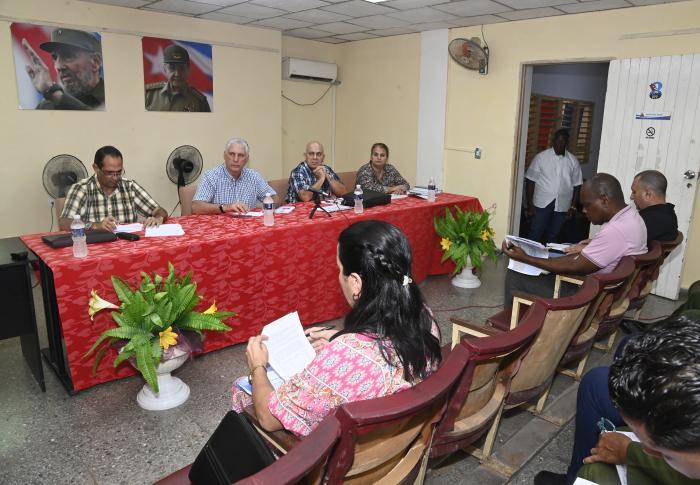
    In an exclusive address to the press corps of the Cuban Presidency published on June 12, 2026, Miguel Díaz-Canel Bermúdez, First Secretary of the Central Committee of the Communist Party of Cuba and President of the Republic, laid out a comprehensive strategy to sustain national development and overcome the long-standing, punitive U.S. imperial blockade that has strained every sector of Cuban life.

    Díaz-Canel opened his remarks by invoking a core principle from the era of revolutionary leader Fidel Castro: that in times of unprecedented complexity, a relentless passion for development and creative problem-solving is non-negotiable. Framing the U.S. blockade as a multidimensional, interventionist act of aggression that has disrupted daily life for every Cuban family and created deep systemic stress across the national economy, he emphasized that the resilience of the Cuban people has already defied Washington’s expectations.

    “A failed state could not have survived even a few weeks of the pressure we have endured for decades,” Díaz-Canel noted, pointing out that the continued existence of the Cuban Revolution and the functioning of the Cuban state directly contradicts repeated U.S. claims of imminent collapse. Drawing on Castro’s teachings, he stressed that crises must be seized as opportunities for growth, and that collective unity and popular will will carry the nation through current challenges.

    To meet this moment, the Cuban government has established two overarching national priorities. The first is robust defense preparedness. Díaz-Canel detailed ongoing work to strengthen the country’s territorial defense system, leveraging weekly Defense Days to refine operational plans, adapt to new lessons learned, and expand civilian participation and protection within a people-centered defense strategy.

    The second, and most transformative priority, is the implementation of the 2026 Cuban Economic and Social Program, a set of sweeping reforms that emerged from months of nationwide public debate. Díaz-Canel explained that public input broadened and strengthened the initial policy framework, with experts refining proposals through comparative analysis of socialist transition experiences in China and Vietnam, and even leveraging artificial intelligence tools to test policy outcomes. The final version of the program is now being finalized for approval by the Communist Party Political Bureau and the National Assembly of People’s Power, after which a nationwide public outreach campaign will begin to ensure broad buy-in for the changes.

    The reforms target more than 20 key areas of economic and governance transformation, starting with a restructuring of the national economic management system to resolve long-standing tensions between central planning and productive incentives. Díaz-Canel emphasized that the core goal of all proposed changes is to drive national production, generate shared wealth, and distribute that wealth through principles of social justice — a necessary step to expand social programs and address growing inequalities and community vulnerabilities exacerbated by the blockade.

    A central pillar of the reform agenda is expanding autonomy to two key drivers of growth: municipal governments and state-owned enterprises. Díaz-Canel argued that national strength grows from strong local governance, proposing that municipalities gain full authority to manage their own economic ecosystems, approve local investments, facilitate partnerships between economic actors, and engage directly in import and export activity, including managing foreign direct investment and projects with Cubans residing abroad. These powers, he stressed, do not conflict with national priorities, but reinforce them by unlocking untapped local endogenous potential.

    For state-owned enterprises, the reforms grant sweeping operational autonomy free from unnecessary bureaucratic interference. Enterprises will be able to set their own size, design worker-centered salary systems, control the use of their profits, engage directly in import and export activity, retain a share of foreign currency earnings for expansion, form partnerships with any domestic or foreign economic actor, and choose their own clients and suppliers. They will also gain direct access to the national foreign exchange market, putting them on an equal competitive footing with non-state economic actors, a long-called-for change by sector stakeholders. Díaz-Canel added that state enterprises will be permitted to open foreign currency bank accounts, removing a major barrier to operational flexibility.

    The reform package also includes a major restructuring of the state and party apparatus, with a draft bill already published for public comment on the National Assembly website that will cut the number of ministries and senior administrative positions significantly. The resulting budget savings will be redirected to support social programs and long-overdue salary reform, particularly for budget-dependent public sector workers, while eliminating bureaucratic bloat to create a more agile, responsive governance system.

    To revitalize Cuba’s critical agricultural sector and advance toward food sovereignty, the reforms grant new powers to streamline land use, putting idle land into production by transferring plots to producers with a demonstrated track record of output. All producer categories — state, cooperative, private, and foreign-invested — will be able to access input markets in both national and foreign currency, form cross-sector partnerships, and benefit from reduced bureaucratic red tape to speed up project approval.

    Foreign trade will also be liberalized: mandatory intermediation for import and export activity will be eliminated, with lower tariffs applied to imported inputs and raw materials than to finished goods that can be produced domestically. Policymakers are also evaluating permitting foreign trade entities to hold overseas bank accounts, while the scope of allowed activities for non-state economic actors will be expanded, with only a limited list of prohibited activities remaining. MSME approval processes will be expedited, with authority delegated to municipal governments to speed up processing, and foreign direct investment will be incentivized through streamlined approval timelines, clearer property rights, and improved access to banking. Cubans residing both on the island and abroad will be able to participate in investment on equal terms with other economic actors.

    Other key priorities outlined in the program include a rapid expansion of renewable energy to reduce dependence on imported fossil fuels, which have been severely disrupted by the blockade — Díaz-Canel noted that only one oil tanker has arrived in Cuba in the past five months. The country will also expand electric mobility, phase out universal product subsidies in favor of targeted subsidies for the most vulnerable households, restructure fiscal policy to end public financing of inefficient state enterprises, strengthen the banking and financial system, and liberalize restrictions on vehicle imports with preferential treatment for electric vehicles powered by solar energy.

    For tourism, a sector hit particularly hard by the U.S. blockade and pressure on international chains to withdraw from Cuba, Díaz-Canel called for new approaches that open the sector to new non-traditional actors to leverage existing tourism infrastructure. Domestic trade will be modernized through nationwide electronic invoicing and expanded use of digital retail platforms, while targeted incentives will protect young skilled workers, retaining domestic human capital by offering competitive wages that give young Cubans the opportunity to contribute to national development without relocating abroad.

    Closing his address, Díaz-Canel called for national unity, noting that Cuba has not ground to a halt under blockade pressure, but is pursuing deliberate, strategic reform. He denounced ongoing U.S. psychological warfare designed to force Cuban surrender, but emphasized that the vast majority of the Cuban people remain committed to defending their revolution and retaining sovereignty over their national development path, rejecting external interference that runs counter to the revolutionary vision of a just, independent Cuba. Open discussion of all reform proposals will continue, he added, with all constructive ideas welcome as the country moves forward together.