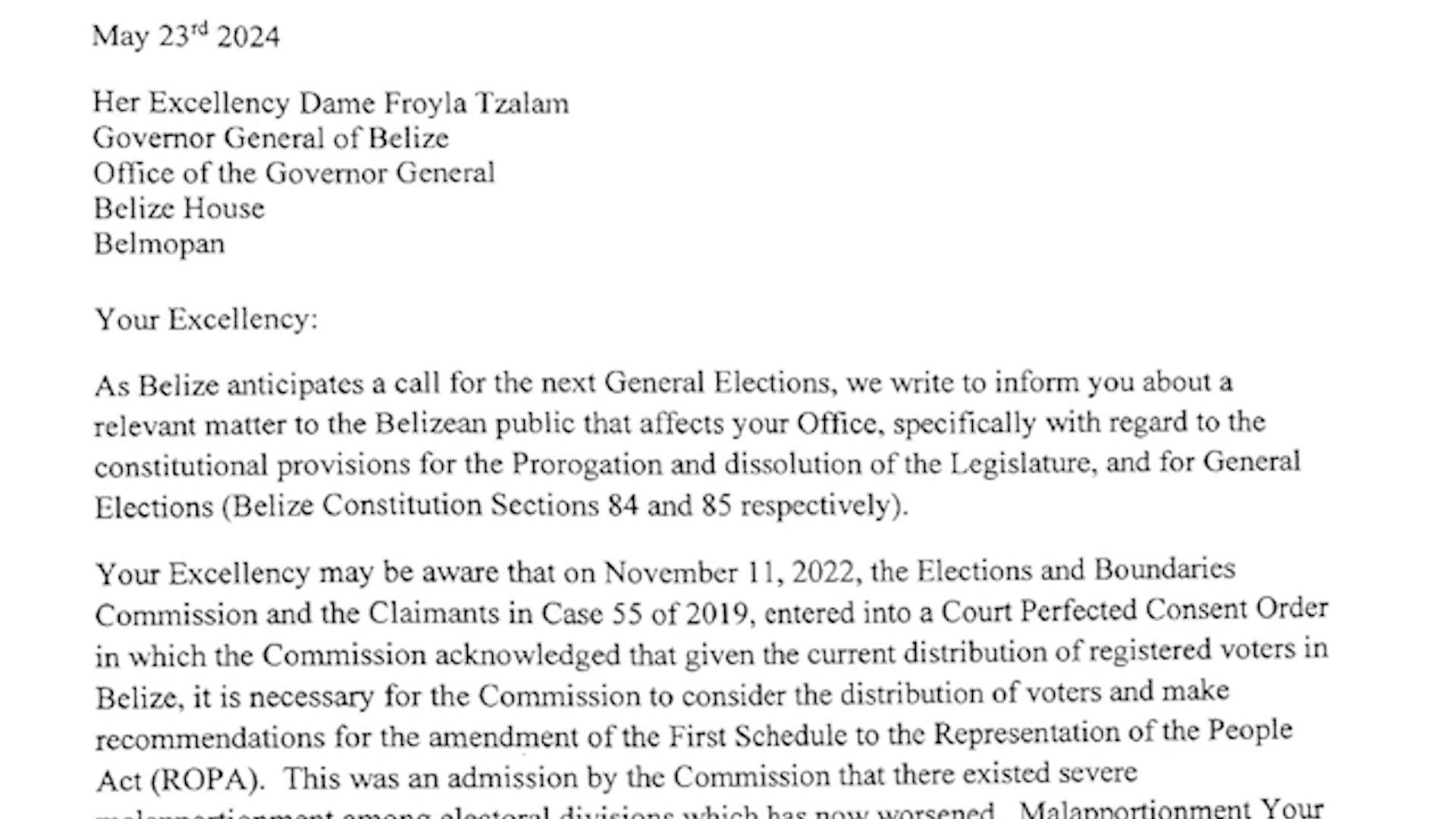
Months after Belize’s ruling administration missed its self-imposed deadline to complete a critical redrawing of national electoral constituencies, a public blame game has erupted between government leaders and civil society activists, raising urgent questions about the fairness of upcoming elections. The process, which was formally promised to wrap up by the end of 2025, remains stalled, leaving constituencies with lopsided voter populations that activists warn skew democratic representation.
At the center of the latest public standoff is Attorney General Anthony Sylvestre, who has pushed back against growing pressure on the government to break the logjam. Sylvestre emphasized in recent comments that the Elections and Boundaries Commission (EBC), an independent constitutional body, holds exclusive authority to draft new electoral maps, approve boundary adjustments, and forward any required changes to the national government. He clarified that the incumbent administration has already signaled its willingness to move forward with the process, and cannot force the EBC to accelerate its work.
Sylvestre also noted that this is not the first legal push for redistricting in Belize. A prior lawsuit brought by Parco Smith and the Belize Peace Movement resulted in a formal consent order that committed the government to support the redistricting process, a commitment the Prime Minister has reaffirmed repeatedly. When asked about the process for advancing constitutional amendments that would be required to enact any EBC-proposed changes, Sylvestre confirmed that any final recommendations from the commission would pass through his office for executive action, but only after the EBC completes its independent deliberations.
Civil society activist Jeremy Enriquez, who has emerged as the most prominent critic of the ongoing delays, is not satisfied with the government’s deflection of responsibility. To force transparency around the stalled process, Enriquez has filed a formal Freedom of Information request seeking internal documents related to the holdup. He has repeatedly warned that the current lopsided distribution of voters across constituencies directly undermines the principle of one-person, one-vote, eroding the fairness of Belize’s electoral system.
Sylvestre added that he has not received any written formal request related to the redistricting process prior to Enriquez’s public calls for action, and declined to comment on any communications sent directly to the Elections and Boundaries Commission, noting that the independent body would need to address queries about its own timeline. As pressure builds from both activists and the public, it remains unclear when the long-delayed redistricting exercise will move forward, leaving electoral fairness in limbo ahead of future national votes.