分类: politics

  • President geeft ambassadeurs duidelijke opdracht: Surinaams belang voorop

    President geeft ambassadeurs duidelijke opdracht: Surinaams belang voorop

    On Friday, a formal swearing-in ceremony for four newly appointed Surinamese ambassadors was held at the country’s presidential palace, where President Jennifer Simons administered the oath of office and issued clear guidance for the diplomats’ upcoming missions. The core mandate given to all four envoys, Simons emphasized, is to advance and protect Suriname’s national interests in all diplomatic activities, while working to deepen the nation’s international partnerships, unlock new economic opportunities, and strengthen Suriname’s global standing.

    The four appointees received distinct postings aligned with Suriname’s diplomatic strategy. Gilbêrt Antoine van Lierop will serve as Suriname’s ambassador to the Kingdom of Morocco. Aashna Kanhai has been appointed ambassador to the Swiss Confederation, while also taking on the role of permanent representative to the United Nations Office at Geneva. Stephanus Meye and Stevanus Noordzee will serve as non-resident ambassadors to Israel and Argentina, respectively.

    Addressing the new ambassadors, President Simons stressed that in an increasingly shifting global landscape, Suriname must continue investing in robust bilateral relations and proactive representation at multilateral international platforms. To advance the nation’s core priorities and long-term ambitions, she explained, the country requires skilled, committed diplomatic representatives who can effectively advocate for Suriname’s interests on the global stage.

    “Your first and foremost loyalty must be to Suriname; this is your starting point: protecting Suriname’s national interest,” President Simons told the envoys, according to official statements from the Suriname Communication Service. She added that Suriname’s diplomatic work should extend beyond traditional political and administrative cooperation, placing equal focus on economic diplomacy, attracting foreign investment, expanding bilateral trade, and elevating Suriname’s international profile.

    Simons also outlined targeted priorities for each ambassador’s specific region of responsibility. For the posting to Morocco, key areas for expanded cooperation include education, energy, agriculture, tourism, and trade. At the UN Geneva office, Kanhai will center her work on advancing multilateral cooperation, upholding international law, and advocating for a fair global trading system. For the bilateral relationship with Israel, collaboration will be deepened in agriculture, water management, technological innovation, and healthcare. For Argentina, Suriname will prioritize exploring new trade opportunities, building institutional capacity, and improving cross-border connectivity between the two nations.

    Speaking on behalf of all four newly sworn-in ambassadors, van Lierop framed his appointment not as a ceremonial honor, but as a profound responsibility to serve Suriname and represent the nation’s interests globally. He noted that Suriname holds unique strengths and untapped opportunities that deserve greater global recognition, highlighting that the nation’s power and potential extend far beyond its natural resources, rooted instead in its people and its future trajectory. “The strength and potential of Suriname lie not only in what we have, but above all in who we are and who we will become,” van Lierop said.

  • AFC backs Ambassador Rodrigues-Birkett for UN Secretary General

    AFC backs Ambassador Rodrigues-Birkett for UN Secretary General

    Just three hours after Guyanese President Irfaan Ali formally put forward Ambassador Carolyn Rodrigues-Birkett as the country’s candidate for the next United Nations Secretary-General, the nation’s opposition Alliance For Change (AFC) has thrown its full weight behind the government’s decision.

    In an official statement released hours after the nomination announcement on 12 June 2026, the AFC praised Rodrigues-Birkett as an outstanding Guyanese diplomat whose decades of public service, proven professionalism, and longstanding dedication to multilateral cooperation make her uniquely suited for the UN’s top leadership role. “The AFC is proud to endorse her candidacy and wishes her every success in this historic endeavour,” the statement read.

    The opposition party has also called on the Guyanese government to move quickly to rally international backing for the nomination, urging immediate outreach to blocs and partners including the Caribbean Community (CARICOM), the Commonwealth, the Organization of American States, the Non-Aligned Movement, and other global stakeholders to build broad cross-regional support.

    At 52, Rodrigues-Birkett brings a wealth of high-level diplomatic and international experience to the candidacy. She served as Guyana’s Minister of Foreign Affairs and International Cooperation from 2008 to 2015, before taking on a senior leadership role as a Director at the UN Food and Agriculture Organization. In 2022, she was appointed Guyana’s Permanent Representative to the United Nations, and she currently leads the country’s 2024-2025 term as a member of the UN Security Council. She also previously served as President of the 65th Session of the UN General Assembly, a role that put her consensus-building skills across diverse nations on full display.

    The AFC emphasized that Rodrigues-Birkett holds all the core attributes required to steer the UN through a period of unprecedented global strain. “Ambassador Rodrigues-Birkett possesses the experience, diplomatic acumen, integrity, and global perspective required to lead the world’s foremost multilateral institution during a period of unprecedented international challenges,” the statement noted, adding that her decades of work across public service, diplomacy, and global affairs have already earned her widespread respect across the Caribbean, Latin America, and the broader international community.

    The party also highlighted Rodrigues-Birkett’s longstanding commitment to foundational global principles: international law, peaceful resolution of cross-border disputes, sustainable development, and the greater inclusion of small states in global decision-making. At a moment when the world faces overlapping crises – from ongoing armed conflicts and accelerating climate change to rising geopolitical division, growing humanitarian need, and mounting challenges to the rules-based international order – the AFC argues the UN needs principled, inclusive, forward-looking leadership, a standard Rodrigues-Birkett meets fully.

    Beyond her personal qualifications, the AFC noted that her nomination marks a key milestone for both Guyana and small developing nations globally. Her candidacy not only reflects Guyana’s expanding role in global diplomacy, it also creates a critical opportunity to center the perspectives and lived experiences of small developing states at the highest levels of global governance. The party expressed confidence that under her leadership, the United Nations would emerge better equipped to advance shared goals of peace, security, sustainable development, and cross-national cooperation.

    Rodrigues-Birkett becomes the fifth official candidate in the race to succeed outgoing Secretary-General António Guterres, whose second term concludes on 31 December 2026. She joins a growing field of contenders that includes four previously announced nominees: Rafael Mariano Grossi of Argentina, nominated in November 2025; Rebeca Grynspan Mayufis of Costa Rica, nominated in March 2026; Macky Sall of Senegal, nominated by Burundi that same month; and Michelle Bachelet Jeria of Chile, whose nomination was backed by Brazil, Chile, and Mexico before Chile withdrew its sponsorship in late March.

  • Politic : Validation of the recovery and development plan (2025-2030) for the Great North

    Politic : Validation of the recovery and development plan (2025-2030) for the Great North

    On June 13, 2026, the Haitian government formally approved the Medium-Term Recovery and Development Plan for the country’s Great North region, a strategic roadmap spanning 2025 to 2030, during a national videoconference hosted under the patronage of Prime Minister Alix Didier Fils-Aimé. The cross-sector gathering drew more than 120 stakeholders, including representatives from national public agencies, local governing bodies, the private business community, domestic civil society organizations, and international technical and financial partners (TFPs) backing the initiative.

    In his opening address to attendees, Marc-Kenley Mogene, Chief of Staff for Haiti’s Ministry of Economy and Finance, outlined the plan’s core mission: to drive accelerated economic transformation across the Great North by rolling out large-scale structuring investments, generating thousands of new formal jobs, and boosting the region’s overall competitiveness to attract additional outside investment. Mogene stressed that successful execution of the plan depends on three non-negotiable foundational conditions: mobilizing sufficient domestic and international financing to fund planned projects, strengthening collaborative alignment between all public and private sector stakeholders, and leveraging the central coordinating role of the Northern Corridor Development Council, which will oversee implementation tracking, cross-initiative alignment, and accountability for all activities outlined in the plan.

    Prime Minister Fils-Aimé framed the plan’s validation as a landmark milestone for Haiti’s broader national efforts to rebuild the economy and address long-standing territorial development imbalances across the country. He reiterated that the regional planning initiative grows out of a new national development vision centered on leveraging the unique realities, inherent strengths, and untapped potential of each of Haiti’s geographic regions. The prime minister added that the region-first framework, first piloted in the Great North, will be gradually rolled out to other parts of the country, with the Far South slated as the next region to receive a customized development plan, all in service of building more inclusive, sustainable national growth.

    Senior public sector officials presented the plan’s four mutually reinforcing strategic pillars that guide all priority actions. First, the plan prioritizes broad economic diversification to reduce the Great North’s dependence on a small set of vulnerable industries. Second, it targets transformative infrastructure upgrades and private sector revitalization to build a resilient productive base that supports long-term expansion. Third, it commits to large-scale investments in human capital and expanded access to essential public services to widen economic opportunity and advance social inclusion for marginalized communities. Fourth, it includes targeted reforms to strengthen regional governance, rebuild public trust in state institutions, and ensure long-term accountability for results.

    The plan was developed over months of collaborative work under the leadership of Haiti’s Ministry of Economy and Finance, in close coordination with national sectoral ministries, and with technical and financial support from key international partners including the Inter-American Development Bank (IDB), the World Bank, the European Union, and the United Nations system operating in Haiti. It now serves as the official strategic framework guiding all public and private investments, policy reforms, and priority development actions focused on the Great North for the next six years.

    Following the formal validation, representatives of international technical and financial partners, local government leaders, and private sector executives all expressed broad support for the initiative, and reaffirmed their ongoing commitment to working alongside the Haitian government to turn the plan’s development vision into tangible results for residents of the Great North. With the approval process complete, the milestone marks the end of an extensive nationwide consultation process that incorporated input from all affected stakeholder groups, and clears the way for the formal implementation phase, where planned investments, governance reforms, and accountability mechanisms will be put in place to drive lasting, sustainable development across the Great North region.

  • PSU Leader Alleges Widespread Procurement Abuse Across Multiple Ministries

    PSU Leader Alleges Widespread Procurement Abuse Across Multiple Ministries

    A brewing public spending controversy in Belize has escalated far beyond an initial single case of suspicious payments, with the country’s top public service union leader now calling for a full, cross-government investigation into what he calls deeply rooted, systemic corruption in state procurement processes.

    The scandal first came to public attention when it was revealed that more than $1.7 million in public funds had been disbursed to Jenny Mira, sister of Minister of State Oscar Mira, in contracts awarded through the Ministry of National Defense. While ministry officials have defended the awards and insisted all contracted goods and services were delivered as agreed, public scrutiny has refused to die down, and has now expanded to question procurement practices across the entire government.

    Speaking in an on-the-record interview with local outlet News Five, Public Service Union (PSU) President Dean Flowers argued that the Mira family contracts are just one visible thread of a much broader pattern of abuse. He pointed to a wide web of ongoing business interests tied to the minister and his extended relatives, with family members holding contracts across multiple sectors: from his sister’s vegetable supply contracts, to brothers’ holdings in air conditioning services and construction, to in-law-led firms winning roadwork projects. Flowers questioned how the minister’s family was able to finance the construction of a private gated community, raising implicit questions about the source of their wealth from public sector contracts.

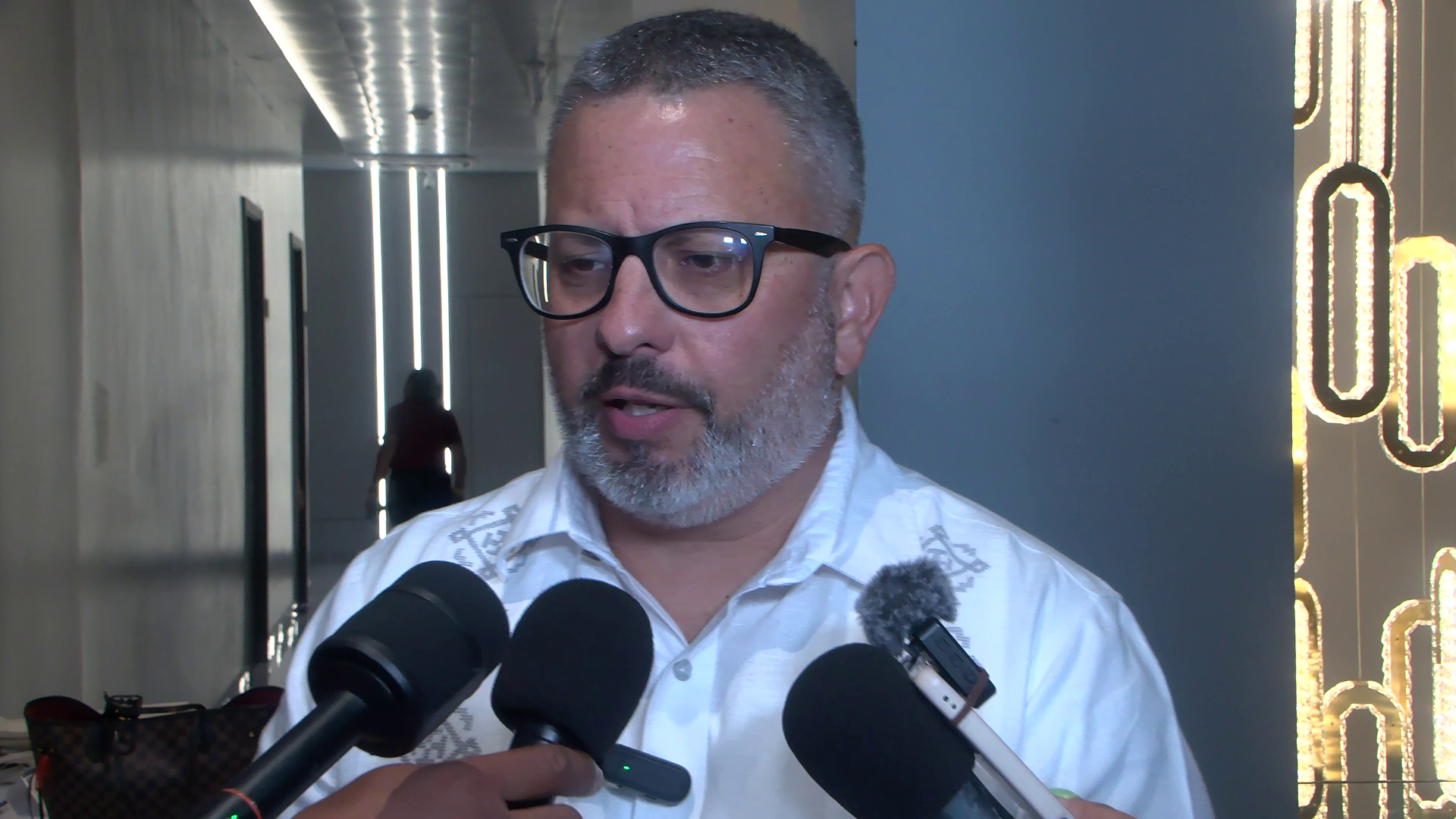
    Francis Usher, Chief Executive Officer of the Ministry of National Defense, pushed back against the allegations, defending the Mira family’s long history as government suppliers. He confirmed the family has provided produce to the Belize Defence Force and Coast Guard dating back to the early 2010s, years before the current administration took office, and emphasized they have been consistent, reliable partners over that time. Usher also rejected claims of payment fraud, stating, “There is nothing that is being paid for that is not being provided,” pushing back against long-running unconfirmed complaints from service members about substandard or insufficient rations.

    On the widely noted practice of splitting large invoices into amounts just under the $10,000 threshold that triggers mandatory additional oversight from the Treasury Department and Ministry of Finance, Usher denied that government officials ever instruct suppliers to split contracts to avoid scrutiny. He suggested suppliers independently adopted the practice because it speeds up payment processing, as lower-value contracts do not require multi-layered approval from additional government bodies.

    Flowers, however, remains unconvinced by the ministry’s denials. Drawing on his decades of experience working in Belize’s public service, he argued that official records frequently do not align with on-the-ground realities, a pattern well-known to the country’s Auditor General. He pointed to a previous confirmed scandal at the Ministry of Transport, where the government paid for high-end air conditioning units but received cheaper, lower-quality models instead, as an example of the kind of fraud that systemic weak oversight enables.

    The PSU president also pushed back against Usher’s claim that all contracted goods have been delivered, questioning how the CEO could personally verify every delivery made across thousands of contracts. He called on Belize’s top independent oversight officials—including Maria Rodriguez, Teresita Miranda, and Maria Arthurs—to launch a full investigation and prove their commitment to protecting public funds and Belizean taxpayers.

    Flowers also expanded the scope of accountability beyond elected ministers, arguing that long-tenured public finance officers are often the enablers of these corrupt practices. He claimed that new politicians and CEOs entering government are frequently introduced to end-runs around oversight rules by career public officers, who then allow the practice to be exploited to redirect public funds into private hands. To advance the investigation, the PSU has already filed formal Freedom of Information requests to obtain full procurement records from the Accountant General, Auditor General, and Contractor General. Flowers stressed that the probe must examine not just political leaders, but the public officials who processed the questionable transactions.

    The unfolding scandal has sparked growing public demand for transparency and accountability around the management of public funds in Belize, with the outcome of the requested investigation expected to set a major precedent for government oversight reform going forward.

  • SIF Under Fire: PSU President Claims Rigged Tendering System

    SIF Under Fire: PSU President Claims Rigged Tendering System

    A major public accountability controversy has erupted in Belize, with the head of the nation’s largest public sector labor organization leveling serious allegations of systemic corruption against the country’s high-profile Social Investment Fund (SIF). In a blistering public address released June 12, 2026, Public Service Union (PSU) President Dean Flowers has broken with longstanding unofficial norms of restrained public criticism, directly calling out SIF leadership and the Ministry of Finance for running a rigged competitive bidding process that puts political favoritism ahead of value for taxpayer money.

    Flowers’ allegations go far beyond isolated claims of mismanagement: he asserts that the entire tendering framework is compromised, arguing that publicly advertised competitive bidding is little more than a facade to award contracts to well-connected bidders rather than the most qualified or cost-effective applicants. To back up his claims, he specifically called out inflated pricing for construction materials, noting that SIF is allegedly paying between $70 and $100 per sack of cement – rates far above standard market pricing that would never be accepted in a truly competitive process.

    The PSU president has issued an ultimatum to leadership at both SIF and the Ministry of Finance: hold a public press conference, release five full years of unredacted procurement and tender records, and allow independent public scrutiny of the documents to prove the bidding process is fair. Flowers argues that full transparency is the only possible path to clearing up growing public suspicion and repairing eroded trust in how public funds are managed. He stressed that the controversy is not about a single flawed contract, but about the integrity of the entire public spending system itself, directly calling out Belizean citizens who are aware of alleged misconduct but have failed to speak out, urging them to join demands for accountability.

    In an immediate response to the allegations, senior SIF officials issued a sharp rebuttal pushing back against every claim made by Flowers. The agency denied all accusations of favoritism, improper influence, and corrupt bidding, insisting that all procurement processes – particularly for high-value contracts – follow strict, open competitive bidding rules. SIF emphasized that all bidders undergo rigorous vetting across technical, financial, and legal eligibility standards before any contract is awarded. The agency also warned that Flowers’ unsubstantiated allegations carry serious risks, noting they could erode public trust in the institution and damage confidence among SIF’s domestic and international funding and implementation partners. SIF defended its longstanding reputation for sound management, asserting that its existing procurement systems are robust and fully compliant with national public spending rules.

  • PSU President Demands Action on Whistleblower Bill

    PSU President Demands Action on Whistleblower Bill

    Amid mounting public scrutiny over questionable public sector spending in Belize, the leader of the nation’s largest public employee organization is intensifying pressure on the ruling government to break a months-long deadlock and advance long-overdue whistleblower protection legislation.

    Dean Flowers, president of the Public Service Union (PSU), argues that the most impactful step to curb systemic corruption and abuse of power in government is simple: extend legal protection to public servants who come forward to report wrongdoing. In pointed remarks delivered on June 12, 2026, Flowers noted that hundreds of current public employees have direct knowledge of corrupt practices but choose to remain silent, terrified of professional retaliation, career damage, or other backlash for speaking out.

    Belize has waited far too long to implement robust, comprehensive whistleblower legislation that would enable the public exposure of corrupt activity across the public service, Flowers emphasized. He is now calling on the government to immediately end delays and bring the proposed protected disclosure bill to the House of Representatives for a vote.

    Flowers directly accused the sitting administration of lacking the political will to meaningfully address corruption. “They have no political will to curb corruption. They have no political will to introduce whistleblowers legislation or protected disclosure legislation to allow and to empower citizens and public officers to point out these things freely and to be compensated if necessary,” he said.

    In a direct public challenge, Flowers called out two senior cabinet members—the Minister of Public Service and the Minister of Religious Affairs—accusing them of repeatedly dodging their responsibility to advance the bill. He urged the pair to stop sidestepping the issue, release the legislation from House committee where it has stalled, incorporate recommendations already submitted by the Belize Chamber of Commerce and the nation’s trade unions, and pass the bill in a single sitting.

    The passage of this law is particularly urgent right now, Flowers argued, because financial officers across the public service are already facing pressure and backlash tied to ongoing corrupt practices. A strong whistleblower law would give these employees the legal security to report unlawful instructions and corrupt facilitation to the Financial Secretary and Auditor General without fear of retaliation.

    Closing his remarks, Flowers tied the call for action to the ministers’ stated values. “If you really believe in a god and you really believe in doing the right thing, do it,” he said. He declined to call out the Prime Minister directly, noting that the Prime Minister’s position on this anti-corruption legislation is already clear to the public.

    This report is adapted from a transcript of an evening television news broadcast.

  • Court Says ‘Answer the Questions’ in Budna’s Abduction Case

    Court Says ‘Answer the Questions’ in Budna’s Abduction Case

    A high-stakes legal process involving an alleged cross-border abduction is set to move forward in Belize, after a High Court justice rejected efforts to dismiss a constitutional claim brought by imprisoned defendant Joseph Budna. Budna’s case centers on his assertion that he was captured and taken into custody illegally via a cross-border law enforcement operation, a serious allegation that has advanced past the initial dismissal stage.

    Justice Martha Alexander, who presides over the case, issued a landmark ruling last week that the dispute remains a pressing, unresolved legal question that requires formal answers from the state, rather than being thrown out of court before a full hearing. The ruling has forced the Belizean government to prepare for a fresh, high-profile legal battle over the conduct of its law enforcement agencies.

    In comments to reporters following the ruling, Attorney General Anthony Sylvestre outlined the government’s next steps, confirming that the state is actively building its formal defense ahead of upcoming procedural deadlines. Sylvestre added that alongside trial preparations, the government is also open to two alternative dispute resolution mechanisms embedded in Belize’s court system: voluntary mediation between parties, and a court-led judicial settlement conference.

    Sylvestre explained that judicial settlement conferences, in particular, offer a structured space for both sides to re-evaluate their positions, with a senior independent legal guide helping each party assess the strengths and weaknesses of their claims ahead of a full trial. Currently, the case is in the active case management phase, with ongoing proceedings to set deadlines for filing legal statements and other core court documents. Sylvestre noted that the government is still working through these preliminary procedural steps, and will not make a final decision on pursuing settlement versus trial until that process is complete.

    When pressed by reporters on whether a potential out-of-court settlement would implicitly confirm long-standing rumors of a high-level official cover-up of the alleged abduction, Sylvestre rejected that framing. He emphasized that court decisions and case resolutions are shaped by both factual evidence and existing legal precedent, not just public speculation. He noted that while Budna’s legal team argues the state is liable for the actions of its officers, the government currently disputes that interpretation of existing Belizean law, and will have the opportunity to make that case in formal proceedings later in the process.

    In a related procedural development, the court has already struck out claims against five individual defendants named in the original filing, including high-ranking officials: the current Minister of Home Affairs and the Commissioner of Police. Only the claim against the state itself will move forward in the coming months.

    This report is adapted from a transcribed evening television news broadcast originally published online.

  • Controversy Brews Over Bush Stick Extraction in Indian Creek

    Controversy Brews Over Bush Stick Extraction in Indian Creek

    A simmering conflict over unapproved bush stick extraction has erupted into open tension in Belize’s Indian Creek Village, exposing deep fractures in local governance and reigniting a long-running national battle over Indigenous Maya land rights.

    The unrest unfolded earlier this week when Cristina Coc, spokesperson for the Maya Leaders Alliance (MLA), encountered the standoff while traveling through the area. Coc explained that the community’s long-standing internal land and resource permitting system has collapsed in recent years, leaving villagers dependent on small-scale extraction permits issued by the national Forest Department. Under existing local rules, any national permit requires formal endorsement from the village’s alcalde – the traditional local governing authority – before extraction can proceed. On this occasion, Coc confirmed, the permit was granted without the required local sign-off, leaving residents unaware of the planned activity.

    “For villagers, this amounts to illegal extraction,” Coc said in an on-the-record interview. The dispute has been fueled by conflicting claims to the land: the village council has recognized a third party’s ownership claim, arguing that the third party only needed council approval to harvest bush sticks, while community members maintain the land is part of their traditional territory, and their own local regulatory framework should take precedence.

    Coc pulled no punches in assessing the root of the local crisis, blaming a complete breakdown of cooperative governance among village leaders. “None of the leaders are willing to set aside their differences and do what is right for the village members,” she said. “This division has eroded all mutual respect. There is disregard for the village police, disregard for the alcalde, and a great deal of misinformation being spread.” Contrary to circulating false claims, Coc confirmed that the alcalde was not present at the extraction site and did not attempt to block the movement of harvested materials. The situation quickly escalated when a truck carrying a group of young men, brought to the site by allies on the village council, arrived and immediately began engaging in physical violence. Coc, who was already on site to mediate, prioritized de-escalation to prevent serious injury, noting that conflict over bush stick extraction did not justify harm to community members.

    This local flare-up comes as the MLA is already challenging a national government land rights reform bill that was explicitly intended to reduce intercommunal and state-community land conflicts across Belize. Instead of easing tensions, the new proposal has triggered fresh pushback from Indigenous leaders, who argue the legislation fails to uphold the Maya community’s constitutionally guaranteed and internationally recognized land rights.

    Coc emphasized that the MLA does not oppose land rights reform as a concept – on the contrary, the group has long called for clear legislative frameworks to resolve ongoing territorial disputes. “We want legislation that advances our rights, but it has to align with existing court judgments, our constitutional rights, and international indigenous rights standards,” she explained. “The current proposal does not do that – it actually limits our rights and threatens our control over our traditional lands.”

    To address the government’s proposed framework, the MLA has filed a request with the Caribbean Court of Justice (CCJ), the region’s highest appellate body, to clarify the scope of the Maya community’s land rights as defined in the court’s original landmark ruling on the issue. The government has claimed that the proposed legislation aligns with a prior consent agreement between the state and the Maya community, but Coc argues the government has misrepresented the agreement’s terms. “That agreement was never an empty document,” she said. “It was built on the lower court ruling, which explicitly confirms our rights based on our centuries-long use and occupation of these lands.”

    Looking ahead, local village leaders have scheduled a meeting with the Forest Department next week to negotiate a peaceful resolution to the Indian Creek Village conflict, while the broader legal fight over national land rights policy will now proceed back to the CCJ for formal review.

    This report is adapted from a transcript of a televised evening newscast, with all quoted content from English-language statements preserved accurately from the original broadcast.

  • CEO Responds to Veteran Soldier’s Benefits Concerns

    CEO Responds to Veteran Soldier’s Benefits Concerns

    In a public account of systemic administrative backlogs plaguing Belize’s retired military personnel, an 18-year veteran of the Belize Defense Force (BDF) has spoken out about being denied the pension he earned after five months of waiting since his discharge. The retired soldier, who served multiple tours guarding Belize’s southern border at the Sarstoon River including direct confrontations with Guatemalan forces, turned to local media to highlight what he calls unacceptable gridlock in the benefits approval pipeline. His case has reignited long-simmering conversations about the bureaucratic hurdles that many former BDF service members encounter when seeking post-service entitlements they are legally owed.

    Local media reached out to Francis Usher, Chief Executive Officer of Belize’s Ministry of National Defence and Border Security, to respond to the veteran’s complaint and shed light on ongoing efforts to resolve widespread processing delays. Usher, who himself retired from military service last March and only expects to receive his own full retirement benefits by the end of June 2026, acknowledged that the current multi-step approval process is unfairly burdensome for veterans who have dedicated decades of their lives to national security.

    “It hurts to tell a veteran they have to wait years for benefits they earned over 20 years of service,” Usher told reporters, before walking through the full chain of administrative steps required to finalize retirement payouts for BDF personnel. He explained that benefit packages are first assembled at BDF headquarters, before being transferred to the defense ministry for his personal review. Once cleared by his office, the application is passed to the Security Services Commission, which only holds voting sessions to approve requests once per month. After commission approval, the file moves to the national treasury, where analysts conduct a full line-item review of the veteran’s career to confirm benefit calculations align with years of service, rank, and other regulatory criteria to prevent over or underpayment. Once treasury signs off, the application is sent to the Ministry of Finance for budget approval, then forwarded to the Public Service Commission for final sign-off, before being returned to the defense ministry to activate payment.

    While Usher called the slow, multi-agency process an “unfortunate reality,” he noted that government bodies across Belize’s public sector are now moving to modernize outdated administrative systems, with a key focus on digitizing paper-based personnel records. This digital overhaul is already underway for both the BDF and the Belize Coast Guard, though Usher confirmed the project remains in its early stages. The outlet also noted that extended wait times for post-retirement benefits are not an issue isolated to the BDF, affecting public sector retirees across multiple government agencies in the country.

    This report is a transcript of a televised evening news broadcast, with Kriol language statements transcribed using an industry-standard spelling system for accessibility.

  • Guyana draagt voormalig minister voor als kandidaat voor VN-secretaris-generaal

    Guyana draagt voormalig minister voor als kandidaat voor VN-secretaris-generaal

    On June 12, Guyanese President Irfaan Ali made a landmark announcement confirming that his government has officially put forward Carolyn Rodrigues-Birkett, the nation’s current permanent representative to the United Nations, as its candidate to succeed outgoing UN Secretary-General António Guterres, whose second and final term concludes at the end of 2026.

    In his official statement, President Ali emphasized that Rodrigues-Birkett’s nomination marks a pivotal moment that reflects both Guyana’s expanding global footprint and the small Caribbean nation’s growing ambition to contribute more meaningfully to the multilateral global system. The head of state pointed to Guyana’s recent assumption of a non-permanent seat on the UN Security Council for the 2024–2025 term as evidence of the country’s rising international standing, highlighting its active engagement in critical global debates spanning peace and security, climate action, food security, sustainable development, and global energy security in recent years.

    Against the backdrop of this growing influence, Ali noted that the time has come for Guyana to put forward a candidate for the UN’s most senior diplomatic post. “Guyana has steadily emerged as an increasingly prominent and influential voice within the international community,” Ali stated, framing the nomination as a natural next step for the nation’s evolving global role.

    Carolyn Rodrigues-Birkett is widely recognized as one of Guyana’s most seasoned and accomplished diplomats. She has served as the country’s permanent representative to the UN Headquarters in New York since 2020, a tenure that saw her play a central leadership role during Guyana’s ongoing Security Council term. Before taking up her current UN posting, Rodrigues-Birkett held multiple senior roles across global and national governance, including serving as Director of the Food and Agriculture Organization (FAO) Liaison Office in Geneva. She has also held several cabinet positions in the Guyanese government, including Minister of Foreign Affairs and Minister of Indigenous People’s Affairs, giving her decades of high-level experience in both domestic governance and international diplomacy.

    President Ali underscored that Rodrigues-Birkett brings the deep diplomatic expertise, extensive global network, and proven leadership skills needed to guide the United Nations through an era defined by overlapping global crises: ongoing armed conflicts, accelerating climate change, widespread food insecurity, and rising geopolitical polarization. “These challenging times demand a leader with the credentials and vision to unite the international community around shared solutions,” Ali noted.

    The nomination also marks a defining step in Guyana’s efforts to cement its presence on the global stage. If Rodrigues-Birkett is successfully elected, she will make history as the first person from Guyana to hold the post of UN Secretary-General, and only one of a small number of leaders from the Caribbean region to ever lead the world body.

    Over the coming months, the selection process for the new Secretary-General will unfold through intensive behind-the-scenes diplomatic consultations among the UN’s 193 member states. The final appointment follows an established procedure, requiring endorsement by the UN Security Council before formal approval by the UN General Assembly.