分类: politics

  • Kennedy Center says it has fully removed Trump’s name from its building

    Kennedy Center says it has fully removed Trump’s name from its building

    The John F. Kennedy Center for the Performing Arts, one of the United States’ most prominent cultural institutions located in Washington, D.C., has confirmed that it has completed the full removal of Donald J. Trump’s name from one of its on-campus buildings. This administrative move caps off a months-long process that began shortly after the end of Trump’s single four-year term as the 45th U.S. president, when the center’s board of trustees first voted to strip his name from the facility.

  • Cabinet Warns Illegal Structures in Barbuda Could Face Demolition

    Cabinet Warns Illegal Structures in Barbuda Could Face Demolition

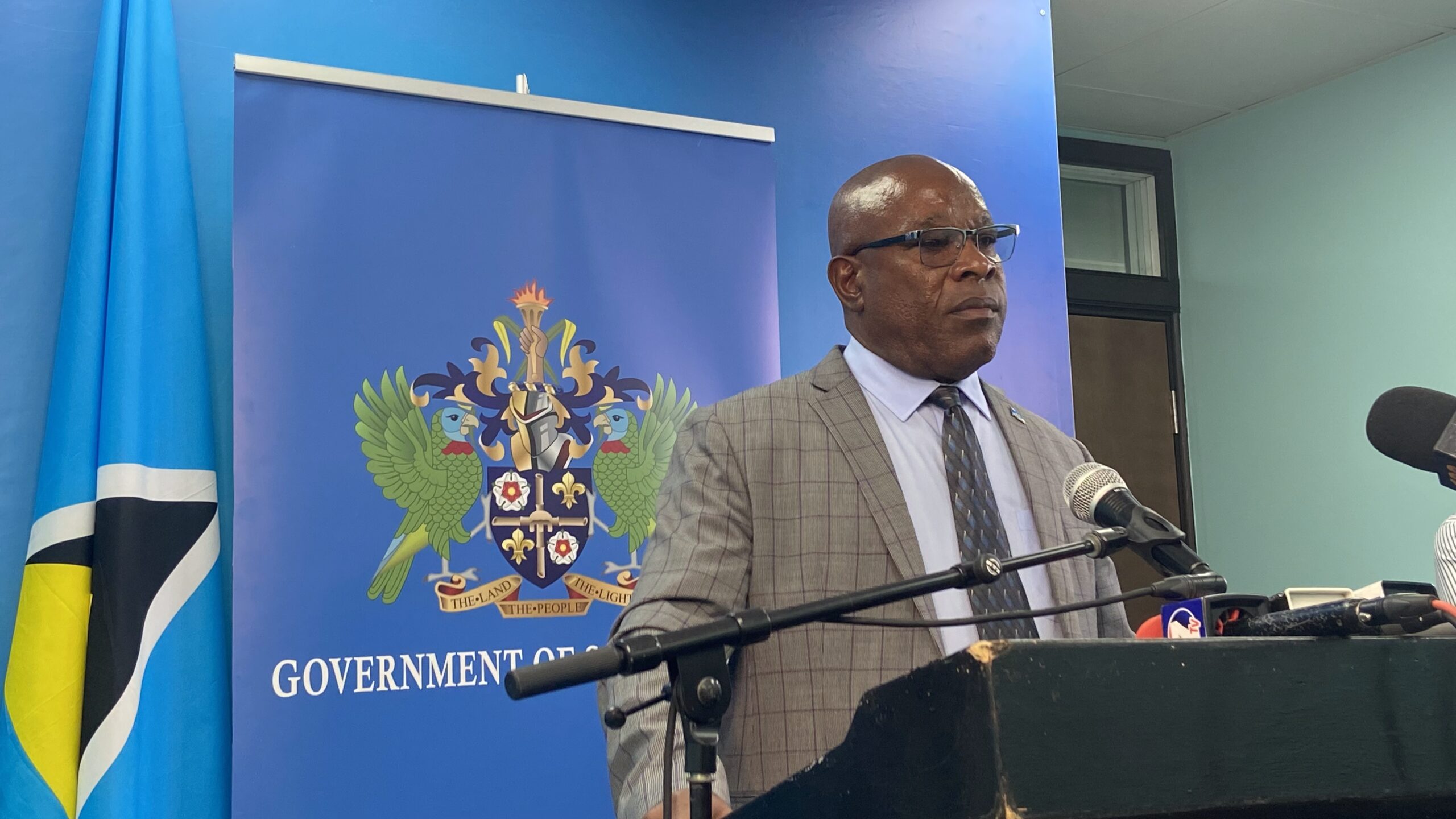
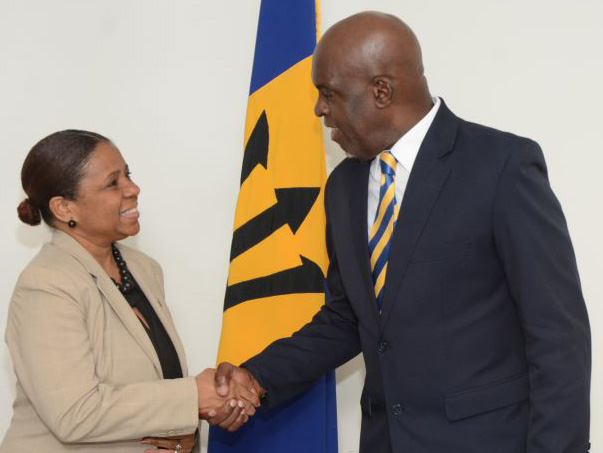
    In a Wednesday Cabinet session focused on land governance in Barbuda, the government of Antigua and Barbuda has doubled down on its commitment to upholding the island’s land regulations, issuing a fresh, explicit warning that unapproved, unauthorized construction across Barbuda faces imminent legal enforcement, including demolition. The announcement came as Attorney General Sir Steadroy Benjamin updated lawmakers on ongoing progress toward launching the long-awaited formal Barbuda Land Registry, a cornerstone policy initiative designed to overhaul the island’s fragmented land administration system.

    Maurice Merchant, Director General of Communications, outlined the body’s unified stance following the meeting: all structures built without the full suite of legally required permits, approvals, and authorizations are officially classified as illegal. Under the government’s newly tightened enforcement framework, authorities will not hesitate to carry out all permitted legal actions, including the full demolition and removal of these unlawful developments, in strict alignment with national land laws.

    This public warning is not an isolated measure, but part of a broader government push to bring order to land ownership and development activity across Barbuda, concurrent with the rollout of the new registry system. During the session, Cabinet also reaffirmed a long-held legal position that the Barbuda Council holds no statutory authority to sell, lease, or transfer any land on the island – any transactions conducted outside of government-approved processes will be considered void and unrecognized by the national administration.

    Merchant noted that Cabinet has growing concerns over the proliferation of unreported land transactions and unregulated development that operate outside of the state’s formal legal framework. The administration is fully committed to halting the spread of illegal construction, he stressed, and warned that any individual or entity moving forward with construction without securing proper authorization does so at their own legal and financial risk.

    In a move designed to balance strict enforcement with protections for long-term residents, officials moved quickly to reassure Barbuda residents who have occupied land on the island for extended periods that they will not be penalized for past informal arrangements. Under the government’s upcoming land registration program, these residents will be given a clear pathway to formalize their land claims and obtain legal ownership documents. This includes the administration’s flagship $1 land ownership initiative, which offers eligible native Barbudans the chance to secure formal title for a nominal fee.

    Cabinet emphasized that the completion of the Barbuda Land Registry will deliver far-reaching public benefits, bringing unprecedented certainty, transparency, and legal security to all matters related to land ownership and development across the island. The formal system will also ensure that all future infrastructure, residential, and commercial projects proceed in full compliance with the national laws of Antigua and Barbuda, laying the groundwork for sustainable, orderly growth on the island.

  • PM vindicated in ‘unspent’ hurricane relief funds, says Montague

    PM vindicated in ‘unspent’ hurricane relief funds, says Montague

    KINGSTON, Jamaica — In a recent address to the country’s House of Representatives during the annual Sectoral Debate last week, Robert Montague, Jamaica’s Minister of Land and Settlements, has pushed back against widespread public criticism of the government’s management of Hurricane Melissa disaster relief donations, arguing that the Auditor General’s independent report vindicates the Prime Minister’s earlier decision to launch the audit.

    The controversy ignited after a real-time audit tabled in Parliament on May 12 revealed a stark gap in fund disbursement: by February 23, 2026, Jamaica’s Office of Disaster Preparedness and Emergency Management (ODPEM) had only spent $26.2 million of the $1.44 billion in donated relief funds collected for survivors of Hurricane Melissa — a mere 1.8% of the total pledged. The catastrophic storm left thousands displaced, destroyed critical agricultural infrastructure, and triggered prolonged shortages of food and basic public services across hard-hit regions of the island.

    Speaking during his scheduled policy presentation on June 9, Montague pushed back against claims of mismanagement, emphasizing that the audit never raised red flags over missing or misappropriated funds. He acknowledged that disbursement has progressed slower than initially projected, attributing the delay to untested new protocols and the unprecedented scale of the disaster that left Jamaican officials navigating uncharted operational territory.

    Crucially, Montague stressed that every dollar of donations from Jamaican citizens, international partners, foreign donors, private companies, and aid agencies has been fully accounted for, a outcome he says reflects well on the country’s governance. “This is a proud moment in our journey as a young nation,” Montague told lawmakers. “Even in the wake of the most devastating weather event we have faced in recent memory, we can stand tall and confirm that no irregularities have been found in the management of these public donations.”

    Montague went on to praise the Prime Minister directly, saying the audit’s findings confirm the wisdom of the leadership’s decision to support the transparent review. The minister added that beyond clearing the government of wrongdoing, the audit also identified structural gaps and procedural weaknesses in disaster relief fund management — changes the Prime Minister has already moved to implement, per Montague.

    Montague framed the report as a watershed moment for public accountability across all Jamaican institutions, noting that the audit’s transparency sets a standard not just for government agencies, but for the private charities and non-governmental organizations that also received disaster relief funds. He called on all entities that accepted donations to publish full breakdowns of how much they have received, spent, and still hold, as well as clear plans for remaining funds, arguing that accountability is a shared responsibility for all groups working in the public interest. “The report is good for Jamaica,” Montague insisted. “It proves that the government can account for money donated to help its people, and it lights the path for all other organizations to follow.”

  • ‘WATCH: You’re delusional’, Jess tells Chuck over no human rights abuse claim

    ‘WATCH: You’re delusional’, Jess tells Chuck over no human rights abuse claim

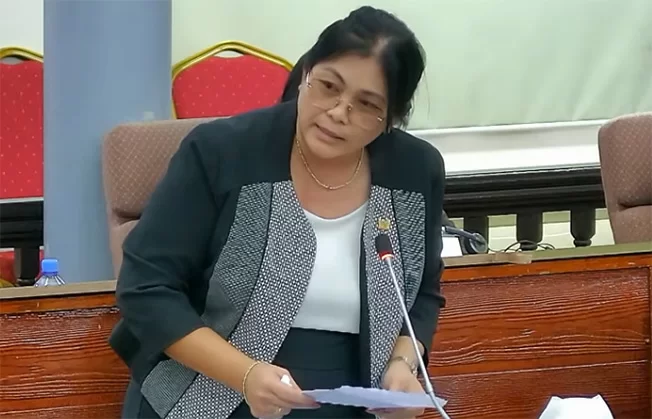
    KINGSTON, Jamaica — A sharp political clash has erupted over the state of human rights in Jamaica, after Justice Minister Delroy Chuck’s controversial denial of a national human rights issue prompted scathing criticism from opposition justice spokesperson Zuleika Jess, who labeled the minister’s remarks “delusional” in light of a recent spate of deadly police violence.

    Chuck first made the striking declaration during his scheduled address to the Sectoral Debate in Jamaica’s House of Representatives last Wednesday. In his comments, the minister asserted that Jamaica “does not, and I hope will never have, a human rights problem.” He defended his position by noting the existence of the Office of the Public Defender, a body empowered to investigate and prosecute violations of human rights, arguing that any aggrieved citizen could seek redress through the institution.

    The opposition pushed back just one day later, when Jess spoke at a groundbreaking event for a major water infrastructure project in St Elizabeth. The $148 million Santa Cruz By-pass Mains Replacement initiative marks the latest phase of the larger Santa Cruz Water Supply Improvement Programme, a public works effort aimed at upgrading access to reliable water for local communities. It was at this public gathering that Jess delivered her forceful response to Chuck’s remarks.

    Jess, who also serves as Member of Parliament for St Elizabeth North Eastern, argued that Chuck’s claim was indefensible in the wake of a devastating recent incident: 11 fatal police shootings carried out across the country in a single 24-hour period. “For a country that is experiencing 11 brutal police fatalities in 24 hours and to have a Minister of Justice state that there is no human rights issue, we find that to be almost delusional on the part of the Minister of Justice,” Jess stated.

    She expanded on her criticism, framing Chuck’s comments as more than just a misstatement. Jess argued that the declaration amounts to an alarming disconnect from on-the-ground realities, and an insult to thousands of Jamaican families who have demanded justice for loved ones killed under suspicious circumstances. “It is a dismissal of the lived realities that so many people here in Jamaica continue to face,” she added.

    The opposition spokesperson closed by calling on Chuck to reverse his position: she urged the minister to reconsider his remarks, retract the controversial statement, and realign his public views with the actual conditions facing Jamaican citizens. “The reality is that the people of Jamaica need justice and we need a government that doesn’t turn a blind eye to the realities on the ground,” Jess emphasized.

  • Trump insists Iran deal ‘hours’ away, despite Israeli strike on Beirut

    Trump insists Iran deal ‘hours’ away, despite Israeli strike on Beirut

    On a Sunday that marked his 80th birthday, former U.S. President Donald Trump once again asserted that a historic agreement to end the ongoing Middle East conflict was mere hours from being finalized — but he lashed out angrily at Israel, blaming an unexpected airstrike on a Hezbollah stronghold in southern Beirut for throwing the diplomatic process off schedule. The attack has already drawn stark warnings of immediate retaliation from Iran, leaving a fragile push for peace hanging in the balance.

  • Trump turns 80 with cage fight at the White House

    Trump turns 80 with cage fight at the White House

    On a milestone Sunday marking his entry into his ninth decade of life, former and current U.S. President Donald Trump is celebrating his 80th birthday with an unprecedented, deeply divisive public spectacle: a full Ultimate Fighting Championship (UFC) card hosted directly on the White House South Lawn. Dubbed “UFC Freedom 250,” the event ties into nationwide festivities honoring the 250th anniversary of U.S. independence, bringing 14 top UFC stars to compete inside the promotion’s signature eight-sided caged octagon, built in a temporary 4,000-seat venue dubbed “The Claw” on the grounds of America’s most iconic executive residence. With an overall price tag estimated at $60 million, organizers and the White House insist the entire cost is being covered directly by the UFC, pulling no funds from public coffers.

    The event carries deep personal and political meaning for the billionaire president, who has long cultivated close ties to mixed martial arts (MMA) — a sport whose core fanbase of young, working-class men aligns closely with Trump’s own political base. Back in May, Trump welcomed participating fighters to the Oval Office, where he hyped the upcoming brawl as a one-of-a-kind historic spectacle, telling attendees “This is going to be an event you’re really gonna like.” In a dramatic entrance planned for the card, top competitors will reportedly walk out directly from the Oval Office before marching down to the South Lawn cage, a theatrical touch that blurs the lines between executive governance and sports entertainment.

    Between bouts, the event will weave in tributes to the U.S. 250th anniversary celebrations, including historical vignettes, performances by U.S. military bands, a military flyover, a military parachute demonstration, and a 10-minute fireworks display to close out the night. Weigh-ins for the fights are being held at the Lincoln Memorial, and organizers have set up giant screens on the National Mall to accommodate an additional 125,000 fans who cannot fit into the White House venue, effectively turning a large swathe of downtown Washington D.C. over to the birthday spectacle.

    Not surprisingly, the event has drawn sharp criticism from across the political spectrum and local communities. Critics argue that hosting a violent, glitzy extravaganza on the White House lawn is deeply inappropriate at a moment when the U.S. is engaged in active conflict with Iran, which has driven sharp increases in fuel and consumer prices that burden working American households. Last week, two local D.C. residents filed a lawsuit to block the event, arguing it amounted to public corruption, but a federal judge rejected the bid to halt the fights, clearing the way for Sunday’s bouts to proceed as planned.

    UFC officials have pushed back against claims that the event inappropriately mixes sports and politics. Chief Content Officer Craig Borsari told reporters this week that the promotion simply sees the occasion as “an unbelievable, incredibly unique opportunity to celebrate this country and our athletes.” Many competing fighters have echoed that framing, focusing on the unprecedented global exposure the White House venue brings to the sport. “We’re not in politics in any way but we have the opportunity to be exposed to the eyes of the world — we have to take it,” French top contender Ciryl Gane told AFP earlier this month. American fighter Michael Chandler, who is scheduled to compete on Sunday’s main card, called the event the “biggest fight event in combat sports history.”

    Beyond the controversy over the event itself, the over-the-top birthday celebration has also drawn attention to questions surrounding Trump’s health as he turns 80, making him the oldest person ever to hold the office of U.S. president. Trump has long sought to frame himself as unusually virile, frequently comparing his stamina to that of Democratic predecessor Joe Biden, who dropped his re-election bid after a widely panned debate performance against Trump. Though Trump’s personal physician has repeatedly stated the president is in excellent health, reports of recurring health issues — including bruised hands, a chronic vein condition in his legs, and frequent apparent drowsiness during official meetings — have circulated among Washington insiders. Trump himself has acknowledged ambivalence about hitting the 80-year milestone, saying in a recently posted official video, “It’s not a number I like, but I’m here nevertheless.”

    The spectacle also fits a long-established pattern of Trump’s approach to the presidency, observers note, pointing to his background as a reality television star and real estate developer known for large, high-profile public events. Last year, for Trump’s 79th birthday, he oversaw an unprecedented military parade in Washington celebrating the 250th anniversary of the U.S. Army. “He’s treating the presidency the way he treats his previous career, a big flashy show,” Peter Loge, director of George Washington University’s School of Media, told AFP. That pattern has held true for his 80th birthday: Trump is set to remain front and center throughout the event, taking in every bout between the gore and the glitz that has become a defining feature of his political brand.

    Adding another layer of political context to the day, there has been widespread speculation that Trump could announce a long-sought peace deal with Iran to coincide with his birthday, though Iranian officials have openly cast doubt on that timeline, leaving the prospect of a last-minute policy announcement uncertain as the country gathers for the fights.

  • A new date has been set to launch the Santiago monorail.

    A new date has been set to launch the Santiago monorail.

    On a recent Friday, the Dominican executive branch announced a revised timeline for the long-awaited Santiago Monorail project, confirming that passenger trial operations, branded as a “white run test”, will launch this coming December. The announcement lands amid soaring public anticipation in the region, and follows a years-long pattern of rescheduled delivery dates for the transformative transit megaproject, which aims to overhaul mobility in the capital of the Cibao region.

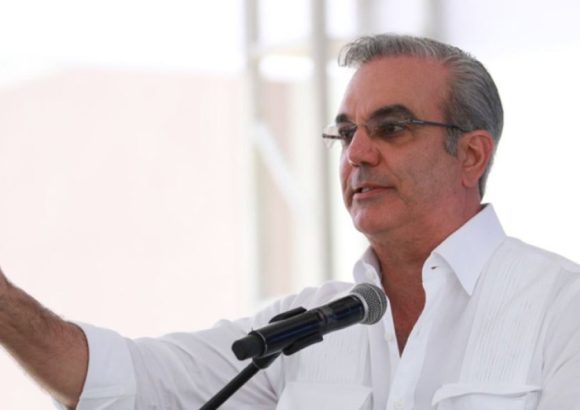
    During an on-site inspection of the monorail’s maintenance workshops and the underground terminal in the city’s monumental district, President Luis Abinader verified that the project has reached 92.6% overall completion, just over four years after construction first kicked off. Abinader also walked through the capabilities of the project’s central Maintenance and Control Center, noting that the facility is almost fully finished with only minor finishing touches remaining, and will be able to accommodate and service up to 15 trains overnight when fully operational.

    Jhael Isa Tavárez, executive director of the Mass Transit System Development Trust (Fitram), the public body overseeing the project, laid out the step-by-step roadmap moving forward: all core civil construction will wrap up in August, paving the way for dynamic empty-train testing between stations E1 and E11 in the final quarter of the year. Additional train units will arrive ahead of the December start date for the public trial run.

    This latest announcement marks the fourth formal timeline set by authorities, after three previous deadlines were missed. When the initial groundbreaking was held in March 2022, the government originally pledged a full inauguration by the end of 2024. The schedule was later adjusted to open the first commercial segment from Cienfuegos to Las Antillas between February and March 2025, when non-passenger movement tests were completed but public access did not launch. Most recently, the official target for first-phase completion was set for 2025, a date that has now been pushed to December 2026. Fitram has cited unforeseen urban adjustments and community-requested changes to the original route, particularly in the Reparto Universitario sector, as key factors contributing to the repeated delays.

    Beyond the monorail inspection, President Abinader packed his working trip to Santiago with a full slate of additional government announcements and project inaugurations. He held a working lunch with students from local polytechnic institutes, where he distributed new laptops and issued a directive to the Ministry of Higher Education, Science and Technology (MESCyT): the agency will begin evaluating scholarship applications while students are still in their fifth year of secondary school, eliminating gaps that force many graduates to lose an academic year while waiting for approval. Abinader also revealed plans to build a new regional campus of the Instituto Tecnológico de las Américas (ITLA) in Santiago Province.

    The president also formally opened the expanded and renovated Dr. Antonio Fernández Municipal Hospital in Monte Adentro, a project that received more than RD$103.9 million in public investment. The upgrade brings the total number of renovated healthcare facilities overseen by the National Health Service (SNS) across the country to 113. At the inauguration, Abinader confirmed that the Licey al Medio Municipal Hospital is on track to be completed next September.

    Abinader’s busy day ended with two more community-focused events: the inauguration of the quasi-Parish of San Benito Abad, and an inspection of the ongoing construction of the new headquarters for the Santiago Fire Department. He also reviewed progress on a new fire station in the El Dorado neighborhood, which the city mayor’s office confirms is currently moving forward as planned.

    Per the official public schedule, the government’s working visit to Santiago will continue into Saturday, with additional project inaugurations and scheduled meetings with regional business and community leaders.

  • Today marks 67 years after June 14: the feat that broke the dictatorship from within

    Today marks 67 years after June 14: the feat that broke the dictatorship from within

    Sixty-seven years after the landmark Constanza, Maimón, and Estero Hondo expedition touched Dominican soil, this defining moment in the nation’s fight for democratic rule remains a cornerstone of the country’s modern political history. What began as a coordinated armed incursion against the long-standing authoritarian regime of Rafael Leonidas Trujillo ultimately failed as a direct military operation, but its legacy sparked the popular opposition that would topple Trujillo’s decades-long dictatorship years later.

    Decades after the event, historians and storytellers have preserved the memory of the expeditionaries’ patriotic mission through published histories, oral anecdotes, and investigative journalistic work, cementing the uprising’s role as the catalyst that restored Dominican democracy. On the afternoon of June 14, 1959, a modified Curtiss C-46 cargo plane rolled down a runway in El Aguacate, Cuba, carrying 54 armed fighters toward the Dominican Republic. To evade detection by Trujillo’s border forces, the aircraft had been repainted to match the colors and official insignia of the Dominican Air Force, with Captain Juan de Dios Ventura Simón – a defector from Trujillo’s own Air Force – at the controls.

    Leading the ground operation was Dominican commander Enrique Jiménez Moya, at the head of a multinational coalition of volunteers committed to ending Trujillo’s 29-year authoritarian rule. Fighters from Cuba, Venezuela, Puerto Rico, Spain, the United States, and Guatemala joined Dominican rebels, uniting disparate ideological backgrounds and personal circumstances around a single shared goal of ousting the dictator. The airborne insertion was only one part of a far larger coordinated plan: two speedboats, the *Carmen Elsa* and *Tinima*, had departed a day earlier from La Chiva dock in Nipe Bay, Cuba, carrying 144 additional expeditionaries scheduled to land on June 14 at two northern Dominican coastal sites, Maimón and Estero Hondo. However, a combination of internal sabotage and severe bad weather delayed the boats’ arrival by six full days, forcing them to miss the planned coordinated landing.

    Despite the setback to the full plan, the C-46 touched down on schedule at a small remote airstrip outside Constanza. Trujillo’s garrison soldiers stationed nearby had no advance warning of the incoming flight, and the initial confusion among defending forces played into the rebels’ hands. After a brief firefight with a local patrol that left several soldiers and one officer dead, the expeditionaries unloaded their gear and slipped off the airstrip as the plane returned to Cuba. Back in the capital of Santo Domingo, Trujillo moved quickly to crush the incursion, deploying nearly 3,000 ground troops supported by truck convoys and air support. By dawn on June 15, Constanza had been turned into a war zone, with regime aircraft carrying out continuous bombing runs; the rebels were forced to retreat into the surrounding mountains to evade the assault.

    Six days behind schedule, the two expeditionary speedboats finally reached Dominican shores. The *Carmen Elsa* landed at Maimón under the command of José Horacio Rodríguez, while the *Tinima* put ashore at Estero Hondo led by José Antonio Campos Navarro. Trujillo’s military had already prepared for the delayed landing, and an additional 3,000 troops backed by air and ground fire repelled the incursion, leaving no survivors from the maritime expeditionary force. After suppressing the uprising, the Trujillo regime launched a deliberate propaganda campaign claiming that the invasion had been defeated not by its professional military, but by ordinary Dominican peasants armed only with machetes, clubs, and hand-thrown stones. The regime built this narrative into a massive public relations push, producing heroic folk songs, merengues, poetry, public rallies and competitions to celebrate the supposed popular victory over the rebels. But the truth of the aftermath was far grimmer: dozens of captured expeditionaries were secretly taken to Trujillo’s torture facilities and extrajudicially executed.

    Only a tiny handful of rebels survived the crackdown: three Dominican fighters, Poncio Pou Saleta, Mayobanex Vargas, and Francisco Medardo Germán, along with two Cuban volunteers – Delio Gómez Ochoa, a veteran of the Cuban Sierra Maestra insurgency, and teenage fighter Pablito Mirabal. While the 1959 expedition was a total military defeat, it reshaped the future of Dominican opposition politics as a powerful symbolic spark. The brutal, indiscriminate repression the regime unleashed against the uprising and its sympathizers generated widespread national outrage, amplifying deep existing discontent with Trujillo’s authoritarian rule.

    In the months following the incursion, a small group of young Dominican opponents began organizing secretly, inspired by the expeditionaries’ sacrifice. Led by Manolo Tavárez Justo and Minerva Mirabal, the group named itself after the June 14 uprising, founding the 14 June Revolutionary Movement (1J4). Within just a few years, the movement grew into one of the most powerful anti-regime political forces in the country, playing a critical role in the eventual collapse of Trujillo’s dictatorship. To honor the expeditionaries’ legacy, the Dominican government passed Law 264-97, which officially designated June 14 as the Day of the Immortal Race, and a mausoleum at the Center of Heroes in Santo Domingo now holds the remains of the fallen fighters, preserving their memory for future generations.

  • Antigua and Barbuda Reaffirms Support for Cuba and CARICOM Relief Efforts

    Antigua and Barbuda Reaffirms Support for Cuba and CARICOM Relief Efforts

    Against the backdrop of sustained economic and humanitarian strain on Cuba, the government of Antigua and Barbuda has publicly reaffirmed its longstanding commitment to standing with the Caribbean island, while making clear it will honor all obligations to regional assistance efforts organized through the Caribbean Community (CARICOM). The pledge came during a post-Cabinet press briefing held Thursday, where Director General of Communications Maurice Merchant addressed questions from journalists about regional support frameworks for Cuba and Antigua and Barbuda’s participation in CARICOM’s coordinated humanitarian initiative. Merchant confirmed that the specific topic of Cuban assistance did not appear on the agenda for Wednesday’s weekly Cabinet meeting. He did, however, note that Antigua and Barbuda’s Minister of Foreign Affairs, E.P. Chet Greene, is currently participating in high-level regional gatherings where Cuba-related challenges remain a key standing discussion item. In clear, formal remarks, Merchant emphasized that the Antigua and Barbuda government’s commitment to supporting Cuba has not shifted, and the nation is fully prepared to meet any commitments tied to CARICOM’s regional support programs. “Antigua and Barbuda stands ready to fulfill its commitment to supporting the humanitarian effort towards Cuba,” Merchant stated. Framing Cuba as one of Antigua and Barbuda’s oldest and most reliable bilateral partners, Merchant added that the administration remains willing and able to extend tangible support wherever its resources allow. Beyond direct humanitarian assistance, Merchant also highlighted that Antigua and Barbuda has a long track record of advocating for Cuba in multilateral international forums, most notably on the issue of long-strained diplomatic and economic relations between Cuba and the United States. He confirmed that this advocacy work will continue, with Antigua and Barbuda remaining dedicated to all international efforts that aim to improve living and economic conditions for the Cuban public. “Anything to lessen the burden of the people of the Republic of Cuba, Antigua and Barbuda stands ready to give support,” he added. CARICOM’s leadership has for months repeatedly voiced public concern over the deepening economic hardships facing the Cuban population, and regional leaders have actively worked to develop and scale practical assistance programs through coordinated cross-national cooperation and targeted humanitarian initiatives. The diplomatic partnership between Antigua and Barbuda and Cuba stretches back decades, with deep, ongoing collaboration in core sectors including public health, education, and technical skills exchange. Government officials have repeatedly emphasized that this close bilateral relationship remains a central pillar of Antigua and Barbuda’s broader foreign policy strategy.

  • Antigua and Barbuda Well Represented on Commonwealth Youth Forum Planning Taskforce

    Antigua and Barbuda Well Represented on Commonwealth Youth Forum Planning Taskforce

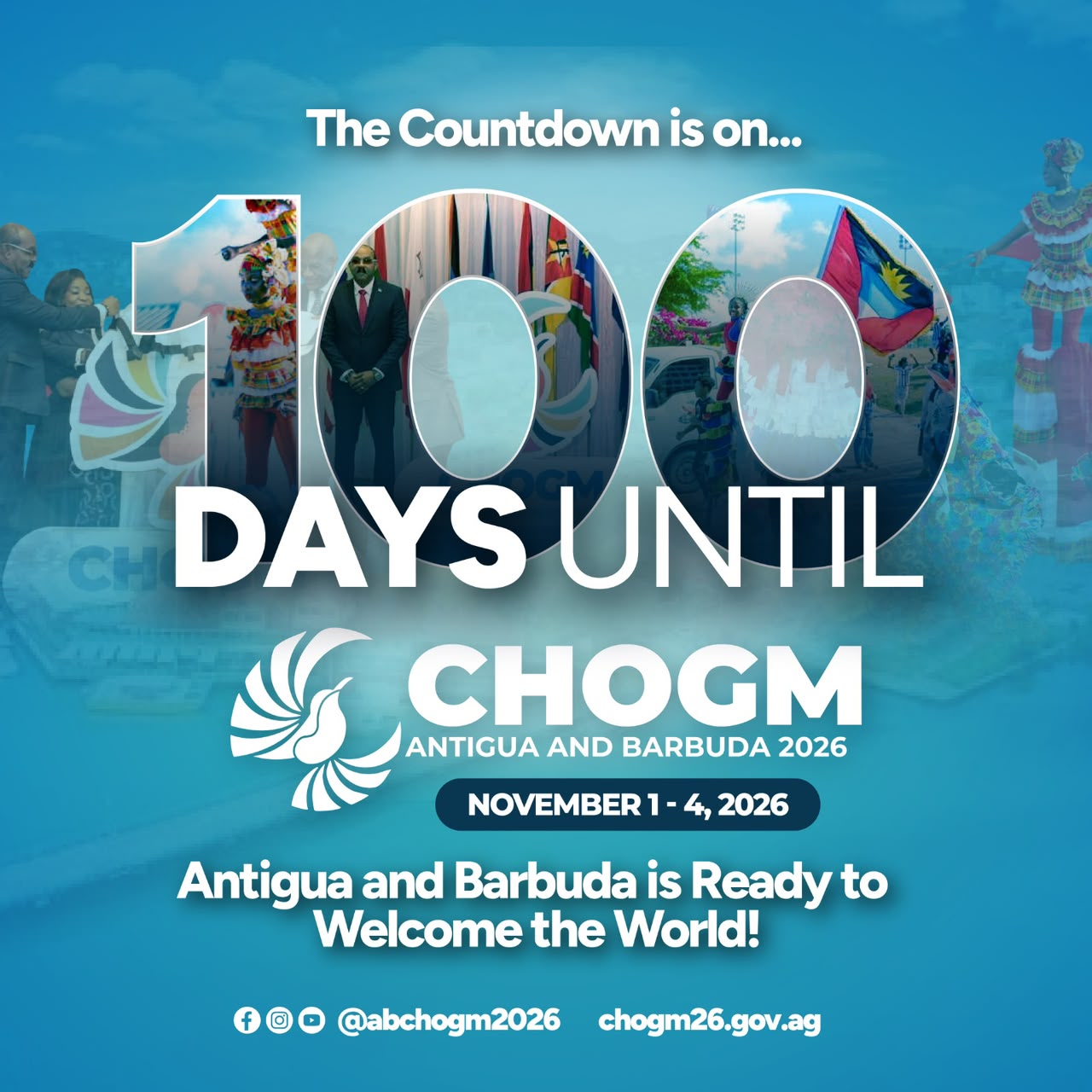
    A new cohort of 23 young leaders from across the Commonwealth has been selected to helm the international taskforce responsible for designing and rolling out the 2026 Commonwealth Youth Forum (CYF), which will take place alongside the 2026 Commonwealth Heads of Government Meeting (CHOGM) in Antigua and Barbuda. This diverse group of emerging leaders will partner closely with three key stakeholders: the Commonwealth Secretariat, the Commonwealth Youth Council (CYC), and the government of Antigua and Barbuda, to bring the forum to life. Key responsibilities for the taskforce include refining the event’s agenda, drafting youth-led policy recommendations, and coordinating critical on-the-ground logistics to ensure smooth operations.

    Drawn from multiple Commonwealth regions and representing a wide cross-section of youth interest groups, the taskforce is centered on a core mission: pushing global policymakers to prioritize initiatives that drive inclusive sustainable development, shared economic prosperity, and targeted youth investment across the 56-nation bloc. Established in 2010, the CYF was founded to address a longstanding gap in global governance, ensuring that youth voices and concerns are not overlooked by national leaders ahead of CHOGM deliberations. Over more than a decade, it has evolved into one of the world’s most influential institutional platforms for young people to engage directly with heads of government and shape multilateral policy. The 2026 iteration of the forum is scheduled to run from 1 to 4 November in St. John’s, Antigua, carrying the official theme “Investing in Youth Agency—Co-Creating Pathways towards Shared Prosperity.”

    Host nation officials have reaffirmed their full commitment to supporting the taskforce’s work. Senator Shenella Govia, Minister of State in Antigua and Barbuda’s Ministry of Works and Housing and the 2026 CYF lead, emphasized the significance of the new cohort. “I’m pleased to announce the Official Commonwealth Youth Forum Taskforce; a team we are confident will design and deliver a successful forum that reflects the diverse perspectives of our Commonwealth youth and provide a meaningful platform for dialogue and action,” Govia stated.

    Jennifer Namgyal, Officer-in-Charge of the Social Development, Youth and Gender Directorate at the Commonwealth Secretariat, highlighted the outsized role the taskforce will play in centering youth needs across the bloc. “We are delighted to be collaborating with the official Commonwealth Youth Forum Taskforce, an important team of young leaders amplifying the aspirations of the Commonwealth’s 1.6 billion young people by highlighting their innovations, elevating their solutions to global challenges, and providing a global platform for their voices to be heard,” Namgyal explained.

    For taskforce co-chair Neema Sheikh Abdikadir Abdikadir, who also serves as CYC Vice Chairperson for Inclusion and Engagement and represents Kenya, the forum comes at a critical geopolitical moment. “At a time when young people are questioning multilateralism in the current geopolitical context, this CYF will enable young leaders and other stakeholders to build their skills and co-create solutions that will shape the future,” Abdikadir said.

    Donte Walter, the taskforce’s second co-chair and the host nation’s representative from Antigua and Barbuda, shared his pride in taking on the role. “I am deeply honoured to serve as Co-Chair of the Taskforce, representing the voices and aspirations of young people in Antigua and Barbuda and across the wider Caribbean region. I look forward to collaborating with fellow leaders and stakeholders to deliver a transformative and impactful youth forum, one that unites visionary youths, strengthens meaningful engagement, and empowers emerging leaders with the resilience and capacity to shape a more sustainable and inclusive Commonwealth,” Walter said.

    In addition to the two co-chairs, the full taskforce roster includes Shacia Albertine (Antigua and Barbuda), Stanley Anigbogu (Nigeria), Eleala Avanitele (Tuvalu), Selena E. Jn Baptiste (Saint Lucia), Byron Christopher (Antigua and Barbuda), Lucia Ene-Lesikar (Tanzania/United Kingdom), Fathima Haneekah Rahil (Sri Lanka), Deborah Hatten (Antigua and Barbuda), Kaiesha Joseph (Antigua and Barbuda), Kristine Louisa (Antigua and Barbuda), Bodh Maathura (Sri Lanka), Desrie Markham (Antigua and Barbuda), Rondell Nedd (Guyana), Arielle Neely (United Kingdom, Turks and Caicos Islands), Eunice Oluwafeyisayo Oladejo (Canada), Christal Percival (Antigua and Barbuda), Vida Betances Reyes (Antigua and Barbuda), Janet Simon (Antigua and Barbuda), Vikrant Srivastava (India), Makiba Oliveia Ward (Antigua and Barbuda), and Amelia Williams (Antigua and Barbuda).

    Organizers project that roughly 300 youth delegates from across the Commonwealth will travel to Antigua to attend the four-day forum in 2026. Additional details about the 2026 CYF and the accompanying CHOGM are available through the Commonwealth Youth Programme, with further updates expected to be released in the lead-up to the event.