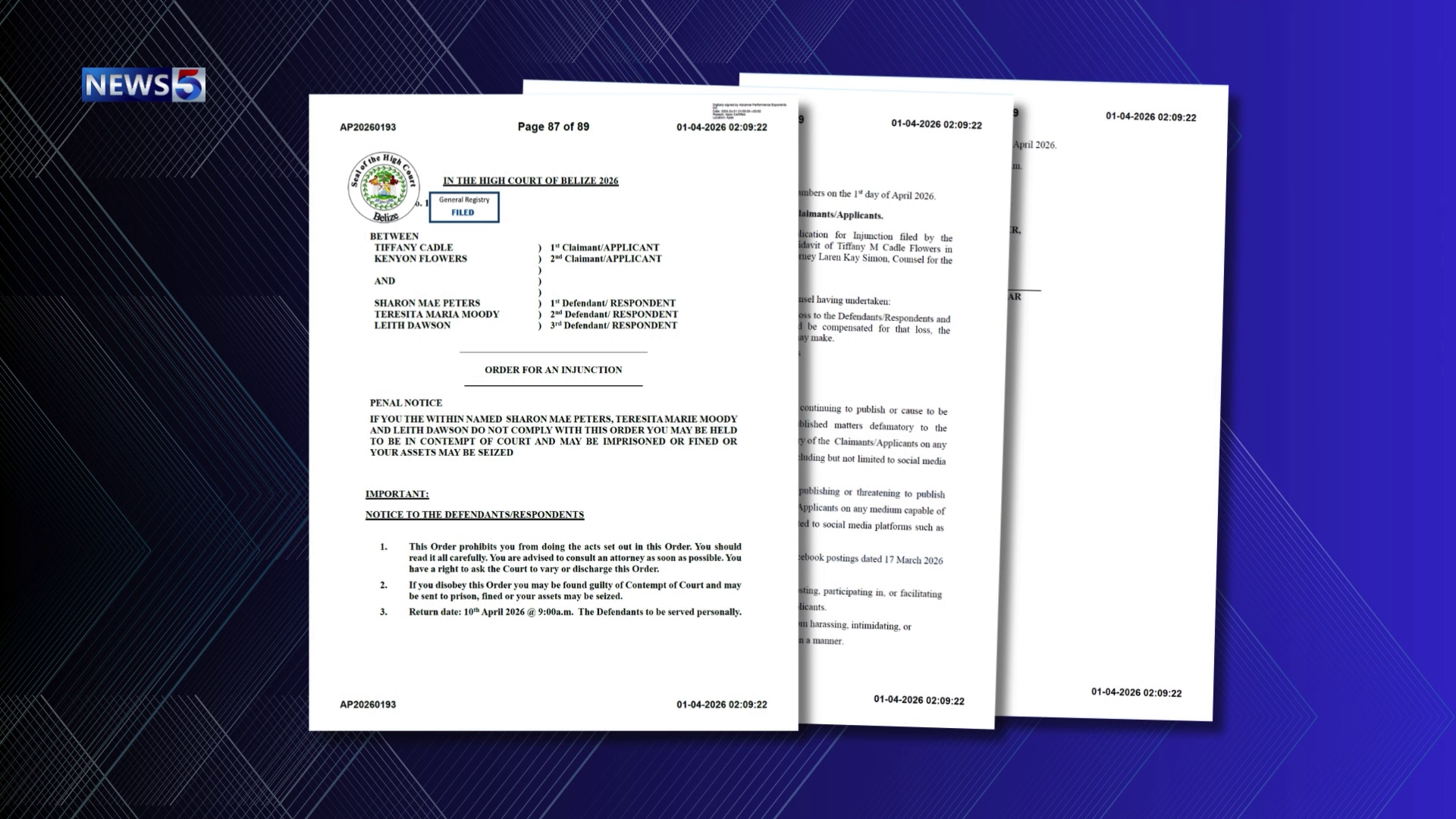
In the summer of 2026, a unfolding legal battle in Belize’s High Court has become a critical focal point for national debates over sweeping changes to the country’s digital media oversight framework. At the center of the conflict is a defamation lawsuit filed by local attorney Tiffany Cadle and her husband Kenyon Flowers against three social media content creators—Sharon Mae Peters, Teresita Moody, and Leith Dawson—who have failed to submit a formal defense to the court, prompting the plaintiffs to pursue a default judgment.
The dispute traces back to a March 2026 social media livestream, where Cadle alleges the defendants made false and defamatory statements about her and her spouse. Acting quickly to limit reputational harm, Cadle secured an emergency court injunction in early April that ordered the removal of the problematic content and a ban on further allegations against the couple. According to Cadle, however, lead defendant Sharon Mae Peters openly defied the court order, repeating the same false claims multiple times, including during another online talk show broadcast over the Easter holiday. Frustrated by the inaction, Cadle attempted to file cyberbullying charges with local police, but no formal action has been taken to date.
As this legal process moves forward, the case is colliding directly with a separate, high-stakes policy debate: the Belizean government’s proposed 2026 Broadcasting Act, a legislative overhaul that would expand government regulation into the digital sphere for the first time. The core question uniting both the lawsuit and the policy debate is the same: who should be held legally responsible for harmful content shared online, and what rules should govern digital public discourse?
Cadle, who is leading the legal action, says she strongly supports the principle of free expression online, including the right of online commentators to highlight issues of public concern that might otherwise go unreported in traditional media. But she argues that this right comes with a non-negotiable responsibility to ensure information shared with audiences is factually accurate. Currently, she notes, traditional terrestrial broadcasters like Belize’s Channel 5 and Channel 7 are held to clear legal standards for content accuracy—standards that she says unlicensed digital commentators should also be required to follow.
A major point of public contention around the proposed new broadcasting law has been its scope: many ordinary social media users have raised concerns that the rules would crack down on casual online speech. Belize’s Broadcasting Authority has moved to ease those worries, clarifying that the legislation is not designed to regulate everyday social media users. Instead, licensing requirements would target online operations that function like traditional broadcasters, with eligibility based on factors including audience size, broadcast frequency, and whether the operation generates commercial revenue.
But Cadle argues the proposed rules do not go far enough. She contends that any public commentator who regularly hosts livestreams to share political, religious, or community commentary with an audience should be required to obtain a license, to demonstrate they can operate as responsible digital content providers. “If the legislation’s goal is to protect the responsible dissemination of information by both traditional and online news outlets, there should be no exemptions for popular online creators who act like broadcasters,” Cadle explained.
The defamation case has been adjourned to October 6, with the court scheduling mandatory judicial settlement talks between the parties. The allegation that Peters violated the initial court injunction remains an active matter before the High Court, separate from the underlying defamation claim. As the legal process unfolds, policymakers and advocacy groups across Belize are watching closely, as the outcome of both the case and the legislative debate will likely set a lasting precedent for online accountability in the country.